Prices of products manufactured in Canada, as measured by the Industrial Product Price Index (IPPI), declined 1.4% month over month in June and gained 12.4% year over year. Meanwhile, prices of raw materials purchased by manufacturers operating in Canada, as measured by the Raw Materials Price Index (RMPI), decreased 6.9% month over month and increased 20.7% year over year. …StatCan said improved prospects for shipping through the Strait of Hormuz following the announcement of a tentative agreement between the US and Iran contributed to lower energy prices. …Higher prices for lumber and other wood products (+2.6%), which recorded its sixth consecutive monthly gain, were the main moderator of the IPPI‘s monthly decline in June 2026. Rising prices for softwood lumber (+6.1%) drove the June increase, with the product group registering its largest month-over-month increase since November 2024.
 Two numbers describe President Trump’s new tariffs on Canada, and they point in opposite directions. 50% is the rate, imposed Monday under Section 338 of the Tariff Act. 2.5% is the effect. The Hub‘s reporting on the proclamations puts the affected goods at roughly 5.5% of Canadian exports now crossing the border duty-free. Weight the new duties by those trade flows and Canada’s average effective tariff rate rises by about 2.5 percentage points, pushing the blended rate toward 10%. The composition of the list reinforces the arithmetic. …Before this round, Canada faced the lowest overall tariff rate of any US trading partner—roughly 6% weighted by 2024 trade flows. Even after the duties take effect in mid-August, Canada remains among the least-tariffed economies selling into the American market. …At the level of the firm, the damage is real and concentrated. …At the level of the national economy, the needle barely moves. Both readings are true simultaneously.
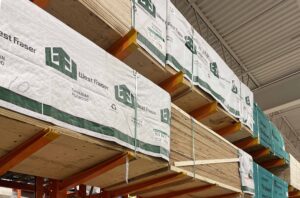 West Fraser, North America’s top lumber producer, is taking a hit from President Trump’s latest round of tariffs on Canada. Its stock is one of the day’s worst performers among forest and building-products shares. The BC company that has sawmills and other wood-products facilities on both sides of the border is already contending with Trump’s 10% national-security tariff on lumber as well as the long-standing duties on Canadian softwood exports. The 50% tariffs Trump announced exempt softwood lumber but include plywood and specialty engineered wood products. West Fraser’s exposure should be minimal because most of its products slated for the 50% levy are sold in Canada, according to TD Cowen analysts. They estimate that just 1% of West Fraser’s aggregate sales would be exposed. And that is assuming that the tariffs stick. [to access the full story a WSJ subscription is required]
 RUSS TAYLOR provided the latest quarterly report from the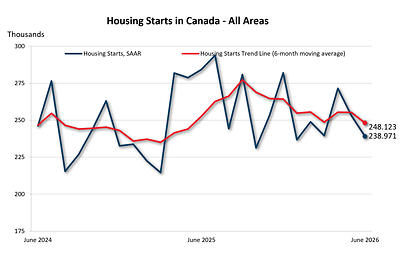

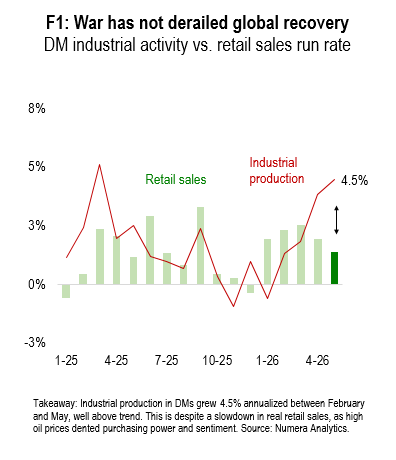
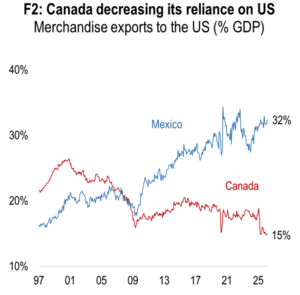 The US has formally declined to renew the USMCA trade agreement for a further 16 years. While existing tariff-free trade terms will continue, the decision triggers annual reviews until the agreement expires in 10 years. President Trump openly views the agreement as detrimental to US manufacturing, placing the burden of concessions firmly on Mexico and Canada. But as today’s chart shows, Canada has a much lower reliance on the US than Mexico, and the Carney administration is taking active steps to diversify its export base further. Exports from industrial sectors subject to tariffs – metals and auto – have fallen sharply, but the hit to activity is limited, as these account for just 2.5% of GDP. …Adjusted for a shrinking working-age population, production in these sectors has picked up. …Goods exports to the US make up close to one-third of Mexico’s GDP. Canada’s share is also high at 15%, but has fallen over time.
 OTTAWA — Canada’s annual inflation rate in May accelerated more than expected to 3.2%, a 29-month high, data showed on Monday, as the impact of higher crude oil prices due to the Iran conflict continued to filter through gasoline costs. Analysts polled by Reuters had estimated the annual inflation rate to touch 3% in May, up from 2.8% in April. The prices, however, are already showing a major reversal in June after an interim peace deal was signed between the United States and Iran last week, which, analysts have said, could help ease the headline number in June. Statistics Canada said excluding the impact of gasoline prices, the consumer price index still posted a higher increase of 2.2% in May from 2% in April. The monthly inflation rate rose to 1% in May, exceeding expectations of 0.8% rise. This is the highest monthly rise in 15 months.
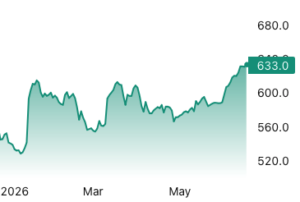 Lumber climbed past $630 per thousand board feet, the highest level since October, amid higher effective US import costs on Canadian softwood and tighter expected supply. Prices rose despite a small reduction in preliminary antidumping and countervailing duties, because the combined tariff burden remains high at about 35.9% including the existing Section 232 levy, set to take effect in August. The market is also being driven by uncertainty ahead of final duty decisions, prompting buyers to accelerate purchases and lift near-term demand. At the same time, US domestic production is still constrained, while housing-related consumption remains structurally large, with softwood lumber and engineered wood products heavily used in new construction. Each new home requires roughly 15,000 board feet of lumber plus extensive engineered wood products, keeping baseline consumption elevated even in a softer housing cycle. [END]

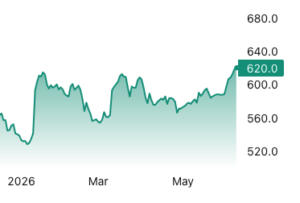 Lumber climbed to $617 per thousand board feet, the highest level since October, as constrained supply outweighed subdued conditions in the housing market. The US lumber market remains tight, with domestic production failing to fully offset reduced imports from Canada following tariffs. Canada still supplies roughly 30% of US consumption, underscoring its continued importance despite trade barriers. The US Commerce Department has proposed lowering combined duties on Canadian lumber to 24.8% from 35.2%, but an additional 10% Section 232 tariff keeps the effective rate close to 35%. Supply pressures have been further intensified by wildfire damage and other production disruptions in Canada, prompting British Columbia to introduce emergency measures aimed at boosting timber availability after storms and fires threatened output. [END]
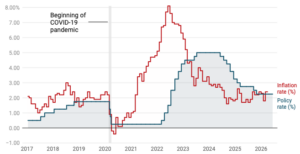 The Bank of Canada is leaving its benchmark interest rate unchanged as it tries to chart a course through global uncertainty. The central bank’s policy rate remains at 2.25 per cent today after its fifth consecutive hold. Bank of Canada governor Tiff Macklem says in prepared remarks that the economy was softer than expected in the first quarter of the year but global oil prices are also staying higher than first thought, which could keep the annual rate of inflation near three per cent for the next few months. The Bank of Canada can’t effectively respond to rising inflation and a weaker economy at the same time, so Macklem says leaving the policy rate unchanged balances those risks. The central bank sees a rebound in economic growth on the horizon but Macklem warns uncertainty is high around the war in Iran and US trade policy.
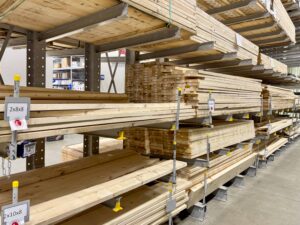 The Canadian lumber industry saw enormous price spikes during the pandemic years of 2020-2022, with costs close to triple what they are today for some products. … “We saw prices skyrocket during COVID, but so too did the cost to operate,” said Aspen Dudzic, the Alberta Forest Products Assocation’s communications director. “And interestingly, post-COVID, we saw the market prices for lumber go down, but the costs to operate have not come down in the same way.” Even though lumber costs have seen a huge drop in prices in a vacuum, why haven’t these cost savings been passed on to the consumer? …“The supply chain is really complex,” Dudzic said. “Nothing we do operates in a vacuum, so there’s a lot of other compounding costs that we have to look at, like inflationary pressures, upticks in fuel and energy prices. …Top of mind is the ongoing trade war with the US.
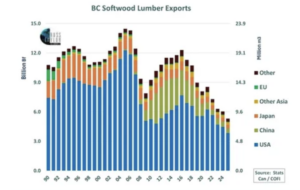 BC has seen lower timber harvests and lumber and lumber exports. …BC exported 2.5 million m3 of softwood logs in 2025, a trend that has been in place since 2022. …BC lumber exports have always focused on the US market, with 64% of production and 76% of total exports directed at the US in 2025. But with US duties and tariffs totalling over 45%. the volumes started to drop in 2025 Q4. Total BC lumber exports in 2025 were 5.1 billion bf, a drop of 12% from 2024. Lumber exports to the US were 3.83 billion bf in 2025, a drop of 14.3% from 2024. …In the first quarter of 2026, total BC lumber exports were lower by 20.1% compared to 2025 Q1, with exports to the US down by a whopping 24.7% (the bite of US duties and tariffs is evident), lower to Japan by 17.7% but higher to China by 10%. It will be challenging for BC mills in export markets for much of 2026 unless demand improves or prices move higher—both unlikely until 2027.
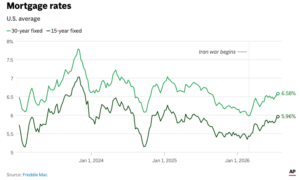 The average long-term U.S. mortgage rate climbed this week to its highest level in nearly 12 months, pushing up borrowing costs for prospective homebuyers at a time when
 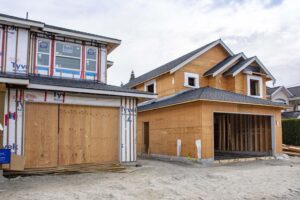 Congress’ historic effort to boost the nation’s housing supply passed both chambers with overwhelming bipartisan support and became law earlier this month. It also left a mountain of paperwork for Washington’s significantly shrunken federal agencies, which are now tasked with turning dozens of new policies into reality. Some of the lawmakers who pushed for the law worry that the Department of Housing and Urban Development — which has shed more than 30% of its core policy workforce in just three years following budget cuts — is too understaffed to quickly issue new rules and implement its provisions, aimed at making building and buying homes cheaper and easier. HUD Secretary Scott Turner is “up to the task, but you’ve got to have the underlying organization to get it done,” Sen. Thom Tillis (R-N.C.) told reporters. …HUD’s budget estimates show the offices that run the department’s programs shed more than 1,800 staff since 2023.

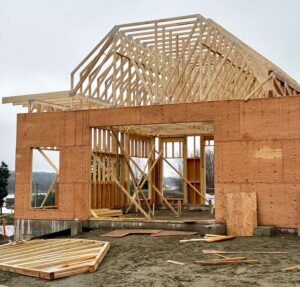 US single-family homebuilding and permits for future construction fell in June, weighed down by higher mortgage rates and inventory of unsold new homes on the market. Single-family housing starts, which account for the bulk of homebuilding, slipped 0.2% to a seasonally adjusted annual rate of 895,000 units. Single-family homebuilding dropped 3.2% year-on-year in June. Permits for future construction of single-family homes dropped 2.4% last month to a rate of 871,000 units. They fell 0.2% year-on-year in June. The rate on the popular 30-year fixed-mortgage has increased by nearly 60 basis points since the US and Israel attacked Iran at the end of February. …Building permits for multi-family housing projects dropped 4.9% to a rate of 445,000 units last month. Overall building permits fell 3.0% to a rate of 1.367 million units. They declined 2.3% year-on-year in June.


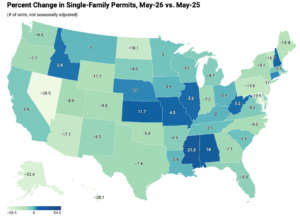 State-level permitting activity continued to reflect a divided housing market through the first five months of 2026. Elevated mortgage rates and ongoing affordability challenges continued to weigh on single-family construction across much of the country, while multifamily permitting remained comparatively stronger, supported by gains in several regions despite continued weakness in parts of the South. Over the first five months of the year, the number of single-family permits issued nationwide reached 380,130. Compared with the same period in 2025, this represents a 6.1 percent decline compared with the May 2025 total of 404,977. In contrast, multifamily permitting activity remained stronger, with 208,192 permits issued nationwide, marking a 6.5 percent increase from the same period last year.
 On July 9, 2026, Mercer International received a notice from Nasdaq staff that the company’s common stock had failed to meet the exchange’s minimum bid price requirement of $1.00 per share for 30 consecutive business days, triggering a formal non-compliance status under Nasdaq rules. The notification does not immediately affect the listing or trading of Mercer’s securities, but it places the company under an initial 180-day compliance period in which it must restore its share price to at least $1.00 for ten consecutive business days to avoid potential future delisting pressure. Mercer is working to regain compliance, though it acknowledges there is no assurance it can meet the requirement within the timeframe. The development… could influence investor sentiment and the company’s capital markets flexibility depending on its ability to achieve and sustain the mandated bid price threshold. [to access the full story a Globe and Mail subscription is required]
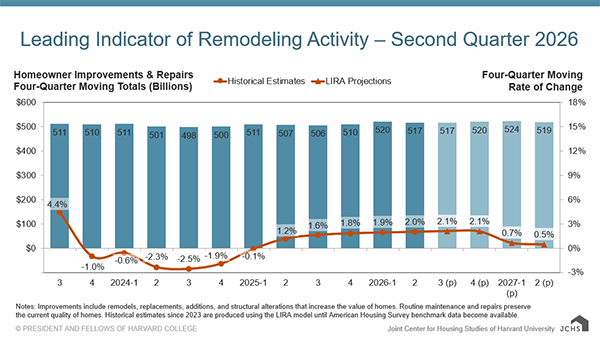
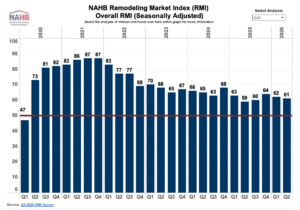 In the second quarter of 2026, the NAHB Remodeling Market Index (RMI) posted a reading of 61, down one point compared to the previous quarter. The RMI has remained in the low 60s consistently over the past year. Even with this slight decline from the previous quarter, remodeler sentiment remains the standout sector within the housing industry, outperforming both its single-family and multifamily counterparts. …However, ongoing economic uncertainty and current cost pressures due to inflation are causing project delays, especially for larger ones. In the latest RMI survey, 74% of remodelers reported that their suppliers have increased prices of materials since March due to higher fuel costs, with the average increase in materials prices over that span being 6.7%.
 The U.S. goods trade deficit is widening, the Commerce Department said Friday, suggesting stockpiling ahead of higher tariffs and a continued reliance on imports for the domestic data center rollout, analysts say. The goods trade deficit for May jumped more than $20 billion to $105.8 billion, up from $83 billion in April, according to
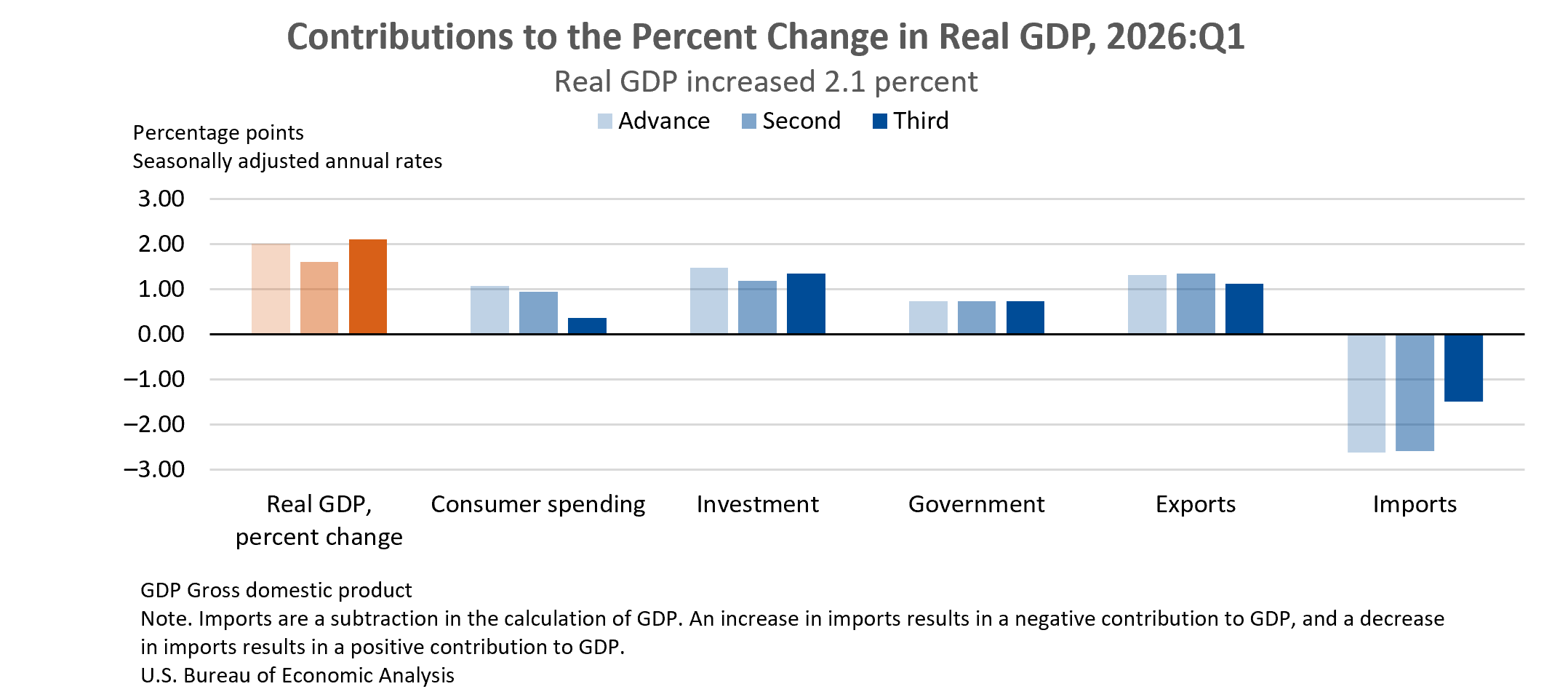
 A closely watched inflation report is set to reveal how much price growth picked up in May — and whether many American consumers remain mired in an affordability crunch. Wall Street forecasters expected the pace of personal consumption expenditures (PCE) to have quickened compared with April data amid higher oil prices and stronger consumer spending. The monthly PCE report is the Federal Reserve’s preferred inflation gauge. New Fed Chairman Kevin Warsh has said the central bank is committed to bringing inflation back to its 2% target — a level it has failed to reach for the past five years. Wall Street now anticipates the Fed will raise its key interest rate at least once by year’s end in a bid to counteract the stronger price growth.


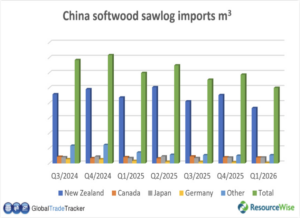 China remains one of the world’s major importers of softwood logs and lumber, but its
  While supply concerns are still weighing on housing affordability, a combination of soaring prices and economic uncertainty is dragging on housing demand, according to the annual
 A top US Customs and Border Protection (CBP) official told Court of International Trade (CIT) Judge Richard Eaton on 9 June that the agency is still creating a process for refunding tariffs that involve more complex entry types and that have been finally liquidated (i.e., are more than 90 days post-liquidation) in the Consolidated Administration and Processing of Entries portal. “We can’t do it all at once,” CBP Executive Assistant Commissioner Susan Thomas testified. ….The US Trade Representative (USTR) is
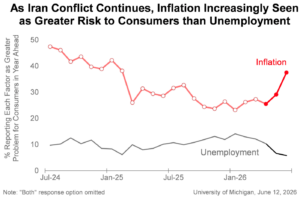 This month, consumer sentiment ticked up about four index points, or 9%, with consumers experiencing some relief due to the early-month easing in gasoline prices. This measured improvement in sentiment was widespread, seen across age, education, and political party. Lower-income consumers exhibited a particularly strong sentiment increase, consistent with the fact that gasoline comprises a larger share of their budgets. Overall, assessments and expectations of personal finances and business conditions all rose this month. Even with June’s early gains, however, views of the economy are still relatively dour. Sentiment is currently 13% below January 2026 and 19% below a year ago, as consumers remain focused on kitchen table issues. They feel burdened by the recent escalation in inflation and worry that higher inflation could remain stubborn going forward, particularly in the short run. Interviews for this release were completed between May 19 and June 8.


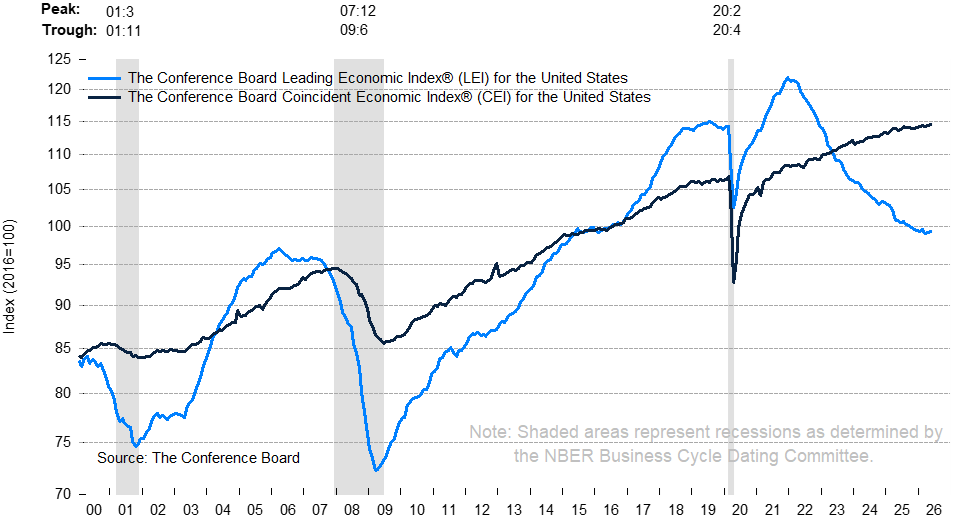
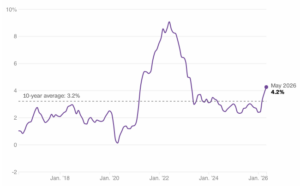 Annual inflation rose to a three-year-high of 4.2% in May, underscoring how elevated energy prices are rippling through the US economy, according to new data from the Bureau of Labor Statistics. Prices rose 0.5% on a monthly basis, driven higher by the US-Israeli war with Iran, the latest Consumer Price Index shows. The higher cost of energy accounted for 60% of the monthly increase. …“[4.2%] is still too hot for comfort, but the more important news was that the increase was concentrated mainly in energy, especially gasoline, rather than spreading widely across the economy,” economist Sung Won Sohn, at Loyola Marymount University. …May’s release is the first inflation report since Kevin Warsh was sworn in as the chair of the Federal Reserve, succeeding Jerome Powell. With inflation moving in the wrong direction and the labor market showing signs of resilience, economists expect the US central bank to keep rates unchanged — or even consider raising them.




 Softwood markets across Latin America and the Asia-Pacific are approaching a turning point, according to the latest market report from Global Wood Trends and O’Kelly Acumen. The report says some of the world’s lowest-cost plantation producers are increasingly linked to major importing markets where domestic supply growth is limited. “With harvests expected to decline in key exporting regions, China remaining structurally dependent on imports, and Japan nearing peak production, the regional supply balance is likely to tighten through 2035 – creating new risks and opportunities for producers, investors, traders, and wood consumers,” it says. The ‘Global Softwood Roundwood Supply – Latin America & Asia-Pacific’ report… says Latin America, Asia, and Oceania. Latin America remain a highly competitive source of softwood roundwood. Brazil, Chile, Argentina, and Uruguay account for nearly all regional softwood supply, supported by large-scale plantation forestry and investment by integrated forest-product companies and institutional owners.
  Japan’s housing starts surged 33.9% yoy in May 2026, sharply accelerating from a 11.4% increase in the previous month and marking the second straight month of expansion. It was also the fastest growth since March 2025, topping market expectations of 31.8%. Growth was broad-based across most segments, including owner-occupied homes (31.8% vs 19.5% in April), rental housing (33.3% vs 17.3%), built-for-sale housing (39.2% vs 3.4%), and two-by-four homes (24.8% vs 64.8%). In contrast, prefabricated housing fell 3.4%, swinging from a 11.1% increase in April.
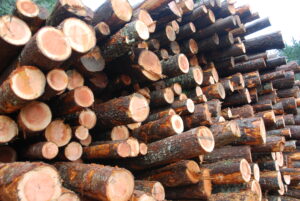 Russia’s timber exports to China, its largest overseas market, fell sharply in the first four months of 2026 as Beijing’s prolonged property downturn weighed on demand, adding to mounting pressure on an industry already struggling with sanctions, high borrowing costs and weak profitability. Exports of Russian sawn timber to China dropped 30% year on year to 2.6 million cubic meters in January-April, while export revenue declined 26% to $603.7 million, the Vedomosti business daily reported. …China accounted for roughly half of Russia’s sawn timber exports in 2025 after Europe closed its market following Moscow’s full-scale invasion of Ukraine. But weakening Chinese construction activity, rising logistics costs and a stronger ruble have eroded demand, leaving Russian producers with fewer alternative markets. Russia’s total sawn timber exports fell 32% year-on-year to around 4 million cubic meters in the January-April period. China imported 11.2 million cubic meters of Russian sawn timber in 2025.