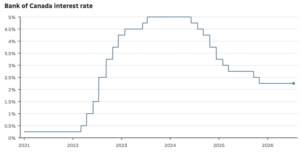
 Bank of Canada Governor Tiff Macklem says inflation risk is on the rise, with higher energy costs topping Canada’s incoming dollar-for-dollar tariffs on U.S. goods as the biggest potential driver of rising prices for consumers and businesses. Macklem’s remarks on Wednesday came after Canada’s central bank held its benchmark interest rate steady at 2.25 per cent, as widely expected by economists. The central bank lowered its policy rate to its current level in October of last year. This latest announcement marks seven consecutive times it has left its trend-setting policy rate unchanged. “The counter-tariffs, and indeed the U.S. tariffs … will add costs for some businesses,” Macklem told reporters in Ottawa. “These tariffs are very steep, but they are applied to a relatively narrow base.”The bigger issue, he said, is the war in the Middle East.
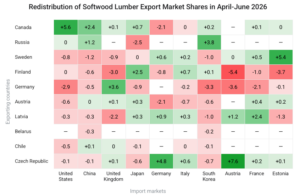 The ten largest softwood lumber import markets imported 16.6 million m3 in April-June 2026. Canada increased its share of U.S. softwood lumber imports by 6 pp, while Germany lost 3 pp of U.S. softwood lumber imports, according to Lesprom Analytics. The ten largest suppliers shipped 15.0 million m3 and held 90% of imports across the ten largest import markets. Canada gained 2 pp of Chinese softwood lumber imports. In the United Kingdom, Germany gained 4 pp and Finland lost 3 pp of U.K. softwood lumber imports. Russia shipped 474 thousand m3 less across the ten largest import markets, followed by Germany at 428 thousand m3 less and Austria at 370 thousand m3 less. In the first half of 2026, the ten largest import markets imported 34.7 million m3. Canada shipped 1.8 million m3 less and Russia shipped 1.2 million m3 less than in the first half of 2025.
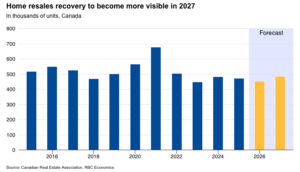 Canadian home resales have been on a winning streak since April, inventory has levelled off, and prices appear to be stabilizing or at least falling more slowly. We see room for further gradual progress ahead as improved affordability and brightening job prospects shore up confidence, increasingly unlocking pent-up demand and slowly draining piled up inventory. But, the path is unlikely to be smooth or uniform across the country. The prolonged market correction in Ontario and BC will take time to heal. And, more resilient regions have little upside left amid stable or rising interest rates and stagnant population growth. …We project home resales and the benchmark price index to fall -3.6% to 453,200 units and -2.3% to $794,200, respectively, this year mainly reflecting weakness this winter and early spring. Recovery will become more visible by 2027 when we forecast transactions to grow 6.7% to 483,600 units, and the benchmark value edges higher by 0.8% to $800,700.
 The Bank of Canada is likely to hold borrowing costs steady, as an escalation in the trade war with the U.S. threatens the economic recovery while adding to inflation risks. Economists and markets expect policymakers led by Governor Tiff Macklem to keep the policy rate at 2.25% on Wednesday. It would be the seventh straight hold — but the mood surrounding the country’s relationship with its top trading partner has changed dramatically since the last one, in July. …“Heightened growth risks from new U.S. tariffs and inflation risks from high oil prices likely created more discomfort for the Bank of Canada since their last meeting in July, but not enough to push them off the sidelines,” Nathan Janzen and Claire Fan, economists at Royal Bank of Canada, wrote. Tariffs will add to inflation while weighing on growth, reviving a dilemma Macklem and his governing council have highlighted throughout the trade war.
 As the dust settles in this tit-for-tat tariff row, what will be affected most on both sides of the border? …Construction materials such as steel, aluminium as well as lumber wood have had tariffs in place before the latest escalation, though Canada has now matched US rates on the metals at 50%. Carney has also imposed import taxes on several US wood products, such as plywood, and even screws used to fix timber together. That means building firms that import such materials will face higher costs and may choose to pass those on through higher prices – pushing up the cost of homes, for example. The Forest Products Association of Canada says tariffs would “raise costs on both sides of the border”, while on the US side, Bill Owens, chairman of the National Association of Home Builders (NAHB) urged Trump to make building materials exempt from his tariff agenda due to an “ongoing housing affordability crisis”.
 New US tariffs on Canadian wood products threaten to raise construction costs for US homebuilders and squeeze supply chains already stretched thin as a potentially long and bruising trade war gets underway. …“Basically, the fact that there’s import tariffs on Canadian shipments to the US and vice versa is going to raise the cost of production for everyone, ultimately through the housebuilder to the consumer,” wood market expert Russ Taylor told Mortgage Professional America. …The full impact on homebuilders could take a few months to become clear but the direction of travel is clear, he said. “The builders either can’t find product or the prices go higher for certain products, and then that starts to influence homebuilders,” he said. “Probably not right away – everyone’s got inventory to sell – but certainly looking ahead a couple of months from now, that’s when some shortages or stockouts could start to occur.”
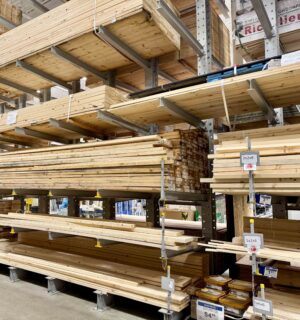 “Tariffs on Canadian plywood will exacerbate the pressures already weighing on the entire construction sector, with the housing market poised to bear the heaviest burden,” AIA’s chief economist Richard Branch said. “For some time now,” Branch added, “a series of destabilizing factors has clouded the road ahead, making it difficult for developers and architecture firm leaders to plan future projects with confidence. When leaders in construction can’t make informed decisions, momentum stalls—and construction activity slows further.” …Thirty-six different types of plywood are impacted by Section 338 duties. The NAHB said the tariffs will increase housing costs and slow down construction.
 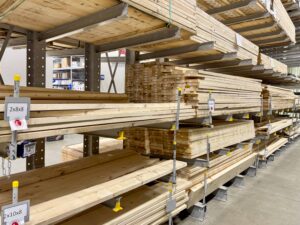 KANSAS CITY, Missouri — A 50% tariff on goods coming from Canada is officially in effect after negotiations crumbled over the weekend, putting a higher price on a large list of imports including lumber and plywood. Pete Peterson, manager at Sutherlands, said prices went up as soon as the news hit. “We don’t want to raise the prices, but we’re just kind of forced to”. Peterson has worked at Sutherlands for over a decade and has seen tariff impacts before. …“Once it’s landed here, it is what it is. Prices are adjusted to what the future prices are going to be. So homeowners, they’re doing less remodeling and stuff.” …“Spring and fall are your renovation times for outdoor projects and stuff. We’re seeing a definite slowdown and people’s need for just everyday projects. Decks, fixing barns, whatnot. Construction, that’s year-round. But homeownership, that’s where our type of business really feels it.”
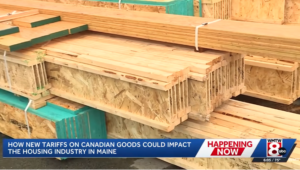 MAINE — Softwood lumber from Canada is already tarriffed at 45% — this round of tariff won’t impact softwood – but it will impact a range of other building supplies – cement, steel, aluminum, copper products – and a range of lumber products like plywood, fiberboard, and oriented strand board. “Right now the cheapest prices is out of Canada and a lot of this product comes out of Canada.” All of these are products that are known for their resilience – used in everything from custom cabinets to exterior siding. Hillside Lumber co-owner Mike Knight says the tariff increase could wind up causing increased demand for American lumber. “They can’t keep up with the demand if we cut off Canada altogether.” That in turn, could lead to higher prices for domestic products too. “Not that I’m against having everything here in the US but I think if the timing is off.” …The increase trickles down, ultimately hitting the home buyers.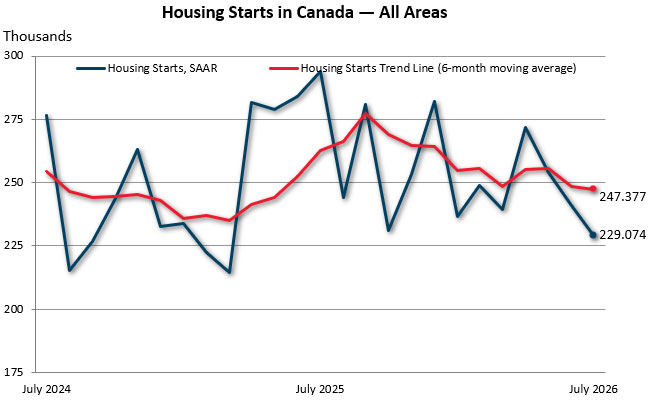
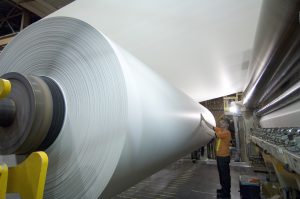 Canadian northern bleached softwood kraft (NBSK) pulp has gone through a difficult cycle over the past three years. Following exceptionally strong prices after the pandemic, the market weakened as Chinese demand slowed, producer inventories grew and new hardwood pulp capacity came online in South America. …China remains the single most important external influence on Canadian pulp prices. As the world’s largest importer of market pulp, changes in Chinese inventories, paper production and economic growth quickly move global prices. Strong Chinese buying typically supports Canadian producers, while periods of inventory reduction or weak manufacturing place immediate downward pressure on pulp markets. …Recovered (recycled) fibre has become an increasingly important part of the industry. …The industry’s greatest challenge is increasingly on the supply side. …Over the next two to three years, the outlook for NBSK is cautiously positive. Unlike hardwood pulp, very little new softwood capacity is being built globally. [to access the full story, a Globe & Mail subscription is required]
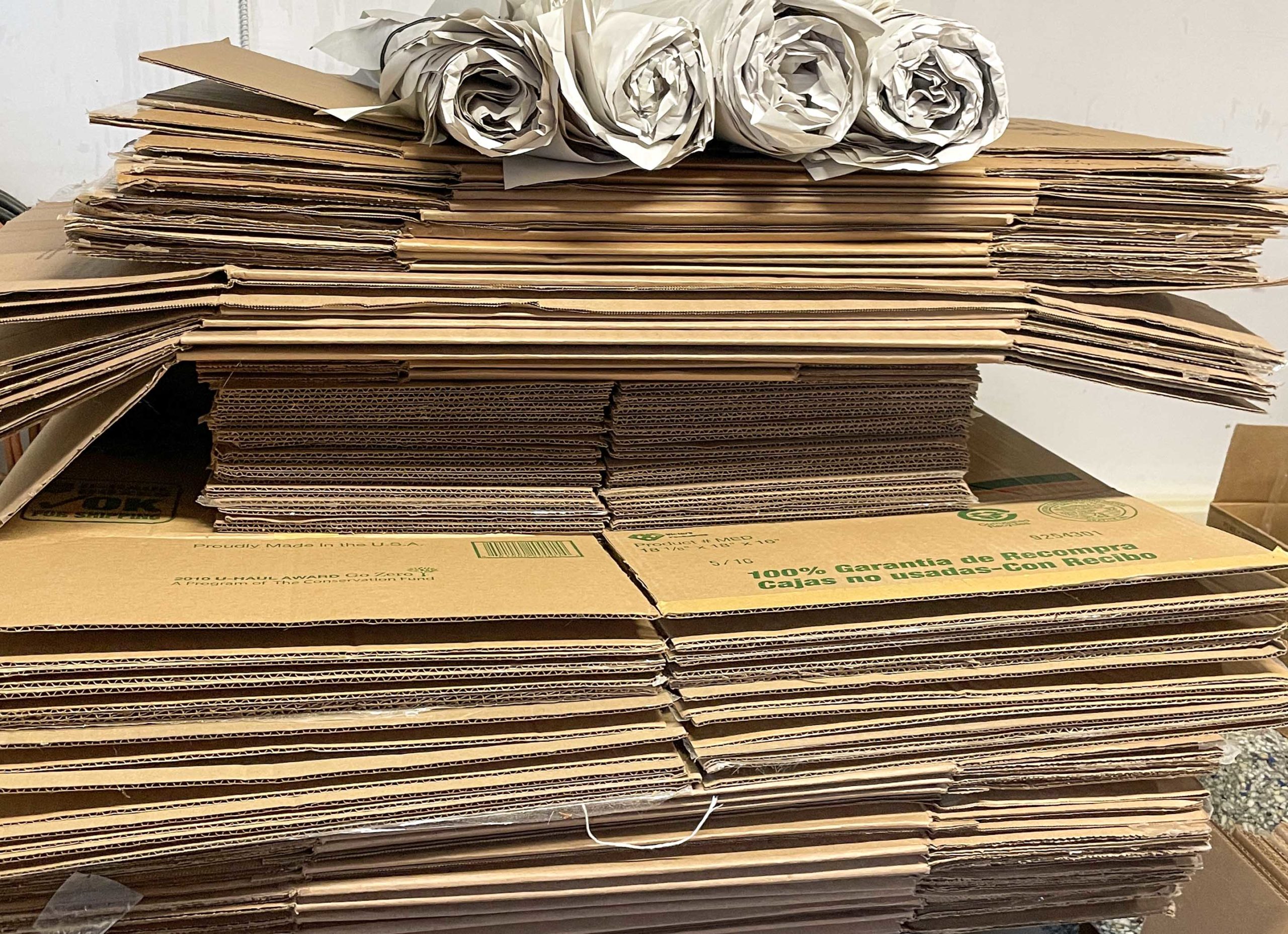 There have been three price increase announcements by the majority producers of containerboard in just five months; most recently PCA’s announcement of a $140/ton (liner and medium) increase effective September 1, 2026; IP announced $80/ton for September 1, 2026, and Smurfit Westrock announced $100/ton. These latest announcements all took place within 3 days of each other. AICC believes these increases are without economic justification based on current rawmaterial inputs and economic data. Producers cite (as they have, again without objective justification,and unconvincingly in such a relatively short period of time in between them) economic need, high operating rates (e.g., Inflation, fuel, labor, insurance), and tight supply to justify these increases. AICC is skeptical of these reasons in the current containerboard and corrugated market. Arguably, the increases are reflective of a small group of producers having market dominance.
 NEW YORK, NY — Mercer International reported second quarter 2026 Operating EBITDA of negative $21.0 million, a decrease from negative $20.9 million in the same quarter of 2025 and positive $7.8 million in the first quarter of 2026. In the second quarter of 2026, net loss was $76.0 million compared to $86.1 million in the same quarter of 2025 and $52.0 million in the first quarter of 2026. Mr. Juan Carlos Bueno, Chief Executive Officer, stated: “Our pulp sales realizations remained steady this quarter, as continued economic uncertainty delayed market recovery. Our second quarter results were also weighed down by rising European fiber costs, driven by regional supply shortages and intense competition for sawmill residuals from energy producers. As a result, we recognized a non-cash impairment of $29.0 million primarily against pulp and fiber inventory.
 BURNABY, BC — Interfor reported its second quarter of 2026 results. The company recorded net earnings in Q2’26 of $1.0 million, compared to a net loss of $63.3 million, and net earnings of $11.1 million in Q2’25. Adjusted EBITDA was $92.3 million on sales of $804.4 million in Q2’26 versus $30.7 million on sales of $643.2 million in Q1’26 and Adjusted EBITDA of $17.2 million on sales of $780.5 million in Q2’25. ….Lumber production of 927 million board feet was up 71 million board feet versus the preceding quarter driven primarily by the ramp up of the recently rebuilt Thomaston, GA sawmill. …The Company is well positioned to navigate this volatility with a diversified product mix in Canada and the US, with approximately 65% of its total lumber produced and sold within the US Ultimately, only about 20% of the Company’s total lumber production is exported from Canada to the U.S. and exposed to duties, tariffs or other potential trade measures.
 The United States’ share of Canada’s softwood lumber exports fell by 1 percentage point to 89% in January-June 2026. Canada exported 13.2 million m3, down 12%, while export value fell 26% to $2.45 billion and the average price declined 16% to $186 per m3. …Shipments to the US fell 13% to 11.7 million m3, a reduction of 1.73 million m3 from a year earlier. Export value dropped 29% to $2.02 billion, and the average price fell 18% to $172 per m3. The listed destinations with higher shipments added 77 thousand m3, equal to about 4% of the US shortfall. Declines in Japan, the Philippines, Germany and the remaining destinations totaled 128 thousand m3, leaving total non-U.S. exports down 51 thousand m3, or 3%, at 1.50 million m3. China remained Canada’s second-largest market with a 4% share. Shipments rose 3% to 525 thousand m3. Japan ranked third with a 3% share, but shipments fell 19% to 373 thousand m3. Taiwan accounted for 1.4%, the Philippines retained a 0.8% share, Mexico rose to 49 thousand m3,Germany received 33 thousand m3.
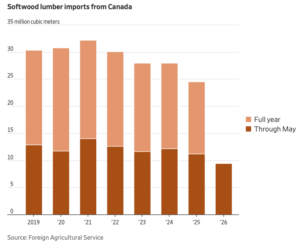 Home sales are slumping, renovation spending is losing steam and yet lumber prices have risen this summer to their highest level in four years. Back in 2022, the price of two-by-fours was falling back to earth after a record-setting spike during Covid. …This time around, reduced supply rather than unyielding demand has driven lumber prices higher. Imports are down due to steep duties on Canadian boards and President Trump’s 10% softwood lumber tariff. Meanwhile, low prices last year prompted sawmill curtailments and closures from BC to northern Florida. …Home builders… say the run-up in prices has become a headwind and will filter through to the cost of houses. Yet lumber futures, which are down about 12% from their high in late July, suggest that wood prices may have peaked for this year. …“I don’t anticipate that those mills that have been shut down are going to come back,” said Weyerhaeuser CEO Devin Stockfish. [to access the full story a WSJ subscription is required]
 VANCOUVER, BC — West Fraser Timber reported the second quarter results of 2026. Second quarter sales were $1.434 billion, compared to $1.334 billion in the first quarter of 2026. Second quarter earnings were $(61) million, compared to earnings of $(188) million in the first quarter of 2026. Second quarter Adjusted EBITDA was $59 million compared to $(66) million in the first quarter of 2026. Other highlights include: Lumber segment Adjusted EBITDA of $41 million, including a $13 million favourable in-year duties adjustment; North America Engineered Wood Products segment Adjusted EBITDA of $13 million; Europe Engineered Wood Products segment Adjusted EBITDA1 of $13 million; and Other Operating Segments Adjusted EBITDA of $(8) million, due largely to maintenance at our Cariboo pulp facility. …”West Fraser’s second quarter results delivered continued progress against our business priorities supported by improved market conditions,” said Sean McLaren, West Fraser’s CEO….Based on our current outlook… capital expenditures for 2026 are expected to remain within the $300 million to $350 million range.
 Canadian wildfires are driving up the price of wood products that the US construction industry depends on — with knock-on effects on housing. Western Spruce Pine Fir futures were selling for $653 per thousand board feet in late July, not far off last year’s high, and up from a low of $524 in late January. The 937 wildfires threatening forests throughout BC are driving that increase. Alex Strong at the NAHB, said President Trump’s proposed 50% tariff on Canadian goods is adding to uncertainty around the supply chain. Set to take effect Aug. 19, the 50% tariffs would directly apply to Canadian plywood, fiberboard and other wood-derived products used in homebuilding. Canada is one of the top suppliers of fiberboard to the US. Derek Nighbor, CEO of FPAC, said that the country is also America’s third-largest supplier of plywood. …The US Congress Joint Economic Committee warned that Trump’s tariffs on a range of materials could increase building costs by $10,900 per home.
 VANCOUVER, BC — Conifex Timber reported results for the second quarter ended June 30, 2026. EBITDA was negative $6.3 million for the quarter compared to EBITDA of negative $7.7 million in the first quarter of 2026 and negative EBITDA of $3.2 million in the second quarter of 2025. Net loss was $9.5 million or the quarter versus a net loss of $9.4 million in the previous quarter and a net loss of $8.3 million in the second quarter of 2025. …Revenues from lumber products were $19.0 million in the second quarter of 2026, representing an increase of 27% from the previous quarter and a decrease of 31% from the second quarter of 2025. … Electricity production contributed revenues of $2.8 million in the second quarter of 2026, $5.2 million in the previous quarter, and $3.6 million in the second quarter of 2025.
 VANCOUVER, BC — Western Forest Products reported their second quarter, 2026 result. Q2, 2026 revenue was $239.6 million, compared to $201.5 million in Q1, 2026, and $289.1 million in the second quarter of 2025. …Adjusted EBITDA of $0.4 million in the second quarter of 2026, as compared to $0.5 million in the same period last year. Adjusted EBITDA in the second quarter of 2026 included a $2.3 million expense related to share-based compensation due to a 20% increase in the Company’s share price, compared to a $0.3 million expense in the same period last year. Net income was $10.5 million in the second quarter of 2026, as compared to a net loss of $17.4 million for the same period last year. Results in the second quarter of 2026 included a $31.3 million property insurance recovery from our Columbia Vista sawmill. …Both the North American Japanese lumber markets are expected to be relatively stable through most of the third quarter of 2026.
 VANCOUVER, BC — Canfor reported its second quarter of 2026 results. Second quarter sales were $1.526 billion, compared to $1.359 billion in the first quarter of 2026. Second quarter earnings were $(18.5) million, compared to earnings of $(72.1) million in the first quarter of 2026. For the lumber segment, operating income was $41.2 million compared to the previous quarter’s operating loss of $43.7 million. …For the pulp and paper segment, the operating loss was $23.1 million compared to an operating loss of $16.2 million for the first quarter of 2026. …Canfor’s CEO, Susan Yurkovich, said “our second quarter results reflect an improvement in earnings, principally driven by a solid operating performance across all of our lumber regions and an ongoing improvement in our underlying cost structure, combined with an uplift in lumber market conditions in North America. Despite this short-term uptick, we continue to take disciplined actions to address longer-term structural fibre and market challenges.”
 MONTREAL, Quebec – Stella-Jones announced financial results for its second quarter ended June 30, 2026. …Sales for the second quarter of 2026 were $1,042 million, up eight million dollars, versus sales of $1,034 million for the second quarter of last year. Excluding the $29 million contribution from the acquisition of Brooks Manufacturing, pressure-treated wood sales decreased by $13 million, or 1%. …Adjusted EBITDA of $167 million, or 16.0% margin compared to $189 million, or 18.3% margin in Q2, 2025. Net income was $61 million compared to $106 million in Q2. …This performance reflected higher wood utility poles sales, largely offset by the lower market price of lumber for residential lumber and lower volumes in railway ties. Logs and lumber sales declined by eight million dollars, or 31%, primarily due to a reduction in logs trading activity. …Eric Vachon, President and CEO of Stella-Jones said “We expect margin performance to improve in the second half of the year.”

 NEW YORK
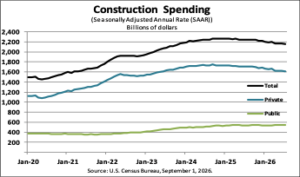 Construction spending during July 2026 was estimated at a seasonally adjusted annual rate of $2,157.6 billion, 0.5 percent below the revised June estimate of $2,167.7 billion. The July figure is 3.8 percent below the July 2025 estimate of $2,242.6 billion. During the first seven months of this year, construction spending amounted to $1,244.6 billion, 3.5 percent below the $1,289.7 billion for the same period in 2025. …Spending on private construction was at a seasonally adjusted annual rate of $1,614.2 billion, 0.5 percent below the revised June estimate of $1,622.9 billion. Residential construction was at a seasonally adjusted annual rate of $859.0 billion in July, 1.3 percent below the revised June estimate of $870.6 billion. Nonresidential construction was at a seasonally adjusted annual rate of $755.2 billion in July, 0.4 percent above the revised June estimate of $752.4 billion.
 The brewing tension between Canada and the US has escalated into a full‑blown trade war, disrupting cross‑border supply chains, driving up the cost of construction materials, and threatening to throw the timelines of major housing projects into disarray. …Developers already grappling with labour shortages, high interest rates, and soaring land costs, now face a destabilizing force that could impact every aspect of the construction process. …“The construction industry continues to build through uncertainty, but contractors are facing increasing pressures in getting the job done,” said Rodrigue Gilbert, President of the Canadian Construction Association. …Meanwhile, the US housing market is feeling the shock as well. …The long‑term implications of the trade war reach far beyond construction sites and border checkpoints, according to a report by the Canadian American Business Council by Oxford Economics. The analysis underscores the depth of Canada–US economic integration and how mutually beneficial that relationship has been for decades.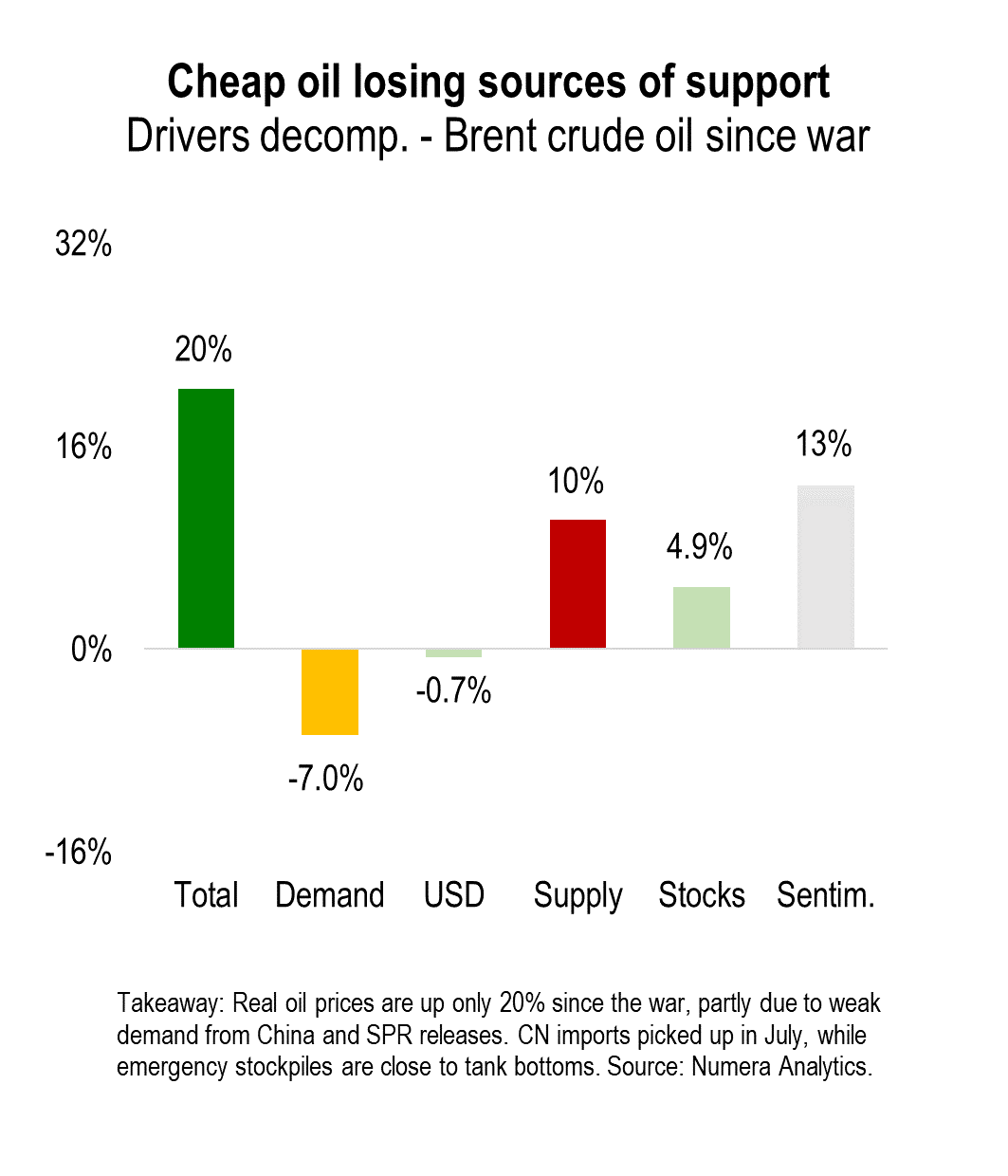


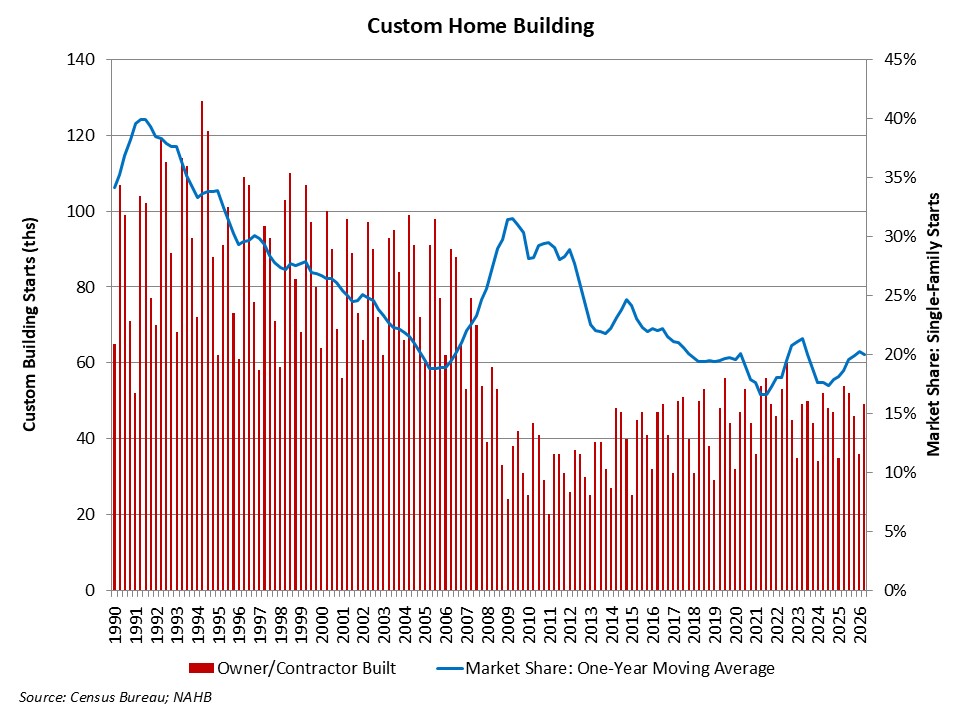

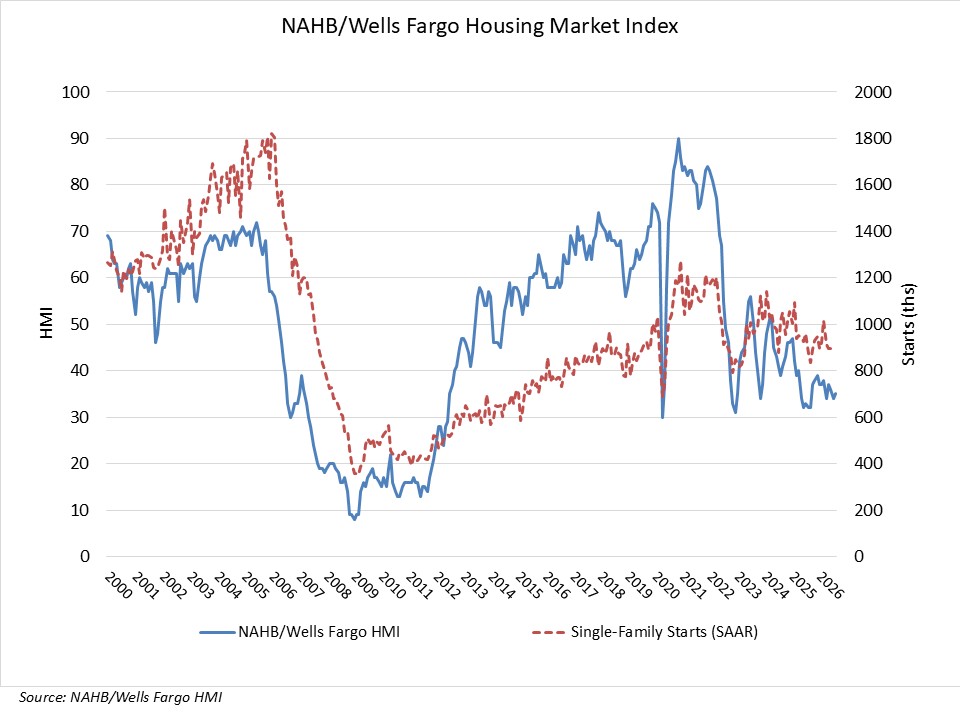
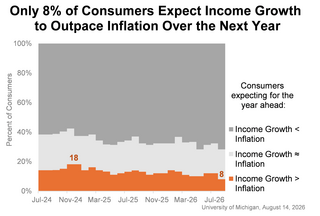
 While North American softwood lumber consumption has declined in 2026, prices have remained surprisingly resilient due to constrained supply, reduced production, and persistent structural demand for housing despite ongoing affordability challenges. …On one hand, builders continue to face affordability concerns, elevated mortgage rates, and cautious consumers. On the other hand, lumber prices have generally strengthened throughout 2026, despite year-over-year declines in consumption. Here’s what the latest market indicators are telling us. …The U.S. housing market continues to balance between long-term demand for new homes and short-term economic pressures. …These trends suggest that, while housing demand hasn’t disappeared, the market is adapting to economic realities rather than expanding uniformly. …Although North American lumber consumption has declined year over year, production has also contracted. Reduced output across both the United States and Canada has helped keep supply relatively tight, supporting pricing across many lumber grades.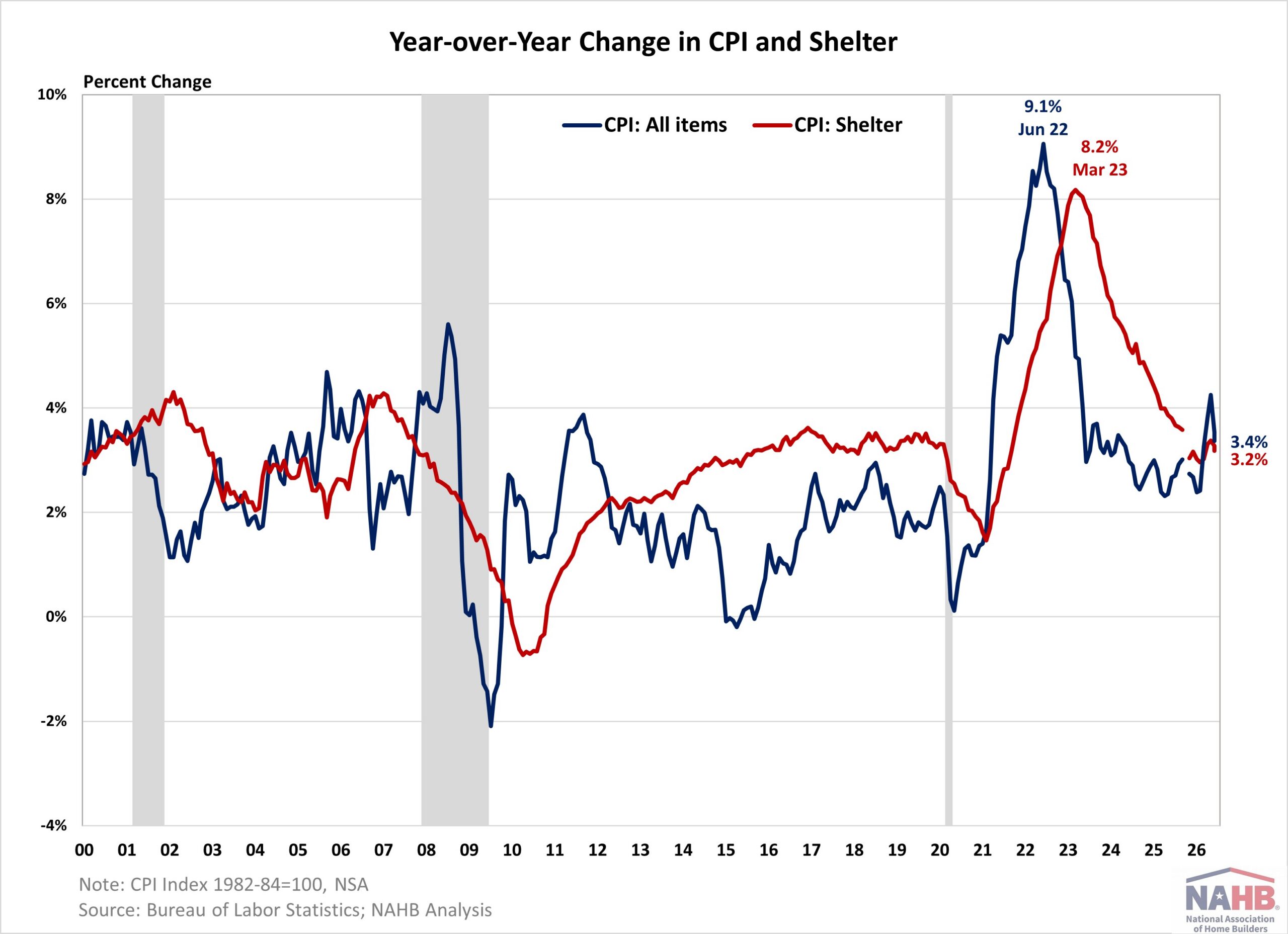
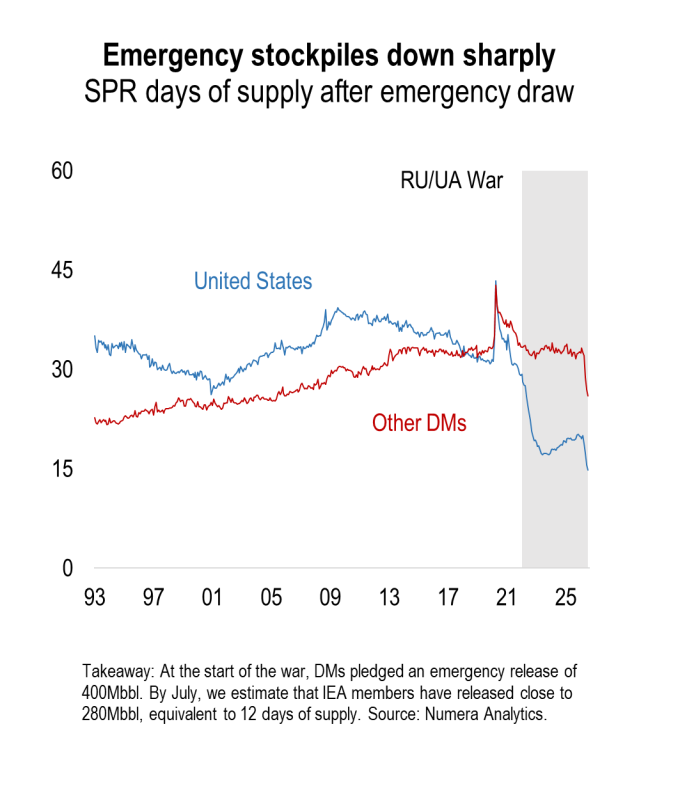


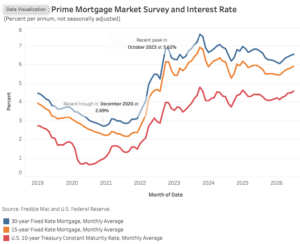 Re-escalation of the conflict in Iran pushed mortgage rates higher in July. According to Freddie Mac, the 30-year fixed-rate mortgage averaged 6.54% in July, up 5 basis points (bps) over June. Since the conflict in the Middle East began, the 30-year mortgage rate has climbed by almost 50 bps. The average 15-year rate averaged 5.91% in July, up 9 bps from June, and up 48 basis points since the end of February. Compared to a year ago, the 30-year rate remains lower by 18 bps, however, the 15-year rate is now higher by 5 bps. The 10-year Treasury yield, a key benchmark for long-term borrowing, rose 10 bps to an average of 4.58% in July as renewed attacks in the Strait of Hormuz heightened concerns about energy supplies and inflation. The yield rose sharply, ending July at 4.67%, 23 bps above its June closing level.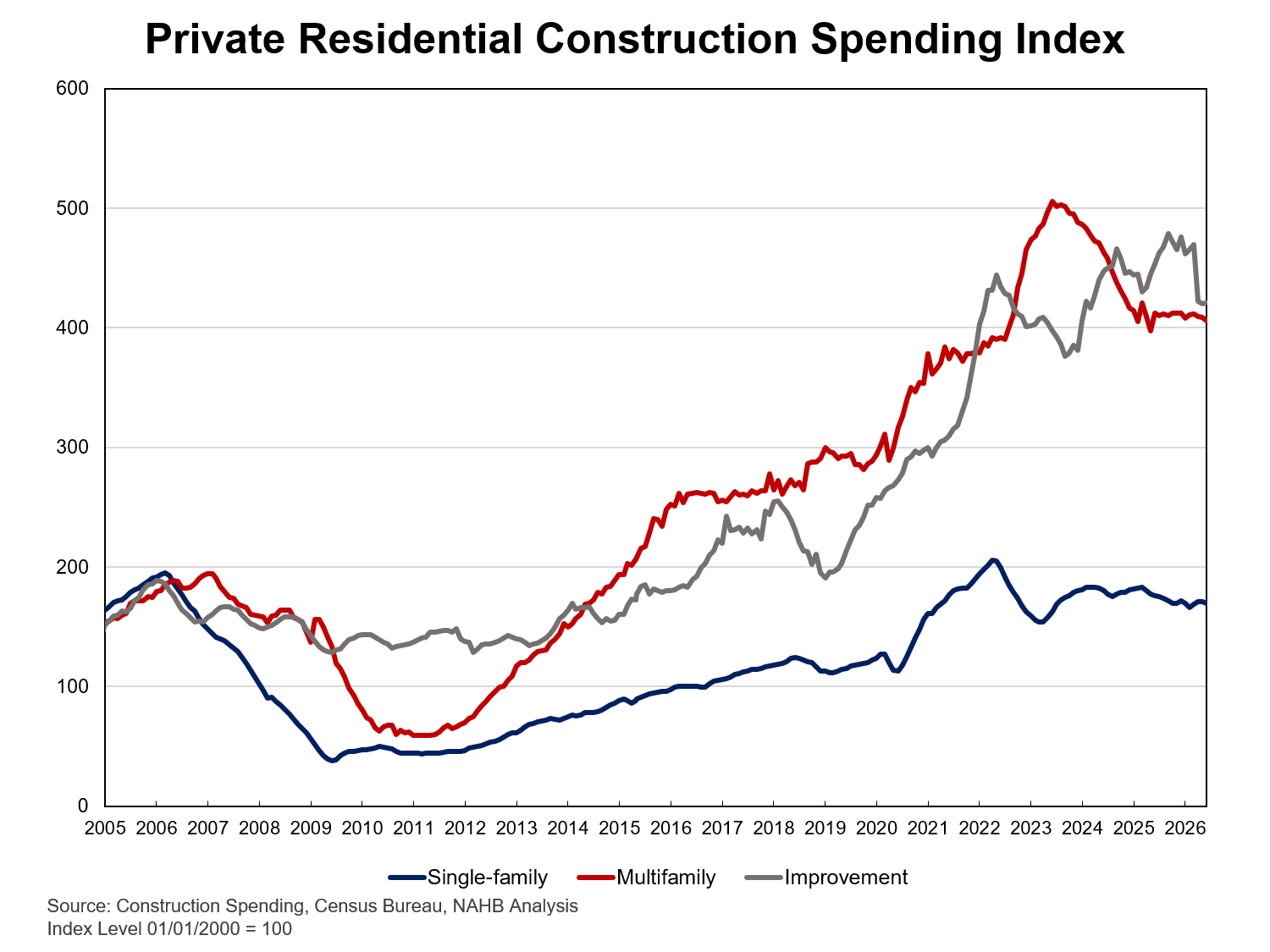






 CAPITAL REGION, New York — Starting next week, Canadian retaliatory tariffs are taking effect. The tariffs are up to 50% on American products. The tariffs are projected to impact $20 billion worth of American goods; materials like lumber, steel, and dairy could be the hardest hit. We see data coming out of the Fed that shows that 90% of the costs of tariffs are passed along to, you know, U.S. businesses and consumers,” said Justin Wilcox, of Upstate United. “That’s having an impact on people’s pocketbooks at a time when they can least afford it.” …The National Association of Home Builders predicts a $10,000 to $14,000 increase per home. …According to an April 2026 report from the New York State Comptroller, Canada is the state’s most significant trading partner. In 2025, exports to Canada declined by $3.8 billion due to tariffs.
 BUFFALO, New York — The changing tariffs policies for the U.S. and Canada are raising cost and supply issues for the home building and remodeling field with possible impact on their customers for planned and future projects… said a contractor and the operator of a lumber and building supplies business. …Domenic Cortese, of Cortese Construction, said “The implications to a new home on the costs of that home are about $10,000 more because of the tariffs. You know you’re probably going to be looking at $2,000 or $3,000 more in lumber costs for a deck just because of the tariffs.” …”The problem is we don’t have the infrastructure in place to ramp up productivity to be able to supply lumber for our needs.” …Lenco’s Stephen Coppola said, “We love the Canadian lumber. Our customers tend to like it quite a bit. But we’ve been very active in trying to find other sources.”




 Drax’s Pellet Production adjusted EBITDA fell 14% to £64 million in the first half of 2026 from £74 million a year earlier, as production declined and internal sales prices fell. Pellet output decreased to 1.9 million metric tons from 2.1 million metric tons, according to Drax Group. The lower production reflected the closure of the Williams Lake pellet plant in Canada and outages at facilities in the U.S. South. Drax also weighted more production toward the second half of 2026 to align pellet supply with expected generation at Drax Power Station. Market conditions affected the Canadian business through limited fibre availability and lower margins. Canadian operations otherwise performed well during the period, while Drax continued a strategic review of the business. Cost reductions in the U.S. South also lowered Pellet Production earnings under Drax’s cost-plus transfer-pricing system.
 GRAND RAPIDS, Michigan — UFP Industries reported results for the second quarter 2026. Net Sales of $1.88 billion increased by 3% compared to $1.84 billion a year ago due to a 1% increase in organic units and a 2% increase due to acquisitions. …Net Earnings Attributable to Controlling Interests of $83 million compared to $101 million a year ago. Earnings were primarily impacted by higher freight costs while a weaker residential construction market was offset by improvements in other business units. Adjusted EBITDA was $154.5 million in the quarter, compared to $174.1 million a year ago. …UFP Industries is a holding company whose operating subsidiaries – UFP Packaging, UFP Construction and UFP Retail – manufacture, distribute and sell a wide variety of value-added products used in residential and commercial construction, packaging and other industrial applications worldwide.
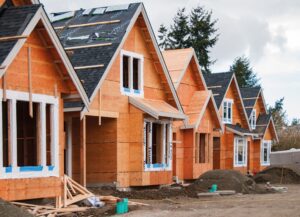 Japan’s housing starts increased 8.2% year-on-year in July 2026, slowing significantly from an 18.6% surge in the previous month. Still, the latest reading marked the fourth consecutive month of growth, surpassing market expectations of 7.9% growth. Owner-occupied homes rose just 0.4% (vs 15.7% in June), while rental housing growth eased markedly (10.0% vs 24.6%). In the meantime, built-for-sale homes continued to grow solidly (14.6% vs 14.2%). At the same time, starts of two-by-four homes fell further (-8.5% vs -7.4%), while prefabricated housing starts dropped 6.9%, reversing a 13.7% gain in June.
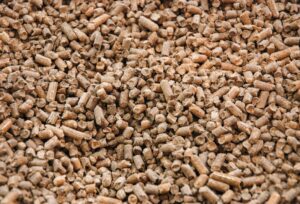 The United Kingdom is forecast to consume 10.35 million tonnes of wood pellets in 2026, representing a 4% increase from 2025 and a record consumption level, according to a report filed with the US Department of Agriculture’s Foreign Agricultural Service. The consumption increase will require an estimated 10.15 million tonnes of imports. The forecast reflects strong demand from the industrial biomass power sector, which is operating at near-maximum capacity as major operators maximise output ahead of structural changes to subsidy mechanisms. Industrial bioenergy accounts for approximately 93% of UK wood pellet demand, with Drax and Lynemouth power stations consuming a combined estimated 9.63 million tonnes annually. …The 4% year-on-year consumption growth from 9.95 million tonnes in 2025 represents continued reliance on biomass within the UK’s electricity generation mix. Residential and commercial heating sectors account for the remaining 7% of wood pellet demand, a significantly smaller market segment than industrial power generation.
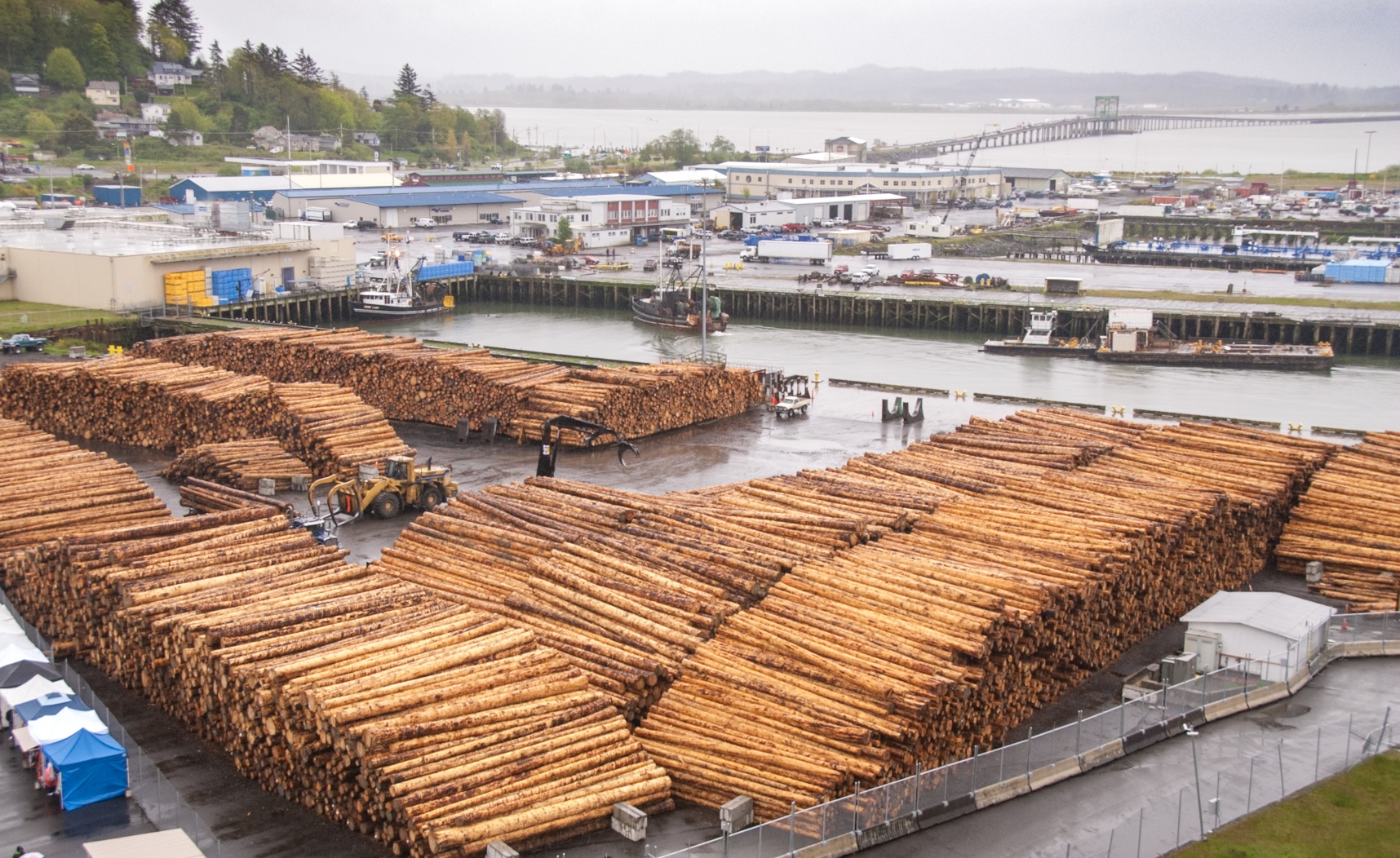 The economic situation of the German sawmilling and timber industry remains strained, according to the latest report from the German Sawmill and Timber Industry Association (DESH). Ther Berlin-based group, which represents German sawmillers, says the persistently weak construction sector, the global economic and sales crisis, high raw material and production costs, and mounting cost pressures are placing a significant burden on domestic companies. It warns of a further deterioration in the situation. In the coming weeks, DESH says many companies will be forced to scale back production capacities and extend scheduled maintenance periods. “Despite promising rhetoric from policymakers, the hoped-for recovery of the domestic construction industry has yet to materialize,” it said. “Demand for construction timber in key export markets also remains subdued due to geopolitical crises and a global economic slowdown. At the same time, persistently high costs for raw materials, energy, and production are burdening companies.
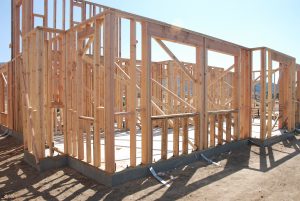 Housing starts across Japan climbed 18.6% in June for a third straight monthly rise, with the recovery missing the two-by-four segment built on imported dimension lumber, where starts fell 7.4%. That is according to data the Ministry of Land, Infrastructure, Transport and Tourism released, which shows owner-occupied, rental, and built-for-sale housing all rising, while the platform-frame trade went the other way. Economists had expected a 12.8% rise, with the stronger result still slowing sharply from May’s 33.9% surge as owner-occupied growth eased to 15.7% from 31.8, rentals to 24.6 from 33.3, and built-for-sale homes to 14.2 from 39.2. Prefab housing swung 13.7% higher after a 3.4% fall in May, leaving two-by-four as the only wooden segment in decline. None of the growth measures a strong market, because the comparison month produced just 55,956 starts, down 15.6% in a third straight fall after the April 2025 revision to the Building Standards Act.