 OTTAWA — Western provinces and the East Coast should remain on alert for the possibility of more wildfire activity throughout the rest of summer, based on the latest federal government update. Wide swaths of B.C. and the prairie provinces are expected to be drier and hotter than normal. Federal government forecasters also see above-average seasonal temperatures for most of the country over the next three months. Typically in the more northern regions, fire activity starts to wind down around September as cooler weather sets in and the days grow shorter. Not this year. Federal bureaucrats said there’s a high likelihood that the large fires currently burning will continue well into the fall amid the higher temperatures. “Wildfire season’s not slowing down,” Emergency Management Minister Eleanor Olszewski said at a virtual press conference in Ottawa on Monday.
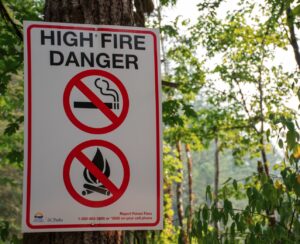
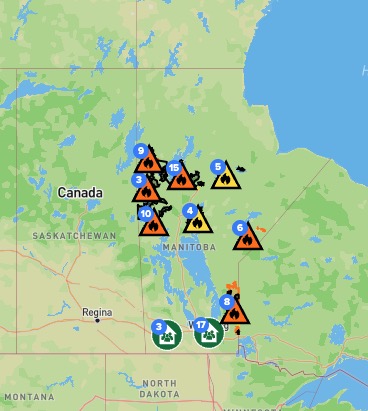 Rapidly growing wildfires in several provinces forced thousands of people from their homes and prompted air-quality warnings in cities thousands of kilometres away, while hot and dry conditions had other areas on high alert, including Nova Scotia, where the government banned most summertime activities in wooded areas. The deteriorating conditions have added up to a wildfire season that is on track to be one of Canada’s worst on record in terms of area burned, second only to 2023. As of Tuesday, at least 15,000 people were under evacuation orders in Manitoba, largely in the province’s north, while fires on Newfoundland and Labrador’s Avalon Peninsula had forced around 600 people from their homes. Across the country, more than 760 wildfires are burning, at least 205 of them deemed out of control. About 6.8 million hectares of land have burned so far this year.
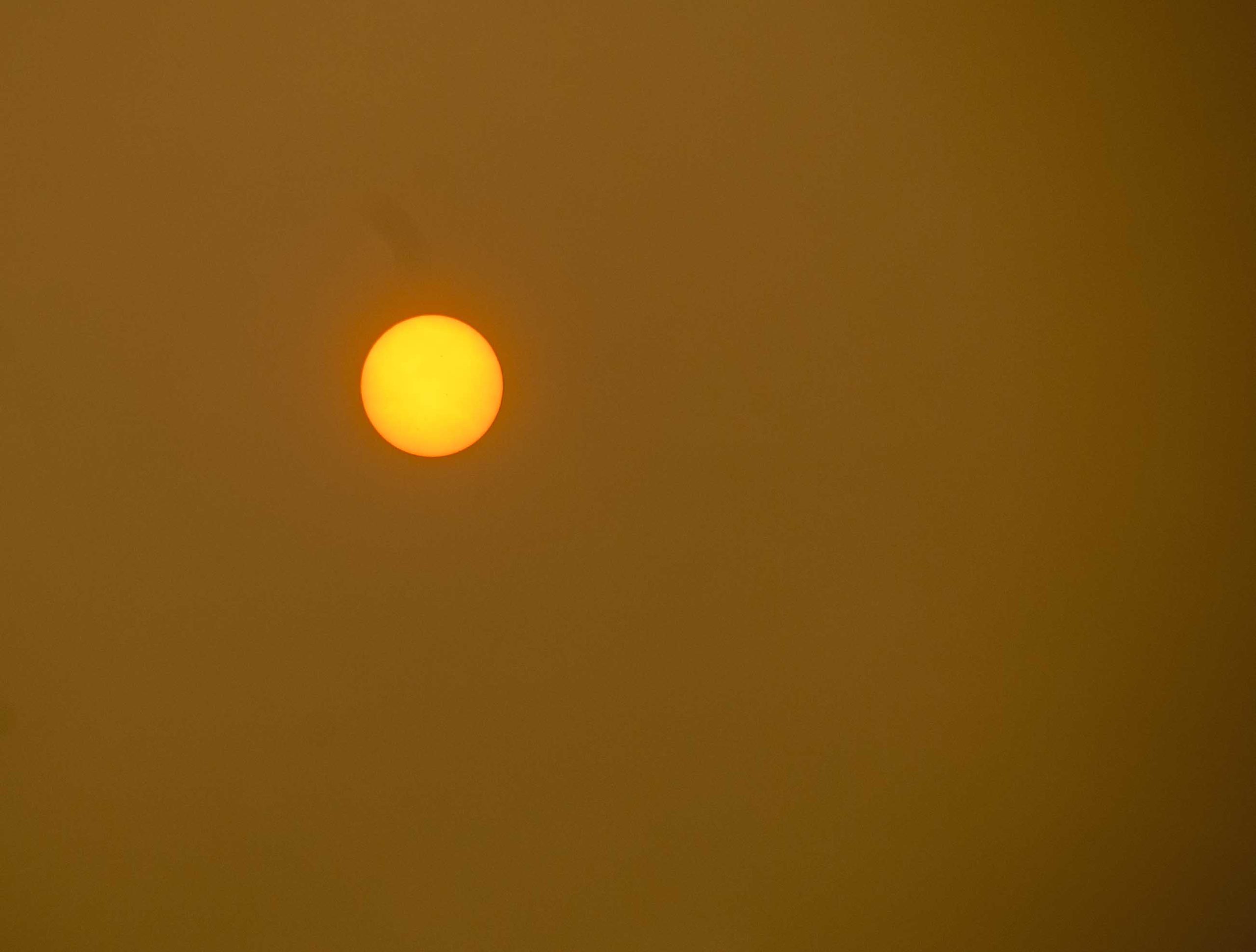 Provincial investigators looking into the cause of this spring’s wildfire near Lynn Lake, Man., allege it started at the nearby Alamos Gold Inc. mining site and that the company was negligent because it didn’t use water to extinguish its burn piles, according to search warrant documents obtained by CBC News. Manitoba Conservation investigators allege the fire, which eventually grew to over 85,000 hectares, started on May 7 after a burn pile reignited at the Toronto-based gold producer’s MacLellan mine site, about 7.5 kilometres northeast of Lynn Lake. By late May, the fire had come within five kilometres of Lynn Lake and forced the evacuation of the nearly 600 residents of the town… Dozens of properties in the area were destroyed. …The investigators asked Alamos Gold staff how they ensured the burn piles were extinguished. The workers said they stirred the piles and installed a fire guard around them, according to the documents.


 It’s been a summer of blue skies for British Columbia’s Lower Mainland, but that’s changed with a wave of wildfire smoke rolling into the region. The Metro Vancouver Regional District has issued an air quality advisory for Metro Vancouver and the Fraser Valley due to elevated levels of fine particulate matter causing hazy conditions across the region. At a Wednesday briefing, B.C. Forests Minister Ravi Parmar said conditions were expected to worsen, with much of Southern B.C. to be affected in the days to come. “We should expect to see wildfire smoke come south in the days ahead. Weather forecasters are saying that the smoke is going to be a major factor in the next 24 to 72 hours,” Parmar said. “There are already reports of smoke hitting communities. We do expect more smoke to arrive in the central and southern interior tonight or tomorrow, and reach Abbotsford and the coast by Friday.”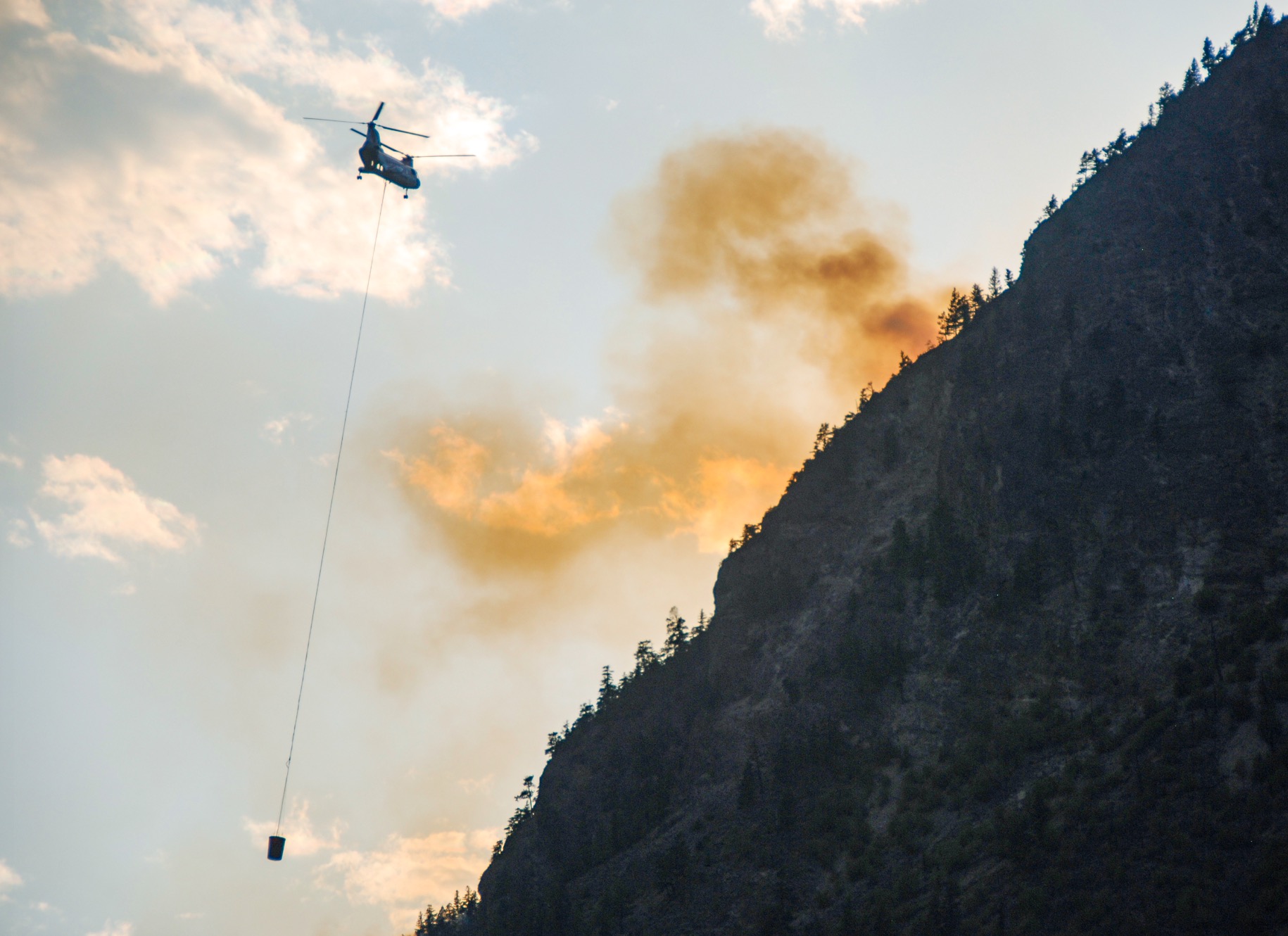
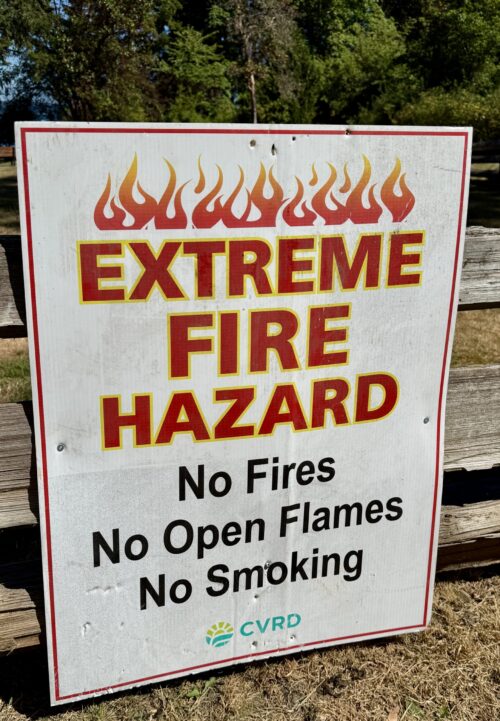 The number of active wildfires in British Columbia has leapt by more than a dozen following several days of hot, sunny weather. B.C. Wildfire Service (BCWS) figures Thursday morning show 81 active blazes, up from 68 on Wednesday, with 19 new starts and seven fires declared out over the past 24 hours. There are now 17 fires classified as burning out of control, up from four on Monday, including a cluster of new starts in the northwestern part of the Cariboo region. The wildfire service’s map also shows three new blazes detected Thursday in conservancy areas northwest of Whistler. BCWS says hot, dry conditions have left fuels across much of the province highly susceptible to ignition and spread. …The wildfire service says thunderstorms in the south are bringing a risk of lightning to the Coastal and southern Interior fire centres, and while those storms could help moderate temperatures slightly…
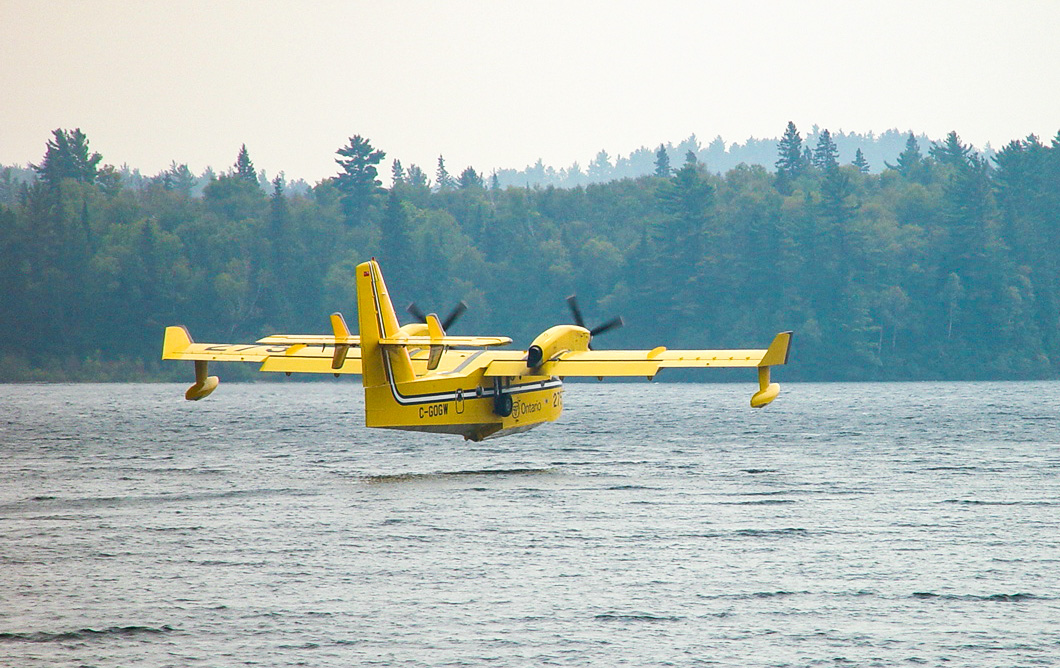 Three new wildfires were confirmed today in the Northeast Region, one is out and two are burning out of control, according to the latest report from Aviation, Forest Fire and Emergency Services. North Bay 14 is on the north side of French River, about 4.5 km south of Sandy Island on Lake Nipissing. This fire is 1.5 hectares and not under control. Haliburton 26 is 0.5 hectares and located on Coo-ee Island on Kahshe Lake. The fire is also not under control. Chapleau 14 was 0.1 hectares and located on the south side of Bunting Lake, approximately 2.6 kilometres west of Perth Lake, and 1.1 kilometres south of Nackawic Lake. It is out. There are six active fires in the Northeast region; one is under control, two are not under control, and three are being observed.
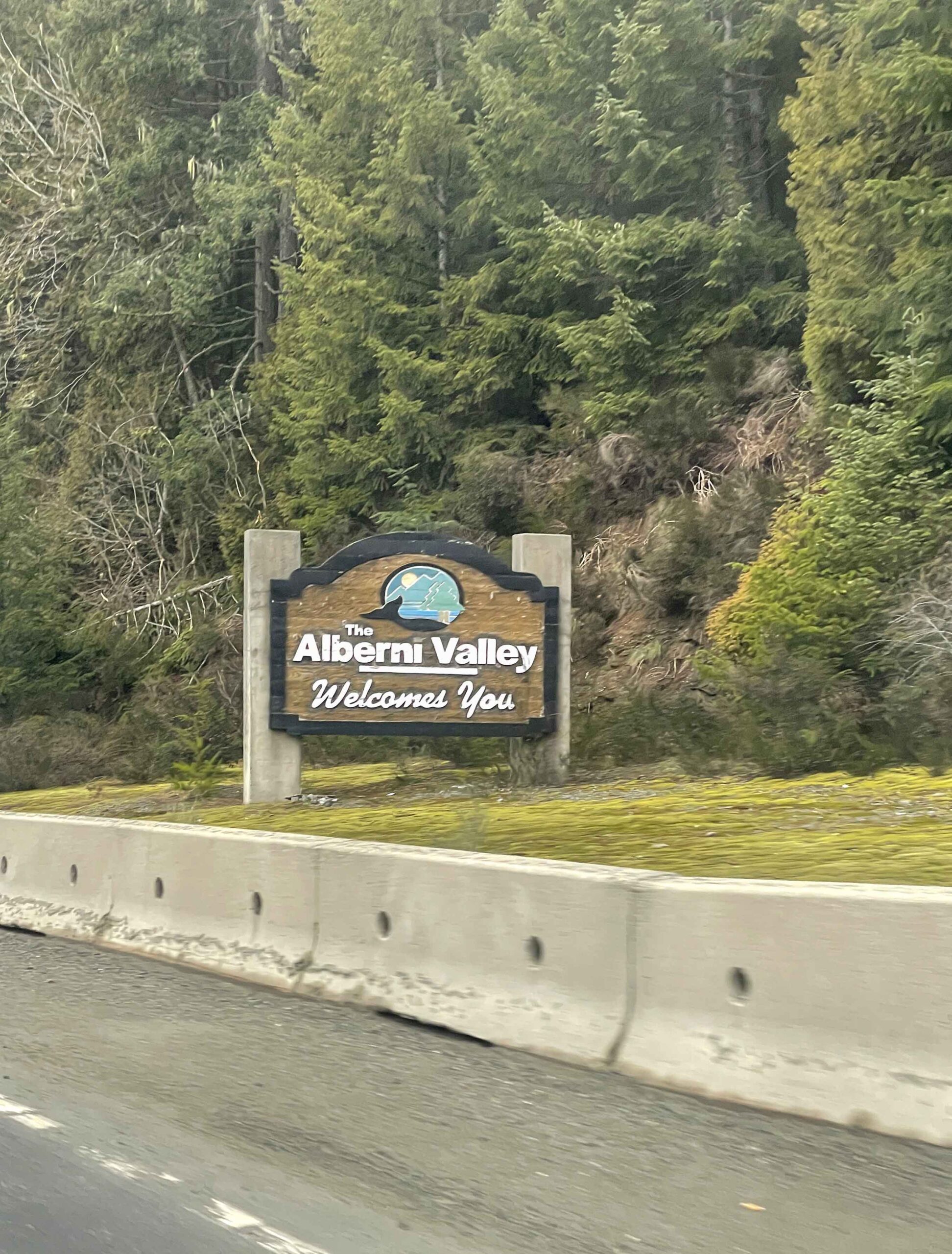 Sharie Minions told a news conference Tuesday that officials are working with the BC Wildfire Service to update two evacuation orders and three alerts that are in place due to the out-of-control Mount Underwood fire. The regional district’s chief administrative officer Daniel Sailland said about 50 permanent residents had to be evacuated along with approximately 150 campers and other visitors due to the fire, which was discovered Aug. 11. Fire information officer Karley Desrosiers said 160 personnel are working on the fire, which is not expected to grow beyond its current 36 square kilometres as the area warms up after several rainy days. “We have received considerable rain since Thursday, and more rain is expected today,” she said. “Going forward, we are expecting conditions to get a little bit warmer and a little bit drier and a bit windier as well. …The blaze has shut off power and the main road access to Bamfield since Aug. 11.
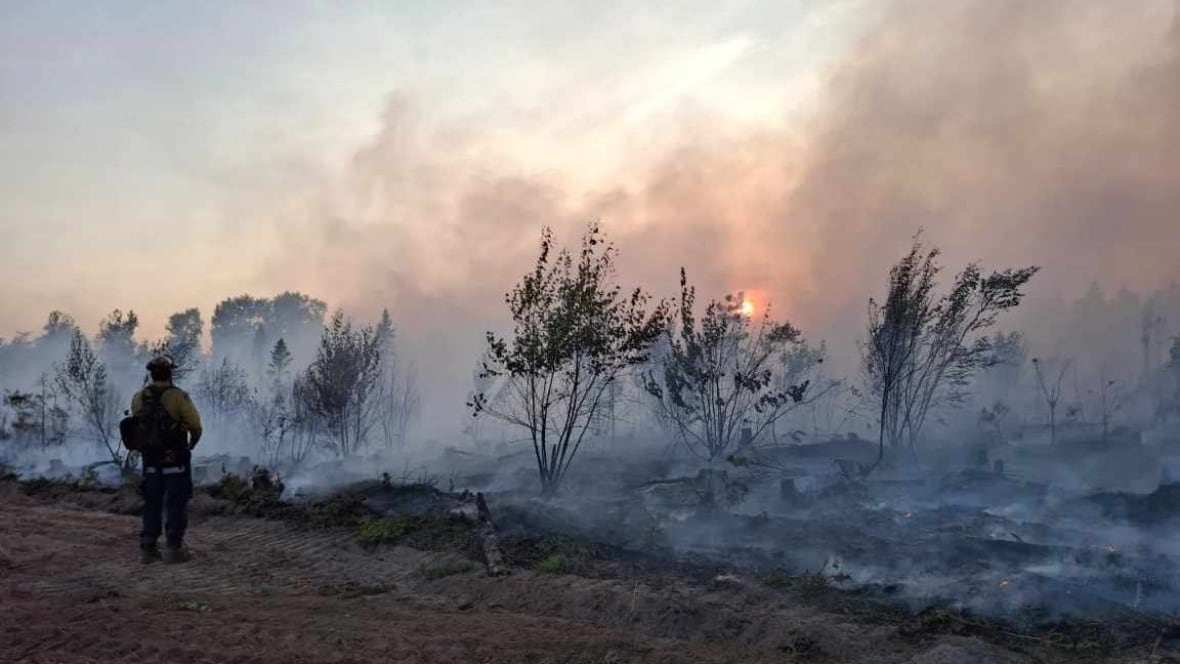
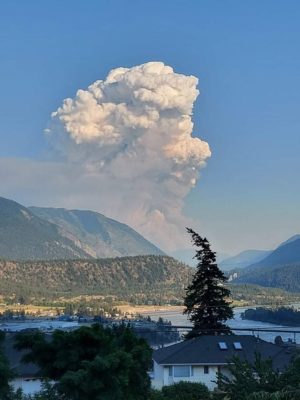 Hundreds of residents who were forced out of their homes by a wildfire burning near Cameron Lake on Vancouver Island are being allowed to return. The Regional District of Nanaimo (RDN) has posted an update removing 257 properties from its evacuation order, although residents remain on alert and must be ready to leave right away. The district said 37 properties in Little Qualicum River Village remain under evacuation order due to the six-square-kilometre wildfire that is now classified as being held. The B.C. Wildfire Service updated the status of the Wesley Ridge blaze, burning about 60 kilometres northwest of Nanaimo, saying it’s not expected to grow beyond its existing containment lines. An update from the wildfire service on Monday said the Wesley Ridge fire did not grow Sunday and was displaying mostly rank-one fire behaviour, a “smouldering ground fire with no open flame.”
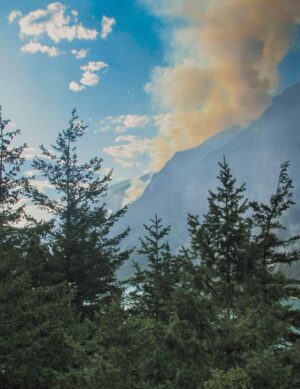 VICTORIA — BC Wildfire Service said an out-of-control wildfire burning on Vancouver Island near Cameron Lake could generate smoke for the “coming weeks, and potentially the coming months.” The warning appears in a video that BCWS posted Sunday as part of a larger update on the Wesley Ridge wildfire. “The public will be seeing smoke at the height of land here on Wesley Ridge for the coming weeks, and potentially, the coming months,” said operations sections chief Beau Michaud while seen standing on a temporary helicopter landing pad fashioned out of logs. But Michaud added that he does not expect the fire to impact Highway 4 connecting communities along the western shore of Vancouver Island with communities on the eastern shore.
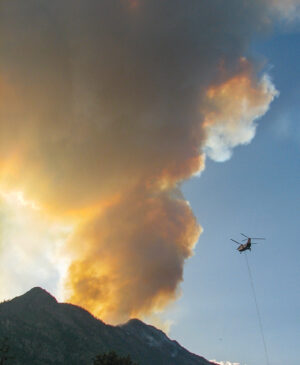 Forest Minister Ravi Parmar told reporters on Wednesday (Aug. 6) that in the past week, roughly 70,000 lightning strikes have hit B.C., leading to a “sudden increase” in fire activity. He also said that the B.C. Wildfire Service has largely been able to keep the fires from spreading. So far this season, more than 850 wildfires have sparked in B.C, but the province has kept 85 per cent of them smaller than four hectares, and only 120 were active on Aug. 6. As of Aug. 11 last year, there had been more than 1,300 fires, with almost 400 still active on that date. The only current “wildfire of note” is the Wesley Ridge fire on Vancouver Island. The fire is at Cameron Lake, between Parksville and Port Alberni, and is 530 hectares in size. Evacuation orders are in place for 400 homes, and 700 more are on evacuation alert.
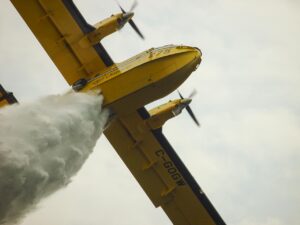
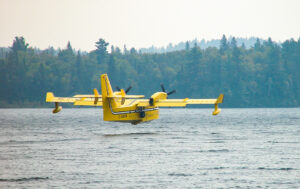
 The local service district of Lethbridge, N.L., is partially evacuated after a wildfire started in a bark pile and its adjacent forest outside Sexton Lumber late Sunday afternoon. The evacuation zone includes the areas of Oldford’s Hill to Southwest Bridge and Bayside Drive and Forest Drive, where the saw mill is located. Anthony Paddon Elementary in Musgravetown has been converted into a reception centre for impacted residents. In a social media post, the school announced that it will be closed to students on Monday, as it supports the efforts of emergency responders. The elementary school in Lethbridge, Hertiage Collegiate, is closed as well. In a social media post the school says more updates will be provided at 10:30 a.m. N.T. Route 233 remains impassible in both directions to all traffic. As of Sunday, three water bombers and ground crews were working the fire, and crews remained on the scene overnight to monitor conditions.
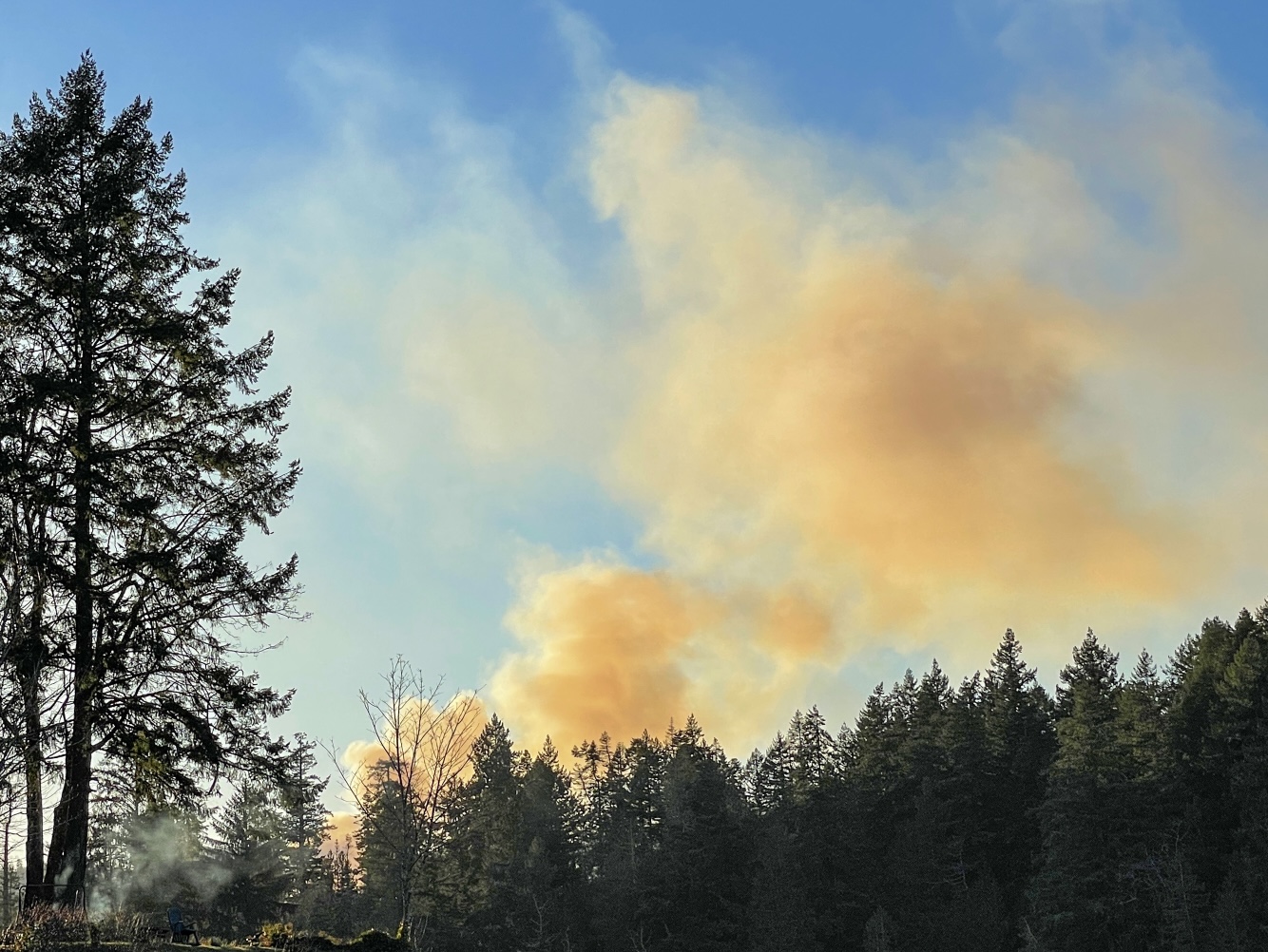 The Nova Scotia government has confirmed 20 homes were destroyed last weekend in the Annapolis County wildfire, which remains out of control and is estimated at 8,234 hectares — or more than 82 square kilometres. According to a news release on Thursday, the residences were destroyed Sunday on West Dalhousie and Thorne roads. Not all of the residences were primary structures. “Our hearts are broken for residents in the West Dalhousie community who’ve lost their homes,” Premier Tim Houston said in a news release. “It’s overwhelming to get that news, it will be a long road to recovery, and I know residents will find comfort through this strong, tight-knit community. The wildfire in the West Dalhousie area of Nova Scotia is still burning out of control and has destroyed 20 homes. The Long Lake fire, which started on Aug. 13, is estimated to be 8,234 hectares in size (or more than 82 square kilometres), as of 11:30 a.m.
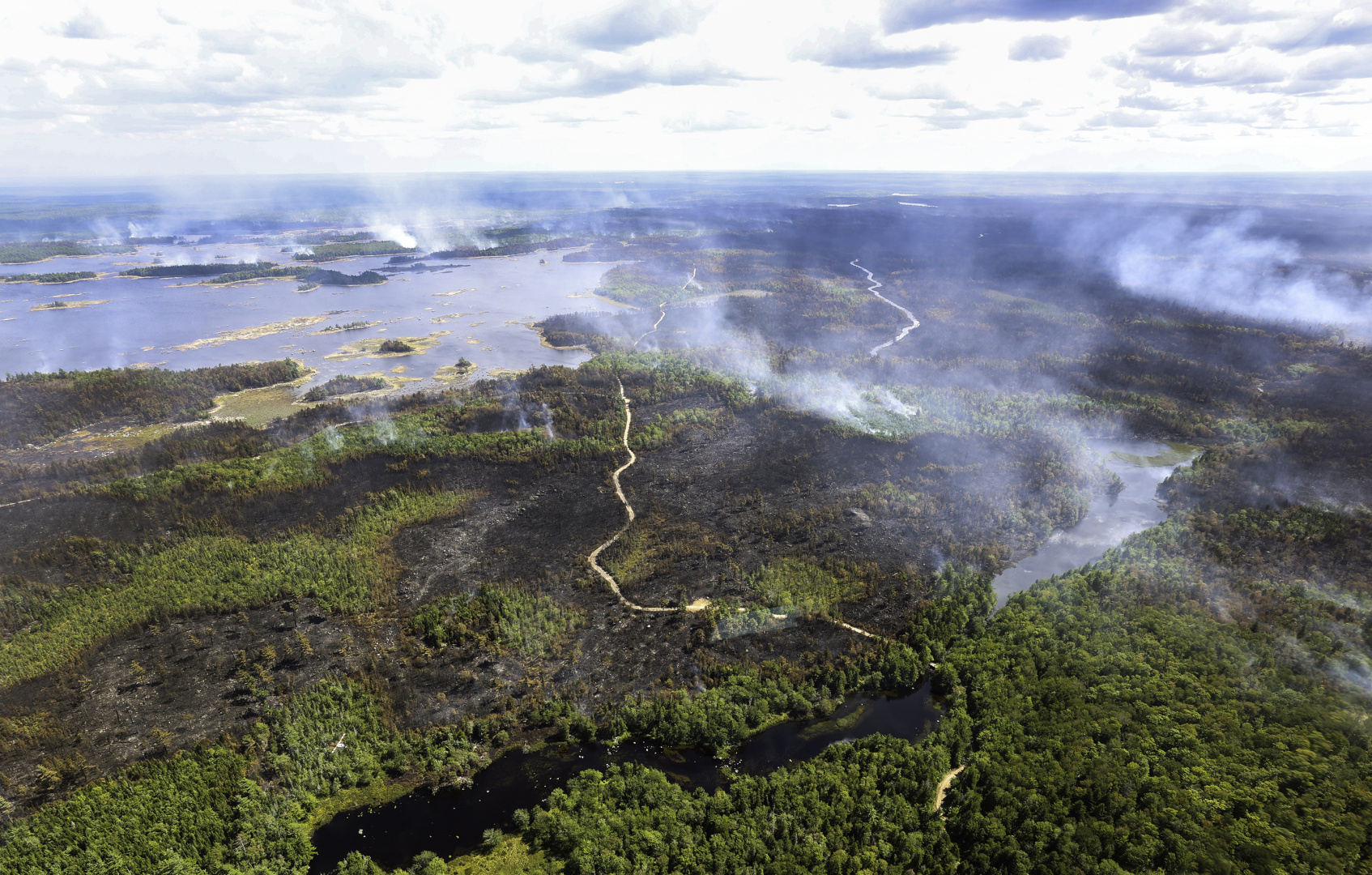

 New Brunswickers will be permitted once again to enter the province’s forests, following a bout of cool weather that has reduced the risk of wildfires, officials said Monday. Starting Tuesday at 12:01 a.m., the province will lift its ban on access to Crown land, parts of which have been scorched in recent weeks by wildfires triggered by drought-like conditions and lightning. “I would like to thank New Brunswickers for their co-operation, for changing their plans for protecting our forests and communities,” Premier Susan Holt said Monday. About two weeks ago, there were 39 active wildfires across the province, and temperatures were close to 40 C with the humidex, said Natural Resources Minister John Herron. But over the past couple of days, temperatures have fallen well into the “very low teens” at night, he said, adding that parts of New Brunswick got rain on Monday, which has helped in firefighting.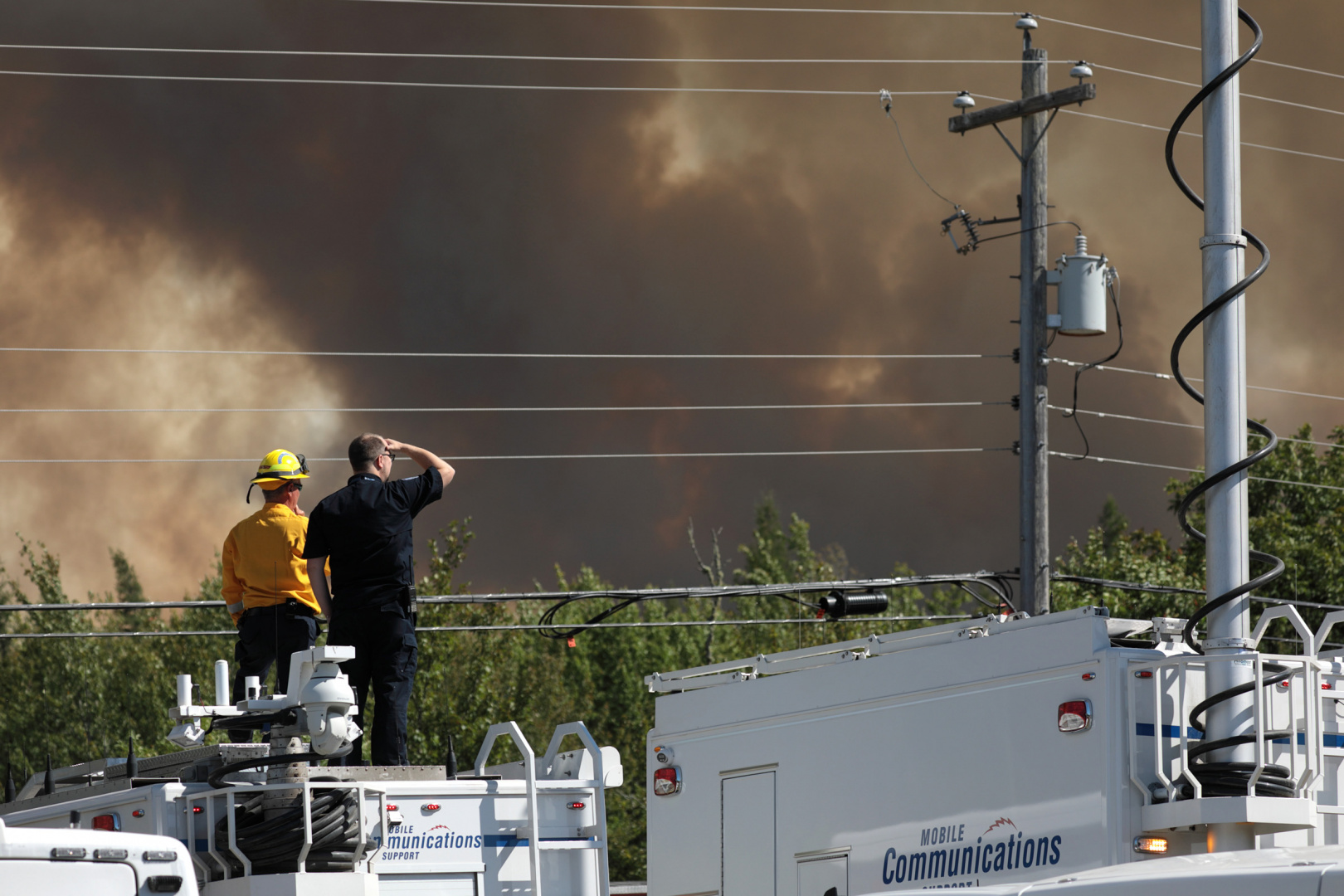





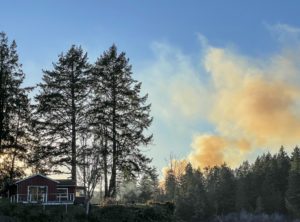 Officials in Nova Scotia say a wildfire in the western part of the province has grown and could force people out of their homes, while cooler temperatures and low winds have helped firefighters in Newfoundland and Labrador. The Long Lake wildfire is expected to grow, said Scott Tingley, manager of forest protection with Nova Scotia’s Natural Resources Department. On Sunday evening, the Nova Scotia Department of Natural Resources said the fire had almost doubled in size, growing from 11 square kilometres in the morning to nearly 20 square kilometres. It had spread past Godfrey Lake to the intersection of Fairns and West Dalhousie roads on one side and the south side of Spectacle Lakes on the other, it added. “These are not favourable firefighting conditions,” Tingley told reporters Sunday morning. “It’s very, very dry.” Two contracted helicopters were helping local firefighters along with crews from Prince Edward Island and Ontario, he said.
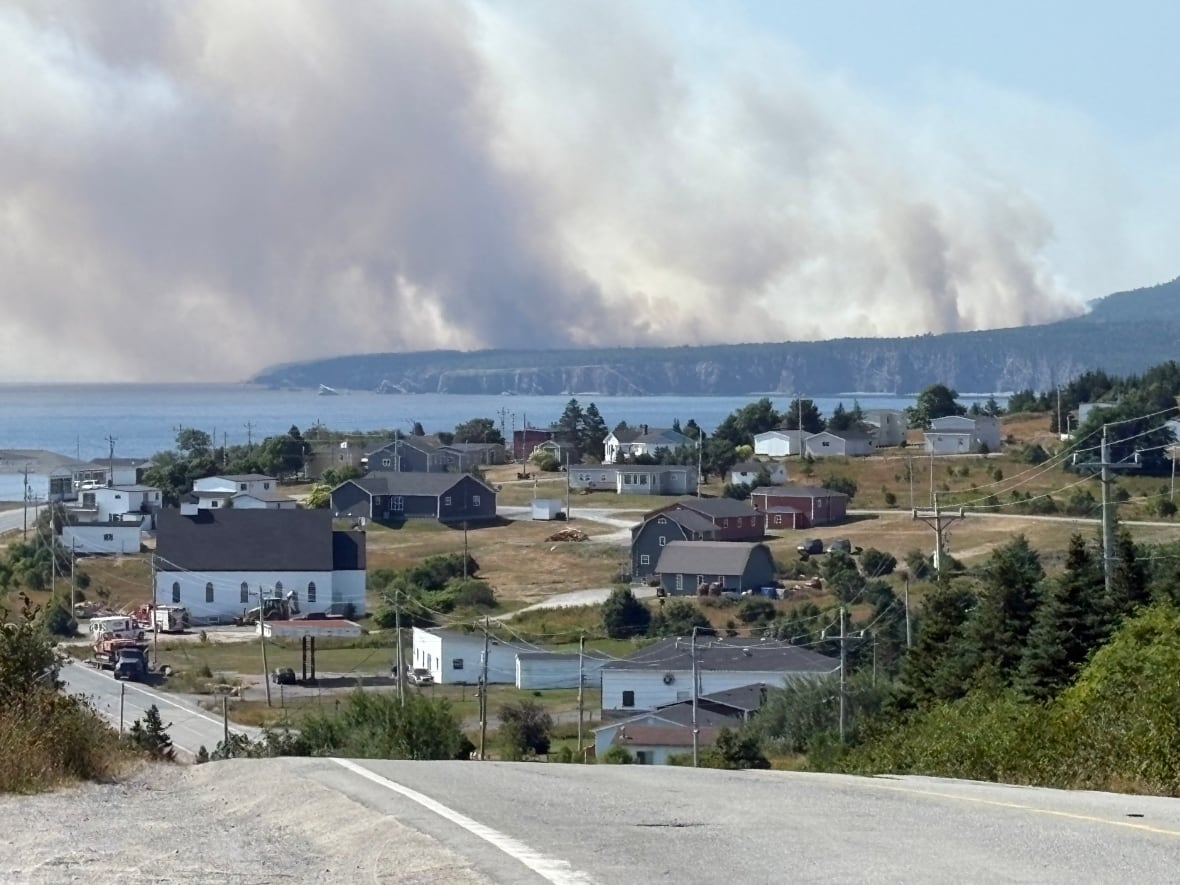
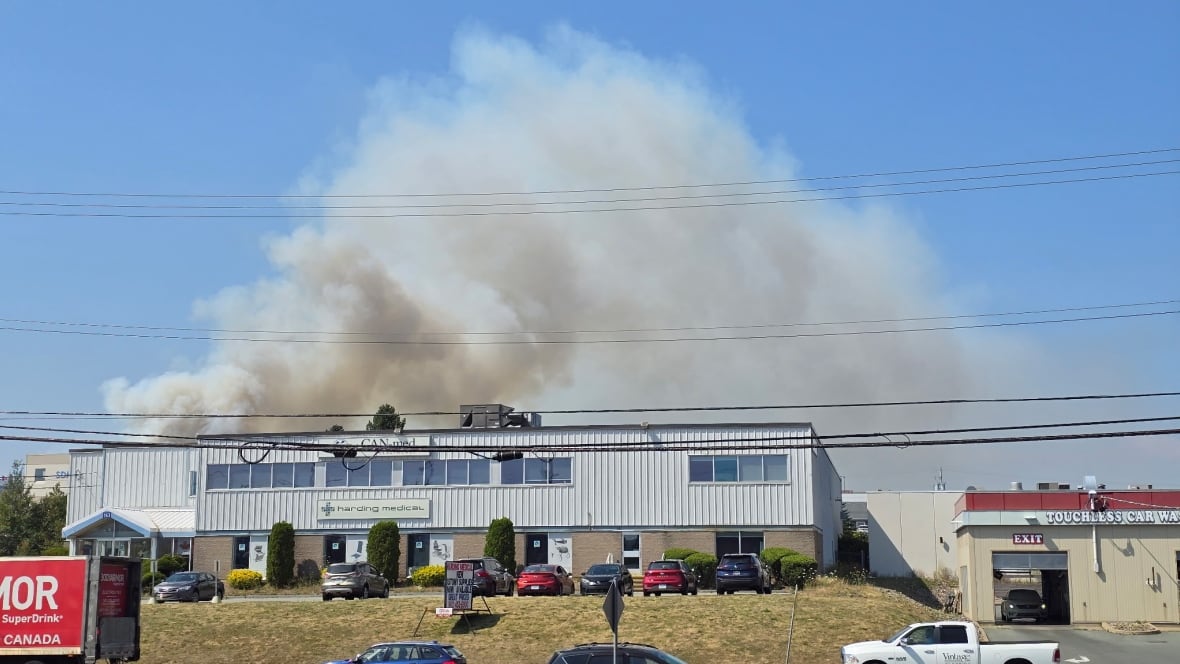
 NOVA SCOTIA –More than one hundred homes have been evacuated as an out of control wildfire near West Dalhousie in Annapolis County continues to burn Friday morning. The fire broke out Wednesday on the north side of Long Lake, about 20 kilometres east of Annapolis Royal, Nova Scotia. The provincial Department of Natural Resources has said a lightning strike caused the fire. …The national weather forecaster has issued an air quality statement for Annapolis County and parts of Halifax County, saying smoke from the wildfires is reducing air quality in the area, and that people who are more likely to be impacted by smoke — including pregnant people, infants and young children, people with chronic health conditions and people who work outdoors — should avoid strenuous outdoor activities.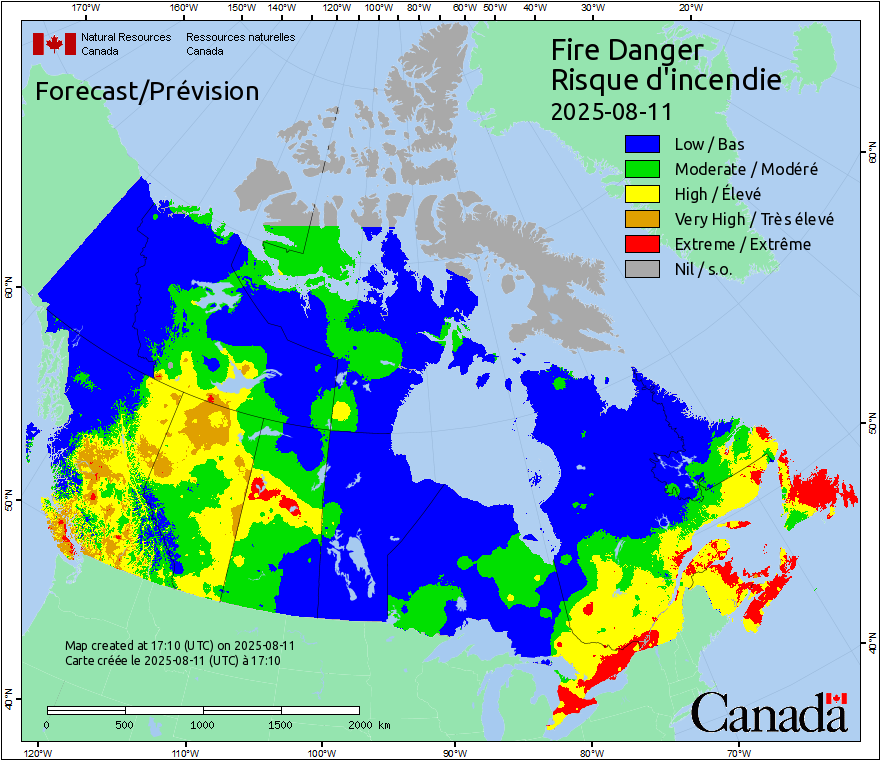


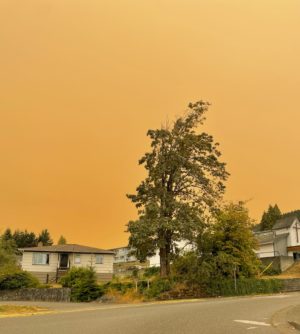 The air quality has finally improved after several days of wildfire smoke hanging over much of southern Quebec. Montreal, along with several other cities in the province, were dealt an air quality advisory starting Saturday and clearing up Monday evening. But this year, the smoke causing the poor air quality isn’t coming from within the province but rather from the fires raging in the Prairies. While Quebec is seeing a rather tame wildfire season, this year is still gearing up to be another intense season for other parts of Canada. So far, 2025 has seen wildfires consume 6.5 million hectares. Last year the number totalled 5.3 million, and in 2023 — Canada’s worst wildfire season on record — a little over 16 million hectares burned. “The thing that is quite exceptional right now is that we had three years in a row with very, very high fire activity in Canada,” said Boulanger. The three most active fire seasons since 1995 have been recorded between 2023 and 2025, he said.


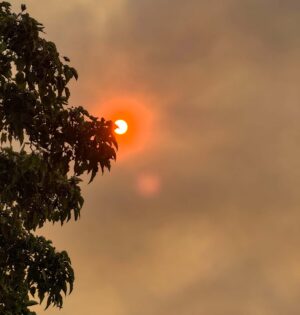 Border Patrol agents arrested two firefighters Wednesday – who they say were in the United States illegally – while they were working to contain Washington state’s biggest wildfire. …The Bear Gulch Fire on the peninsula has already torched almost 9,000 acres in the Olympic National Forest. …The human-caused wildfire on Washington’s Olympic Peninsula has been burning since July 6 and was just 13% contained as of Thursday. …Washington Gov. Bob Ferguson said he is “deeply concerned” about the arrests. Washington Sen. Patty Murray said, “Trump has undercut our wildland firefighting abilities in more ways than one—from decimating the Forest Service and pushing out thousands of critical support staff, to now apparently detaining firefighters on the job.” Under the Biden administration, the Department of Homeland Security said it would not conduct immigration enforcement “at locations where disaster and emergency response and relief is being provided” such as evacuation routes or areas where emergency supplies are being distributed.
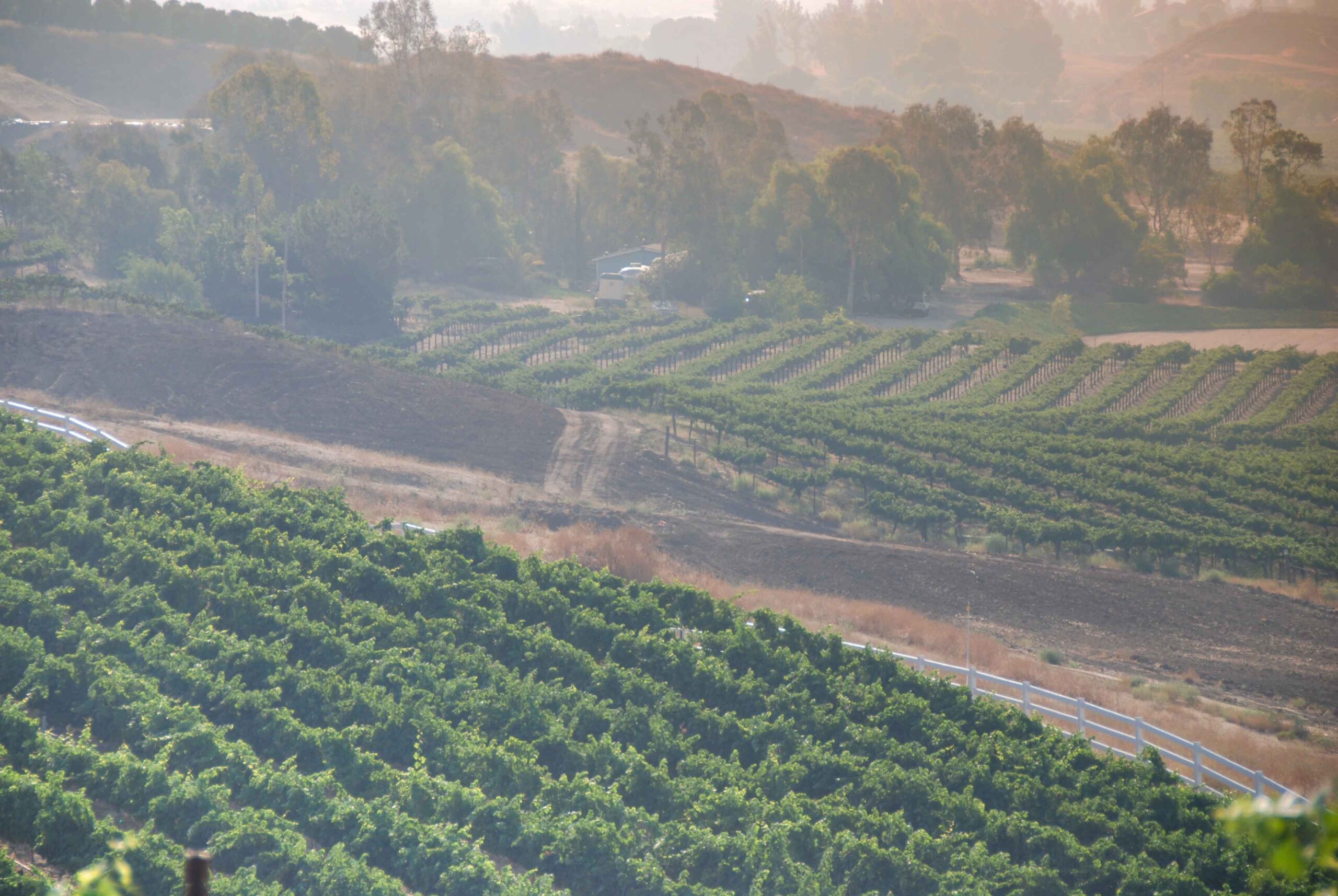 A wildfire that destroyed four homes in central Oregon was starting to stabilize on Monday, authorities said, while a blaze in Northern California wine country has so far spared some of the state’s most famous vineyards. Moisture helped the 1,200 firefighters battling Oregon’s Flat Fire, but more work needed to be done. Dry, hot weather had fueled a rapid expansion of the blaze across 34 square miles of rugged terrain in Deschutes and Jefferson counties since the fire began late Thursday. …Officials said firefighters had protective lines of some sort around the entire fire, including roads, but the fire remained at 5% containment. …Meanwhile, the Pickett Fire in Northern California has charred about 10 square miles of remote Napa County, known for its hundreds of wineries. It was 15% contained on Monday. …western United States have been sweltering in a heat wave … with temperatures hitting dangerous levels in Washington, Oregon, Southern California, Nevada and Arizona.


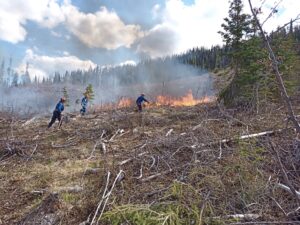 PAYSON, Arizona — Crews on the ground and in the air are making progress against the Washington Fire, which had burned an estimated 550 acres about 11 miles north of Payson. The lightning-caused blaze, which started Aug. 13, was 6% contained with nearly 500 personnel assigned as of Sunday. Firefighters are working to keep the fire boxed in between the Highline Trail to the south and Forest Road 300 to the north, while strengthening handlines and contingency lines around threatened communities and cabins. Officials say a combination of dozer work, hose lays, handlines and aerial water drops helped slow the spread and protect structures on the fire’s edge. …Dry, hot weather is expected to challenge suppression efforts in the days ahead, with firefighters also on alert for new starts. …Evacuation orders remain in place for Mountain Ridge Cabins, Washington Park and Shadow Rim Ranch.
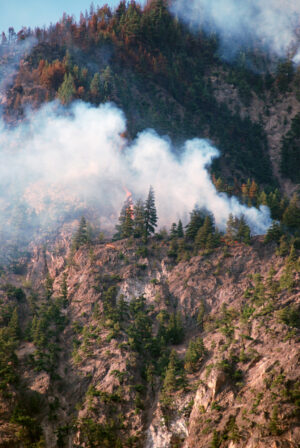 GORMAN, California —
  Fires, storms and the potential for near-record high temperatures across the western US are in the offing for the coming week. The Gifford Fire, about 125 miles northwest of Los Angeles, had burned 113,648 acres and was 21% contained through Saturday, according to Cal Fire. So far, 809 people have been evacuated and the Los Padres National Forest was closed because of the flames. There are 3,935 fire crews and support staff on the scene, and at least seven have been injured, according to a joint statement by Cal Fire, the US Forest Service and several local agencies. The Gifford blaze is the largest of 14 fires across the state. …Large wildfires in Colorado have also caused air quality to drop there, the U.S. National Weather Service said. …Meanwhile, smoke from forest fires in Canada has once again crossed into the US, causing air quality alerts to be posted in Minnesota and parts of Wisconsin.
 Spain has sent 500 more troops to fight raging wildfires, bringing the total deployed to 1,900, as the death toll from the blazes has risen to four. On Sunday, a firefighter died after an accident during firefighting efforts when his truck fell down a steep hill, the Castile and León regional government said. Spain’s Prime Minister Pedro Sanchez expressed “sadness” and “desolation” on X at the latest death. In neighbouring Portugal, where fires are also blazing, another firefighter was killed on Sunday in a “tragic” traffic accident, President Marcelo Rebelo de Sousa said. Fires have also broken out in Greece, France, Turkey and the Balkans as a heatwave has scorched swathes of southern Europe. Several large fires are still burning in the northwest and west of Spain, where 27,000 residents are currently evacuated from their homes.
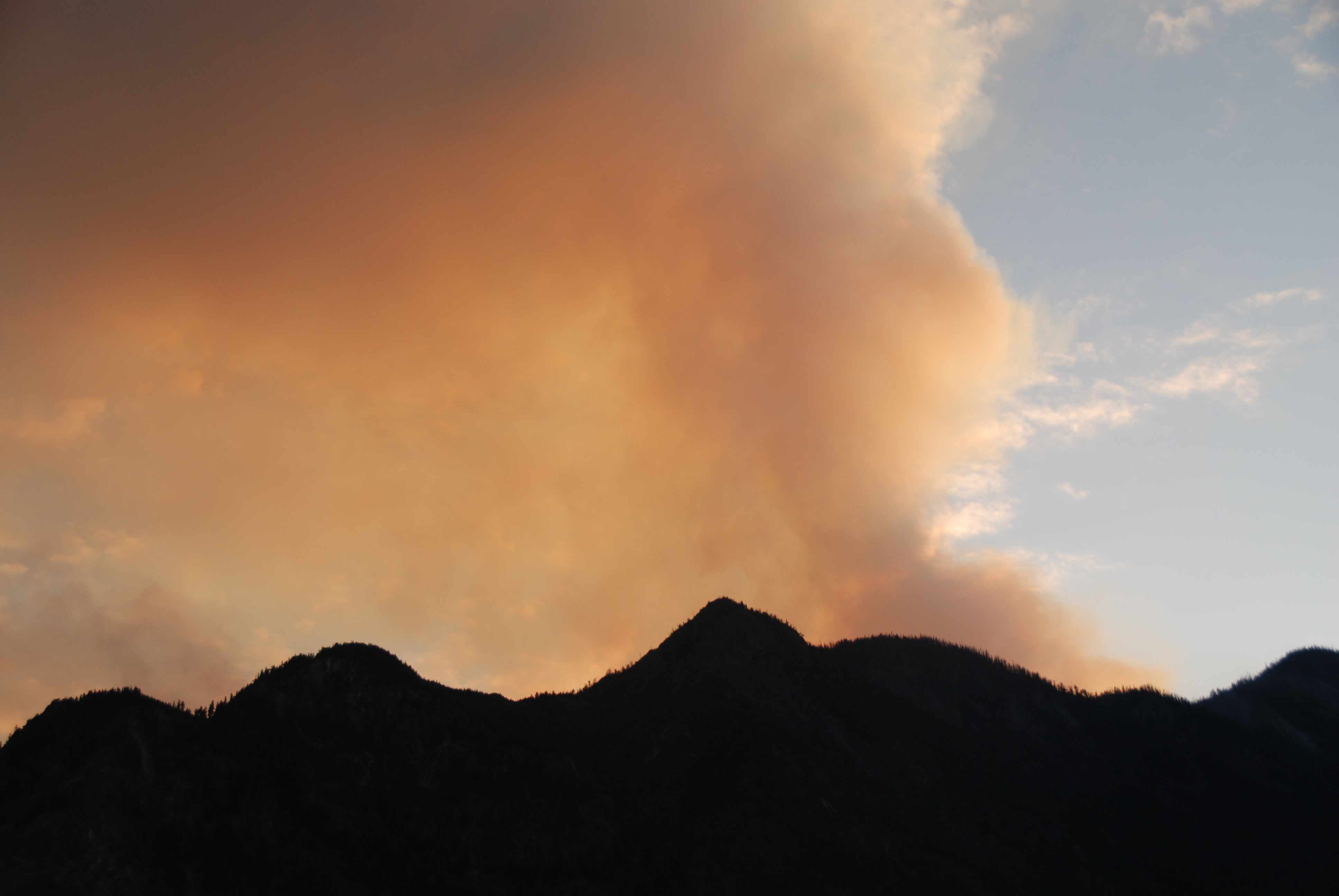 Spain is deploying a further 500 soldiers to battle wildfires that have torn through parched woodland during a prolonged spell of scorching weather, Prime Minister Pedro Sánchez said Sunday. The decision to add to the more than 1,400 troops already on wildfire duty came as authorities struggled to contain forest blazes, especially in the northwestern Galicia region, and awaited the arrival of promised aircraft reinforcements from other European countries. …Spanish national weather agency said on Saturday, the maximum temperature was 44.7 degrees Celsius in the southern city of Cordoba. …Portugal is set for cooler weather in coming days after a spate of severe woodland fires. …In Turkey, where recent wildfires have killed 19 people, parts of the historic region that includes memorials to World War I’s Gallipoli campaign were evacuated Sunday as blazes threatened homes in the country’s northwest. …Turkey has been struck by hundreds of fires since late June, with record-breaking temperatures.
 ATHENS — Wildfires intensified across southern Europe on Wednesday with a round-the-clock battle to protect the perimeter of Greece’s third-largest city and at least three deaths reported in Spain, Turkey and Albania. Outside the Greek port city of Patras, firefighters struggled to protect homes and agricultural facilities as flames tore through pine forests and olive groves. Tall columns of flames rose behind apartment blocks on the outskirts of the city. …Spanish Prime Minister Pedro Sánchez expressed condolences after the death of a firefighting volunteer in the hard-hit Castile and León region north of the capital, Madrid, where thousands have been displaced by evacuations. In Turkey, a forestry worker was killed Wednesday while responding to a wildfire in a southern region, officials said. The Forestry Ministry said the worker died in an accident involving a fire truck that left four others injured.
 At least three people have died in a scorching heatwave that is fuelling dozens of wildfires across parts of southern Europe, forcing thousands of people from their homes. Red heat alerts have been issued in parts of Italy, France, Spain, Portugal and the Balkans, warning of significant risks to health as temperatures push above 40C (104F). Spain’s weather service Aemet said temperatures could reach 44C (111.2F) in Seville and Cordoba, while southern Portugal could also hit 44C. In Spain, an equestrian centre employee died after suffering severe burns in Tres Cantos, near Madrid, where winds over 70km/h (43mph) drove flames near homes, forcing hundreds to flee. In Spain’s north-western region of Castile and Leon, almost 4,000 people were evacuated and more than 30 blazes were reported. Another 2,000 people were evacuated from hotels and homes near the tourist hotspot of Tarifa. …In neighbouring Portugal, firefighters battled three large wildfires.
 France’s biggest wildfire this summer was spreading quickly Wednesday in a Mediterranean region near the Spanish border after leaving one person dead, authorities said. The fire had burned an area larger than Paris. About 2,000 firefighters and several water bomber aircraft battled the blaze that broke out Tuesday afternoon in the village of Ribaute in the Aude region, a rural, wooded area that is home to wineries. The fire, which has burned 13,000 hectares (32,000 acres), remained ‘’very active” on Wednesday, the local administration said in a statement. The weather was hot, dry and windy, making it difficult for firefighters to contain the blaze. One person died in their home, and at least 13 others were injured, including 11 firefighters, local authorities said. One person who was initially described as missing has been located and is safe.