The 100 hectares that make up the Puntledge Forest have officially been protected, after a successful fundraising campaign over the past year by the Comox Valley Land Trust. The forest, which also encompasses mature trees, wetlands, trails and the Puntledge River, is a community favourite. The forest was at risk of being logged before the CVLT began acquiring it in 2023. Now, with the final 37 hectares acquired a release from CVLT says “this beloved place is protected forever.” …Since last summer, almost $500,000 was raised from 635 donors. During the same time CVLT was pursuing $1.5 million in grants from four agencies and foundations. BC Hydro’s Fish and Wildlife Compensation Program subsequently provided $400,000 to take the project over the finish line. The Government of Canada’s Natural Heritage Conservation Program – Land Trusts Conservation Fund provided $350,000, and the Sitka Foundation and an anonymous foundation each provided $200,000. The biggest single donor was BC Parks Foundation, which provided $700,000 in conjunction with the Wilson 5 Foundation.
 As Canadians face the growing threat of extreme weather events, high-intensity forest fires, and biodiversity loss, Forests Canada hosted The Forest Conference on February 19 and 20 in Mississauga, Ontario to bring experts from different fields together to talk about how we can conserve, restore, and grow Canada’s forests. During the conference, Forests Canada announced its annual award winners and would like to congratulate the award recipients.
 OTTAWA — The federal government has been ordered to reassess its 2022 approval of a popular weed-killer after a Federal Court judge ruled this week the original approval was unreasonable. Justice Russell Zinn gave Health Canada six months to reassess the health risks of glyphosate after the agency failed to show it considered new scientific evidence identifying new or elevated risks associated with the herbicide when it renewed the registration for a product containing it. …Monsanto, has faced multiple lawsuits in the US with multi-million-dollar awards to the plaintiffs, while others have been overturned. …The US Environmental Protection Agency reported in 2020 there were no risks to human health from current uses of the herbicide, but its assessment was overturned. …While the Federal Court’s ruling didn’t speak to the health risks of glyphosate, Zinn said Health Canada failed to show any evidence that it evaluated the new studies.
 In the February newsletter you’ll find these stories and more:
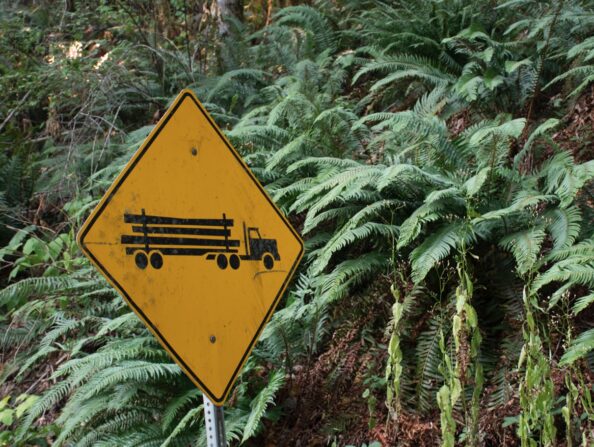 The province’s review of B.C. Timber Sales (BCTS) is based on a false contention the industry is running out of wood because of allowable annual cut reductions, says the Valhalla Wilderness Society (VWS). VWS said the Ministry’s review of BCTS to ensure the province’s forestry sector “is continually evolving to overcome challenges and create a guideline for a stronger, more resilient future” is barking up the wrong tree. VWS’ Anne Sherrod said the province’s intention to protect more old-growth and reform forestry in a more environmentally beneficial manner lasted only until the forest industry applied enough pressure. …Logging companies were already moving their mills and jobs out of B.C. long before U.S. President Donald Trump was elected, said Sherrod, and claims the province continues to reduce the allowable annual cut, or isn’t signing permits fast enough and environmentalists are depriving them of wood, are just excuses.
 VICTORIA – Workers and communities throughout B.C. are benefiting from Forest Enhancement Society of BC (FESBC) supported projects that reduce wildfire risk and increase fibre supply, keeping local mills and energy plants running in the face of U.S. tariff threats and unjustified softwood lumber duties. With $28 million from the Province, FESBC is supporting 43 new and expanded fibre-recovery projects and 31 new and expanded wildfire-mitigation projects. “In tough times, I want workers in our forest sector to know I’ve got their back,” said Ravi Parmar, Minister of Forests. “Whether it’s better utilizing existing sources of fibre or helping protect communities from wildfire, the projects are supporting workers and companies as they develop new and innovative forest practices.” Projects are taking place in all eight of the Province’s natural resource regions, helping create jobs, reducing wildfire risk and supporting B.C.’s pulp and biomass sector. They will be complete by the end of March 2025, in advance of wildfire season.
 The Tłı̨chǫ Government in the Northwest Territories signed

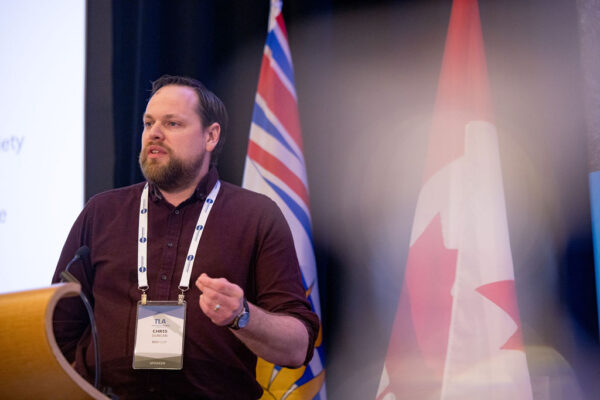
 Recently there has been discussion about upcoming forest harvesting plans on Tree Farm Licence 47 on Quadra Island. This area is within the unceded and core territory of the We Wai Kai Nation, who approves all forest management activities on the TFL. The Nation and Mosaic Forest Management have worked closely to develop a constructive relationship based on the recognition that as title holder, We Wai Kai has the right to ensure that resources on Quadra Island are being managed consistent with their conservation values and their right to benefit economically from resource extraction on their title lands. The Nation’s logging company, Way Key, is conducting all harvesting on the TFL on Quadra. Both We Wai Kai and Mosaic recognize there is interest in future harvesting activities. We also know that Islanders want a map that identifies where the old growth is (as part of a spatially explicit strategy) before harvesting occurs.
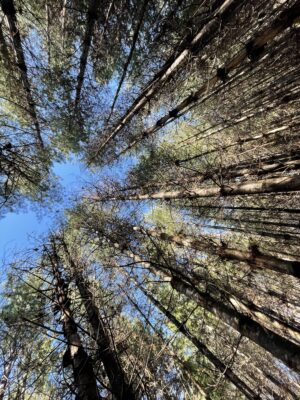 The Kaslo and District Community Forest Society (KDCFS) revisited previous board discussions about future logging plans needed to mitigate fires. During a Feb. 20 meeting, KDCFS members highlighted the demand for cedar and fir while highlighting that several blocks of hemlock trees have been damaged by past fires, rendering some unusable. The Briggs Creek fire that occurred in 2022 led to the destruction of many hemlock trees that will need to be harvested in the next two years before deteriorating. Society forester and treasurer Jeff Mattes explained that the society’s logging plans for the year 2025 will include utilizing a patch-cut system to reserve some of the trees. A patch-cut system refers to the removal of an entire stand of trees less than one hectare.
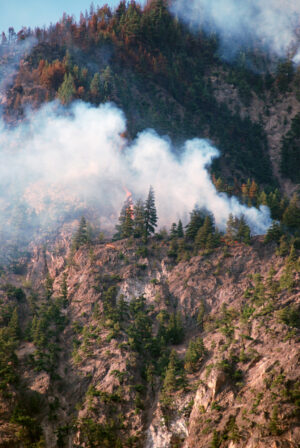 Devices used to detect and prevent wildfires in remote forests are expensive, but the one that Northeastern University student Anson He is making will be cheaper to launch on drones over dense woodlands. He is pursuing his master’s degree in computer science at Northeastern’s Vancouver campus. In January, he started a co-op at Bayes Studio — a Vancouver company that uses robotics and machine learning to make forest fire detection tools. He is helping to produce a device that uses less expensive components than others on the market. His role is core to the small company’s success: He is in charge of prototyping the hardware and coding the software for what Bayes calls its Edge device. Other team members work on integrating artificial intelligence into the device’s functionality and connecting the device to servers.
 YELLOWKNIFE, NT
 Bat species considered to be at risk seem to be in “relative abundance” on the east coast of Vancouver Island. Scott Wilson, wildlife research biologist with Environment and Climate Change Canada, gave a first look into data he’s been gathering during a presentation Feb. 20 hosted by Nanaimo and Area Land Trust and Nature Nanaimo. “I’ve worked on migratory birds most of my life and the bats a bit more recently, and we know so much less about bats in comparison to migratory birds,” said Wilson. “I’d say we’re where we were 30 years ago with birds in terms of understanding their habitat needs and their ecology.” …The data shows that in the Nanaimo area, wetlands were significantly preferred by the myotis species, with a relative abundance 6-10 times higher compared to non-wetlands. They were also preferred by the silver-haired hoary and big brown group, but less significantly, with the species also frequenting meadow bluffs.
 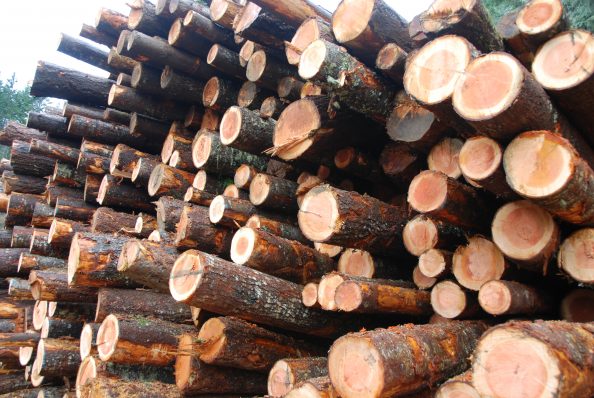 In 2019, the residents of Glade, B.C., learned they had no right to clean drinking water, after members of the Kootenay community waged a legal battle against forestry companies logging in their watershed. A judge sided with the timber companies, arguing that their economic interests outweighed the community’s concerns about its water supply. A similar story has emerged in Wynndel, B.C. — another town in the drought-stricken region — as residents worry about planned logging in their watershed, Duck Creek. Here, in the Kootenays, logging on both private and Crown land is pretty widespread. One resident told reporter Steph Kwetásel’wet Wood that forestry in the area has gotten out of hand, and lack of management on sustainable practices has turned the practice into “corporate slaughter.” …about five per cent (or 4.5 million hectares) of B.C.’s forests are privately owned, which means that the public has little insight, and even less say, into what happens.
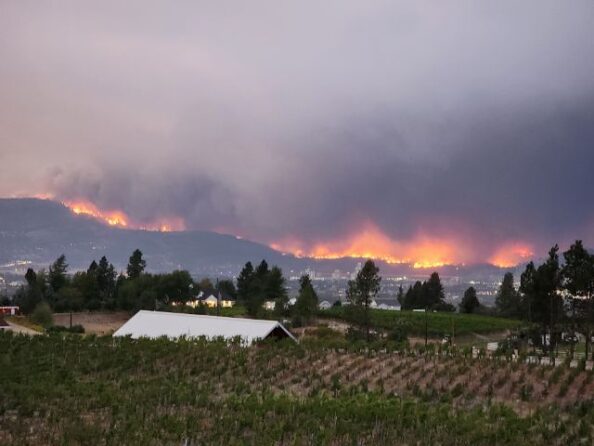 Kelowna, B.C. – A new documentary, B.C. is Burning, is tackling British Columbia’s wildfire crisis by exploring forest management solutions. The project was sparked in 2024 when Kelowna entrepreneur Rick Maddison, who lost his home in the 2003 Okanagan Mountain Park wildfire, came across an article by retired forester Murray Wilson about wildfire prevention. The two teamed up to create a film focused on solutions rather than devastation. “I’m hoping if these ideas in the film are adopted, more communities can be protected from this ongoing threat,” says Maddison. …The documentary features interviews with leading experts, including scientists, carbon specialists, and forestry professionals, providing a comprehensive look at the problem and potential solutions. “We’ve spoken with some of the leading people in the field,” says Wilson. “Their insights could change how we manage our forests—and how we protect our communities.” The team is hoping to raise $45,000 to finish production and distribution of their film.
 BC-based Interfor reaped an estimated $1.8 million in net profit from logging in old-growth areas that were meant to be preserved, a decision by the province’s Forest Appeals Commission says. The commission upheld the finding that Interfor committed eight contraventions of the Forest and Range Practices Act with the logging between 2012 and 2016 in the Arrow Lakes area of southeastern BC. …Interfor’s forest stewardship plan for the area stipulated that logging should not take place in old-growth management areas except in certain circumstances. It said Interfor’s site plans didn’t meet those requirements. Instead, it said the configuration of the cut blocks “indicates that the harvesting of (old-growth management areas) was a goal for Interfor, rather than confining such harvesting to exceptional circumstances,” as required by the stewardship plan. …Interfor acknowledged that its operations had involved logging old-growth management areas. But the company claimed it had complied with its forest stewardship plan.
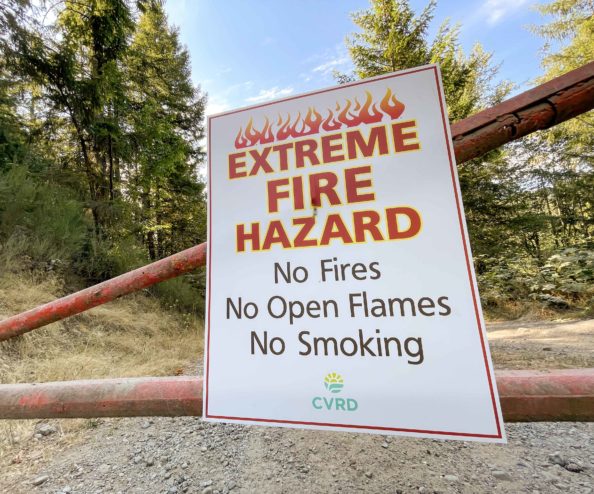 Big, dense forests full of highly flammable wildfire fuel surround Hope. But the town itself isn’t as doomed to fiery destruction as one might initially fear. While there is plenty of potential for wildfires in the area, a new report presented to Hope council says Hope itself benefits from several geographic features that keep the risk to homes and businesses to moderate levels. The wildfire risks facing Hope have been comprehensively catalogued in the community’s first wildfire resilience plan, a draft of which was presented to council earlier this month. The report warns that a severe wildfire could burn wide swaths of the forests surrounding the town. The forests are dense and full of coniferous trees that bake in hot, dry summer weather. In Hope, the highest risk areas are those that buttress the nearby woods.



 After a century of wildfire suppression across the West, it’s no secret that the approach to forest management has needed to change. And change is, and has been, underway. But newly proposed changes, now in the form of legislation that would let fuel mitigation projects, including logging, in high-risk zones like the forest surrounding Durango skirt the public input process have some environmental groups up in arms. The
 …More than 150 scientists and experts had collectively spent thousands of hours working on a draft report, a first-of-its-kind assessment of nature across the United States. But President Trump ended the effort, started under the Biden administration, by executive order. On Jan. 30, the project’s director, Phil Levin, sent an email telling team members that their work had been discontinued. But it wasn’t the only email he sent that day. “This work is too important to die,” Dr. Levin wrote in a separate email to the report’s authors, this one from his personal account. “The country needs what we are producing.” Now key experts who worked on the report, called the National Nature Assessment, are figuring out how to finish and publish it outside the government. …Rajat Panwar, a professor of responsible and sustainable business at Oregon State University who was leading the chapter on nature and the economy, was preparing slides to present his section when he got the news.
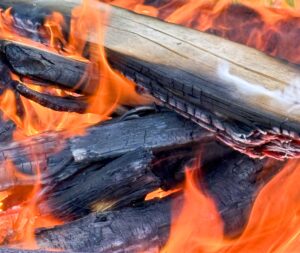 For over a century, the American environmental movement has been animated by an intuitive and simple idea: Protecting trees means leaving forests alone. This stance—championed by figures like John Muir—was based on the belief that any alteration, including thinning or intentional burning, of wilderness harms it. While this ideology helped prevent widespread destruction by timber companies, it also created unintended consequences. Research now shows that overgrown forests are fueling unnaturally severe wildfires, causing irreparable ecological damage and massive economic loss… A key issue remains limited funding. Budget cuts to state and federal land management agencies have reduced the resources available for proactive fire prevention… Insurance and legal concerns further complicate matters. While the need for improved wildfire mitigation is widely recognized, legislative gridlock, environmental regulations, and partisan divisions have slowed progress.
 Each spring, the U.S. Forest Service hires dozens of seasonal biologists to venture into remote Northwest forests on federal land and set up acoustic recorders to monitor for sounds indicating the presence of northern spotted owls, a threatened species. There are only as many as 5,000 northern spotted owls left in the Northwest… The counting is crucial for preventing the owls’ extinction. But President Donald Trump ordered a hiring freeze that means the Forest Service cannot hire more than 40 seasonal scientists to count the owls, according to Taal Levi, an associate professor at Oregon State University who works on owl monitoring. The monitoring typically involves about 60 scientists working from central California to Canada, Levi said. It also means the agency will likely go without dozens more scientists needed to monitor threatened and endangered salmon, frogs and other fragile species….
  …On Monday, the Ninth Circuit Court of Appeals upheld Missoula federal district judge Donald Molloy’s rulings on a few counts that will require the Kootenai National Forest to keep the Black Ram logging project on hold for a while longer. The appeals court upheld rulings on two of four claims that the U.S. Forest Service challenged, so the agency must redo parts of its project analysis. First, the justices agreed that the Forest Service failed to comply with Kootenai Forest Plan because the agency didn’t show whether or how it included unauthorized roads in its road density calculations. …Second, the justices agreed that the Forest Service didn’t take “a hard look,” as required by the National Environmental Policy Act, at unauthorized road use and its effects. The justices pointed at the agency’s unsupported claims of sporadic use of roads and prompt barrier repair as proof.
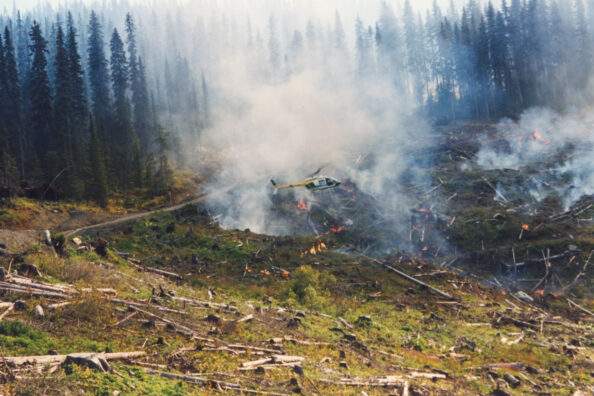 SEATTLE — The termination letters that ended the careers of thousands of U.S. Forest Service employees mean fewer people and less resources will be available to help prevent and fight wildfires, raising the specter of even more destructive blazes across the American West, fired workers and officials said. The Forest Service firings …are part of a wave of federal worker layoffs, as President Donald Trump’s cost-cutting measures reverberate nationwide. Workers who maintained trails, removed combustible debris from forests, supported firefighters and secured funds for wildfire mitigation say staffing cuts threaten public safety, especially in the West, where drier and hotter conditions linked to climate change have increased the intensity of wildfires. …U.S. Rep. Kim Schrier, a Washington state Democrat, said on the social platform X that the Forest Service layoffs are already hurting the state, “and it is only going to get worse. Fire season is coming.”
 Fewer wildfires occur in North American forests today than in past centuries, but this decline has increased the risk of more intense wildfires, according to a study published in Nature Communications. While it may seem unexpected, frequent low-intensity surface fires help maintain forest health by naturally reducing fuel buildup over large areas. Researchers from the Cooperative Institute for Research in Environmental Sciences at the University of Colorado Boulder and the U.S. Forest Service’s Rocky Mountain Research Station compared wildfire frequency across two periods: 1600 to 1880 and 1984 to 2022. Using data from 1,850 tree-ring records in historically burned areas, they assessed past fire activity and compared it with modern fire perimeter maps from Canada and the United States. The findings show modern-day fires are much less frequent than they were in past centuries, despite recent record-breaking fire years, such as 2020.
  PORTLAND, Ore. — An environmental nonprofit is sounding the alarm over the federal funding cuts and hiring freeze instituted by President Donald Trump’s administration, which it said could threaten the population of Oregon’s endangered spotted owl. The widespread layoffs and cuts instituted by the Trump administration have set off a series of protests across the country and around Portland, some of which have focused specifically on the thousands of U.S. National Parks and Forest Service workers who have been fired. The Northwest Forest Plan and the U.S. Bureau of Land Management (BLM) require the endangered owl population to be monitored, but the Center for Biological Diversity said in a news release that the federal freeze means the monitoring “either won’t occur or will be greatly reduced.”
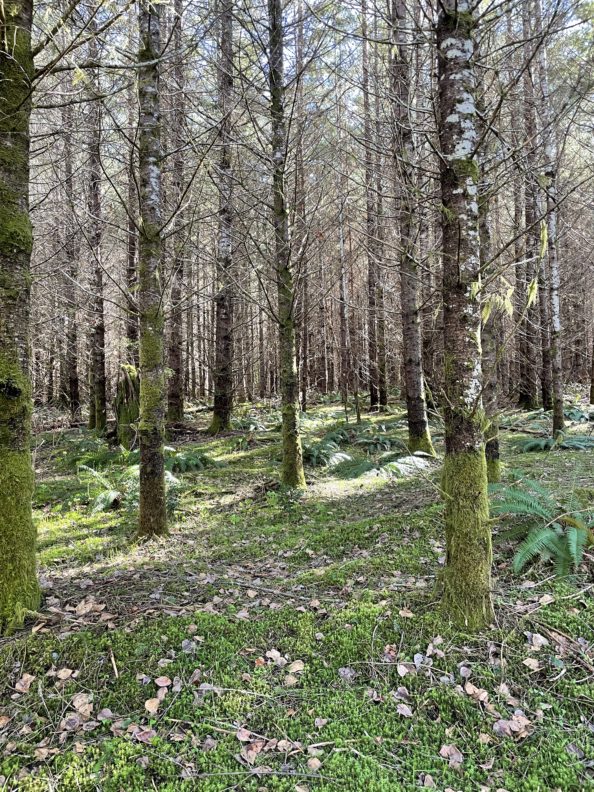 There’s no two ways about it: the U.S. Forest Service is at an impasse, seized by uncertainty like hardly ever before. In its quest for a supposedly leaner, more decentralized government, the Trump administration, led by DOGE chieftain Elon Musk, is taking an ax to the federal workforce. The Forest Service in particular is hemorrhaging manpower: it was reported on Friday that Trump had pink-slipped 3,400 workers. That is roughly one-tenth of USFS personnel. “These cuts are particularly impactful for the Northwest because we have vast expanses of national forest and public land,” says Rep. Kim Schrier. However much the PNW has to lose, this is no mere regional issue. It’s an affront to Mother Nature herself, Schrier says, because “we’re taking away people who do what we call ‘wildfire mitigation’: they do the work that thins the forests to prevent catastrophic wildfires. They do that year-round so we aren’t choking on smoke all summer.”
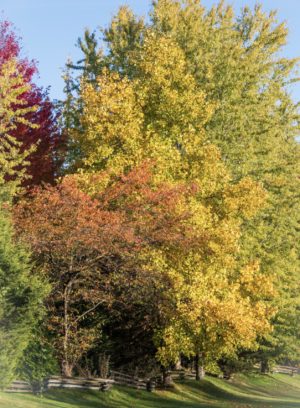 The US Department of Agriculture revoked a federal tree-planting grant to Keep Indianapolis Beautiful in a move the nonprofit’s CEO Kranowitz said may be the result of anti-DEI initiatives coming from the Trump Administration. The money would have helped KIB plant more trees throughout the city, and those plantings should not be all the same kind of tree, Kranowitz explained. The $400,000 grant for urban forestry projects was awarded to the organization in January through the Arbor Day Foundation, but was then clawed back on Tuesday. There’s growing evidence that words like “biodiversity” are being targeted by federal agencies bent on terminating Diversity, Equity and Inclusion initiatives across the country. U.S. Secretary of Agriculture Brooke Rollins recently cancelled a federal contract in Hawaii for an agency meeting on biodiversity and has identified and canceled other training programs on environmental justice claiming they run “contrary to the values of millions of American taxpayers.”
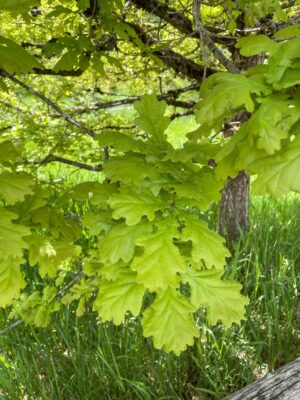
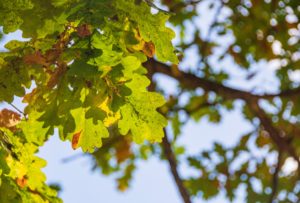 A group of scientists has been quietly working for decades on a project to improve tree genetics, with white oaks among the target species for the UT Tree Improvement Program. For those who are curious, genetics in organisms refers to the study of genes and how they are passed down from generation to generation. Genetics in trees, however, focuses on the study of genes within tree species and examines how their genetic makeup influences traits such as growth rate, wood quality, and resilience to environmental stresses. Scott Schlarbaum, a distinguished professor of forestry at UTIA, leads the UT Tree Improvement Program and is among the co-authors of the paper that describes the white oak genome and how local adaptations may have implications for the species in relation to heat and drought stress. Photo by A. Mains, courtesy UTIA.