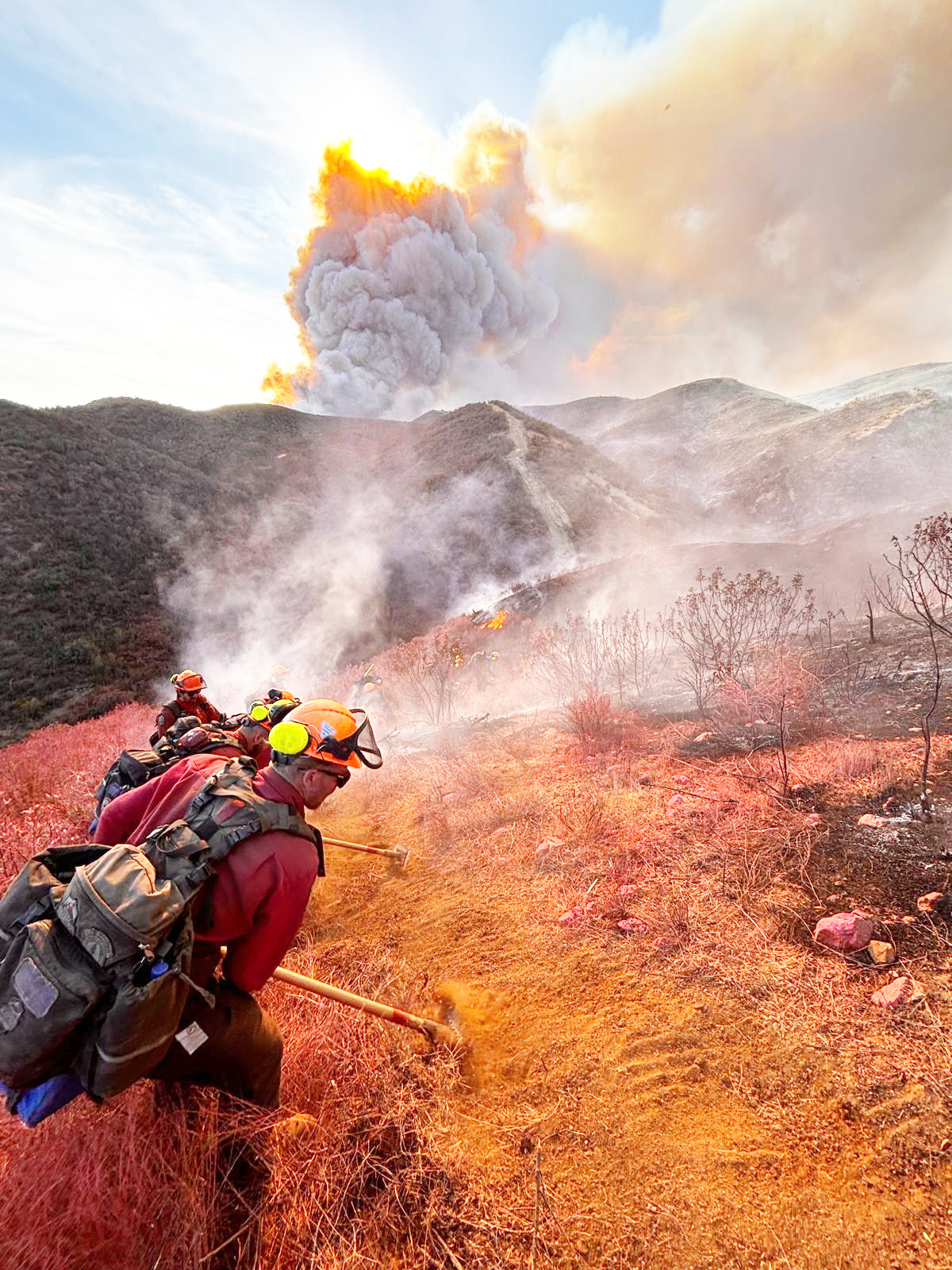
The wildfires that devastated parts of Los Angeles have left deep scars on one of the world’s most iconic cities. …the images of multimillion-dollar mansions and landmarks reduced to ashes serve as a sobering reminder: The ravages of climate change are indiscriminate and increasingly relentless …Tech billionaire Elon Musk, …has joined the far right in blaming the promotion of diversity, equity and inclusion (DEI) for the mass destruction by suggesting the Los Angeles Fire Department compromised its ability to fight the fires because it “prioritized DEI over saving homes” — a thinly veiled criticism levelled against the hiring of women and minorities. But that ignores the real issue — a $17.4-million budget cut that has severely constricted operations, even as demand for fire and emergency services has surged. Such pejorative remarks also serve to mask that up to 30 per cent of the crews fighting wildfires in California are made up of the state’s prison inmates.


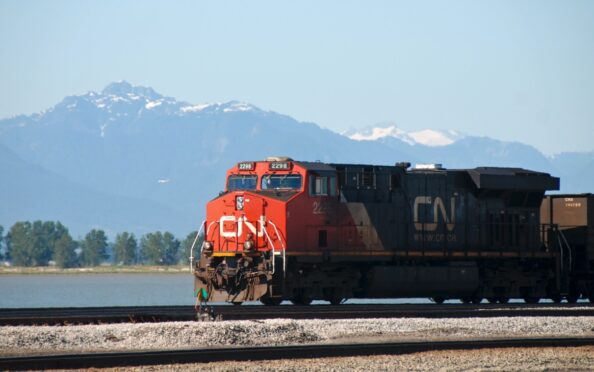 MONTREAL — CN and Tree Canada have awarded ten Canadian communities with $50,000 grants for tree planting and greening projects. These grants, totaling $500,000, are made possible through CN EcoConnexions – From the Ground Up program that invests in community greening projects along CN’s rail network across Canada. …CN has also funded 45 additional $10,000 grants through Tree Canada’s Community Tree Grants program, supporting municipalities in their efforts to expand and maintain urban forests. Through the From the Ground Up program, CN has helped municipalities enhance their natural environments, improve social well-being, and engage residents who value green spaces. …Together with mass reforestation projects, CN and Tree Canada, along with other partners, have planted over 2.4 million trees through EcoConnexions initiatives, with a goal of planting a total of 3 million trees by 2030. Tree Canada works closely with grant recipients to help ensure the long-term success of their greening projects.
 GRAND FORKS – The Forest Practices Board has finished a complaint investigation into Interfor Corporation’s logging practices north of Grand Forks. The complainant believed Interfor did not properly manage whitebark pine and caused environmental damage during site preparation for planting. The board found that Interfor planned and implemented special management practices for whitebark pine in the cutblock during its operations from late 2021 into early 2022. The investigation also determined that Interfor’s mounding activities – a technique that uses an excavator to scoop and pile soil to create raised planting spots for seedlings – did not cause environmental harm. “Interfor retained whitebark pine trees, avoided scarring them and preserved the species’ natural seed bank,” said Keith Atkinson, chair, Forest Practices Board. “Interfor also planted around 5,200 whitebark pine seedlings on the cutblock, incurring extra expenses to help maintain the species into the future.”



 Len Apedaile, RPF, is the general manager of Tiičma Forestry, a small market logger based up in Ka:’yu:’k’t’h’/Che:k’tles7et’h’ First Nations (KCFN) territory on Vancouver Island’s north coast. He thinks, if anything, the American tariffs scenario of 25% on all Canadian imports will give businesses the opportunity to re-evaluate how they fundamentally do things. …“This doesn’t happen overnight, but I think that you’ll see that this will spur on those efforts over time,” said Apedaile. …“We really don’t understand where these tariffs are coming from because they just don’t make sense for the Americans or us. …Tiičma Forestry operates in a high-cost area of Vancouver Island. The relatively new First Nations forestry company sells west coast old and second growth logs to a Terminal Forest Products sawmill on the mainland who exports primarily to the U.S.
 The BC government is providing Forest Professionals British Columbia (FPBC) with a $620,000 grant to improve and expand the use of registered forest professionals in managing BC’s forests for wildfire. “The increasing frequency and severity of wildfires has shown that we need to be more proactive in managing our forests and the forested lands near our communities to make them more resilient to wildfire and enhance public safety,” said Christine Gelowitz, RPF, Forest Professionals BC chief executive office. “Working in partnership with BC Wildfire Service, we will set robust practice standards in wildfire prevention, planning, and recovery, allowing forest professionals to better manage forests for wildfire and help reduce the risk to the public and the environment.” The funding will support the Wildland Fire Joint Panel Initiative, which includes Forest Professionals BC and the BC Wildfire Service.

 MONCTON, New Brunswick –
 Dear Premier Houston, On January 21st, you sent a letter to your caucus addressing potential actions your government could take in response to US President Trump’s threat of tariffs, later made available in the Chronicle Herald. We are extremely concerned with some of the content of your letter …as well as the disrespectful way you have described the interests of Nova Scotians and the environmental groups that represent them, referring to opposition voices to unsustainable resource extraction activities as “special interest” groups. …we are left wondering if your term “special interest” group refers only to organizations based in Halifax, or urban areas in general, or perhaps only to organizations led by scientists and other experts in environmental fields. In this case, where does Nature Nova Scotia fall? Our staff and board are rural Nova Scotians, some of us woodlot owners, and foresters, but we are also scientists, and we are certainly environmentalists.
 …More than 150 scientists and experts had collectively spent thousands of hours working on a draft report, a first-of-its-kind assessment of nature across the United States. But President Trump ended the effort, started under the Biden administration, by executive order. On Jan. 30, the project’s director, Phil Levin, sent an email telling team members that their work had been discontinued. But it wasn’t the only email he sent that day. “This work is too important to die,” Dr. Levin wrote in a separate email to the report’s authors, this one from his personal account. “The country needs what we are producing.” Now key experts who worked on the report, called the National Nature Assessment, are figuring out how to finish and publish it outside the government. …Rajat Panwar, a professor of responsible and sustainable business at Oregon State University who was leading the chapter on nature and the economy, was preparing slides to present his section when he got the news.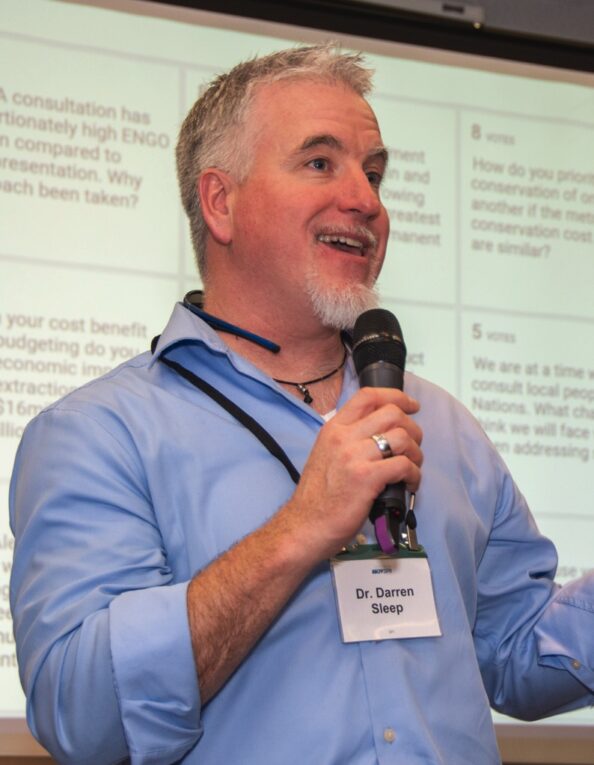
 WASHINGTON, D.C. – Senator Mike Lee (R-Utah), Chairman of the Senate Committee on Energy and Natural Resources, and Senator John Curtis (R-Utah) joined Representatives Mike Kennedy (R-Utah-03), Burgess Owens (R-Utah-04), Blake Moore (R-Utah-01), and Celeste Maloy (R-Utah-02), to introduce the Utah Wildfire Research Institute Act. This bill establishes a federal wildfire research institute at Utah State University to study wildfire ecology and develop innovative solutions to reduce wildfire risks. The institute will collaborate with local, state, and federal partners to improve forest and rangeland management and implement strategies for long-term ecological restoration. “Robust forest management strategies are essential to protecting Utah’s nearly 22 million acres of forests from catastrophic wildfires. The Utah Wildfire Research Institute Act will significantly enhance our state’s wildfire preparedness by bolstering the tools and resources available to proactively manage and protect our forests and communities,” said Chairman Lee.
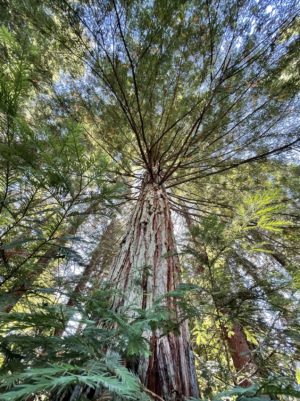 U.S. Senator Jon Ossoff is introducing a bipartisan bill to help grow Georgia’s forestry industry. Sen. Ossoff and Sen. Bill Cassidy, M.D. (R-LA) introduced the bipartisan Forest Data Modernization Act, which would modernize and improve the U.S. Forest Service’s Forest Inventory and Analysis program to ensure reliable data is available to inform forest management decision making. The bipartisan bill would require the Forest Service to prepare an updated strategic plan to expand data collection and further integrate advanced remote sensing technology. According to the forestry industry, the improvements would unlock new economic opportunities for foresters and better protect the environment. The companion bipartisan bill is being introduced by Representatives Kim Schrier (D-WA-08) and Barry Moore (R-AL-01) in the U.S. House of Representatives …“The Georgia Forestry Association (GFA) commends Senators Ossoff and Cassidy for their bipartisan leadership in re-introducing the Forest Data Modernization Act.
 Washington D.C.–The Sustainable Forestry Initiative (SFI) is proud to announce a groundbreaking new project to advance climate smart forestry practices across the United States, supported by a generous investment of over $800,000 from the Doris Duke Foundation. The project, Advancing Carbon Stewardship Practices for Large Landowners in the United States, will use a forest sector-focused approach to advance forest management and conservation activities to both enhance the carbon sink and reduce sources of emissions from forests. Forests … are experiencing increased frequency and severity of fire, drought, pest outbreaks, and disease—all of which negatively impact forest and community health, economic development, and resiliency while threatening our safety. “We are so thankful for this investment from the Doris Duke Foundation to leverage our network, scale, and the SFI Forest Management Standard, which includes progressive requirements on climate and fire,” said Kathy Abusow, President and CEO of SFI.
  A bipartisan group of senators introduced legislation Thursday that would create a new Wildfire Intelligence Agency, seeking to streamline the federal response to fires. The bill, led by Sens. Alex Padilla (D-Calif.), Tim Sheehy (R-Mont.), John Hickenlooper (D-Colo.) and Steve Daines (R-Mont.), came in the wake of recent blazes that decimated parts of Southern California, primarily in the Los Angeles region. “The scale of the wildfire crisis demands a singular, whole-of-government wildfire intelligence center to foster cross-agency collaboration and save lives,” Padilla wrote in a statement. The joint office would share information with the Department of Agriculture, the Department of Commerce and the Department of the Interior, according to the legislation. “Wildfires don’t care about state lines or forest service boundaries,” Hickenlooper said. “A centralized wildfire intelligence center will speed our response to fires and promote cross-agency collaboration to tackle them.”
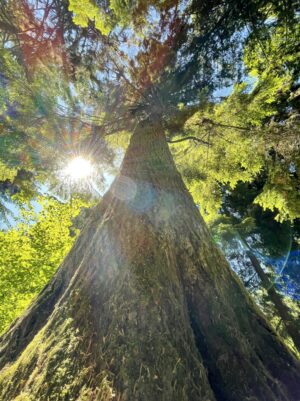 Another 29,800 acres of timberland just got conserved under easement as working forest, the third phase in Columbia Land Trust’s project of protecting about 75,000 acres, sold by SDS lumber company in 2021. Columbia Land Trust hopes to conserve almost everything except the mill itself, buying the most important 15,000 acres of habitat outright. They hope to put the other 60,000 under conservation easements. In this case, Washington’s Department of Natural Resources will hold some of the rights over the 29,800 acres of land. It can be sold, but never developed; it must always remain working forest. This is the trust’s biggest project to date… SDS Lumber was the last family-owned, vertically-integrated (meaning it owned and operated most stages of its own supply chain) timber company in this part of the Northwest.
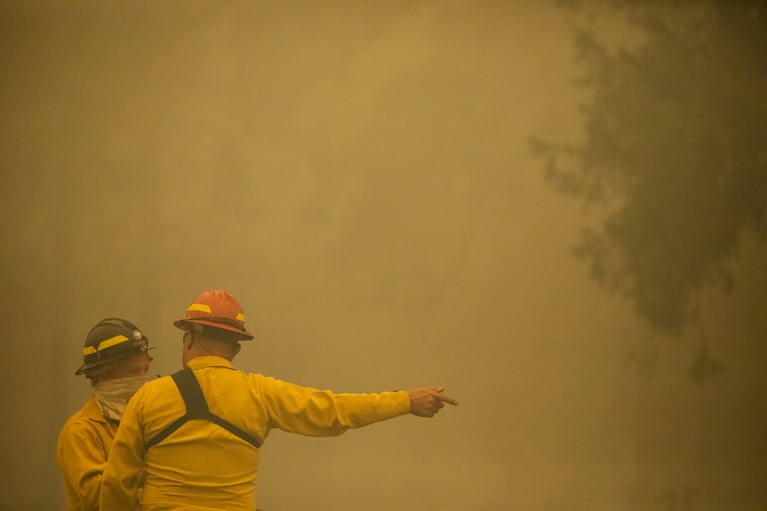
 WASHINGTON – A bipartisan group of lawmakers has introduced the Future Logging Careers Act, a bill aimed at allowing teenagers from logging families to gain early hands-on experience in the industry under parental supervision. The legislation, introduced by U.S. Senators Jim Risch (R-Idaho) and Angus King (I-Maine), along with U.S. Representatives Glenn “GT” Thompson (R-Pa.) and Jared Golden (D-Maine), would amend the Fair Labor Standards Act to permit 16- and 17-year-olds to work in certain mechanized logging operations. Similar exemptions currently exist for youth working in family-owned farms. Supporters of the bill, including the American Loggers Council and the Associated Logging Contractors of Idaho, argue that the measure would help sustain family-run logging businesses by allowing younger generations to gain experience before entering the workforce as adults. Industry representatives have pointed to labor shortages and the challenges of retaining workers as key reasons for the bill’s introduction.


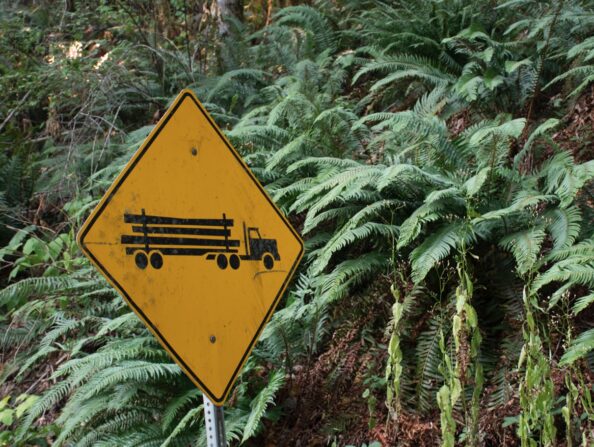 Alabama’s roads and bridges are already under immense strain, but two bills moving through the Legislature could accelerate their decline—adding 150 million dollars in maintenance costs annually, reducing highway lifespan by up to 30 percent, and forcing weight restrictions on hundreds of bridges. Senate Bill 110 and House Bill 204 would allow heavier log trucks to operate on Alabama highways while simultaneously limiting enforcement by requiring state troopers to escort overweight trucks to permanent platform scales—effectively halting roadside safety inspections for extended periods. Experts warn that these changes could have devastating consequences for infrastructure durability, public safety, and taxpayer-funded repairs. The push for heavier loads is being driven by logging and timber industry interests, which stand to benefit financially from relaxed restrictions. However, transportation and infrastructure experts warn that the cost to the public far outweighs any economic gain.
 Senator Mike Rounds has re-introduced a bill that would require National Forest superintendents to submit remediation plans if their timber production falls well below the allowable amounts laid out in forest plans. The remediation plans would be required to bring timber production in the respective forests back to at least 75% of their allowable amounts. Rounds says timber production in the Black Hills has far below its allowable 181,000 units. “Three years ago, we did about 80,000, the year before last we did about 60,000, and we’re down to about 59,000 units this year, and so the bottom line is not even a third of what we should be harvesting in the Black Hills is actually being done,” Rounds said. “But it also means some of those forests that could be more properly managed, based upon their own plan are not being harvested, the plan is not being followed,” Rounds said.


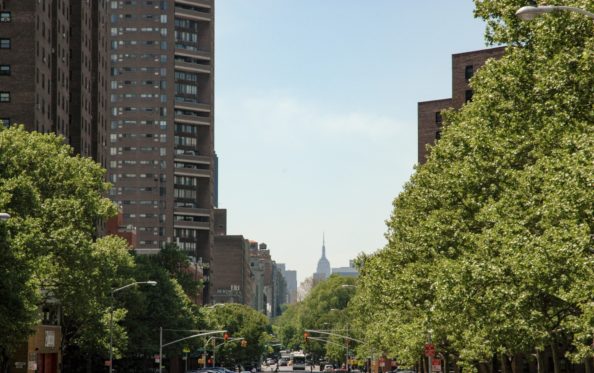 The State of New York last week announced the launch of two new interactive tools for recording and tracking the number of trees planted as part of a climate initiative to reach 25 million trees by 2033. Developed by the state’s Department of Environmental Conservation and its Office of Information Technology Services, the Tree Tracker allows state agencies and private organizations and individuals to report the number and location of trees planted, as well as planting dates, species and tree size. “New York is taking decisive action to protect our environment and strengthen communities’ ability to withstand severe weather,” Gov. Kathy Hochul said in the press release. “Our progress toward the 25 Million Tree goal is a testament to the power of community-driven action, and the new Tree Tracker will make it easier for New Yorkers to track our progress, share updates and contribute to a healthier environment for the future.”