 Mattawa, ON – The Canadian Institute of Forestry (CIF-IFC) is excited to announce that the 2026 National Conference and 118th Annual General Meeting will take place in Calgary, Alberta, from October 5-8, 2026. This landmark event, hosted in collaboration with the Society of American Foresters (SAF) and the CIF-IFC Rocky Mountain Section, will unite forestry professionals, practitioners, and students from across North America and beyond under the theme, “Leading from where we are for a brighter future.” The event will showcase the leaders of today and empower the leaders of tomorrow to begin acting now to make the world they want to see. …The Conference will serve as a platform to address pressing issues such as climate change, biodiversity, and sustainable forestry and natural resources management while highlighting innovative approaches to ensure a vibrant and resilient future for forests globally.
 How FSC is using Google Earth Engine to monitor forest degradation and support EUDR compliance: The Forest Stewardship Council is leveraging cutting-edge technology to better monitor and protect the world’s forests.

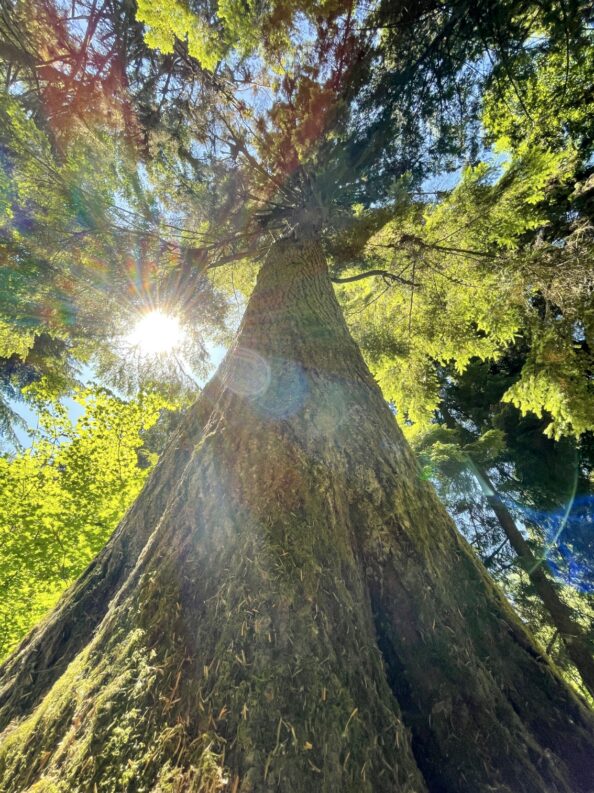 A new University of British Columbia study has pinpointed strategies to help local forests adapt to climate change. …the eight-year study found ways forest ecosystems can be better prepared for the climate threat, with a focus on mitigating the loss of the Douglas fir tree. …professor and co-author of the study Suzanne Simard, said the project looked at the process of relocating Douglas firs that are already adapted to dry, hot weather, further north. …Opting for a two-pronged approach, researchers also explored how various routes of harvesting and regenerating forests would affect the migrated seedlings’ attempt to grow in the face of climate change. Researchers tried various avenues, from clear-cutting to retaining larger densities of the tallest Douglas fir trees, said Simard.

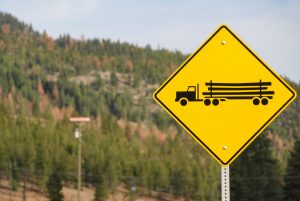 The B.C. government has tasked new Forest Minister Ravi Parmar with reviewing its lead timber agency, B.C. Timber Sales. The Jan. 15 news release announcing the review, and Premier David Eby’s mandate letter to Parmar, both downplay the environment in favour of the business side of forestry… There is no mention of watersheds, biodiversity, wildlife, and climate change in either the news release announcing the review or in the mandate letter, which mentions old growth once in passing. Asked why it is not mentioned in the above six reasons for the BCTS review, or in Eby’s mandate letter, Parmar said, “I’m fully committed to fulfilling my obligations on the old growth action plan. … Biodiversity, taking care of our lands, being good stewards of our land, is critical to me, and it’s going to be a huge part of this review.”
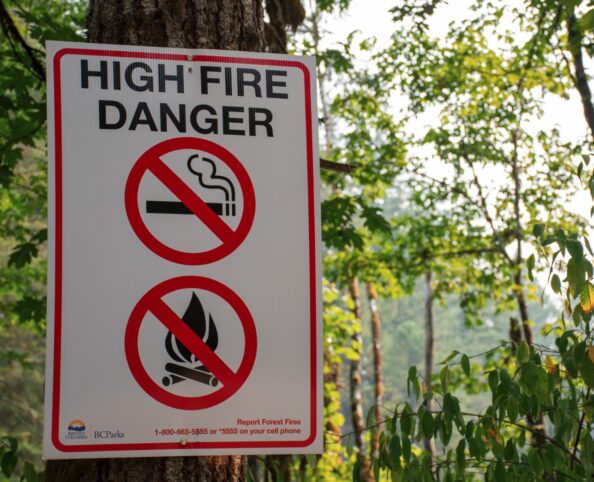 In British Columbia, wood remains the primary framing material, remarks Anthony Marks, who constructs fire resistant modular homes, but the fire resistant modular homes his company constructs are framed with steel. They also use wood sheathing coated with a fire retardant and fibrous cement board products for exterior cladding. …Anabela Bonada, manager and research associate at the University of Waterloo’s Intact Centre on Climate Adaptation says there are solutions at hand to reduce the risk of fire to homes — Canada just hasn’t demanded they be taken yet. …Canada’s National Building Code is geared toward protecting buildings and homes in cities and doesn’t refer to wildfires. …Most Canadian communities are lagging in responding to wildfire threats, Bonada said. …Referring to the National Research Council of Canada’s guide for wildland-urban interface fires, she said programs like

 Colorado wildlife officials say the capture of 15 grey wolves in British Columbia and their release in the U.S. state is complete, an operation they say led to unspecified threats against staff. The operation that began in B.C. on Jan. 10 and wrapped up on Saturday follows Colorado voters’ approval of a 2020 ballot initiative to reintroduce grey wolves to the state, where the animals are listed as endangered. But the program has stirred opposition, and a statement from Colorado Parks and Wildlife on Sunday says its staff have been threatened over the relocations. It says its officers were “watched” and were targeted by threatening phone calls and social media posts. The department says it did not share details while the wolf release was underway due to the “safety risk and security needs of our staff and the animals.” It adds that two of the 10 wolves reintroduced in Colorado in 2023 have been illegally shot.
 The provincial government is injecting cash into early-stage planning for a potential forestry project by Sḵwx̱wú7mesh Úxwumixw (Squamish Nation) and its economic development arm, Nch’Kay Development Corporation, it was announced last week. With $50,000 from the BC Manufacturing Jobs Fund, the Nation will conduct pre-construction engineering and site assessments to determine the potential for a future capital project… Though details of the project haven’t been finalized, it represents a larger push in the forestry sector to use resources more efficiently, shift away from old-growth timber reliance, and invest in high-value manufacturing. The BC Manufacturing Jobs Fund is partnering with forestry companies throughout the province to grow and stabilize their operations and get the most out of our fibre supply, while producing more made-in-B.C. engineered wood products.


 Rhonda Millikin, an award-winning ecologist who has questioned Whistler’s approach to wildfire mitigation, was issued a cease-and-desist letter last month from Forest Professionals British Columbia (FPBC), which said she is not certified to offer forestry advice. The FPBC said in its Dec. 14 letter that Millikin was unlawfully engaged in the reserved practice of professional forestry by providing advice and recommendations to the RMOW to limit or cease forest fuel-thinning efforts. “On principle, we don’t have an issue with people, whether a member of the public or someone from a different profession, researching or holding opinions or even talking about those opinions,” explained Casey Macaulay, the FPBC’s registrar and director of act compliance, who authored the cease-and-desist letter. “Where it’s an issue is when they start to advocate for a particular practice, and in this case, where that practice is so out of sync with the current science and the current practice of protecting communities from wildfires.”
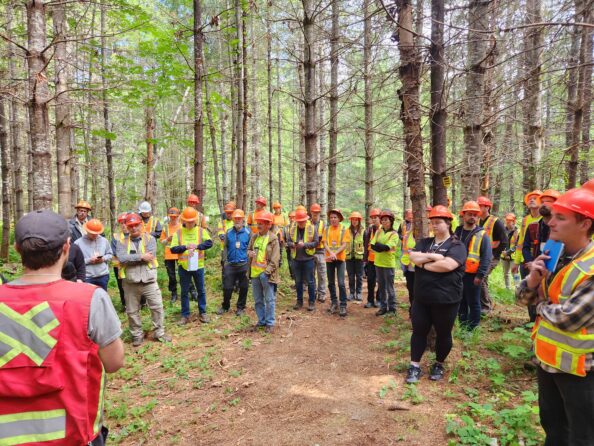 The Coast Silviculture Committee is an ad hoc organization of forest professionals whose prime objective is to disseminate current technical forest management and silvicultural information to all forest practitioners and the public in coastal British Columbia. Its membership includes corporate, government, and self-employed professional foresters and forest technologist, forestry educators, forest land owners, researchers, and tenure managers. Every year the CSC holds two meetings; a short, one or two day, information meeting in winter, and a slightly longer field based technical workshop in early to mid- June; summer meetings are held in a different part of the coast each year. All of the surplus funds from workshops go towards supporting development of silvicultural expertise in students at the post-secondary level through providing of awards. The Winter 2025 workshop is scheduled for February 19 at Vancouver Island University.
  A lumber producer in Thessalon, Ont. that has been active for more than seven decades quietly shuttered its operations late last month — resulting in the layoff of roughly 40 employees in the weeks leading up to its impending closure. Midway Lumber Mills Ltd. first notified employees of plans to shut down the mill and lay off its workforce in October of last year, the soon-to-be former chair of USW Local 8748 told SooToday on Monday. “We got nine weeks advance notice that it was going to happen,” said Derrick Bookman, who has worked in a number of roles at the mill over the years. “They went above and beyond.”

 President Donald Trump signed executive order aimed at boosting oil and gas drilling, mining and logging in Alaska. While state political leaders cheer, environmental groups see it as worrying. …”It means a timber industry in the Tongass National Forest can once again take place. It means Alaska can begin the process [of] finally getting its remain[ing] acreage of land from the federal government”, Republican Gov. Mike Dunleavy said on X about the executive orders. …It also aims to reverse restrictions on logging and road-building in a temperate rainforest. …Cooper Freeman, Alaska director at the Center for Biological Diversity, told The Associated Press that the president “just can’t wave a magic wand and make these things happen. Environmental laws and rules must be followed… We’re ready and looking forward to the fight of our lives to keep Alaska great, wild and abundant”.
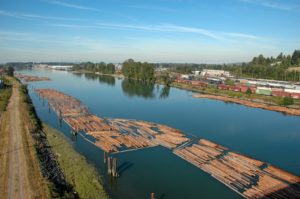 For the second time this decade, Weyerhaeuser Co.’s Longview lumber mill has been hit with a serious state fine for violating state stormwater control regulations. On Monday, the state Department of Ecology announced it has fined the company $145,000 for 36 stormwater discharge violations, 15 monitoring requirements violations, and 16 reporting requirement violations, all of which occurred between July 2022 and May 2024… “We believe strongly in permit compliance and invest significant time and resources to ensure we are meeting all environmental standards,” Weyerhaeuser Co. spokeswoman Mary Catherine McAleer said in an e-mailed statement Thursday. The latest penalty follows another related to stormwater that Ecology issued to Weyerhaeuser‘s Longview lumber mill in 2022, when the agency fined the facility $40,000 for repeated water quality violations.
 The
The 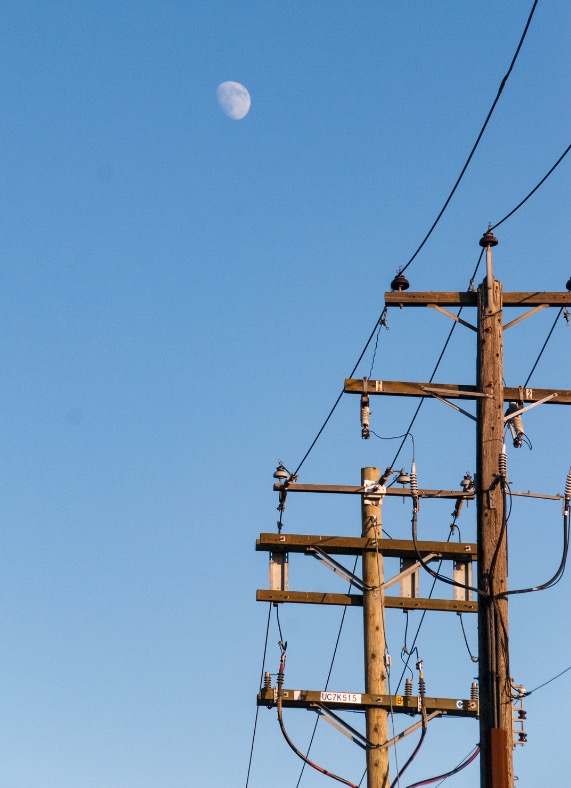 As California residents grapple for answers in the wake of a massive firestorm event in which two major blazes ravaged parts of Los Angeles — the Palisades Fire and the Eaton Fire —power lines are once again at the center of debate. It’s no wonder. Failed electric equipment and poor maintenance have caused horrific blazes in recent years, sometimes sparked by the smallest of parts, according to government investigators. …The 2023 fire in Maui that killed 102 people was caused by “reenergization” of broken power lines during high winds that showered sparks into dense, dry vegetation. …One key but often unpopular tool for preventing deadly wildfires is shutting off power when high winds of certain velocities are forecast. …Undergrounding power lines is the single best method to avoid dangerous arcing of overhead wires, or having dry palm frond hit one that can spark or spread fires. It’s also by far the most costly
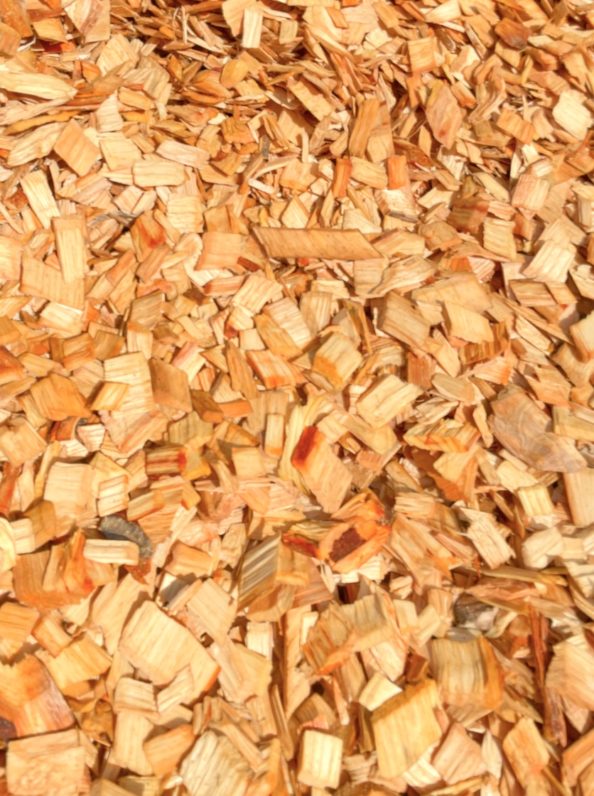 BATON ROUGE, La. — Louisiana produces 70% more forests than it is cutting down. The Forestry Association is trying to encourage industry to utilize those resources, including renewable fuel makers. The state has been working on reforestation closely since the 1940s when the issue of losing critical timber came to a head. With paper mills closing up shop over the years, Louisiana Forestry Association Executive Director Buck Vandersteen said the state is nearing a forest level that will be hard to manage against disease and wildfires. Vandersteen talked about four mills that are in the works of opening in some of the northern parishes in the state. Those companies harvest the larger trees for hardwood. Smaller brush and trees offer an opening for the biofuel industry to thrive. …With the Trump administration … undoing the push towards renewable energy, there is a question of how this will impact the industry in Louisiana.
 WASHINGTON – Today, U.S. Secretary of Commerce Gina Raimondo announced the Department’s Economic Development Administration (EDA) is investing $6.2 million in the state of Kansas to support forestry and construction industry workforce development. The EDA forestry investments announced today are: Kansas State University in Manhattan will receive a $3.2 million grant to bolster natural resource and wildfire risk management workforce development through construction of a modernized training facility. This EDA investment will be matched with $815,794 in local funds. …“The Biden-Harris Administration’s Investing in America agenda is growing jobs, building a sustainable workforce, and creating opportunities for workers across the country,” said Secretary of Commerce Gina Raimondo. “These EDA investments in Manhattan and Beloit will provide expanded forestry and construction workforce training programs so local workers get the skills they need for in-demand jobs, and the local economy grows.”
 Nearly half of the global boreal forests — spanning Canada, Alaska and Siberia — are undergoing major transitions due to climate change, making them increasingly vulnerable to forest fires and altering their role as a key carbon sink, a new study has revealed. These forests are vast and found in the cold, northern regions. However, they are warming four times faster than the global average and are expected to shift into a new ecological regime. This transformation could impact global climate regulation by triggering biome shifts and changes in tree cover dynamics, according to the study published in the journal