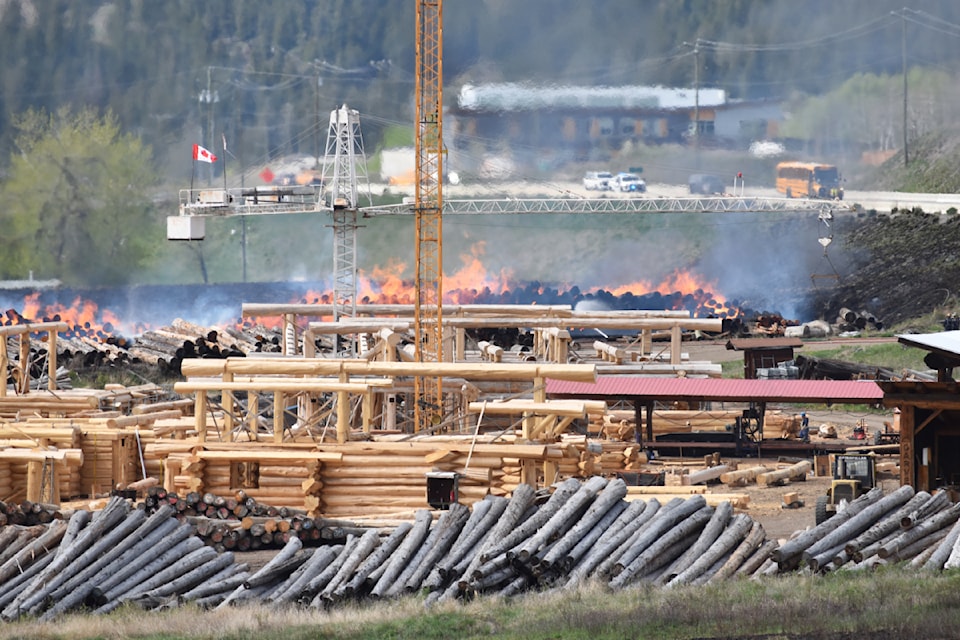
 A Trump—Carney meeting today could ease tariff tensions or deepen the divide. In related news: ERA’s Kevin Mason on the high cost of replacing Canadian lumber; DHA’s Keith Christman speaks to decorative hardwood impacts; Mark Carney looks to prefabricated homes to address housing shortage; and lumber prices ease as futures hit yearly lows. Meanwhile: Georgia-Pacific is closing its Emporia, Virginia plywood mill; International Paper breaks ground at its Waterloo, Iowa packaging facility; a log yard fire at BC’s Pioneer Log Homes; and Boise Cascade reports Q1 net income of $40M.
In Forestry news: Trump’s budget proposal points to deep cuts to forest lands; Alaska and New Hampshire seek to boost forest conservation; new research on forest recovery challenges after severe fire; a new study on boreal forests at the UN Forum on Forests; New Zealand on track to ban full farm-to-forest conversions; and the latest news from FSC Canada.
Finally, meet the professionals at BCIT’s industry-driven Wood Processing Program.
Kelly McCloskey, Tree Frog News Editor
 Professionals working in the lumber and sawmill sector and looking to advance their careers can gain specialized training through BCIT’s Associate Certificate in Industrial Wood Processing, starting June 2025. The IWP program was developed with industry subject matter experts and informed by industry leaders to support upskilling and professional development within the sector. The program is 1-year, delivered online and part-time to allow students to balance work and studies.


 Lumber futures fell below $550 per thousand board feet, hovering at yearly lows as excess supply from winter restocking collided added to a decline in demand. A 14.2% drop in U.S. single-family housing starts to an annualized 940,000 units in March, pushed new-home inventories to nearly eight months of supply. While a federal directive to raise timber production from public lands by 25% may ease constraints in the long term, the 90-day pause on new reciprocal tariffs has removed near-term urgency for buyers to cover import risks. At the same time, expectations of sharply higher anti-dumping duties on Canadian lumber have prompted mills to hold back supply, further pressuring prices as domestic inventories accumulate and demand remains subdued despite the onset of the spring building season.
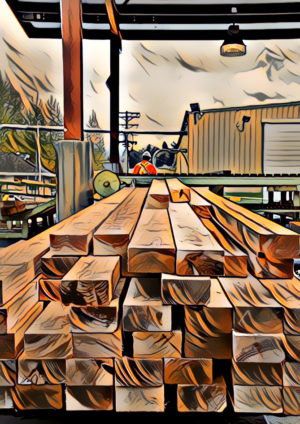 Uncertainty over international trade barriers has caused significant fluctuations in lumber prices in recent months, according to Keta Kosman, publisher of Madison’s Lumber Reporter. “The whipsaw fatigue of conflicting tariff announcements over two months had Western Canadian suppliers hoping to see the market settle down,” Kosman. …Some stakeholders held off on buying lumber altogether, while others ordered early in hopes of securing delivery ahead of any potential trade restrictions. “Others decidedly switched their purchasing to Southern Yellow Pine from SPF,” Kosman says. …Data from the WWPA indicates US sawmills were running at only 67% of full capacity in January, compared to 72% for the full-year 2024. In Canada, sawmill utilization was 74% of capacity, down just one percentage point compared to the previous year. …“At this time, there is significant lumber supply able to come back online at existing facilities should demand improve into the summer.”
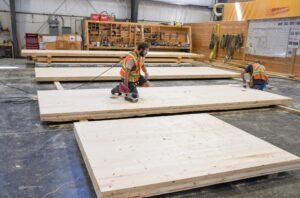 Prime Minister Carney has pledged billions of dollars in financing for makers of prefabricated homes to help end the country’s housing shortage. Experts say the plan is visionary – and laden with risks. Mr. Carney has promised to provide $25-billion in loans and $1-billion in equity financing for companies that largely build homes in factories rather than on construction sites. The federal government will also place bulk orders of prefabricated housing to help jump-start a nascent industry. …It’s a big, bold bet that could make it faster, cheaper and more environmentally friendly to build a chunk of the 3.5 million homes that Canada needs to add by 2030. But factories need sustained demand, a large enough market and streamlined production. That’s what must weave out of the web of housing bureaucracy and hyperlocal rules that currently tangles up residential construction, the experts caution. [to access the full story a Globe and Mail subscription is required]
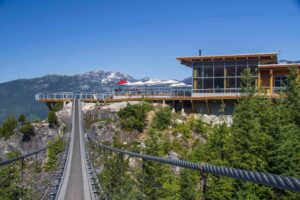 Material intelligence refers to how materials perform, adapt, and interact with ecological and cultural systems. It considers howstone, steel, or timber respond to intertangled forces, how those materials are sourced and assembled, and how they persist after demolition. Designers are centering material intelligence in constructing our cities in a generation of environmental uncertainty and strained supply chains. Few materials embody this shift as vividly as cross-laminated timber (CLT). By layering and bonding planks into structural panels, CLT offers strength, fire resistance, and a significantly lower carbon footprint than concrete or steel. Across Europe and Canada, mass timber has emerged as a centerpiece of decarbonized construction. Yet in the United States, progress has moved more slowly. Developers hesitate. Codes trail behind innovation. Conventional materials still dominate the urban skyline.
 The May News & Views includes the following headlines: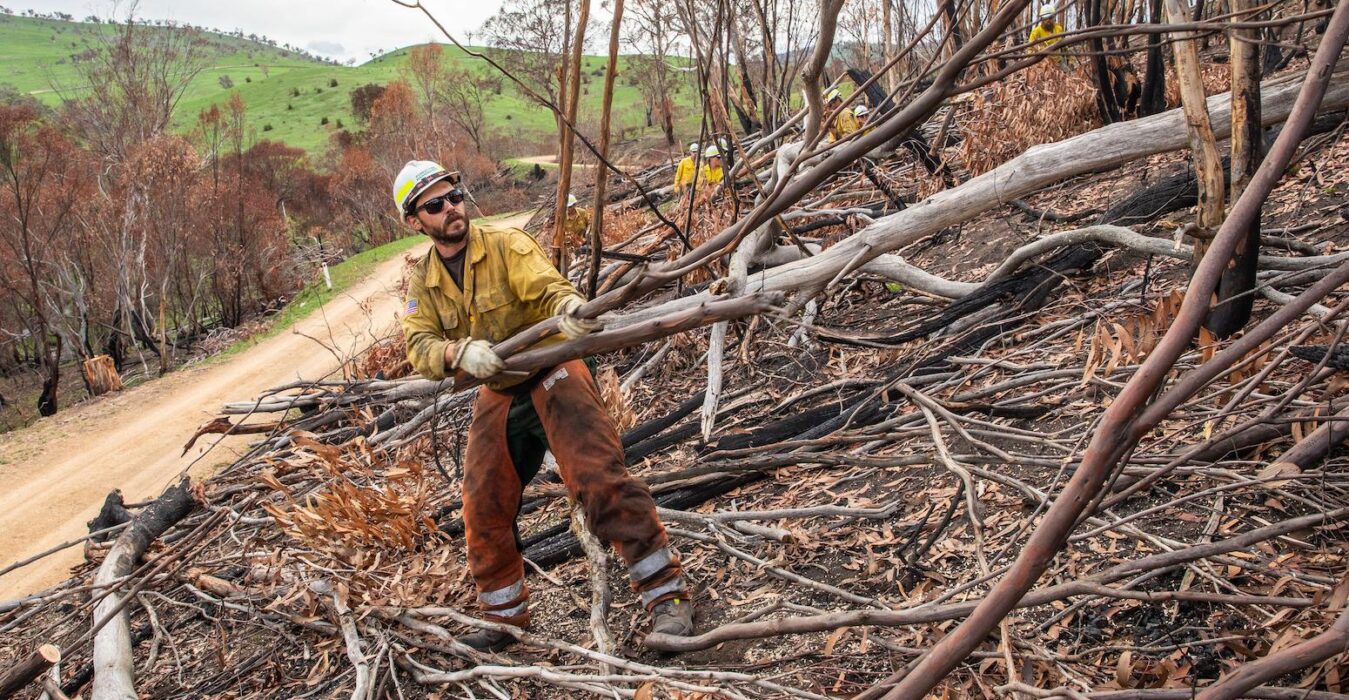

 Taking aim at “climate ideologies antithetical to the American way of life,” President Donald Trump’s
 NEW HAMPSHIRE yield tax on timber, often called the “timber tax,” was established in 1949 and has been locally collected to offset property taxes ever since. …The yield tax on timber has been an essential tool for promoting conservation, helping the timber industry, and stabilizing municipal revenues in heavily timbered towns. …The legislation would, “…encourage conservation of the forest resources of [New Hampshire] by releasing growing wood and timber from the yearly burden of local property taxes and substituting a yield tax….” The timber tax has been very effective achieving these goals… The current policy strikes an excellent balance between industry and conservation. There is a new government-promoted industry threatening New Hampshire’s timber industry, loggers, timber processors, and heavily timbered towns that depend on timber tax revenues. Carbon credits.
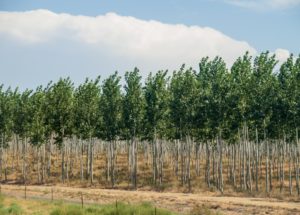 Agriculture and Forestry Minister Todd McClay has confirmed that restrictions on full farm-to-forest conversions on LUC 1-6 farmland will be in place this year, and reaffirmed that they will take effect from 4 December 2024 – the date of the original announcement. Enabling legislation will be introduced to Parliament during Q2 of this year. “The Government is focused on maintaining strong food and fibre production while supporting sustainable land use. We remain concerned about the effect that farm conversions are having on highly productive land — particularly sheep and beef farms in Northland, the East Coast and parts of Otago and Southland,” Mr McClay says. The new rules, now progressing through Cabinet, will ensure balance and recognise the value of both forestry and farming, while providing certainty for our food producers.
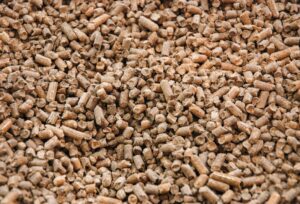 The Sustainable Biomass Program (SBP) has today announced the publication of two Interim Regional Risk Assessments (RRAs), covering British Columbia and Alberta Forests, Canada (available

 Representing 27% of all forests worldwide, boreal forests are the planet’s terrestrial “second lung” after tropical forests. Encircling the North Pole, they span North America, Europe, and Asia, playing a vital role in global carbon sequestration and storage, biodiversity, and supporting societies and economies. Despite their importance, boreal forests do not receive the same visibility and attention among policymakers and the public as their tropical forest counterparts. A new study published by the United Nations Economic Commission for Europe (UNECE), presented today at the United Nations Forum on Forests in New York, highlights the urgent need to increase the understanding of this global “treasure trove” and to safeguard its important contributions… Boreal forests, like other forest biomes, are important to global goals such as the Sustainable Development Goals (SDGs) 8, 12, 13 and 15, the six Global Forest Goals and the Targets of the United Nations Strategic Plan for Forests 2030.
 The United Nations Forum on Forests commenced its twentieth session today, as speakers spotlighted the connection between healthy forests and a sustainable future, the increasing threats to this important global resource and the subsequent need to invest in its protection despite a shrinking fiscal space. The Forum will hold its twentieth session from 5 to 9 May in New York. Established in 2000 by the Economic and Social Council, the Forum has universal membership and is tasked with reviewing progress in the implementation of sustainable forest management. This session — a technical one — will focus on Global Forest Goals 1 (reversing forest loss), 3 (protecting forests and using sustainable forest products) and 5 (promoting inclusive forest governance). “This Forum is unique,” observed Ismail Belen (Türkiye), Chair of the Forum’s twentieth session — noting that “it is the only global intergovernmental platform with universal membership that focuses on all forest-related issues”.

