 The Canadian American Business Council says the Oval Office meeting was exactly what we hoped for. In related news: Carney gets the Trump treatment; BC keeps its expectations in check; and the US imports more cars, lumber and oil. In other Business news: ERA’s Kevin Mason says Q1, 2025 could be lumber’s high-water mark; and FEA’s Paul Jannke clarifies timing of new US softwood duties. Meanwhile: Western Forest Products; Stella-Jones; and Louisiana Pacific all report positive Q1, 2025 earnings.
In Forestry news: Canadian forest leaders commit to sustaining Canada’s forests; Garry Merkel touts UBC’s indigenous land stewardship degree; the USDA announced $23 million to reduce wildfire risk and boost timber production; and Trump’s timber order spurs debate in Vermont’s woods.
Finally, Mosaic wants you to share your take on responsible recreation – take the survey!
Kelly McCloskey, Tree Frog News Editor

 A meeting between the leaders of Canada and the US is not usually considered a high-stakes showdown, but here was newly elected Prime Minister Mark Carney making his first visit to the Oval Office to see President Donald Trump, who has spent months musing about turning America’s northern neighbor into the 51st state. …The interaction offered a glimpse into how Trump has transformed Oval Office meetings from brief and bland encounters into precarious affairs. …His approach can be thrilling for supporters and destabilizing for diplomats accustomed to a more deliberative approach to international relations. … It appears that Carney struck the right balance, at least in Trump’s mind. An invitation to the Oval Office has long been the height of international prestige. …Now, they’re raucous episodes in a foreign policy reality show, starring Trump. While the president can be a gracious host, he openly complains about visitors’ countries.
 MONTRÉAL, RICHMOND, BC, and
  A high-stakes meeting between Prime Minister Mark Carney and United States President Donald Trump on Tuesday is being closely watched by politicians in Victoria. Ravi Kahlon, minister of housing and municipal affairs, said the province is being pragmatic… “We’re not expecting an agreement, and we’re also realistic that any agreement made with President Trump can be changed with a tweet the next day,” Kahlon said Tuesday. …Kahlon says the key for B.C. is to rely on its resources and to increase diversified trade with other countries. …Adding that breaking down interprovincial trade barriers will also help. …Meanwhile, B.C.’s forestry minister, Ravi Parmar, says Carney needs to prioritize B.C’s softwood lumber industry during his talk with Trump. …Western Canadian director for the United Steelworkers, Scott Lunny, tells 1130 NewsRadio that if the goal for the Trump administration is to rewrite the free trade agreement, we should “quit the nonsense and get on with that.”
 As the next step in its plan to protect Ontario workers in the face of tariffs and economic uncertainty, the provincial government is expanding its Skills Development Fund (SDF) by nearly $1 billion over the next three years, for a total of $2.5 billion. This funding will help train and reskill Ontario workers, including those directly impacted by layoffs resulting from tariffs and ensure they have the necessary support to find good-paying jobs and help strengthen Ontario’s economy. “We’re already seeing the impact of President Trump’s tariffs and the economic uncertainty he has created on Ontario workers,” said Premier Doug Ford. “Today’s announcement of a further $1 billion in SDF funding is just the latest step in our plan to protect Ontario by investing in workers and making sure they have the support they need to succeed, no matter what comes our way.”
 Fresh trade data shows deepening US reliance on Canadian goods, even as the president claims the opposite. …According to the US Census Bureau and Bureau of Economic Analysis, the US goods trade deficit with Canada widened to $4.9 billion in March, up sharply from prior months. The surge was driven by higher imports of Canadian-made cars, crude oil, and finished wood products — the exact categories Trump dismissed. Automotive imports rose by $2.6 billion, including a $2.1 billion spike in passenger vehicles, many of which are assembled in Canada. Oil and lumber purchases also increased, contributing to a 14% month-over-month jump in the broader US trade deficit, which hit a new monthly high of $140.5 billion in March. …The US typically runs a services surplus with Canada, and American firms rely heavily on Canadian supply chains in autos, energy, and materials, as the fresh BEA data suggests.
 VANCOUVER – Western Forest Products reported improved financial results in the first quarter of 2025, as compared to the same period last year. Net income was $13.8 million in the first quarter of 2025, as compared to a net loss of $8.0 million in the first quarter of 2024, and a net loss of $1.2 million in the fourth quarter of 2024. …lumber production of 134 million board feet (versus 145 million board feet in Q1 2024); average lumber selling price of $1,533 per mfbm. …North American markets are expected to be volatile due to concerns around the economic impact caused by potential further US tariffs and retaliatory tariffs. The spring building season which typically leads to gains in softwood lumber demand could be more muted. …In Japan, the spring housing demand is stronger than expected and channel inventories have declined. …Demand for our Industrial lumber products in North America are expected to strengthen as supply remains tight across all species.
 MONTREAL — Stella-Jones announced financial results for its first quarter ended March 31, 2025. Highlights include: Sales of $773 million, relatively unchanged from Q1 2024; Operating income of $143 million, including insurance settlement of $38 million; EBITDA of $179 million, or 23.2% margin; Acquisition post-quarter of a steel transmission structure manufacturer, aligned with strategy to support North American infrastructure. …Eric Vachon, President and Chief Executive Officer of Stella-Jones said “Though macroeconomic headwinds continue to impact volume growth, at this stage we remain confident in our ability to achieve our financial objectives. …“The Company entered into a definitive agreement to acquire Locwel., a leading manufacturer of lattice towers and steel poles for electrical transmission. This transaction marks a step forward in Stella-Jones’ long-term vision, allowing us to enhance our infrastructure offering and establish a presence in the growing steel transmission structure industry.”
 The Federal Reserve is likely to hold interest rates steady later on Wednesday amid fears that President Trump’s tariffs will rekindle inflation and slow economic growth. The decision to keep the Fed’s benchmark borrowing rate between 4.25% and 4.5% is widely expected by financial markets despite the president’s repeated demands for the Fed to lower interest rates. …Trade tensions have led to a sharp drop in consumer confidence. But they’ve yet to put much of a dent in the job market. …So long as tariffs threaten to put upward pressure on prices, the Fed will be inclined to keep interest rates relatively high, in an effort to prevent inflation from spiking again. That calculation could change, however, if the job market softens and unemployment starts to climb. Ordinarily, that would push the central bank toward lowering interest rates.
 Mortgage loan applications saw little change in April, as refinancing activity decreased. The Market Composite Index, which measures mortgage loan application volume based on the

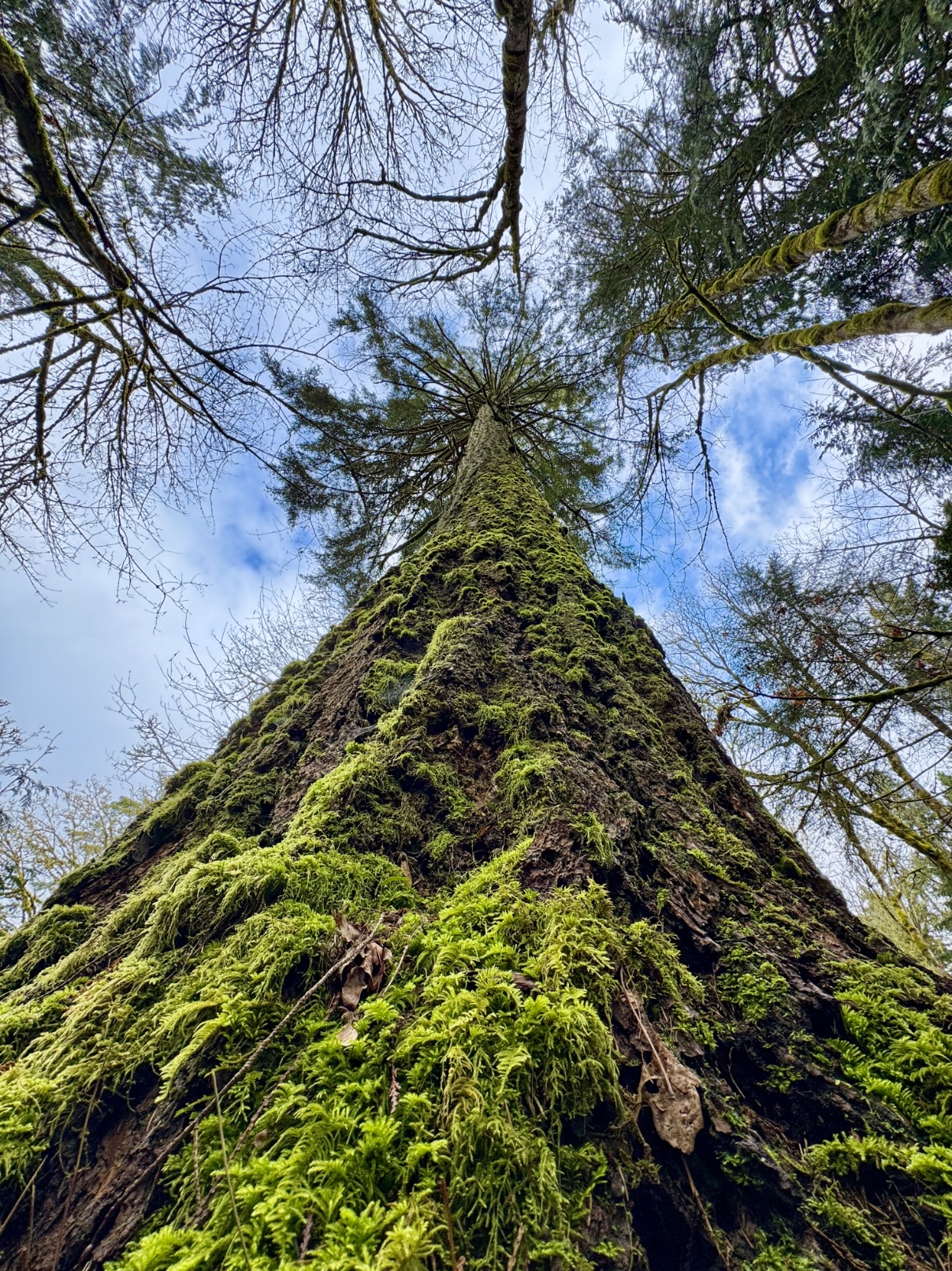 Forests are fundamental to Canadians. As “hewers of wood and drawers of water,” forests are as much a part of Canadian DNA as hockey sticks and maple syrup. …Canada harvests a relatively small portion – less than 0.5% – of its forests annually, adhering to sustainable practices. Every hectare harvested is carefully managed to ensure full regeneration, maintaining ecosystems and biodiversity while continuing to support the communities and livelihoods that depend on them. Harvesting takes years of meticulous planning. In fact, before a single tree is cut, forestry companies study and analyze the forest ecosystems before developing and presenting the government and the public with 100 to 200-year plans, repeating the process every ten years with improved information. [The Hill Times requires a subscription for full access to this story]