 Growing uncertainty stemming from Trump’s tariffs keep US builder sentiment in negative territory. In related news: reports on the tariff cost and tax hit by industry sector; Fannie Mae says US home prices will moderate; and Canada holds its interest rate steady. In other Business news: Pixelle is closing its paper mill in Chillicothe, Ohio; Sweden’s forest industry is struggling; Russia anticipates growth; and the latest from BC Wood, TimberWest Magazine and the Montreal Wood Convention.
In Forestry news: the Tyee opines on the Canadian election and BC forest workers; the outlook for Michigan’s ice-storm impacted forests; saving eastern oak forests will require more burning; three fire parameters that lead to safer and cleaner burns; and more on Trump’s push to solve wildfires by expanding logging.
Finally, University of BC’s ‘wood-detective’ tunes into sustainably grown guitars.
Kelly McCloskey, Tree Frog News Editor
 The Bank of Canada held its benchmark interest rate steady at 2.75 per cent on Wednesday, ending a run of seven consecutive cuts. The decision, for which the market had given roughly even odds, comes following weakening inflation data published yesterday, and as Canadian and global economies contend with U.S. President Donald Trump’s twisting trade war. In its decision, the Bank noted various signs of the Canadian economy slowing, and outlined two possible scenarios that underline the uncertainty of the trade war. “Consumption, residential investment and business spending all look to have weakened in the first quarter,” the central bank said in a statement alongside the decision. “Trade tensions are also disrupting recovery in the labour market. Employment declined in March and businesses are reporting plans to slow their hiring. Wage growth continues to show signs of moderation.”
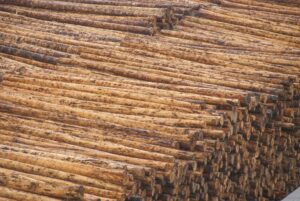 President Trump is forging ahead with his aggressive tariff campaign, moving on from “reciprocal” tariffs to the sector-specific tariffs he promised. To do so will involve Trump’s continued application of Section 232 of the Trade Expansion Act of 1962, which allows a president to impose tariffs to protect or bolster domestic industries if there are deemed potential national security threats. What used to be a rarely employed trade provision has been a favorite instrument. The Commerce Department previously launched Section 232 probes into copper and lumber. And earlier this month, the administration started investigating pharmaceuticals and semiconductors. …Softwood lumber is a critical and preferred ingredient for homebuilding, and 30% of it is imported by the US. Homebuilders warn that tariffs on softwood lumber and other materials could further exacerbate the housing affordability crisis. Higher costs of lumber imports could also affect other products, such as furniture and even toilet paper.
 WASHINGTON, DC – Following national home price growth of 5.8% in 2024, a panel of more than 100 housing experts forecasts home price growth to average 3.4% in 2025 and 3.3% in 2026, according to the Q1 2025 Fannie Mae Home Price Expectations Survey (HPES), produced in partnership with Pulsenomics. The panel’s latest estimates of national home price growth represent revisions from last quarter’s expectations of 3.8% for 2025 and 3.6% for 2026, as measured by the Fannie Mae Home Price Index (FNM-HPI).



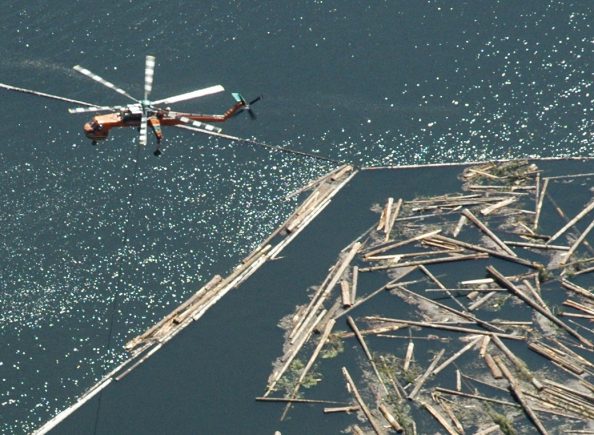 It’s been hard to keep up with the impact of U.S. President Donald Trump’s tariff trade war on Canada. Punishing tariffs have been levied on steel, aluminum and automobiles and — critically for B.C. — softwood lumber. “Tariffs are the top election issue for workers,” Canadian Labour Congress president Bea Bruske said. “This uncertainty really has people very, very stressed out about the future of their jobs.” …The United Steelworkers union represents about 14,000 forestry workers across Canada. Wood Council chair Jeff Bromley said it’s still not clear what the tariffs will mean for members. …Bromley said the federal government can support forest workers by enhancing employment insurance and funding training support for workers who need to find work in other industries. But Bromley said the ultimate solution is a new softwood agreement.
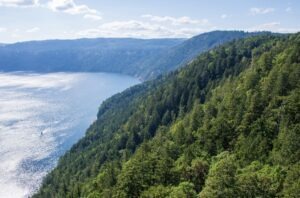 In an emergency directive issued late last week, U.S. Department of Agriculture Secretary Brooke Rollins announced her department’s plan to expand logging and timber production by 25% and, in the process, dismantle the half-century-old environmental review system that has blocked the federal government from finalizing major decisions concerning national forest lands without public insight. Under Rollins’s direction and following an earlier executive order signed by President Donald Trump, the U.S. Forest Service would carry out the plan that designates 67 million acres of national forest lands as high or very high wildfire risk, classifies another 79 million acres as being in a state of declining forest health, and labels 34 million acres as at risk of wildfire, insects, and disease. All told, the declaration encompasses some 59% of Forest Service lands. …Environmentalists say the administration’s plans are likely to only escalate wildfire risk and contribute more to climate change. …A
 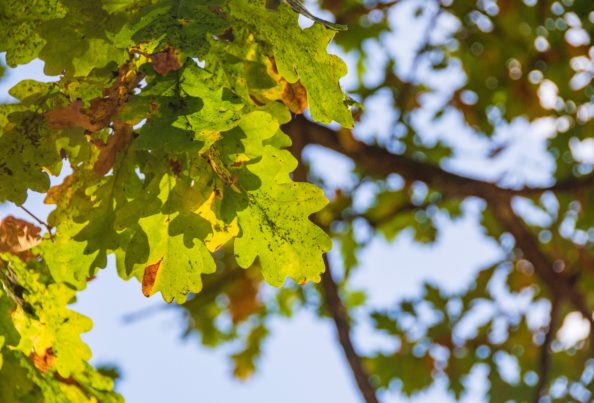 Virginia — …Slowly but steadily, the oak is disappearing from our forests and from our landscape. To use just one typical measure: In Shenandoah National Park, the oak canopy has shriveled by 20 percent over the past 20 years, according to a study funded by the Shenandoah National Park Trust. The oak’s decline is accelerating in a vicious arboreal cycle. There are many reasons for this, but one rises above all others. Oaks are fire-dependent, meaning they require frequent fires to regenerate. But fire-suppression efforts over the past century have broken this timeless pattern. Fire-intolerant trees with far less ecological value — maple, beech, basswood, black gum, tulip trees — have risen to replace the oak, hickory and pine forests, which need regular fire to open the forest canopy, bring in light and eliminate competitors. The best way to save the oak, and the countless critters that rely on it, is to return fire to our landscape. [A Washington Post subscription is required for full access]
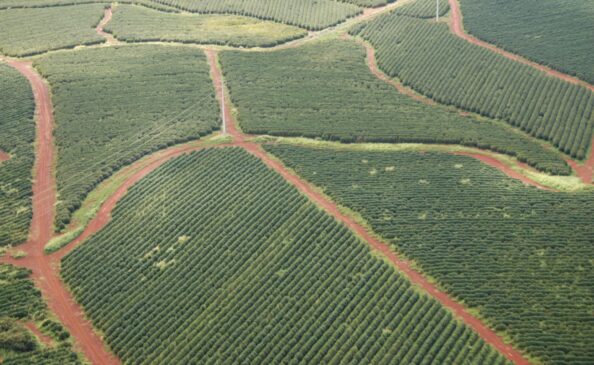 BOGOTA, Colombia — A recent amendment to Peru’s Forestry and Wildlife Law is drawing fierce backlash from environmental groups and Indigenous groups that warn it could accelerate deforestation in the Amazon rainforest under the guise of economic development. The amendment eliminates the requirement that landowners or companies get state authorization before converting forested land to other uses. Critics say the change could legitimize years of illegal deforestation. “To us, this is gravely concerning,” said Alvaro Masquez Salvador, a lawyer with the Indigenous Peoples program at Peru’s Legal Defense Institute. Masquez added that the reform sets a troubling precedent by “effectively privatizing” land that Peru’s constitution defines as national patrimony. “Forests are not private property—they belong to the nation,” he said. Supporters of the amendment, enacted in March, say it will stabilize Peru’s agricultural sector and provide farmers with greater legal certainty.