 International Paper to divest 5 European corrugated box plants as required per its DS Smith acquisition. In other Business news: tariffs may trip-up Godfrey Wood Products’ new OSB mill in Maine; Jasper Lumber’s Alabama sawmill upgrade nears completion; Unifor calls for a Team Canada approach on duties; Adera Development says trade war could boost mass-timber; BC’s Forest Minister says US customers are afraid to protest; and how Vanderhoof, BC is faring after its sawmill closed. Meanwhile: Canada’s housing starts fell in March, and a new report on Canada’s housing crisis.
In Forestry/Wildfire news: the European Space agency is launching a new biomass satellite; Clemson University awards honour forestry accomplishments; University of West Alabama expands its forestry program; BC’s firefighters gather to train; Wisconsin sees records start to wildfire season; California ups investments in wildfire prevention; Eastern White Pine is at risk in the US East; and US logging order sparks fear in the US Southeast.
Finally, research on the value of tropical forests as natural factories of plant chemicals.
Kelly McCloskey, Tree Frog News

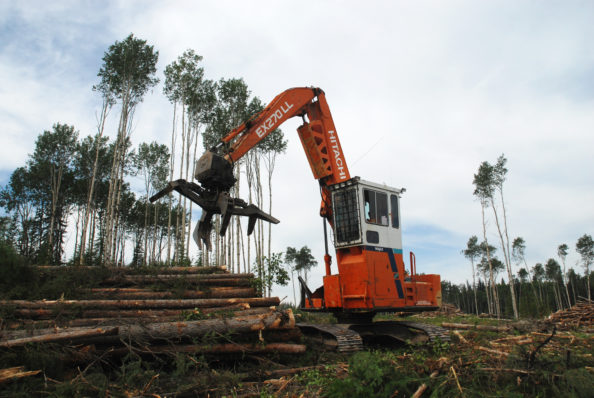 When forestry contractor Mike Egli heard the sawmill in Vanderhoof was closing, he was expecting the worst. Egli co-owns logging contractor Dalchako Transport with his brothers. As with many local forestry companies, Dalchako’s livelihood was tied to the Plateau sawmill, Vanderhoof’s largest employer. With more than 200 workers, the sawmill was integral to the local economy. It closed at the end of December 2024. Egli has found other contracts to keep working since December, but the mill’s closure has caused a massive upheaval. “We lost all that work there,” he said. …Meanwhile, workers in Vanderhoof are looking to other industries to make a living. It’s a shift many northern B.C. workers have had to make before. …Not all workers are leaving the industry. Mayor Moutray said local forestry contractors are commuting 200 kilometres to Quesnel, B.C., for work, or flying into remote work camps to stay in forestry.
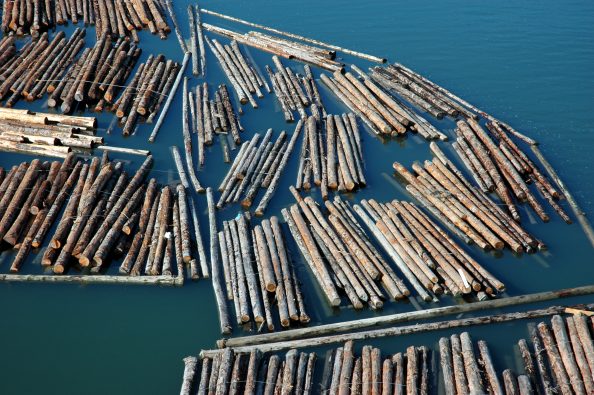 By raising duties on Canadian lumber, the United States is contending that the producers benefit from unfair subsidies and sell products below market value. However, British Columbia Premier David Eby called it an “attack on forest workers and British Columbians” on April 5. …Harry Nelson, an associate professor of forestry at the University of British Columbia, said the increase stems from Washington’s annual review of its trade remedy findings. “The main reason for the significant increase is that both rates went up, the antidumping especially so.” …Nelson said some companies such as Canfor face a nearly 50 percent tariff and could be unsustainable. “Lumber margins tend to be small — certainly not 50 percent, and it is hard to imagine how Canfor will be able to continue to operate,” he said. “I would expect a curtailment in production, where higher-cost firms may either take temporary downtime or permanently shutter some more mills.”
 As tariffs reshape supply chains, more Americans may be checking packaging for the “Made in USA” label, either to sidestep import taxes or to support domestic businesses. …According to the Federal Trade Commission, to qualify for the label, US authorities must determine that a product’s final assembly or processing has taken place in the US, and that a significant portion of its manufacturing costs must also be incurred domestically. …That said, some foreign components are allowed to still qualify as “Made in USA.” — as long as they don’t substantially transform the product. …However, bilateral trade agreements can override these rules. Under the United States-Mexico-Canada Agreement, a one-time importation of a commercial product valued under $2,500 is exempt from country of origin labeling requirements.
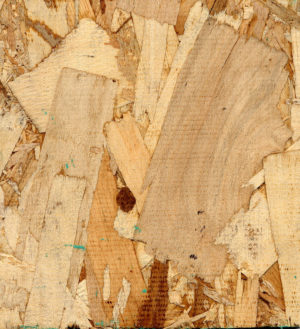 Tariffs could impact efforts to rebuild a former paper mill in Jay that was destroyed in an explosion almost five years ago. Godfrey Wood Products is looking to build a new factory on the property that would manufacture oriented strand board, a type of structural wood paneling. The company says that they have all of the permits they need, but they haven’t been able to move forward with construction because of uncertainty with tariffs. A lot of the equipment they need would come from Europe. “The stated goal of all of this tariff business is to, incentivize domestic manufacturing. Well, hell, I’m trying my level best to become a domestic manufacturer of OSB in Jay, Maine, and it seems like the public policy of the country is trying to thwart that,” said John Godfrey, owner of Godfrey Wood Products.

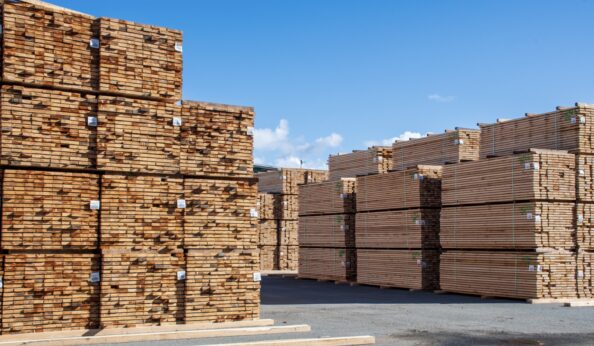 OTTAWA — Wholesale trade, excluding petroleum, petroleum products, and other hydrocarbons and excluding oilseed and grain, rose 0.3 per cent to $85.7 billion in February, Statistics Canada said Monday. The overall increase in sales came as just two of the seven subsectors posted gains. Statistics Canada said sales in the machinery, equipment and supplies subsector gained 7.1 per cent for the month to $19 billion. All four of the subsector’s industry groups climbed, with the computer and communications equipment and supplies industry group up 11.2 per cent, while the construction, forestry, mining, and industrial machinery, equipment and supplies industry group added 6.8 per cent.
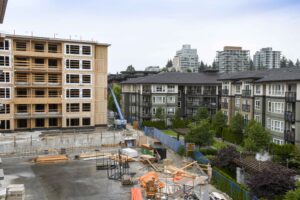 A BC economist says policy proposals from the federal parties do not measure up to the scope of Canada’s housing problem. “(Much) of the policy shift is shifting in the right direction. We still have the problem that the concrete policies on the table don’t match the scale of the housing crisis,” Alex Hemingway, with BC Society for Policy Solutions, said. …Hemingway said he vetted the platforms through two questions: what are plans doing to significantly increase the supply of more affordable housing in the non-market sector; and how to address exclusionary zoning that exists in the biggest, most expensive cities. …Despite all the funding promises, it is still difficult to increase density in areas currently zoned for single-family homes. …If Canada is looking for ways to reduce its economic dependence on the US, “dealing with these fundamental issues of housing and exclusionary zoning, should be an economic priority.”
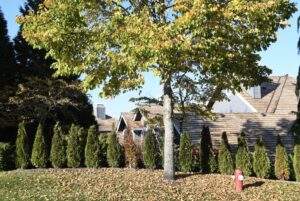 Proposed changes to Port Moody’s tree protection bylaw will adjust the requirements for developers and property owners to replace trees, afford greater protection to larger trees and establish a registry for significant landmark or legacy trees. In a report to be presented to council’s city initiatives and planning committee on Tuesday, April 15, Port Moody’s manager of policy planning, Mary De Paoli, said the new rules are consistent with council’s strategic goal to strengthen the city’s urban forest and enhance its natural assets. The revisions come more than five years after some councillors advocated for increased protection of Port Moody’s tree canopy. “It’s such and important part of our climate action plan,” said Coun. Amy Lubik. “It’s critical for keeping our community safe in these extreme climate events.”
 Hundreds of municipal, First Nations and BC Wildfire Service (BCWS) firefighters from across the province are coming together at the Wildfire Resiliency and Training Summit in Penticton to train, collaborate and learn about new technology and practices ahead of the 2025 wildfire season. “We don’t know exactly what this wildfire season will bring, but I want British Columbians to know that we are working hard every day to be ready,” said Ravi Parmar, Minister of Forests. …The Wildfire Resiliency and Training Summit brings together First Nations and local government representatives, emergency managers, wildfire mitigation specialists, and firefighters to collaborate and train with the BCWS and discuss the latest developments in wildfire technology, mitigation and prevention. The five-day event attracts more than 350 wildfire professionals and includes two days of collaborative training between structural fire departments from throughout the province and the BCWS.
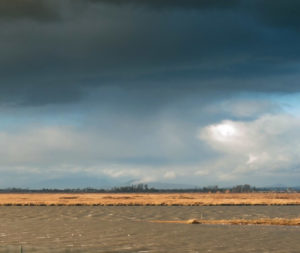 In the months after Hurricane Helene leveled thousands of acres in Pisgah National Forest, John Beaudet and other volunteers cleared downed trees from the Appalachian National Scenic Trail. Chopping them up and moving them aside was back-breaking work, but essential to ensuring safe passage for hikers. So he was dismayed to learn that a section of the trail in western North Carolina could remain closed for more than a year because the National Forest Service wants that timber left alone so logging companies can clear it… The fast-track approach to environmental review following Helene has many people concerned that the public isn’t being given any chance to inform the process. According to forest advocates who have been in communication with the Forest Service, the government reportedly plans to announce 15 salvage projects in western North Carolina. Volunteers, scientists, and hikers are asking for transparency in a process they say could prioritize profit over ecosystems.
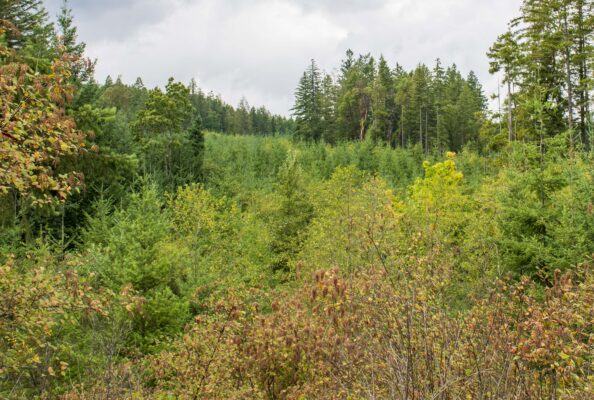 The Wisconsin Department of Natural Resources (DNR) is proud to join communities, organizations and individuals throughout the state in celebrating trees and forests during Forest Appreciation Week, which runs from April 21 to Arbor Day (April 25) and includes Earth Day (April 22). Forest Appreciation Week is a time to reflect on the importance of urban and rural forests. “Everyone has a role in ensuring that forests continue to serve a vital role in the ecological, cultural and economic health of our state, our local communities and our individual lives,” said Carmen Hardin, DNR Applied Forestry bureau director. 17 million acres of forests cover nearly half of Wisconsin and millions of urban trees provide many benefits; to maintain these many benefits, we need to be good stewards of the forest resources.

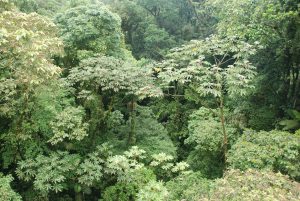 A new study led by researchers at Washington University in St. Louis and the Missouri Botanical Garden has uncovered a surprising layer of diversity in tropical forests. Not only are the forests populated by a dizzying number of tree species, but each of those species takes a different approach to chemistry, increasing the array of natural compounds that provide important functions for the plants — and potentially for humans. The research helped clarify the ecological and evolutionary forces that make tropical forests such hotbeds of biodiversity. While the team wasn’t specifically looking for compounds that could be useful for humans, their findings underscore the value of tropical forests as natural factories of plant chemicals that could have important uses in medicine and other fields, said Jonathan Myers, a professor of biology in Arts & Sciences at WashU. “Tropical plants produce a huge diversity of chemicals that have practical implications for human health.”