 The US Department of Commerce released its preliminary countervailing duties on Canadian lumber, even before the Trump tariffs hit. In related news: Prime Minister Carney discusses softwood lumber duties with BC Premier Eby; Canada’s economy is starting to crack; US homebuilder stocks tumble; and the European Commission considers its tariff response. Meanwhile: the Decorative Hardwood Association on wood imports that affect US national security; and the Wood Pallet and Container Association has a new board.
In Forestry/Wildfire news: push back on Trump’s timber plans East and West; Oklahoma’s Governor resists calls to reconsider firing—says Forest Service held back; and BC ENGO’s put a price on old-growth forest protection. Meanwhile: charges laid in Grande Prairie lumber mill death; and (with apologies) a correction to the COFI panel on Fibre, and once again the overall conference wrap-up.
Finally, on Day 2 of Wildfire Resilience and Awareness Week: certificate training (MacLeod Forest Services), worker safety (BC Forest Safety Council), and lessons learned (Mosaic).
Kelly McCloskey, Tree Frog News Editor


 Last year’s wildfire season in BC was the most destructive on record, with 2.8 million hectares burned—more than double any previous year. The fires caused significant disruption to the work and lives of many people in BC, and the impact was felt strongly by those in the forest industry. Evacuations and alerts, oppressive smoke, high heat, area closures, and lack of access to industry critical resources, including helicopters, were among the many challenges faced by the industry. …The forestry sector is vital to BC’s economy, and its workforce is the backbone of the industry. It’s crucial for forestry workers to understand wildfire risks and management to ensure their safety and the safety of forestry operations. Equipping forestry workers with the necessary skills they need to prepare themselves for the prevention, and/or mitigation wildfires is essential.
 At MacLeod Forest Services, our primary business focus is providing training and response services to a variety of customers. This includes our S100 Wildfire for Industry Program. Our aim is to provide timely, achievable, effective, up to date and cost-efficient wildfire instruction to all stakeholders that have the potential to be affected by a wildfire. By staying involved in response we can continually improve our products and services as changing conditions require. We have provided training to stakeholders from First Nations crews, the Forest, Agriculture, Outdoor Recreational and Construction Industries, Type 2 and 3 Wildfire Contractors, BC Wildfire Service crews as well as rural residents. The MacLeod S100 for Industry is a two-day BCWS S100 course enhanced to better prepare participants to be on their own until organized help arrives. Upon completion participants will be able to: assess wildfires accurately; develop an appropriate plan; and respond safely and effectively. Course runs April 29-30, 2025.
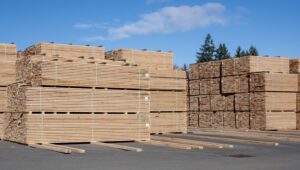 Premier David Eby cautioned last week that BC should not make too much of the appearance that the country “dodged a bullet” in the latest round of tariff fire from the US. …Eby’s fears were borne out, when the US announced a plan to more than double the duty against Canadian softwood. …Eby told the legislature that Forests Ministry staff are “working on a proposal to defer stumpage.” The tariff threat likely means a setback for the ambitious goal that Eby set for the forest minister, Ravi Parmar. He directed Parmar to “work toward…a harvest of 45 million cubic metres per year”. The increase would be 50 per cent greater than last year’s 30 million cubic metres harvest, but still well short of the almost 60 million harvested the year the New Democrats took office. …Though the industry welcomed the premier’s target for increasing the harvest, it remains privately skeptical that the NDP can make the necessary changes in regulation and permitting to bring about the increase.


 Canada’s economy was already stumbling a few months ago. Now, it is on the brink of recession because of President Trump’s tariffs. Canada’s economy is starting to shed jobs after months of tariff-fueled anxiety, while the outlook among businesses and consumers has become increasingly dour as one of the US’s largest trading partners braces for more pain to come. …Last week, Canada’s statistical agency reported that 33,000 Canadians lost their jobs in March, the worst jobs report in more than three years. On Monday, the Bank of Canada reported that businesses and households expect inflation to climb, and company executives warned they expect to pass on higher, tariff-fueled costs to customers regardless of the hit to consumer demand. …Canada’s fiscal and monetary outlook has also been complicated by the government’s decision to retaliate against the US. [to access the full story a WSJ subscription is required]
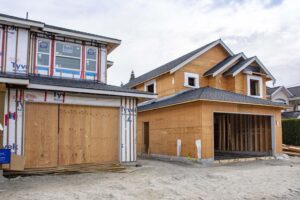 Homebuilder stocks plunged Monday following reports that the US is preparing to sharply increase tariffs on Canadian lumber, independent of President Donald Trump’s new “reciprocal” tariffs. …After reports of the new lumber duties emerged over the weekend, however, shares of homebuilders plunged swiftly Monday. …”Tariffs are the clear culprit for the stock market pullback and fears of recession,” says Realtor.com® Senior Economist Joel Berner. “Recession risk is especially poignant for builders.” …The latest round of tariffs, however, will likely increase materials costs for all homebuilders, to some extent, with a recent survey of builders finding that they expect an average cost increase of $9,200 per home as a result of tariffs. …Over the weekend, Moody’s Analytics Chief Economist Mark Zandi raised his outlook for the odds of a recession this year to 60%, up from just 15% a few months ago.
 Prince George city council took the first step in renewing its contract with Lakeland Mills Ltd. to supply fibre for the Downtown Renewable Energy System through 2026 with options to extend it through 2027 and 2028 at its Monday, April 7 meeting. From a central location near the intersection of Second Avenue and George Street, the system uses wood waste to power boilers that pump heated water to buildings across downtown Prince George like city hall, the Prince George Public Library, the Canfor Leisure Pool, the Ramada Hotel and more. The original contract with Lakeland Mills to supply the products used to power the boilers ran from 2012 to 2022. If the bylaw creating the new agreement eventually passes fourth reading, the new agreement would stretch retroactively from July 1, 2022 to Dec. 31, 2026 with options to extend it through 2027 and 2028.
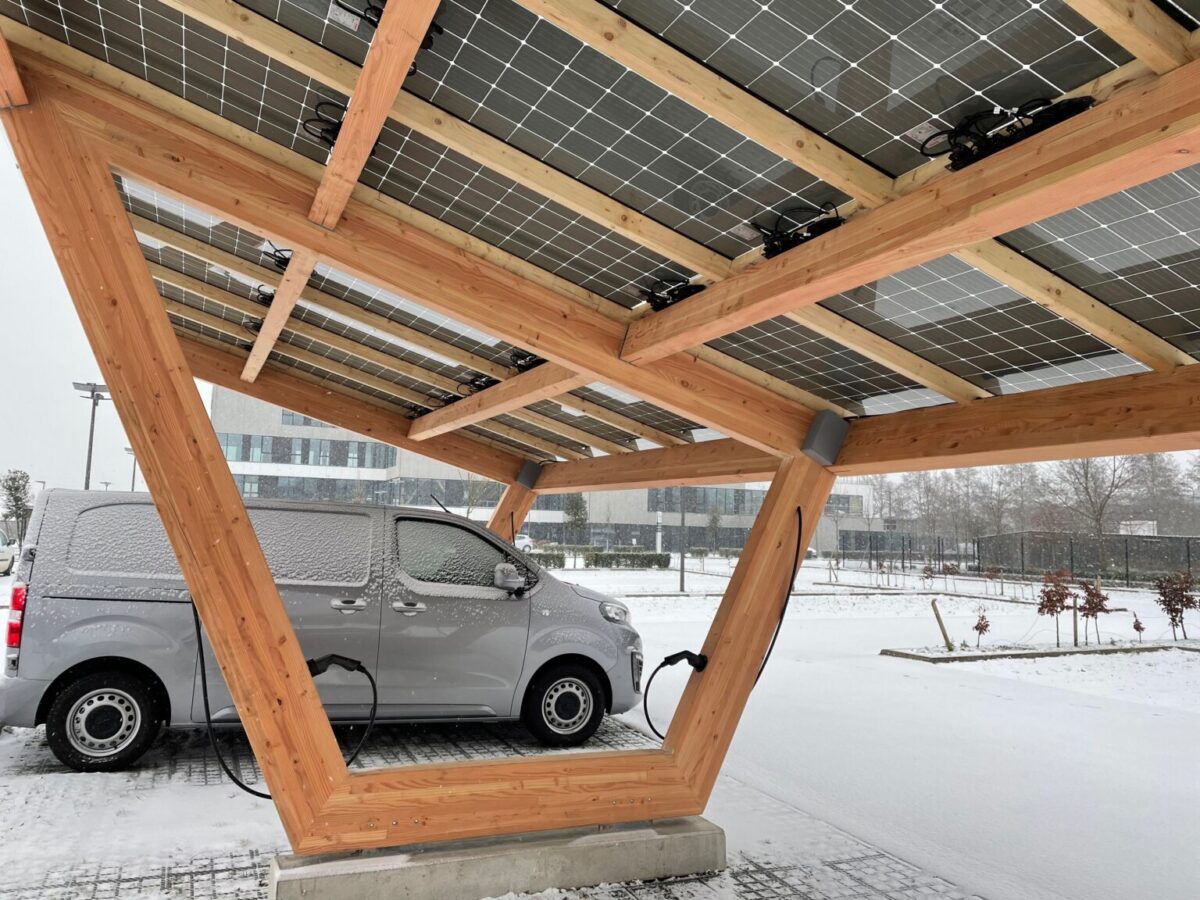
 The Trump administration’s drive to harvest more timber from national forests will lead to a “thriving wood products economy” that doesn’t rely on imports, a top Forest Service official told the agency’s top brass in a memo last week. But the timber goal acting Associate Chief Chris French pinpointed — a 25 percent increase from current levels offered for sale — would fall short of the first Trump administration’s ambitions and barely make a dent in U.S. timber supplies, data shows. The chasm between the new administration’s rhetoric — cut more trees on national forests to reduce the country’s reliance on wood imports and rejuvenate the economy — and the math behind French’s memo reflect the hurdles to returning to the timber industry’s prosperous times around national forests… Timber industry representatives and others familiar with the Forest Service’s timber program point to several flaws in the administration’s timber-boom narrative, although the industry welcomes the Forest Service’s moves to step up production.

 Sometime next month, the Bolivian government and a company you probably haven’t heard of are poised to offer what could be the largest single sale of carbon credits in history. The deal will be unusual not only for its size—$1.2 billion, organizers said—but also because it will be backed by a national government and packaged under new rules developed as part of the Paris Agreement. Depending on who you ask, the sale could mark a new frontier in global climate finance, the latest offering in a long and dubious line of carbon credits or, potentially, a giant escalation in corporate greenwashing… “I don’t think a lot of people even in the climate world quite appreciate how much volume and activity may be emerging quickly from this new area,” said Danny Cullenward, an economist and lawyer focused on the scientific integrity of climate policy.

 WorkSafeBC is releasing a discussion paper concerning changes made to policy on duration of benefits (retirement age). To reflect legislative amendments to the Workers Compensation Act, policy changes related to retirement age determinations were effective on January 1, 2021. After reviewing the implementation of the initial changes, WorkSafeBC’s Board of Directors approved further policy changes, effective January 1, 2024, on WorkSafeBC’s determination of whether a worker “would retire” after the retirement dates set out in the Workers Compensation Act. The Board of Directors approved these policy changes in advance of public consultation. Our Policy, Regulation and Research Department is now consulting on the 2024 changes to determine whether further changes are necessary. The discussion paper and information on how to provide feedback can be found here:
  The Workers Compensation Amendment Act, 2019 (Bill 18) expanded the definition of “firefighter” and changed the definition of “worker” in the Workers Compensation Act, resulting in implications for society fire brigades that engage volunteer firefighters. Our Policy, Regulation and Research Department is releasing a discussion paper with proposed amendments to policy in the Assessment Manual to provide guidance on how WorkSafeBC determines the employer of a volunteer firefighter, and to remove outdated language. The discussion paper and information on how to provide feedback can be found here: