 President Trump’s trade war goes global—blows up postwar order. In related news: Bloomberg says US emerges as the biggest loser; Politico says Trump’s math is crazy; Canada dodges bullet but will fight existing levies; New Zealand says timber exemption may be temporary; how tariffs will hit US construction; and what’s at stake for softwood lumber.
In other news: Teal Jones loses bid for damages over Haida Gwaii; Canfor Corporation and International Paper release their sustainability reports; Oklahoma’s governor looks to dissolve its forestry service; BC’s Ravi Parmar appoints Makenzie Leine as new Deputy Minister of Forests; and Louisiana Pacific updates its management team. Meanwhile: a new NAHB survey on who makes the decision on which products use; and caring for trees after the ice storm.
Finally, Don Wright says Canada should fight tariffs like Muhammad Ali, not Joe Frazier.
Kelly McCloskey, Tree Frog News Editor

 An invasive tree species that is illegal to plant in Ohio has begun to bloom, and will soon fill the air with a distinctive odor that many liken to rotting fish. Callery pear trees – which come in multiple varieties including “Bradford” pear, “Autumn Blaze” and “Cleveland Select” – typically begin to bloom in the state in late March to early April, according the Ohio Department of Natural Resources. The species was brought to North America from Asia in the 1900s with the goal of combatting fire blight, a bacterial disease among common pear trees. The tree quickly become popular in landscaping due to its adaptability, white flowers and shape. It has also since become well-known for another one of its qualities – its odor. The tree’s blooms typically have a strong aroma, which has been likened to a variety of unpleasant scents, including rotting fish, puke and animal waste.
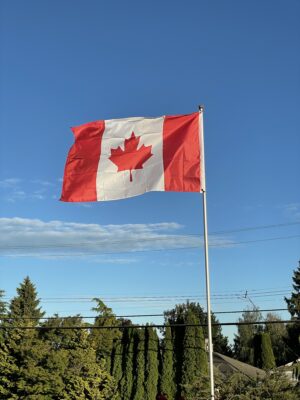 OTTAWA — Canada’s exemption from Donald Trump’s global tariffs was “like dodging a bullet into the path of a tank”, say business leaders as other levies are poised to hit key industries that drive the country’s economy. …Canada was noticeably absent, alongside trade ally Mexico. Prime minister Mark Carney said 25% tariffs on Canadian steel and aluminum, as well as on automobiles, will come into effect within hours. Canada would “fight these measures with countermeasures” he said. Already, Canada had put a 25% tax on C$30bn worth of US goods in response to Trump’s tariffs. …Carney warned that while Trump had preserved key elements of the bilateral relationship, the global tariffs “fundamentally change the international trading system”. …On Wednesday, a bipartisan group of senators passed a resolution to end the national fentanyl emergency the president invoked to justify the 25% tax on Canadian imports. …House speaker Mike Johnson is unlikely to bring the measure to a vote.
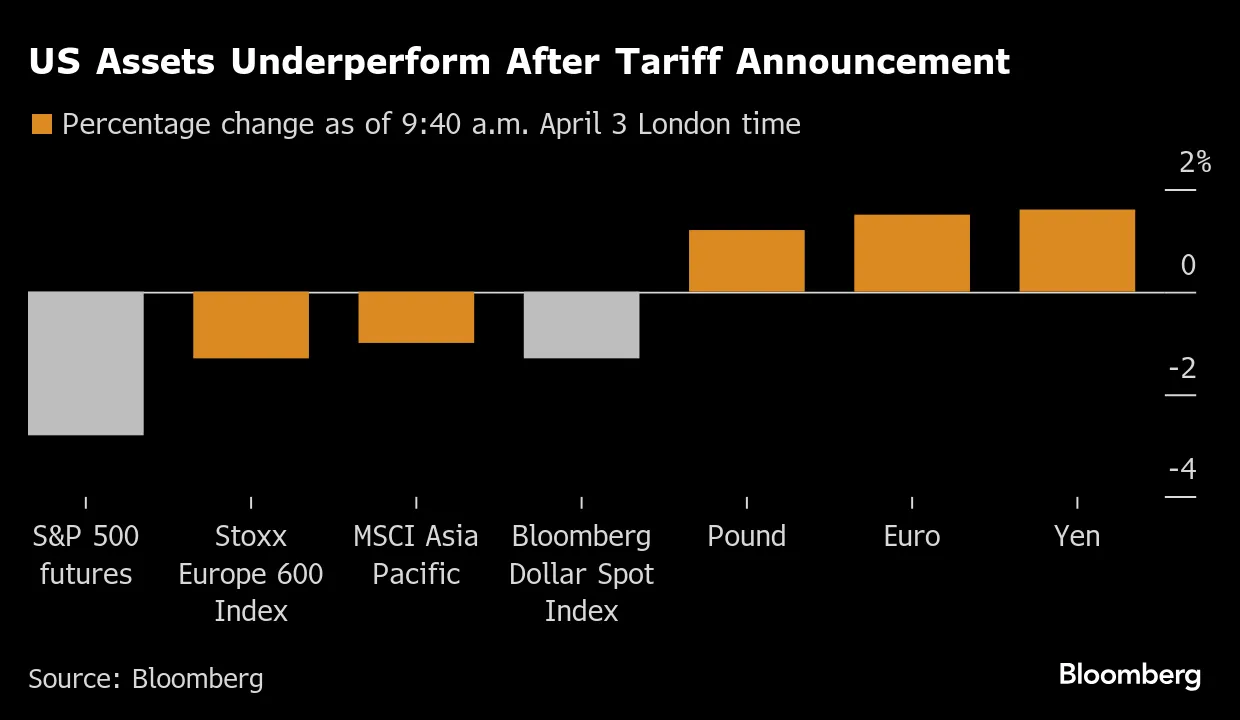
 Sweeping new tariffs announced by Donald Trump provoked dismay, threats of countermeasures and urgent calls for talks to find ways to rescind the stiff new import taxes imposed on goods from countries around the globe. …Trump maintains they will draw factories and jobs back to the United States. …European Commission President Ursula von der Leyen said it was a “major blow to the world economy.” …British Prime Minister Kier Starmer said he hopes to get the tariffs lifted with a trade deal. …Financial markets were jolted. …China’s Commerce Ministry said Beijing would “resolutely take countermeasures to safeguard its own rights and interests,” without saying exactly what it might do. …Mexican President Claudia Sheinbaum said she would wait to see how Trump’s announcement will affect Mexico, which like Canada was spared for goods already qualified under their free trade agreement with the United States, though previously announced 25% tariffs on auto imports took effect Thursday.
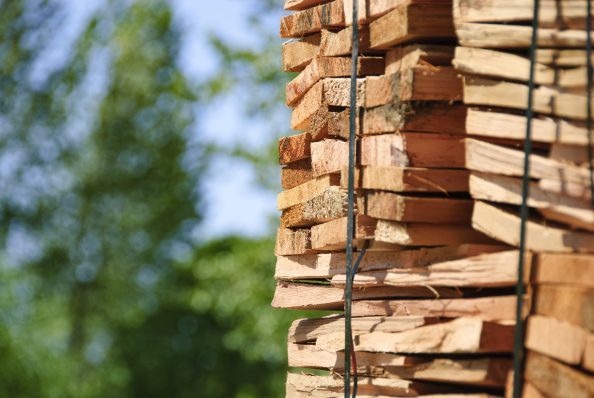 Teal Cedar Products has lost a bid for damages against the B.C. government over its declaration of First Nations rights on Haida Gwaii. The company argued the recognition of title over the lumber-rich but highly protected island archipelago deprived it of its ability to harvest despite Teal holding tree farm and forest licences in the area. It argued the B.C. government didn’t act in good faith, essentially expropriated property where Teal had business interests, and failed in a promise to keep the company whole during its negotiations with the Haida Gwaii Management Council over Indigenous title to the former Queen Charlotte Islands. B.C. Supreme Court Judge Brenda Brown rejected all three rationales and dismissed the claim for damages against either of the defendants, the B.C. government or the management council. …Teal obtained the two tenures from TimberWest in 2008, before selling them to A&A Trading Ltd. in late 2016.
 President Donald Trump is prepared to impose tariffs on many Canadian products that are shipped to the United States. Included on the list of tariffs are the wood products industry, which is facing a 25 percent tariff on products shipped south of the border. In response to the President’s actions, the Vermont House Committee on Agriculture and Forestry took testimony from two employees at the Agency of Natural Resources last week… In the past two years Vermont has lost two sawmills, becoming more reliant on Canada. Vermont imported $52 million in sawmill and wood products from Canada in 2024. Pierson said some of the wood was shipped from Vermont to Canada where it was processed and shipped south.
 Willis, a business of WTW, and The Nature Conservancy (TNC) have launched a new $2.5 million wildfire resilience insurance for the Tahoe Donner Association in Truckee, California. Described as “first-of-its-kind,” this policy directly links insurance costs to proactive wildfire risk mitigation efforts. Developed in partnership with UC Berkeley’s Center for Law, Energy and the Environment, the policy aims to demonstrate how ecological forest management practices can lead to reduced premiums and increased insurance availability. Such techniques include tree thinning to improve the health and growth of the remaining trees and planned fires to clear out flammable vegetation, both proven to reduce wildfire risk and make forests healthier. Tahoe Donner has completed forest management projects over 1,520 acres since 2015. …This new policy, covering 1,345 acres of Tahoe Donner’s land, secures a 39% lower premium and an 89% lower deductible than would have been possible without the nature-based forest management.

 Manufactured homes play a measurable role in the U.S. housing market by providing an affordable supply option for millions of households. According to the American Housing Survey, there are 7.2 million occupied manufactured homes in the U.S., representing 5.4% of total occupied housing and a source of affordable housing, in particular, for rural and lower income households. Often thought of as synonymous to “mobile homes” or “trailers”, manufactured homes are a specific type of factory-built housing that adheres to the U.S. Department of Housing and Urban Development’s Manufactured Home Construction and Safety Standards code. …The East South Central division (Alabama, Kentucky, Mississippi and Tennessee) have the highest concentration of manufactured homes, representing 9.3% of total occupied housing. The Mountain region follows with 8.5%, while the South Atlantic region holds 7.7%.
 In the course of their business, home builders and remodelers buy many different products— ranging from lumber and other wood products to electrical and plumbing fixtures, a variety of materials used to finish various areas of the house, appliances, and even tools. The National Association of Home Builders (NAHB) recently surveyed both its single-family builders and its remodelers, asking them who’s most often responsible for choosing these products. In a separate question, NAHB also asked where these products are purchased irrespective of who chooses them because even when they’re not the ones driving the product choice, builders and remodelers often know where the product is being purchased. …The survey results show that, irrespective of who actually makes the purchase, it is the builders and remodelers themselves who most often influence product selection and therefore should most often be the prime targets for manufacturers looking to effectively market building products.
  VANCOUVER, BC – Canfor Corporation and Canfor Pulp Products released their joint 2024 Sustainability Report today. The report describes the companies’ approach to managing environmental, social and governance activities, and reports on established targets. Canfor CEO Susan Yurkovich said, “Sustainability is at the forefront of our business and we continually strive to be better at all that we do.” 2024 performance highlights include: Maintaining certifications for sustainable forest management and fibre procurement activities, with 100% of Canfor-managed forests certified to SFI® or FSC® Forest Management Standards, 100% of sourced fibre in North American operations managed to the SFI Fibre Sourcing Standard and 100% of Swedish forestry operations certified to the PEFC Forest Management Standard. …Advancements in safety, health and wellness initiatives. …Investing in communities, with more than $2 million donated. …Continuing to pursue our goal to be net zero by 2050.
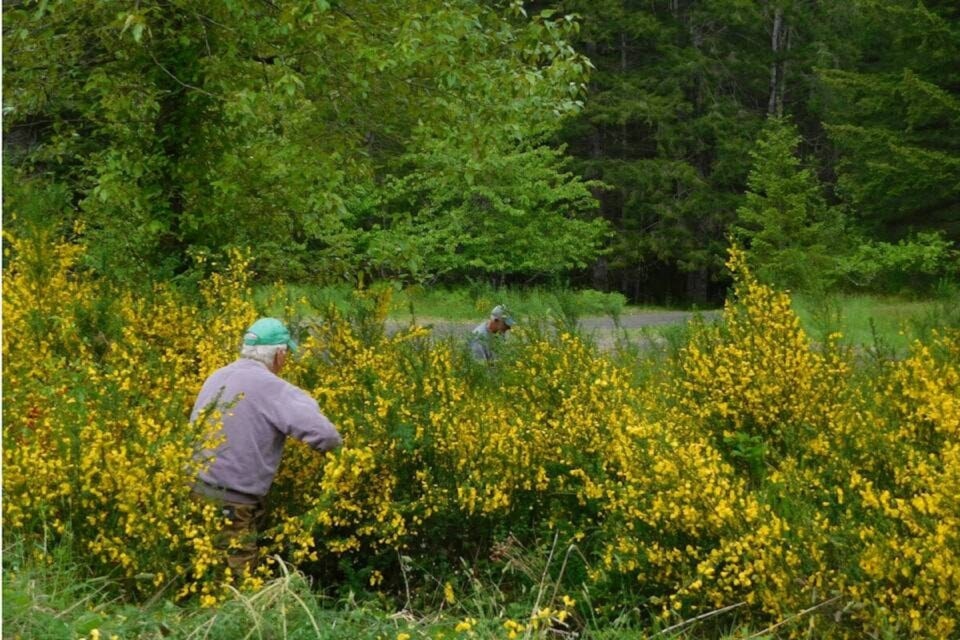

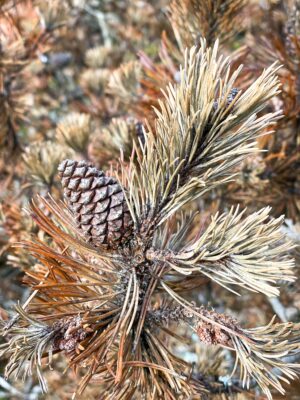 The Osoyoos Indian Band (OIB) and American forestry company Weyerhaeuser have struck what they describe as a “landmark partnership” to manage a tree farm licence (TFL) east of OIB reserve land near Oliver. The OIB said stewardship of their traditional territory “is both a responsibility and an opportunity”. Through this partnership, OIB says it has taken a co-leadership role in managing TFL 59, an area of “profound cultural, ecological, and economic significance”. The two aim to raise the benchmark for sustainable forestry by balancing modern forestry practices with traditional knowledge… The tenure has a broad and ambitious set of management objectives, including reducing wildfire risk, protecting water resources, enhancing wildlife habitat, increasing forest resiliency and rehabilitating areas impacted by the devastating 2021 wildfires.
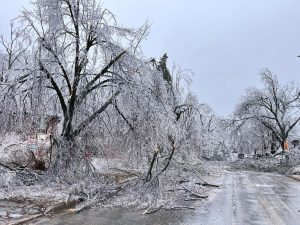
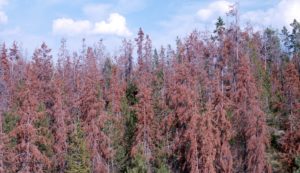 An insect known for turning entire mountainsides the color of rust could be making a resurgence in Colorado. The pest is none other than the mountain pine beetle. After a roughly decade-long period of relatively lower populations, the bugs are rebuilding their numbers along the Front Range and in southwest Colorado, according to an annual forest health report published by the Colorado State Forest Service in late March. “I’m a little concerned moving in this summer because we really haven’t had any precipitation,” said Dan West, the forest entomologist for the Colorado State Forest Service. “I’m worried bark beetles are going to increase their populations in these drought-stricken trees.” Few bugs have had a more visible impact on forests across the western U.S.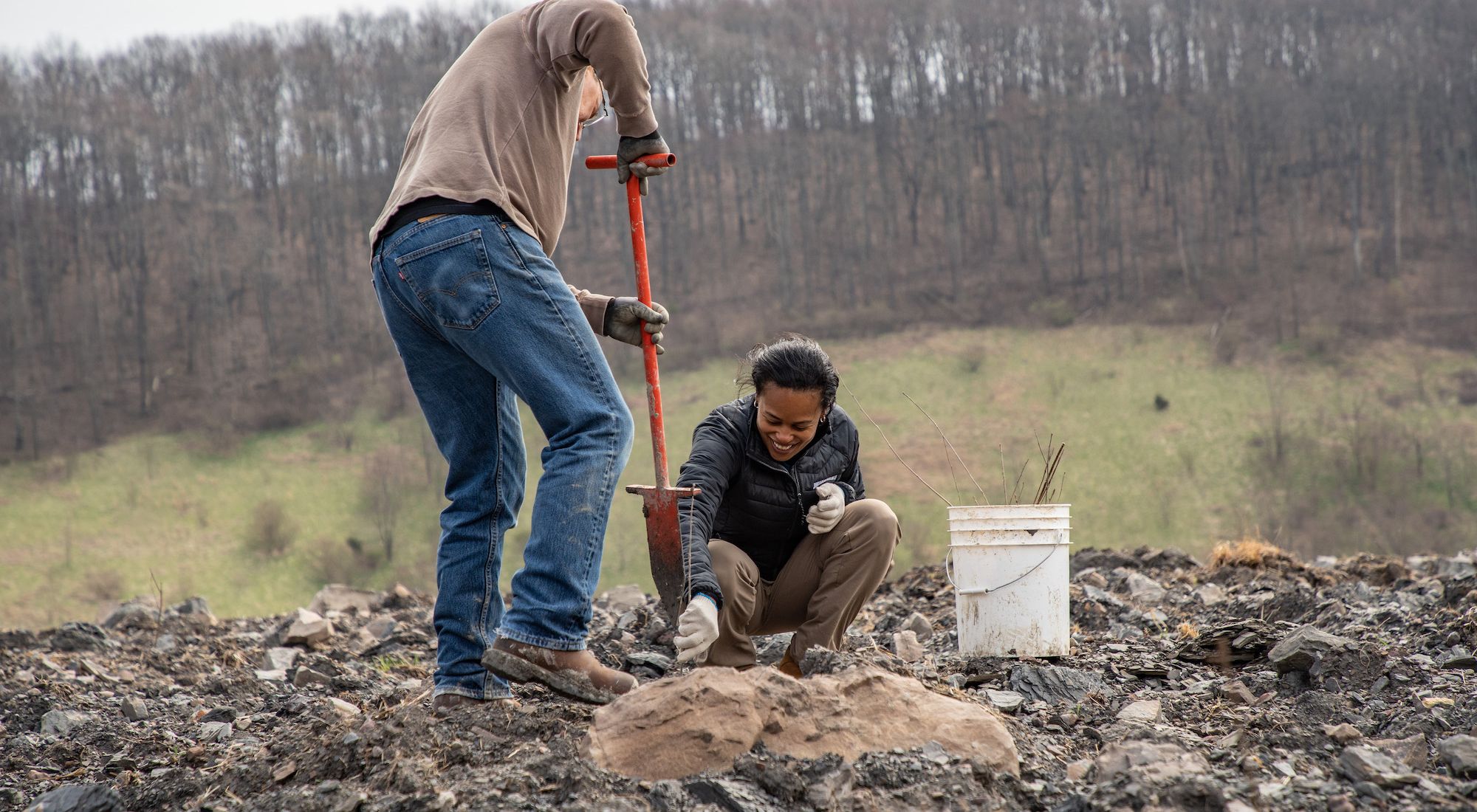
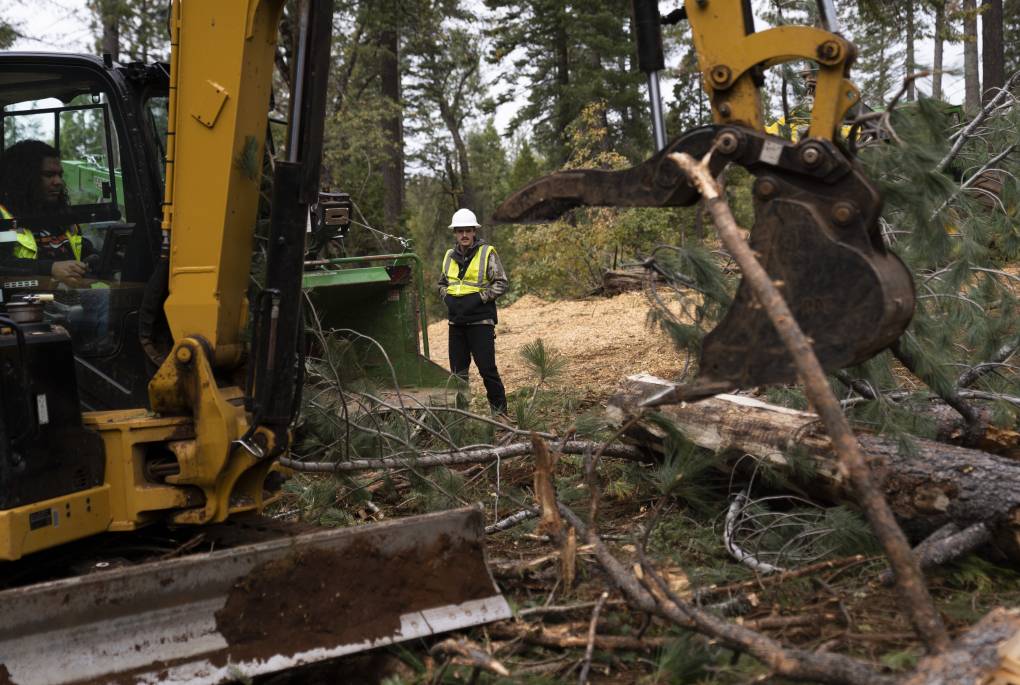
 Last week, Gov. Kevin Stitt criticized the Oklahoma State Forester’s response to the fires that blazed across Oklahoma in March. This week, the governor is floating the concept of axing the entire Forestry Services division. Stitt has said he believes the Oklahoma Forestry Service held back resources during the fires. When asked to specify which resources during a press conference, Stitt said he didn’t know. “The fact that we can’t get answers about where their assets were around the state is further proof that this is a deep-seated bureaucracy that are trying to protect their actions,” Stitt said. “We still haven’t been able to figure out where they were during that thing.” Just weeks after the fires, the state’s Chief Forester Mark Goeller resigned following criticism from the governor.


 International Paper, the global leader in sustainable packaging solutions, today announced it exceeded its sustainability goal of conserving and restoring 1 million acres of ecologically significant forestland. This milestone achievement enhances biodiversity protection, strengthens carbon sequestration, and supports sustainable land management, reinforcing the company’s commitment to environmental stewardship and climate resilience. “We are thrilled to have surpassed one of our Healthy and Abundant Forest targets to conserve 1 million acres of ecologically significant forestland by restoring nearly 1,158,00 total acres, and we did so six years ahead of schedule,” said Sophie Beckham, Chief Sustainability Oficer, International Paper. “Reaching this milestone is a testament to the company’s ongoing commitment to nature conservation and to the great work of our conservation partners.” IP released its 2024
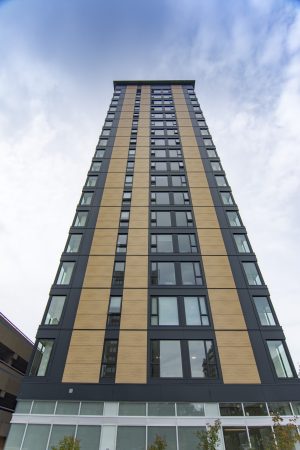 As the EU pushes to meet its climate neutrality targets by 2050, the concept of ‘renewable carbon’ is rising fast in both policy and industry circles. Unlike fossil carbon, which is extracted from underground and released into the atmosphere during production and consumption, renewable carbon comes from above-ground sources, biomass, recycled materials, and captured CO2. In short, it’s carbon that is already part of the ongoing carbon cycle. “Renewable carbon is not just about replacing fossil-based materials: it’s about rethinking how we design, use, and reuse resources across industries,” said Michael Carus, managing director of the Germany-based Nova Institute during a recent event hosted by EURACTIV and Metsä Group. This kind of thinking is gaining traction among companies looking to green their supply chains. Wood-based products, for instance, have a unique potential to store carbon for long periods when used in construction or durable goods, making them a crucial component of a low-carbon, circular economy.