 Trump announced 25% tariff on cars, then threatened higher levies if Canadian and EU retaliations hurt the US economy. In related news: Unifor sees existential threat to forest workers; RBC says Canada can still grow its forest industry; tariffs revive painful memories of pandemic-era toilet paper shortages; US economic optimism falls; flatbed trucking costs rise; and Vermont and Idaho foresee layoffs. In other Business news: Doman temporarily curtails Arkansas planer mill; and a wood flooring importer is fined for evading US anti-dumping laws.
In Forestry/Climate news: a UN report raises forest diversity concerns; BC rushes to finish wildfire mitigation before summer; Colorado’s latest forest pest report; Oklahoma’s chief forester is out of a job; Maine’s climate-smart forestry is at risk; and the war takes it toll on Ukraine’s forests.
Finally, Venice’s upside-down forest keeps the 1604-year-old city afloat.
Kelly McCloskey, Tree Frog News Editor
 President Trump’s promised tariffs on softwood lumber risk disrupting the supply chain for something nobody wants to be caught without: toilet paper….While Trump advocates for new tariffs partly to bolster US manufacturing, they may also hit the availability of northern bleached softwood kraft pulp, or NBSK, a key component in making toilet paper and paper towels. NBSK constitutes about 30% of standard U.S. bathroom tissue and half of a typical paper towel, and is currently sourced primarily from Canada, said Brian McClay, chairman of TTOBMA. He added that the U.S. imported about 2 million tons of Canadian NBSK last year, highlighting the longstanding reliance of American paper-goods producers on pulp from their northern neighbour. …“If Canadian pulp mills close because they don’t have the fibre supply, I can’t think of any other option for them — they just can’t switch the recipe around,” he said. The scenario risks reviving painful memories of pandemic-era toilet paper shortages.
 COFI 2025 – April 2-4 in Prince George, BC — As BC’s forest sector grapples with significant turbulence – including US tariffs, geopolitical uncertainty, and sector-wide challenges in BC – strong leadership and collaboration are essential to securing a sustainable and competitive future. The “Calm, Cool, & Collaborative: Leadership for Turbulent Times” panel at the 2025 COFI Convention will bring together senior decision-makers from industry, government, and First Nations. These influential voices will share their insights on navigating market uncertainty, shaping effective policies, and strengthening community resilience. Jon our panelists: Hon. Ravi Parmar, Minister of Forests, Province of BC; Chief Councillor John Jack, Huu-ay-aht First Nations; Juan Carlos Bueno, President & CEO, Mercer International; and Lisa Dominato, Councillor, City of Vancouver for a lively discussion moderated by Greg Stewart, President, Sinclar Group Forest Products Ltd. & Chair, COFI Board of Directors.
  CALIFORNIA — The US Department of Justice (DOJ) announced that it had reached an $8.1 million settlement in a civil False Claims Act case based on alleged customs violations by defendants Evolutions Flooring, a San Francisco-based importer of wood flooring, and its owners Mengya Lin and Jin Qian. …The complaint shows how DOJ and relators may formulate such cases. Evolutions and its owners were accused of knowingly evading customs duties, including antidumping duties, countervailing duties, and section 301 tariffs, on wood flooring manufactured in the People’s Republic of China. Acting at the direction of its owners, Evolutions allegedly mispresented the country of origin of certain flooring imports – declaring them as Malaysia-origin – to avoid the high duties applicable to China-origin products. Evolutions also allegedly falsely declared the true manufacturer of the imported merchandise.
 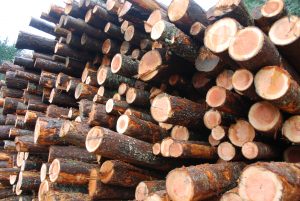 VERMONT — Oliver Pierson, Vermont state’s director of forestry, and Katharine Servidio, mapped out the [tarrif] tangle for the House Committee on Agriculture, Food Resiliency, and Forestry. As sawmill capacity in the U.S. has retracted, New England’s loggers have looked to Canada to process timber felled on this side of the border. …Vermont imported $52 million in sawmill and wood products from Canada in 2024, according to Pierson. …There is a case for bringing more milling back to America, Pierson said, but “it wouldn’t be for a year or two from now when we’d be able to stand up additional processing capacity.” In the short term, Servidio and Pierson said that they expect that U.S. tariffs on lumber imported from Canada and retaliatory Canadian tariffs on Vermont timber will be debilitating for the logging industry in the state.
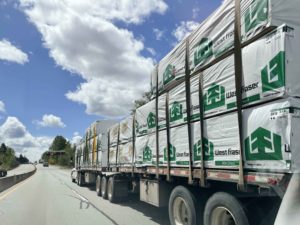 Flatbed trucking rates have surged over the past month as steel and lumber shippers hurry to stockpile inventory amid tariff whiplash threatening to roil their supply chains, experts say. A six-week increase in rates has led to the highest flatbed pricing to start a year since 2017, according to DAT, as freight repositioning combines with a typical seasonal pickup in construction and other industries. “Demand usually picks up in March and April as planti ng, building, construction, machinery imports, and nursery seasons gear up,” said DAT Principal Analyst Dean Croke. “…Last week, the average flatbed spot rate went up 4 cents to $2.13 per mile compared to the previous week. Meanwhile, the load-to-truck ratio for flatbed went up to 46.92 from 41.12 loads per truck.Shippers have pulled forward cargo imports such as machinery, lumber, metals and oversized flatbed freight to mitigate tariff uncertainty.
 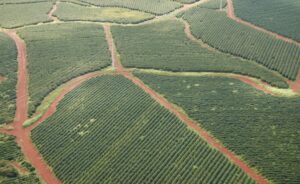 In a move that merges sustainable finance with industrial-scale environmental stewardship, Sydney-based natural capital investment manager New Forests has partnered with Japan’s Oji Holdings Corporation, one of the world’s largest pulp and paper producers, to establish the Future Forest Innovations Fund. With an initial commitment of US$300 million ( US$297 million from Oji and US$3 million from New Forests ), the fund aims to acquire and manage 70,000 hectares of plantation forests across Southeast Asia, North and Latin America, and Africa… The partnership signals an alignment between traditional manufacturing and ecological impact investing. Oji Holdings, which already manages 635,000 hectares of plantation forests worldwide, is leveraging this initiative to meet its 2030 net sequestration goal of 1.5 million tonnes of carbon dioxide equivalent per year, integrating climate action into its global forest footprint.
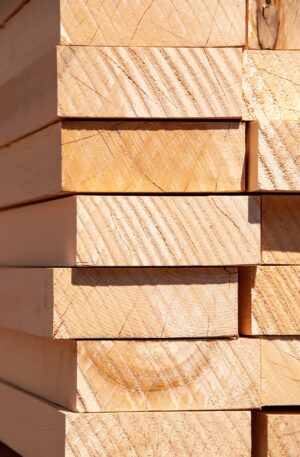 Wood, a traditional and sustainable structural material, has long been used in construction and furniture due to its availability and mechanical properties. However, natural wood’s strength is often insufficient for advanced engineering applications. Now,
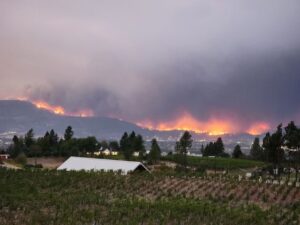 If you’ve noticed smoke on days it hasn’t been snowing or raining recently, it’s likely from a prescribed burn. Local governments across the Okanagan including the Westbank First Nation are working to finish as many of their prescribed burn operations as possible before the weather gets too hot and dry. A prescribed burn, sometimes called a controlled burn, is a planned and intentional use of fire on a specific land area to reduce wildfire risk, improve wildlife habitat, or restore ecosystems… The McDougall Creek wildfire was one of the most destructive local wildfires in recent memory, destroying 303 structures in West Kelowna, Westbank First Nation, Kelowna and the RDCO. The Insurance Bureau of Canada estimated the fire caused $480 million in insured damage.
 A draft co-management framework and plan to manage North Cowichan’s 5,000-hectare municipal forest reserve likely won’t be presented until sometime in 2026. The municipality and the Quw’utsun Nation (which consists of Cowichan Tribes, Halalt First Nation, Lyackson First Nation, Penelakut Tribe, and Stz’uminus First Nation) agreed in April, 2024, that they would work together to establish a co-management framework and plan for the forest reserve, and that work is still ongoing. North Cowichan’s communications director Barb Floden said the municipality and the Quw’utsun Nation issued a joint request for proposals to support the development of the co-management plan in February, which will be closing soon, and it is expected that the draft framework and plan will be ready next year. “The public will be kept informed of the process through joint statements and updates at council meetings,” Floden said.
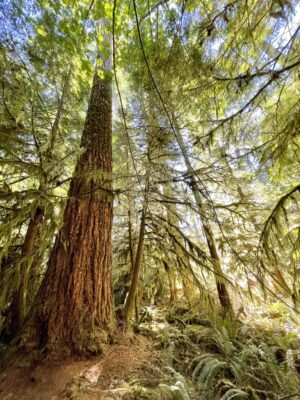 The Pacific Northwest is fortunate to have vast forests and ideal conditions for growing trees quickly. These forests have long been a cornerstone of our rural economies while also protecting streams, sequestering carbon and supporting wildlife. However, we face a troubling trend: a decline in local timber production and a growing reliance on imported lumber. We use science for active forest management with the toughest regulations in the world, we do forestry the best here. It’s time to prioritize local timber and rebuild a robust, sustainable industry right here in Washington… Prioritizing local wood production is a win-win for the Pacific Northwest. Wood is good, but local wood is best if we want to restore a vital, create economic stability and protect our environment.
 It’s a cold day at Sun Mountain Lumber in Deer Lodge, Montana. Outreach Forester Sean Steinebach walks toward the mill’s massive kiln where freshly cut two-by-fours are dried. You can feel the heat radiating off the fresh boards. He stops and inhales. “It smells fresh and it smells bright and it smells wild,” he says. The mill’s lumber yard is filled with stacks of Douglas fir and lodgepole pine logs that will soon become lumber. Having a steady and reliable supply of logs is crucial to keeping the mill in business, says Steinebach. “We drive the economics of Powell County for sure, Anaconda, Deer Lodge County. We’ve got a lot of employees that live there. Granite County, we’ve got employees there. We’re a big impact in the whole state, I think. Forest products in general is a huge impact in the state of Montana.”
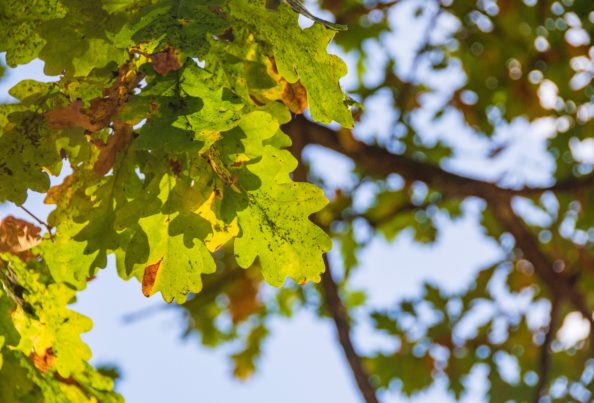 A quiet collapse is sweeping through America’s hardwood log export industry, completely devastating working families in rural communities who’ve been left behind as trade battles play out far above their heads. On March 4, China abruptly banned imports of U.S. hardwood logs, citing pest concerns — though industry insiders believe it was thinly veiled economic retaliation to the Trump administration’s recent tariffs. The impact was immediate and massive: China is the dominant buyer of U.S. logs, importing the vast majority of what America exports. Without that market, the entire industry lost its economic lifeline, according to Seth Riggio, a 35-year-old log broker based in Greenville, South Carolina. The move set off a chain reaction that has pushed loggers, exporters, truckers, and rural communities across the country into financial ruin. …These aren’t corporations with reserves. Most loggers don’t have savings accounts or college degrees. What they have are contracts, equipment, and a forest to work.
 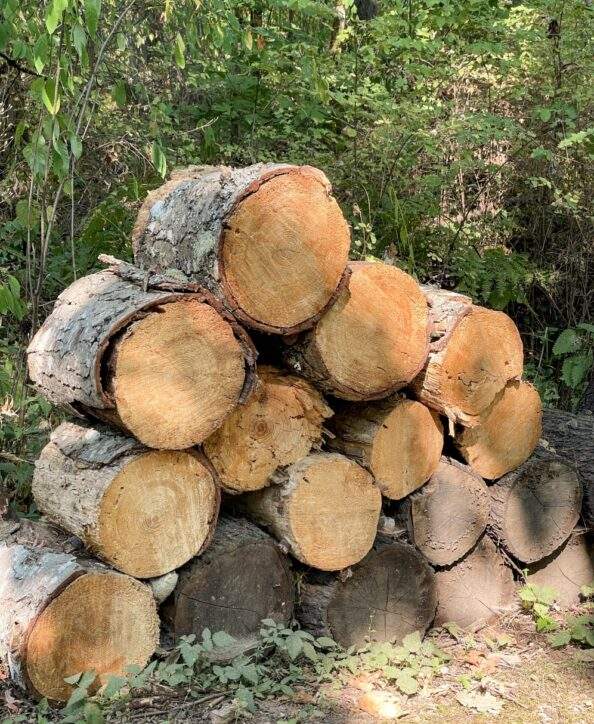 Millions of federal dollars promised to Maine woodland to improve harvest practices has been stalled for months without explanation. Landowners and logging companies are increasingly anxious about the funding blockade, and will have to make tough decisions if the money doesn’t come through. Baskahegan Co. Vice President Kyle Burdick said it was banking on federal reimbursements to sustain logging operations on its Down East timberland this year. But if the money doesn’t come through, it will have to potentially lay off logging contractors. Baskahegan was one of six Maine landowners that last year agreed to try out forestry practices that thin out woodlands to encourage bigger tree growth. The pilot project, funded through a $32 million climate smart commodities grant from the U.S. Department of Agriculture, was intended to store more carbon and generate valuable wood products in the future. The funding has been blocked since President Donald Trump put money …under review.
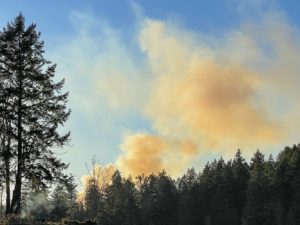 Last year was Ukraine’s worst year for wildfires in more than three decades of record-keeping, as shelling along front lines in the war with Russia triggered an unprecedented number of blazes, scientists said. Forest fires in Ukraine in 2024 burnt more than twice the area destroyed by fire in the entire 27-country European Union in 2024. Satellite data showed nearly 9,000 fires torched a total of 965,000 hectares in Ukraine in 2024. Ukraine has around 10 million hectares, or 100,000 sq km (38,610 sq miles), of forest. Around a third of the area burned last year was farmland… Maksym Matsala, a forest researcher at Sweden’s University of Agricultural Sciences, said the main cause was artillery and falling shells igniting fires. He said the jump in fires last year was partly because of a large build-up of dead and damaged trees since Russia’s invasion in 2022, which had created plentiful fuel for fires during extremely dry weather in 2024.