 Canada and Europe will continue to play crucial role in meeting US wood demand—as Washington state wonders if boosting timber production can counter tariffs. In related news: tariff uncertainty keeps Canadian home buyers on the sidelines despite a rise in building construction; while US housing starts surged 11.2% last month and falling permits signal a slowdown; and here’s what building homes on federal land in the US would look like. Meanwhile, good news for India and New Zealand in timber and lumber trade; and a new global platform for recycled wood.
In Forestry/Climate news: almost half of landslides in southwestern BC have been linked to logging or wildfires as the forest fire season gets underway; Arkansas asks EU leaders to reconsider deforestation regulation; the Northwest Forest Plan revision aims to solve multiple issues; and the US Forest Service remains silent on firings. Meanwhile: dozens of wildfires burn across Missouri and Kansas; and Southwest Idaho targets high wildfire risk; and it’s time to guard against pine beetles.
Finally, an alternative to wood caskets comes from an invasive vine in Australia.
Suzi Hopkinson, Tree Frog News Editor

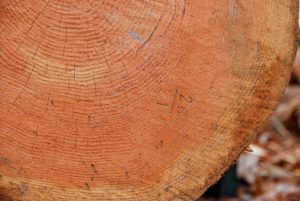 Despite decades of a fractious trade relationship between softwood producers in Canada and those in the U.S., the Canadian softwood lumber industry hasn’t liked to trumpet what it considers the superiority of its product because the two markets are so intertwined. Production has increased at U.S. sawmills in the past decade, including at facilities owned by companies with head offices in Canada. That’s now changing, with Canadian producers wanting to make plain to consumers in Canada, in the U.S. and no doubt, to potential new markets around the world, that the spruce, pine and fir grown north of the 49th parallel is a superior product. That’s because the growth rings are tighter than those found in the lumber in the U.S. South. It takes from 70 to 100 years before spruce, pine and fir (SPF) trees are considered ripe for harvesting in the B.C. Interior. By comparison, southern yellow pine trees are harvested after about 35 years. [a paid subscription is required to read this story]
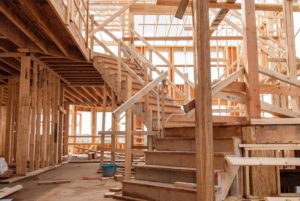 Shopping for a new home? Ready to renovate your kitchen or install a new deck? You’ll be paying more to do so. The Trump administration’s tariffs on imported goods from Canada, Mexico and China are already driving up the cost of building materials used in new residential construction and home remodeling projects. The tariffs are projected to raise the costs that go into building a single-family home in the U.S. by $7,500 to $10,000… Such costs are typically passed along to the homebuyer in the form of higher prices, which could hurt demand at a time when the U.S. housing market remains in a slump and many builders are having to offer buyers costly incentives to drum up sales… “These prices will never come down,” Schnipper said. “Whatever is going to happen, these things will be sticky and hopefully we’re good enough as a small business, that we can absorb some of that.”
 Trump administration officials are roiled in debate over how to implement the president’s pledge to equalize U.S. tariffs with those charged by other nations, with aides scrambling to meet the president’s self-imposed deadline of April 2 to debut a plan. Officials have recently weighed whether to simplify the complex task of devising new tariff rates for hundreds of U.S. trading partners by instead sorting nations into one of three tariff tiers, according to people close to the policy discussions, who emphasized that the situation remains fluid and could evolve in the coming weeks. The proposal was later ruled out, said an administration official close to the talks, adding that Trump’s team is still trying to sort how to implement an individualized rate for each nation. …The reciprocal tariff plan is expected to be introduced on April 2, along with additional 25% duties on a handful of industries, such as autos, semiconductors and pharmaceuticals.
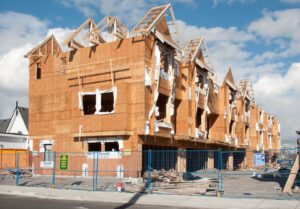 The US housing market showed mixed signals in February, with a sharp rise in housing starts contrasting with a decline in building permits. According to the latest data from the U.S. Census Bureau, new residential construction activity picked up, but future construction intentions weakened, raising questions about the sector’s near-term strength. Privately-owned housing starts surged to a seasonally adjusted annual rate of 1.501 million in February, marking an 11.2% increase from January’s revised figure of 1.350 million. The single-family sector led the gains, with starts rising 11.4% to 1.108 million units. However, despite this strong monthly performance, overall starts remained 2.9% below February 2024 levels, signaling ongoing challenges in year-over-year growth. …This decline extended the downward trend, with permits now 6.8% below year-ago levels. Single-family authorizations remained relatively stable at 992,000, down just 0.2% from January.

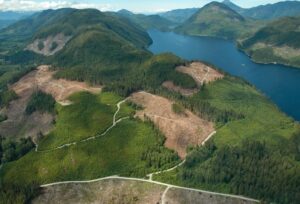 WASHINGTON STATE is one of the most productive parts of the country for growing timber. Most of the timber is west of the Cascades and its annual production in the United States is only second to Oregon. However, harvesting faces significant constraints according to the Department of Natural Resources (DNR). DNR manages about two million acres of timberlands, but only half can be harvested due to challenging terrain or environmental protections, such as endangered species habitats. …Federal lands in Washington state currently produce minimal timber, and changing protected land status would require congressional action, not just presidential directives. Upthegrove, a Democrat, anticipates any attempts to increase federal timber harvesting would face lengthy legal challenges. In Washington state, over 70% of the timber harvested comes from privately owned forestland. …For these reasons, state officials believe Washington cannot realistically offset the costs associated with Canadian lumber tariffs.
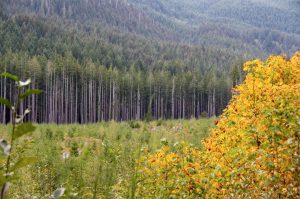 The US president recently suggested that domestic lumber production could be significantly increased by opening federal lands to logging. This move, he argued, would reduce US dependence on lumber imports from Canada and Europe. …At first glance, tapping into federal timber resources might seem like a logical solution. However, the reality is far more complicated. A combination of declining forestry expertise, legal challenges, labor shortages, infrastructure limitations, and lack of private investment incentives makes this an unrealistic path to reduce lumber imports to the US. …While the US president suggests that opening federal lands for logging could boost domestic lumber production, this is an unrealistic expectation. …Despite claims that the US no longer needs Canadian lumber, the reality is that imports from Canada and Europe will continue to play a crucial role in meeting US domestic wood demand in the future.
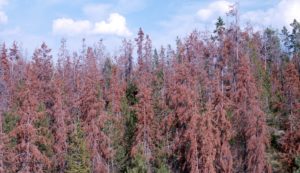 It might be time to treat your trees to prevent pine beetle infestations in the Black Hills. That’s according to US Forest Service Entomologist Kurt Allen, and Department of Agriculture and Natural Resources Forest Health Specialist John Ball. The pair have been hosting talks and information sessions on mountain pine beetle outbreaks since 1999. Last week, they stopped in Spearfish with a handful of clear messages. For one thing, the Black Hills is not necessarily on the verge of a mountain pine beetle epidemic — at least not on the scale last seen a decade ago… “Between the larvae feeding and a blue stain fungus they introduce, they kill trees very quickly,” Ball said.
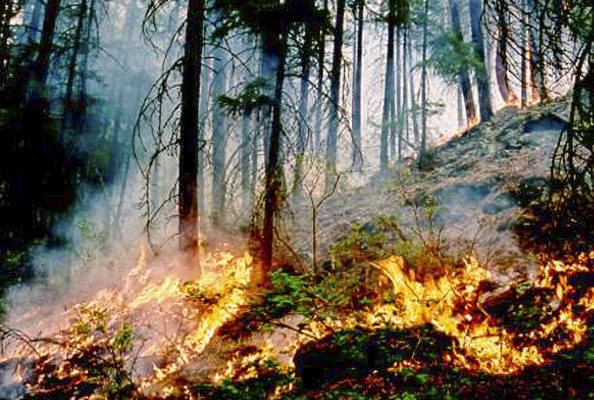 Washington’s Department of Natural Resources says it’s coming up with backup plans to address the growing threat of serious wildfires in the state. The typically close working relationship with federal forest managers has frayed under the Trump Administration. It started in mid-February, when the U.S. Department of Agriculture cut thousands of probationary employees at the U.S. Forest Service. The USDA is in charge of stewarding places like the Mount Baker-Snoqualmie National Forest and the Gifford-Pinchot National Forest. Altogether, about 2,000 employees across the country were fired. The USDA emphasized that no “operational firefighters” had been let go, and argued the critical work of responding to wildfires would not be interrupted. …Grassroots Wildland Firefighters estimated that three-quarters of the employees laid off had secondary wildland firefighting duties, meaning firefighting wasn’t their primary job, but they were pulled in to fight fires as needed.
 Two-thirds of Canadians agree the next federal government should prioritize action on climate change and protecting nature, a new poll has found. Sixty-two per cent of those surveyed said Canada should maintain its commitments on climate change despite the U.S. government’s recent decision to pull out of the United Nations Paris agreement to lower greenhouse gas emissions. A similar share of respondents supported Ottawa investing in renewable energy over fossil fuels. The poll questioned a panel of 1,548 Canadian adults in an online survey from March 7-10. Michael Polanyi, a policy and campaign manager at Nature Canada, said his group is concerned the $6.5 billion promised to industry last week does not come with guidelines that would prioritize workers and limit harms to nature. “It’s in Canada’s economic interest in terms of accessing global markets that we’re not further degrading forests,” Polanyi added, pointing to tightening EU regulations. “There’s a risk of closing market off to Canadian forest products.”
 KANSAS CITY, Mo. — An extreme fire danger continues to affect all counties across Kansas this week, and Missouri is also under a high fire danger this week. In Missouri, there were more than 40 wildfires burning across the state as of Monday morning. In Kansas, there were four — one burning across 1,500 acres east of Winfield and another spanning 1,200 acres west of Dover. “This week brings continued high fire danger across the state,” the Forest Service said. “Unfortunately, this is just the beginning of fire season.” In preparation for the fire danger this week, the Forest Service said it’s coordinated with the Great Plains Interstate Fire Compact to bring in reinforcements from out of state — including Wyoming and Utah.