 BC’s Auditor General says the province’s forest carbon accounting isn’t consistent or transparent enough. In related news: a Montana study on the driving influences of forest carbon storage; Canada supports tree planting in Quebec; BC’s Forest Practices Board calls for protection of cultural sites; and the Canadian Parks and Wilderness Society releases its report card on provincial conservation efforts.
In Business news: the United Steelworkers ratify a 4-year collective agreement with Canadian Pacific Kansas City; BC seeks to strengthen its forestry sector; Montana sees pros and cons with Trump’s orders; Canadian housing isn’t immune to trade war; US consumers fear tariff impacts; North Cowichan braces for forest sector fallout; and the European Commission reviews its retaliatory options.
Finally, US uncertainty positions Canada for more mass timber construction.
Kelly McCloskey, Tree Frog News Editor

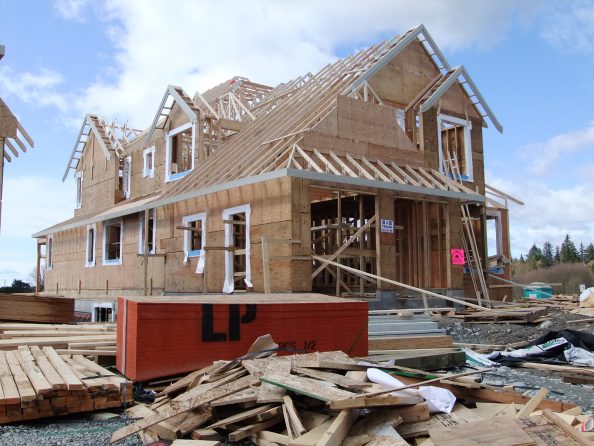 Lumber and other costs could soar … but that’s not even the biggest problem. First, Canada was hit with tariffs. Then it wasn’t. Then came March 4, a.k.a. Tariff Tuesday. Then the U.S. stock markets tanked and big American industries — including the auto sector — ramped up their tariff objections. Then we had Oops Never Mind About Those Tariffs For Now Thursday. …As it stands, Canada has a second tariff reprieve on goods covered under the Canada-U.S.-Mexico Free Trade Agreement. Until April 2. So this trade war is far from over. Whether directly or due to instability, it affects every aspect of our economy — and that includes housing. …While builders can use Canadian lumber, of course, other materials and products are traditionally imported largely from the U.S. These include appliances, glass windows and doors, ceramic tiles, hardware components such as fasteners, and machinery and tools.
 Ravi Parmar, Minister of Forests, celebrated the official opening of Canoe Forest Products’ new kiln. The new kiln was made possible with funding from the Province’s BC Manufacturing Jobs Fund (BCMJF). …Canoe received more than $2.2 million in November 2023 to commission a new kiln, boosting both production and sustainability at its operation in Salmon Arm and help protect 200 jobs. …Parmar accompanied Canoe employees, community guests, and Nick Arkle, CEO of the Gorman Group, at an opening ribbon-cutting ceremony. …Parmar is also visited Tolko Industries who received $8 million to help expand Tolko’s Heffley Creek operation. Family-run Gilbert Smith Forest Products in Barriere received $1.1 million to support facility modernization and new equipment. AcuTruss Industries in Vernon received $100,000 to support the purchase and commissioning of equipment to manufacture precision cut I-joists through automation.
 Following the US government’s imposed tariffs on steel and aluminium, Cepi has called on the European Commission to continue negotiations, citing the potential for future tariffs including pulp and paper and aiming to avoid supply chain disruptions. Cepi is currently taking part in a consultation launched by the European Commission. …The confederation asks the Commission to exclude from such EU retaliation list products that risk being in short supply in the EU. …According to Cepi, the EU imports around 900,000 tonnes of pulp per year from the US and close to 600,000 tonnes of paper and board, while the EU exports about 1600,000 tonnes of paper and board to the US and around 350,000 tonnes of pulp. It states that since a multilateral agreement of all major pulp and paper producers in January 2004, there have been no import tariffs on both sides of the Atlantic.
 A surprise jump in inflation and a flood of “noise” in the economy may push the Bank of Canada to pause its interest rate cuts next month, some economists argue. Statistics Canada said that the annual rate of inflation accelerated sharply to 2.6% in February as the federal government’s temporary tax break came to an end mid-month. That marks a sizeable jump from the 1.9% increase seen in January, when Canadians saw GST and HST taken off a variety of household staples. …Economists expect Ottawa’s move to strike the consumer carbon price as of April 1 will take some steam out of the inflation figures next month. But Nguyen argued the pressure from the trade dispute — Trump has threatened another wave of tariffs on April 2 — will “outweigh” the benefits of eliminating the carbon price for consumers.

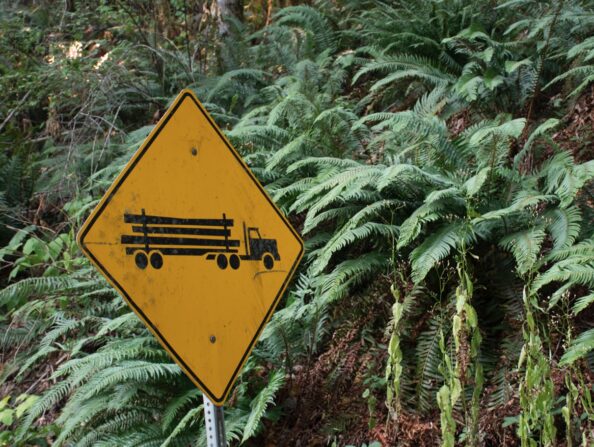 Two-thirds of Canadians agree the next federal government should prioritize action on climate change and protecting nature, a new poll has found. The national poll was carried out by Leger on commission from the B.C.-based environmental group David Suzuki Foundation. A similar share of respondents supported Ottawa investing in renewable energy over fossil fuels. …The poll questioned a panel of 1,548 Canadian adults in an online survey. In a letter sent Tuesday to the leaders of all major federal political parties, the David Suzuki Foundation joined 13 environmental groups calling on the next government to provide tariff relief measures that don’t lead to the over-harvesting of Canadian forests. The letter also lobbies the next federal government to craft tariff relief measures that prioritize funding Canadian workers — not foreign-owned forestry corporations. …“Unsustainable logging practices in Canada put this key export market at risk,” the letter notes. “Canada must acknowledge and reform current industrial logging practices that degrade forest ecosystems.”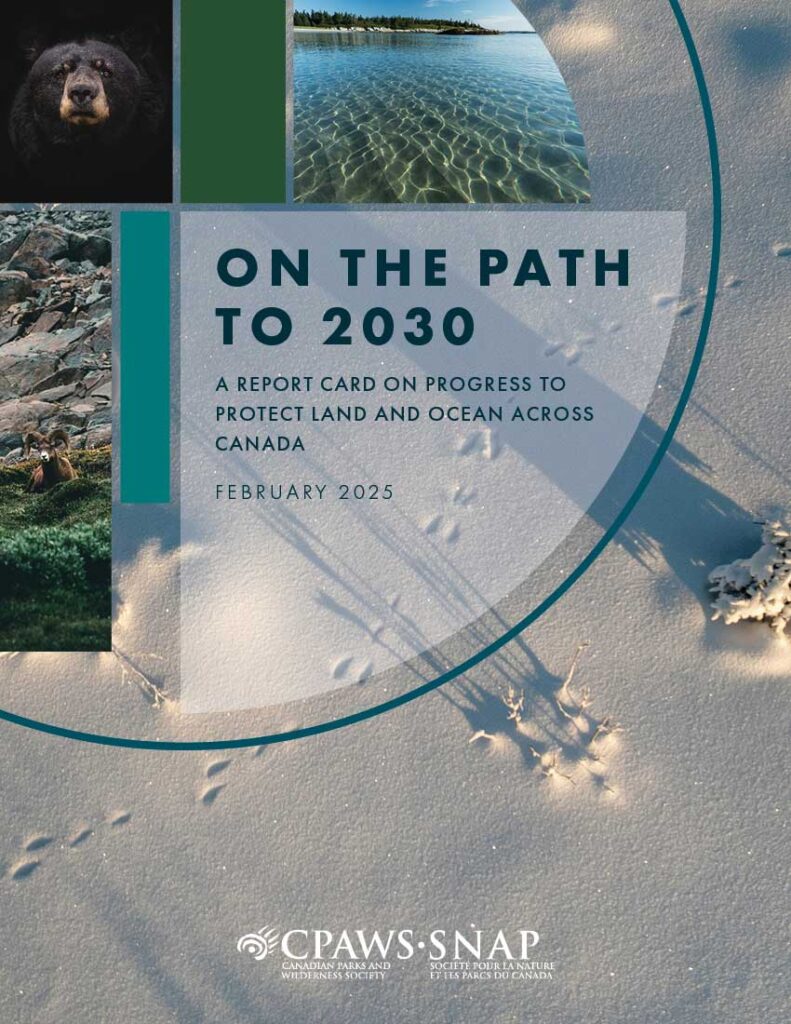
 West Kelowna, B.C. – …Ntityix Resources LP (Ntityix), owned by Westbank First Nation (WFN) has undertaken extensive wildfire risk reduction work . They have achieved significant milestones in their ongoing efforts with support from the Ministry of Forests and the Forest Enhancement Society of BC (FESBC). …“Our government has all hands on deck to protect people, communities and forests, but we cannot do it alone. That’s why the work done by organizations like Ntityix is critical, especially in the Thompson Okanagan region where the wildfire risk is high. I thank them for doing their part in the fight against climate change and wildfires,” said Ravi Parmar, Minister of Forests. …Ntityix has been at the forefront of wildfire risk reduction initiatives in the Thompson Okanagan region, leveraging cultural practices and traditional knowledge to enhance fuel modification zones and significantly contribute to long-term wildfire mitigation strategies.

 Gatineau, Quebec — Natural Resources Canada announced more than $16 million in funding for four tree-planting projects that will bring environmental, health and social benefits to both urban and rural communities across the province of Quebec. The City of Gatineau and the City of Saint-Jean-sur-Richelieu are receiving funding for urban tree-planting projects that will plant new trees on public lands, helping to capture carbon, increase biodiversity and cool areas vulnerable to extreme heat. …These projects are being supported in part by Canada’s 2 Billion Trees (2BT) program. This program is dedicated to working with governments and organizations across the country to support the expansion of Canada’s forests while creating sustainable jobs in communities.
 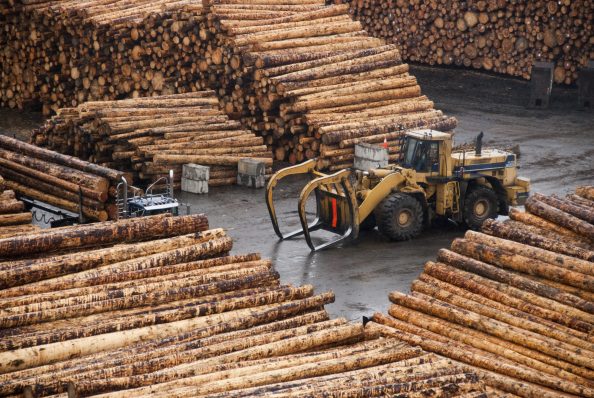 President Donald Trump’s March 1 Executive Order calling for “