 Northern Pulp’s proposed pulp mill will require $2.5 billion in private-public funding. In other Business news: cooler heads prevail on US-Canada tariff escalation, but Trump’s steel levies beget countermeasures by Canada and Europe; Alberta’s forest industry seeks tariff support at home; and Drax is not in breach of its UK sustainability obligations. Meanwhile, lumber prices and lumber futures continue to oscillate and Canada cuts its interest rate to 2.75%.
In Forestry news: the USDA Forest Service hires back all 6,000 fired workers—as layoffs sparked wildfire preparation concerns; Louisiana Tech names Paul Jackson director of Ag Sciences and Forestry; the remains of California firefighter from 2020 El Dorado Fire are finally confirmed; and the latest news from FSC Canada.
Finally, and sadly, longtime forestry advocate and North Cowichan mayor Tom Walker died March 7.
Kelly McCloskey, Tree Frog News Editor

 A Vernon internet personality known for her funny online responses has shifted to creating political content with an upcoming federal election and ongoing trade war with the United States. Vernonite Elle James, known online as Shameless Elle, has been creating content for years, primarily making humorous reaction videos. Things started to shift for James during the most recent U.S presidential election.


 The Bank of Canada has cut its overnight lending rate by 25 basis points to 2.75 per cent, it announced on Wednesday. In a note explaining the decision, the bank said the economy started the year strong, with solid GDP growth and inflation within its two per cent target. But tariff uncertainty caused by the on-again, off-again trade war between Canada and the U.S. has weighed on business spending and hiring, and shaken consumer confidence, the decision said. It’s “against this backdrop” that the central bank decided to cut the rate by a quarter point, Bank of Canada governor Tiff Macklem wrote in his remarks. …Macklem has noted in the past that the bank cannot shield the Canadian economy from the financial impact of tariffs, but that it can instead use interest rates to manage a potential surge in inflation.
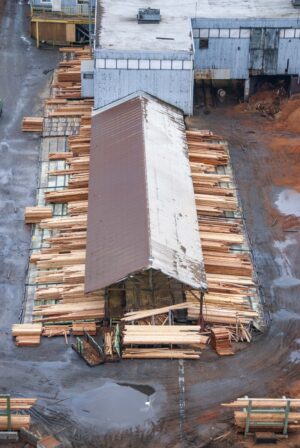 I have received several questions from owners and contractors regarding what to expect with lumber prices given the tariffs (or the potential of tariffs, depending on the day). The short answer is prices will go up. The long answer is much more complicated and hinges on a number of factors and considerations. 1. Almost 30 percent of the lumber used in the U.S. each year comes from Canada. …2. Any tariffs or potential for tariffs creates opportunistic price increases. …3. Demand, however, doesn’t seem to be particularly strong for new construction at this time. …4. Tariffs do help to onshore manufacturing (a long-term positive), but the trees aren’t all in America. …In the short-term, tariffs create more uncertainty and increased pricing, which only further adds to the inflation story. In the long-term, tariffs on lumber won’t achieve the level of onshoring that can happen in other industries.
  Lumber futures rebounded to around $650 per thousand board feet, nearing the two-and-a-half-year high of $658 touched earlier this month as escalating U.S. tariff threats on steel, aluminum, and dairy—along with the prospect of sharply higher auto tariffs—stoked fears of further trade restrictions, reversing the recent plunge. The renewed trade war tensions have heightened concerns that lumber could be the next target, prompting traders to reassess supply risks. Earlier, prices had dropped to around $600 after President Trump delayed a 25% tariff on Canadian softwood for the second time, temporarily easing supply concerns. The proposed levy, which would raise total duties to as much as 52%, could significantly strain North American production and push construction costs higher. However, the latest escalation in the trade war has reversed sentiment, with traders wary that lumber could still face new restrictions, driving speculative buying. [END]
 Now that a 25% tariff on lumber from Canada is looming, will this cause crazy wood pricing to return? To some extent, that is very probable, and here’s why. In 2024, our country got about 72% of its lumber from its own forests. The rest was imported from various countries, especially Canada, from which we purchased 28.1 million cubic meters last year. Canada accounts for 84.3% of all softwood lumber imports. …While it might be possible to switch to importing more lumber from other countries, none has Canada’s large production capacity. Also, supply chains — especially for lumber — are complex and costly to change, says Frederik Laleicke, at NC State University. …As long as demand for lumber doesn’t drop, a 25% tariff on Canada will likely make lumber—and therefore new houses and renovations—more expensive since US companies will raise the price of Canadian-sourced lumber to compensate for the tariffs.

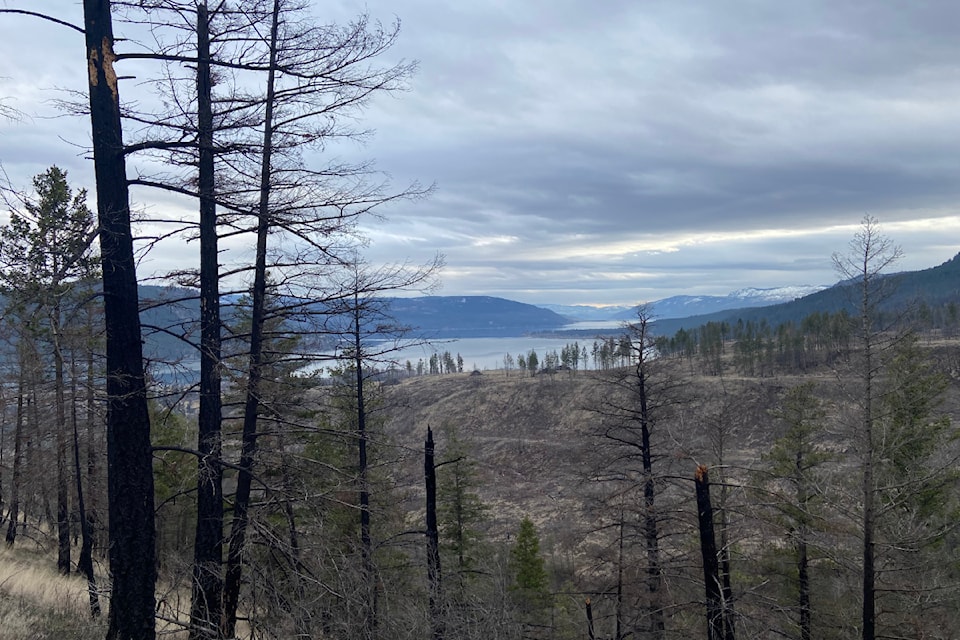


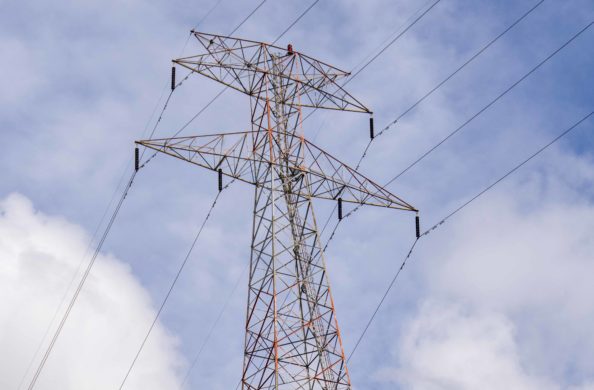 Oregon lawmakers are considering a legislative package that would provide some protection to utility companies whose equipment sparks wildfires. House Bill 3917, introduced Tuesday by Rep. Pam Marsh, D-Ashland, would create a fund to help people who lose homes or businesses to utility-caused wildfires — as long as they agree not to sue utility companies for that damage. Marsh is also sponsoring a complementary bill, House Bill 3666, which would allow the Oregon Public Utility Commission to grant a safety certificate to utilities it deems are “acting reasonably with regard to wildfire safety practices.” The wildfire assistance fund created by HB 3917 would be seeded by utility companies that are regulated by the state’s Public Utility Commission, including Pacific Power and Portland General Electric. Half of their their seed contribution could come from ratepayer dollars, and the other half would come from the share of rates designated for profits.
 HORRY COUNTY, S.C. — As the Covington Drive fire in Carolina Forest reaches Day 11, the South Carolina Forestry Commission told News13 the agency will cover all its costs associated with fighting the blaze but that it’s “too early to know” what the actual price will be. “We will cover all our costs associated with the fire — personnel, food, lodging, equipment, etc,” the agency said. “Since the Southeast Compact was activated, we will reimburse the Florida IMT for their costs — personnel, food, lodging, equipment. As with all large incidents of this type, there will be expenses we don’t even know about yet that we will have to pay for.” The forestry commission said since the fire management assistance grant was approved, FEMA will reimburse agencies and fire departments for 75% of approved costs.
 In 2006, Brazilian President Lula da Silva’s government passed the Public Forest Management Law, implementing a forest concession scheme designed to regulate and legalize logging activities in Brazil’s forest — in particular, the Amazon. Forest management consists of removing a small number of trees whose species are valued in the market. After that, the area can only be explored again in 30 to 40 years, following its regeneration cycle. Behind on its concessions targets, the current government wants to almost quadruple the current area of federal concessions by 2026. Even though it is different from deforestation, timber management has never been seen as a way to conserve the forest by traditional peoples.
 LONDON, March 12 – British energy regulator Ofgem said on Wednesday that it had not found evidence of a breach of sustainability obligations by power company Drax, in the watchdog’s review of reports prepared by auditor KPMG. Renewable power generators in Britain can receive renewable obligation (RO) certificates which can then be sold to energy suppliers who use them to sell renewable electricity products to customers. For biomass power plants to qualify for the certificates they must show at least 70% of their biomass fuel comes from sustainable sources. Green groups have long criticised the sustainability credentials of biomass power plants, which burn wood pellets to generate electricity. In 2023, regulator Ofgem opened an investigation into whether Drax was in breach of annual reporting requirements under the RO scheme. Ofgem said it reviewed over 3,000 documents and did not find evidence to support claims that sustainability obligations had been breached.