 US Forest Service chief Randy Moore announced his retirement with concern for fired employees. In related news: the firings decimate an already understaffed agency; Western states scramble to prepare for wildfire season; and the hiring-freeze endangers spotted owl protections. Meanwhile: Brussels confirms U-turn on EU green laws; columnist Terence Corcoran says shift is the new normal; and forestry CEO Ken Kalesnikoff says we’ve done a poor job of telling our story.
In tariff news: the White House says tariffs are coming but there’s still room to negotiate; a Montana professor points to local downsides; and an Ontario logger says Canada is missing the point. Meanwhile: an Alberta appeal panel upholds West Fraser Mills safety action; and Stella-Jones reports positive Q4, 2024 earnings.
Finally, BC is Burning documentary looks at the devastation caused by wildfires.
Kelly McCloskey, Tree Frog News
 WASHINGTON — U.S. President Donald Trump said again Wednesday he plans to hit Canada and Mexico with devastating duties — but a White House official confirmed on background that the tariff plans could change through negotiations. …He signed an executive order to implement “reciprocal tariffs” by raising U.S. duties to match the tax rates that other countries charge on imports starting April 2. He ordered 25% tariffs on all steel and aluminum imports into the United States on March 12. Trump also floated the idea of imposing tariffs on automobiles and forest products in April. …Trump himself seems to be having a hard time keeping track of his massive tariff agenda. …Many experts say Trump’s actions are intended to shake up Canada and Mexico ahead of a review of the continental trade pact. The Canada-U.S.-Mexico Agreement was negotiated during the first Trump administration to replace the North American Free Trade Agreement.
  At the 2025 COFI Convention, we’re diving deep into B.C.’s forest sector competitiveness and sustainability—and how we compare to leading global regions. Join Kurt Niquidet, COFI’s VP & Chief Economist, and Glen O’Kelly, CEO of O’Kelly Acumen, as they reveal findings from a new study benchmarking B.C. against 10 international jurisdictions—including Sweden, Finland, Austria, the U.S., and Brazil. Key insights include: Strengths & Weaknesses – What industry leaders are saying about B.C.’s competitive position; Global Comparisons – How B.C. stacks up on economic and sustainability performance; and Opportunities for Growth – Strategies to strengthen B.C.’s competitive edge. This is a must-attend conversation for anyone invested in the future of B.C.’s forest industry. Don’t miss it—Register before the end of Early Bird Pricing on March 3!
 BOZEMAN, Mont. – The Trump administration’s tariffs are stirring discussions in Montana, with concerns about their impact on local economies. At Montana State University, Dr. Nicole Karwowski, an assistant professor of economics … explains that while tariffs can benefit certain business and factory owners, as well as shareholders of domestic firms, the broader impact tends to be negative. She highlights that these beneficiaries gain from the increased costs international companies face when competing in the U.S. market. The local economy in Bozeman is particularly affected, Karwowski says, due to the rising cost of construction materials. “We import a lot of our timber from Canada. And housing prices are already skyrocketing in places like Bozeman especially. So the different types of construction materials and raw materials are increasing in cost because of these tariffs. Then we’re going to see it harder to be building more in places like Bozeman,” she said.
 The Southern Forest Products Association believes strong partnerships are essential for sustaining growth and success. That starts with our most valuable partnership — our members. Their commitment is the driving force behind our success. The 2024 SFPA Value Report recaps the association’s: International market development and success in driving demand for Southern Pine lumber exports; A new, consolidated website; Digital promotion efforts; Membership growth; and Industry collaboration.
 MONTREAL — Stella-Jones announced financial results for its fourth quarter and year ended December 31, 2024. Sales for the fourth quarter of 2024 amounted to $730 million, up 6% from sales of $688 million for the same period in 2023. …Net income for the period amounted to $52 million compared with $56 million in the corresponding period of 2023. …Sales for the year ended December 31, 2024 reached $3,469 million, up 5%, versus sales of $3,319 million in 2023. Net income in 2024 was $319 million, compared to net income of $326 million in 2023. Despite the lower net income, earnings per share in 2024 was higher at $5.66 versus $5.62 in 2023 due to the continued repurchase of shares. …Eric Vachon, CEO of Stella-Jones, “We achieved solid results in our infrastructure product categories, even in the face of softer market demand. We acquired new customers, maintained our expanded EBITDA margin of over 18%, and delivered strong operating cashflows.”


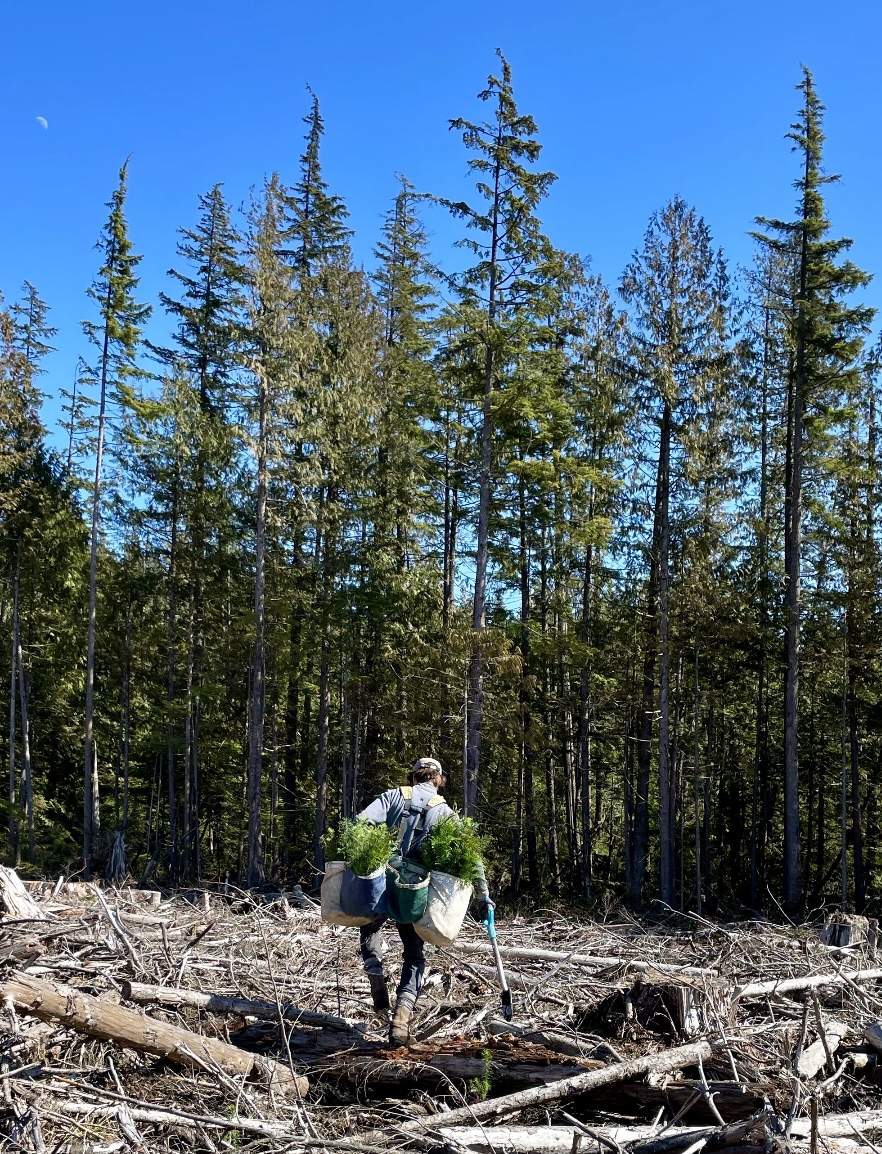 The Tłı̨chǫ Government in the Northwest Territories signed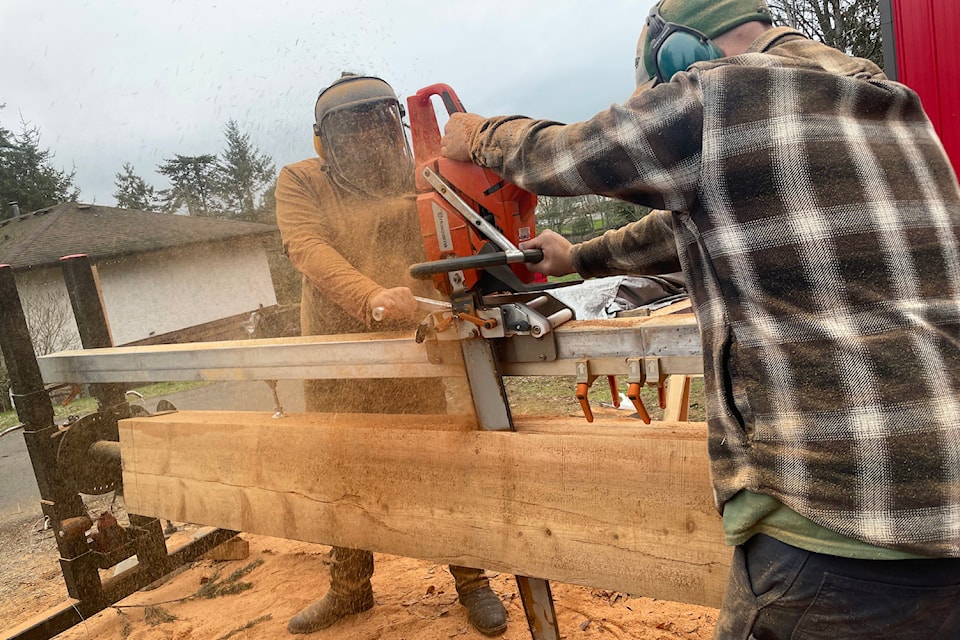


 For over a century, the American environmental movement has been animated by an intuitive and simple idea: Protecting trees means leaving forests alone. This stance—championed by figures like John Muir—was based on the belief that any alteration, including thinning or intentional burning, of wilderness harms it. While this ideology helped prevent widespread destruction by timber companies, it also created unintended consequences. Research now shows that overgrown forests are fueling unnaturally severe wildfires, causing irreparable ecological damage and massive economic loss… A key issue remains limited funding. Budget cuts to state and federal land management agencies have reduced the resources available for proactive fire prevention… Insurance and legal concerns further complicate matters. While the need for improved wildfire mitigation is widely recognized, legislative gridlock, environmental regulations, and partisan divisions have slowed progress.
 Each spring, the U.S. Forest Service hires dozens of seasonal biologists to venture into remote Northwest forests on federal land and set up acoustic recorders to monitor for sounds indicating the presence of northern spotted owls, a threatened species. There are only as many as 5,000 northern spotted owls left in the Northwest… The counting is crucial for preventing the owls’ extinction. But President Donald Trump ordered a hiring freeze that means the Forest Service cannot hire more than 40 seasonal scientists to count the owls, according to Taal Levi, an associate professor at Oregon State University who works on owl monitoring. The monitoring typically involves about 60 scientists working from central California to Canada, Levi said. It also means the agency will likely go without dozens more scientists needed to monitor threatened and endangered salmon, frogs and other fragile species….
  The US Department of Agriculture revoked a federal tree-planting grant to Keep Indianapolis Beautiful in a move the nonprofit’s CEO Kranowitz said may be the result of anti-DEI initiatives coming from the Trump Administration. The money would have helped KIB plant more trees throughout the city, and those plantings should not be all the same kind of tree, Kranowitz explained. The $400,000 grant for urban forestry projects was awarded to the organization in January through the Arbor Day Foundation, but was then clawed back on Tuesday. There’s growing evidence that words like “biodiversity” are being targeted by federal agencies bent on terminating Diversity, Equity and Inclusion initiatives across the country. U.S. Secretary of Agriculture Brooke Rollins recently cancelled a federal contract in Hawaii for an agency meeting on biodiversity and has identified and canceled other training programs on environmental justice claiming they run “contrary to the values of millions of American taxpayers.”
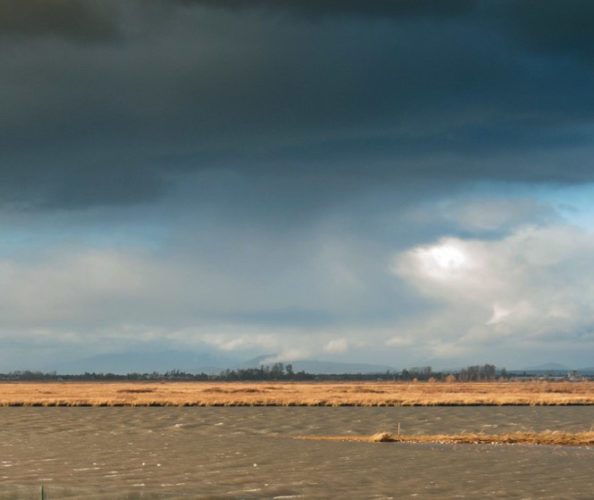 A major shift in environmental policy seems to spreading around the world. The most high-profile indicator of the shift is Germany, where Social Democratic Chancellor Olaf Scholz and his Green Party coalition partner were thrown out of office on Sunday… The only question left is how far the green wave has receded in Germany — and across Europe. The French government has been accused of watering down environmental regulations. Elsewhere in Europe, green parties have been “kicked out of government” in Austria, Belgium and Ireland. While the Canadian policy establishment resists declaring a trend, the carbon war has moved down the priority ladder, as evidenced Monday during the French-language Liberal leadership debate. A party that’s about to pick Mark Carney, the planet’s top climate-policy powerbroker, as leader, rolled through two hours of debate without coming up with anything coherent to offset its about-face removal of its own consumer carbon tax.
 The Alberta Occupational Health and Safety Appeal Body has denied an appeal from a West Fraser Mills worker who was suspended for one day without pay and received a disciplinary letter that he claimed was retaliation for acting in compliance with workplace safety rules. The appeal panel upheld the original ruling, noting that it properly applied the standard of review in determining the employer had met its burden of proof. The case involved S.G., an employee of West Fraser Mills Ltd., operating as Ranger Board. S.G. filed a complaint under section 19 of Alberta’s Occupational Health and Safety Act (the Act), alleging the discipline was imposed in retaliation for acting in compliance with occupational health and safety requirements.
 Don’t miss the March edition of the BC Forest Safety Council newsletter. It’s jam-packed with information about Safety Heros like Shawn Flynn and Brian Penny. Health updates about pain management, off-road vehicles, managing the last of the snow and daylight savings! How do you stay safe when you find yourself under water? Does your team have an emergency response plan? Plus, what’s new, upcoming events, and even a cheerful rabbit for you to colour in your down moments! Check out this month’s BC Forest Safety News
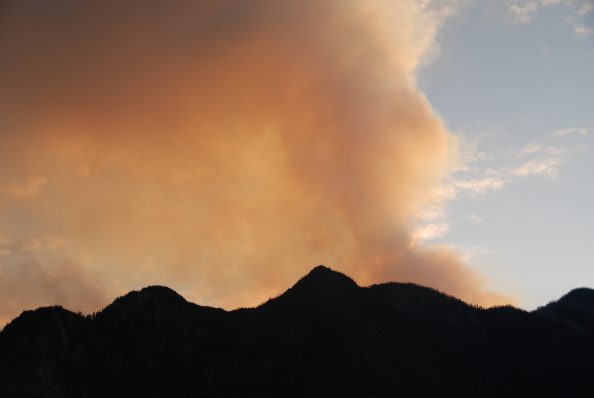 MORIOKA, JAPAN — One person has died, and more than 80 homes appear to have burned down after a wildfire broke out in a northeastern Japan city, local authorities said Thursday, as the region faced its third fire in about a week. Since Wednesday, the blaze has scorched more than 600 hectares in Ofunato, Iwate Prefecture, the municipal government said. With the fire still spreading, about 3,300 residents have been ordered to evacuate. Firefighters battled the blaze through the night, while helicopters were deployed in the morning to contain it from the air. The Fire and Disaster Management Agency requested emergency support from firefighting departments in eight nearby prefectures, and they sent about 690 personnel combined. …Efforts to contain the blaze Wednesday were carried out at ground level as the strong winds precluded waterbombing by helicopters. When the latest fire broke out, strong wind and dry air warnings were in place in the area.