 Health Canada has been ordered to reassess the health risks of glyphosate amid evidence of evaluated risks. In related news: a New Brunswick professor says tree diversity is key; an Ohio professor links forest ecology to wildfires; Trump’s layoffs may raise the risk of wildfires; and Sweden looks to emission-free workplaces in forestry. Meanwhile: Trump’s cuts may impact building safety research; Vancouver opposes code change allowing single-staircase egress; and the latest news from FSC Canada.
In Business news: Canada’s business leaders want Ottawa to fight tariffs with tariffs; BC’s forest minister says US tariffs will be devastating; City of Hinton supports Alberta Forest Products Association’s advocacy plan; and Canadian and US builders brace for layoffs and tougher times. Meanwhile: Mercer and Boise Cascade report Q4, 2024 earnings.
Finally, can Canada challenge the tariffs, and how might the impacts vary by product and city?
Finally (again), a special thanks to everyone who complete our survey. And for those who haven’t – the deadline is today!
Kelly McCloskey, Tree Frog News


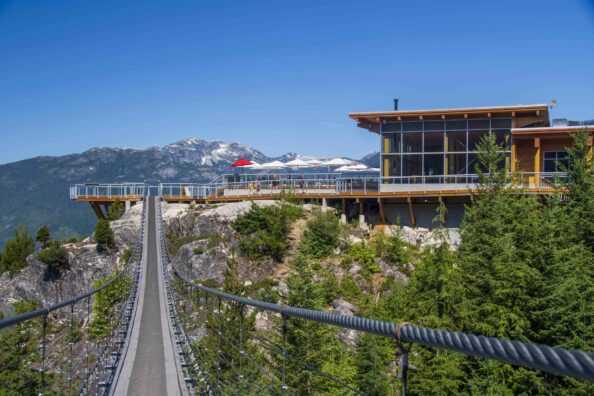 SQUAMISH, BC — Peter Dickson has owned FraserWood Industries, a Squamish-based timber manufacturer, since 1998. He has grown his business, earning contracts near and far, including the Sea to Sky Gondola service building and log cabins at Walt Disney World. One third of his business is exported to the US. …“The biggest problem is our American customers will be reluctant to sign moving forward with the uncertainty.” …David Girard sits on the government relations committee for the Sea to Sky Canadian Home Builders Association, and he said the tariffs would have an outsized impact on consumers and demand for Canadian products, and cause reduced employment. According to a recent survey by KPMG, 48% of Canadian companies contacted said they would invest or produce in the U.S. to retain American customers and reduce costs. But for FraserWood, that’s not an option.
 Hinton Town Council will add its voice in support of the Alberta Forest Products Association (AFPA) advocacy efforts. Nicole Galambos of the AFPA – of which both West Fraser and Mondi are members – appeared as a delegation before council with a presentation called Trade Barriers and Albert’s Forest Industry. “Today [there are] some pressing trade challenges facing our sector, particularly some of the softwood lumber duties and tariffs, in addition to emerging US trade barriers and global competition,” Galambos told council, asking for their help. …AFPA suggested there are six steps the Government of Alberta can take to support the forest industry, the first of which is advocate for Alberta forest products in the US. The second is keep Alberta’s regulatory costs low, with Galambos pointing out that high costs have led to mill closures in BC. The third is … a Build With Alberta Wood Act similar to those in BC and Quebec.
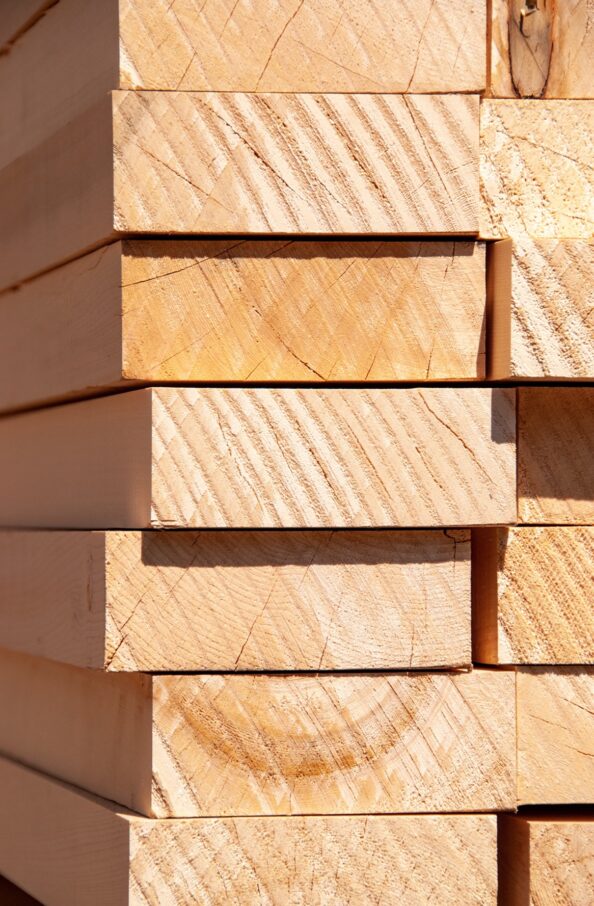 VICTORIA — B.C.’s Forests Minister Ravi Parmar says the expectation of more duties and additional tariffs piled onto Canadian softwood lumber would “absolutely be devastating” for the country’s industry. Parmar says the government expects the U.S. Commerce Department will issue anti-dumping duties by Friday of as much as 14 per cent, on top of the current 14.4 per cent duty. It comes after U.S. President Donald Trump told media on Air Force 1 that his administration was eyeing a 25 per cent tariff on lumber some time around April. Parmar says he knows many forestry workers are going to be worried about their jobs and he’ll continue to fight for them. He says the extra tariffs are “very likely” and Canada should take Trump at his word. …He said provincial and federal governments need to continue to make the case that while such tariffs hurt Canadians, they will also hurt Americans.
 WASHINGTON —
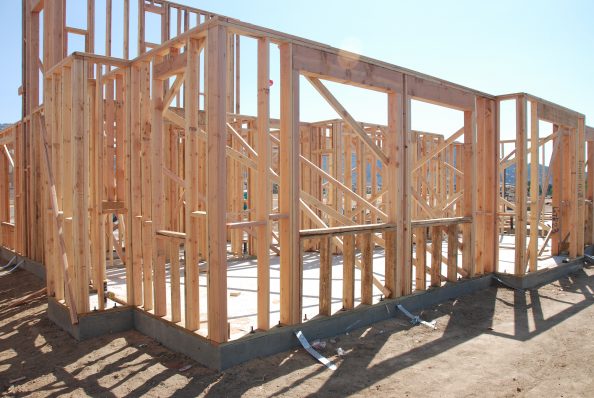
  If Canada is hit with 25% tariffs… the trade impacts for the forest products sector will be wide ranging. …Lumber is the most talked about commodity with respect to tariffs, largely due to the size of the market but also the fact that tariffs would be in addition to duties which are already being paid and are set to rise come August. The US can’t supply its own lumber demand and will have to continue to import Canadian lumber. Prices will rise. …The US is even more reliant on OSB from Canada. …In softwood, ~70% of demand is met by imports and in hardwood the proportion is even higher, at 89%. Canada is the largest softwood pulp supplier to the US, representing 74% of imports; a 25% tariff on Canadian goods would inevitably result in higher costs for US customers that produce paper, packaging and tissue. There are no easy near-term substitution options.
 NEW YORK — Mercer International reported fourth quarter 2024 net income of $16.7 million compared to a net loss of $87.2 million in the fourth quarter of 2023 and a net loss of $17.6 million in the third quarter of 2024. Q4 revenues were $488 million, down from $502 million in Q3, 2024 but up from $470 million in Q4, 2023. Mr. Juan Carlos Bueno, CEO, stated: “In the fourth quarter of 2024, softwood pulp prices remained strong, decreasing slightly from recent record prices.” …Hardwood pulp prices in China and North America decreased in the fourth quarter of 2024 as the market absorbed capacity increases from earlier in the year. …Lumber sales realizations increased, driven by modestly higher prices in the U.S. market, while in Europe, prices remained stable.
  High Point, N.C. — After a successful first year, British Columbia wood expert
  The Government of British Columbia recently approved and enacted changes to the BC Building Code to enable just a single staircase for new small multi-unit residential buildings. However, in response to Vancouver City Council’s approved directive requesting City staff to consider similar changes to the separate Vancouver Building Code, City staff are strongly opposing such a flexible allowance, primarily due to safety concerns. This negative recommendation to City Council takes into account critical feedback previously provided by fire rescue departments in BC during the provincial government’s consultation on its proposed changes. The provincial government’s new regulations enable residential buildings up to six storeys — designed for no more than 24 residents per floor — to have just one egress staircase. Previously, such buildings with three or more storeys required at least two egress staircases.
 For the past 25 years, the Federal Emergency Management Agency (FEMA) has helped develop building codes, the construction standards that help houses survive hurricanes, wildfires and earthquakes. Now, the Trump Administration has ordered that to stop. …FEMA is dropping out of the latest effort to improve building codes. …The recommendations FEMA submitted were filed with the International Code Council, an independent association that develops building codes used by states and local governments. The proposals FEMA is retracting its involvement from focus on helping homes survive strong winds, seismic shaking and rising floodwaters. …The ICC convenes experts and stakeholders in the building industry to review and improve building codes every three years, and is developing a new set of standards now. After they’re approved, many local and state governments across the country adopt the codes, which set the mandatory construction rules in their communities.
 In the February newsletter you’ll find these stories and more:
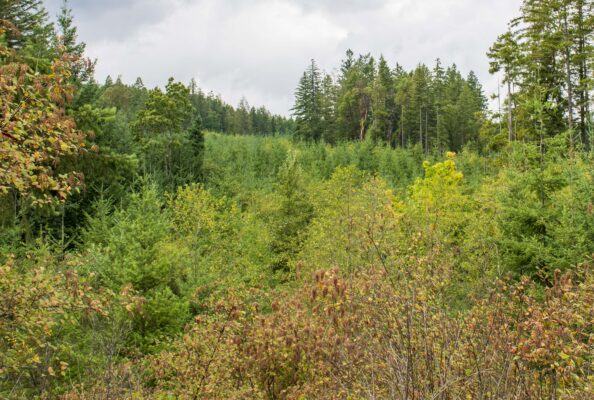 OTTAWA — The federal government has been ordered to reassess its 2022 approval of a popular weed-killer after a Federal Court judge ruled this week the original approval was unreasonable. Justice Russell Zinn gave Health Canada six months to reassess the health risks of glyphosate after the agency failed to show it considered new scientific evidence identifying new or elevated risks associated with the herbicide when it renewed the registration for a product containing it. …Monsanto, has faced multiple lawsuits in the US with multi-million-dollar awards to the plaintiffs, while others have been overturned. …The US Environmental Protection Agency reported in 2020 there were no risks to human health from current uses of the herbicide, but its assessment was overturned. …While the Federal Court’s ruling didn’t speak to the health risks of glyphosate, Zinn said Health Canada failed to show any evidence that it evaluated the new studies.
 PORTLAND, Ore. — An environmental nonprofit is sounding the alarm over the federal funding cuts and hiring freeze instituted by President Donald Trump’s administration, which it said could threaten the population of Oregon’s endangered spotted owl. The widespread layoffs and cuts instituted by the Trump administration have set off a series of protests across the country and around Portland, some of which have focused specifically on the thousands of U.S. National Parks and Forest Service workers who have been fired. The Northwest Forest Plan and the U.S. Bureau of Land Management (BLM) require the endangered owl population to be monitored, but the Center for Biological Diversity said in a news release that the federal freeze means the monitoring “either won’t occur or will be greatly reduced.”
 Fewer wildfires occur in North American forests today than in past centuries, but this decline has increased the risk of more intense wildfires, according to a study published in Nature Communications. While it may seem unexpected, frequent low-intensity surface fires help maintain forest health by naturally reducing fuel buildup over large areas. Researchers from the Cooperative Institute for Research in Environmental Sciences at the University of Colorado Boulder and the U.S. Forest Service’s Rocky Mountain Research Station compared wildfire frequency across two periods: 1600 to 1880 and 1984 to 2022. Using data from 1,850 tree-ring records in historically burned areas, they assessed past fire activity and compared it with modern fire perimeter maps from Canada and the United States. The findings show modern-day fires are much less frequent than they were in past centuries, despite recent record-breaking fire years, such as 2020.
 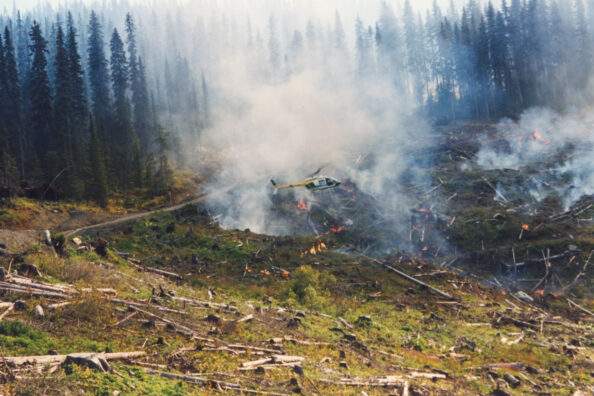 SEATTLE — The termination letters that ended the careers of thousands of U.S. Forest Service employees mean fewer people and less resources will be available to help prevent and fight wildfires, raising the specter of even more destructive blazes across the American West, fired workers and officials said. The Forest Service firings …are part of a wave of federal worker layoffs, as President Donald Trump’s cost-cutting measures reverberate nationwide. Workers who maintained trails, removed combustible debris from forests, supported firefighters and secured funds for wildfire mitigation say staffing cuts threaten public safety, especially in the West, where drier and hotter conditions linked to climate change have increased the intensity of wildfires. …U.S. Rep. Kim Schrier, a Washington state Democrat, said on the social platform X that the Forest Service layoffs are already hurting the state, “and it is only going to get worse. Fire season is coming.”