RISI says lumber price volatility will increase in 2025 due to tightening conditions, duties and policy uncertainty. In related news: Do it Best CEO says tariff impact will be immediate; experts factcheck Trump on US lumber dependance; and tariffs are said to add to Canadian and US housing cost uncertainty. Meanwhile: Canada’s 13 premiers are in Washington DC to push back on tariffs; BC’s Eby says trade war has no winner; and BC, Alberta, Ontario, Quebec and New Brunswick industry groups speak out. In other Business news: Spearhead Inc. wants to produce glulam in Nelson, BC; and BC-based Atli Resources appoints Johathan Lok as CEO.
In other news: BC Forest Practices Board says Interfor properly managed whitebark pine; a new study says Colorado forests are now a carbon source; and Oregon senators want firefighters to be exempt from the USDA hiring freeze. Meanwhile: US lawmakers introduce; the Forest Data Modernization Act, the Future Logging Careers Act, and a Wildfire Research Institute Act.
Finally, February is Friends and Sponsors month at the Tree Frog News. We are delighted to welcome back our many supporters and at the same time invite others to help keep our service running and the subscriptions free and open . If you’d like to know more, please email sandy@treefrogcreative.ca for details.
Kelly McCloskey, Tree Frog News




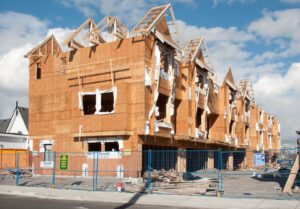 Pressing ahead with steep tariffs on Canada and Mexico risks exacerbating the US housing crisis and threatening the broader economy, dozens of congressional Democrats have warned Donald Trump. …In a letter to Trump seen by the Guardian, Democrats noted that the US imports key construction materials worth billions of dollars – from lumber to cement products – from Canada and Mexico each year. “Given the severe housing shortage, compounded by rising construction costs, persistent supply chain disruptions, and an estimated shortfall of 6m homes, these looming tariffs, while intended to protect domestic industries, risk further exacerbating the housing supply and affordability crisis while stifling the development of new housing,” they wrote. More than 40 Democrats urged the White House to consider housebuilding industry estimates that the proposed tariffs will raise the cost of imported construction materials by up to $4bn.
 The significant risk that tariffs pose to Canada’s economy casts a potentially dark shadow over the housing market. Any economic turbulence arising from tariffs would be felt by participants, whose confidence is critical to the stability of the housing market. …Therefore, assessing the outlook for Canada’s housing market at this juncture is like putting a price on a home before an earthquake—it’s hard to know what shape the structure will be in at the end of the day. Still, we highlight some of the key themes in 2025. …Lower interest rates heat up demand. …Inventory of homes for sale is rebuilding in Canada. …Strained affordability, immigration and uncertainty to keep buyers cautious. …Affordability relief from rate drop will only be partial. …Absent any major economic shock, we’d expect housing market demand and supply to stay balanced in the year ahead, yielding minimal price increases Canada-wide.
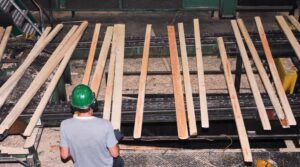 Experts told us that, in theory, if the US stopped importing crude oil and lumber from Canada and Mexico, it still would be able to meet domestic demand using natural resources available in the U.S. But, in reality, they said, the transition would be costly and take some time to implement, among other complications. “Sure: we could probably meet most of our lumber needs domestically,” said Marc McDill at Penn State University. “The reasons why we don’t boil down to two things: 1) sometimes imports are cheaper than our own suppliers, and 2) we value our forests for a lot of other things.” He added that without lumber from Canada, “1) prices would go up, 2) we would harvest more of our own trees, and 3) we would import more from countries.” …Rhett Jackson at the University of Georgia, said that differences in the lumber produced in the US and Canada may be problematic. …“All lumber is not created equally.”
 Ending the forced use of paper straws: Today, President Donald J. Trump signed an Executive Order to end the procurement and forced use of paper straws. The Federal government is directed to stop purchasing paper straws and ensure they are no longer provided within Federal buildings. The Order requires the development of a National Strategy to End the Use of Paper Straws within 45 days to alleviate the forced use of paper straws nationwide. Bringing back common sense: The irrational campaign against plastic straws has forced Americans to use nonfunctional paper straws. This ends under President Trump. …President Trump has made it a top priority to promote a clean and healthy environment for the American people.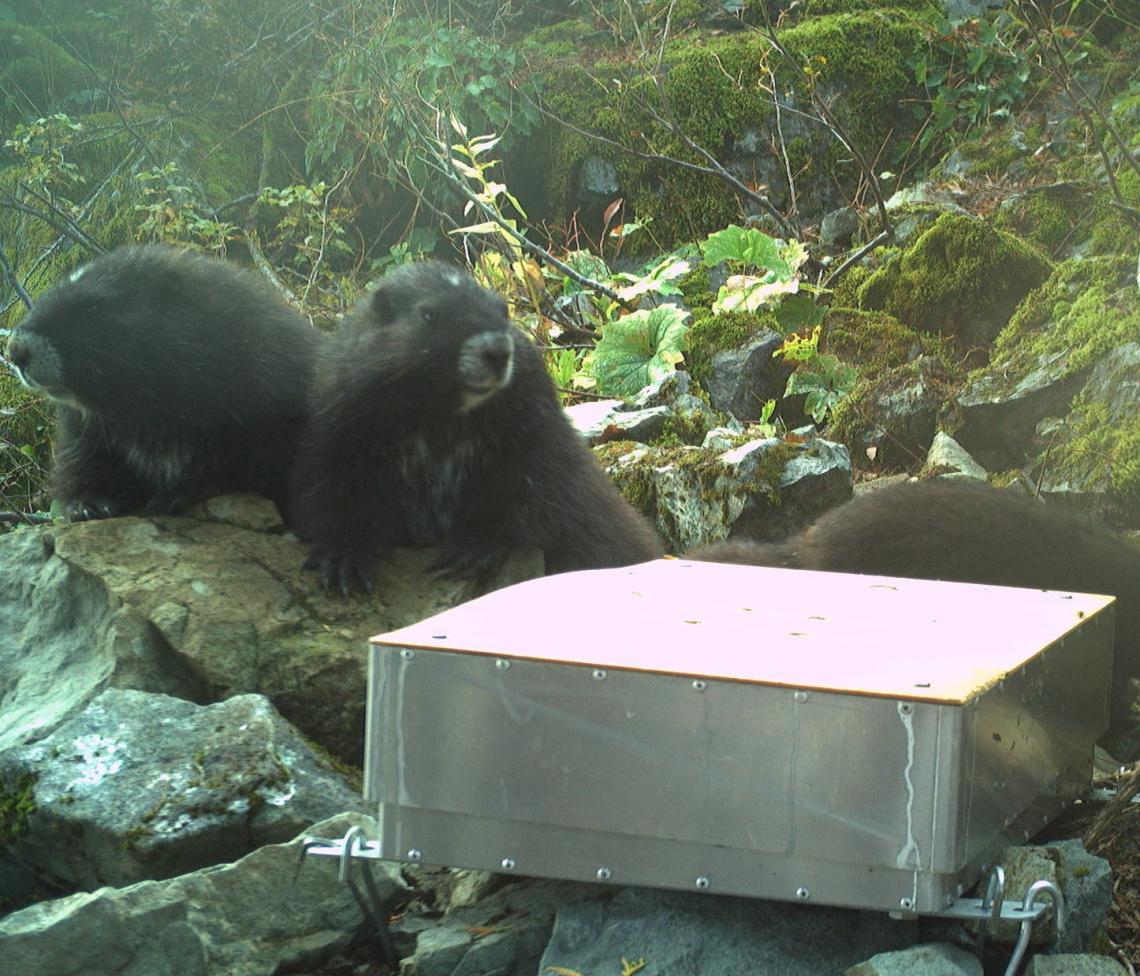
 GRAND FORKS – The Forest Practices Board has finished a complaint investigation into Interfor Corporation’s logging practices north of Grand Forks. The complainant believed Interfor did not properly manage whitebark pine and caused environmental damage during site preparation for planting. The board found that Interfor planned and implemented special management practices for whitebark pine in the cutblock during its operations from late 2021 into early 2022. The investigation also determined that Interfor’s mounding activities – a technique that uses an excavator to scoop and pile soil to create raised planting spots for seedlings – did not cause environmental harm. “Interfor retained whitebark pine trees, avoided scarring them and preserved the species’ natural seed bank,” said Keith Atkinson, chair, Forest Practices Board. “Interfor also planted around 5,200 whitebark pine seedlings on the cutblock, incurring extra expenses to help maintain the species into the future.”
  Dear Premier Houston, On January 21st, you sent a letter to your caucus addressing potential actions your government could take in response to US President Trump’s threat of tariffs, later made available in the Chronicle Herald. We are extremely concerned with some of the content of your letter …as well as the disrespectful way you have described the interests of Nova Scotians and the environmental groups that represent them, referring to opposition voices to unsustainable resource extraction activities as “special interest” groups. …we are left wondering if your term “special interest” group refers only to organizations based in Halifax, or urban areas in general, or perhaps only to organizations led by scientists and other experts in environmental fields. In this case, where does Nature Nova Scotia fall? Our staff and board are rural Nova Scotians, some of us woodlot owners, and foresters, but we are also scientists, and we are certainly environmentalists.
 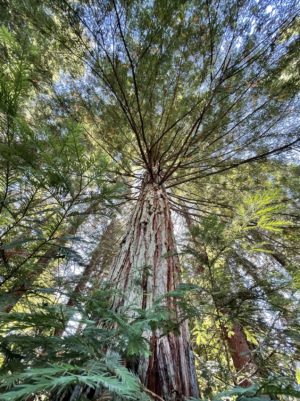 U.S. Senator Jon Ossoff is introducing a bipartisan bill to help grow Georgia’s forestry industry. Sen. Ossoff and Sen. Bill Cassidy, M.D. (R-LA) introduced the bipartisan Forest Data Modernization Act, which would modernize and improve the U.S. Forest Service’s Forest Inventory and Analysis program to ensure reliable data is available to inform forest management decision making. The bipartisan bill would require the Forest Service to prepare an updated strategic plan to expand data collection and further integrate advanced remote sensing technology. According to the forestry industry, the improvements would unlock new economic opportunities for foresters and better protect the environment. The companion bipartisan bill is being introduced by Representatives Kim Schrier (D-WA-08) and Barry Moore (R-AL-01) in the U.S. House of Representatives …“The Georgia Forestry Association (GFA) commends Senators Ossoff and Cassidy for their bipartisan leadership in re-introducing the Forest Data Modernization Act.
 WASHINGTON, D.C. – Senator Mike Lee (R-Utah), Chairman of the Senate Committee on Energy and Natural Resources, and Senator John Curtis (R-Utah) joined Representatives Mike Kennedy (R-Utah-03), Burgess Owens (R-Utah-04), Blake Moore (R-Utah-01), and Celeste Maloy (R-Utah-02), to introduce the Utah Wildfire Research Institute Act. This bill establishes a federal wildfire research institute at Utah State University to study wildfire ecology and develop innovative solutions to reduce wildfire risks. The institute will collaborate with local, state, and federal partners to improve forest and rangeland management and implement strategies for long-term ecological restoration. “Robust forest management strategies are essential to protecting Utah’s nearly 22 million acres of forests from catastrophic wildfires. The Utah Wildfire Research Institute Act will significantly enhance our state’s wildfire preparedness by bolstering the tools and resources available to proactively manage and protect our forests and communities,” said Chairman Lee.
 WASHINGTON – A bipartisan group of lawmakers has introduced the Future Logging Careers Act, a bill aimed at allowing teenagers from logging families to gain early hands-on experience in the industry under parental supervision. The legislation, introduced by U.S. Senators Jim Risch (R-Idaho) and Angus King (I-Maine), along with U.S. Representatives Glenn “GT” Thompson (R-Pa.) and Jared Golden (D-Maine), would amend the Fair Labor Standards Act to permit 16- and 17-year-olds to work in certain mechanized logging operations. Similar exemptions currently exist for youth working in family-owned farms. Supporters of the bill, including the American Loggers Council and the Associated Logging Contractors of Idaho, argue that the measure would help sustain family-run logging businesses by allowing younger generations to gain experience before entering the workforce as adults. Industry representatives have pointed to labor shortages and the challenges of retaining workers as key reasons for the bill’s introduction.