 President Trump signalled the announcement of reciprocal tariffs, as fallout rises from Monday’s steel and aluminum tariffs. In related news: Canada’s forest industry fears it will be next; West Fraser says tariffs mean uncertainty; and US and Canadian homebuilders say their costs will rise. In other Business news: New Brunwsick timber firms win right to appeal major Aboriginal title case; Georgia Pacific invests in its South Carolina plywood mill; and West Fraser Timber and Smurfit Westrock report Q4, 2024 results.
In Forestry/Climate news: Canada recommits to cut emissions under the Paris Agreement; SFI helps landowners with wildfire resilience; Domtar funds Indigenous-led conservation in Canada; progress is reported on First Nations reconciliation in Northern Ontario; and Vancouver faces another legal challenge over tree removal in Stanley Park.
Finally, a Valentine’s Day owl-fundraiser that uses rats named after old flames.
Kelly McCloskey, Tree Frog News
 Revenge, they say, is a dish best served cold. And for an endangered owl breeding program in Canada, it’s also a dish best served dead. For the price of a coffee, spurned and disgruntled lovers can revel in the satisfaction of having a dead rat named after an ex, before it is fed to a northern spotted owl. The British Columbia-based breeder is running its

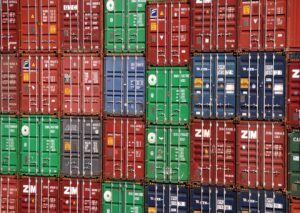 Reciprocal tariffs are straightforward in theory: The U.S. would pose the same levies on imported goods from a given country that the other country imposes on their U.S. imports. But it gets far murkier in practice, as countries often charge different tariffs on different classes of goods. Goldman Sachs economists outlined three approaches Trump could take. “Country-level reciprocity” is the “simplest” strategy which would have the U.S. impose the same average tariffs. “Product-level reciprocity by country” would have the U.S. place marching tariffs on a good-by-good basis by trading partner.” Reciprocity including non-tariff barriers” is the “most difficult” approach as it would encompass a complicated web of inputs including inspection fees and value-added taxes. …4.8% is the U.S.’ weighted average tariff rate if Trump implemented the country-level strategy. …Goods from the 20 countries the U.S. has free trade agreements with, including Australia, Canada, Mexico and Panama, won’t be affected – though Trump has targeted several of those countries in recent weeks.
 U.S. President Donald Trump in an all-caps post on Truth Social Thursday teased a new round of sweeping reciprocal tariffs, matching the higher rates other nations charge to import American goods. …Reciprocal tariffs were one of Trump’s core campaign pledges — his method for evening the score with foreign nations that place taxes on American goods and to solve what he has said are unfair trade practices. …He is set to share more details on the tariffs ahead of his visit with Indian Prime Minister Narendra Modi, White House press secretary Karoline Leavitt told reporters on Wednesday. …The tariffs are likely to hit developing countries hardest, especially India, Brazil, Vietnam and other Southeast Asian and African countries, given that they have some of the widest differences in tariff rates charged on U.S. goods brought into their countries compared to what the U.S. charges them.




 OTTAWA, ON