Denise Mullen
David Elstone
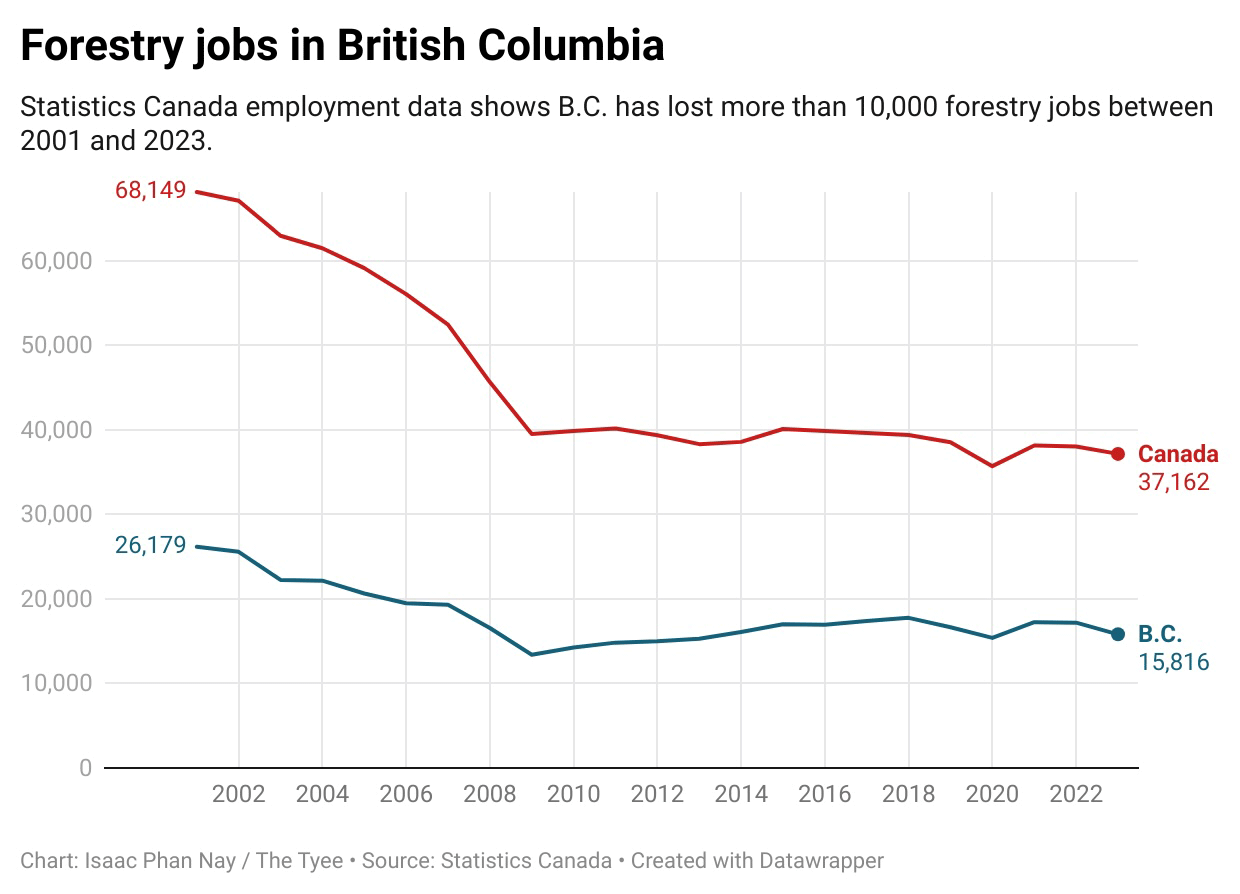
The longstanding softwood lumber dispute, wherein the US persistently alleges BC subsidizes its lumber industry already has the Americans imposing a 14.4% duty on BC lumber, so an additional 25 per cent tariff could prove catastrophic, triggering layoffs, mill closures and economic turmoil in forestry-dependent communities. … Given the escalating risk of a full-scale trade war, BC must adopt innovative and assertive countermeasures to safeguard its forest sector. These measures are emergency response actions to address the regulatory and tax regime in BC and, while temporary, some could have long-term benefits after the tariffs are gone. …Given the potential for widespread sawmill closures, BC must actively seek alternative markets, particularly in Asia. Furthermore, in such extreme times as the province faces, consideration of less politically popular exporting opportunities may need to be explored.
These include temporarily eliminating fee-in-lieu charges on unmanufactured log exports… Eliminating the provincial sales tax where applicable on forestry-related transportation. …Repeal of the carbon tax and other fuel consumption-related taxes. …BC could look to pause, for now, the introduction and implementation of new environmental and forestry policies. …It is imperative to emphasize that… none of these proposals require direct financial handouts from the provincial government. Instead, the focus should be on targeted regulatory relief and cost reductions, ensuring business continuity and workforce stability. BC now faces a critical juncture — either accept mass unemployment and economic stagnation, or implement bold, temporary measures to keep the proverbial lights on for its forest sector. A decisive and calculated response is not just desirable, it is essential for the long-term sustainability of BC’s economy and the forest sector, in particular.

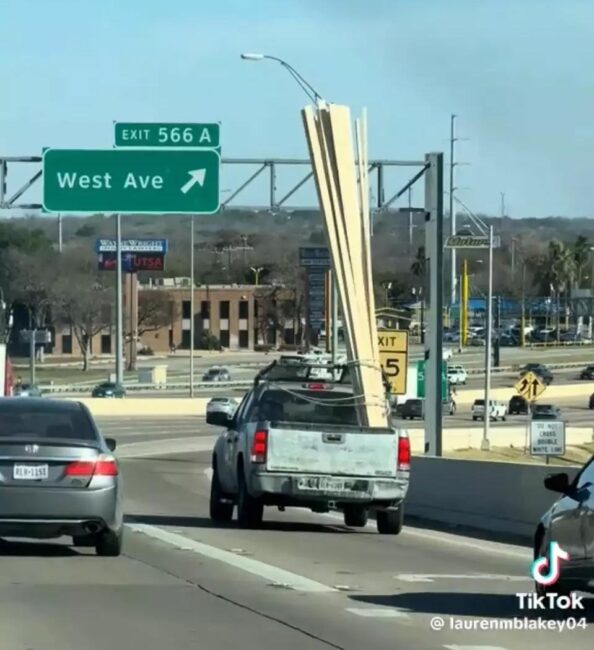 Another questionably secured load in the bed of a truck along a San Antonio highway is stirring up conversation online. A truck was spotted carrying lumber upright with the pieces of wood skyrocketing, clearly taller than the truck itself. …A truck, avoiding state law which prohibits overhang of more than 3 feet either in front or back of a vehicle, opted to put their lumber load upright. Narrowly missing highway overhangs, the lumber appears to violate state law which says the overall height of a load hauled in Texas can’t exceed 14 feet …The beams, which protruded several feet above the back of the truck, were swaying in the wind, tied down only at a couple places at their base by a questionable and slacked set of ropes.

 The Province has formed a new council to advance BC’s interests in the long-standing softwood lumber dispute with the US. The council brings together leaders from the forestry sector and labour, alongside experts on US relations and officials from the BC government. The B.C. Softwood Lumber Advisory Council convened its first meeting on Jan. 30. It advises the Minister of Forests, including the sixth administrative review, providing recommendations on steps BC can take to eliminate the 14.4% duties. The council will also help the Province advocate to the federal government. Parmar will chair the council… and the US Council members are:
 BURNABY, BC — The United Steelworkers union welcomes Premier David Eby and the Government of BC’s decision to expedite major projects, representing an investment of approximately $20 billion, and for establishing a council to advocate for forest workers in the face of existing and pending duties and tariffs. The strategic move to advance critical mineral and energy products not only boosts the province’s economic resilience, but also ensures job security for USW members. …By accelerating these projects, the province is taking proactive steps to mitigate external economic pressures and reinforce that B.C. is a key leader in the sector. The advisory council to deal with potential impacts of increased duties and possible additive tariffs on lumber exports to the U.S. is equally important. The USW is pleased to be included in the council, which is working to get rid of the softwood duties.



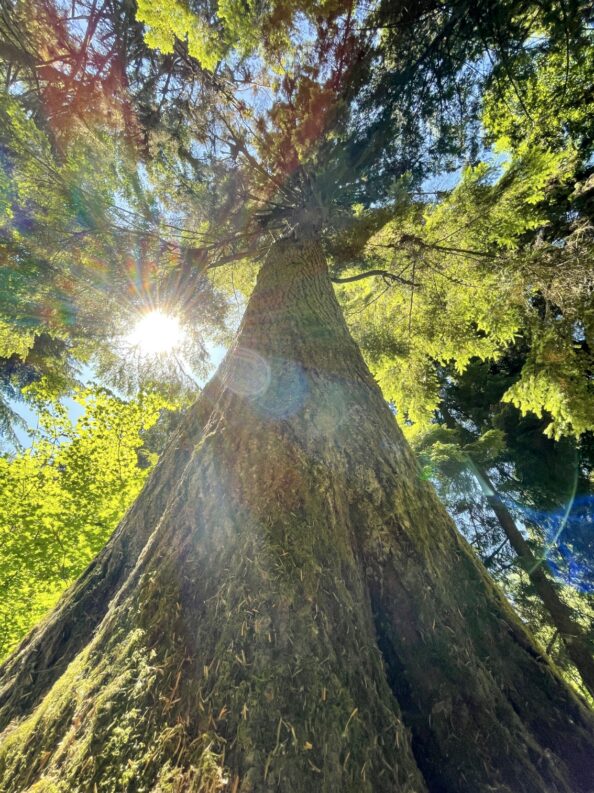 The overall goal is to have a working forest while sustaining ecological and cultural values so that future generations have access to forest areas just as diverse and healthy as those currently enjoyed. For Sunshine Coast Community Forest (SCCF) operations manager, Warren Hansen, ecosystem-based management (EBM), a tool introduced in its operations in 2021, “came from the heart” of what the community wants from SCCF. In his opening remarks at a Jan. 30 Community Advisory Panel and public information webinar, he noted that SCCF’s board and community advisory panel are committed to using EBM in stewarding its tenure by harvesting timber in a way that curbs losses of biodiversity. The overall goal is to have a working forest while sustaining ecological and cultural values so that future generations have access to forest areas just as diverse and healthy as those currently enjoyed. To do that, SCCF relies on advice from contractors including Laurie Kremsater and Anna Yuill, who presented an overview of EBM to about 35 people tuned into the webinar.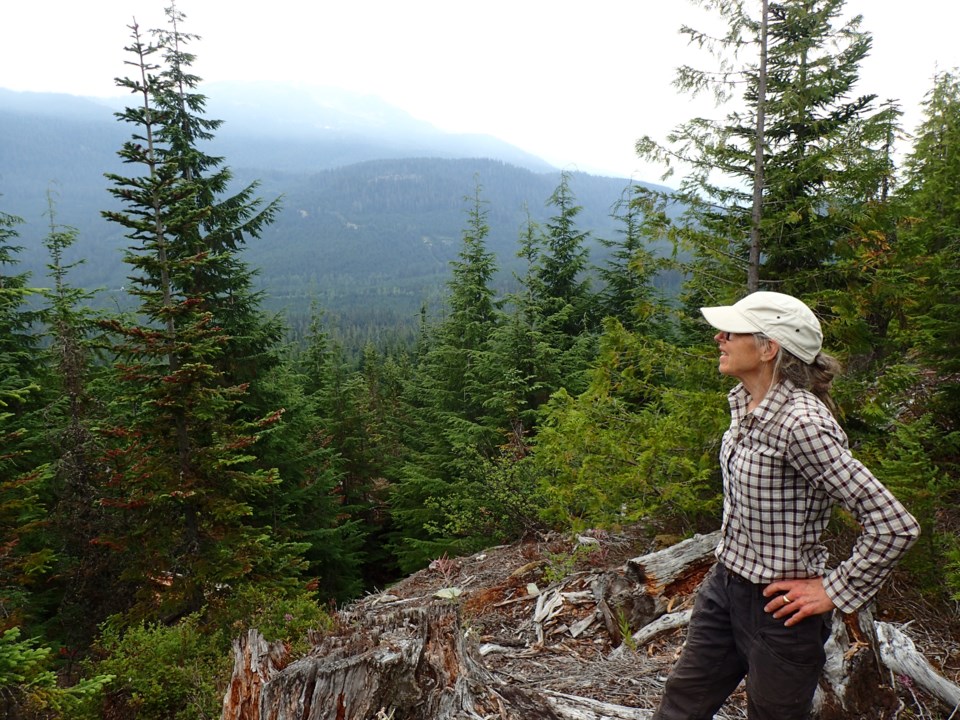
 Dear Minister Ravi Parmar: I am writing to you in reference to your recent Minister’s Statement regarding photos of tree spiking claimed to be of Fairy Creek, submitted to you anonymously and without verification. I understand from the reporter who subsequently interviewed me that the purported sender was “Friends of Fairy Creek.” My name is Kathy Code and I am a Fairy Creek Forest Defender. …Thus, I was dismayed to read your statement. Not only are you giving public voice to unsubstantiated claims from an unknown sender, but the weight of your office gives some credence to the underlying accusations. …I ask on behalf of the citizens of BC that you withdraw your statement as a means of maintaining the dignity of your office.