 BC Wood recently announced that Premier David Eby will open the 22nd Annual Global Buyers Mission (GBM) on Friday, September 5th. This shows the significance of the GBM to British Columbia’s forestry and value-added wood industry. Kicking off the tradeshow, the Premier will join delegates on the tradeshow floor. Premier Eby’s presence highlights the critical role of British Columbia’s wood and forestry sector in driving innovation, sustainability, and economic growth. With recent U.S. decisions increasing countervailing duties on Canadian softwood lumber to over 35%, there’s an unprecedented level of uncertainty about how the market will be impacted. A newly announced panel presentation will analyse the escalating tariffs threatening to disrupt supply chains, inflate costs, and reshape the forestry industry. Forest Minister Parmar will introduce the panel and participants Mo Amir, Nick Arkle, Liz Kovach and Kurt Niquidet on September 4th.
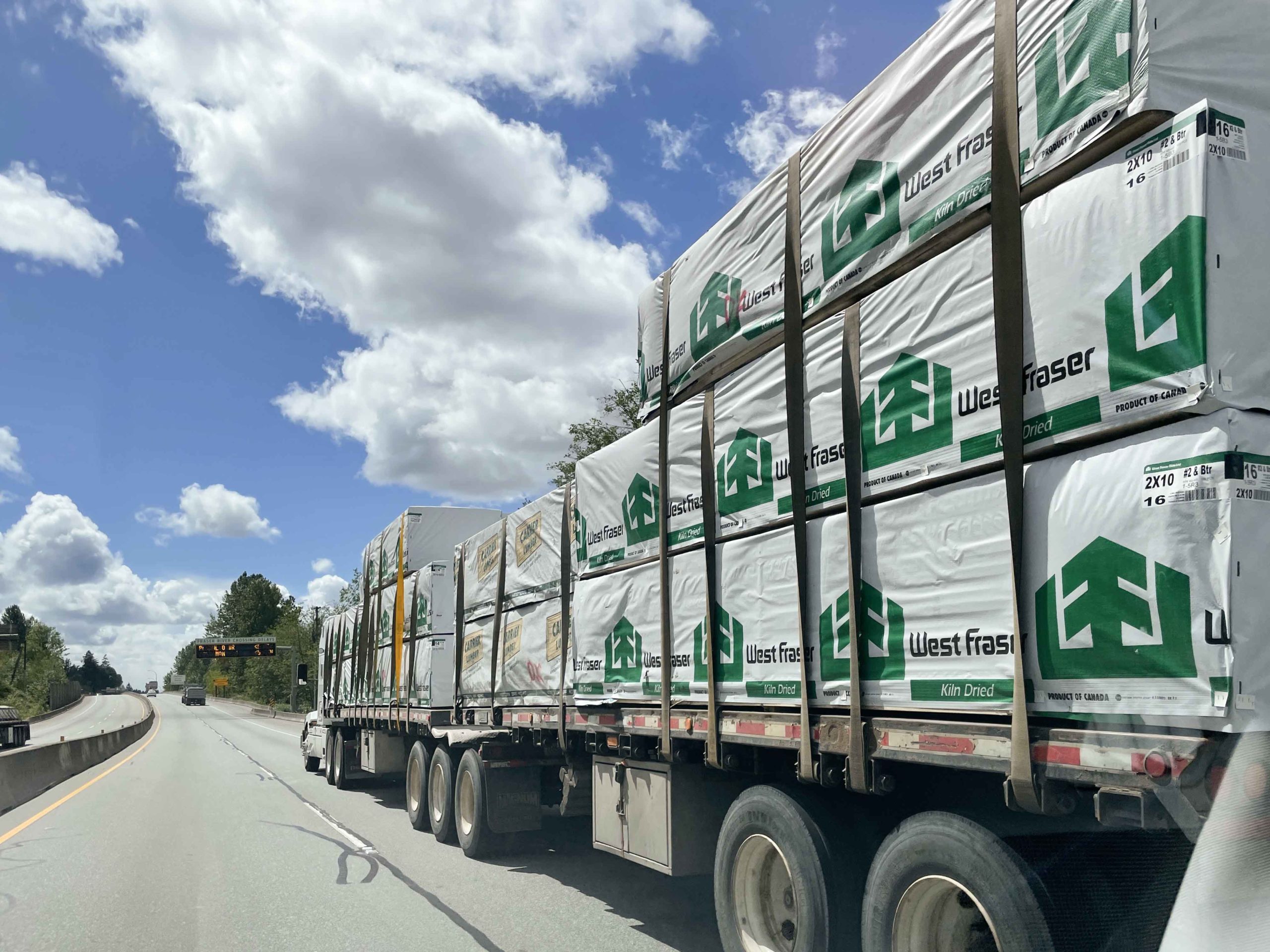 West Fraser Timber is continuing to succeed in this ever-changing world, despite a lower second quarter. …Sales were up slightly from Q1 — $1.532 billion, compared to $1.459 billion. However, earnings were nearly cut in half — $24 million compared to $42 million in the first quarter. “Demand for many of our building products slowed in the second quarter as spring building activity fell short of our expectations,” said Sean McLaren, West Fraser’s President and CEO. “This was more acute in our North America Engineered Wood Products segment, which experienced further easing of demand as the quarter progressed [with] softer U.S. new home construction.” …West Timber’s director of communications, Joyce Wagenaar, told Black Press Media that this year has been a challenge economically. “2025 has brought a number of changes, most notably sluggish demand for building products in Canada and the U.S. due to challenging economic conditions, leading to a slowdown in new home construction,” said Wagenaar.
 A fire at a lumber yard inside Quesnel city limits is being managed by West Fraser Mills and was expected to be completely extinguished on Monday, Aug. 25, the city’s fire chief said. The 500-square-foot fire at BC Eco Chips on Pinecrest Road was first spotted around 4 a.m. on Saturday, Aug. 23, leading to a response from six fire departments in the Cariboo Regional District, BC Wildfire Service and personnel from West Fraser Mills. Reached by phone on Aug. 25, Quesnel Fire Chief Ron Richert said that the fire departments and wildfire service withdrew from the scene around 8 p.m., leaving West Fraser Mills in charge of managing the scene. At that point, the chief said, there were still “significant flames” but it was fully contained. …Richert confirmed that there were no structured damaged or people hurt by the fire. The cause of the fire has yet to be determined.
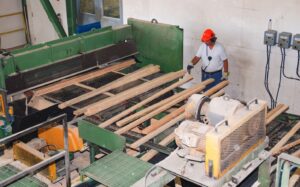 JAFFRAY, BC — The BC Labour Relations Board has dismissed an application from unionized employees with Galloway Lumber Company seeking a court order against the employer in a labour dispute over a negotiated severance agreement due to the permanent closure of the Galloway sawmill, near Jaffray. While the labour board dismissed the application on Aug. 14, vice-chair Carmen Hamilton deferred the matter to the parties’ negotiated dispute resolution process. Meanwhile, both sides are have agreed to bring the matter before an arbitrator who is not available until January 2026. “At its heart, this matter is a contract interpretation dispute,” wrote Hamilton. The United Steelworkers Local L-405 is seeking roughly $1.2 million in severance that was negotiated as part of an adjustment plan that was negotiated following the closure of the mill.
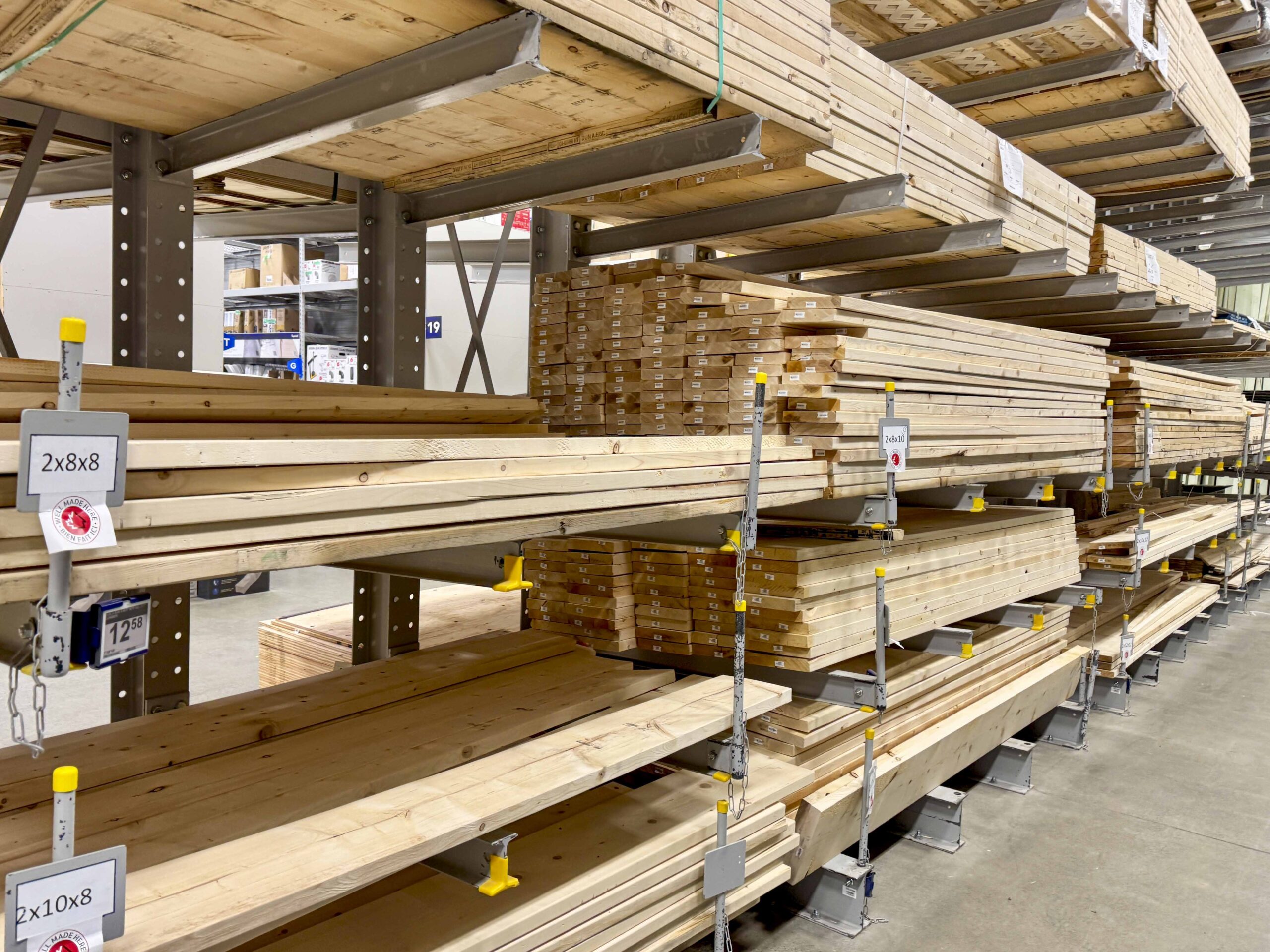 Canadian business owners are sharing growing fears that things could go from bad to worse if the U.S.-imposed trade war doesn’t end soon. New data from the Canadian Federation of Independent Business (CFIB) shows those business owners are being hit the hardest, particularly in B.C. “Two-thirds of B.C. businesses import or export directly to the United States, and when you look at those who do so indirectly, so they buy from importers or exporters, that number jumps up to 80 per cent of all businesses exposed to trade with the United States. So, that’s a huge number,” Ryan Mitton, director of Legislative Affairs in B.C. at the CFIB said. He adds that the situation appears even more grim for hard-hit industries like steel and lumber. “…one in five in BC have been impacted by softwood lumber tariffs, and that’s the highest rate of all the provinces in Canada,” he adds.


 VANCOUVER, BC — Conifex Timber reported results for the first quarter ended March 31, 2025. EBITDA was negative $3.2 million for the quarter compared to EBITDA of $4.9 million in the first quarter of 2025 and negative $7.1 million in the second quarter of 2024. Net loss was $8.3 million for the quarter versus net income of $0.6 million in the previous quarter and net loss of $9.7 million in the second quarter of 2024. …Lumber production in the second quarter of 2025 totalled approximately 35.3 million board feet, representing operating rates of approximately 59% of annualized capacity. Second quarter production was negatively impacted by operating the sawmill on a four-day configuration, necessitated by reduced log availability.
 COQUITLAM, BC — Gregor Robertson, Minister of Housing and Infrastructure and Minister responsible for Pacific Economic Development Canada (PacifiCan), announced an investment of over $6.8 million for two Coquitlam-based businesses that are developing technologies to reduce waste and advance sustainability in the energy and textile sectors. …Novo Textile Company is receiving an investment of over $1.8 million to expand its textile recycling capacity. Novo plans to bind recycled fibres with BC wood pulp fibres to produce Canadian-made textiles at a competitive price. This will strengthen Canadian supply chains and divert 15 million pounds of garment waste from landfills annually. …Novo Textiles was incorporated in 1991 as a supplier of fibre-filled home textiles. Most recently, Novo introduced a textile recycling production line, continuing its evolution within the textile sector. It is estimated that 92 million tonnes of textile waste ends up in landfills annually.
 The lumber and sawmilling sector demands skilled leaders who combine technical expertise with sound business acumen. BCIT now offers two Associate Certificates, designed to be completed part-time and fully online in just 12 months, enabling working professionals to advance without leaving the industry. The Associate Certificate in the Business of Sawmilling (starting October 2025) focuses on the operational, financial, and strategic aspects of modern sawmill management. Topics include production planning, quality optimization, supply chain considerations, and market dynamics. Graduates are equipped to contribute to profitability and long-term competitiveness. The Associate Certificate in Industrial Wood Processing (IWP) (starting January 2026) emphasizes the science and technology of wood conversion. With courses in wood properties, manufacturing processes, quality control, and technical problem-solving, the program prepares participants to step into supervisory roles with confidence. Both programs are tailored for career advancement in the North American lumber industry.

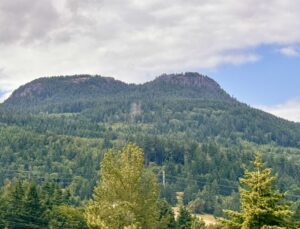 Harvesting in North Cowichan’s 5,000-hectare municipal forest reserve (MFR) is considered a primary issue for the rest of council’s term, which ends in October, 2026. On Aug. 20, council voted 4-3 to make harvesting, which hasn’t taken place since 2019, one of its strategic priorities. Coun. Bruce Findlay pointed out that the municipality has received no revenues from harvesting in the MFR for six years, and it may take several more years yet as negotiations with the Quw’utsun Nation on co-management of the MFR continue. …Despite the vote, CAO Ted Swabey advised council that he thinks that it’s unlikely that any harvesting could actually take place before the end of council’s term. …The public engagement aspect of the forest review concluded in early 2023, and the feedback from that process found very strong support for active conservation in the MFR, which would allow for targeted harvesting to provide some income, while restoring and enhancing biodiversity.
 On the heels of record-breaking daily high temperatures, Vancouver Islanders face warmer than usual weather this week. Temperatures will continue to “remain well above seasonal” into mid-week for east and inland Vancouver Island with cooler temperatures overnight, according to an Environment Canada statement issued early Aug. 26. The extra warm conditions are expected to persist from inland Greater Victoria, up the east coast from Nanoose Bay to Fanny Bay. Cloud cover is expected Thursday. The Malahat area broke the newest record on the Island, hitting 30.2 C, topping the 29.8 daily record set in 2022. Nanaimo tied the oldest record, hitting a high of 33.3 set in 1958. Campbell River, Courtenay and Comox all flirted with 2016 records, with Campbell River shading the old 30 C temperature, hitting 30.2. Comox and Courtenay both tied the 2016 record of 30.3. The heat coincided with a new wildfire discovered Aug. 24 south of Nanaimo. The 8.6-hectare fire was classified as being held as of Tuesday morning.
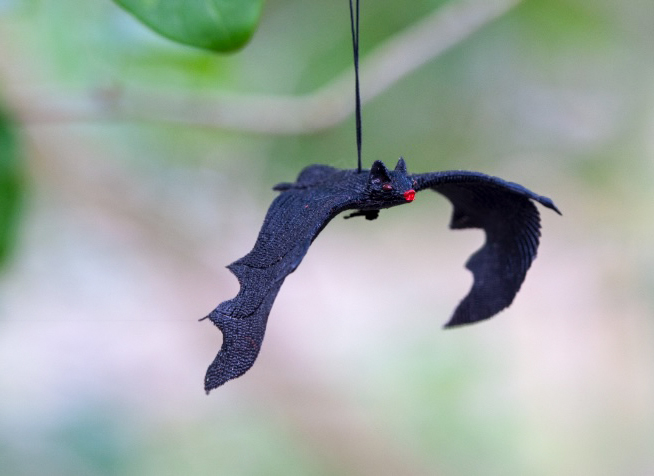 An international research project in the northern is taking a hard look at the decline of keynote bat populations in a bid to help area ecosystems survive and thrive. Efforts to preserve a population of northern myotis – an endangered bat species that used to be found throughout eastern B.C., but whose range has been contracting to the central Interior – are under way near Kinbasket Lake, north of Revelstoke and Golden. Researchers with the Wildlife Conservation Society … are planting fake bark to mimic the old-growth trees where the northern myotis roosts, and on the north side they are using radio detectors to determine how many of the bats are present in logged areas. Logging may not be an automatic death sentence to bat populations, Lausen says, but it needs to stay within the limits of what northern myotis colonies can sustain. One of the project’s goals is to identify those limits.

 A prolonged heat wave gripping British Columbia has already toppled more than 20 daily high-temperature records, with forecasters warning the sweltering conditions are set to persist through mid-week. Environment Canada has extended heat warnings to large parts of the province, including Fraser Canyon, South Okanagan, and South Thompson, where highs in the upper 30s are expected to continue. Inland sections of the north and central coasts are forecast to reach up to 29C, while four special weather statements remain in effect for Vancouver Island. …Even as air quality improves, wildfire officials warn the soaring heat and dry air are fuelling dangerous conditions. The B.C. Wildfire Service said low relative humidity is making forest fuels highly susceptible to ignition… For insurers, the intensifying fire risk underscores a costly pattern. …Another active fire season … adds further pressure to an industry already grappling with rising catastrophe exposures in B.C.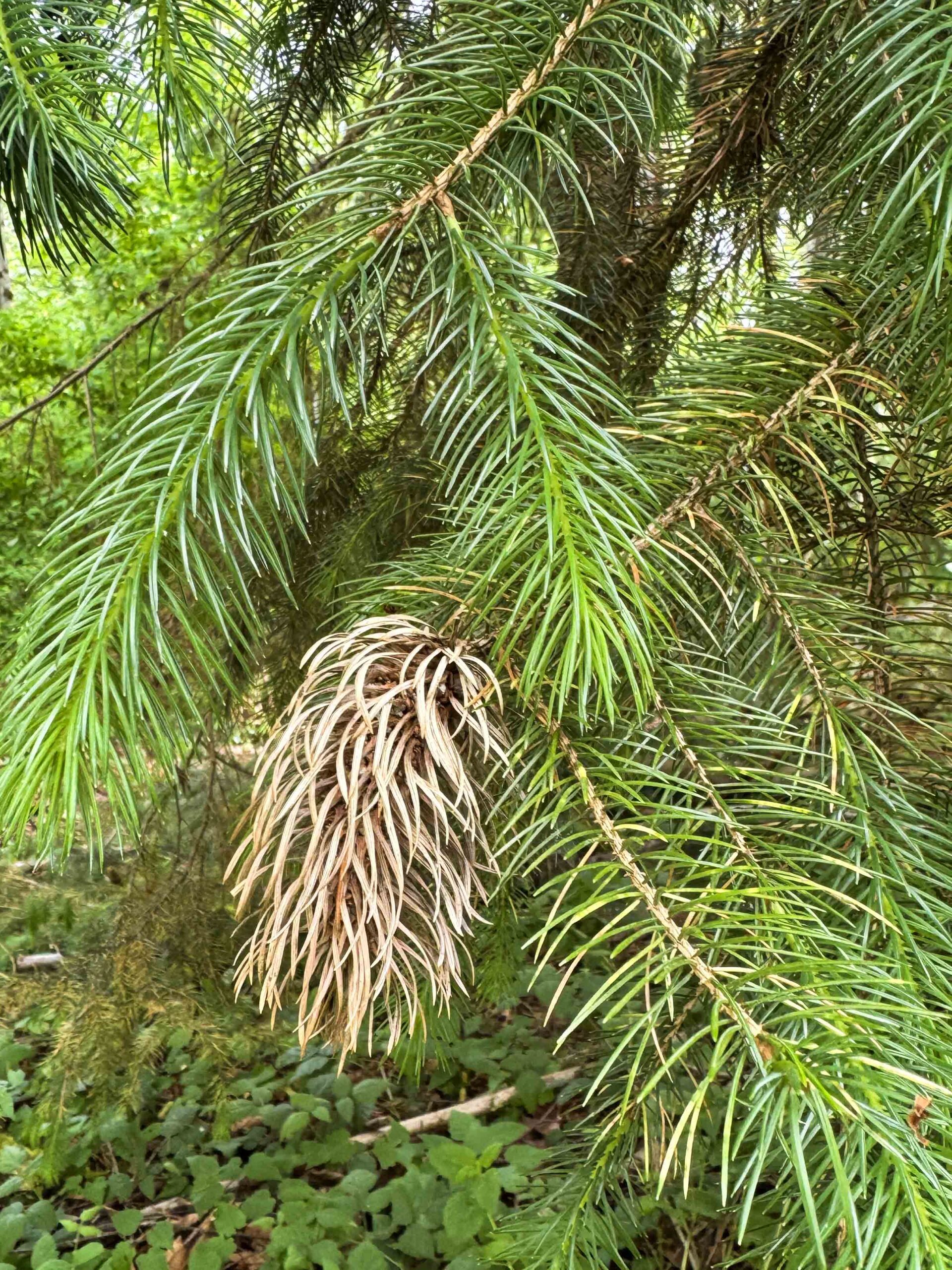

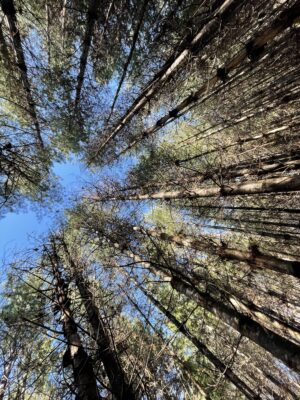 The Forest Appeals Commission dismissed a Vanderhoof hunting and fishing lodge’s appeal of a $25,000 fine for cutting Crown timber without a licence. In an Aug. 13 decision, panel chair Maureen Baird upheld the March 2023 fine against Crystal Lake Resort Ltd. by the Ministry of Forests. Daniel Brooks, whose family bought the resort in 1975, admitted trees were cut without a licence in July 2020 on a right of way and the company asked, after the fact, for the Ministry of Forests to authorize the removal of merchantable timber. The ministry advised the company that it needed to have a licence to harvest in the first place. Brooks said he did not know he needed a licence. …The Ministry approved the required management plan, that allowed cutting trees if the resort had a forestry licence to do so.
 In the Summer Almanac you’ll find these headlines and much more:
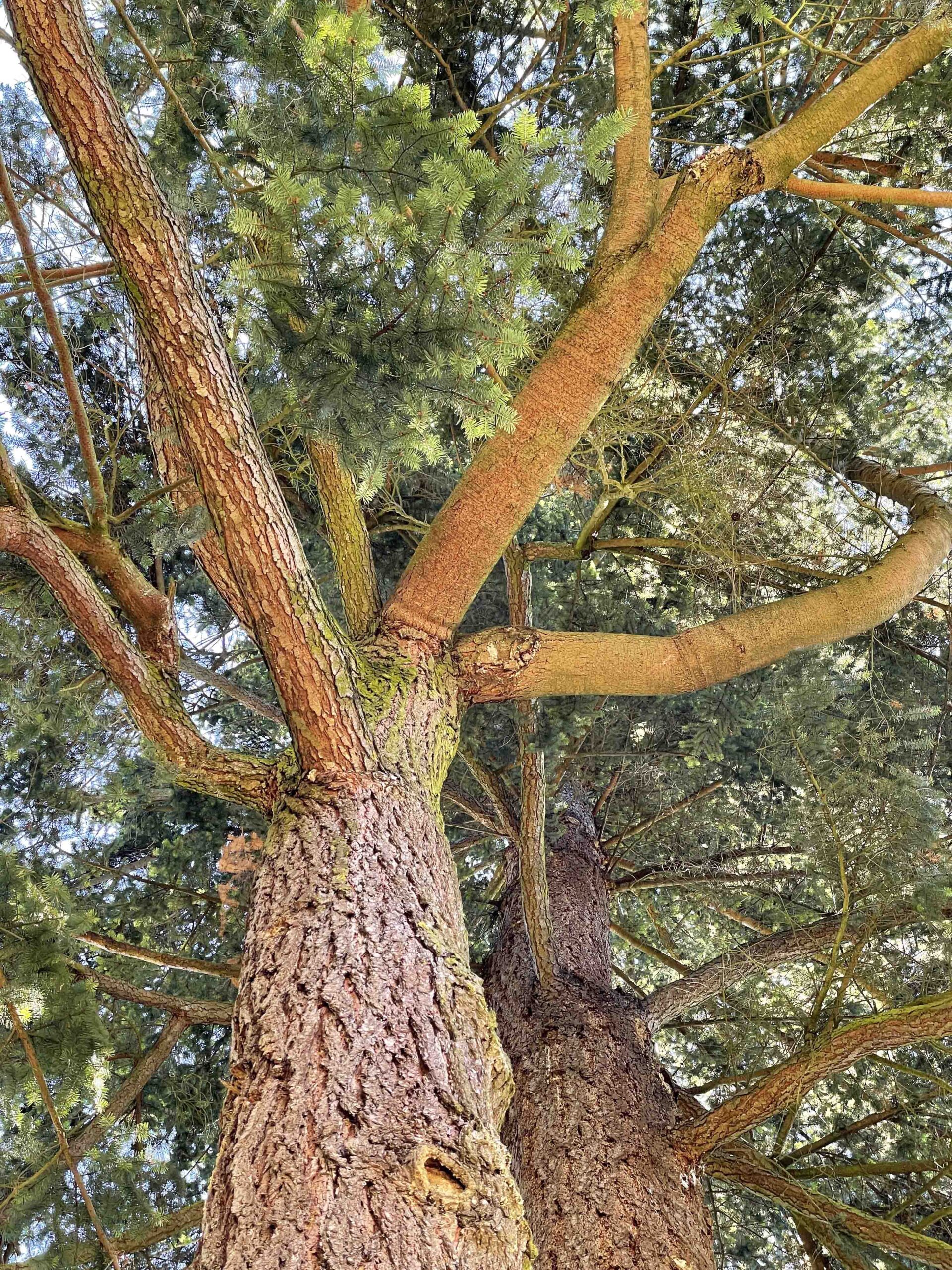 Peter Constabel, a professor in the biology department at the University of Victoria said that several years of repeated drought in B.C. mixed with heat stress has increased the likelihood of branches breaking off, it could even happen on a “perfectly calm day” without any breeze. The consequences can be tragic. Constabel, who specializes in tree health said, “it’s the drought that specifically causes this, and somehow it stresses the tree and drops the branch, or the branch falls. If you get cumulative droughts, of course, it weakens the tree overall”. …Dry spells can leave trees in a weakened state, Simon Fraser University biological sciences professor Jim Mattsson said, reducing photosynthesis and growth, cutting their energy or sugar reserves, and lowering production of chemical defences. All of these can cause a chain reaction increasing trees’ susceptibility to insects and fungal diseases, causing trees to rot inside, weaken and potentially topple over.

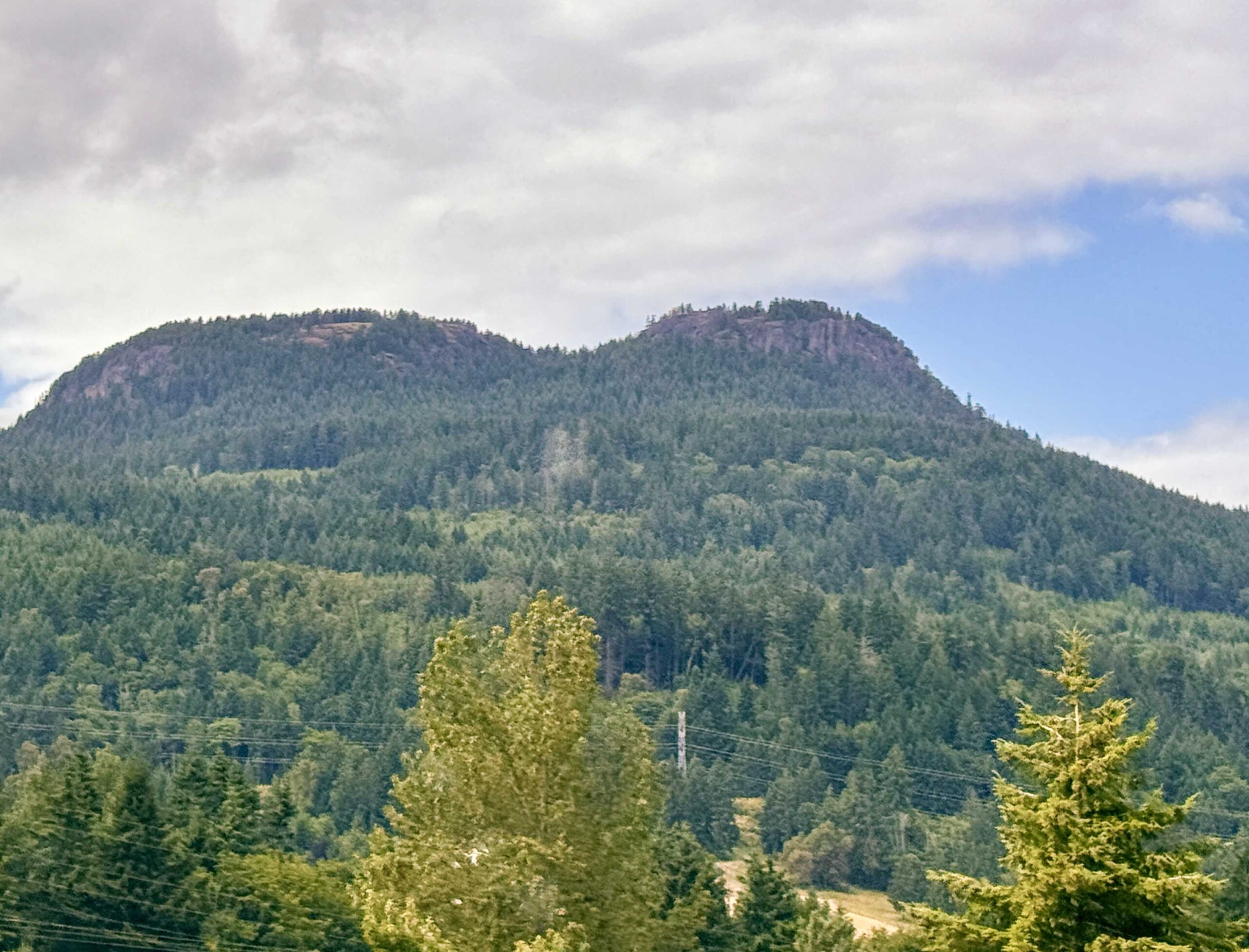 The Cowichan Valley Citizen has published two letters to the editor referencing the North Cowichan Municipal Forest Reserve
 Global warming is predicted to drive one of the greatest declines in caribou populations in the last 21,000 years, with British Columbia’s herds expected to see declines of up to 61 per cent by 2100 if high rates of warming go unchecked, a new study says. Caribou — also known as reindeer in Europe and Asia — have survived several spells of Arctic warming in the past. Their presence across the planet’s tundra, forests and mountains have long supported Indigenous populations while acting as ecosystem engineers, disturbing the soil and trampling vegetation in a way that promotes new plant growth. …Human disturbance of those landscapes — from logging to road building — has already led to a two-thirds decline in the global population over the past 30 years. New
 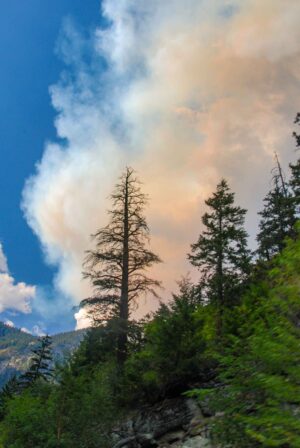 The Mount Underwood fire near Port Alberni wasn’t your typical Vancouver Island blaze. But what is normal is changing. Thanks to droughts and heat waves, tiny fires that crews were once able to extinguish in a matter of hours are now ballooning into major blazes. Historically, fires have been nearly non-existent in coastal B.C., and the playbook for putting them out has been simple: Find fire. Spray water on it. Dig up hot spots. Case closed. This “direct attack” was possible because of the slow speed at which fires grow in coastal ecosystems. But the Mount Underwood fire, which ignited along the road connecting Port Alberni to Bamfield, spread rapidly, burning as a Rank 5 fire, with flames rising into the crowns of trees and up the mountainside. “In the seven years I’ve worked for the Coastal Fire Centre, I don’t think I’ve seen a fire like this on Vancouver Island,” Julia Caranci told CBC.
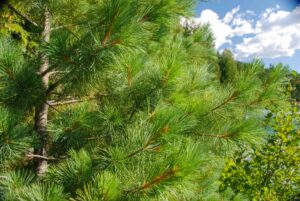 Over 70,000 new trees have been planted in Narrow Hills Provincial Park after the destructive Shoe Fire ripped through the area in May. The park, about 130 kilometres northeast of Prince Albert, Sask., is home to Gem Lakes and Lost Echo campgrounds, which remained closed for the season due to the wildfire. “There was a lot of enthusiasm to get the new life going back in the forest,” Pat MacKasey, a provincial park forest ecologist. MacKasey has been the supervisor of a five-person crew who have planted 73,080 Jack pine and white spruce trees since July. Trees have been planted in an area in Pine Lake that had previously been wiped out by a windstorm in the 1990s, he said. MacKasey says regrowth after that storm was slow, but new trees were eventually planted again in 2002 once forest health improved.
 The number and severity of wildfire damage claims are increasing partly because fire seasons are longer with more hectares burned, according to IBC spokesperson Adam Sutherland. “As we see the frequency and severity of claims growing, that’s putting pressure on premiums. “We know the risk is only going to grow. Insurance puts a price on risk. That’s why it’s paramount that we do much, much more as a society to reduce that, to better fireproof our communities and better protect our homes.” He said in addition to government action to reduce fire danger in the forests, residents need more incentives to protect their properties. “But then we also need to rethink our building codes and how we are developing our communities in the first place. That means moving away from wood shingles, wood roofs. No more vinyl siding. We need non-combustible materials on homes and interface fire zones for all new development.”
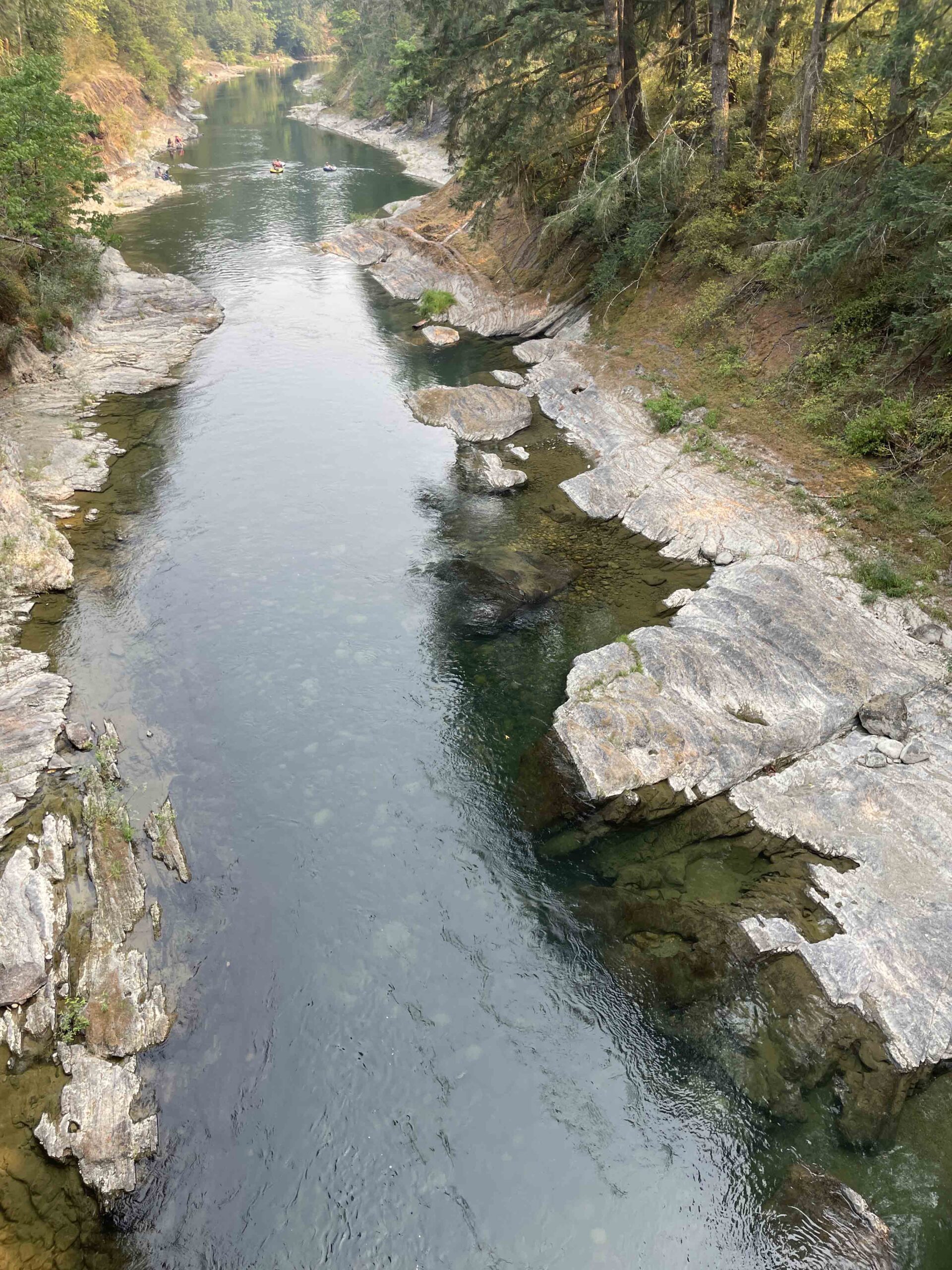 Cowichan Lake had just 16.5 per cent water storage capacity as of Aug. 13 as the recent hot spell, which saw temperatures in the region go above 30C, began to die down. Brian Houle, environment manager at the Domtar Crofton mill, which owns and operates the weir at Lake Cowichan, said the regulators of the watershed decided to reduce water flows from the lake over the weir to 4.5 cubic metres per second beginning on Aug. 13. He said the flow reduction will be done in two stages, dropping to 5.0 cms on Aug. 13 and then to 4.5 cms on Aug. 14 and that flow will hold until the rainfall returns this fall. …Houle said that, as water flows are reduced to the river, Domtar will have qualified professionals in the river helping to salvage fish stranded in pools, as well as measuring water quality.

 A powerful documentary that addresses BC’s escalating wildfire crisis and the urgent need for solutions will be shown tonight in Williams Lake. “BC Is Burning” was written and produced by retired forester Murray Wilson who has over 4 decades of experience in wildfire suppression and forest management. “In August 2024 I started filming mainly around the Interior of BC.” Wilson said, ” I didn’t do any filming in the Williams Lake area but Central Chilcotin Rehabilitation Ltd. had some excellent videos and they very graciously gave me some of their footage from around the Williams Lake area as well as Percy Guichon who is also in the documentary.” …So far the documentary has been shown in Kelowna, Vernon, Merritt, Kamloops, and Williams Lake tonight (August 19) then it will be in Nakusp and on to Castlegar. A 20 minute Q & A with Wilson and Josh Prestie, Regional Executive Director for the Ministry of Forests will follow the Williams Lake show.
 BARRIE, ON – As Canada faces rampant wildfires, non-profit charity Forests Canada and forestry consulting firm Cariboo Carbon Solutions are partnering to help private landowners and First Nations communities restore their forests. They supported the planting of 100,000 trees in North Shuswap and Criss Creek, British Columbia in response to the 2023 Bush Creek East wildfire and will plant 2.2 million in other areas of the province over the next five years. “Canada is facing a devastating wildfire crisis,” Elizabeth Jarrett, Chief Operating Officer, Forests Canada, says. “This new partnership will enable us to support restoration efforts.” In regions across British Columbia, Cariboo Carbon Solutions is providing private landowners and First Nations communities that have been devastated by wildfires with professional reforestation services for their properties. After the successful planting of 100,000 trees in North Shuswap and Criss Creek this spring, the organization is looking to support other communities in BC.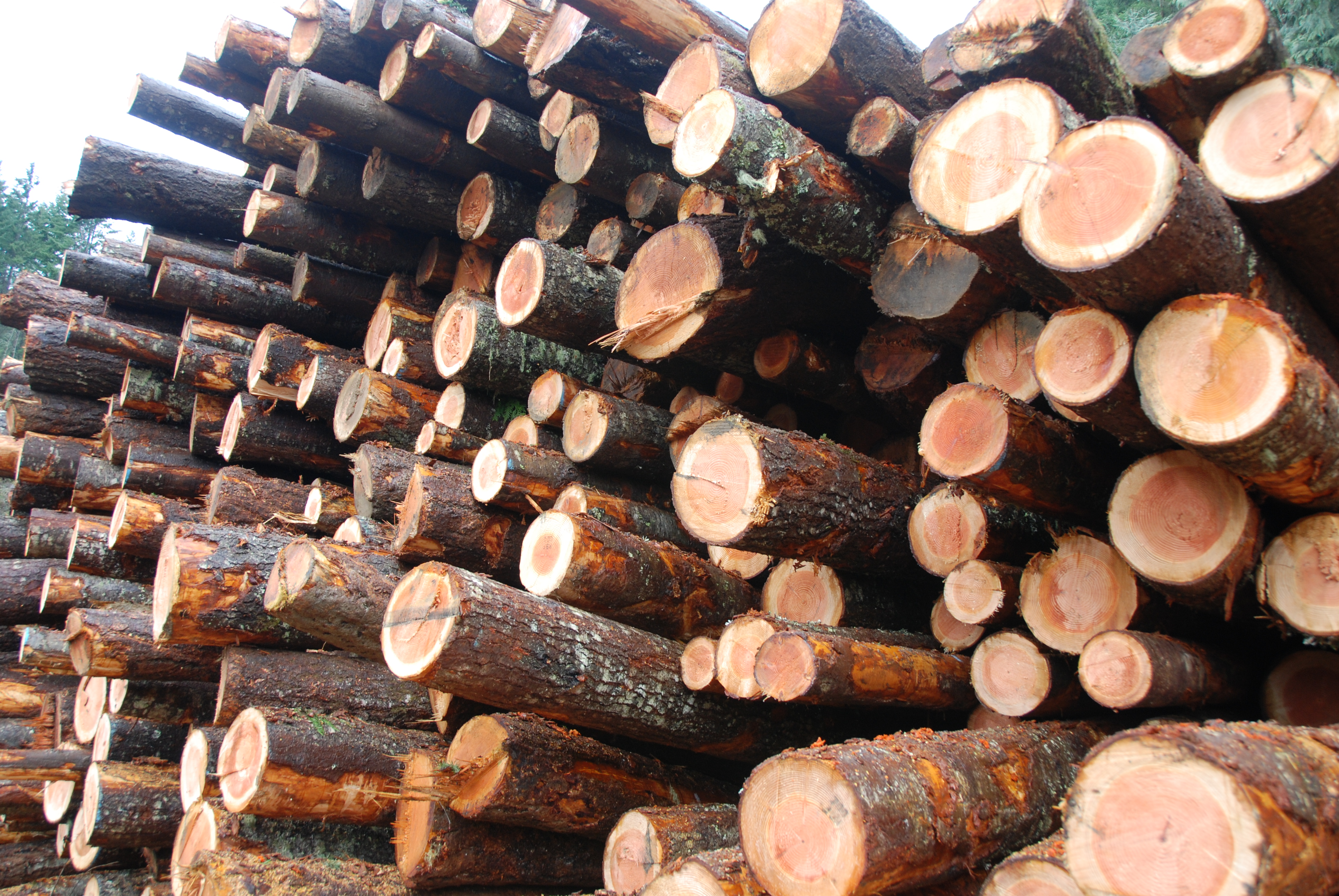
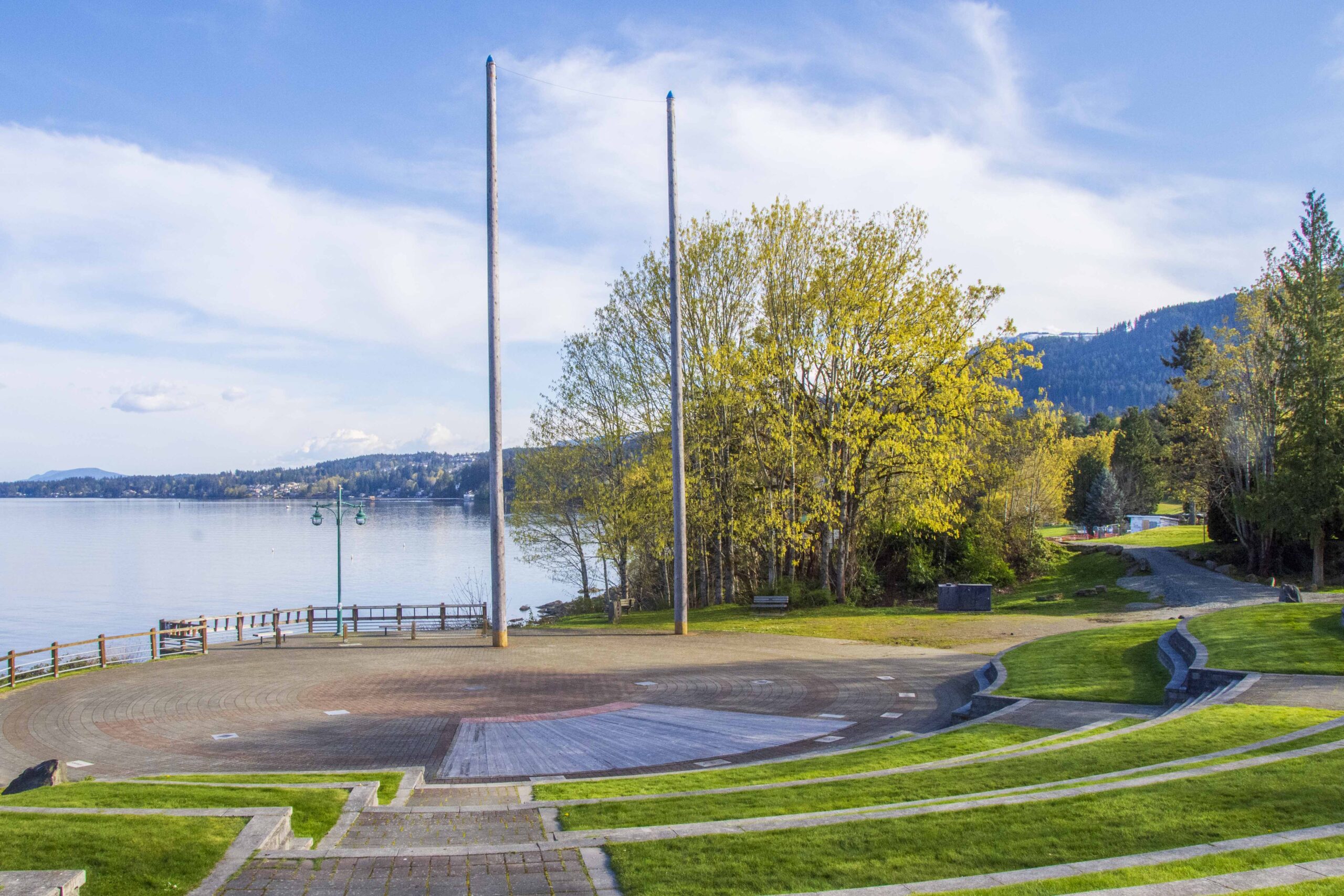 …It’s a rare sight today to see a spar tree in a timber harvesting area, but you can see them at any loggers’ sports shows. This year locals will have a chance to see climbers in action on Sunday, Sept. 14 at the Transfer Beach Amphitheatre. Just a couple of weeks ago the state of the two spar poles at the amphitheatre was in question. …Dave MacLeod from Husky Forest Service, a professional tree climber as well as a loggers’ sports tree climber, said instead of destroying the trees, they could be taken out to find out where the rot ends. His suggestion was accepted and the trees were taken out by RKM Cranes on July 30 and laid down to be examined. MacLeod did tests at various lengths of the trees and it was determined that the rot was up 10 feet from the bottom, so 11 feet was cut off.
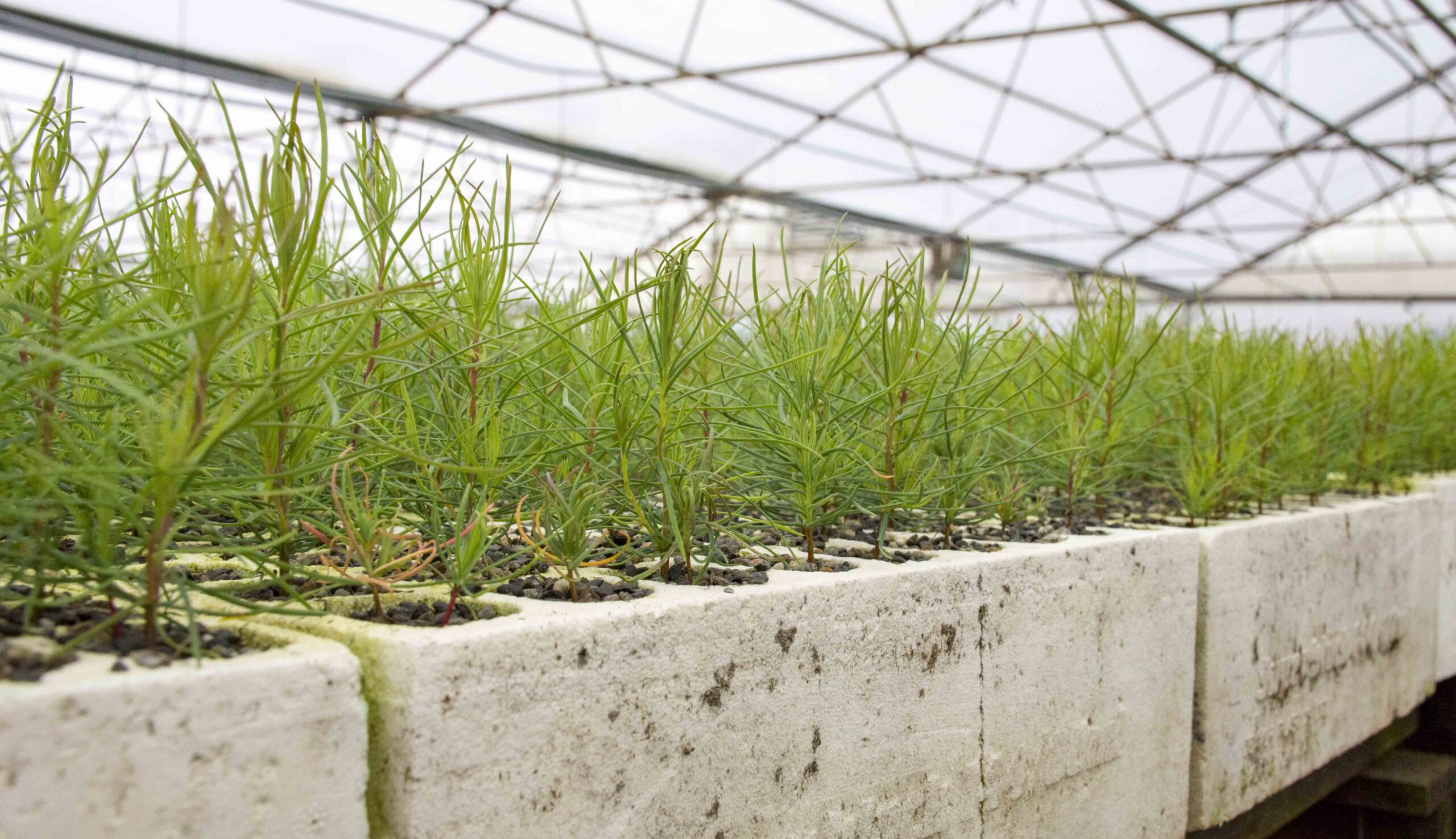 The number of trees planted in British Columbia is set to decline for a third year in a row, falling a combined 135 million seedlings short of a B.C. government’s election promise to increase planting amid a string of devastating wildfire seasons. In B.C., the logging industry is legally required to reforest after harvesting. But as harvest levels have dropped, so too has tree planting. The province planted 281 million tree seedlings in 2024. But by the end of the 2025 season, that number is expected to drop to 238 million, according to the Ministry of Forests. By the end of 2026, projections from the Canadian Tree Nursery Association (CTNA) suggest the number could fall even further to 226 million — far short of the 300 million trees promised by the NDP government in the last election.
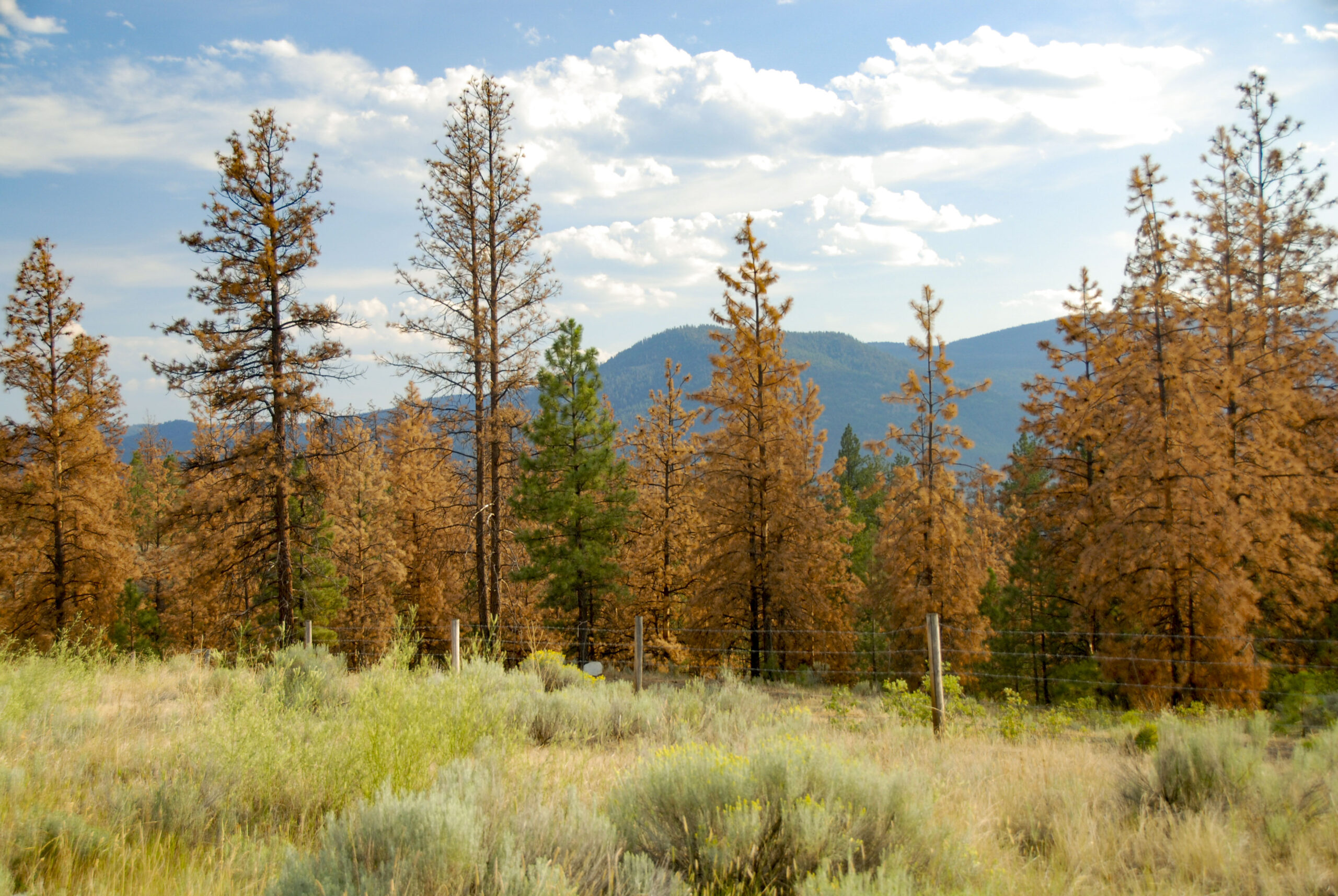 Ottawa is offering $45.7 million for projects in B.C. and across Canada that advance knowledge about wildfires. The projects will be focused on protecting Canadians from the growing threat of wildfires, strengthening wildfire risk assessments, and improving mitigation and adaptive forestry practices. …The Vancouver-based Métis Wildfire Community Research Initiative is among the funding recipients. “Our approach is different because we are building strong relationships with local people.” said Joe Desjarlais, Director of Research for the B.C. Metis Foundation. “We’re training them to do wildfire research, to recover their own knowledge for their own benefit, to give them a voice.” …Natural Resources Canada said annual national costs for fighting wildland fire total over $1 billion. It says fire-suppression costs could double by 2040.
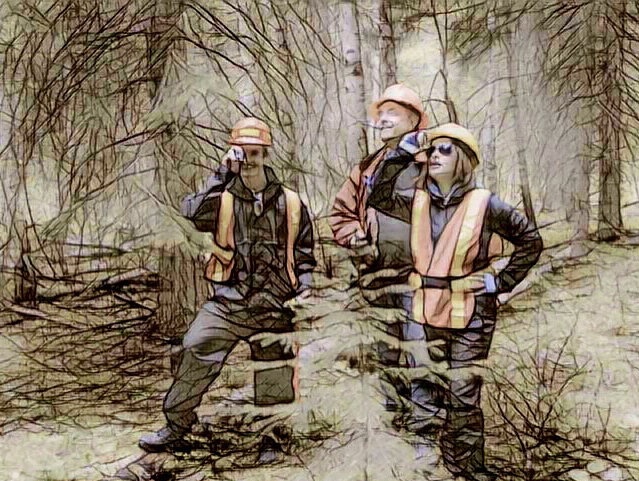 CNC’s Applied Research team received a $170,775 Applied Research Tools and Instruments (ARTI) grant through the Natural Sciences and Engineering Research Council of Canada (NSERC) for the creation of a state-of-the-art remote sensing lab. …The grant allows for the acquisition of terrestrial LiDAR scanners, allowing researchers to capture, analyze and better understand individual tree characteristics, forest structure, and wildfire hazards, among other forest attributes. CNC research fellow Dr. Pablo Crespell will lead research activities related to remote sensing lab purchases and operation, including drones, LiDAR sensors and scanners, multispectral sensors, software applications, and computer hardware. Grant funds will also be used to support the costs of relevant training for CNC research staff, such as drone pilot training and new analysis approaches.
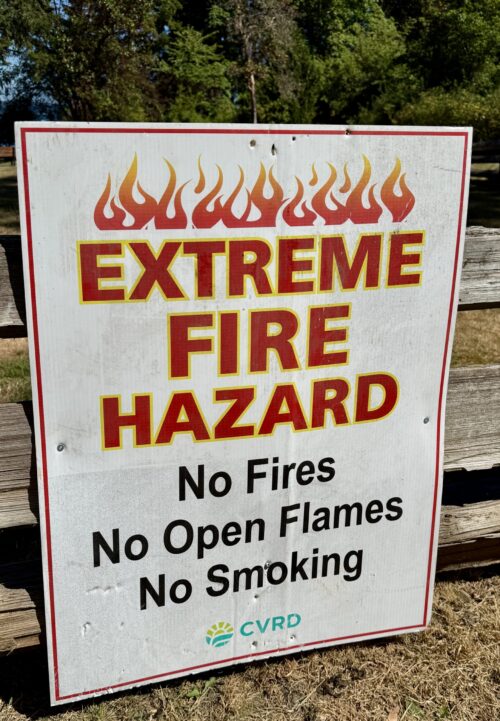 …as climate change fuels more frequent and intense wildfires, governments can reduce the damage and protect lives with proactive, targeted actions. That means strengthening policies that guide where and how we build, investing in land and fuel-management strategies, supporting Indigenous leadership and stewardship, expanding emergency-response capacity and accelerating emissions reduction. The solutions are within reach, but they require governments to lead with urgency, coordination and commitment. …Here are five key actions governments can take to reduce wildfire risk — noting that no single strategy can solve the problem by itself: Stop encouraging building in harm’s way; Make new development fire-resilient; Manage forests and reduce wildfire fuel; Strengthen firefighting capacity; and Cut carbon pollution to avoid runaway risk. Governments at all levels face a clear choice: continue with business as usual and see fire seasons grow worse or take bold action to reduce risk, protect people and ensure public resources are spent wisely.
 In this edition of Forest Safety News you’ll find these stories and more:
 The Province of B.C. is lending its expertise to Mosaic Forest Management as it develops plans to reopen the Bamfield Main Road, sections of which were rendered unsafe due to the Mt. Underwood wildfire. “We recognize the importance of Bamfield Road to the Huu‑ay‑aht First Nation and area residents,” said Mike Farnworth, Minister of Transportation and Transit. “There is substantial work necessary … to reopen Bamfield Road. Ensuring the safety of the travelling public is the top priority, and the Province will continue to support to Mosaic throughout this process.” Initial engineering assessments have determined a section of the Bamfield Road managed by Mosaic is unsafe for all traffic, prompting Mosaic to close the route with a section of the road being defined as a No Work Zone by BC Wildfire Services. Falling rocks, dangerous trees and a fire-damaged slope are presenting exceptionally challenging conditions, and there is no timeline for reopening the road in its current configuration.
 Don’t miss the August WorkSafeBC Health and Safety News:
 The Occupational Health and Safety Regulation provides that, except as otherwise determined by WorkSafeBC, an employer must ensure no worker is exposed to a substance exceeding the Threshold Limit Values (TLVs) prescribed by the
 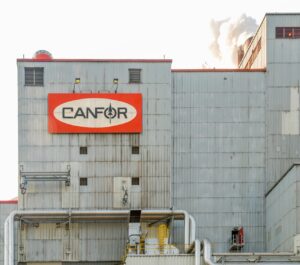 PRINCE GEORGE, BC — Canfor Pulp has been fined after a worker seriously injured their hand in an unguarded piece of machinery. WorkSafeBC issued the $489,104 penalty on July 10 following an inspection at the company’s Northwood Pulp Mill in April. According to the inspection report, a worker was injured on the fifth floor by a hydraulic cylinder that cycles every 64 seconds, “dropping rapidly down” into a metal box. …The agency determined the firm failed to ensure its machinery and equipment was fitted with adequate safeguards to protect workers from hazardous points of operation. …Canfor spokesperson Mina Laudan said a contract worker sustained a hand injury in the incident. “We deeply regret that a worker was injured at our site. It is our responsibility to provide a safe working environment,” said Laudan. “Following the injury, we took immediate steps to safeguard the equipment that was involved in the incident.”
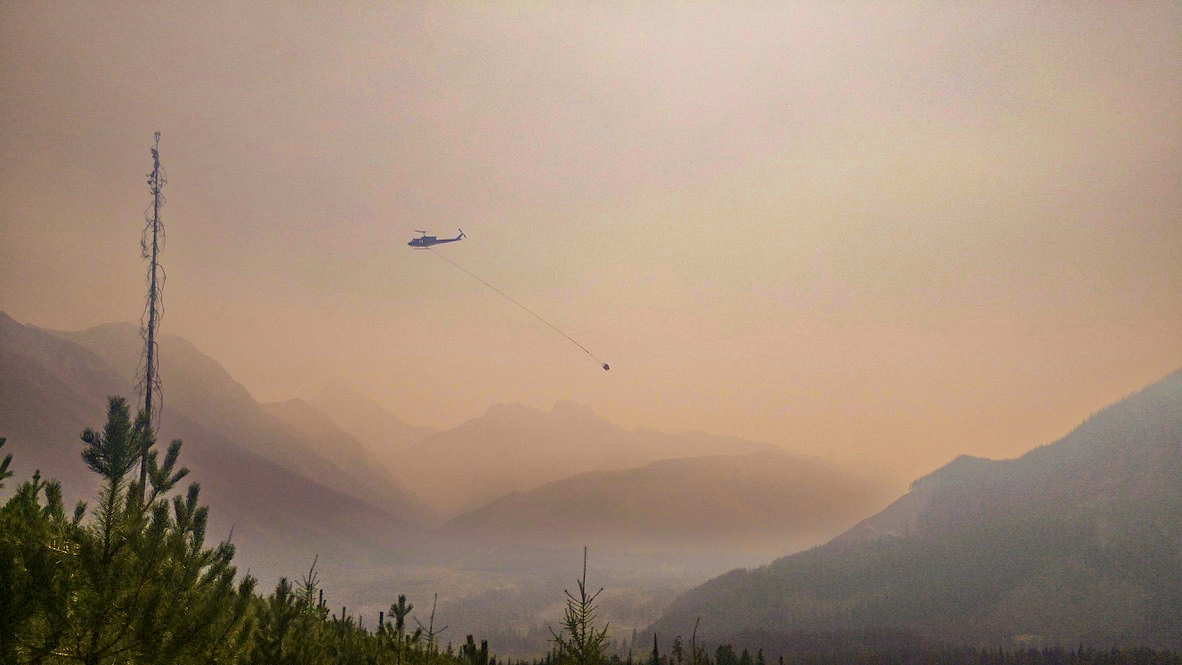 As Saskatchewan experiences one of its worst wildfire seasons on record, smoke continues to prompt air quality alerts for the public. …however, less than five per cent of personnel working the wildfires in Saskatchewan are wearing masks, and despite the health risks, that’s not likely to change any time soon. “Saskatchewan Public Safety Agency (SPSA) personnel have access to N95 masks if they wish to wear them on the fire line, but most choose to wear bandannas,” the SPSA wrote in an email to paNOW. Structural firefighters within urban centres are required to wear self-contained breathing apparatus (SCBA) to protect them from smoke inhalation and exposure to harmful airborne contaminants, but in Saskatchewan, using facial protection is voluntary for wildland firefighters, and there is no provincial protocol to use them. …N95 masks can help reduce exposure to fine particles, but don’t filter out harmful gases. Bandannas offer little to no protection.
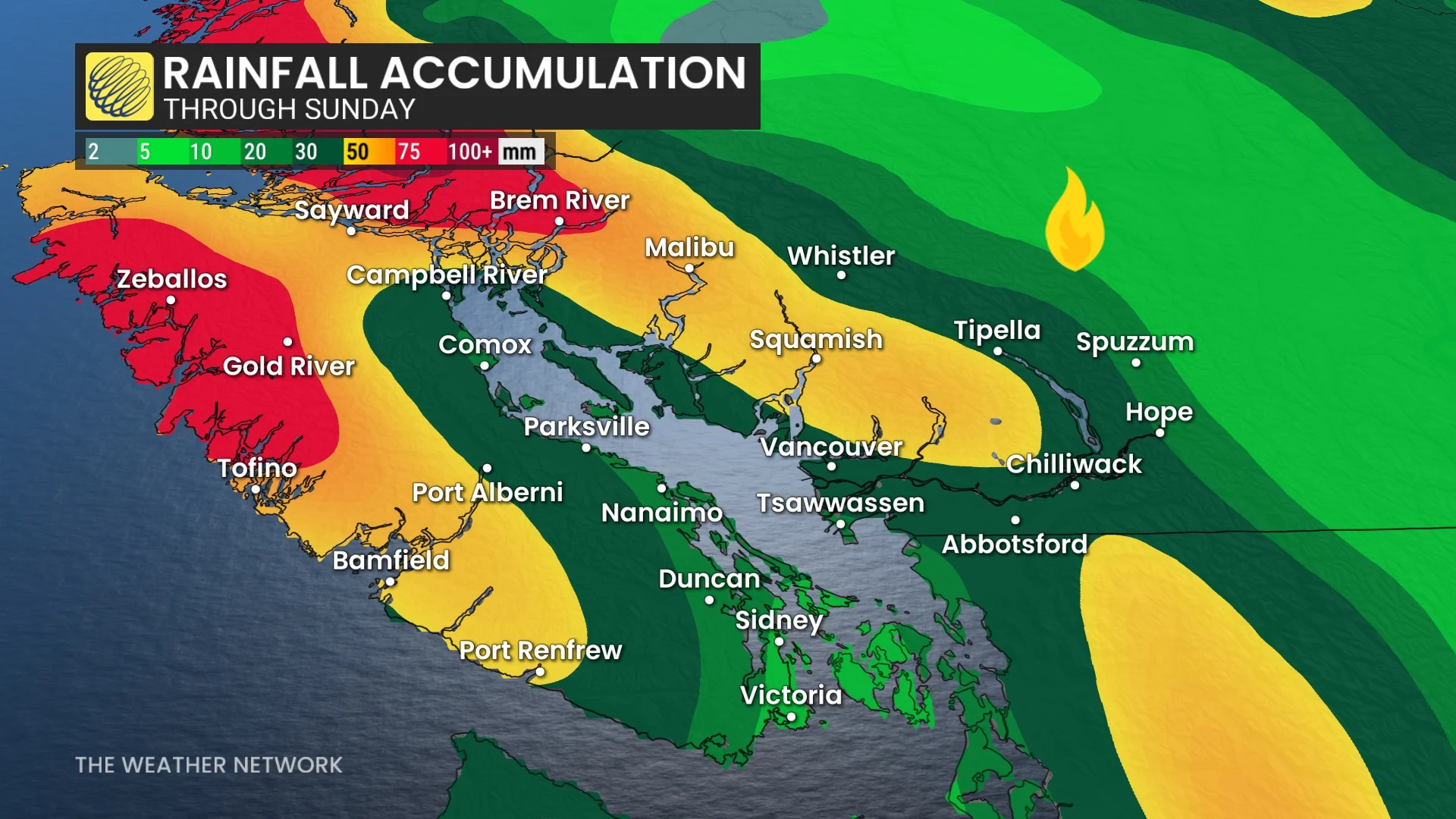
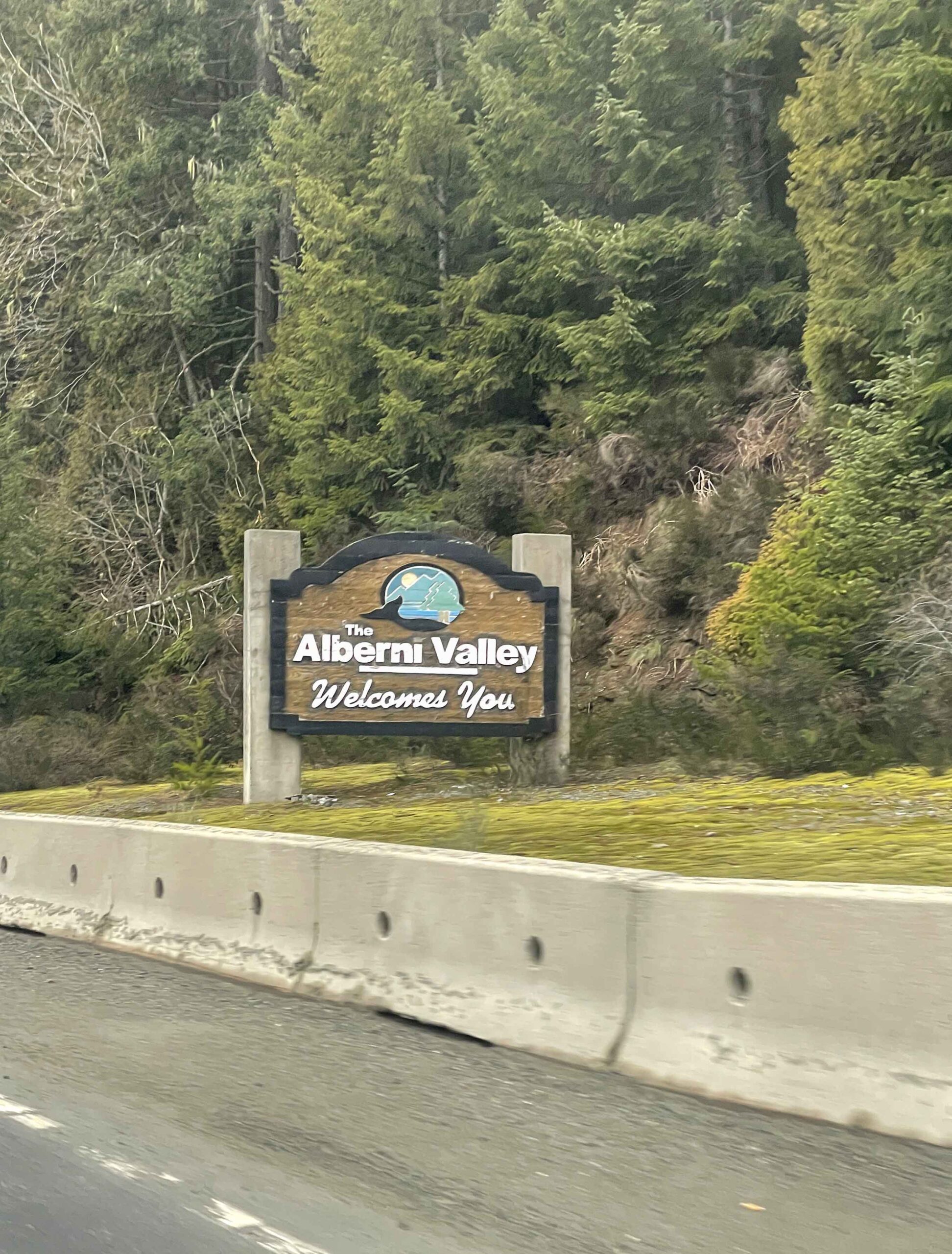 Sharie Minions told a news conference Tuesday that officials are working with the BC Wildfire Service to update two evacuation orders and three alerts that are in place due to the out-of-control Mount Underwood fire. The regional district’s chief administrative officer Daniel Sailland said about 50 permanent residents had to be evacuated along with approximately 150 campers and other visitors due to the fire, which was discovered Aug. 11. Fire information officer Karley Desrosiers said 160 personnel are working on the fire, which is not expected to grow beyond its current 36 square kilometres as the area warms up after several rainy days. “We have received considerable rain since Thursday, and more rain is expected today,” she said. “Going forward, we are expecting conditions to get a little bit warmer and a little bit drier and a bit windier as well. …The blaze has shut off power and the main road access to Bamfield since Aug. 11.