
Jason Krips
The wildfires that swept through Jasper National Park in 2024 were devastating — but they weren’t unpredictable. They were the foreseeable result of years of policy choices: the decision to leave forests untouched, to restrict active management, and to allow risk to build in the name of preservation. Alberta’s forests are disturbance-driven — they rely on natural events like wildfire to renew, diversify, and maintain ecological balance. But over the past century, we’ve suppressed these disturbances to protect communities, infrastructure and wildlife. Without fire, forests don’t regenerate naturally. And without policy tools that allow for active interventions like harvesting, we’re left with dense, aging stands vulnerable to fire and pests. Now, in 2025, we face an urgent question: will we continue down the same path, or will we modernize our approach to forest management — even in places long considered off-limits, like national parks?
…Our members don’t operate inside the park, but they do operate next to it, and what happens within the park’s boundaries doesn’t stay there. …In 2017, we warned that aging forests, pine beetles, and hot, dry summers were creating a perfect storm. In 2024, that danger became reality. …We need a national parks policy to reflect this reality. It should encourage science-based, ecologically sensitive management tools like thinning, selective harvesting, and prescribed fire across the entire park — tools that reduce fuel loads and restore healthier forest structures. Beyond parks, we also need to revisit legislation like the Species at Risk Act. In Alberta, this law currently prevents management in large areas of older forest, ironically putting caribou and other species at greater risk when those forests inevitably burn. …Canada’s forests, inside and outside of parks, are among our greatest national assets. But if we want to protect them, we need to manage them.
Additional coverage in the Rocky Mountain Outlook, by Glen Grossmith: LETTER: In support of rethinking forest management “It’s encouraging to see attention drawn to the real, actionable strategies that can make a difference in the face of escalating wildfires.”

 It will take time to fully understand the implications of a landmark court ruling that appears to place Aboriginal title in British Columbia above standard private property rights. But already, there’s a fierce political debate. The BC Supreme Court ruled that the Cowichan Tribes holds title over federal, city and private land in Richmond that it historically used as a fishing village. This title sits higher in the legal hierarchy than fee simple land rights of other current owners. The ruling could set a precedent that fundamentally changes the security of standard private property in B.C. …Eby’s comments hit at the core of the fallout — that with most of British Columbia identified by First Nations as traditional territory, the court ruling could scare away not only the general public but businesses considering investing in the province. …But Justice Young appeared to set a new precedent by calling Aboriginal title the “senior interest in land vis-a-vis the fee simple titles.”
 For one local lumber mill, the federal government’s announcement of support for the Canadian softwood lumber industry is a step in the right direction. Nick Arkle, CEO at Gorman Brothers Lumber, said in his 50 years of working in the forestry industry, he hasn’t sensed a government that has been this supportive at a federal level. “Both federally and provincially, I’m seeing some major shifts,” Arkle said after Prime Minister Mark Carney visited the Gorman Brothers Lumber mill in West Kelowna to announce the federal government’s strategy to bolster Canada’s softwood lumber industry. …Arkle said Canada also has to figure out how to get along with its neighbours. Gorman Brothers has strong relationships with many customers in the U.S., said Arkle, and those customers can’t figure out why they’ve got this trade action going on because they want Gorman Brothers’ lumber.
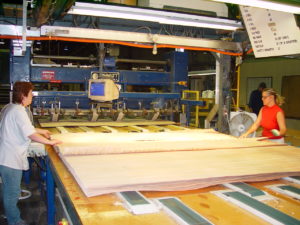 A BC manufacturer that says it’s facing closure is accusing the provincial government of hypocrisy after the premier recently touted a product it had a hand in. BC Veneer Products provided the wood fibre that UBC designers used to fabricate a soccer ball out of innovative “wood leather,” something which Premier Eby promoted while on a June trade mission to Japan. …The problem, Gunia explained, is the company hasn’t been able to secure more logs to keep his plant and its 17 employees working. The forestry company he works with on Vancouver Island has already reached its maximum allowable cut for the year. The operator has another block it can harvest in January, but Gunia says that will be too late. …Gunia said his company’s troubles are particularly galling, given the emphasis the premier and the province have put on promoting value-added wood products.
 Kalesnikoff Mass Timber has been recognized by the federal government for its role in advancing Canada’s housing goals. In June, Kalesnikoff opened North America’s first mass timber pre-fabrication and modular facility, expanding its product for use in multi-storey affordable and market housing, schools, workforce housing, and more. The facility aligns closely with Prime Minister Mark Carney’s new Build Canada Homes Program, which he discussed during a stop in Kelowna on Aug. 5. Carney plans to launch the program this fall, offering federal financing to homebuilders who use Canadian materials, as the government aims to develop around 500,000 homes per year. He praised Kalesnikoff as a catalyst for this effort, while announcing several other initiatives aimed at increasing housing supply and market diversification – including a $25-billion commitment for private builders who prioritize Canadian materials in housing and infrastructure projects.
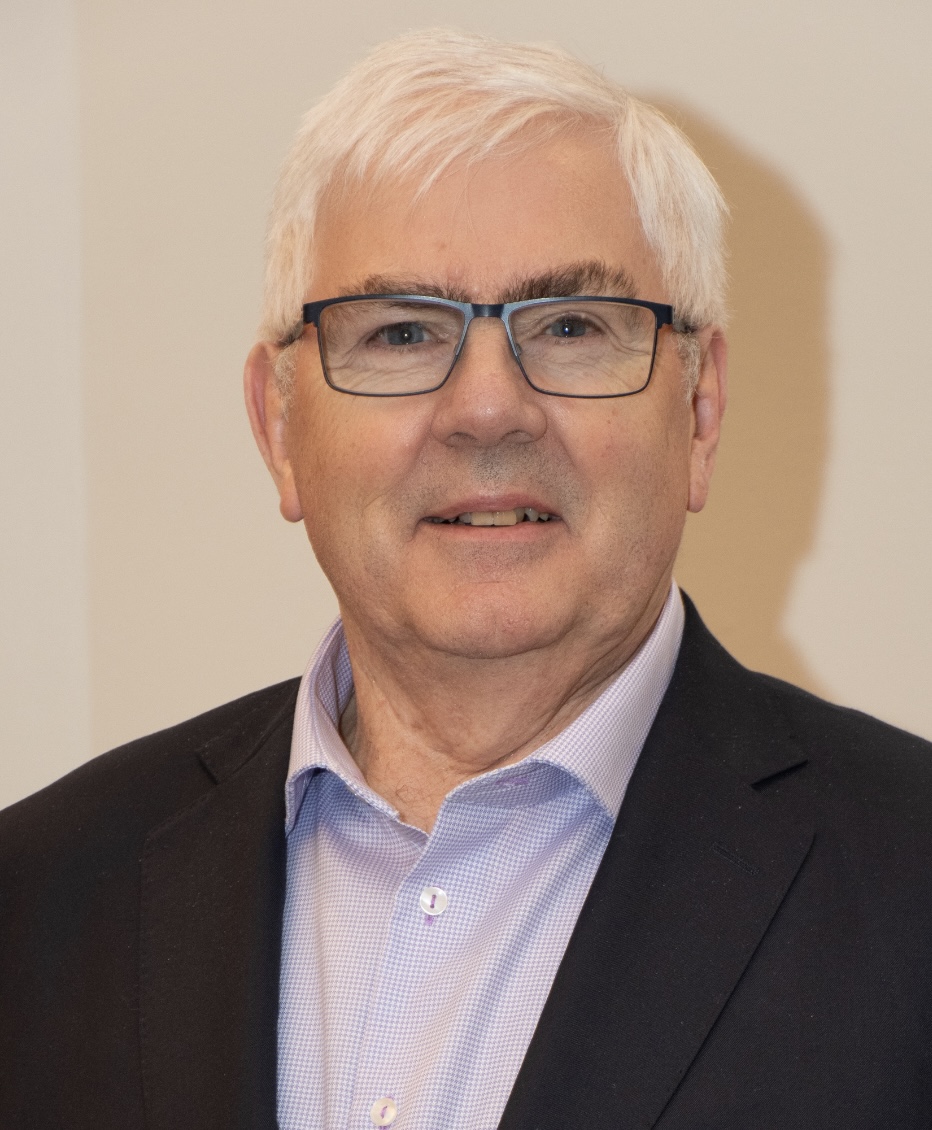
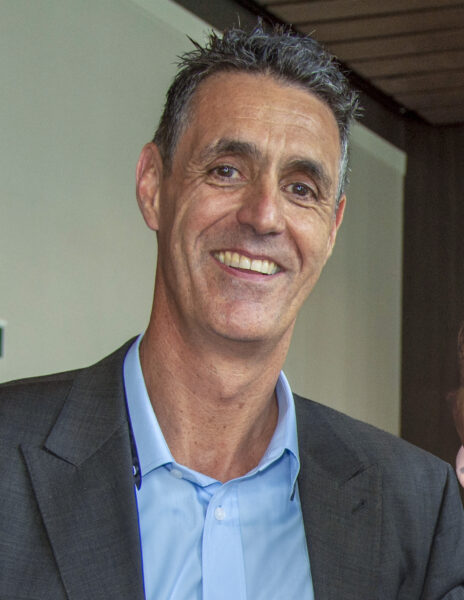
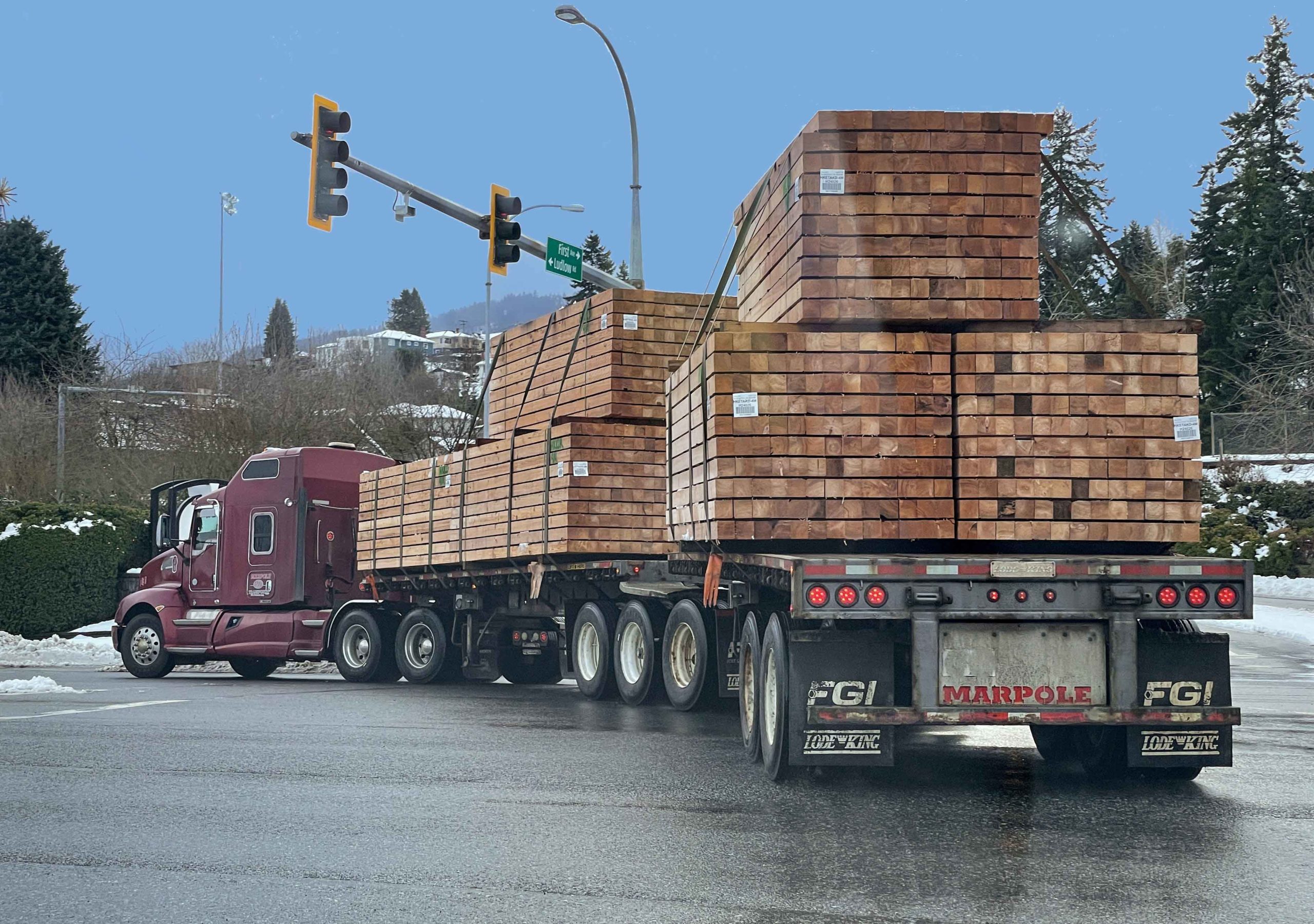 British Columbia’s forestry leaders offer a mix of praise and caution following the announcement of federal aid for Canada’s lumber industry. While both welcomed the support, they emphasized the urgent need for fiber access and resolving the US trade dispute. B.C. Forestry Minister Ravi Parmar called the federal funding package “really good news” and a long-overdue show of federal support for a sector that has long felt sidelined in Ottawa. …Parmar emphasized that B.C., as the world’s second-largest exporter of softwood lumber, must receive a proportional share of the funding to modernize its mills and build new global partnerships. …B.C. Conservative forestry critic Ward Stamer, welcomed the funding as a positive sign of federal commitment but warned that the underlying problems plaguing B.C.’s forestry industry remain unaddressed. …“It shows the federal government understands how important the forest industry is not just to B.C., but to the whole country,” said Stamer.

 VICTORIA — BC’s minister of jobs and economic growth is urging the federal government to stand firm and “negotiate hard” when trying to find a solution to tariffs imposed by President Trump. …He said he believes Carney and Canada-US Trade Minister Dominic LeBlanc are taking the right approach, “which is keeping their head down… and not getting distracted by the day-to-day swings of the president of the United States.” He said he would also highlight the importance of the softwood lumber industry for BC, which is just as crucial as the auto industry is to Ontario. …Both Eby and Kahlon have repeatedly argued that the long-running softwood lumber dispute with the United States should be part of a larger deal. Brian Menzies, executive director of the Independent Wood Processors Association, said he is “not very optimistic” that a future deal would also resolve the softwood dispute.
 BURNABY, B.C. – The United Steelworkers union (USW) District 3 and the USW Wood Council are calling on the federal government to take urgent action in response to the latest escalation in the softwood lumber trade dispute. Following the U.S. Department of Commerce’s decision to increase anti-dumping duties on Canadian softwood lumber exports to 20.56%, the USW is demanding immediate support for forestry workers and communities across the country. …“Our prime minister says softwood lumber is a priority in trade talks, but what forest workers need now is action,” said Scott Lunny, USW Western Canada Director. …In addition the USW is calling for a comprehensive support package for forest workers, including wage subsidies, loan guarantees for affected businesses and other targeted resources to support provinces, regional and local communities to sustain critical infrastructure and services through this unprecedented uncertainty.
 In British Columbia’s forestry sector, logging and trucking businesses are beginning to take a closer look at how they manage and report fuel use. While the Motor Fuel tax rules themselves haven’t changed, recent enforcement has prompted many operators to reassess long-standing practices — particularly when it comes to using coloured fuel in mixed on- and off-highway operations. For businesses that rely on marked fuel in remote areas or cross between forest roads and public highways, assessments are surfacing more frequently and creating uncertainty around compliance. If you’ve received a notice — or aren’t sure whether your operations could be affected — there are steps you can take to reduce the impact and protect your business. …Increased enforcement of the B.C. Motor Fuel Tax rules has created a layer of complexity that many forestry businesses weren’t prepared for. …the consequences of misunderstanding the rules, especially around fuel eligibility, have become more serious.
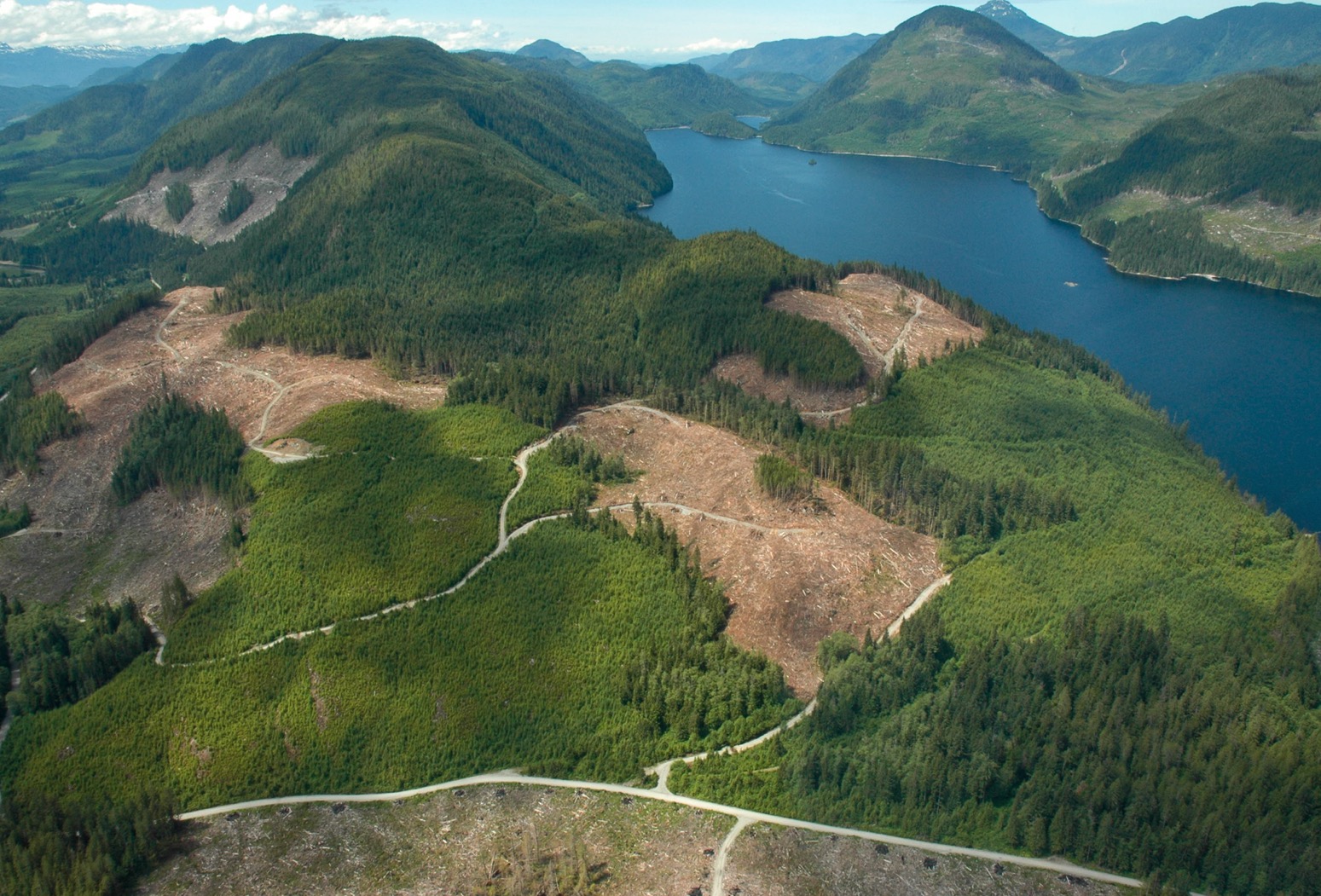 Campbell River Mayor Kermit Dahl sent an open letter to Premier David Eby, calling for immediate action to address issues within B.C.’s coastal forestry sector. Dahl warns continued inaction could result in further mill closures, job losses and the collapse of the coastal forestry industry. According to Dahl, coastal harvest volumes have dropped by over 40 per cent since 2019, with more than 5,400 direct forestry jobs lost since 2022. The 2025–26 budget projects a harvest of 32 million cubic metres … an estimated $275 million in lost revenue. The mayor says Premier Eby pledged to “protect jobs and the economy” when reshuffling his cabinet and says “those words ring hollow for thousands of coastal forestry workers watching their industry collapse—… from policy paralysis and regulatory misfires.” Dahl argues the crisis is not caused by … internal delay. “When harvest approvals that once took six months now take two years or more, that’s not a tariff issue—it’s a made-in-B.C. problem,” Dahl says.
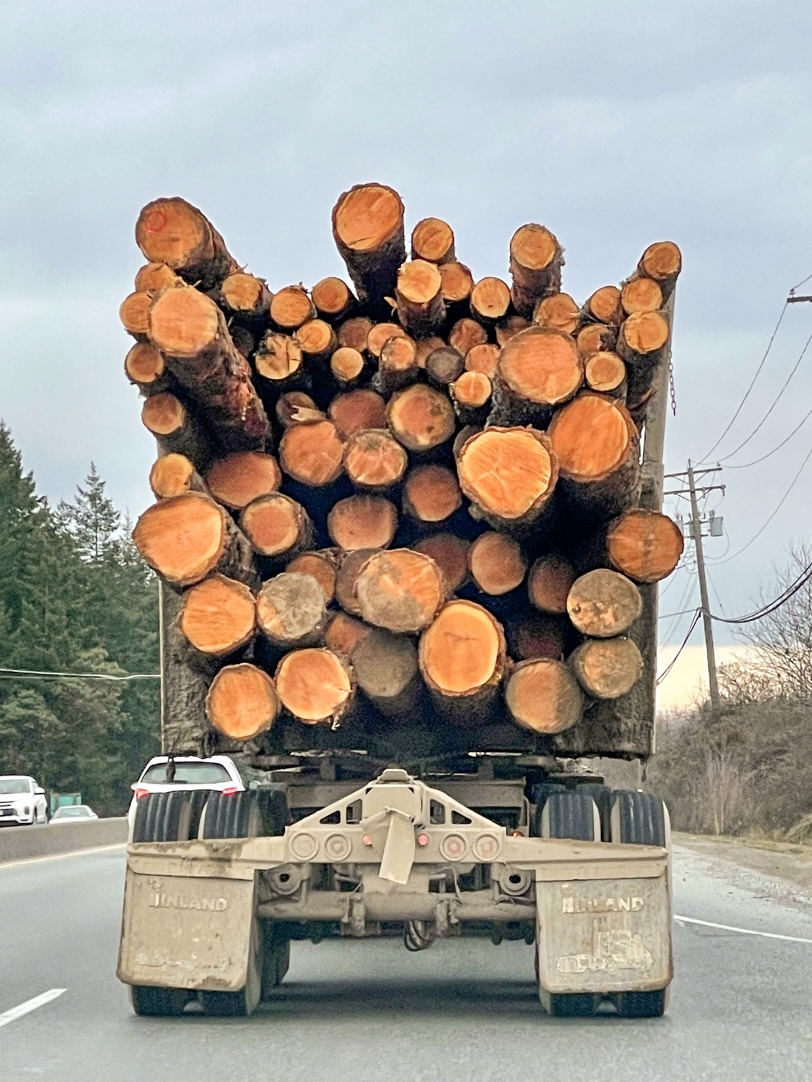 VICTORIA — The Council of Forest Industries wrote a letter to the New Democrats earlier this month, outlining more than a dozen proposals to rescue a struggling industry. “B.C.’s forest industry is in crisis,” wrote COFI President Kim Haakstad in the July 14 letter to Forests Minister Ravi Parmar. “Fibre availability is at historic lows, permitting systems are gridlocked, and investment is retreating in the face of prolonged uncertainty. The risk is not gradual decline — but accelerated facility closures, job losses, and the permanent erosion of forest industry capacity.” Haakstad was responding to Premier David Eby’s announcement of a “major project” to restore the industry in a speech to this year’s COFI’s convention. …I asked the government last week for a response to the proposals set out in the COFI letter. I got back a general statement from Parmar, which pretty much brushed aside the notion of a crisis in the industry.
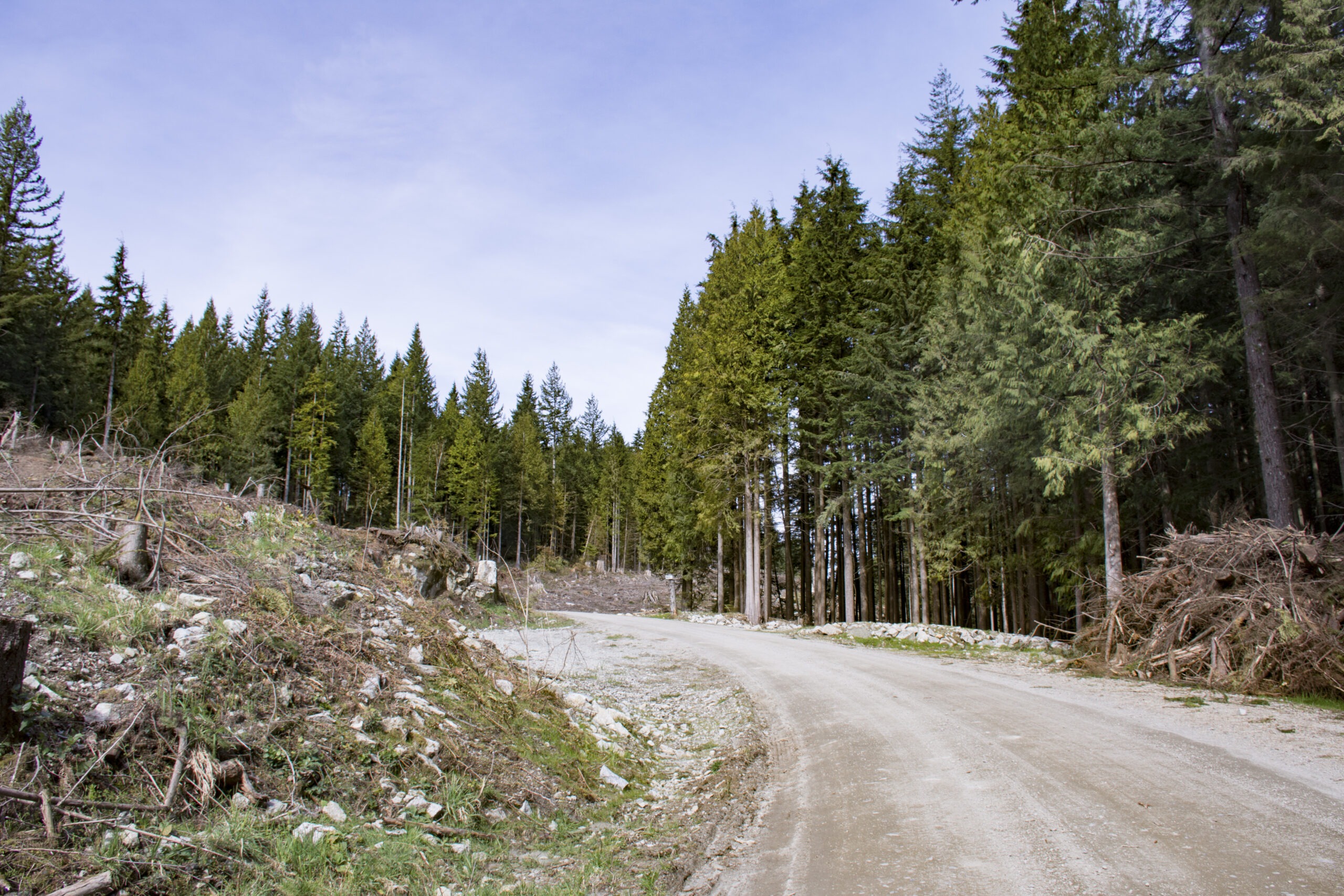 A new report warns the impacts on B.C.
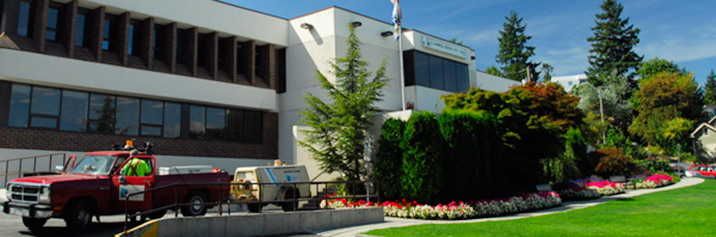

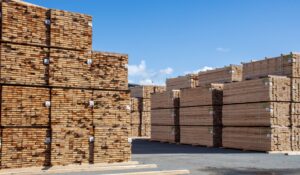 BC’s forestry sector would have been brought to its knees Friday by new American duties on Canadian softwood lumber, if it wasn’t already flat on its back from being hammered by years of provincial government policies. …But even before the new duties, B.C.’s forestry sector was in a crisis. Annual harvest volumes are down by tens of millions of cubic metres, lumber production and exports have shrunk dramatically, export revenues have fallen, thousands of jobs have been lost, and dozens of mills have been curtailed or shuttered. The industry has blamed various BC NDP policies, including new old-growth logging deferrals… and extraordinarily long permitting delays. …If New Democrats are serious about saving the industry from ruin, now would seem to be the time to shelve the never-ending reviews and actually do something. The government could spin a pivot to pro-forestry policies not as a retreat, but as a made-in-BC response to American trade aggression.

 With recent U.S. decisions increasing countervailing duties on Canadian softwood lumber to over 35%, there’s an unprecedented level of uncertainty about how the market will be impacted. These escalating tariffs threaten to disrupt supply chains, inflate costs, and reshape the forestry industry. At BC Wood, we’re dedicated to helping you navigate these challenges. Which is why we will be hosting a Tariffs Panel at the Global Buyers Mission (September 4, 2025). Introduced by Minister Ravi Parmar, the panel will bring together top leaders to analyze the challenges, opportunities, and strategies amid escalating trade tensions. Moderated by Mo Amir, GM of SPF Precut Lumber, the panel will include: Nick Arkle, CEO, Gorman Brothers Lumber; Liz Kovach, President, Supply-Build Canada; and Kurt Niquidet, President, BC Lumber Trade Council.
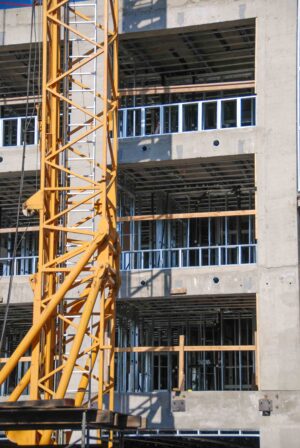 Canada’s first commercial carbon capture cement facility is now under construction in Mississauga Ont., backed by $10 million in federal funding. The project is part of the country’s effort to reduce industrial emissions. The project, led by Calgary-based startup Carbon Upcycling in partnership with Ash Grove Cement, aims to capture carbon dioxide from cement production and turn it into a low-carbon material that can replace part of traditional cement. Minister Evan Solomon, … said “These collaborative projects supporting our climate goals and enhancing our global competitiveness”. The facility will use Carbon Upcycling’s technology to mix captured CO2 with steel byproducts like slag to create a powder similar to cement used in construction. Carbon Upcycling CEO Apoorv Sinha said the system could reduce emissions from cement by up to 40%. …Sinha said the new facility will store up to 150 kilograms of carbon dioxide in every tonne of low-carbon cement it produces.
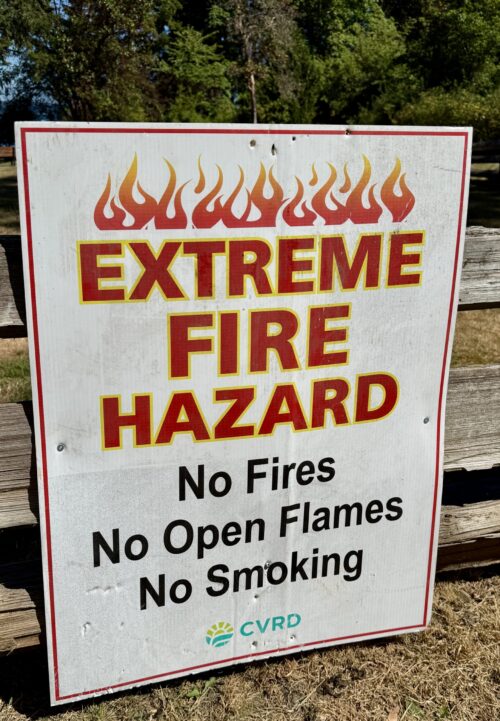 …as climate change fuels more frequent and intense wildfires, governments can reduce the damage and protect lives with proactive, targeted actions. That means strengthening policies that guide where and how we build, investing in land and fuel-management strategies, supporting Indigenous leadership and stewardship, expanding emergency-response capacity and accelerating emissions reduction. The solutions are within reach, but they require governments to lead with urgency, coordination and commitment. …Here are five key actions governments can take to reduce wildfire risk — noting that no single strategy can solve the problem by itself: Stop encouraging building in harm’s way; Make new development fire-resilient; Manage forests and reduce wildfire fuel; Strengthen firefighting capacity; and Cut carbon pollution to avoid runaway risk. Governments at all levels face a clear choice: continue with business as usual and see fire seasons grow worse or take bold action to reduce risk, protect people and ensure public resources are spent wisely.
 The human side of forestry is often overlooked but always present. Seeing the forest for the trees in this case means connecting the dots between the many ways that people interact with, benefit from and shape natural spaces, and the consequences these activities are having on everything from environmental sustainability to community wellbeing. In this issue, we delve into the social sciences of forestry, highlighting how the academic work, career paths and actions taken by our UBC Forestry community are shaping the future for the sake of humans and the planet.
 SMITHERS – The Forest Practices Board has released the results of its investigation into a complaint about logging in the Lemieux and Gardner Creek watersheds, 30 kilometres southeast of Smithers. A resident alleged that over-harvesting had dried up creeks and wells, and that logging proceeded without proper public consultation. Board investigators examined recent harvesting, road construction and maintenance by three licence holders: BC Timber Sales (BCTS), Kyah Development Corporation (KDC) and the holder of woodlot licence W0104. Investigators assessed whether licensees met legal requirements for water management and public review. All three licensees complied with requirements for public review. BCTS and KDC exceeded requirements by voluntarily sharing operational-planning information with stakeholders. BCTS and KDC also met all water- management requirements.
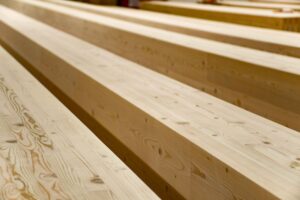 Castlegar sawmill and mass timber producer Kalesnikoff Lumber received a mention from Prime Minister Mark Carney on Aug. 5 during a visit to Kelowna. Carney was talking about his government’s Build Canada Homes initiative when he brought up Kalesnikoff’s innovations. The Build Canada Homes program prioritizes domestic materials in construction and requires companies contracting with the federal government to source Canadian lumber. It also calls for the use of Canadian technologies and resources in off-site construction of prefabricated and modular homes. “One example of the possibilities, just a few hours drive from here in Castlegar, Kalesnikoff Mass Timber recently opened its 100,000-square-foot mass timber prefabrication and modular facility – the first of its kind in North America,” said Carney. “They’re adding new products and services, including prefabricated wall panels, mass timber modules, and trusses designed and manufactured for construction efficiency.”
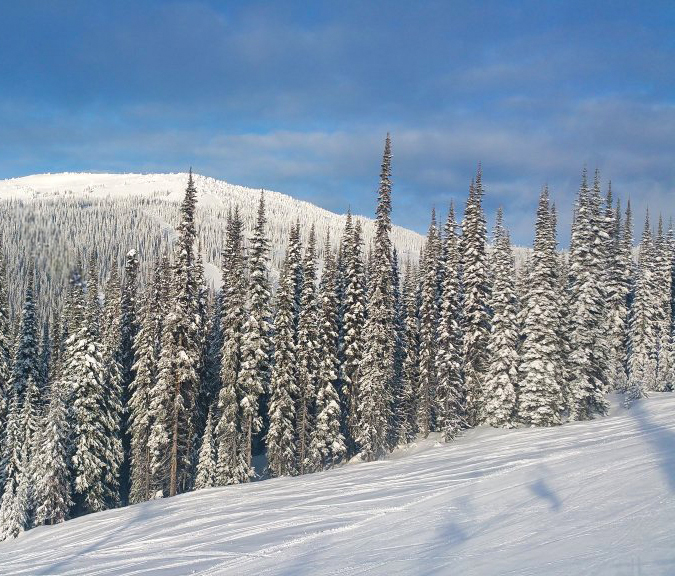 One of Revelstoke’s most popular mountains for Nordic skiing and cycling has reappeared on the map for B.C.’s lumber licensee, raising questions of how recreationists’ favourite routes could be impacted. Within the last year, BC Timber Sales (BCTS) issued a Forestry Operations Map outlining plans for Mount MacPherson, home to the Revelstoke Nordic Ski Club (RNSC) and various Revelstoke Cycling Association trails. Currently, several dozen hectares in the Wetask-Mt. MacPherson area are licensed for cut blocks, while several hectares more are mapped for retention areas and roads. …Operations are indicated to run until 2027, and all six cut block licenses have a planned development date of last Jan. 15. In a statement the Ministry of Forests said one of its recent licences was auctioned last spring and will be harvested this fall or winter. Another licence currently sits in the development stage, slated for auction next summer.
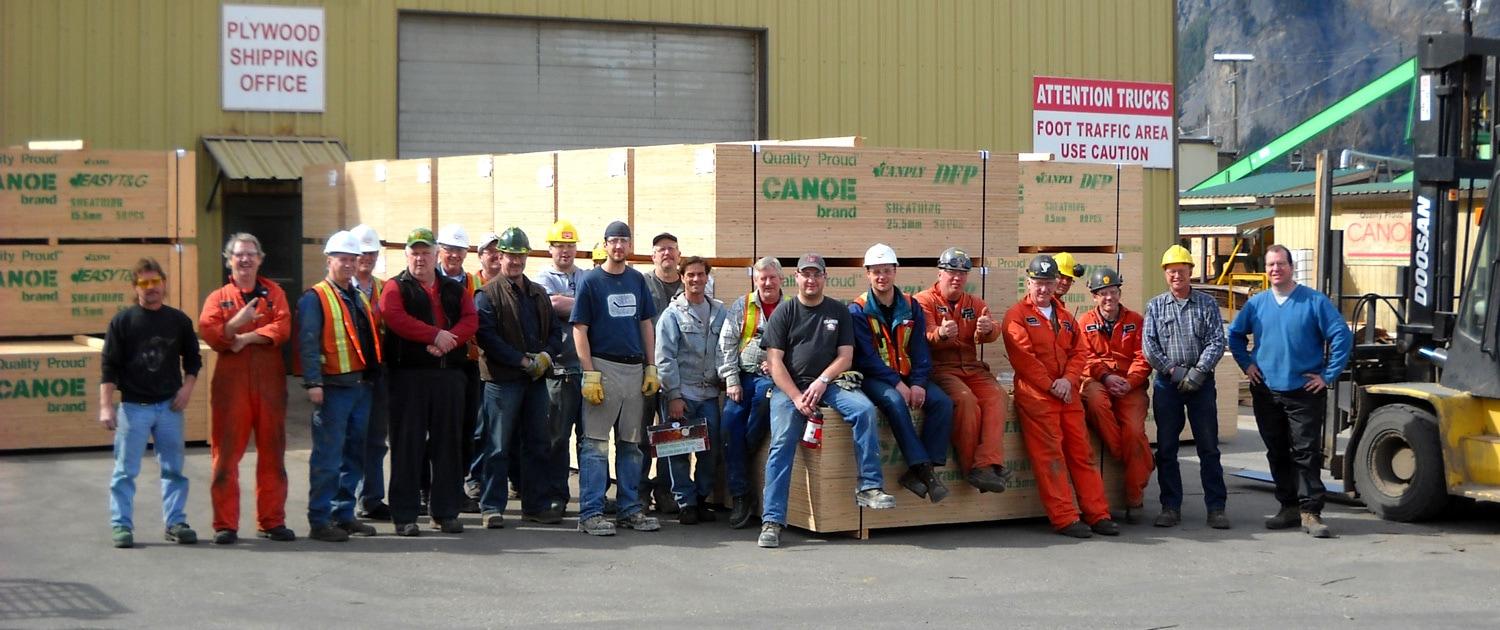


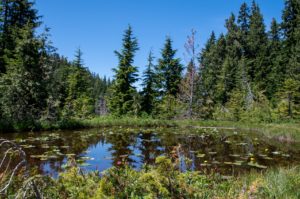 Above average spending on Yukon wildfires is in the forecast due to rising costs of fuel, aircraft, vehicles, food and fire retardant, Yukon wildfire officials told reporters during a July 30 briefing. Officials indicated more spending doesn’t necessarily mean more fires; it relates to higher costs in general. “The cost of fuel is going up. The cost of aircrafts are going up. The cost of vehicles is going up. Fire retardant, which we used over a million litres of, has almost doubled in price in the past several years. Food for catering, for feeding all these crews. Obviously, the cost of food has gone up,” director of Yukon Wildland Fire Management Devin Bailey said at the mid-season briefing. “As everything gets more expensive, we’re going to see more expensive responses during fire season.”
 Gibsons council is renewing its push for stronger watershed protections and clearer oversight of forestry operations, following a staff report on
  …The pressure to balance local benefits and profitability is something community forests must continuously navigate. A


 Years of drought combined with persistent wildfire, some of it burning underground over winter, are causing forests in B.C.’s north east to fall down. Having had the roots and organic soils that had held them up burned away these often green trees now form a dense ground fuel load for future fires. The fallen trees also form a jack-straw of branches and boles that will act as an abatis in the face of fire crews. This has fire specialists and ecologists in the Fort Nelson Fire Zone worried. “With this fuel type, another concern is the multi-year impacts of having this much fuel on the ground,” says Eric Kopetski BCWS Fire Behaviour Analyst. The Fort Nelson Fire Zone has been dealing with drought and fire for years with the Fort Nelson Complex now covering 4 million hectares including 25 fires and 350,000 hectares burned this year. Distance, terrain and fire tenacity already pose challenges to fire crews.


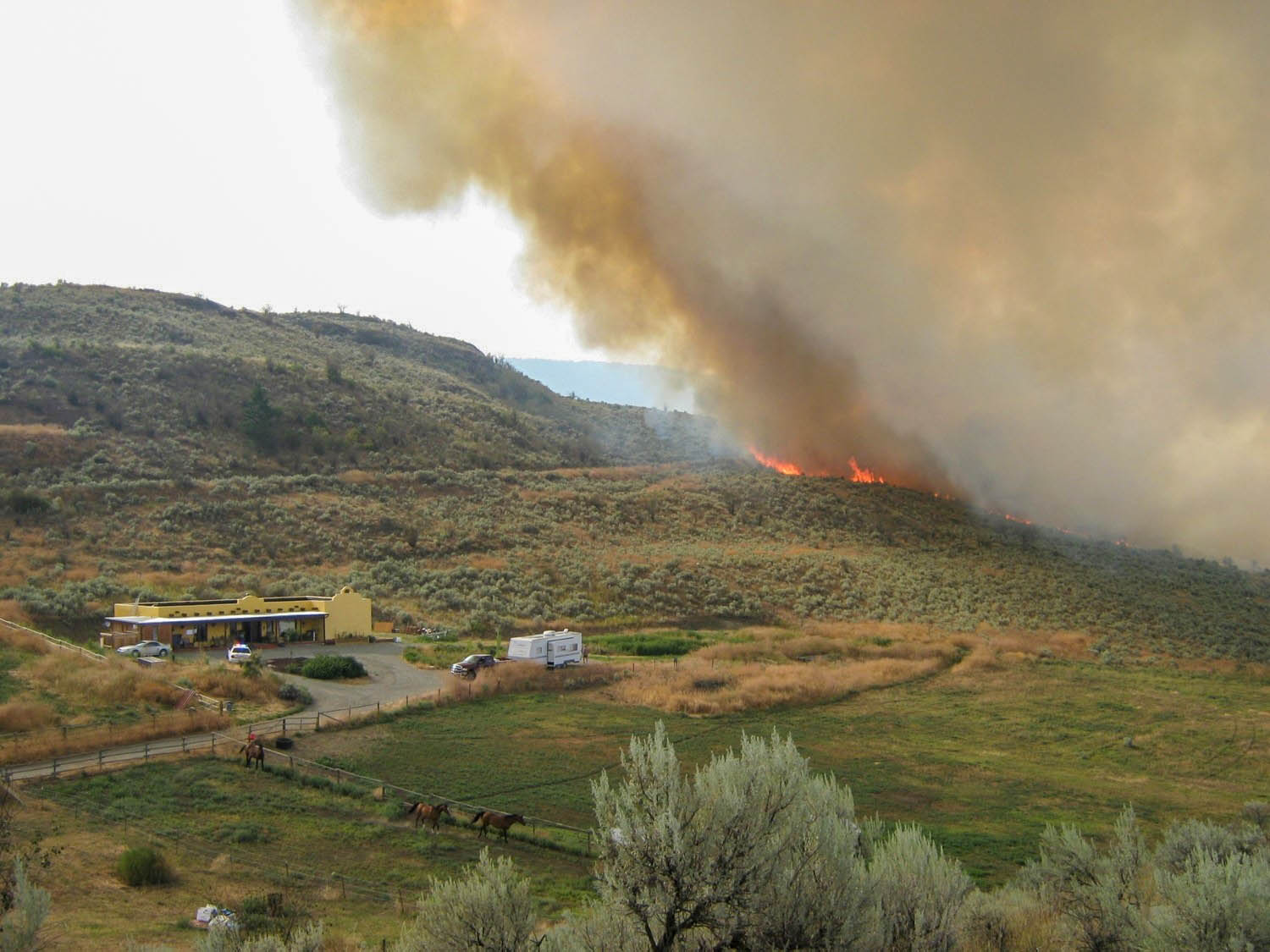 A recent report out of British Columbia suggests using beneficial fires to build wildfire resilience. In the Yukon, that idea is not new — but finding a way to reap the benefits of fire while preventing devastation is a delicate balancing act. …the



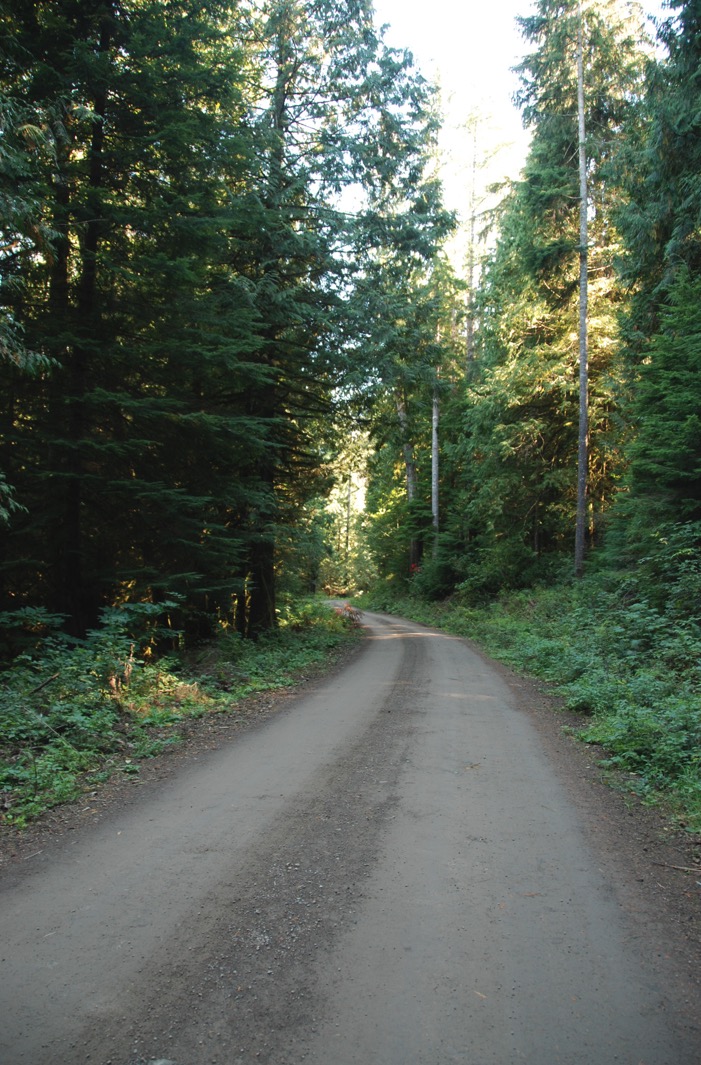 Pointing to several recent closures that caused major traffic disruptions on Highway 97, Okanagan MPs and MLAs are urging the provincial and federal governments to work together on a solution. The group of six politicians gathered outside Okanagan Lake West-South Kelowna MP Dan Albas’ office on Tuesday (Aug. 12) to offer their own idea — pave 201 Forest Service Road (201 FSR) between Kelowna and Penticton so it can be used during emergency closures of Highway 97. “People are going to be taking that road, as we’ve seen reported by local journalists, and they’re getting lost,” Albas pointed out. “So this is going to happen whether or not the federal and provincial governments decide to act, but we can’t tolerate that.” The 201 FSR is a long and winding route that many Okanagan residents use during extended closures of Highway 97.
 As the B.C. Day long weekend approaches, people are encouraged to stay informed about wildfire conditions, be prepared and plan travel. Warming summer temperatures and ongoing drought mean much of British Columbia is at heightened risk of wildfire, even after recent cooler temperatures and rain. Environment and Climate Change Canada (ECCC) has forecast hot temperatures this week in B.C., with heat warnings currently in place for parts of the province. People are encouraged to prepare for hot summer weather. To access the Province’s PreparedBC extreme-heat preparedness guide,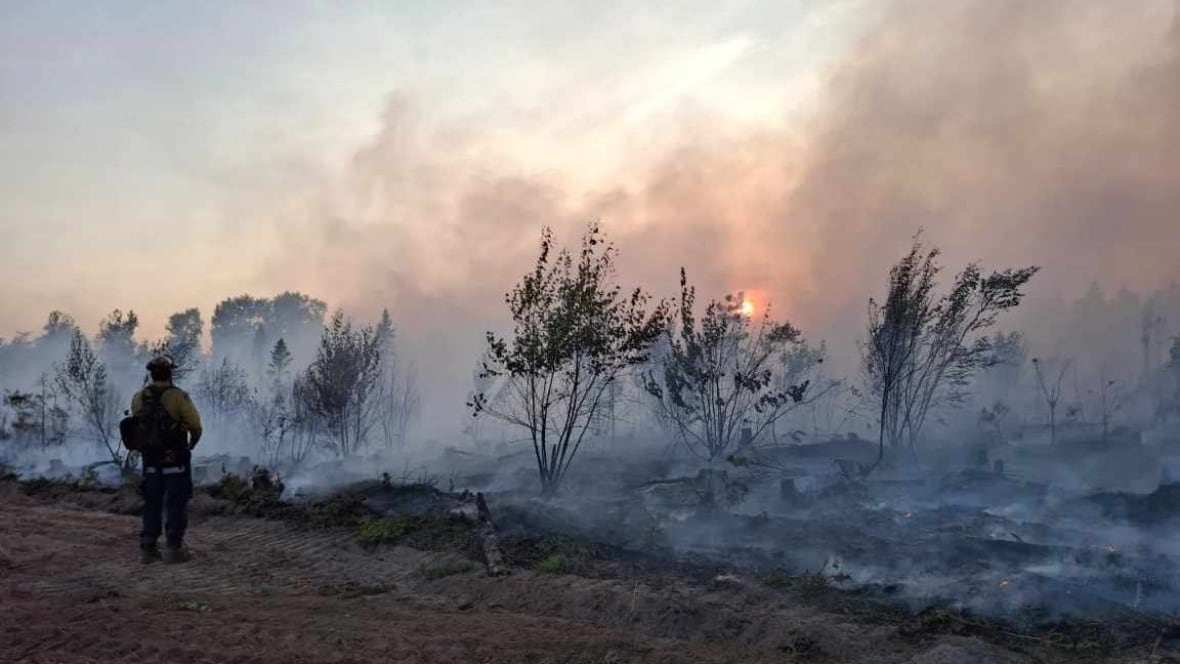
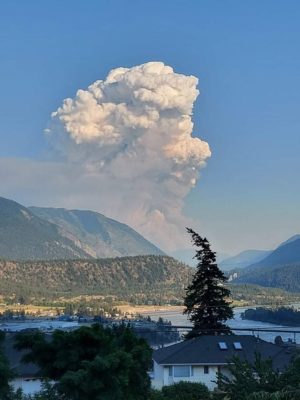 Hundreds of residents who were forced out of their homes by a wildfire burning near Cameron Lake on Vancouver Island are being allowed to return. The Regional District of Nanaimo (RDN) has posted an update removing 257 properties from its evacuation order, although residents remain on alert and must be ready to leave right away. The district said 37 properties in Little Qualicum River Village remain under evacuation order due to the six-square-kilometre wildfire that is now classified as being held. The B.C. Wildfire Service updated the status of the Wesley Ridge blaze, burning about 60 kilometres northwest of Nanaimo, saying it’s not expected to grow beyond its existing containment lines. An update from the wildfire service on Monday said the Wesley Ridge fire did not grow Sunday and was displaying mostly rank-one fire behaviour, a “smouldering ground fire with no open flame.”
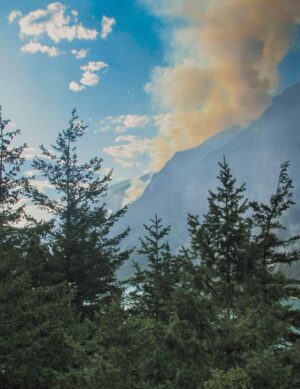 VICTORIA — BC Wildfire Service said an out-of-control wildfire burning on Vancouver Island near Cameron Lake could generate smoke for the “coming weeks, and potentially the coming months.” The warning appears in a video that BCWS posted Sunday as part of a larger update on the Wesley Ridge wildfire. “The public will be seeing smoke at the height of land here on Wesley Ridge for the coming weeks, and potentially, the coming months,” said operations sections chief Beau Michaud while seen standing on a temporary helicopter landing pad fashioned out of logs. But Michaud added that he does not expect the fire to impact Highway 4 connecting communities along the western shore of Vancouver Island with communities on the eastern shore.
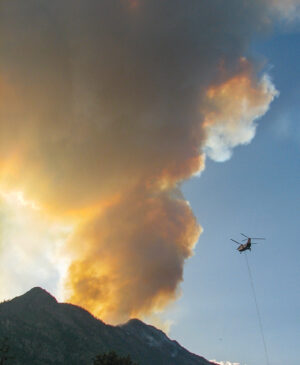 Forest Minister Ravi Parmar told reporters on Wednesday (Aug. 6) that in the past week, roughly 70,000 lightning strikes have hit B.C., leading to a “sudden increase” in fire activity. He also said that the B.C. Wildfire Service has largely been able to keep the fires from spreading. So far this season, more than 850 wildfires have sparked in B.C, but the province has kept 85 per cent of them smaller than four hectares, and only 120 were active on Aug. 6. As of Aug. 11 last year, there had been more than 1,300 fires, with almost 400 still active on that date. The only current “wildfire of note” is the Wesley Ridge fire on Vancouver Island. The fire is at Cameron Lake, between Parksville and Port Alberni, and is 530 hectares in size. Evacuation orders are in place for 400 homes, and 700 more are on evacuation alert.
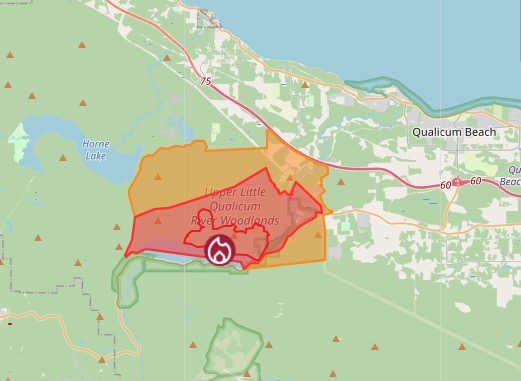 A wildfire on Vancouver Island is threatening Douglas-fir trees in Cathedral Grove, located on the western shoreline of Cameron Lake. The old-growth forest is filled with gigantic 800-year-old trees… The out-of-control Wesley Ridge wildfire was discovered on July 31 and is now 511 hectares in size. The Regional District of Nanaimo issued an evacuation order on August 2, which affected nearly 400 properties in the area around Cameron Lake, about 25 kilometres west of Parksville. …The fire has grown rapidly over the weekend as it looms over Highway 4, which remains open for the time being. Crews are trying to push it back, even using night vision so they can battle the blaze 24 hours a day. Emelie Peacock with the BC Wildfire service says, “we currently have 142 personnel responding to this wildfire, which includes 65 firefighters, 2 followers, and roughly 75 structure protection specialists”. …The fire is suspected to be human-caused … investigation is still in its preliminary stages.