 We are gauging interest in a conference for students and young professionals across B.C. in the forestry industry. The goal of this conference is to create a more unified forestry sector throughout the province by bringing together students and young professionals to discuss current and future challenges in forestry, explore innovative solutions, and build relationships that can support us throughout our careers. This is a youth-led initiative and so having your opinions and participation is crucial to determine the topics and speakers for the conference. We have created a short survey (see link) to help determine the topics and timing of this conference. This is a chance for young professionals and students like yourself to build a more connected, informed, and forward-thinking forestry community and empower them to help shape the future of forestry in B.C.
 Vancouver — Forest Professionals British Columbia (FPBC) honoured seven individuals as part of its recognition program in Vancouver on February 5. Forest Professionals BC recognized three Distinguished Forest Professionals, one Forest Professional of the Year, one Jim Rodney Memorial Volunteer of the Year, and two authors for BC Forest Professional Magazine Best Article at the 78th Forest Professionals BC forestry conference recognition banquet.
  …Jeff Fisher (North Vancouver), BSF, RPF, Christopher Vukovic (Qualicum Beach), HBScF, RPF(Ret), and John Walker (Williams Lake), RPF, were honoured as Distinguished Forest Professionals for 2025. This category recognizes significant accomplishments over a career, for providing outstanding service to the profession of forestry and for furthering the principles of Forest Professionals BC. It is the profession’s highest honour for a registrant.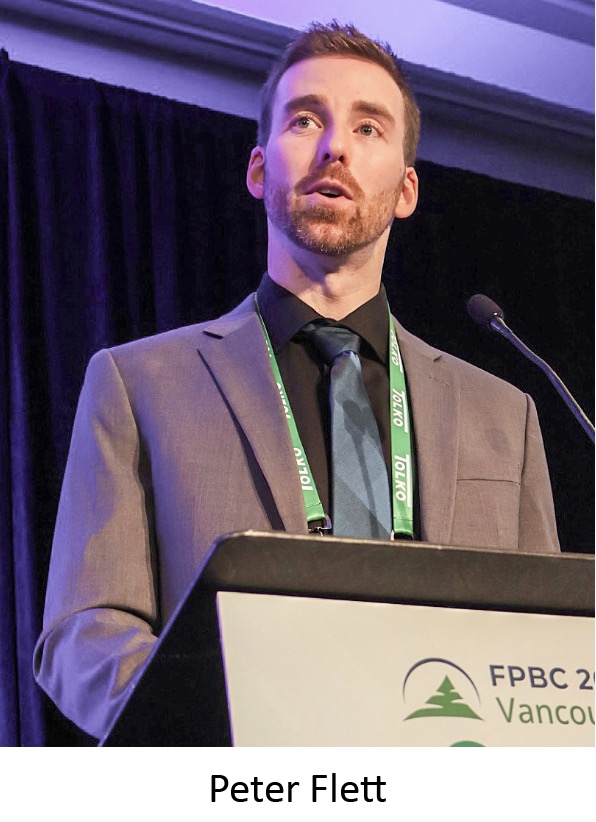
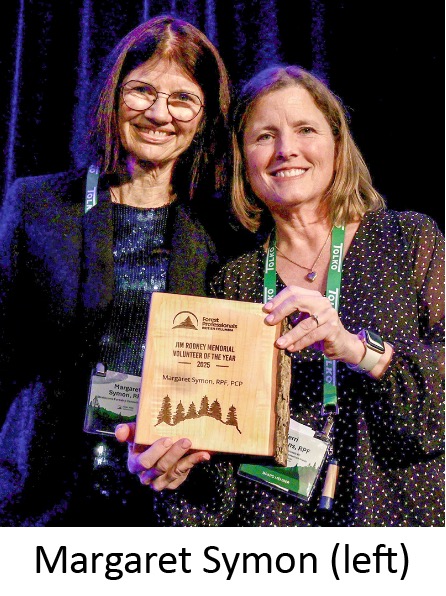 Peter Flett, MSFM, RPF, of Penticton is the 2025 Forest Professional of the Year. Margaret Symon, RPF, PCP, of Duncan is the 2025 Jim Rodney Memorial Volunteer of the Year. Lastly, Vanessa Fetterly, BSc, RPBio, and Carl Pollard, BSc, RPF, collaborated on the 2025 BC Forest Professional Magazine Best Article.
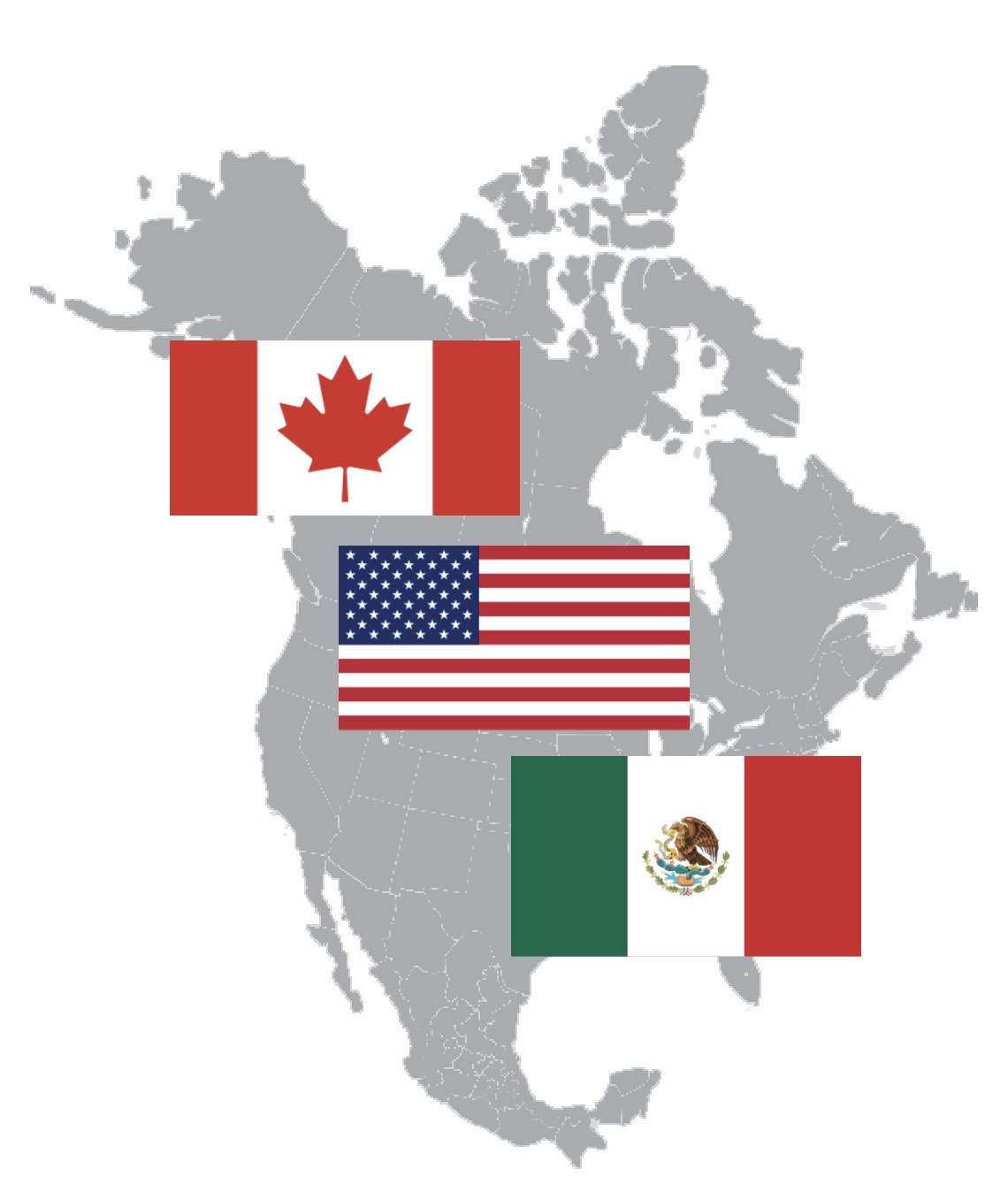 Prime Minister Mark Carney has chosen former Privy Council clerk Janice Charette to head Canada’s trade negotiations as it prepares for a review of the North American trade pact. Charette’s title is chief trade negotiator to the United States, according to a Monday news release from the Prime Minister’s Office (PMO). She’ll be a senior adviser to Carney and Canada-U.S. Trade Minister Dominic LeBlanc. “Charette brings extraordinary leadership, expertise and a deep commitment to advancing Canada’s interests,” Carney said in the release. “She will advance Canadian interests and a strengthened trade and investment relationship that benefits workers and industries in both Canada and the United States.” The announcement comes as the federal government prepares for a scheduled review of the Canada-U.S.-Mexico Agreement (CUSMA) this year. It also comes a day after Mark Wiseman, a global investment banker and pension fund manager, took the reins as Canada’s next ambassador to Washington.
 Almost three years after declaring bankruptcy, and more than two years under new owners, legal proceedings for Penticton’s Structurlam are continuing through the courts as it fights with the company that sent it into bankruptcy in the first place. In January, the case returned to the BC Supreme Court in Vancouver to order two Canadian engineering firms to produce documents and reports for the proceedings as Structurlam faces $80 million US in claims from Walmart, according to a decision published on Feb. 11. In 2023, Structurlam began bankruptcy proceedings after Walmart ended its contract to build the company’s new home office campus in Arkansas. …In July, Walmart filed a claim for over $80 million US for allegedly defective, nonconforming, rejected, nondelivered, or returned goods that it had paid for and alleged costs to replace said goods. The January 2026 B.C. Supreme Court decision orders two engineering firms to provide their documentation.
 WINDSOR, Ontario — For months, trade negotiations between Canada and the United States have been stalled. This week that all changed when US President Trump announced negotiations were back on. During his social media tirade about Windsor, Ontario’s Gordie Howe Bridge, and a list of other perceived transgressions, Trump wrote… we will start negotiations, IMMEDIATELY.” While Trump’s political speed bump threatens to derail the planned opening of the commercial corridor, some industry leaders see an opening to accelerate negotiations. “Trade conversations have now restarted, a few weeks ago conversations weren’t happening. I see this as a positive,” says Canadian Association of Moldmakers Nicole Vlanich. …With Trump restarting trade negotiations that he once brought to a screeching halt, business leaders in Windsor hope this will be an important first step towards paving a clearer picture for economic growth for both the Canadian and US economies.
 WASHINGTON, DC — In a vote that GOP leaders fought hard to avoid, a half dozen Republicans sent a blunt message to President Trump that they do not support the tariff regime that he has made the centerpiece of his second term. Six Republicans joined with Democrats in the vote to effectively repeal the president’s tariffs on Canada, the culmination of months of consternation in the GOP over the president’s trade war that has quietly rattled even some of his staunchest loyalists in Congress. …The Senate has already passed a similar measure to cancel Trump’s tariffs on Canada, which — unlike most measures — can be passed with a simple majority rather than 60 votes. But even if the Senate does agree to this same House measure, Trump would still have the power to veto it. The House did not secure enough votes to protect a veto override.
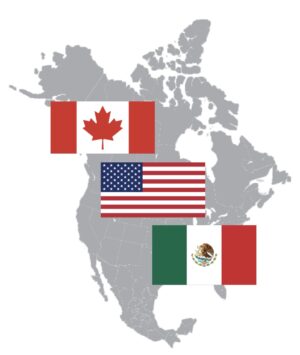 Some of Canada’s major labour organizations are urging Ottawa to put workers at the centre of any renegotiation of the Canada-US-Mexico Agreement as preparations begin for the pact’s mandatory 2026 review. Leaders met with Dominic LeBlanc, the federal minister responsible for Canada–US trade, for what they described as a high-level roundtable on the future of CUSMA amid rising trade tensions and renewed threats of U.S. tariffs. Canadian Labour Congress president Bea Bruske said unions delivered a “clear and urgent message” that Canada should not accept a revised trade deal that weakens domestic industry or costs Canadian jobs. …Bruske was joined by leaders from several large manufacturing and building trades unions representing sectors heavily exposed to trade policy decisions, including auto manufacturing, construction and resource-based industries. Bruske said the upcoming CUSMA review should strengthen Canadian industries and working-class communities, not “hollow them out” in the rush to renew the agreement.

 The BC government is forecasting that the natural gas industry will play a larger role as the top driver of provincial resource revenue, while warning about tough times in the former economic powerhouse of forestry. Natural gas royalties are expected to ring in at nearly $1.3-billion for the 12 months ending March 31, 2027, up 38%. …The government is anticipating $521-million in forestry revenue for the 2026-27 fiscal year, up 3%, but still down sharply when compared with several years ago. …In the 2020-21 fiscal year, forestry revenue surpassed $1.3-billion and natural gas royalties reached $196-million. …Tuesday’s budget introduces a temporary Stumpage Payment Deferral Program in an effort to ease the cash crunch for companies. The voluntary program covers the first 11 months of 2026. …The government anticipates that the trend of depressed annual volumes of tree harvesting will continue over the next several years, restricting the production of softwood lumber. [to access the full story a Globe & Mail subscription is required]
 The United Steelworkers union found positives in a difficult BC budget. …Recognizing the uncertainty created by US trade policy… USW Western Canada Director Scott Lunny said… “Today’s budget advances the government’s work towards long-term economic stability, including BC’s goal of securing $200 billion in private-sector investment over the next decade in sectors including mining, forestry and manufacturing”. …USW noted positives, including: a continued commitment in funding to strengthen permitting capacity in resource industries; a $400- million Strategic Investments Special Account to leverage federal government dollars for investment and job creation in key sectors like value-added forestry, responsible mining, manufacturing and clean energy; and unprecedented investment in skilled trades funding as well as a training grant to encourage apprenticeships. …”While we welcome the $20 million to help workers and employers in tariff-impacted sectors like steel and forestry, there is still a missing commitment to stabilizing and sustaining the primary forestry sector,” said Lunny.
 The only thing more surprising than the collapse of the co-operation agreement between the BC Greens and NDP would have been if the two sides had agreed on a new deal. …The Co-Operation and Responsible Government Accord (CARGA)… didn’t seem to be meeting anyone’s needs. For the NDP, the deal was supposed to act as a safety net for a slim one-seat majority. …It worked for last year’s budget. But outside of that, the Greens refused to back the NDP on three other confidence matters. And for that, the government agreed to advance the Green causes… [including] an early review of CleanBC and another review of the forestry system. For the Greens …it was a mixed bag, at best. The NDP did launch reviews of CleanBC and forestry, but then didn’t accept the resulting recommendations. The documents seem destined for that dusty shelf in the legislature library where unwanted reports go to die.

 Municipal leaders are on the front lines of BC’s economy, where the health of the forest sector directly impacts jobs, services, and long-term community stability. This timely panel brings together mayors from across the province for a practical, solutions-focused discussion on what a competitive and resilient forestry future means for families and local economies — and what’s needed to ensure forestry remains a cornerstone industry for generations to come. Featuring mayors Maria McFaddin (Castlegar), Brad West (Port Coquitlam), Leonard Krog (Nanaimo) and Gary Sulz (Revelstoke), the conversation will offer grounded municipal perspectives from communities both large and small. The session will be moderated by Karen Brandt, Senior Vice President, Public Affairs and Partnerships with Mosaic Forest Management. Expect candid insights, local realities, and a forward-looking discussion on strengthening forestry and the communities it supports.




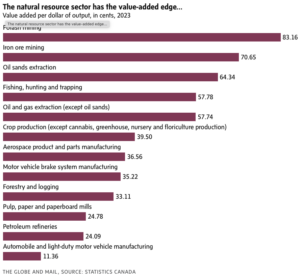 It’s been nearly a century since political economist Harold Innis popularized the phrase “hewers of wood and drawers of water” in decrying Canada’s dependence on natural resources. …Underpinning that cry is the (wrongheaded) assumption that natural resources such as mining, agriculture and energy are second-grade economic activity, less desirable than manufacturing. …That mistake is the foundation for many public policy blunders over many decades. The numbers demolish that myth, and tell a very different story, one in which energy, mining and other natural resources sectors create enormous economic value and are globally competitive. …The federal government needs to get itself out of the way of some of the strongest parts of the Canadian economy. Stop subsidizing inefficient sectors. Stop raising protective tariffs that harm other parts of the economy. Focus on rolling back unjustified regulatory barriers that harm the ability of the entire economy, particularly globally exposed natural resources sectors, to compete. And, most of all, stop the undervaluing Canada’s great natural advantage in natural resources. [to access the full story a Globe & Mail subscription is required]
 The pace of homebuilding in Canada continues to slow with no near-term signs of a turnaround, said Canada Mortgage and Housing Corp. on Monday. The national housing agency said the seasonally-adjusted annual pace of housing starts declined 15% in January. Housing starts can vary considerably month-to-month as big projects get started, but the agency’s six-month moving average for annual starts also showed a 3.5% decline. “The six-month trend has decreased for the fourth consecutive month,” said CMHC deputy chief economist Tania Bourassa-Ochoa in a news release. “We expect new construction to continue trending lower going forward as trade and geopolitical uncertainty, high construction costs, weaker demand, and rising inventories continue to constrain developer activity.” She said a near-term turnaround is looking unlikely, and reflects what the agency has been hearing from developers over recent months. The pullback comes amid a variety of pressures, including lower immigration numbers and US trade policy.
 Canada’s annual inflation rate edged down to 2.3% in January, Statistics Canada said on Tuesday, driven downward by a decline in the cost of gasoline. Economists were largely expecting the rate to remain unchanged from December’s 2.4%. Pump prices put pressure on the headline rate, having fallen 16.7% in January compared to the same period last year. With gas excluded, January’s inflation rate came in at 3%. The Bank of Canada’s preferred measures of core inflation, which strip away volatility from one-time tax changes and gas prices, all ticked down in January — bringing those rates closer to the central bank’s two per cent inflation target. “Overall, this is an encouraging result for the Bank of Canada, with inflation finally nearing the [2%] target on a broader basis,” wrote Douglas Porter, chief economist at Bank of Montreal. ›
 BURNABY, BC — Interfor recorded a net loss in Q4, 2025 of $104.6 million, compared to a net loss of $215.8 million in Q3’25 and a net loss of $49.9 million in Q4’24. Adjusted EBITDA was a loss of $29.2 million on sales of $600.6 million in Q4’25 versus an Adjusted EBITDA loss of $183.8 million on sales of $689.3 million in Q3’25 and Adjusted EBITDA of $80.4 million on sales of $746.5 million in Q4’24. …During and subsequent to Q4’25, Interfor completed a series of financing transactions. Taken together, these transactions significantly enhance Interfor’s financial flexibility, bolster liquidity and provide meaningful additional runway as the Company continues to navigate volatile lumber market conditions. …Lumber production of 753 million board feet was down 159 million board feet versus the preceding quarter. …Interfor’s strategy of maintaining a diversified portfolio of operations in multiple regions allows the Company to both reduce risk and maximize returns on capital over the business cycle.
 NEW YORK, New York — Mercer International reported fourth quarter 2025 Operating EBITDA of negative $20.1 million compared to positive $99.2 million in the same quarter of 2024 and negative $28.1 million in the third quarter of 2025. In the fourth quarter of 2025, net loss was $308.7 million compared to net income of $16.7 million in the fourth quarter of 2024 and a net loss of $80.8 million in the third quarter of 2025. The net loss in the fourth quarter of 2025 included total non-cash impairments of $238.7 million. This included non-cash impairments of $203.5 million recognized against long-lived assets at our Peace River mill due to the continued down-cycle environment of hardwood pulp markets, $12.2 million against certain obsolete equipment and $23.0 million against pulp inventory due to low prices and high fiber costs. …Mr. Juan Carlos Bueno, CEO: “We continue to prioritize improving liquidity and working capital, committing to rebalancing our asset portfolio and maintaining operating discipline.”
 VANCOUVER, BC

 B.C.’s export performance moved against the national pattern in November. Domestic exports to international markets rose 7.6 per cent year over year to $4.59 billion, whereas exports nationally declined by about four per cent on a customs basis. This contrast partly reflects differences in the types of goods each region exports. Nevertheless, provincial export trends remain soft, reflecting U.S. tariffs on key products like lumber, and end of de minimis treatment of low value exports. Year-to-date, B.C. exports slipped a mild 0.1 per cent from same-period 2024, which was slightly stronger than the national reading. …That said, a declining trend continued in the battered forestry sector (-13.7 per cent year over year), where tariffs have compounded weakness from timber supply constraints and other duties already imposed by the U.S.
 VANCOUVER – Western Forest Products reported adjusted EBITDA of negative $6.2 million in the fourth quarter of 2025. In comparison, the Company reported Adjusted EBITDA of $14.4 million in the fourth quarter of 2024 and Adjusted EBITDA of negative $65.9 million in the third quarter of 2025, which included a non-cash export tax expense of $59.5 million related to the determination of final duty rates from the sixth Administrative Review. Net loss was $17.5 million in the fourth quarter of 2025, as compared to a net loss of $1.2 million in the fourth quarter of 2024, and net loss of $61.3 million in the third quarter of 2025. …For the full year 2025, the net loss was $82.4 million compared to to a net loss of $34.5 million in 2024. …“Despite more challenging markets and higher softwood lumber duties and tariffs in 2025, we enter 2026 with a significantly improved balance sheet to navigate the expected near-term market uncertainty,” said Steven Hofer, President and CEO of Western Forest Products.
 EDMUNDSTON, New Brunswick – Acadian Timber reported financial and operating results for the three months ended December 31, 2025 as well as for the full 2025 fiscal year. “While 2025 brought a multitude of challenges, Acadian delivered steady operational performance in New Brunswick, helping to offset weather-related challenges, trucking constraints, and productivity issues in Maine,” said Adam Sheparski, President and Chief Executive Officer. …During the fourth quarter, Acadian generated sales of $22.0 million compared to $20.2 million in the fourth quarter of 2024. Acadian generated $5.2 million of Adjusted EBITDA and declared dividends of $5.3 million. During 2025, Acadian generated revenue from timber sales and services of $87.0 million, compared to $91.6 million in the prior year. The sale of 752,100 voluntary carbon credits contributed an additional $24.6 million to total sales in 2024 while no sales of carbon credits occurred in 2025.
  As Denmark has recently tightened its standards for new construction with the aim of reducing embodied carbon, what lessons can Canada draw from this experience? In 2023, the Danish Building Code made life-cycle assessment (LCA) mandatory for all new buildings over their first fifty years. …The government also mandated researchers to provide practitioners with a list of generic material data for cases where an Environmental Product Declaration (EPD)—required to perform an LCA. When the regulation came into force in 2023, the entire construction industry was opposed to it, recalls Thomas Graabaek. “ And then slowly there was a movement within architects and engineers that actually we need to have even stricter demands.” …“Unfortunately, in Canada, [architects] have been educated only around operations, [not on its entire life cycle],” explains Kelly Alvarez Doran. He advocates for the establishment of embodied-carbon targets at different regulatory scales.


 Canada Wood’s January market news highlights the continued expansion of Canadian wood products into key international markets, with a strong focus on mass timber, technical innovation, and long-term partnerships. Articles explore new opportunities for Canadian species in China’s growing glulam sector, including efforts to diversify beyond Douglas fir into Hem-Fir, SPF, and yellow cedar. Other features examine rising interest in mass timber construction in South Korea, driven by carbon-reduction goals and modern architectural demand. The January updates also showcase how long-standing Canadian demonstration projects in southern China are building confidence in wood’s durability in challenging climates, helping pave the way for larger, more complex structures. Rounding out the month is news of renewed Canada–China cooperation on wood construction, reinforcing shared commitments to low-carbon building and sustainable urban development. Together, these stories offer a timely snapshot of how Canadian wood expertise is shaping construction practices abroad.
 Modern Methods of Construction Education (MMC Edu) is a national platform that connects education and industry to advance construction training in Canada. It is a key outcome of the Mass Timber Training Network: Advancing Trades for a Sustainable Future (MTAT) project, which brings together a national network to advance wood as a low-carbon building material by addressing major barriers to mass timber adoption across the country. Led by the British Columbia Institute of Technology (BCIT) in partnership with Natural Resources Canada (NRCan) through the Green Construction Through Wood Program (GC Wood), the MTAT project focuses on education and training as a key vehicle for reducing barriers and preparing the next generation of the workforce. MMC Edu serves as a shared platform where network members, industry partners, and educators can exchange knowledge and access resources that support innovation, sustainability, and workforce readiness across Canada.
 International Pulp Week (IPW) is the premier annual gathering for the global market pulp sector, organized by the Pulp and Paper Products Council (PPPC). Set for May 10–12, 2026 at the Sutton Place Hotel in Vancouver, BC, the three-day conference brings together producers, customers, logistics providers, analysts and other key stakeholders from around the world to share market intelligence, expert insights and strategic dialogue on trends shaping the future of pulp markets. Through keynote presentations, expert panels and extensive networking opportunities, IPW offers decision-makers high-value analysis, opportunities for business development, and collaboration across the pulp supply chain. The event has become a must-attend forum for those involved in international pulp production, trade and investment, with participants from more than 40 countries expected to attend.


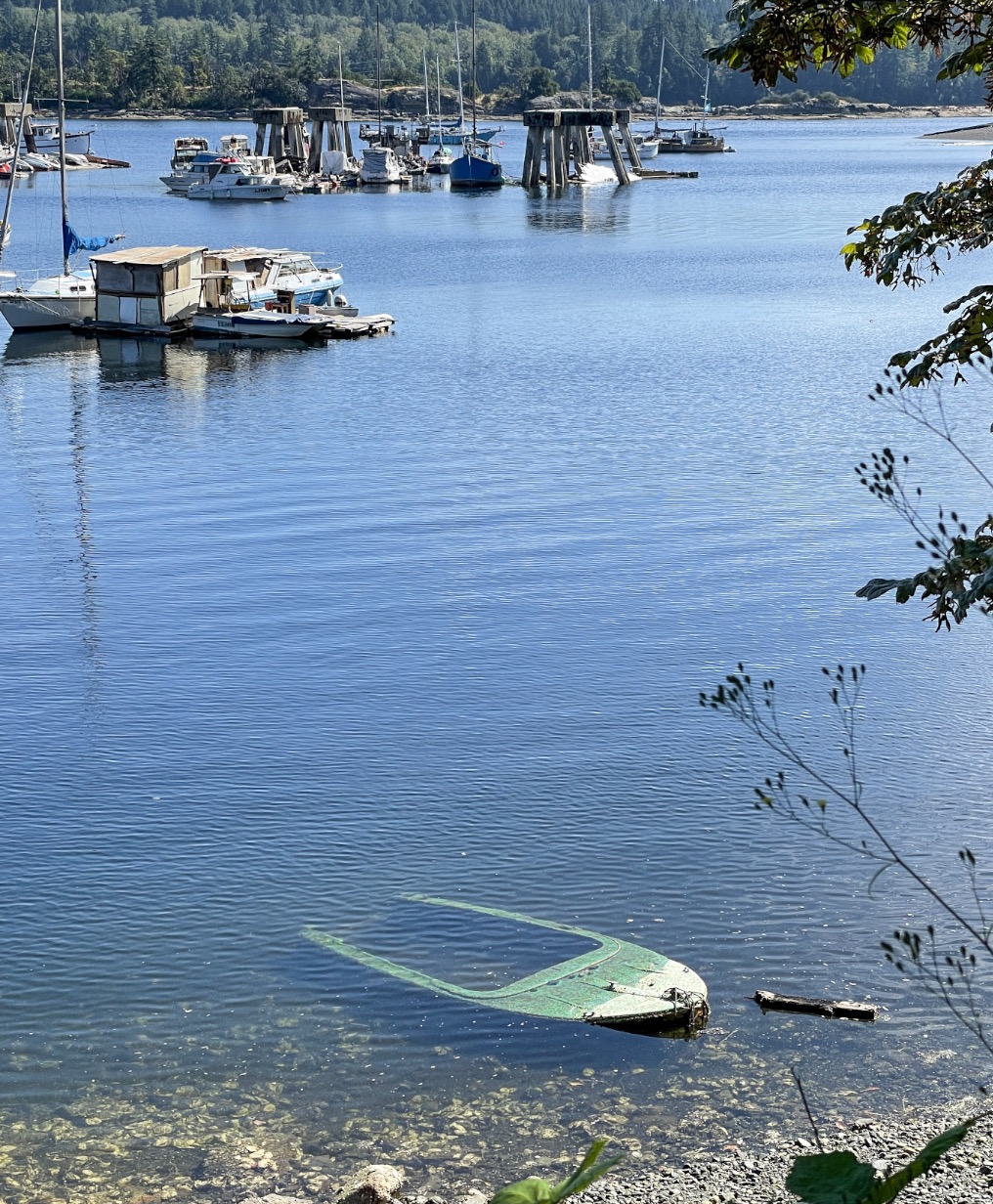 North Cowichan wants something done about the growing amount of fibreglass pollution in the Cowichan estuary. Council passed a motion at its meeting on Feb. 4 that the municipality write a letter to senior levels of government and the appropriate regulatory authorities asking that they raise awareness of the issue and take action to deal with the problem. Coun. Christopher Justice, who made the motion, said that the issue of derelict and deteriorating fibreglass boats is something that is becoming more acute in local harbours and waterways. …North Cowichan Mayor Rob Douglas said the municipality must signal its support for the continued operation of the Western Forest Products sawmill, which operates in that area. He said he spoke to officials at the mill before the council meeting. “They advised me that they are not aware of any fibreglass contamination coming from the mill site,” Douglas said.
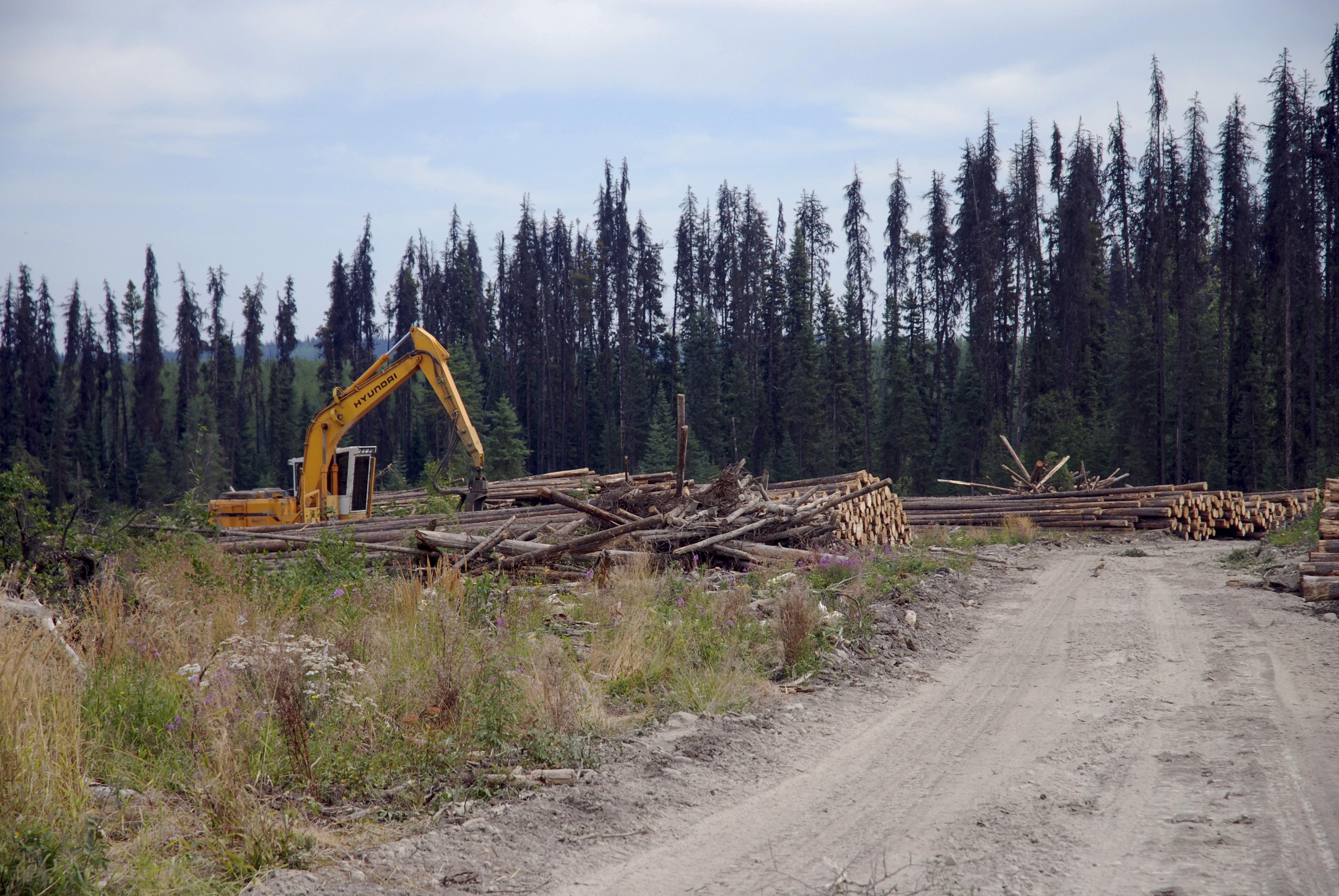 PRINCE GEORGE – [Local forester and forestry advocate Michelle Connolly says what’s being suggested in a recent report, titled “From Conflict to Care: BC’s Forest Future,” is off the mark.] “One of the core beliefs is that people are better at managing nature, than nature is, even though forests have been self-organizing and self-managing for millennia,” says Connolly. “The lack of self-awareness right up front in that report is troubling, because it means that they’re not aware of their own biases and belief systems that are guiding the things they’re putting in this report.” Kiel Giddens, Conservative MLA for Prince George-Mackenzie, says the report overlooks a lot of industry concerns. …Giddens says, while the report misses the mark overall, he agrees with Objective Number 2 around regional decision making. …But Connolly says where the report truly hits the mark is over what is seen as a lack of transparency in the decision-making processes.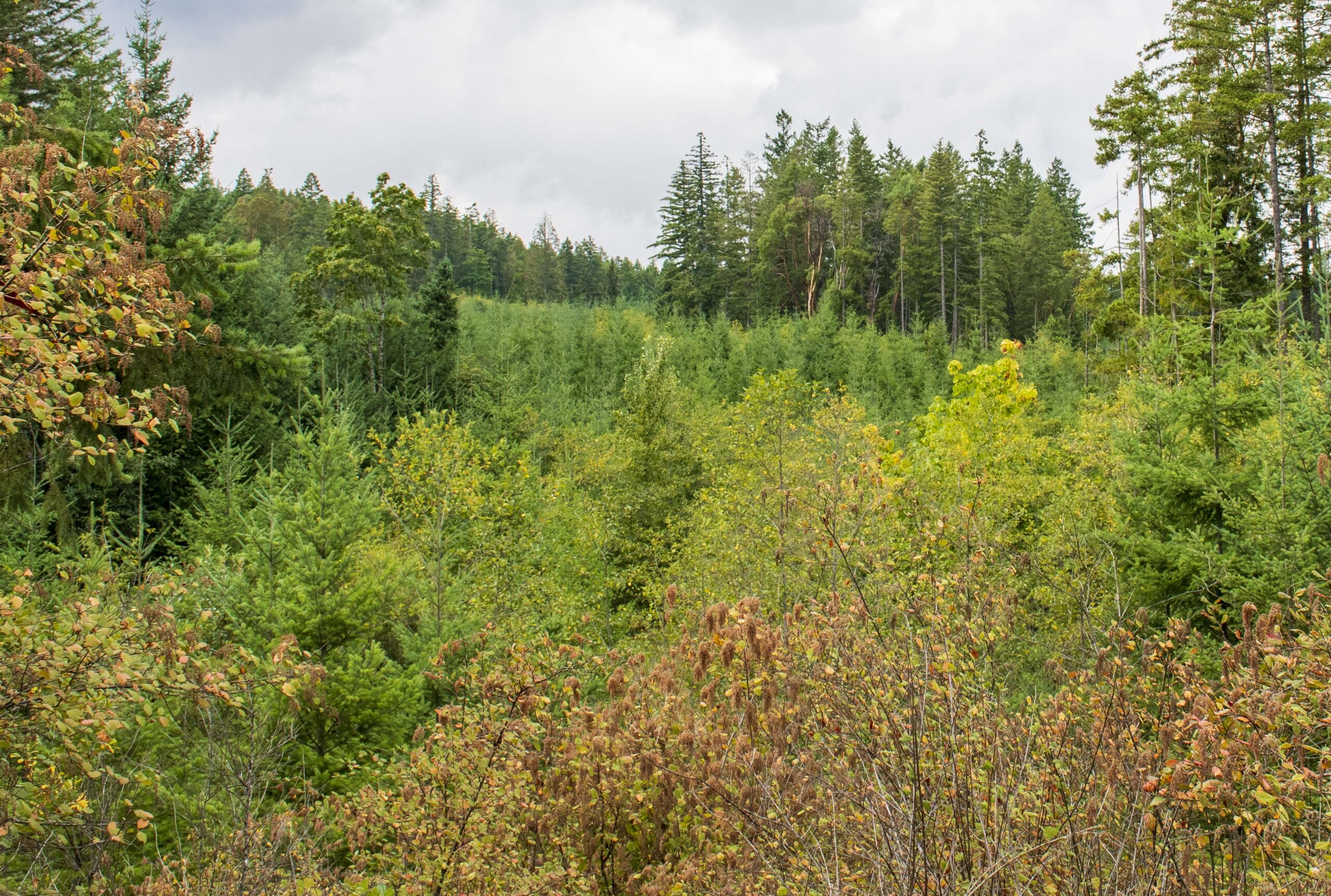
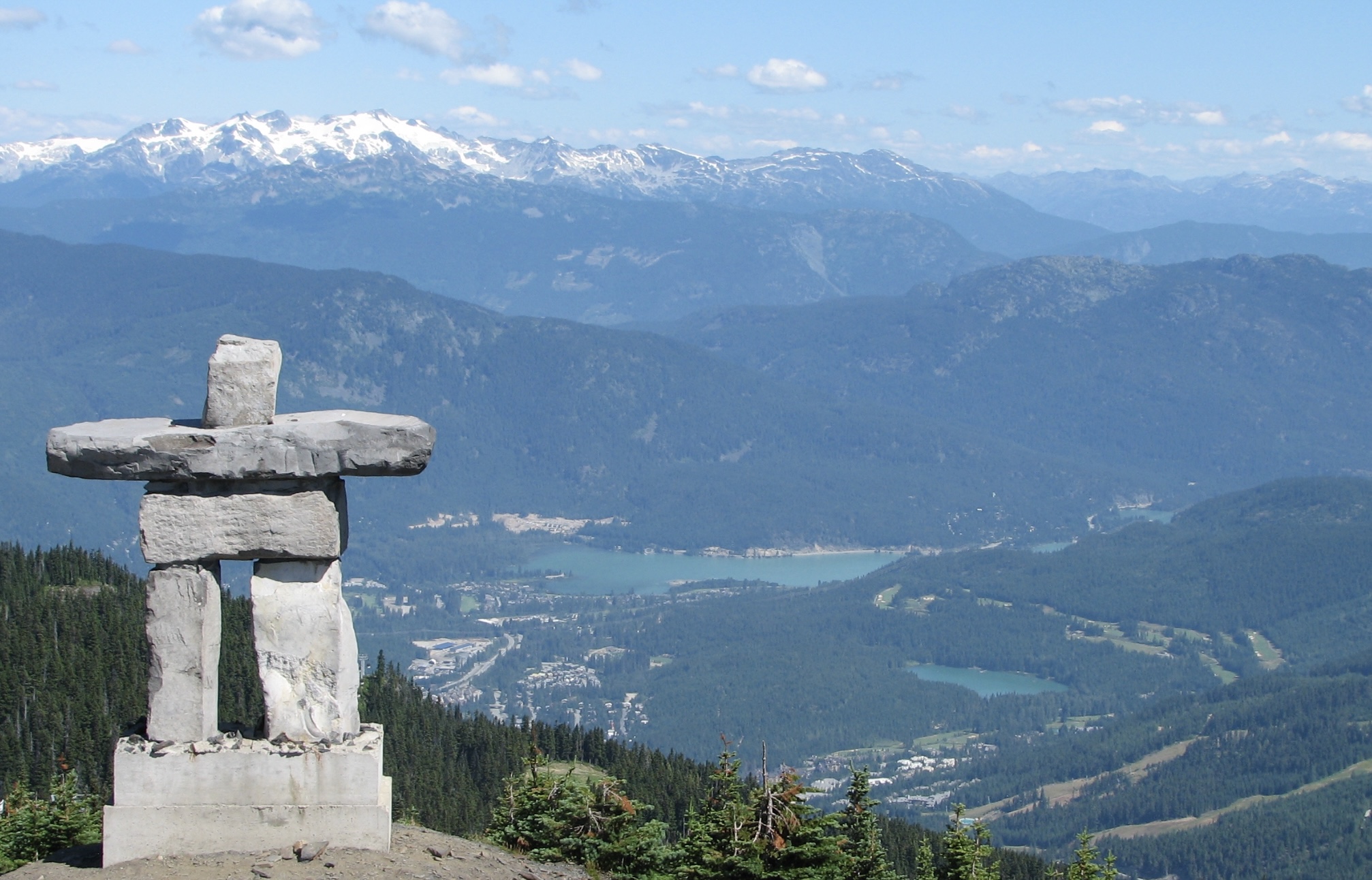 Whistler is fortunate to be surrounded by temperate rainforest, which is essential to the resort’s appeal as a tourist destination. Forests have also proven to be highly beneficial for human mental and physical health. …Old-growth forests, defined as undisturbed for at least 250 years, are vital to addressing the interconnected biodiversity and climate crises. …On the climate side, old-growth forests store vast amounts of carbon in living trees, dead wood, and undisturbed soil. …Since the early 1900s, Whistler’s forests have been logged extensively, and low-elevation old-growth forests that once covered the valley are now found only in limited areas. Commercial logging and thinning have continued by the Cheakamus Community Forest (CCF) since 2009, though old-growth logging was deferred in 2021. …Given that old-growth forests thrive on stability, attempting to manage them doesn’t make ecological sense, especially since they are already among the most climate-resilient ecosystems on Earth.
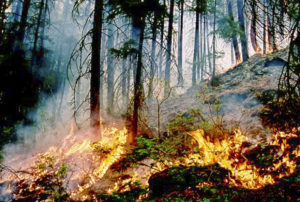 Fire departments across BC are concerned about changes to the FireSmart program and how funding is provided to communities as they plan for wildfires. The Ministry of Forests says it’s moving to a more “holistic approach” based on where risk is the highest but the fire chief who was at the centre of the Wesley Ridge wildfire on Vancouver Island last summer says the program is too important to change. Nick Acciavatti says funding from the provincial FireSmart program was instrumental in saving numerous homes in the Wesley Ridge fire. …The program provides funding to local fire departments that then go into local neighbourhoods to educate and undertake fire prevention work like brush clearing and cleaning properties of combustible materials. But that money may no longer be available to any fire department that applies for it is something Acciavatti is concerned about, considering the changing wildfire conditions here on Vancouver Island.

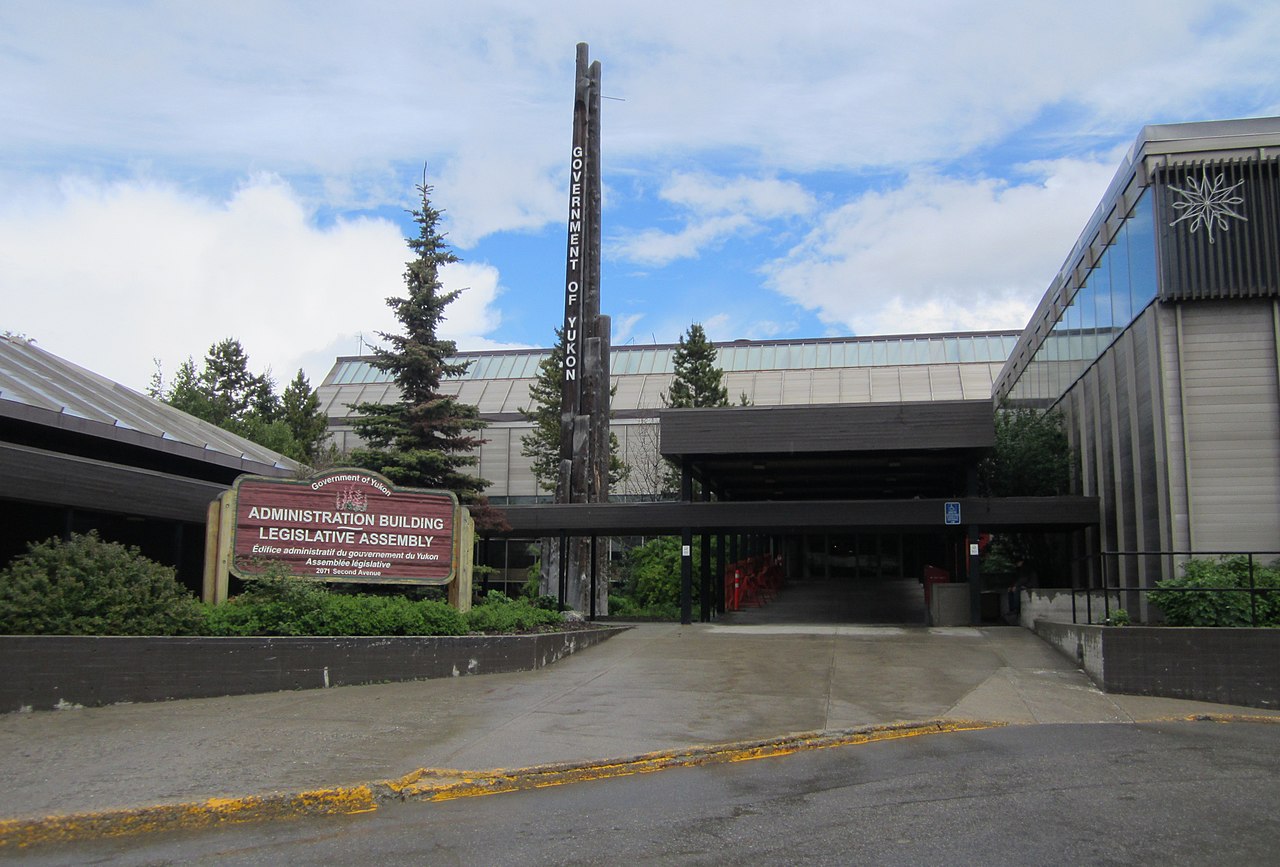



 The Forest History Association of British Columbia is pleased to launch its 2026 Speaker Series with Jennifer Houghton, Campaign Director for the New Forest Act project with the Boundary Forest Watershed Stewardship Society, on Tuesday, February 17, 2026 via Zoom. Jennifer’s talk, “Same System, Same Results: A Century of BC Forestry Without Structural Change,” takes a long-view look at the history of forest management in British Columbia. Over decades of reviews and tweaks to policy, tenure, and allowable cut levels, outcomes on the ground have remained largely unchanged. Jennifer will explore how volume-driven, tenure-based systems became entrenched and why those repeated cycles of reform have fallen short. Drawing on her work co-authoring the legislative framework for the New Forest Act, she will also introduce this grassroots proposal as a way to rethink and strengthen forestry law so that it serves both ecosystems and communities more effectively. All are welcome to register for the free Zoom event.
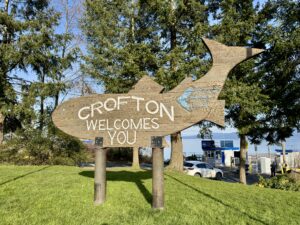 NORTH COWICHAN, BC — A representative for mill workers in North Cowichan addressed council to oppose the idea of a special task force to identify why mills are closing in the region. Adrian Soldera, president of Public and Private Workers of Canada Local 8… said everyone already knows why the mills are closing and that a new task force would be a waste of time. …He said the Crofton mill is ending several jobs at its plant and that the Chemainus sawmill now faces extended curtailment efforts due to a fibre crisis. Soldera added that putting another group together to investigate why the mills are closing would be redundant. …“its like asking for a committee to study why a house is on fire while the roof is already collapsing,” Soldera said. “Every day this task force spends sitting in a boardroom another family in a mill town wonders if they can pay their mortgage.”


 Montreal — An activist group calling itself Les Robins des ruelles has followed its recent Robin Hood-style grocery store heists in Montreal with a claim to have sabotaged planned logging operations in a forest in the Mauricie region. …Translated as the Robins of the Alleyways, the group’s name is intended to evoke the legendary English folk hero who robbed from the rich to give to the poor. The group says on social media that although it delivered the booty to community kitchens and low-cost housing complexes, the grocery heists were political statements against the current economic order. …The latest such move by the group seems to be an action intended to discourage logging in some old-growth forests of Mékinac, in the Mauricie region. In a statement … the Robins say they have “armed the forest by driving steel bars through the trees on the site.” …The president of Forex Langlois Inc., said he is taking the sabotage claims “very seriously”


 With global temperature rising and extreme weather becoming the new normal, ballooning insurance premiums and shrinking coverage are hitting Canadians hard. Basement floods and severe winter storms have brought the financial fallout of climate change home—it is no longer a hypothetical. …“The fact that every insurance company has climate scientists on staff and insurance companies are all pricing in climate risk; there is no financial incentive for them to do that if it wasn’t real,” said Dr. Kate Marvel, a NASA climate scientist. If climate change were a hoax, insurers would simply undercut one another, offering cheaper coverage and dismissing long-term risk, Marvel explained. Instead, they are doing the opposite; quietly rewriting the rules of risk as extreme weather becomes more frequent, more destructive and more expensive. …The question is whether governments will act quickly enough to adapt to a warming climate and confront who pays for the damage when they don’t.
 The 2026 Arctic Bioenergy Summit and Tour brought together over 125 northern energy leaders, policymakers, and bioenergy experts in Yellowknife from January 26–28 to explore sustainable heating solutions for remote and Arctic communities. The event, hosted by the Arctic Energy Alliance and the Wood Pellet Association of Canada, showcased the theme Sustainable Bioenergy for Northern Communities: Reliable. Affordable. Local. Sessions emphasized that bioenergy continues to offer meaningful economic, environmental, and energy‑security benefits for northern and remote communities—especially when paired with strong local leadership and practical, scalable project design. The event also provided valuable networking opportunities, connecting community representatives, government officials, and industry innovators.
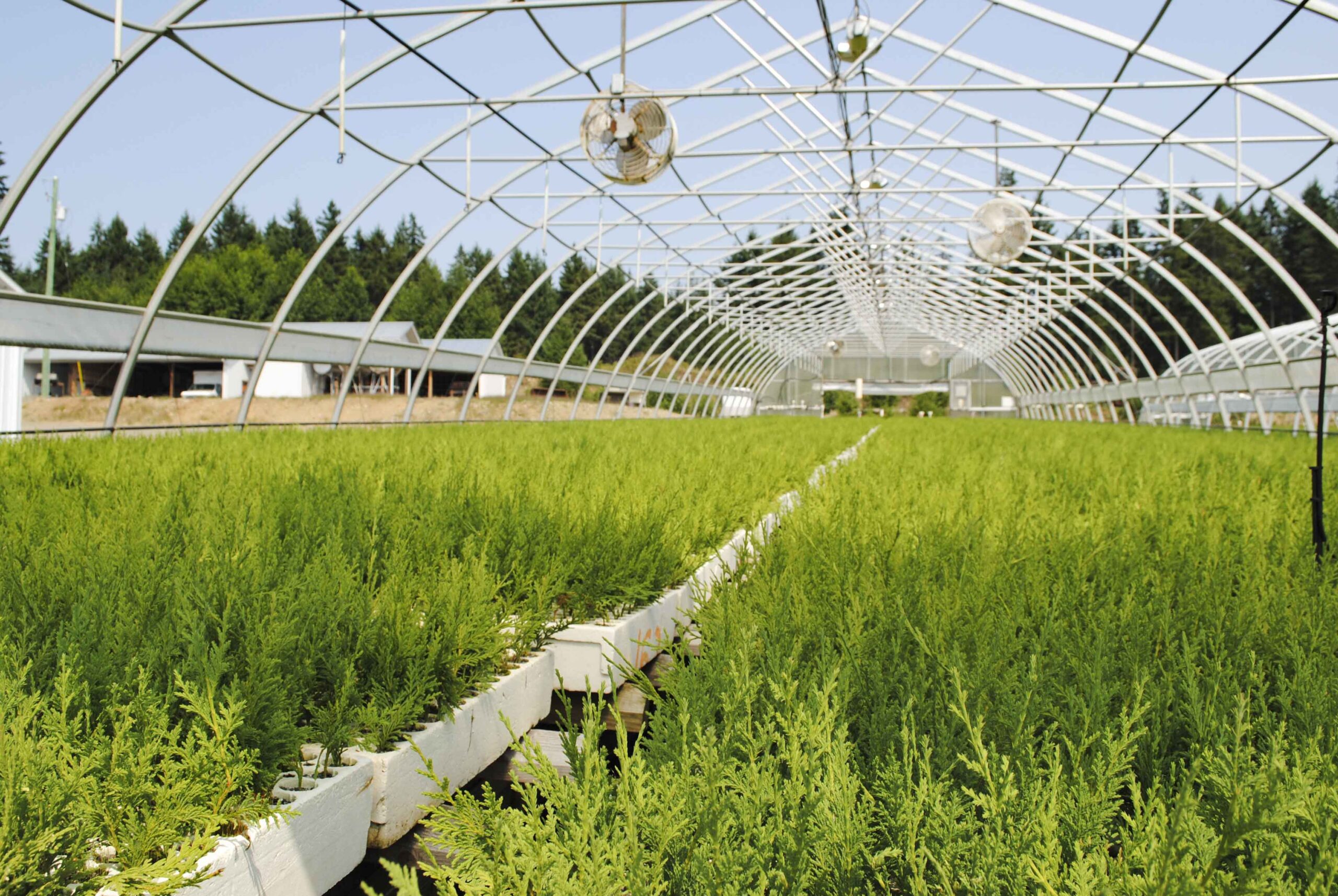 Strategically planting trees along the northern edge of Canada’s boreal forest could remove multiple gigatonnes of carbon dioxide from the atmosphere by the end of the century, according to a new study led by researchers at the University of Waterloo. The research, published in