 Following Tree Frog News’ November 7 op-ed, “Rigged by Design? How Method and Policy Keep U.S. Lumber Duties High”, the US Lumber Coalition responded (Understanding Why Duties Persist — Not Because of Arbitrary Math, But Because of Past and Ongoing Harm) noting that the Department of Commerce did not use “zeroing” in its latest anti-dumping calculation. The note below clarifies what Commerce actually applied and what remains unresolved.
Following publication, the US Lumber Coalition pointed out that the Department of Commerce did not use “zeroing” in its latest anti-dumping calculation. In reviewing the record, Tree Frog News found that Commerce applied a differential-pricing framework, which uses statistical tests to determine comparison methods.¹ However, a 2020 WTO panel found that this framework could produce mathematically similar distortions to zeroing — in effect, “replicating the problem without using the name.”² but because the most recent review record is largely redacted and the WTO Appellate Body remains inactive, there has been no external review of how this method performed in the most recent review.
The more important question, then, is whether the procedural change has addressed the sources of bias identified in past WTO rulings — specifically in how Commerce calculates anti-dumping margins, measures subsidies, and selects its review periods — which continue to produce duty levels that appear inconsistent with actual market conditions. Tree Frog News will continue to report as new information emerges.
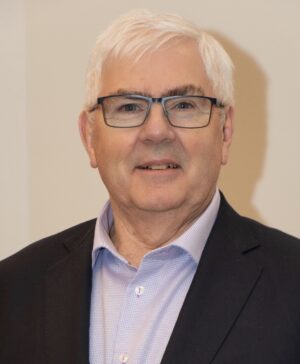
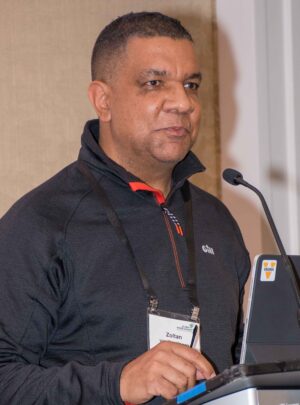


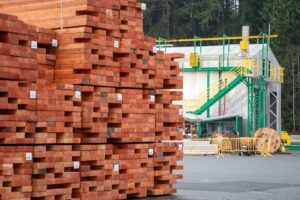 Canada’s forestry industry plans to divert a significant share of its wood exports from the US to new international markets. …The aim to send some 1bn board feet to alternative markets underscores how Trump’s tariffs are starting to reshape some global supply chains, although tensions between the US and Canada over wood exports have simmered for more than half a century. …“The US simply needs to fact-check better before they end up with a large shortage of lumber that may cause further housing shortages,” said Rick Doman, chair of FII BC. …Zoltan van Heyningen for the US Lumber Coalition said the American timber industry could replace 1bn board feet of Canadian imports “without batting an eyelid”. …The NAHB says at just 64% of capacity it “will take years” for US domestic lumber production to expand to meet industry demands. …Mike McDonald, a UK-based consultant, acknowledged it would take time to establish confidence among European consumers. [to access the full story a FT subscription is required]
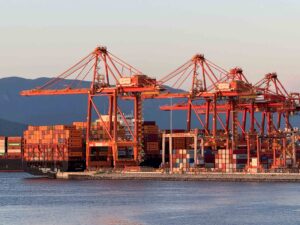 HONG KONG — It is an image that just a year ago would have seemed unfathomable: the Canadian and Chinese leaders standing side by side. …The tide began turning early last month… Prime Minister Carney and leader Xi Jinping met on the sidelines of the Asia-Pacific Economic Co-operation summit in South Korea – the first time leaders of the two countries had met in eight years. …That has since been followed by another ministerial visit to China. China also reinstated Canada to its approved travel list for tour groups. …But as leaders in Ottawa and Beijing signal it may be time to start doing business again, some experts warn China could be attempting to exploit Canada at a vulnerable moment. …Meanwhile, the US has increasingly ramped up its economic war on its northern neighbor. …Beijing has said it will drop the canola tariffs if Ottawa does the same for Chinese electric vehicles.
 CASTLEGAR, BC
 OTTAWA, ON – Canadian Forest Owners (CFO) appeared before the House of Commons Standing Committee on Natural Resources today as part of its study on the forest industry, which is being severely affected by the ongoing softwood lumber dispute. Andrew de Vries, Chief Executive Officer of CFO, and Vincent Miville, Vice-Chair of CFO and Executive Director of the Quebec Federation of Forest Producers, presented recommendations aimed at better recognizing the strategic role of forest owners and the importance of private forests in Canada. CFO represents 480,000 forest owners who collectively own about 10% of Canada’s forested land, but account for 20% of the country’s timber production. These owners supply wood to the forest industry, contribute to regional economies, and provide essential environmental services to rural communities. “The lack of understanding of private forests is a blind spot in Canada’s forest and trade policy, and as a result, support programs for the sector often overlook their essential contribution,” said de Vries.
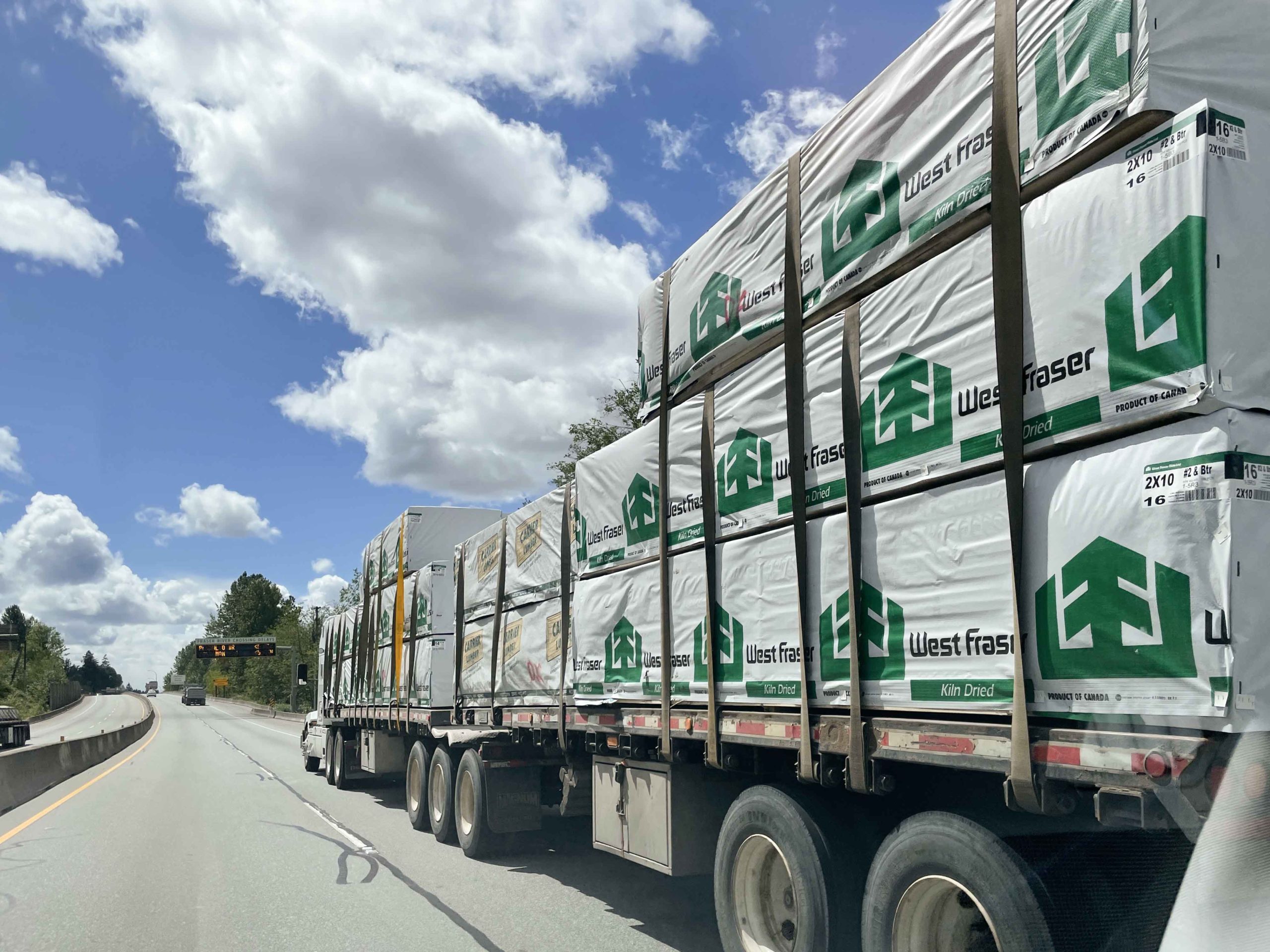 The softwood timber tariffs levied by the U.S. have begun to hit the lumber industry hard. Citing a drooping softwood lumber demand, compounded by higher duties and additional tariffs that have reached 45 per cent for U.S. markets, West Fraser Timber announced Thursday its plans to permanently shutter both its Augusta, Ga., and 100 Mile House lumber mills by the end of 2025. Approximately 165 employees at the 100 Mile House mill will be laid off, as the company says it can’t secure an adequate volume of economically viable timber. The closing of the mill drops West Fraser’s capacity by 160 million board feet. …The closure of the Augusta lumber mill is a result of challenging lumber demand, and the loss of economically viable residual outlets, which combined has compromised the mill’s long-term viability. Around 130 employees will be laid off there, and further reduce West Fraser’s capacity by 140 million board feet.

 TORONTO – United Steelworkers union (USW) National Director Marty Warren issued the following statement on the federal Budget 2025: This budget recognizes something workers have been saying for years. Canada needs to build more at home and expand its industrial capacity. The commitments on Buy-Canadian procurement, industrial strategy and trade enforcement are important steps forward and reflect priorities Steelworkers have been advocating for across the country. There are meaningful investments in steel, forestry, critical minerals and manufacturing – sectors that support thousands of good union jobs and anchor regional economies and communities. We welcome tools that can help stabilize supply chains and strengthen domestic production. …Buy-Canadian rules must be enforced, industrial dollars must translate into real jobs and production on the ground, and forestry and industrial communities need long-term certainty, not temporary relief. We see steps in the right direction. Now it’s about follow-through.
 Members of the management team for West Fraser’s 100 Mile Lumber appeared in front of the District of 100 Mile House Council to answer questions about the permanent closure of their 100 Mile House mill by the end of December. …Mayor Maureen Pinkney began the meeting, noting that the closure is sad news and that she was surprised they were going straight to closure without any curtailment. …Rob Baron, West Fraser’s regional manager of operations, said “The conditions that precipitated the decision to go to permanent closure are really entirely related to long-term viability related to the high cost of saw logs coming to this mill”. …They’re currently getting their shutdown coordinator set up and have resources on site to help their employees through the transition. …Baron said West Fraser doesn’t have any plans for what they’ll be doing with the property in the future, but welcomes anyone interested in the facility to contact them.


 Campbell River, BC — La-kwa sa muqw Forestry Limited Partnership (LKSM) is ready to sit down at the bargaining table with the USW at any time, and has been ready throughout this strike, which it has made clear many times to the USW. However the USW has repeatedly refused to do so, as recently as October 24. Despite repeated invitations from LKSM, the USW has also declined both meaningful negotiations and mediation to assist the bargaining process, unnecessarily prolonging this months-long strike. “LKSM’s First Nations shareholders are dismayed and extremely frustrated by the provincial government’s failure to help both parties to make progress through the appointment of a mediator, especially given the hardships the forestry industry is facing right now,” says Nanwakolas Council President Dallas Smith. “Mediation is an opportunity to bring the parties together …and yet BC still has failed to appoint a mediator after all this time.”
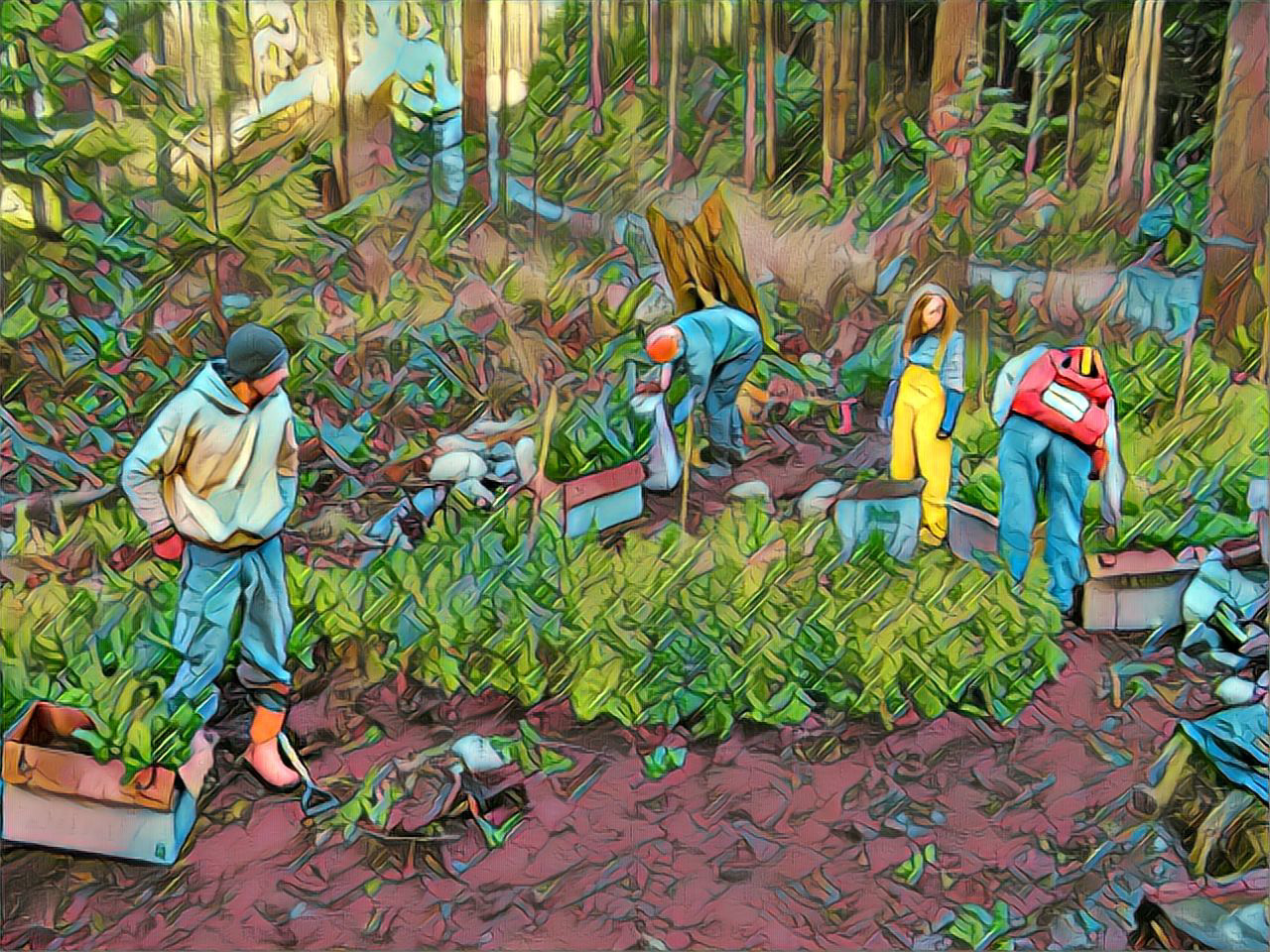 A decision to cut a tree-planting in the federal budget was met with disappointment by seedling producers. The Canadian Tree Nursery Association represents more than 95 per cent of Canada’s forest restoration seedling producers. The federal government decided to cut short the Two Billion Trees (2BT) Program, saving an estimated $200 million over four years. CTNA executive director Rob Keen said the decision would threaten the long-term environmental recovery of Canada’s forests and jeopardize the forest restoration sector. “I think the whole program was just starting to get some good momentum,” Keen said. …Keen said about 600 million trees are planted each year by the forestry industry. “So, really there was a very significant increase in overall tree planting in Canada,” he said. “And then, I guess in the budget … the government decided, ‘OK, we’re done.’ ”


 BURNABY, BC — Interfor reported its Q3, 2025 results. The company recorded a net loss of $215.8 million compared to net earnings of $11.1 million in Q2’25 and a net loss of $105.7 million in Q3’24. Adjusted EBITDA was a loss of $183.8 million on sales of $689.3 million in Q3’25 versus Adjusted EBITDA of $17.2 million on sales of $780.5 million in Q2’25 and an Adjusted EBITDA loss of $22.0 million on sales of $692.7 million in Q3’24. Lumber production of 912 million board feet was down 23 million board feet versus the preceding quarter. This decline largely reflects the Company’s announcement on September 4, 2025, to temporarily curtail production. …Weak lumber market conditions were reflected in Interfor’s average selling price of $618 per mfbm, down $66 per mfbm versus Q2’25. …Interfor’s strategy of maintaining a diversified portfolio of operations in multiple regions allows the Company to both reduce risk and maximize returns on capital over the business cycle.
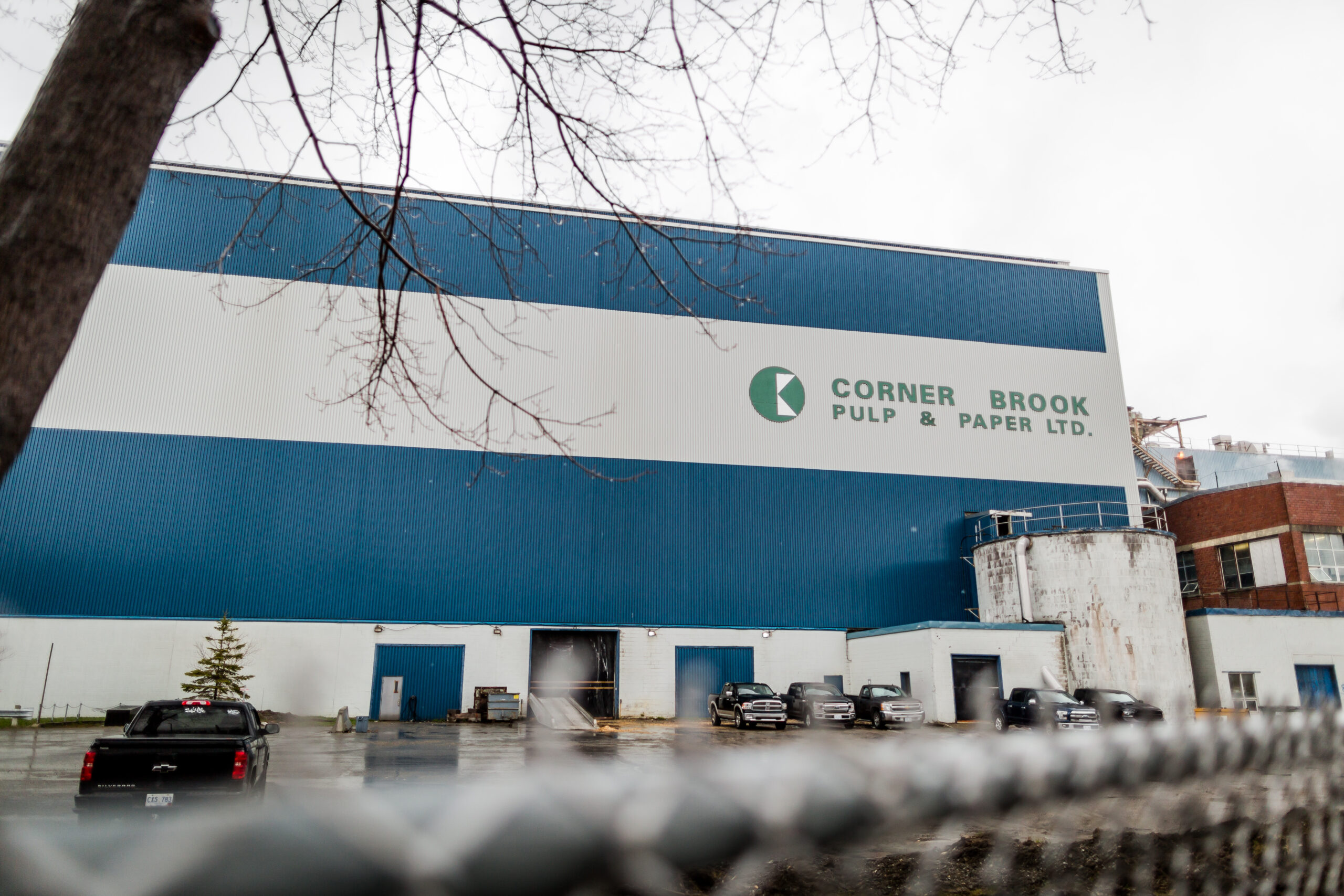
 NEW YORK — Mercer International reported third quarter 2025 Operating EBITDA of negative $28.1 million, a decrease from positive $50.5 million in the same quarter of 2024 and negative $20.9 million in the second quarter of 2025. In the third quarter of 2025, net loss was $80.8 million compared to $17.6 million in the same quarter of 2024 and $86.1 million in the second quarter of 2025. Mr. Juan Carlos Bueno, CEO, stated: “In the third quarter of 2025, persistent global economic and trade uncertainties, fiber scarcity in Germany as well as the impact of pulp substitution accelerated the decline in pulp market demand and pricing, which negatively impacted our operating results and contributed to a $20.4 million non-cash inventory impairment charge in the quarter.
 VANCOUVER, BC — Canfor Corporation reported its third quarter of 2025 results. The Company reported an operating loss of $208 million and a net loss of $172 million. …Canfor’s CEO, Susan Yurkovich, stated: “The ongoing global economic and trade uncertainty, in conjunction with punitive US softwood lumber duties, led to persistently weak market conditions and subdued demand across all of our operating regions during the third quarter of 2025. …For the lumber segment, the operating loss was $182.2 million for the third quarter of 2025, compared to the previous quarter’s operating loss of $229.2 million. …For the





 Zoom Seminar | November 18| 11:30am – 1:00pm| This seminar helps leaders and teams learn to use artificial intelligence to enhance productivity, communication, and operational efficiency. Rather than replacing people, AI can act as a digital teammate, handling routine or repetitive work so humans can focus on creativity, decision-making, and critical thinking. Participants will explore practical ways to use AI tools like ChatGPT, Copilot, and others to streamline workflows in areas such as administration, project management, customer service, and content creation. You will learn: How AI tools like ChatGPT and Copilot work; common misconceptions; How to give clear, effective instructions to AI. Examples of strong vs. weak prompts; Examples of AI applications for administrative tasks, writing, and increasing productivity; and What to include in an internal AI-use framework: approved tools, privacy, and accountability. Safe and unsafe examples. $29 per person (you do not need to be a BC Wood member to participate – Limited to participants from Canada only)



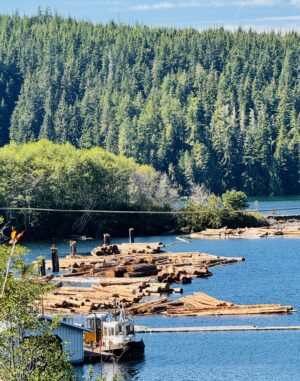 Logs are a familiar sight on the beaches along the coast of Vancouver Island and Haida Gwaii and are often viewed positively, as they can stabilize the banks, be used for firewood or act as benches by beach-goers. However, new research from the University of Victoria (UVic) shows that these logs are not as innocuous as they seem. According to a study published by UVic biologist Tom Reimchen and two of his students, free-floating logs that wash ashore, referred to as drift logs, are causing widespread destruction of rocky intertidal ecosystems communities along the coast of Western Canada. …While drift logs may seem rather stable to the casual observer, more than 90 per cent of logs are displaced annually, and log movement during storms is frequent and extensive. This movement disrupts the ecological environment in the intertidal zone—the stretch of beach between the highest high tide and the lowest low tide. …This research was published in
 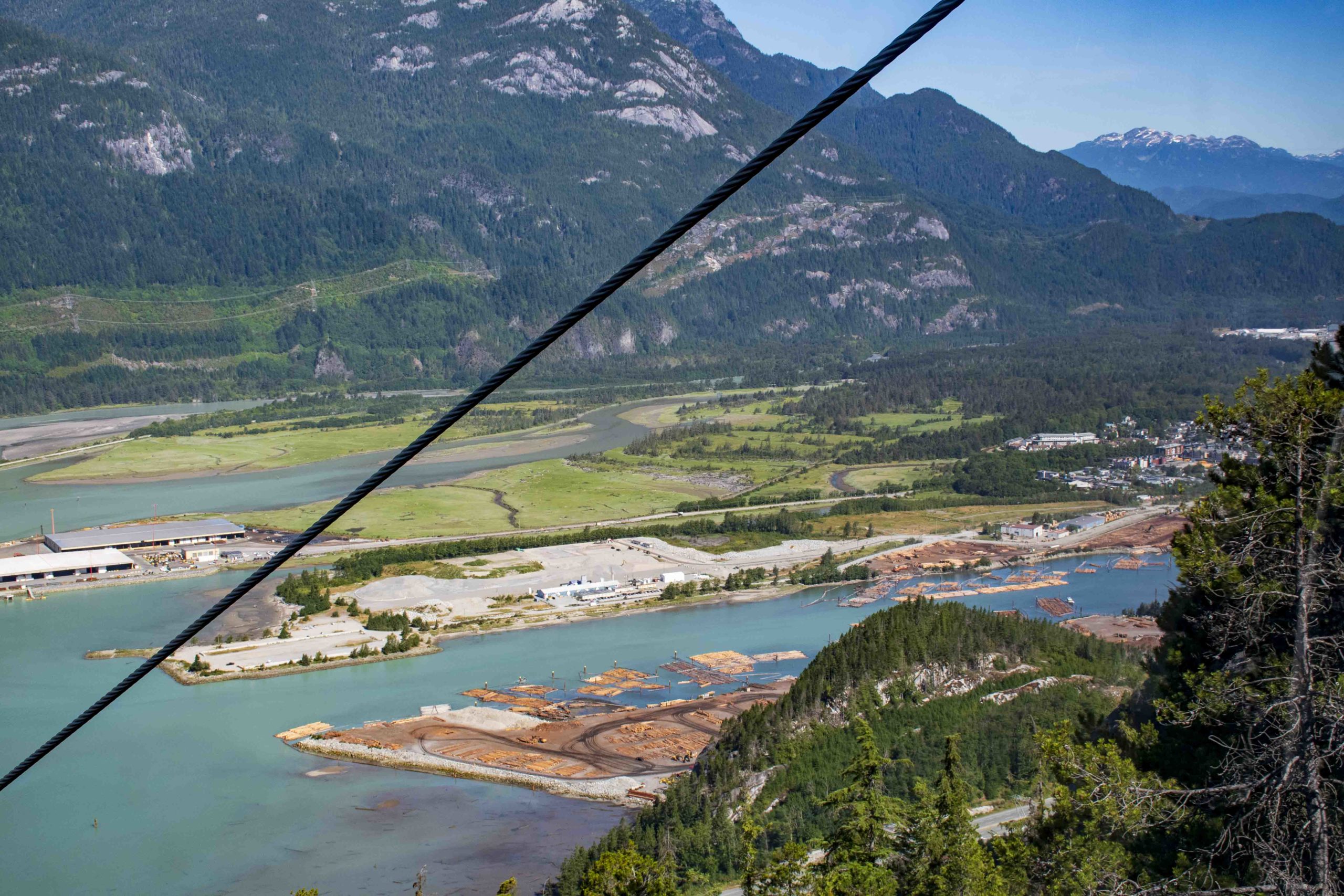 At a recent public open house, the Squamish Community Forest unveiled its vision for sustainable land use, cultural preservation, and wildfire mitigation over the next five years. The Squamish Community Forest functions on a Community Forest Agreement (CFA) and equal shareholding between Skwxwú7mesh Úxwumixw (Squamish Nation) and District of Squamish. This was their first ever partnership, as Squamish mayor and Community Forest chair Armand Hurford confirmed. The discussion that followed was centred around the sustainability and balance of cultural and environmental values. This year, the Community Forest has been given a $40,000 grant from the Silviculture Innovation Program (SIP) to implement silviculture in collaboration with the Nation’s Rights and Title and Cultural teams—a part of the Community Forest’s imminent five-year plan.


 Vernon, Revelstoke and Penticton will be included in a province-wide protest demanding a halt to old-growth logging on Tuesday. In Vernon, it’s being dubbed a “showdown at BC Timber Sales,” and the local organizers, which include the Peachland Watershed Protection Alliance and the Interior Watershed Task Force, are driving that adversarial image home by encouraging protesters to don western garb when they rally outside the Ministry of Forests office from 11 a.m. to 2 p.m. Nov. 18. Similar rallies are being held in Victoria, Nelson, Revelstoke, Smithers, Courtenay, Parksville, Prince George, Grand Forks, Penticton, Port Coquitlam, and Powell River. …Protest organizers took aim at Forestry Minister Ravi Parmar, saying seven B.C. mills have closed during his eight-month tenure. “Meanwhile he is off in Asia promising wood we do (not) have and opening trade offices … promising trees we do not grow,” the press release states. …A website,
 Biologist Amber Peters and the Valhalla Wilderness Society (VWS) screened their highly-anticipated film, Safe Haven: The Rainbow-Jordan Wilderness, about the biodiverse and nearly-untouched inland temperate rainforest just north of Revelstoke. “This is the best example of a fully-intact inland temperate rainforest,” Peters said. … The Rainbow-Jordan is likely “the largest pocket of intact temperate rainforest in the region” around Revelstoke, Wildsight Revelstoke branch manager Reanne Harvey said. “The forest itself has been in that space for over a thousand years.” … The 30-minute film, produced in collaboration with Damien Gillis, advocates for the B.C. government to protect these expanses of hard-to-access and undisturbed old-growth from logging as a Class A provincial park. Unlike an old-growth protected area or Indigenous Protected and Conserved Area, park status would ensure legislated protection for the Rainbow-Jordan, Peters told some 200 attendees at the screening.
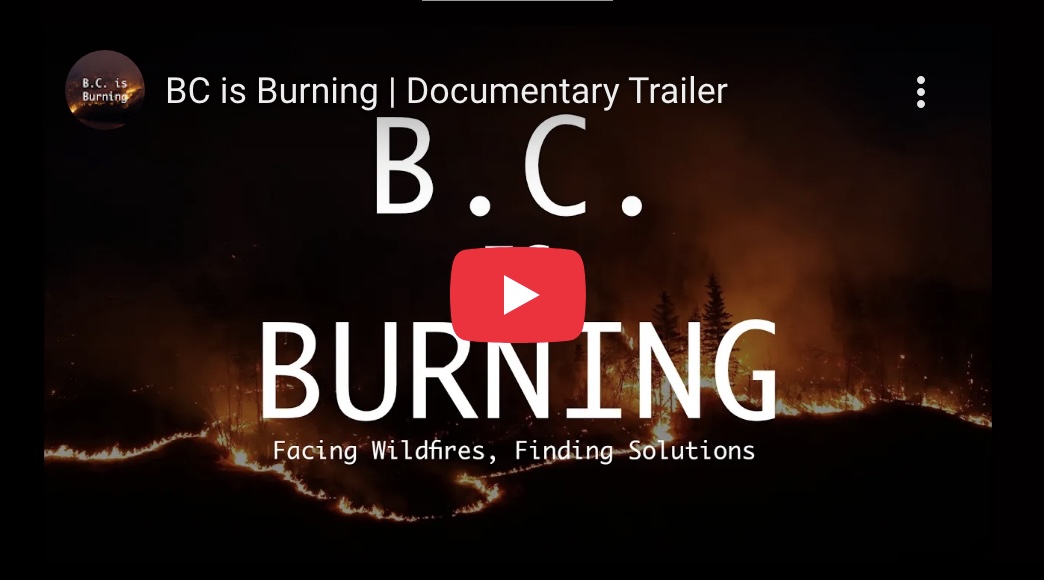 Murray Wilson believes active forest management is crucial to reducing greenhouse emissions. The connection between the two is wildfires. “If you can reduce wildfires, just on carbon alone – your CO2 emissions – you’re doing a good thing,” said the retired Vernon forester… For the past year, Wilson has been sharing this message, about the need for active forest management, with residents and politicians through his new and first film, the documentary B.C. is Burning. …The Shuswap Climate Action Society, Forsite Consultants Ltd. and Canoe Forest Products will present the film in Salmon Arm on Nov. 26, with a Q&A moderated by Salmon Arm Mayor Alan Harrison. …Wilson will be screening the documentary at the B.C. Legislature. He said government officials, including B.C. Wildfire assistant deputy minister Rob Schweitzer, featured in the film, have taken part in past screenings and question periods. He views this as a sign the documentary is resonating with the Province.
 Local residents are invited to share their input on the development of the Mackenzie forest landscape plan (FLP), which will guide long-term forest management in the area. “This is an opportunity for Mackenzie residents to share what matters most about your forests,” said Ravi Parmar, Minister of Forests. “Forests are part of who we are and your voices guide how they’re managed.” People can share their thoughts through a survey, open from Monday, Nov. 10 until Dec. 22, 2025. …FLPs are intended to be developed in partnership with First Nations to ensure meaningful participation in forestry planning and decision-making. Tsay Keh Dene Nation has partnered with the Province on the Mackenzie FLP. Engagement with other First Nations in the area continues. Community engagement is also a key part of every FLP, ensuring everyone in the area has an opportunity to be heard.
 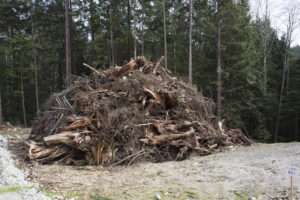 A First Nations joint-venture forestry company is under fire for its burning practices. C̕awak ʔqin Forestry recently lit up a series of burn piles only a few metres from where a local company turns post harvest wood waste into much needed hogfuel for the Catalyst paper mill. Under provincial guidelines, forest harvesters are supposed to look for grinding or chipping opportunities ahead of burning. Keith Wyton from the local air quality council says local governments should push foresters to not burn. …Forest companies are allowed to pile and burn slash at this time of year, but Wyton wants the BC Government to step in. …C̕awak ʔqin General Manager Geoff Payne said they were operating within provincial guidelines and were permitted to burn. C̕awak ʔqin Forestry is a joint venture between Western Forest Products and the Huu-ay-aht First Nation.
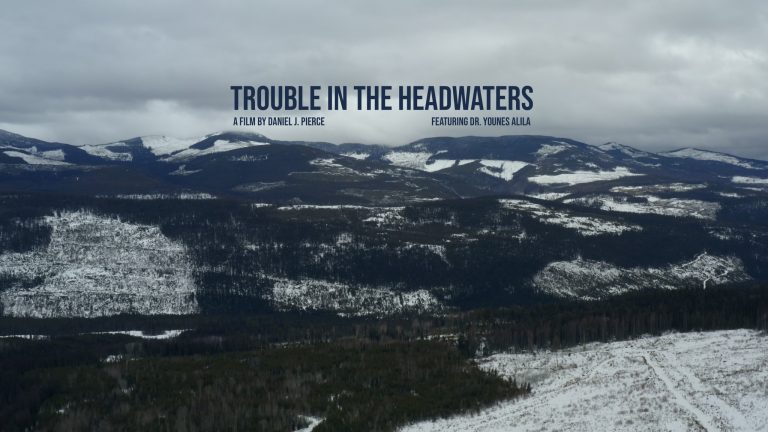 Trouble in the Headwaters, a 25-minute documentary by Daniel J. Pierce, is coming to Golden! This film sheds light on the disastrous 2018 flood event in Grand Forks, BC, and features UBC forest hydrology and watershed management Professor Dr. Younes Alila. Both Daniel and Younes will be present to introduce the film and answer questions afterwards as part of a panel discussion with local experts and Wildsight’s forestry team. Join us to explore the complex connection between clearcut logging and the increasing frequency of floods, landslides and droughts across our province.
 ALBERTA — Crowsnest Pass, the lowest pass through the Rocky Mountains between New Mexico and Jasper National Park, is home to Alberta’s rarest, most tree-species-rich forest. Some species growing here are as rare in Alberta as sage grouse and woodland caribou. …Trees don’t thrive within this forest. They cling to life. …A question I’ve long posed to society and the managers of southwestern Alberta’s matchstick forest is this: Is it economically viable to manage this forest for timber production? …Some years ago, I was selected to sit on a Government of Alberta advisory committee creating a vision for future management of this forest. …Alberta’s forest managers, responding to the problem they helped create, have now placed a new prescription on the pharmacist’s cutting block. The old prescription — clear-cut logging. The new prescription — profoundly expanded clear-cut logging.
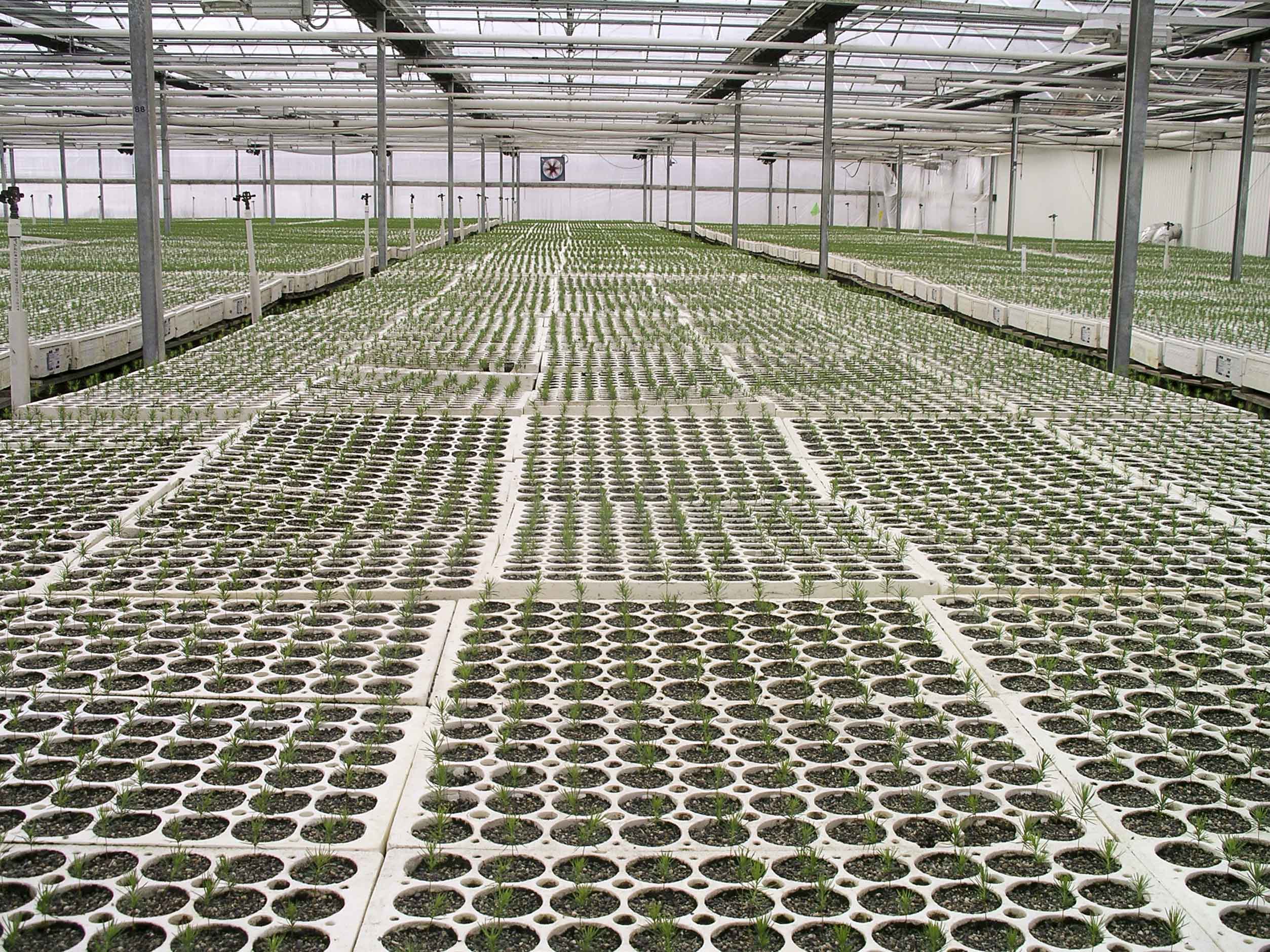 The PRT tree seedling nursery …with locations in Canada and the United States is North America’s largest producer of container-grown forest seedlings. …But at time when the forestry sector is facing hurdles such as softwood lumber duties and new American tariffs, the 2 Billion Trees program will be scrapped in the proposed federal 2025 budget. …a billion trees would have been grown from seed in nurseries like PRT and then planted across Canada. …Brinkman Reforestation is the largest tree planting company in Canada and says the industry is facing enough hurdles without having the 2 Billion Trees program cancelled. …In Black Creek, three generations of the same family have been growing tree seedlings at Sylvan Vale Nurseries. …manager Siriol Paquet says extra programs like 2 Billion Trees are important at at time when logging is declining, because if trees aren’t being cut, then they don’t need to be replaced with new ones.
 The steep flanks of Tsitika Mountain on northern Vancouver Island are scarred with clearcuts and slash piles almost to the boundary of the Tsitika Mountain and Robson Bight ecological reserves. High above the Tsitika River, 34 hectares of towering conifers, cliffs, and waterfalls are on the auction block. The parcel, labelled TA 1375 by BC Timber Sales, was recommended for deferral by BC’s advisory panel. That would have suspended logging, possibly permanently. Instead, BCTS is putting TA 1375 up for sale. …The steep and rugged terrain is a challenge for prospective loggers, but they face plenty of other obstacles. …Independent researchers at Tsitika Mountain made a surprising discovery this year: a Pacific Wild program recorded over 300 marbled murrelets flying through the area in one month.
 The provincial government has awarded a pair of contracts to build firebreaks in areas of the Avalon Peninsula ravaged by this summer’s historic wildfire season — fires that forced hundreds of people from their homes and destroyed more than 200 structures. A firebreak is an intentionally created gap where burnable material, like vegetation and trees, are cleared in an effort to stop a fire from spreading further by removing flammable materials that could feed it. It was employed as a firefighting tactic against the Kingston, Martin Lake and Paddy’s Pond fires. According to a list of recently disclosed provincial government procurement contracts, Conception Bay South-based Platinum Construction Company Limited was awarded a $51,600 contract. Another contract, valued at $419,983.35, was awarded to Jerseyside-based Tier 1 Capital Corporation to build firebreaks in Burnt Point and Salmon Cove. Both contracts were awarded shortly after the PC party won a majority government on Oct. 14.
 Every year, there are thousands of landslides in Oregon. Geologists say the number is increasing due to climate change. …Swaths of the Pacific Northwest are particularly prone, thanks to a combination of mountainous landscape and heavy rainfall. “Over the last couple decades, the landslides and the surface processes and surface hazards that I’ve been working on have become much more prominent, primarily due to climate change and humans inhabiting more areas in hazardous terrain,” said Josh Roering, a professor of earth sciences at the University of Oregon. …Roering is one of the geologists involved in the newly formed Center for Land Surface Hazards (CLaSH). A $15 million NSF grant jumpstarted the center that will study landslides and other surface hazards. While CLaSH is housed in the University of Michigan, it is a collaboration with more than a dozen academic, governmental and community partners across the country.
 BELÉM, Brazil
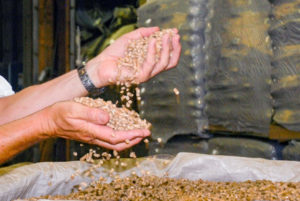 Drax power plant has continued to burn 250-year-old trees sourced from some of Canada’s oldest forests despite growing scrutiny of its sustainability claims, forestry experts say. A new report suggests it is “highly likely” that Britain’s biggest power plant sourced some wood from ecologically valuable forests as recently as this summer. Drax, Britain’s single biggest source of carbon emissions, has received billions of pounds in subsidies from burning biomass derived largely from wood. The report, by Stand.earth, claims that a subsidiary of Drax Group received hundreds of truckloads of whole logs at its biomass pellet sites throughout 2024 and into 2025, which were likely to have included trees that were hundreds of years old. The report could raise fresh questions for the owner of the North Yorkshire power plant, which has been forced in recent years to defend its sustainability claims while receiving more than £2m a day in green energy subsidies from UK bill payers.
 Each year, the BC Forest Safety Council honours individuals who go above and beyond to make forestry safer for everyone. Since 2008, the Leadership in Safety Awards have recognised outstanding contributions in three key areas: harvesting, manufacturing and lifetime achievement. These awards honour people who lead by example—those who bring fresh ideas, foster a strong safety culture and consistently put the well-being of others first. …Congratulations to all of this year’s award recipients! Your leadership, care and commitment continue to make BC’s forestry industry safer and stronger. Nominations for the 2026 Leadership in Safety Awards open on January 12, 2026.
 WorkSafeBC has fined the Provincial Government over $750,000 in connection with a pair of incidents involving the BC Wildfire Service that date back to 2023. An administrative penalty of $759,369 was levied on Sept. 25 following investigations into the two incidents – one of which led to the death of a firefighter near Fort St. John, while the other could have killed or injured multiple firefighters in the North Shuswap. In that North Shuswap incident, previous inspection reports by WorkSafeBC determined that a group of five Brazilian firefighters became “trapped by extreme fire behavior” during a planned ignition. …WorkSafeBC determined that a lack of planning, training, and communication were all contributing factors. …The other incident dates back to July 28, 2023, when 25-year-old firefighter, Zak Muise, was killed while fighting the Donnie Creek fire. WorkSafeBC determined that neither worker was wearing a helmet, the passenger had not been using a seatbelt, and the passenger-side retention netting had been damaged.