
Jason Krips
The wildfires that swept through Jasper National Park in 2024 were devastating — but they weren’t unpredictable. They were the foreseeable result of years of policy choices: the decision to leave forests untouched, to restrict active management, and to allow risk to build in the name of preservation. Alberta’s forests are disturbance-driven — they rely on natural events like wildfire to renew, diversify, and maintain ecological balance. But over the past century, we’ve suppressed these disturbances to protect communities, infrastructure and wildlife. Without fire, forests don’t regenerate naturally. And without policy tools that allow for active interventions like harvesting, we’re left with dense, aging stands vulnerable to fire and pests. Now, in 2025, we face an urgent question: will we continue down the same path, or will we modernize our approach to forest management — even in places long considered off-limits, like national parks?
…Our members don’t operate inside the park, but they do operate next to it, and what happens within the park’s boundaries doesn’t stay there. …In 2017, we warned that aging forests, pine beetles, and hot, dry summers were creating a perfect storm. In 2024, that danger became reality. …We need a national parks policy to reflect this reality. It should encourage science-based, ecologically sensitive management tools like thinning, selective harvesting, and prescribed fire across the entire park — tools that reduce fuel loads and restore healthier forest structures. Beyond parks, we also need to revisit legislation like the Species at Risk Act. In Alberta, this law currently prevents management in large areas of older forest, ironically putting caribou and other species at greater risk when those forests inevitably burn. …Canada’s forests, inside and outside of parks, are among our greatest national assets. But if we want to protect them, we need to manage them.
Additional coverage in the Rocky Mountain Outlook, by Glen Grossmith: LETTER: In support of rethinking forest management “It’s encouraging to see attention drawn to the real, actionable strategies that can make a difference in the face of escalating wildfires.”
 President Donald Trump said the US will put a 35% tariff on some imports from Canada, escalating the tensions between two countries that have impaired one of the world’s largest trading relationships. The new rate represents an increase from the 25% tariffs Trump imposed in early March under an emergency law. …But the US administration kept in place an exemption for goods traded under the rules of the US-Mexico-Canada trade agreement. US automakers and other companies with integrated North American supply chains had pushed for that carve-out, which has allowed US importers to continue bringing in the bulk of Mexican and Canadian products without duties. Because of the USMCA exemption, the effective tariff rate on US imports of Canadian goods was around 5%. …Trump signaled that he would be open to further talks with Carney. …Hours before raising Canada’s tariffs, Trump agreed to extend current tariffs on Mexico for 90 days.


 BURNABY, BC – The United Steelworkers union (USW) District 3 and the USW Wood Council are calling on the federal government to take urgent action in response to the latest escalation in the softwood lumber trade dispute. …“This latest increase, along with other threatened tariffs, is yet another blow to workers, communities and the long-term sustainability of our industry,” said Scott Lunny, USW Western Canada Director. “We represent thousands of loggers and mill workers… and their families, are at risk – governments need to act now.” …“It’s a constant attack on our industry and our workforce from the US administration. ….In addition to calling for a deal on softwood lumber to be a priority for Canada in trade talks with the US. …“These duties are unfair and will only drive up housing costs for U.S. consumers, while putting thousands of Canadian jobs at risk,” said Jeff Bromley, USW Wood Council Chair.
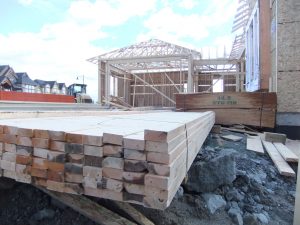 BC’s independent wood product makers say hundreds of small- and medium-sized manufacturers may be forced to shut down in light of the latest decision from the US to raise anti-dumping duties on Canadian softwood… [which] includes a requirement for Canadian companies to retroactively remit duties for products shipped to the US since Jan.1, 2023. Association chair Andy Rielly says that requirement could not only force small BC producers to shut down, but may also threaten operators’ personal assets as they may have to risk using their homes as collateral to secure bonds to pay. …Association executive director Brian Menzies describes independent wood product producers as “collateral damage” in the trade war.” …“We acquire logs and lumber at ‘arm’s length’ from various suppliers on the open market, just like claims made by members of the US Lumber Coalition, and yet our Canadian companies along with U.S. consumers must pay these unfair and costly duties.”
 VICTORIA — BC’s minister of jobs and economic growth is urging the federal government to stand firm and “negotiate hard” when trying to find a solution to tariffs imposed by President Trump. …He said he believes Carney and Canada-US Trade Minister Dominic LeBlanc are taking the right approach, “which is keeping their head down… and not getting distracted by the day-to-day swings of the president of the United States.” He said he would also highlight the importance of the softwood lumber industry for BC, which is just as crucial as the auto industry is to Ontario. …Both Eby and Kahlon have repeatedly argued that the long-running softwood lumber dispute with the United States should be part of a larger deal. Brian Menzies, executive director of the Independent Wood Processors Association, said he is “not very optimistic” that a future deal would also resolve the softwood dispute.
 BURNABY, B.C. – The United Steelworkers union (USW) District 3 and the USW Wood Council are calling on the federal government to take urgent action in response to the latest escalation in the softwood lumber trade dispute. Following the U.S. Department of Commerce’s decision to increase anti-dumping duties on Canadian softwood lumber exports to 20.56%, the USW is demanding immediate support for forestry workers and communities across the country. …“Our prime minister says softwood lumber is a priority in trade talks, but what forest workers need now is action,” said Scott Lunny, USW Western Canada Director. …In addition the USW is calling for a comprehensive support package for forest workers, including wage subsidies, loan guarantees for affected businesses and other targeted resources to support provinces, regional and local communities to sustain critical infrastructure and services through this unprecedented uncertainty.
 In British Columbia’s forestry sector, logging and trucking businesses are beginning to take a closer look at how they manage and report fuel use. While the Motor Fuel tax rules themselves haven’t changed, recent enforcement has prompted many operators to reassess long-standing practices — particularly when it comes to using coloured fuel in mixed on- and off-highway operations. For businesses that rely on marked fuel in remote areas or cross between forest roads and public highways, assessments are surfacing more frequently and creating uncertainty around compliance. If you’ve received a notice — or aren’t sure whether your operations could be affected — there are steps you can take to reduce the impact and protect your business. …Increased enforcement of the B.C. Motor Fuel Tax rules has created a layer of complexity that many forestry businesses weren’t prepared for. …the consequences of misunderstanding the rules, especially around fuel eligibility, have become more serious.
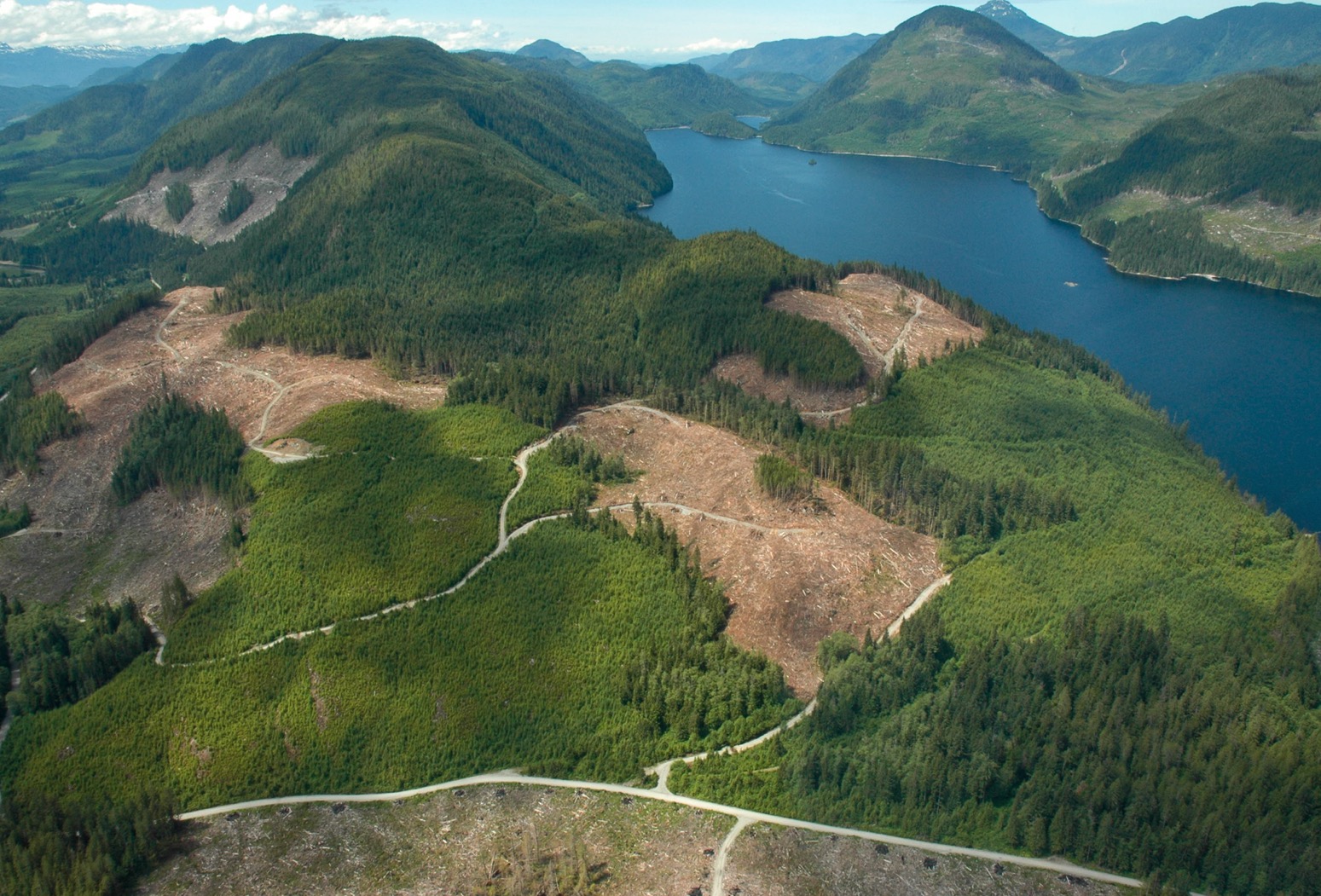 Campbell River Mayor Kermit Dahl sent an open letter to Premier David Eby, calling for immediate action to address issues within B.C.’s coastal forestry sector. Dahl warns continued inaction could result in further mill closures, job losses and the collapse of the coastal forestry industry. According to Dahl, coastal harvest volumes have dropped by over 40 per cent since 2019, with more than 5,400 direct forestry jobs lost since 2022. The 2025–26 budget projects a harvest of 32 million cubic metres … an estimated $275 million in lost revenue. The mayor says Premier Eby pledged to “protect jobs and the economy” when reshuffling his cabinet and says “those words ring hollow for thousands of coastal forestry workers watching their industry collapse—… from policy paralysis and regulatory misfires.” Dahl argues the crisis is not caused by … internal delay. “When harvest approvals that once took six months now take two years or more, that’s not a tariff issue—it’s a made-in-B.C. problem,” Dahl says.
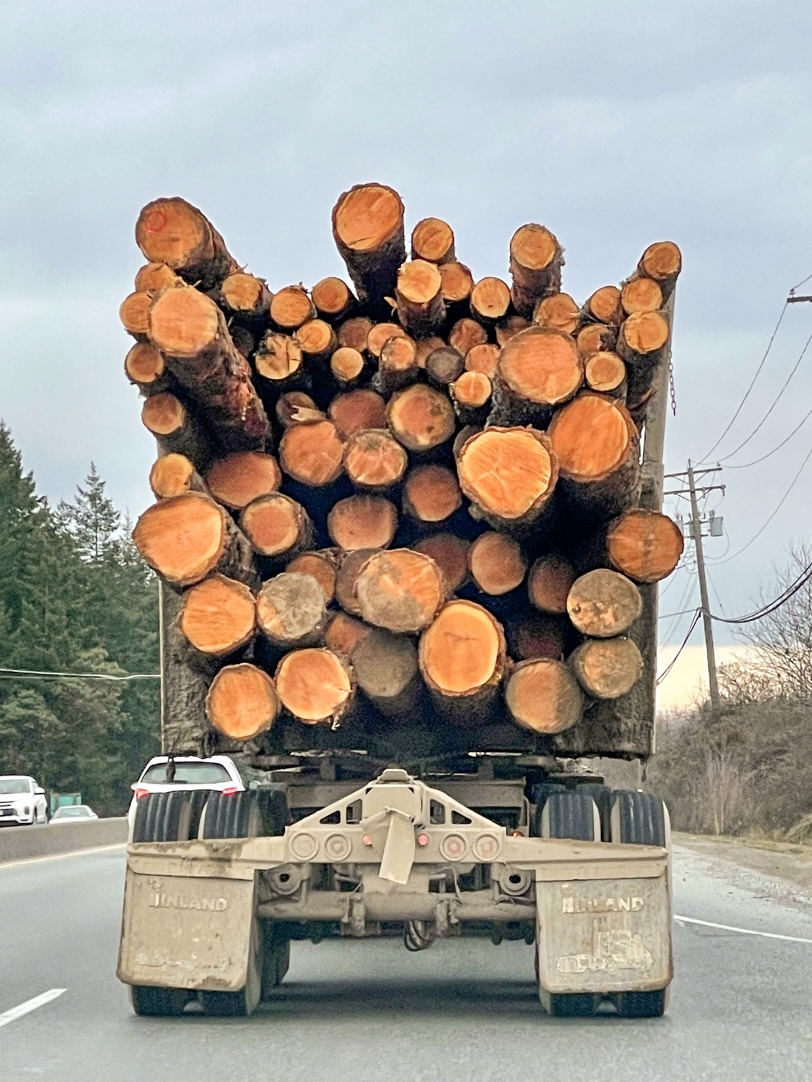 VICTORIA — The Council of Forest Industries wrote a letter to the New Democrats earlier this month, outlining more than a dozen proposals to rescue a struggling industry. “B.C.’s forest industry is in crisis,” wrote COFI President Kim Haakstad in the July 14 letter to Forests Minister Ravi Parmar. “Fibre availability is at historic lows, permitting systems are gridlocked, and investment is retreating in the face of prolonged uncertainty. The risk is not gradual decline — but accelerated facility closures, job losses, and the permanent erosion of forest industry capacity.” Haakstad was responding to Premier David Eby’s announcement of a “major project” to restore the industry in a speech to this year’s COFI’s convention. …I asked the government last week for a response to the proposals set out in the COFI letter. I got back a general statement from Parmar, which pretty much brushed aside the notion of a crisis in the industry.
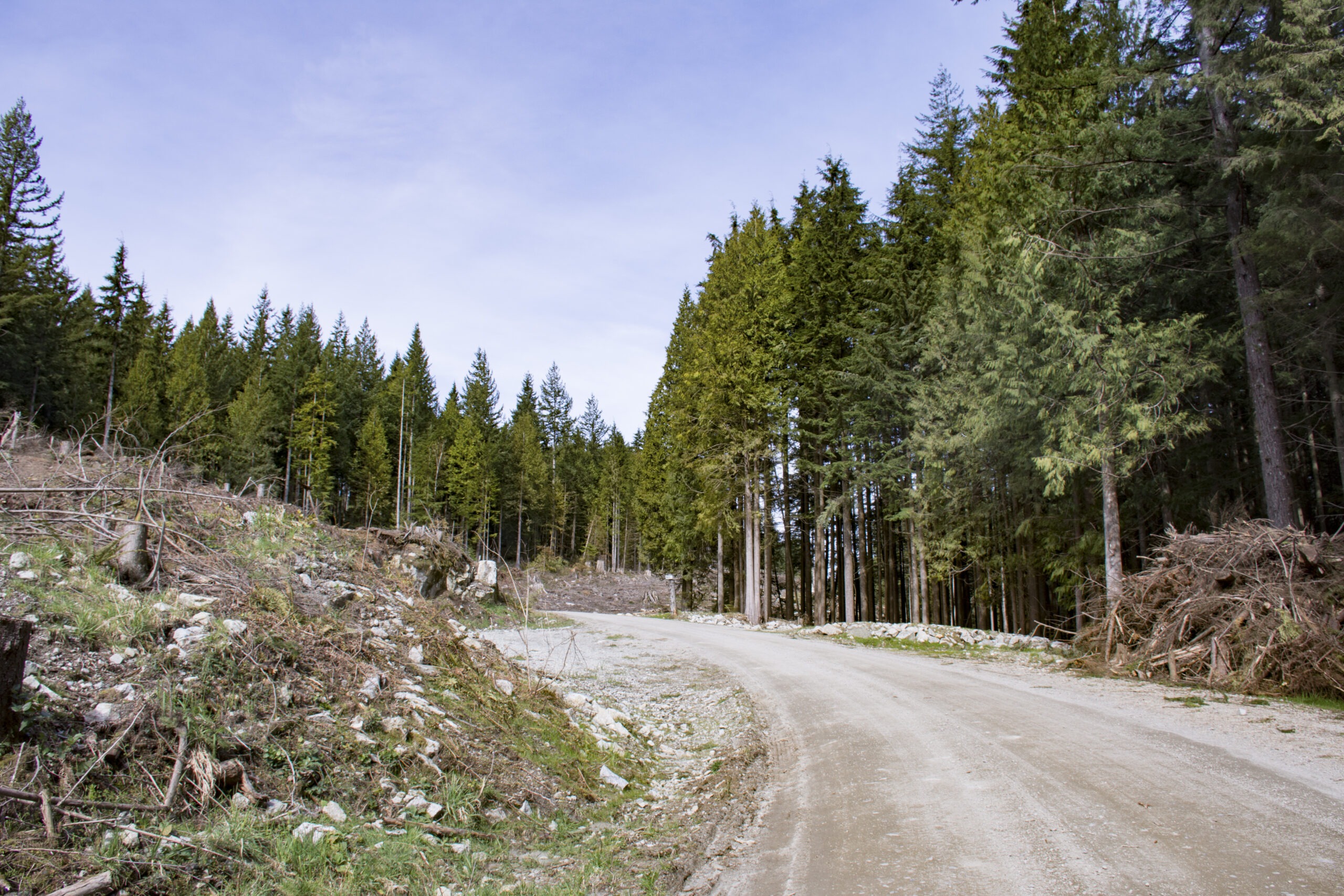 A new report warns the impacts on B.C.

 BC’s forestry sector would have been brought to its knees Friday by new American duties on Canadian softwood lumber, if it wasn’t already flat on its back from being hammered by years of provincial government policies. …But even before the new duties, B.C.’s forestry sector was in a crisis. Annual harvest volumes are down by tens of millions of cubic metres, lumber production and exports have shrunk dramatically, export revenues have fallen, thousands of jobs have been lost, and dozens of mills have been curtailed or shuttered. The industry has blamed various BC NDP policies, including new old-growth logging deferrals… and extraordinarily long permitting delays. …If New Democrats are serious about saving the industry from ruin, now would seem to be the time to shelve the never-ending reviews and actually do something. The government could spin a pivot to pro-forestry policies not as a retreat, but as a made-in-BC response to American trade aggression.


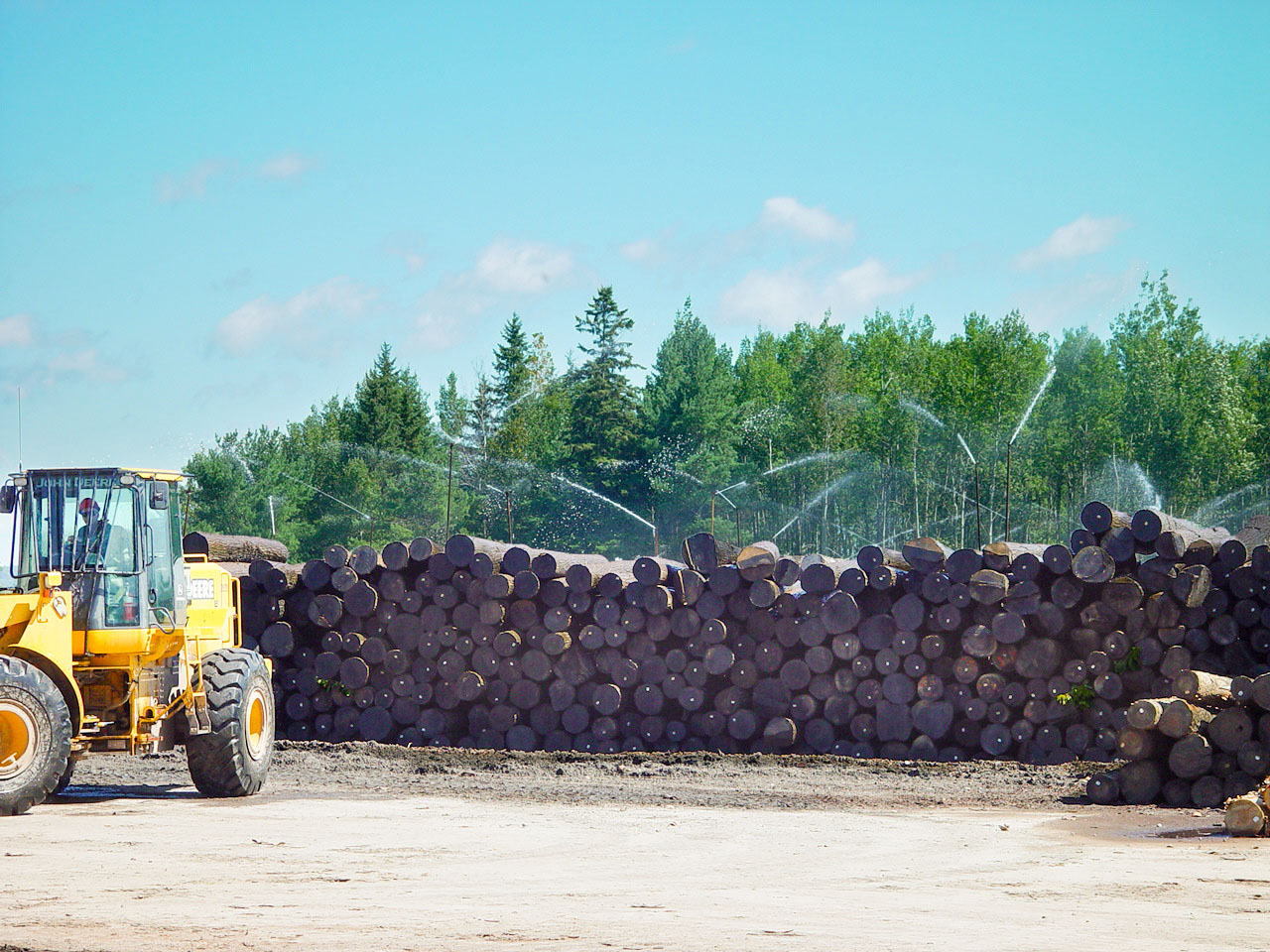 Mushkegowuk-James Bay MPP Guy Bourgouin is calling on the province to take immediate action to protect Ontario’s forestry sector in the wake of new U.S. tariffs on Canadian lumber. Bourgouin said the impact of the tariffs imposed by U.S. president Donald Trump could be devastating for northern communities that depend on the industry. “The anti-dumping tariffs imposed by Trump will devastate our lumber industry. Condemning Trump’s actions isn’t enough. We saw it with the auto sector, with steel, and now with lumber — the Premier’s ‘wait and see’ approach is leaving thousands of workers vulnerable to layoffs.” Bourgouin criticized the Ford government for failing to present a concrete strategy, calling their approach “an afterthought” for northern Ontario’s economy. …Ontario NDP party argues that using Ontario-produced wood could tackle multiple challenges at once, safeguarding forestry jobs, boosting local economies, and addressing the province’s housing shortage with “made-in-Ontario” solutions.
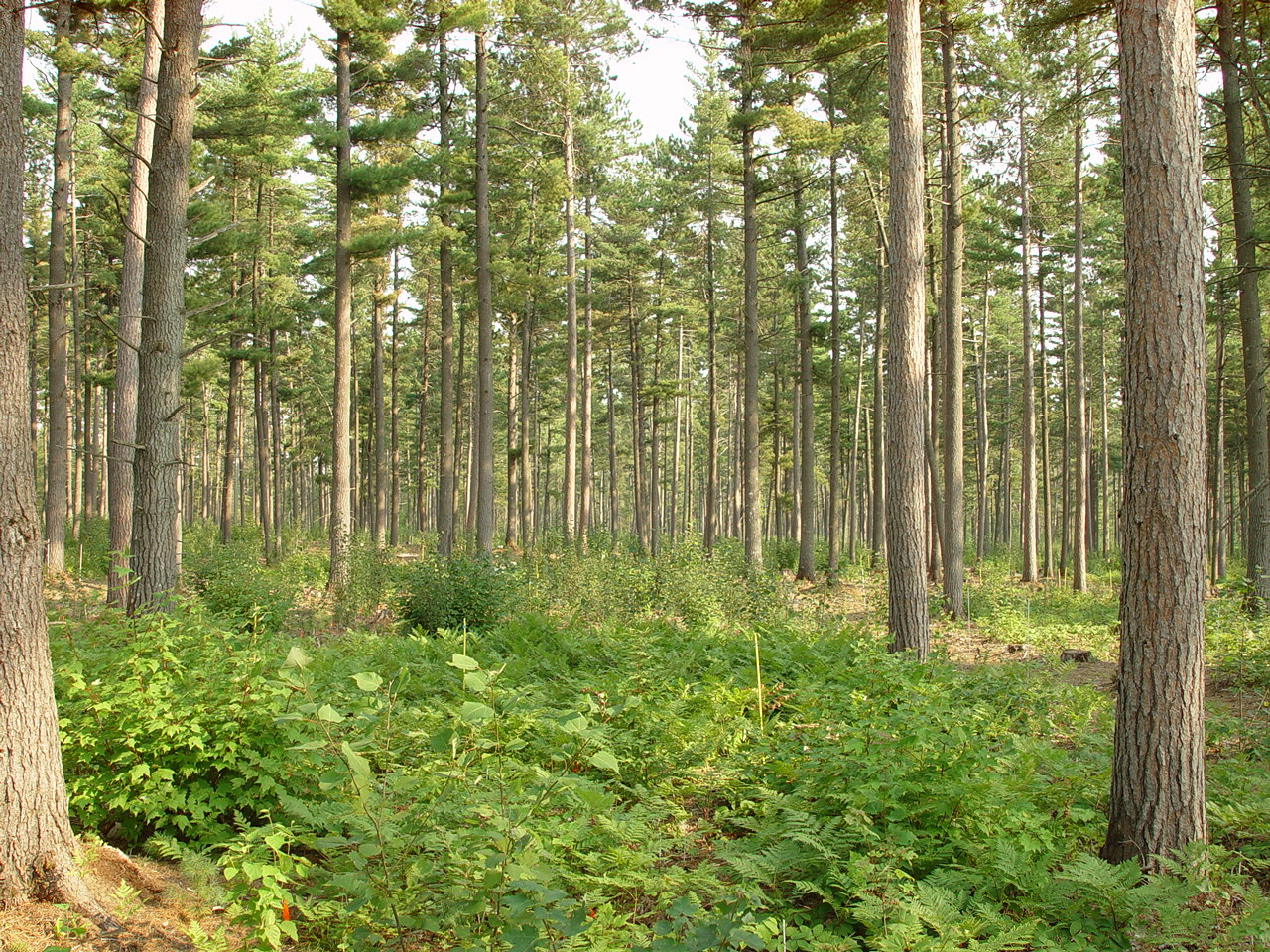 Members of the forest industry and the provincial government weighed in Monday on the Trump administration’s decision to raise tariffs on Canadian softwood lumber. Last week, the U.S. Commerce Department decided to raise anti-dumping duties on Canadian softwood to 20.56 per cent. A news release stated the province’s forest industry is “deeply troubled” by the decision to increase the duties by over 14 per cent. “Increasing anti-dumping duties to 20.56 per cent from the current average rate of 7.66 per cent is unjustified,” read the statement. “New Brunswick’s softwood lumber producers already face punitive and unfair anti-dumping and countervailing duties.” According to the statement, when combined with an anticipated rise in countervailing duties, the new increase to anti-dumping duties will mean an expected new total of 34 per cent by the middle of August.
 A cornerstone industry of northwestern Ontario is at risk, says a regional municipal group, with the decision by the U.S. Department of Commerce to raise anti-dumping duties on Canadian softwood lumber to 20.56 per cent. “Forestry is the economic lifeblood of communities across northwestern Ontario,” said Rick Dumas, president of the Northwestern Ontario Municipal Association (NOMA), in a July 28 statement. “This unjustified and protectionist action will have a direct and harmful impact on workers, families, Indigenous communities, and local economies throughout our region.” The provincial government called the U.S. commerce department’s decision to increase duties on Canadian softwood lumber exports an “unjust burden” on American consumers that will raise construction costs in the U.S., make homes less affordable, and negatively impact economic growth on both sides of the border. “We remain firm in our position that these duties should be lifted entirely, for the benefit of workers and families on both sides of the border.”
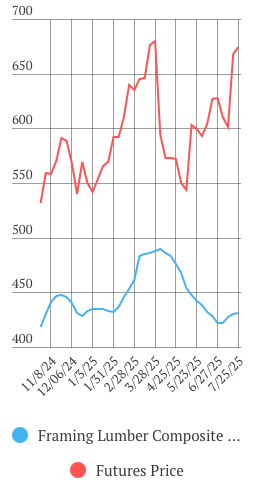
 Lumber futures hit their highest price in three years Friday despite a home-building slump and a lackluster remodeling market. Though wood demand is tepid, traders are pricing in dramatically higher duties on lumber imports from Canada. Lumber futures for September delivery hit $695 per thousand board feet Friday, up 39% from a year ago and the highest price since summer 2022, when the price of two-by-fours was tumbling down from its pandemic surge. November futures are trading even higher, around $710. The US raised its antidumping duty Tuesday to nearly 21% from 7.7%… [and] The Commerce Department said it would impose a higher countervailing duty in the coming days. The combined rate is expected to be around 35%. …”We don’t make a tremendous amount of money on distributing lumber,” Builders FirstSource CEO Peter Jacksons told investors. “We’re not eating a 20-point increase in lumber. It’s not possible. So it will be passed through. The market will adapt.” [to access the full story a WSJ subscription is required]
 VANCOUVER, BC —
  NEW YORK, NY -‑ Mercer International reported second quarter 2025. In the second quarter of 2025, net loss was $86.1 million compared to $67.6 million in the same quarter of 2024 and $22.3 million in the first quarter of 2025. Mr. Juan Carlos Bueno, Chief Executive Officer, stated: “Our operating results for the second quarter of 2025 reflect the impacts of ongoing uncertainties in the global trade environment coupled with the resulting weaker dollar. This challenging backdrop contributed to weaker demand for pulp in China during the quarter. …Our lumber sales realizations in both the U.S. and Europe increased in the second quarter of 2025 as a result of lower supply and steady demand.
 Canada’s pension funds have more than $1tn invested in the United States, and that figure could grow by $100bn or more annually, said Dominic LeBlanc, the federal minister responsible for US trade, during a visit to Washington. …Financial Post reported that LeBlanc made the comments in response to questions about whether US President Donald Trump might request specific commitments on Canadian investment as part of trade talks. The US has offered increased foreign investment as a possible pathway to improved trade terms. …Despite the potential growth in US exposure, LeBlanc said the federal government would not direct pension managers to increase their holdings or participate in specific American projects as a condition for reduced tariffs. Canada’s pension funds are already deeply integrated into US markets.
 The Bank of Canada today maintained its target for the overnight rate at 2.75%, with the Bank Rate at 3% and the deposit rate at 2.70%. While some elements of US trade policy have started to become more concrete in recent weeks, trade negotiations are fluid, threats of new sectoral tariffs continue, and US trade actions remain unpredictable. …The current tariff scenario has global growth slowing modestly to around 2½% by the end of 2025 before returning to around 3% over 2026 and 2027. CPI inflation was 1.9% in June, up slightly from the previous month. …Based on a range of indicators, underlying inflation is assessed to be around 2½%.
 I am surprised at how President Trump is gradually succeeding in his goal. …Canada, along with China, is the only country standing up to the US, but it is inevitable that if no agreement is reached, the chances of a recession will increase. …Canada needs the US to avoid the worst, but the point of the article is different: how much does the US need Canada? My impression is that this issue is often underestimated. …We don’t need their lumber. But is that really the case? …Why Canadian lumber is essential. …The first and probably most important reason is that US forests are mainly privately owned (by companies or families). …Becoming less dependent on Canada is extremely complicated for the US due to the usual logistical challenges. …This industry has been in gradual decline for decades, and wanting to save it in order to be less dependent on Canada is a waste of resources.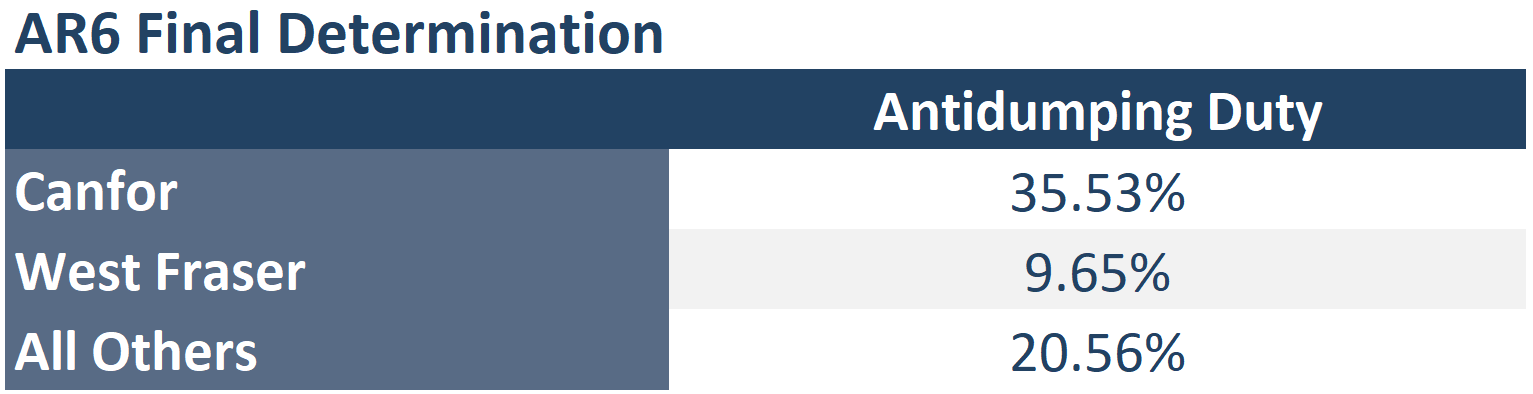
 The U.S. Commerce Department has announced it is nearly tripling its anti-dumping duties on Canadian lumber imports from 7.66% to 20.56% following its annual review of existing tariffs. The anti-dumping duties are in addition to current countervailing duties set at 6.74%, which would bring the total lumber duties above 27%. However, the countervailing duty rate is expected to move higher on Aug. 8. Commerce issued a preliminary determination on countervailing duties earlier this year that would raise the countervailing duty rate to 14.38%. Moreover, President Trump’s Section 232 [investigation] could result in higher lumber tariffs. …For years, NAHB has been leading the fight against lumber tariffs because of their detrimental effect on housing affordability. In effect, the lumber tariffs act as a tax on American builders, home buyers and consumers. …We are also urging the administration to move immediately to enter into negotiations with Canada on a new softwood lumber agreement that will… eliminate tariffs altogether.
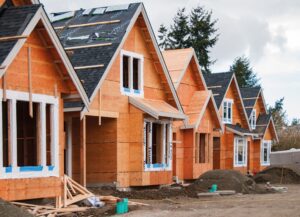 OTTAWA—Home buyers and builders in Canada are in retreat, adding to the woes of an economy struggling under the weight of President Trump’s tariffs. Housing helped spur growth in Canada just prior to, and after the worst of, the Covid-19 pandemic. …Data this month indicated existing-home sales climbed modestly for three straight months as of June. But economists and real estate agents are far from convinced it signals recovery after a tariff-fueled slowdown. They note the sales rebound was the result of sellers cutting their listing price. Housing affordability remains stretched in Canada, according to the Bank of Canada data. …For builders, prices for new homes are failing to cover higher costs for labor, loans and taxes and fees set at the municipal level. The Canadian Home Builders’ Association said its own confidence index is at historically pessimistic levels. [to access the full story a WSJ subscription is required]
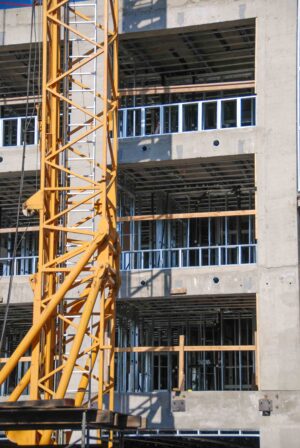 Canada’s first commercial carbon capture cement facility is now under construction in Mississauga Ont., backed by $10 million in federal funding. The project is part of the country’s effort to reduce industrial emissions. The project, led by Calgary-based startup Carbon Upcycling in partnership with Ash Grove Cement, aims to capture carbon dioxide from cement production and turn it into a low-carbon material that can replace part of traditional cement. Minister Evan Solomon, … said “These collaborative projects supporting our climate goals and enhancing our global competitiveness”. The facility will use Carbon Upcycling’s technology to mix captured CO2 with steel byproducts like slag to create a powder similar to cement used in construction. Carbon Upcycling CEO Apoorv Sinha said the system could reduce emissions from cement by up to 40%. …Sinha said the new facility will store up to 150 kilograms of carbon dioxide in every tonne of low-carbon cement it produces.
 The Forest Stewardship Council Canada announces the launch of a public consultation on draft indicators related to Intact Forest Landscapes (IFLs). These indicators form part of our ongoing work to strengthen forest stewardship and protect ecologically and culturally significant forest areas across Canada. IFLs are large, unfragmented areas of natural forest that are free from significant human activity and are critical for biodiversity, carbon storage, and Indigenous cultural values. FSC Canada is committed to ensuring that management activities in IFLs are carefully assessed and responsibly planned. These indicators will guide how FSC-certified forest operations manage intact forest areas… Indigenous Cultural Landscapes (ICLs) are areas that hold significant cultural, ecological, and spiritual value to Indigenous Peoples, reflecting their deep relationships with the land. Due to the need for more in-depth consultation with Indigenous Peoples on the Draft Indicators and Guidance for ICLs, an additional consultation period will be launched shortly.
  Canada has trees… But …Ottawa is at odds with a slew of environmental groups over what that means. [They] issued a
  Canada is home to nearly 347 million hectares of forest, which account for about 9% of the world’s forests. As I travel this week across the northern boreal to visit mill and woodlands employees and local community leaders, I’m reminded of the vastness of our forests, the 200,000 direct jobs and families that rely upon them, and how the resilience of those workers is part of both an ever-evolving story and my sense of self as a Canadian. Our connection to our forests has also informed our role in the world beyond commerce, and beyond symbols. …As we endure another devastating wildfire season across Canada, there is more discussion at the community level about turning to more active forest management as a solution. …In a world in which Canada’s exportable natural assets are being besieged by avoidable uncertainty, Canada’s forests are our most sustainable, renewable resource. …To me, being Canadian means having a privileged relationship with nature, especially with our trees and forests.
  …The pressure to balance local benefits and profitability is something community forests must continuously navigate. A


 Years of drought combined with persistent wildfire, some of it burning underground over winter, are causing forests in B.C.’s north east to fall down. Having had the roots and organic soils that had held them up burned away these often green trees now form a dense ground fuel load for future fires. The fallen trees also form a jack-straw of branches and boles that will act as an abatis in the face of fire crews. This has fire specialists and ecologists in the Fort Nelson Fire Zone worried. “With this fuel type, another concern is the multi-year impacts of having this much fuel on the ground,” says Eric Kopetski BCWS Fire Behaviour Analyst. The Fort Nelson Fire Zone has been dealing with drought and fire for years with the Fort Nelson Complex now covering 4 million hectares including 25 fires and 350,000 hectares burned this year. Distance, terrain and fire tenacity already pose challenges to fire crews.


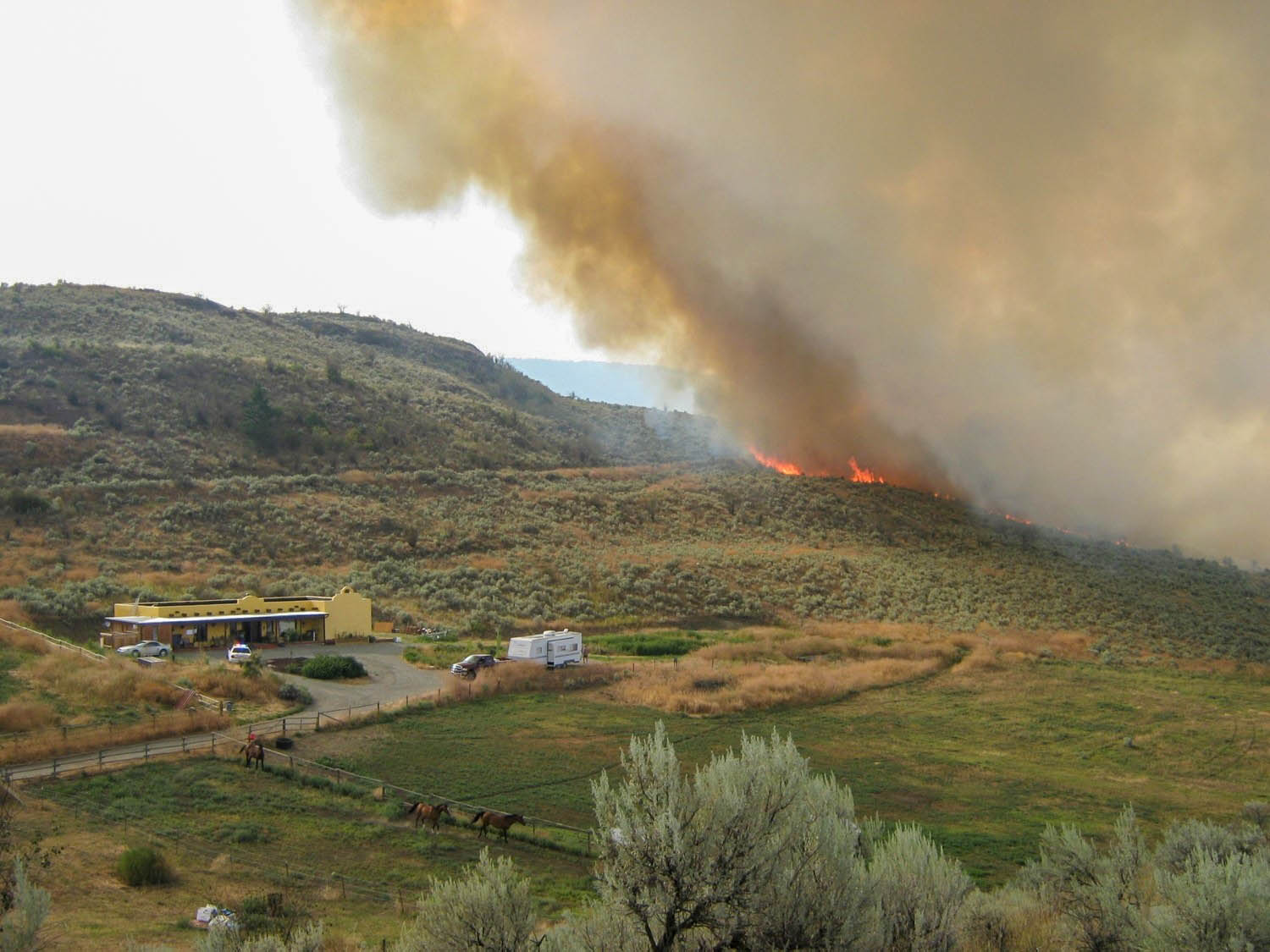 A recent report out of British Columbia suggests using beneficial fires to build wildfire resilience. In the Yukon, that idea is not new — but finding a way to reap the benefits of fire while preventing devastation is a delicate balancing act. …the

 Vic Fedeli, MPP for Nipissing, announced the Ontario government is investing $2,874,898 through the Skills Development Fund Training Stream to The Canadian Institute of Forestry to support 75 workers across Northern Ontario get the skills they need to land good-paying, in-demand jobs in forestry, logging, and agriculture-related services. …“As we navigate a shifting economic landscape, disrupted by U.S. tariffs, we remain laser-focused on protecting Ontario workers and job seekers,” said MPP Fedeli. “That’s why we’re investing over $2.8 million to support a project by the Canadian Institute of Forestry, in partnership with College Boréal, to train workers for in-demand roles in the forestry and resource sector, helping grow Northern Ontario’s economy.” …”These programs are equipping the next generation of forest professionals and ensuring the continued vitality of our forestry communities,” said Ken Farr, Interim Executive Director, Canadian Institute of Forestry.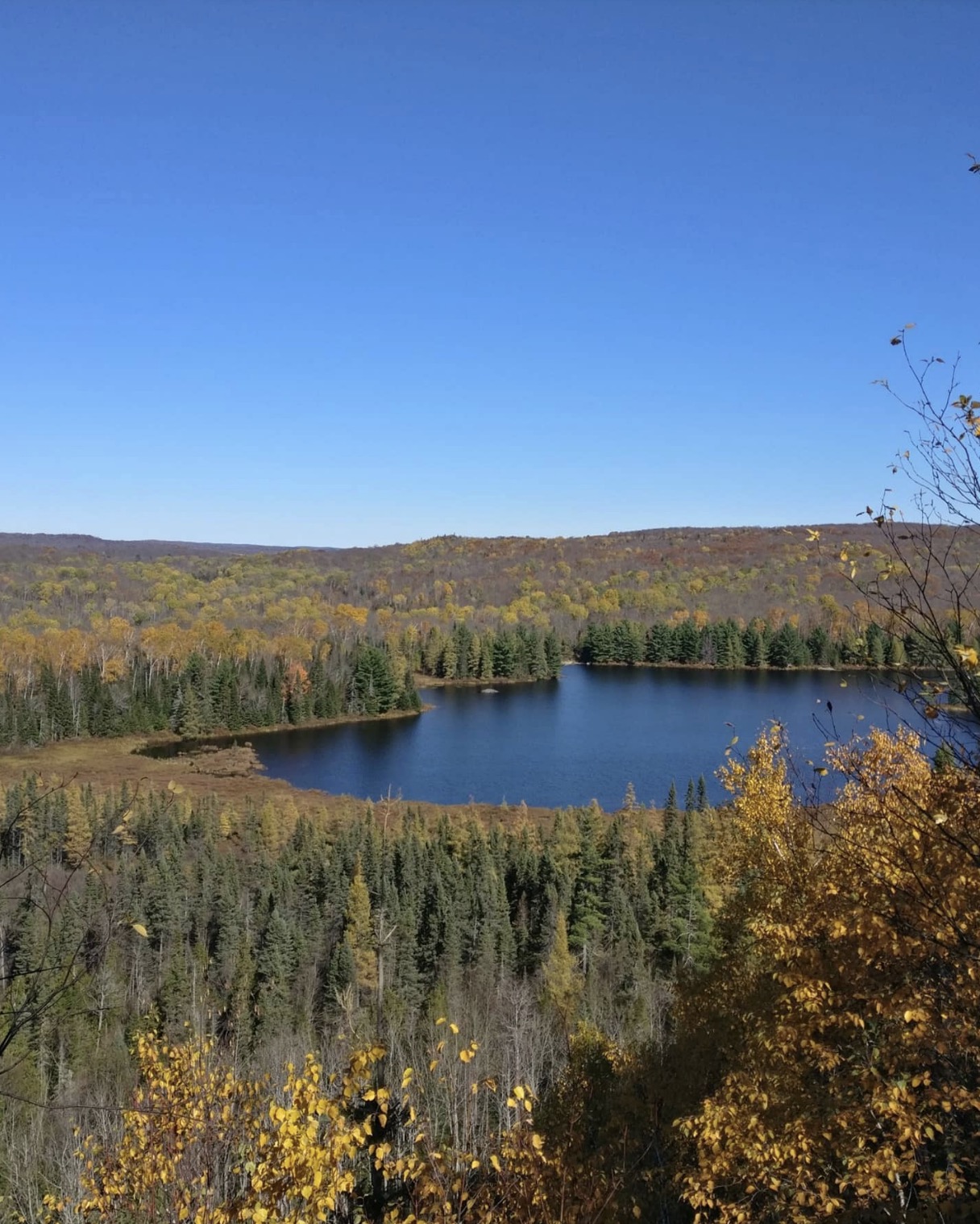

 As the B.C. Day long weekend approaches, people are encouraged to stay informed about wildfire conditions, be prepared and plan travel. Warming summer temperatures and ongoing drought mean much of British Columbia is at heightened risk of wildfire, even after recent cooler temperatures and rain. Environment and Climate Change Canada (ECCC) has forecast hot temperatures this week in B.C., with heat warnings currently in place for parts of the province. People are encouraged to prepare for hot summer weather. To access the Province’s PreparedBC extreme-heat preparedness guide,
  Toronto is among the most polluted cities in the world on Monday morning as the city remains under a special air quality statement for its third consecutive day. Environment Canada said smoke from forest fires is expected to continue to impact much of southern Ontario Monday and may persist into Tuesday before finally easing. “Air quality and visibility due to wildfire smoke can fluctuate over short distances and can vary considerably from hour to hour,” said Environment Canada in a special air quality statement issued Monday morning. …Toronto ranked third in a
 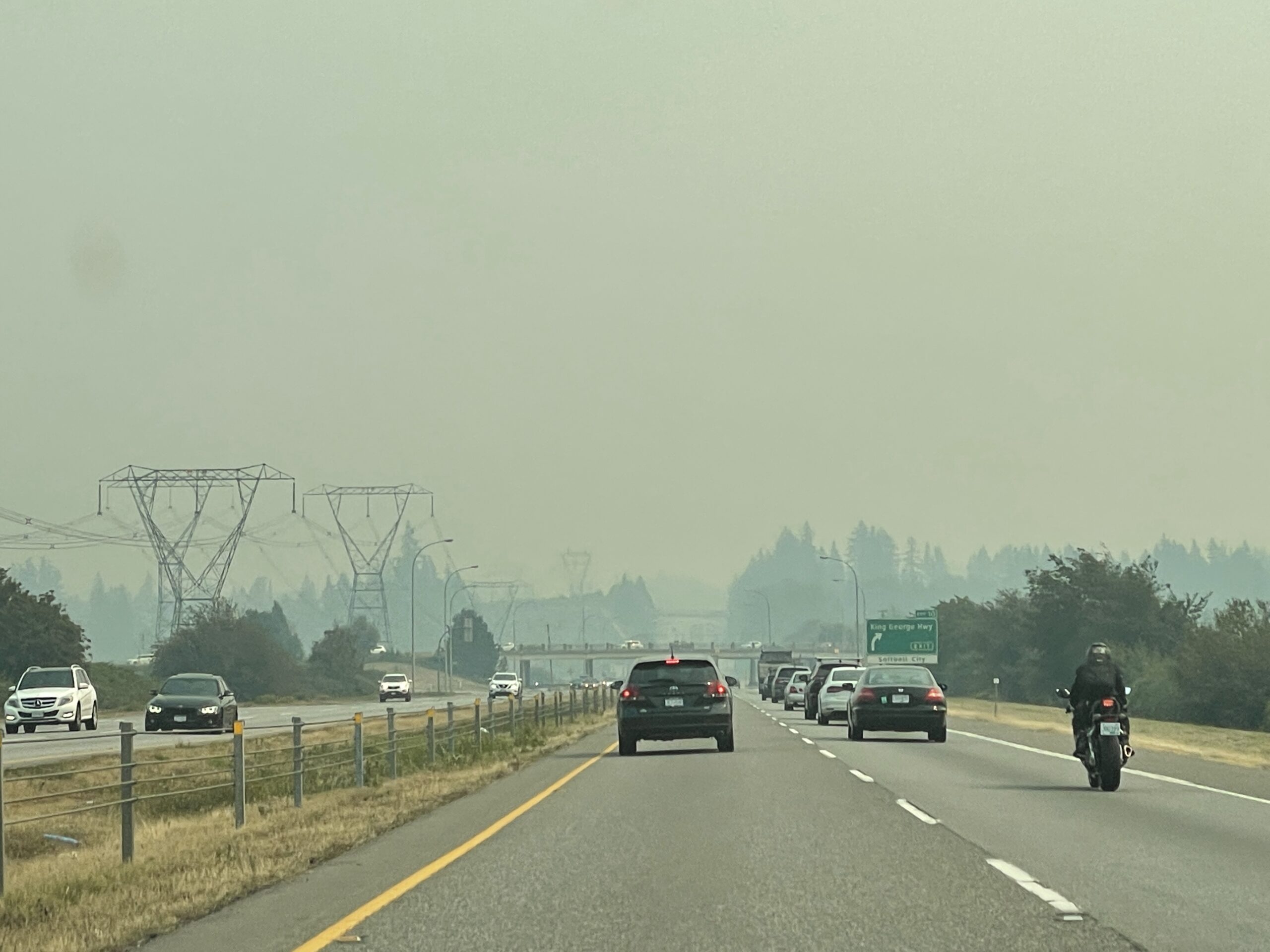 KENORA — Across Northwestern Ontario, the public is being urged to limit time outdoors due to “extremely high levels of air pollution.” The poor air quality is being caused by smoke from forest fires in the Prairies, according to an air quality warning issued by Environment Canada and the Province of Ontario Tuesday morning. The warning extends from east of Marathon — including Biigtigong Nishnaabeg — west to the Manitoba border and extends as far north as to include communities like Wunnumin Lake, Muskrat Dam and Deer Lake. Poor air quality is expected to persist through Thursday for most areas, according to the updated warning, extending the expected duration.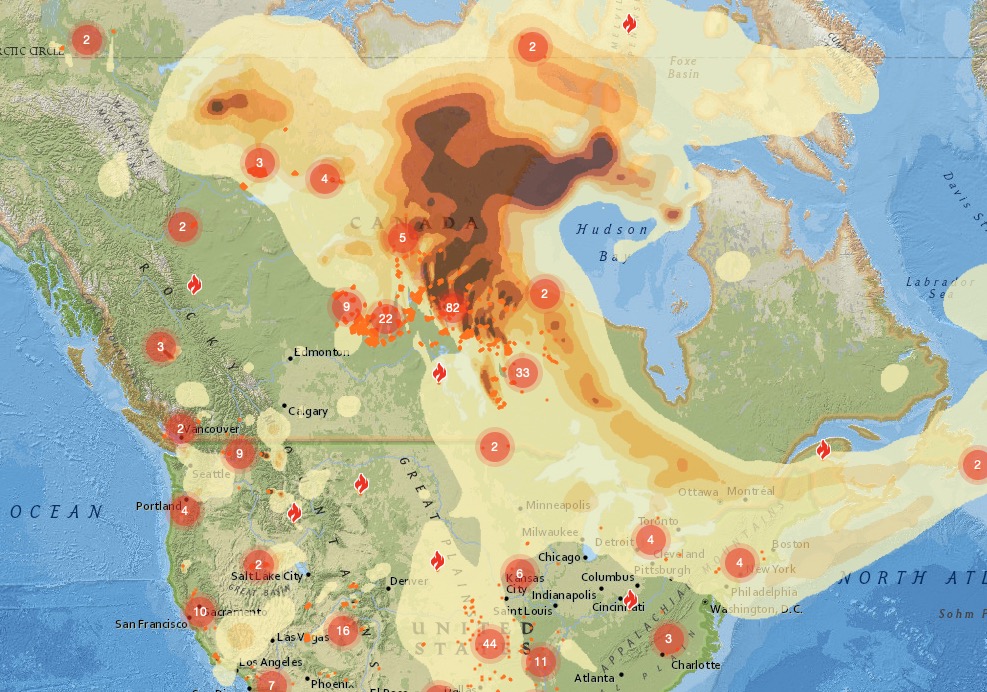
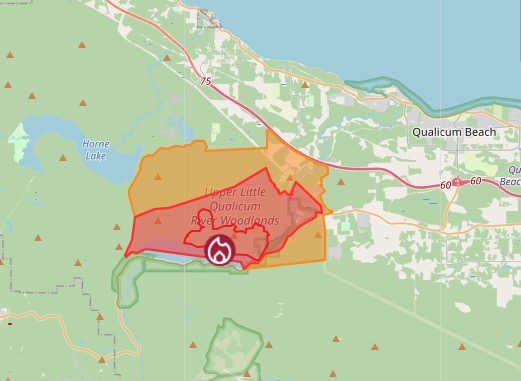 A wildfire on Vancouver Island is threatening Douglas-fir trees in Cathedral Grove, located on the western shoreline of Cameron Lake. The old-growth forest is filled with gigantic 800-year-old trees… The out-of-control Wesley Ridge wildfire was discovered on July 31 and is now 511 hectares in size. The Regional District of Nanaimo issued an evacuation order on August 2, which affected nearly 400 properties in the area around Cameron Lake, about 25 kilometres west of Parksville. …The fire has grown rapidly over the weekend as it looms over Highway 4, which remains open for the time being. Crews are trying to push it back, even using night vision so they can battle the blaze 24 hours a day. Emelie Peacock with the BC Wildfire service says, “we currently have 142 personnel responding to this wildfire, which includes 65 firefighters, 2 followers, and roughly 75 structure protection specialists”. …The fire is suspected to be human-caused … investigation is still in its preliminary stages.