 The Tree Frog News featured the panels and speakers from last week’s International Pulp Week. In today’s Tree Frog News are links to all of the conference sessions in chronological order.
Day One – June 1, 2025
- Registration and Wecome Cocktail
Day Two – June 2, 2025
- Looking Back, Moving Forward: 20 Years of Industry Insights: Kevin Mason
- Economic Uncertainty: A Macro View on Tariffs and Markets: Joaquin Kritz Lara
- Metsä Fibre’s enhanced position in Softwood Pulp: Mikko Antsalo
- The Global Hardwood Market: Leonardo Grimaldi
- How Carbon Capture and Removal is Unlocking Opportunity: Jonathan Rhone
- Navigating EUDR Compliance with Automation and Digital Tools: Parker Budding
Day Two – June 3, 2025
- Managing Geopolitical Uncertainty and Its Challenges: Robert McKellar
- Reshaping China’s P&P Industry in a Shifting Global Landscape: Haidong Weng
- The Shanghai Pulp Futures Exchange Path to Internationalization: Jin Feifei
- How Luojing Terminal is Meeting China’s Pulp Demand: Tian Jun
- Current Trends in End-Use Markets: Mathieu Wener
- Global Pulp Market: Demand Drivers and Outlook: Emanuele Bona
 A
A  With roughly 2,000 wildfires in B.C. each year, forestry workers are often operating in or near fire-affected areas. It’s up to employers to ensure their crews are properly trained and prepared to recognize the risks and respond safely. …Employers are responsible for identifying hazards, assessing risks, and ensuring effective controls are in place — along with providing training, supervision, and fit-for-use equipment.
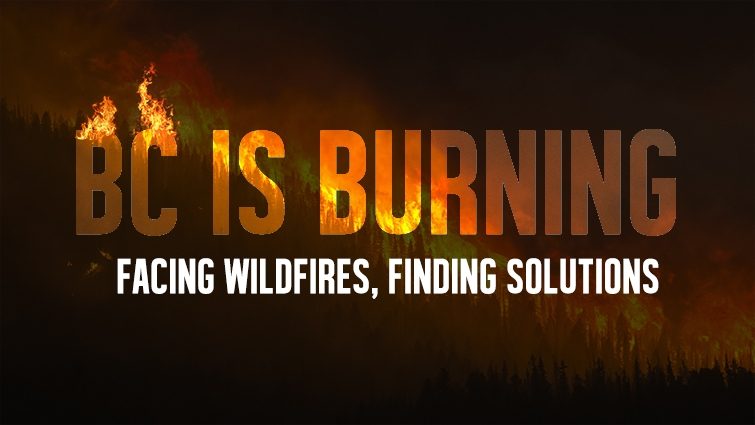
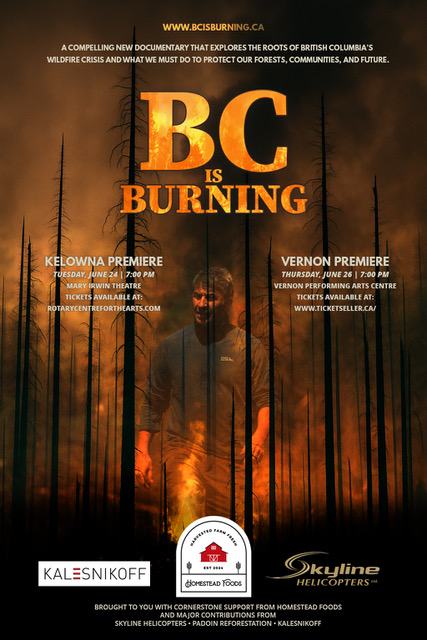 New film reveals the roots of B.C.’s wildfire crisis—and what we must do to stop it. A powerful new documentary exploring the causes and consequences of British Columbia’s escalating wildfire crisis will premiere to the public at the Mary Irwin Theatre in Kelowna on Tuesday, June 24 at 7:00 pm and at the Vernon Performing Arts Centre Thursday June 26 at 7:00 pm. Titled B.C. is Burning, the 45-minute film delivers a sobering but hopeful look at what’s fueling today’s megafires—and the science-based solutions that could protect our forests, our communities, and our future. B.C. is Burning was independently produced and funded through community support, with Homestead Foods generously contributing half of the total budget. We also gratefully acknowledge major support from Skyline Helicopters, Padoin Reforestation, and Kalesnikoff.
 The second Trump administration has come out swinging on trade. New tariffs have reignited uncertainty across global supply chains and forced America’s economic allies to find ways of placating the White House. For Canada and Mexico, Washington’s partners in Trump’s U.S.-Mexico-Canada Agreement, this has been a stark reminder of how easily trust can erode, even in the most integrated trade relationship in the world. …In terms of trade, the stakes could not be higher: Mexico and Canada are the United States’ no.1 and no. 2 trading partners. But the partners don’t just trade enormous amounts with each other; they build things together. Therefore, the review process is also a chance to modernize North America’s trade architecture, reinforce strategic industries, and rebuild the foundations of regional trust and cooperation. America’s competitiveness depends heavily on the integrated North American manufacturing platform, and thus on the success of Mexico and Canada, its partners.
 The Institute is seeking an enthusiastic individual to provide strategic and operational leadership as Executive Director. The Executive Director leads the Canadian Institute of Forestry / Institut forestier du Canada (CIF-IFC), guiding the organization through strategic growth and operational excellence. This role ensures the long-term sustainability of the Institute through sound governance, financial stewardship, and stakeholder engagement. The Executive Director works closely with a small team, the Executive Committee, and a broad national network of members, volunteers and partners. They are accountable to the Board of Directors and collaborate with committees, staff, members, sponsors, and regions across Canada. This is a full-time, remote position. Individuals with the requisite qualifications are invited to apply by July 21, 2025.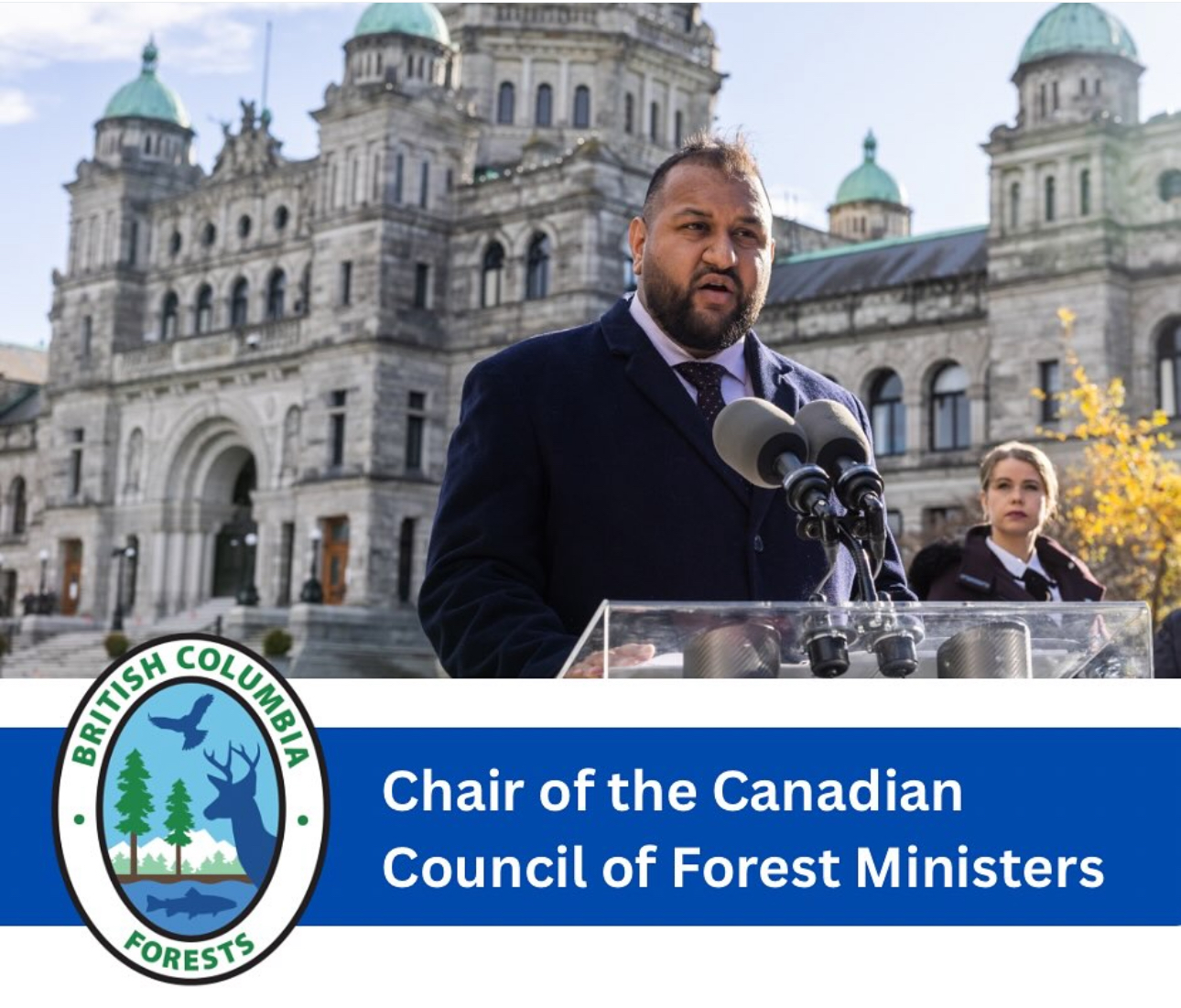
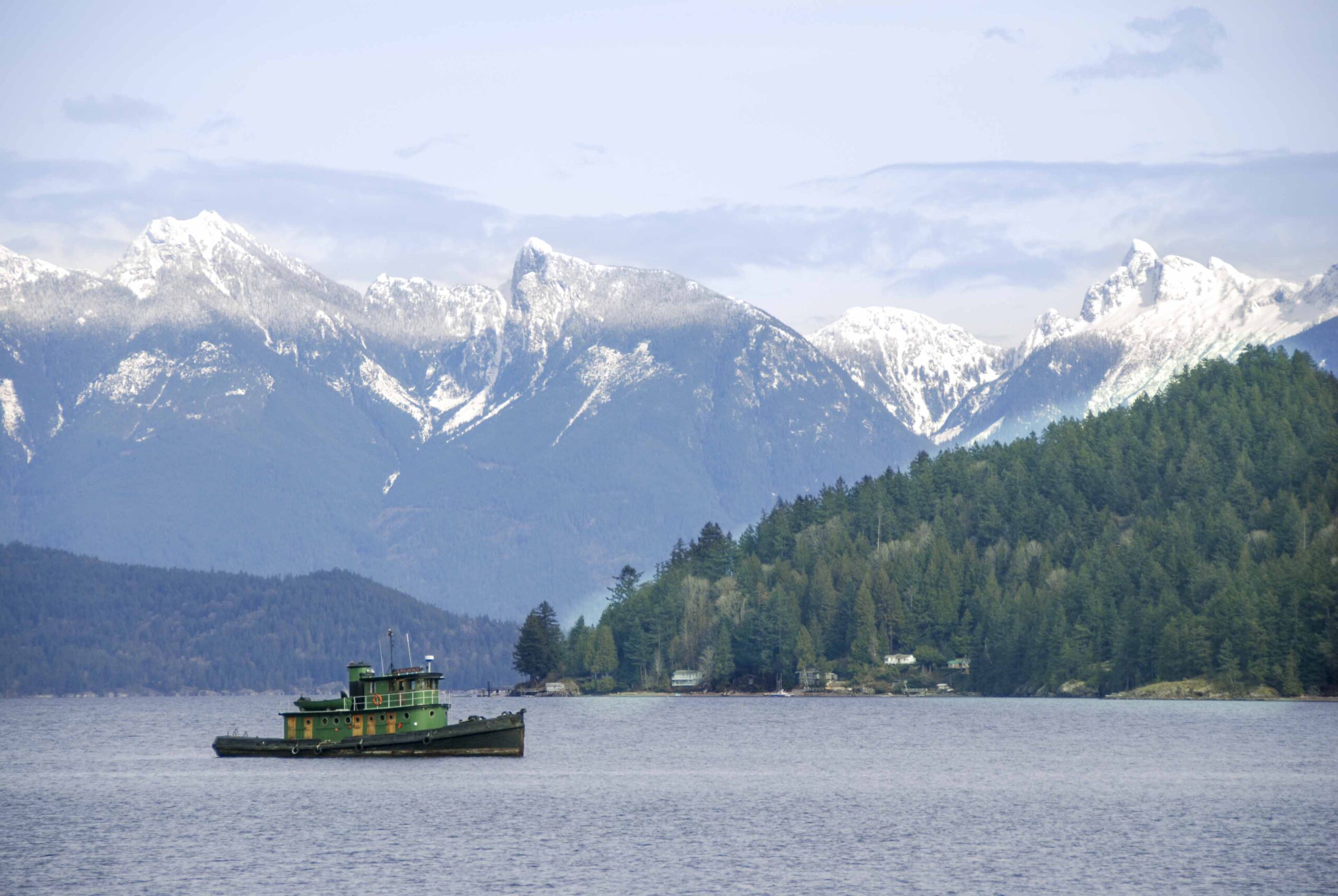 A contractor hired to oversee logging on a Sechelt property and that site’s numbered company owner were sentenced for violations of the Heritage Conservation Act June 16, in the first ever B.C. Provincial Court sitting held at the shíshálh Nation longhouse. Grant Starrs, 55, of Sechelt and 0990199 B.C. Ltd. both pleaded guilty to the 2020 disruption of an identified heritage site. That area was occupied by the graves of 49 shíshálh people, according to federal Crown counsel Molly Greene. Provincial Court Judge Robert Hamilton accepted the joint submission of the Crown and defence attorneys, and fined the company $200,000, payable within five business days. Starrs was fined $30,000 and given 90 days to pay. Each is also to pay a victim surcharge of 15 per cent of their fine amounts. …In issuing his decision, Hamilton stated the fine to the company was four times higher than previous ones issued for such violations of the Heritage Conservation Act.
 Cranbrook, BC – United Steelworkers (USW) Local 1-405 members at Galloway Sawmill have had enough and are going public with their frustration with Peak Renewables and Galloway Sawmill owner Brian Fehr and the violation of their collective agreement rights and severance owed to the 20 workers of the Galloway Sawmill. “Workers left at the Galloway Sawmill are entitled and deserve their severance from Peak Renewables and owner Brian Fehr at Galloway Sawmill. The company is reneging on a negotiated closure agreement and the workers are the only ones that get hurt,” said USW Local 1-405 President Grant Farquhar. “That site was closed officially by the employer in December of 2024. Five months later and two months after the commitment was made by the employer to pay the severance was made, the members still haven’t received it.” Brian Fehr, owner of Peak Renewables, bought the Galloway Sawmill from Bud Nelson in 2017. The mill hadn’t run since December of 2022.
  SURREY, BC — Mackenzie Sawmill is back in the courts, a little more than a decade after the sum of three fires ruined a large mill built in 1938. The first of three fires was on Nov. 12, 2010, followed by a second on Jan. 25, 2011 and the third on Oct. 31, 2014 essentially destroyed what was left of it. …Judge Rory Krentz, presided over a hearing in B.C. Supreme Court in Vancouver, where the defendants applied for a dismissal for want of prosecution. Mackenzie ceased operations in early 2011 after the second fire, with two groups of employees entitled to severance pay. The court heard Mackenzie told the union the company intended to build another mill on site, enabling the union employees to keep their jobs. …This was before the third fire, after which Mackenzie indicated it still planned to rebuild the mill. But the union alleges MacKenzie decided before the last fire happened that it wouldn’t rebuild.
 TORONTO – The Ontario government released
 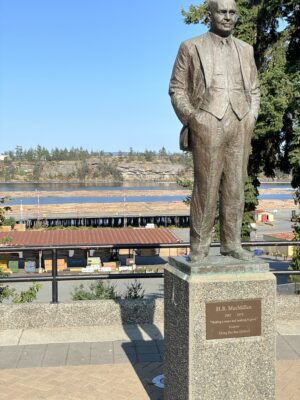 Western Forest Products says it will curtail all operations at its Chemainus sawmill next week, sidelining 150 employees for an indefinite period. The company said the curtailment, set to start June 18, is due to market challenges that include weaker lumber demand and higher US softwood lumber duties, as well as a lack of available viable log supplies. The company also blamed market conditions and a lack of log supplies for a similar shutdown in the spring of last year. Western Forest Products’ other mills at Duke Point, Ladysmith, Saltair and Cowichan Bay, and a value-added remanufacturing plant in Chemainus, will continue to operate, said Babita Khunkhun, senior director of communications for Western Forest Products. She said there is no end date for the curtailment at the Chemainus mill at this point, as the company monitors conditions. The mayor of North Cowichan said he was initially told 55 workers were facing layoffs.


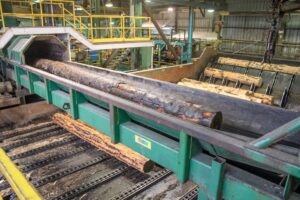 As Ottawa bets big on EVs and batteries, core manufacturers in sectors like lumber, metal and machinery are left fighting uphill battles at home. Among his various and sometimes conflicting economic objectives, Donald Trump has identified revitalizing manufacturing as a priority. He has railed against the decline in factory jobs — a complaint that overlooks the jump in U.S. manufacturing employment since 2015 but does reflect the fact that manufacturing today accounts for a significantly smaller share of U.S. jobs than it did 30 years ago. Canadian policymakers have also been paying more attention to manufacturing, particularly since the 2020-21 COVID shock highlighted the country’s vulnerability to supply chain disruptions. Unfortunately, Ottawa’s preferred game-plan has been to dole out vast taxpayer-funded subsidies to politically favoured segments: Electric vehicles, batteries and clean-tech products.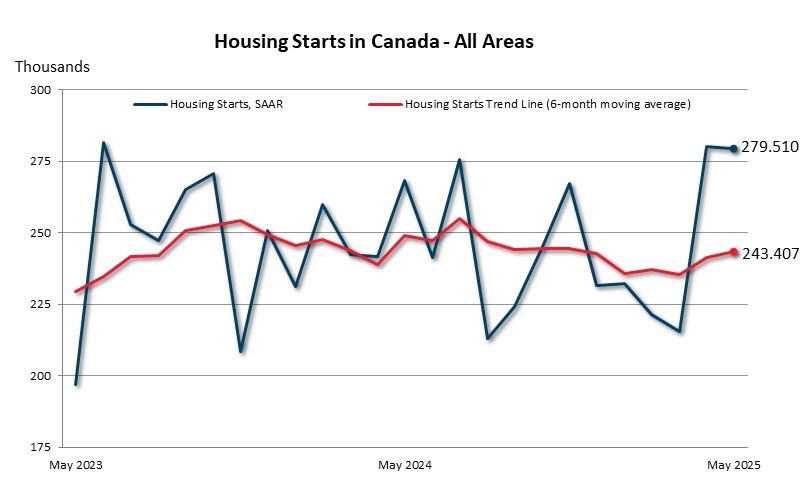
 Lumber futures rose past $610 per thousand board feet, a ten-week high, as steady construction activity met tightening supply and mounting trade barriers. US homebuilding remains steady with single-family starts flat at 1.36 million units in April and permits edging lower, while Canadian multi-unit starts jumped 34%, keeping mill orders firm. Canadian harvests are constrained by pine-beetle infestations, prairie wildfires that have burned more than 200,000 hectares this spring and strict cut limits that left British Columbia nearly 42% below its allowable quota in 2023. In the US, sawmill utilization stalled in the mid-70% range despite recent capacity additions. Tariffs of roughly 14.5% on Canadian softwood, along with threats of higher levies, have discouraged cross-border shipments, while major exporters divert supply to Asian and European markets. Elevated fuel and transportation costs further raise delivered prices.

 Ash and chemicals from some of BC’s largest wildfires are winding up in the Fraser River, which could eventually lead to low oxygen levels and harm marine life, say UBC researchers. In a peer-reviewed study, published in the journal Science of The Total Environment, scientists linked increases in the concentrations of compounds like arsenic and lead, and nutrients such as nitrogen and phosphorus, to wildfires that had burned near the 1,375 kilometre long river. These are all compounds that are found naturally in the water. However, researchers tracked a significant increase in compounds as wildfires were happening near the river. The researchers studied fires within 500 metres, 1,000 metres and 1,500 metres. Fires burning close to major waterways had immediate influence on water quality, said Emily Brown, a research scientist at UBC’s institute for the oceans and fisheries. The more distant wildfires had delayed influence on water quality.
 Forest Products Association of Canada issued this statement to recognize the release of the Kananaskis Wildfire Charter at the G7 meetings: Canada’s forest sector welcomes the G7’s commitment to address the environmental, economic, health, and social challenges that come with the increase in catastrophic wildfires globally. Over 3.7 million hectares have already burned in Canada this year, putting us on pace for our second worst fire season on record. To put that in some context, more than five times the land base that Canada’s foresters would harvest in an entire year has already burned in 2025. And when Canada’s foresters do their work, they ensure the forest is regrown. Fires in some parts of Canada are now burning so hot that regeneration of these forests are challenged due to scorched soils. The time for action is now. Quite simply, fires will get worse if we are not more proactive in managing fuel loads and our aging forests.
  Since mid-May, wildfires across Canada have burned 9.6 million acres, prompting the evacuation of approximately 40,000 people. According to Indigenous Services Canada, a government ministry, more than half of those evacuees are from First Nations communities, and nearly 34 tribes in almost every province are affected. The sudden rush of refugees has challenged the country’s crisis response infrastructure as people seek shelter and services in cities far from their homes, with little information of when they may return to their communities. …Indigenous Services Canada has been authorized to release $20.9 million to disburse to First Nations. …According to an Intact Centre report in 2023, 60 percent of Canadian communities are now vulnerable to wildfires, a third of which are Indigenous living on reserves.
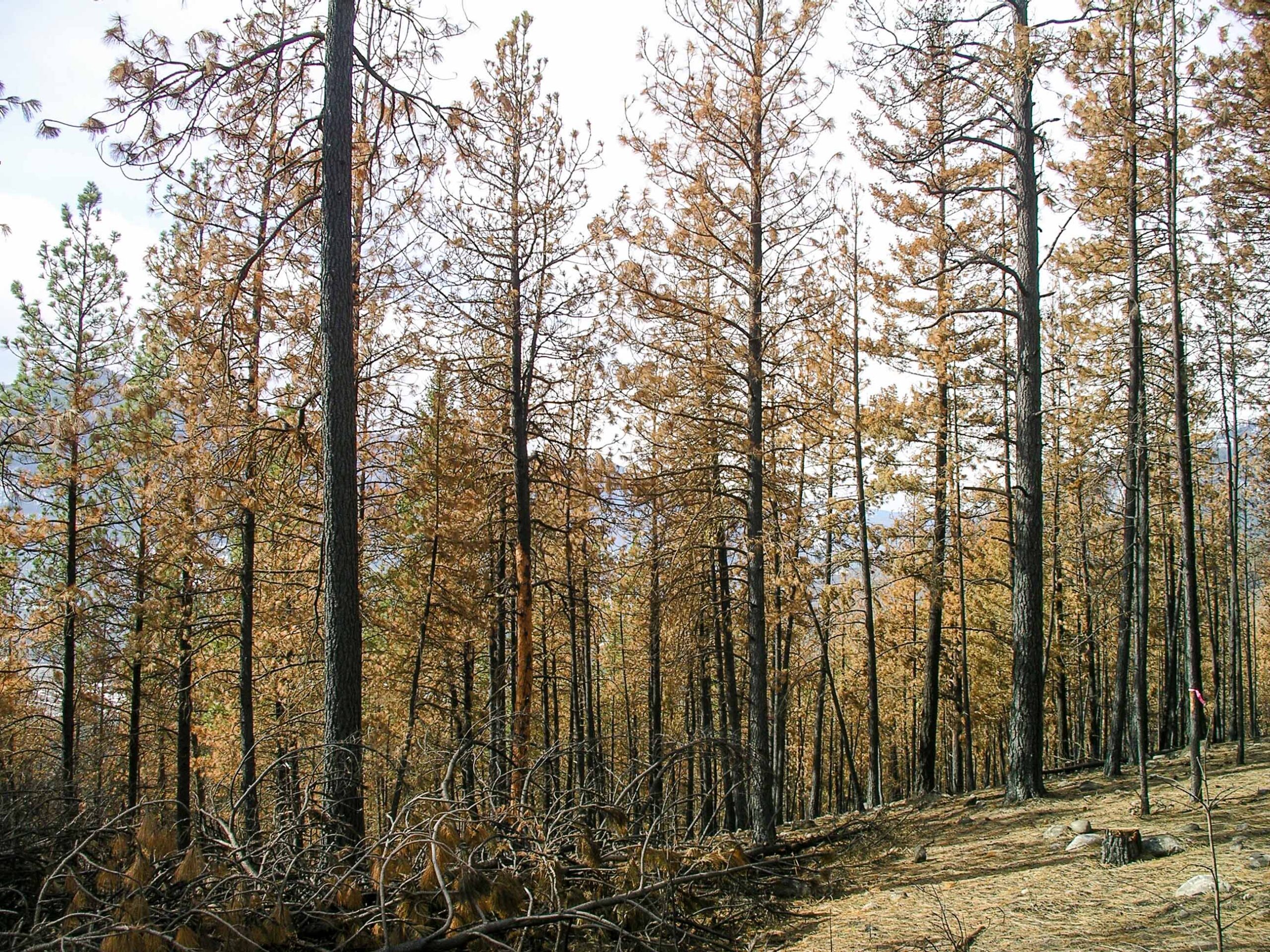 Scientists say wildfire could transform parts of the Canadian landscape, as more intense and more frequent fires push forests to adapt and prevent certain common Canadian trees from regrowing…. Canada’s native plants are hardwired to endure the effects of wildfire — to an extent. But … drier conditions and warmer weather due to climate change are making these fires more frequent and hotter. …What could happen is a shift from tall forests to grassland or savanna in some parts of the country… This would in some ways be a return to the past, said Marc-André Parisien, a scientist with the Canadian Forest Service — and not necessarily a bad thing. …“We’re moving to a place that has no historical analogue,” said Mike Flannigan, the science director of the Canadian Partnership for Wildland Fire Science at the University of Alberta. “We’re in new uncharted territory,” as climate change has exacerbated wildfires’ pace and scale. [Full story access requires a subscription to the Washington Post]
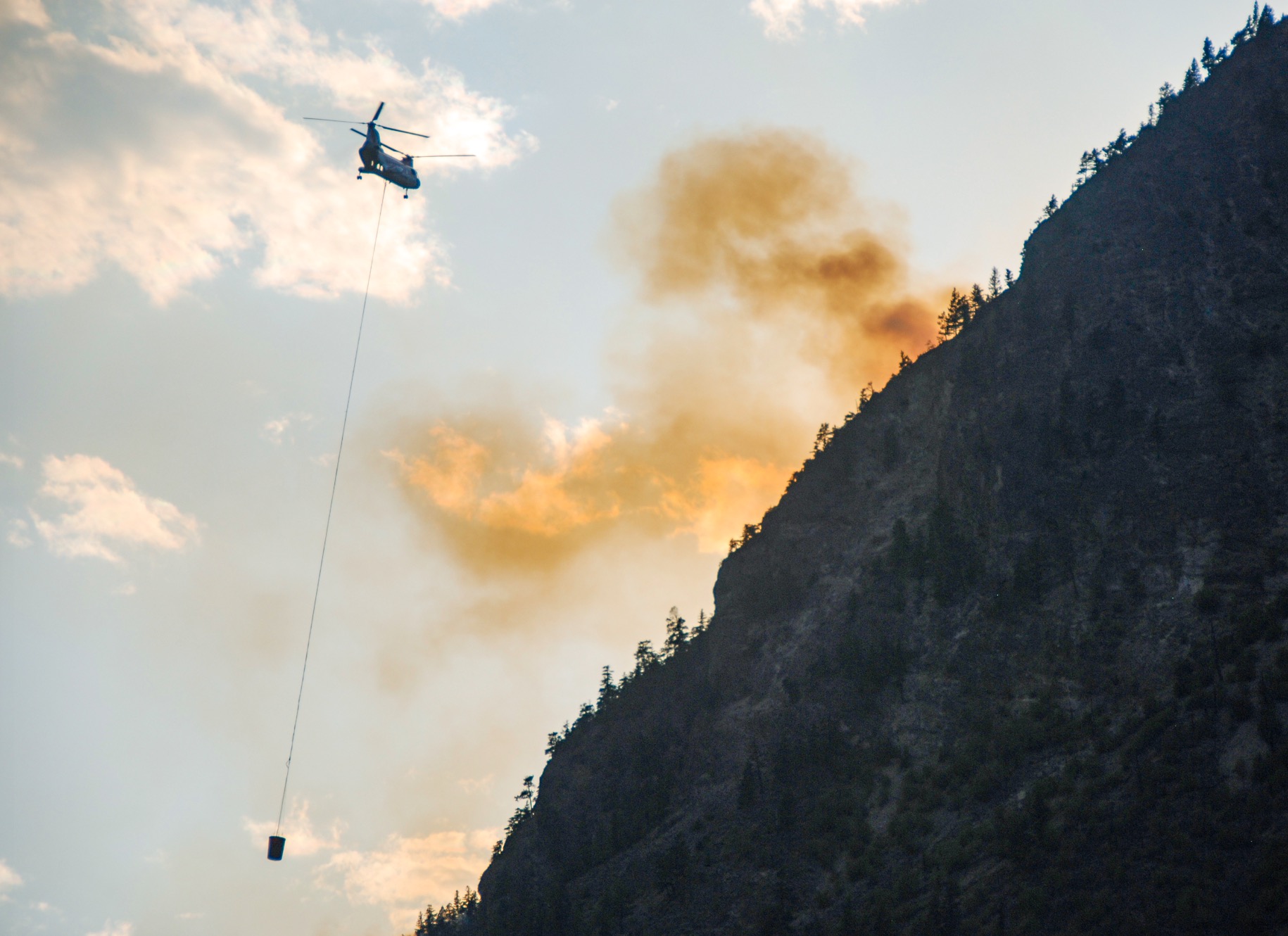 OTTAWA – This year’s wildfire season in Canada is shaping up to be the second-worst on record and federal officials are warning of a dangerous summer in parts of British Columbia. Officials … held a technical briefing Thursday in Ottawa with an update on the state of multiple wildfires and its forecast for the coming months. “We are expecting a hot and dry summer, and definitely leading to a forecast of increased fire danger conditions for much of western and northern Canada,” said Michael Norton, director general of the Northern Forestry Centre with Natural Resources Canada. Wildfires have scorched 3.7 million hectares across the country so far… Modelling by Environment and Climate Change Canada suggests temperatures will be about a degree or two above normal across the country through August, though the risk of wildfires remains highest in central and western provinces and territories.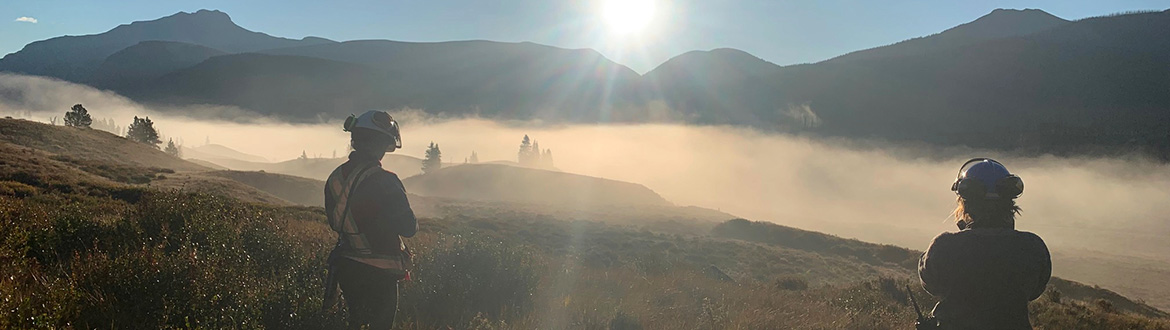
 Elphinstone and West Howe Sound community associations’ efforts to have B.C. Timber Sales (BCTS) defer the 35.2 hectare Elphinstone Highlands cutblock (TA0519) from its current Q1 sales schedule received support from the Sunshine Coast Regional District (SCRD) board. Provision of a letter of support for the deferral requests was endorsed at the board’s June 12 meeting. According to the BCTS Chinook area sales schedule released April 17, TA0519 was slated to go to auction by June 30. In a June 18 email response to Coast Reporter, the Ministry of Forests stated that “Sales schedules are issued to notify of upcoming proposed timber sales auctions. BC Timber Sales starts accepting bids when a licence is placed on BC Bid for auction… TA0519 is a partial harvest/commercial thin sale and was pulled from BC Bid due to an administrative error. It is anticipated that TA0519 will be reposted this fiscal year.”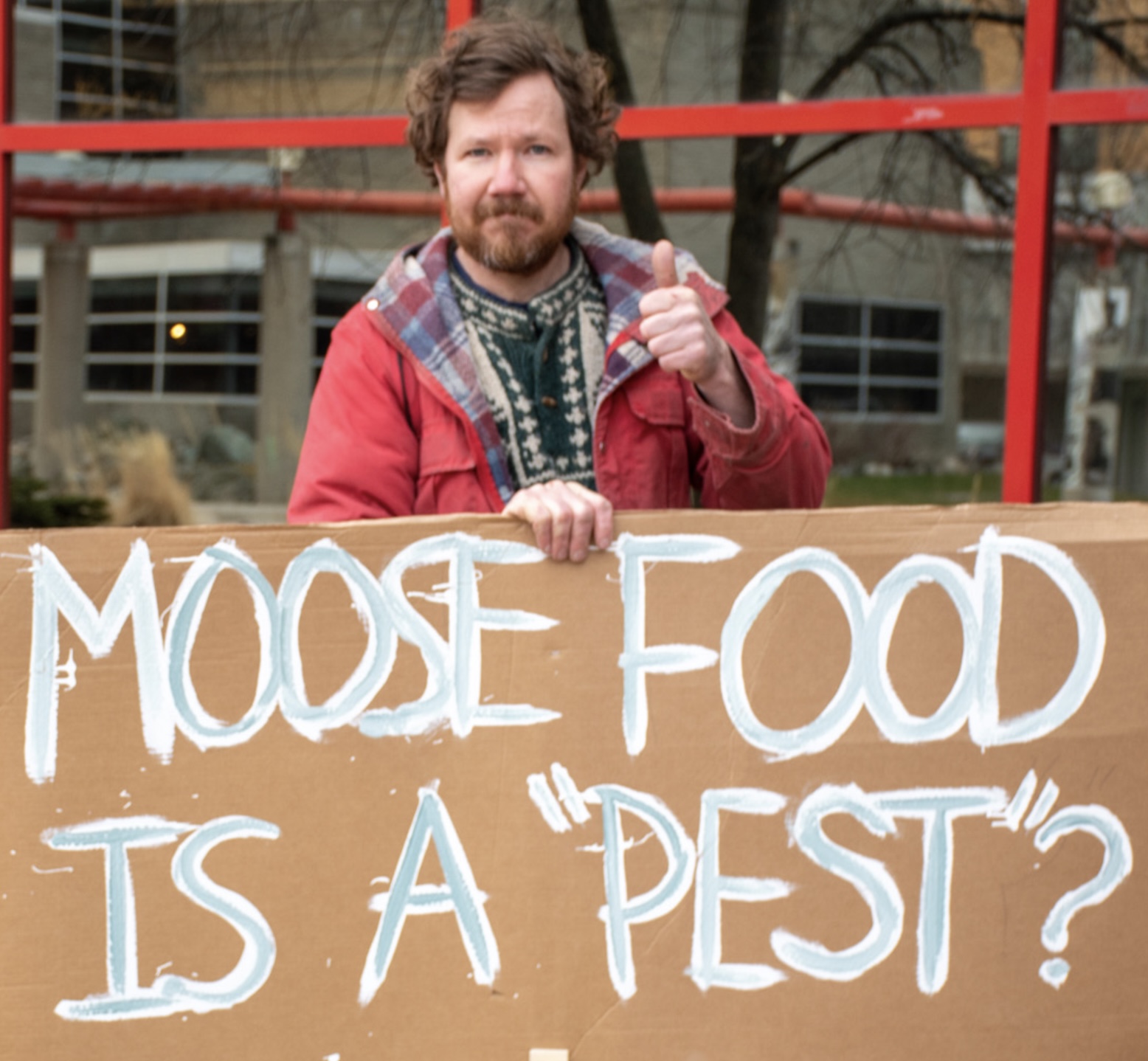


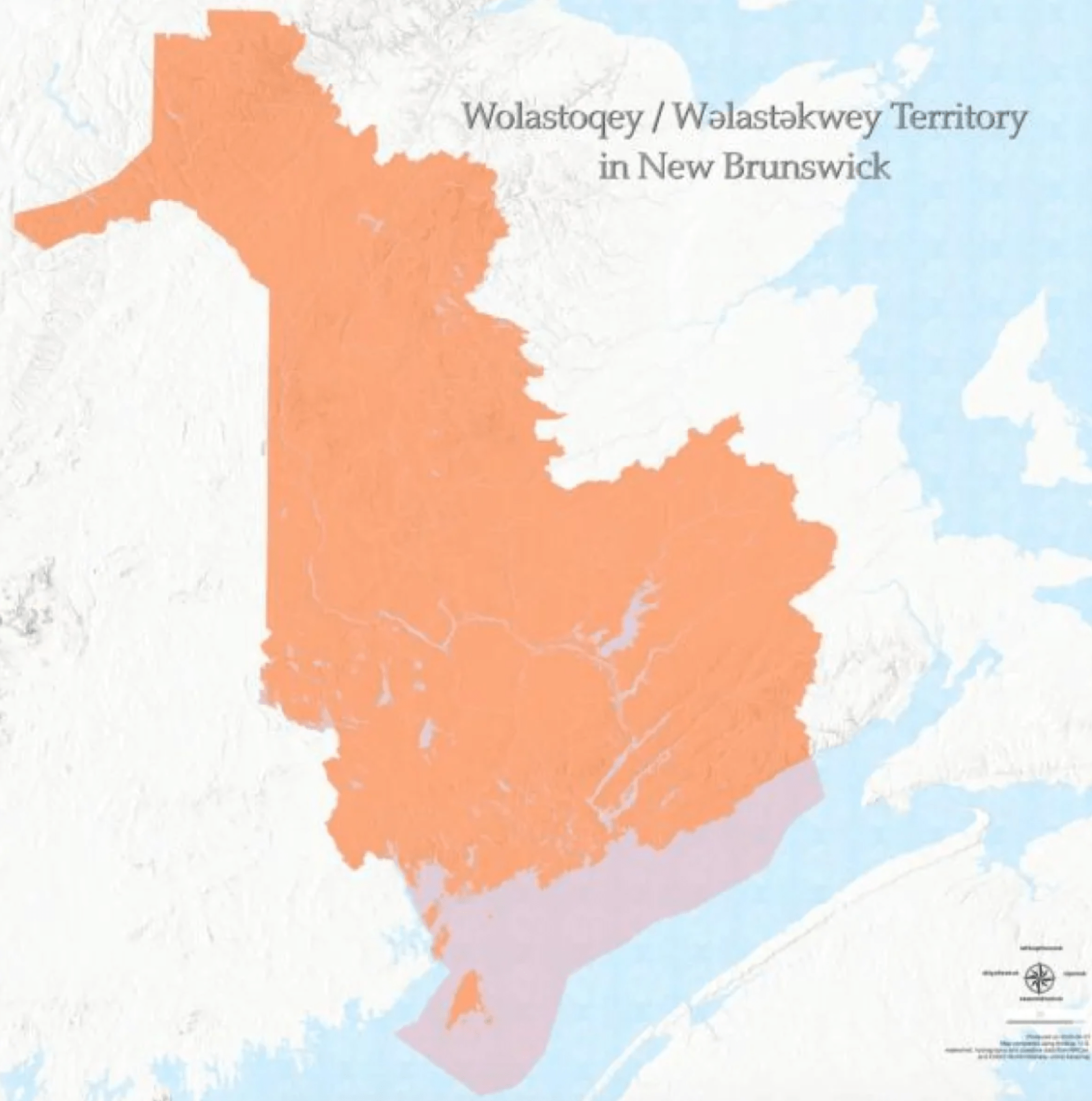
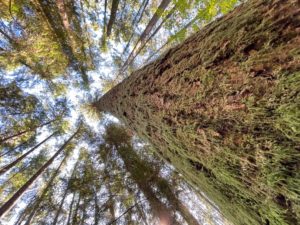 An insolvent BC forestry company’s attempt to sell off a forest licence to pay back creditors has triggered a dispute with several First Nations, who allege the company is attempting an “end run” around their rights. This spring, three Indigenous groups challenged the Teal-Jones Group before a BC Supreme Court judge for attempting to complete an interim transfer of forest licence A19201 to Western Canadian Timber Products (WCTP). The move came before the B.C. Minister of Forests could consult with 39 First Nations who have territory in the area. …The legal dispute hinged on whether the proposed interim agreement triggered a duty to consult with First Nations. But Fitzpatrick ruled Teal Jones’ agreement with WCTP remained “the highest and best offer presently available for consideration and approval after all that time.” The judge concluded that the sales process had been conducted in a “fair and reasonable manner”.
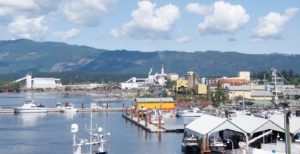 Looking over the 40-acre waterfront Somass property, Port Alberni’s Chief Administrative Officer Mike Fox sees an area that is key to shaping the city’s future. “I believe this project will be one of those defining moments where people will look back years from now and comment on how the community rallied and how we enabled the development of this key waterfront area,” he says. The land that once housed Western Forest Products Somass Division was purchased from the timber giant after the mill was shuttered in 2017 and the land sat vacant for more than a decade… While there was early discussion about trying to incorporate some of the structures used in the operation of the mill, geotechnical and structural analysis work is being done to see if any meet building standards. One of the buildings included in initial discussions burned down last summer.
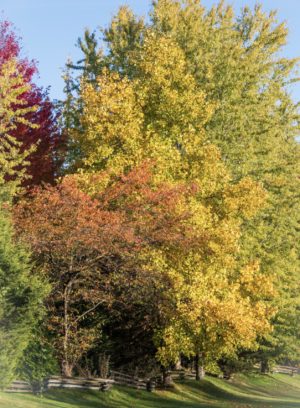 Whistler’s mayor and council advanced a pair of sweeping environmental bylaws that will introduce stricter rules for tree removal and land disturbance across the resort community. At its regular meeting, council gave first three readings to new environmental and tree protection bylaws, with 87 letters submitted in support and a wave of speakers appearing in council chambers to back the regulations. The bylaws were introduced to address long-standing gaps in how Whistler protects its natural areas, following community concern over clear-cut lots, unregulated vegetation removal and heightened wildfire risk. In addition to creating a new permit process for tree removal, the rules prohibit land clearing in sensitive areas and carry steep penalties for infractions—up to $50,000 for unauthorized tree-cutting.

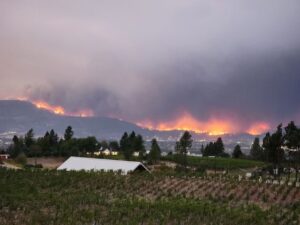 A wildfire risk reduction initiative led by the Lower Nicola Indian Band Development Corporation (LNIBDC) has significantly decreased wildfire hazards in the Steffens Estates area, just north of Merritt, while setting an example for Indigenous-led land stewardship in British Columbia. The multi-phase project, which began in 2022 and was completed in March 2024, combined strategic timber harvesting with intensive fuel mitigation efforts to create safer forest conditions near the Steffens Estates subdivision—land bordering private residences and Crown forests. With more work planned near Steffens Estates and around critical communications infrastructure on Iron Mountain, the project is part of a broader effort to proactively manage wildfire risk in British Columbia. B.C. Minister of Forests Ravi Parmar also praised the initiative: “Wildfire risk reduction is one of the most important ways we can protect people, homes, and vital infrastructure – especially as our province faces the growing impacts of climate change.”
 There’s an entire cycle of life that helps some wildlife thrive when the boreal forest burns, but experts say climate change and human activity have led to larger, more intense wildfires, exacerbating the negative effects on some species. While it’s too early to know exactly how one of the worst wildfire seasons in Saskatchewan history is affecting wildlife, research shows some species have evolved over millennia to take advantage of forest fire cycles. “It’s almost essential, particularly in the boreal forest, to have some degree of fire on the landscape, because it is important to create that sort of regenerative habitat for species that depend on it,” said Jean-Michele DeVink, an environmental consultant and adjunct professor at the University of Saskatchewan. “The challenge, is that for other species that do require more mature forest, the extent of fires that we’re seeing throughout the boreal forest is a bit of a problem.”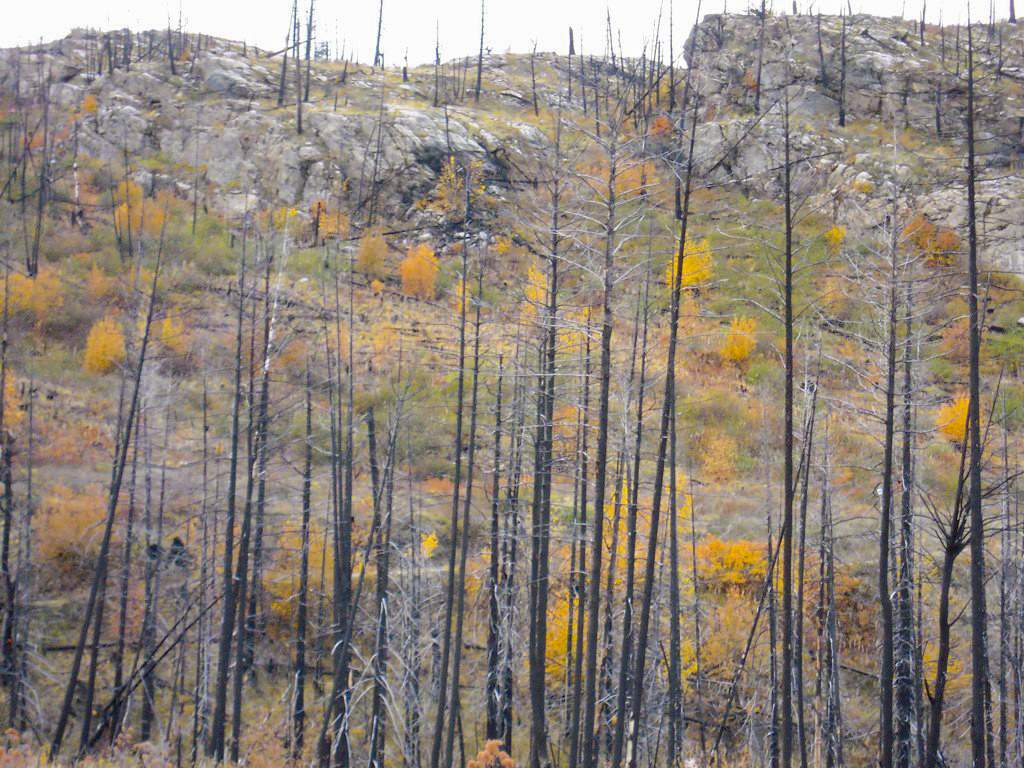
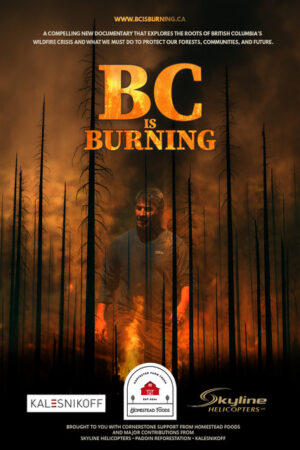 A wildfire documentary funded in part by community donations and Okanagan businesses will be screened in Kelowna and Vernon later this month. B.C. is Burning is a 45-minute film that explores the causes and consequences of the megafires that have devastated communities in the province in recent years. It also looks at science-based solutions that could protect communities, forests and B.C.’s future. The documentary was produced and written by retired forester Murray Wilson, initiated by association producer Rick Maddison and directed/edited with production support from Ryan Tebbutt of Edge Digital Media in Kelowna. It combines expert interviews, government data, and powerful footage from both British Columbia and California. …We know how to stop this,” says Wilson. “B.C. can lead — if we stop solely reacting and start managing our forests to protect lives, cut emissions, and reduce wildfire risk.”
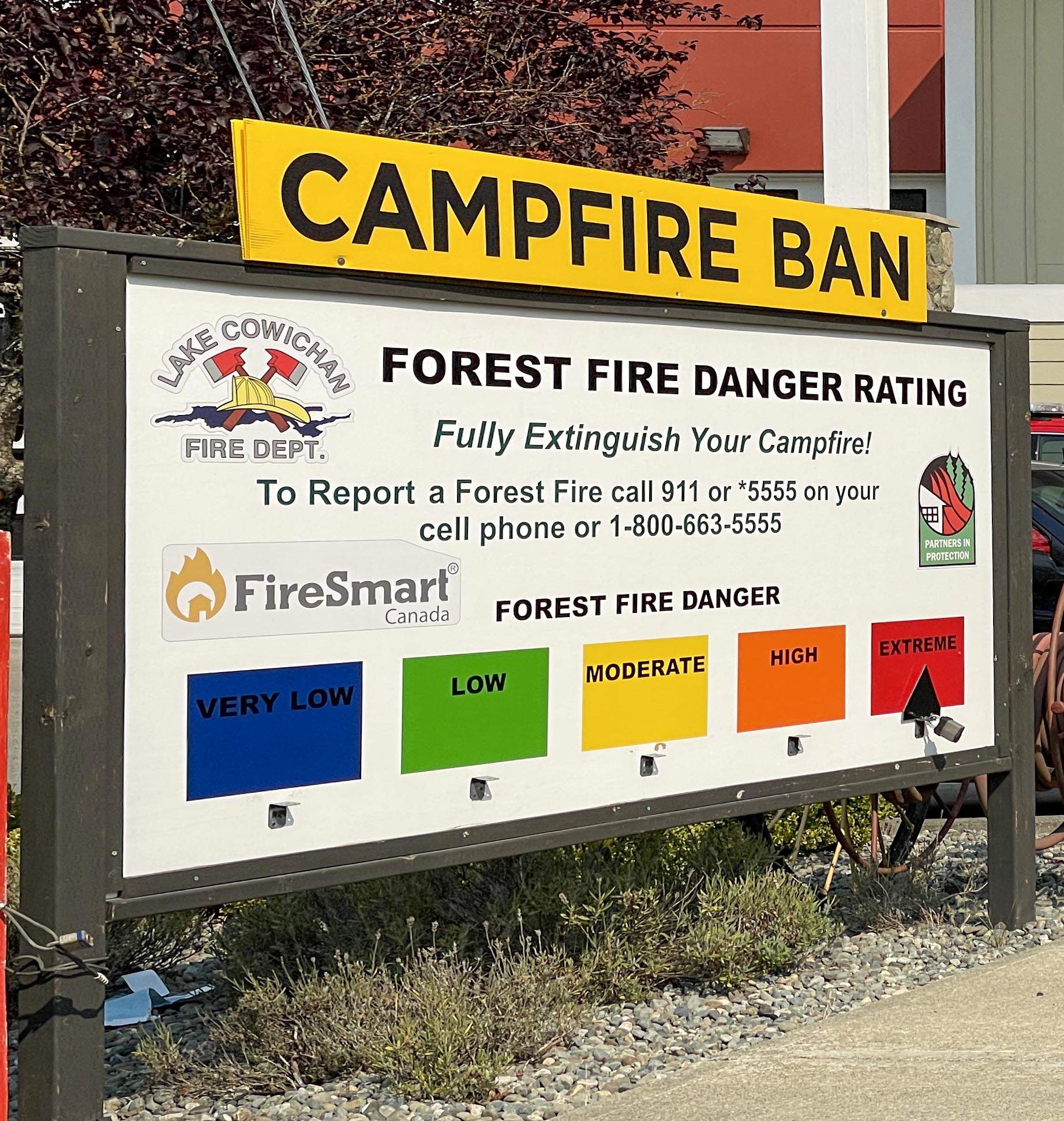 With dry conditions persisting, the Fire Danger Rating in North Saanich remains at ‘high’ since it was first raised on June 10, prompting fire and emergency services to urge residents to prioritize fire safety. “Forest fuels are extremely dry and the fire risk is serious,” the district warns. “Fires can start easily, spread quickly and be difficult to control. Use extreme caution in forested areas and during outdoor activities.” “We’re hoping the rating will encourage residents to take a proactive approach to keep their homes and properties safe in the event of a fire,” Deputy Fire Chief Aaron Kary emphasized. The fire department is offering residents valuable tools to enhance their preparedness. Wildfire automated sprinkler systems protection kits are available for purchase through the department, offering an easy-to-install solution for home protection. …While the forecast offers a glimmer of hope with potential rain … the rating will “remain high until significant precipitation occurs.”
 A new study suggests small, consistent amounts of exposure to the herbicide glyphosate can lead to higher incidents of cancer – a finding that has Green party Leader David Coon calling on the province to take the issue seriously. The study, by the Italian-based non-profit Ramazzini Institute, involved exposing rats to small levels of the herbicide and two other products for 2+ years. It found that “statistically significant dose-related (amounts of glyphosate) increased incidences of benign and malignant tumors.”…Bayer, which uses glyphosate in its Roundup herbicide, denounced the study. “It is clear this study has serious methodological flaws, which is consistent with the Ramazzini Institute’s long history of making misleading claims about the safety of various products,” the company said. …A government spokesperson initially told Brunswick News that the study’s findings weren’t applicable in New Brunswick because two products studied aren’t used in Canada.
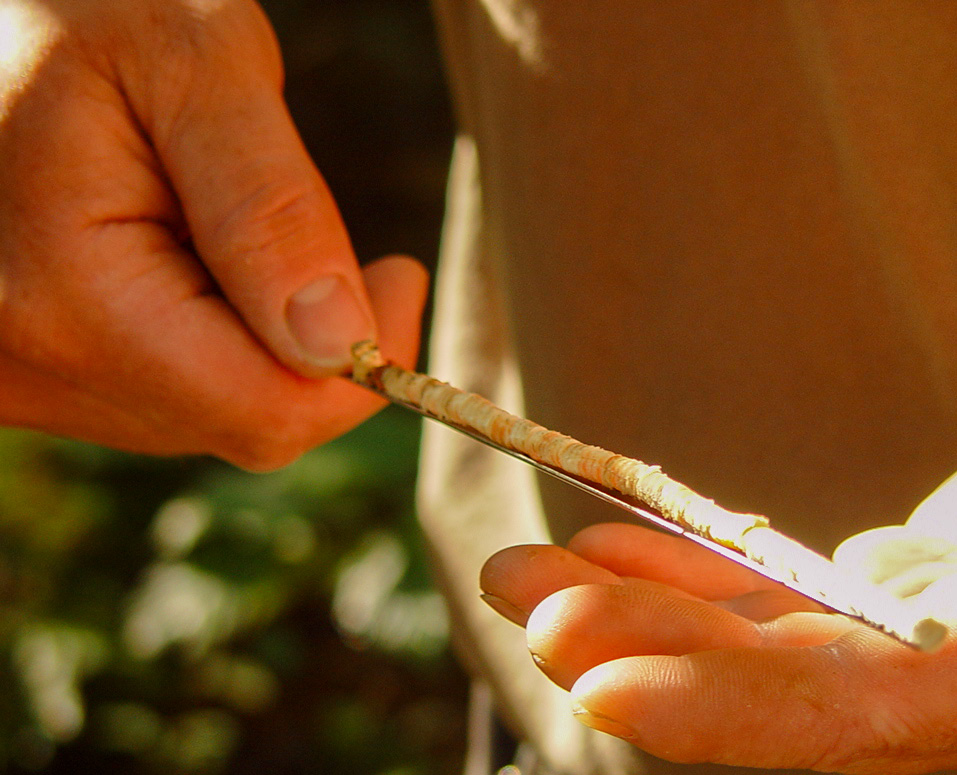 Chris Watson of Lorneville, a rural community in southwest Saint John, recently saw what he believed to be a centuries-old red spruce near Spruce Lake. He drilled a small hole into the trunk by hand and took a pencil-sized sample to have it tested. Ben Phillips, environmental lecturer at Mount Allison University, began a process known as dendochronology on the sample — a study that measures the age of trees by counting small lines otherwise known as tree rings. “This tree, I can confidently say, is over 400 years old,” Phillips, who runs the Acadian Forest Dendochronology Lab on campus, said about the sample he got from Watson. “It is probably in the top 10 oldest trees in the province that I know of.” …Both Phillips and Ilana Urquhart, Nature Trust of New Brunswick conservation co-ordinator, want to see legislation put in place in New Brunswick that would protect areas with old growth, specifically.

 They slither in silence, drape trees in silk and chew through lively leaves. This year, the forests of Ontario are full of a very distinctive, creepy crawler – the tent caterpillar. Eastern tent caterpillars are appearing in large numbers across the province marking what experts describe as an ‘outbreak year’ for the species. While noticeable, the current outbreak is not as severe as previous ones, according to Dan Rowlinson, forest health field coordinator with Ontario’s Ministry of Natural Resources. According to the Government of Ontario, periodic outbreaks occur roughly every 10 to 12 years and typically last three to six years in a particular areas. The tent caterpillar, often mistaken for their close relatives; the spongy moth, is known for having a similar looking larvae.
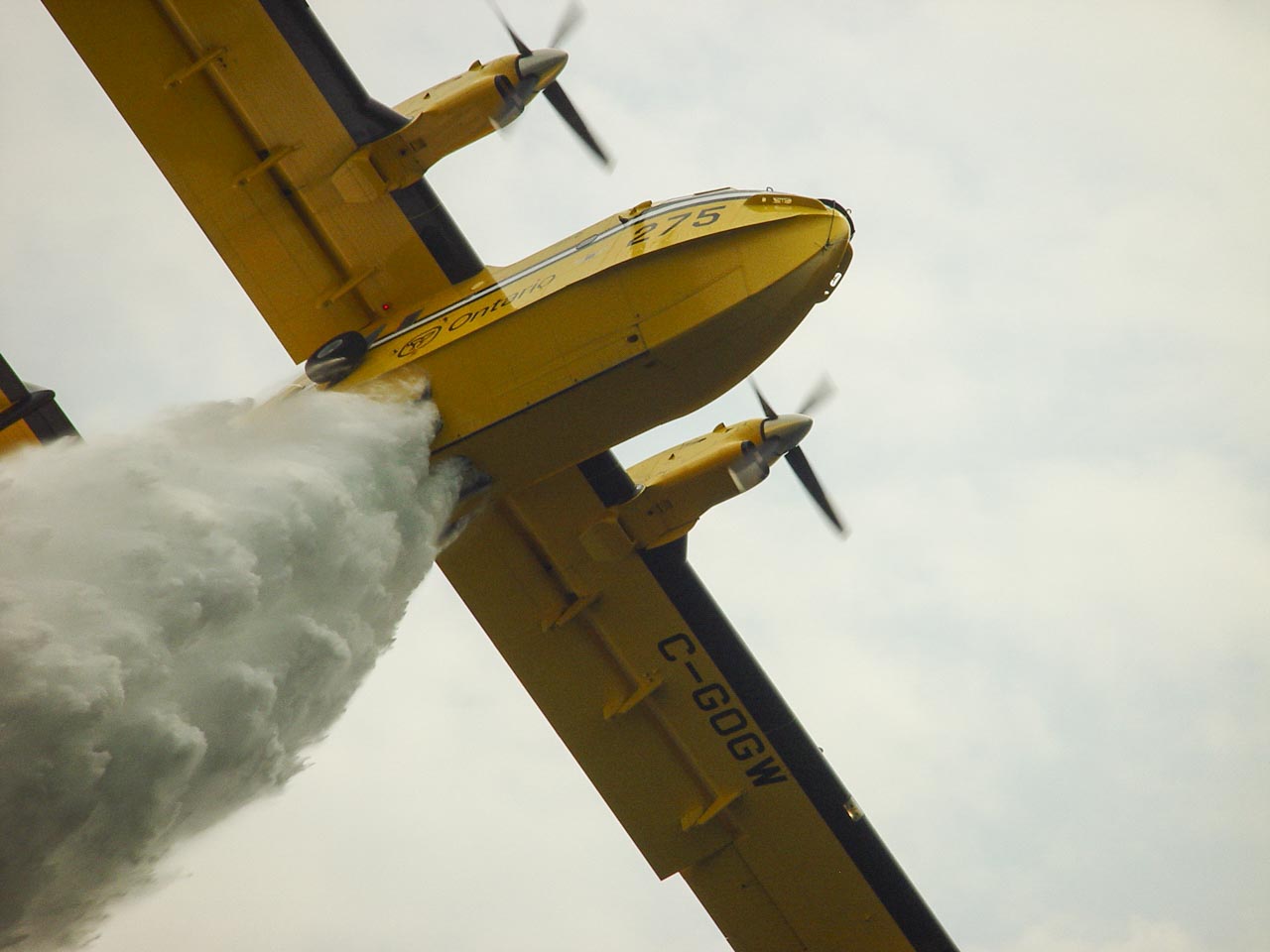 The Ontario Public Service Employees Union (OPSEU) is calling on the province to increase wages for water bomber pilots, as a shortage of pilots has led to the grounding of some aircraft. OPSEU said in a news release that pilots it represents have “resoundingly rejected an offer that would have made Ontario second to last in terms of wages for these dangerous and critical jobs.” OPSEU president JP Hornick told CBC that Ontario water bomber pilots are leaving for other provinces because they can earn better wages. “We have a government that is touting the fact that they’re purchasing six new water bomber planes, but they can’t even actually address the staffing needs that they have on the existing planes,” Hornick said. “This isn’t somebody taking off of a regular tarmac, right? They’re flying planes into the worst possible conditions, active wildfires, dipping down into lakes, filling it with water.”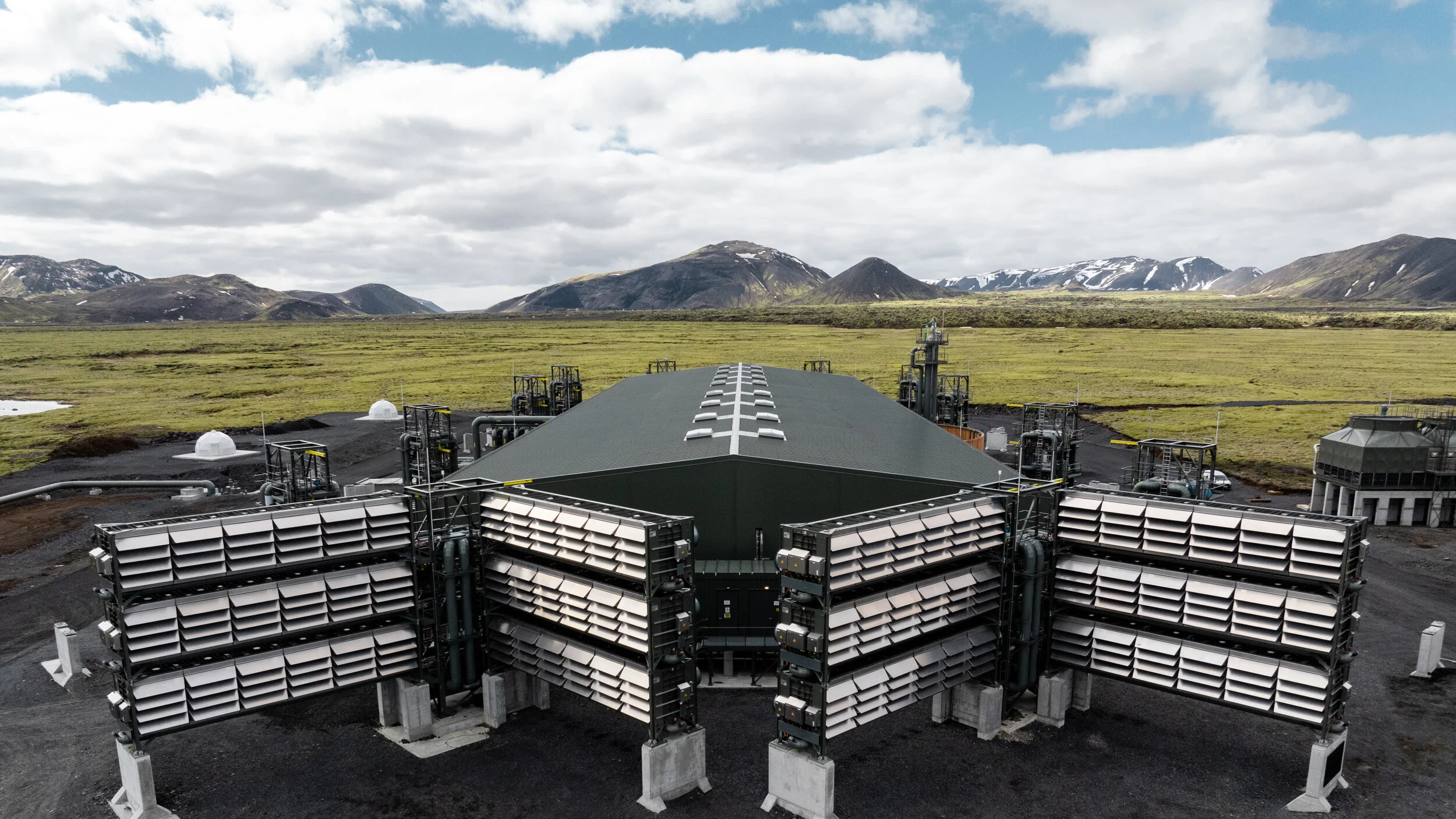

 Earlier this year, Burnaby’s Svante Technologies made inroads in Alberta. The move eastward is partially powered by a newly formed partnership with Mercer International. The Canadian cleantech’s carbon capture project is targeting biogenic CO2 emissions from Mercer’s Peace River pulp mill. …One of the strategies the firm intends to adopt in Canada is carbon sequestration. Within Alberta, carbon sequestration is a sensible tactic to apply, according to Mercer International’s chief executive officer, Juan Carlos Bueno. “The reason why we’re doing it there is because the mill is located in Alberta, where you have geological formations that are suitable for sequestering CO2,” Bueno informed Andrew Snook of Pulp & Paper Canada. …Finalizing investment in the project, however, is no small consideration. There is a price tag north of $500 million and moving forward would require extensive support from both the Province of Alberta and Government of Canada.

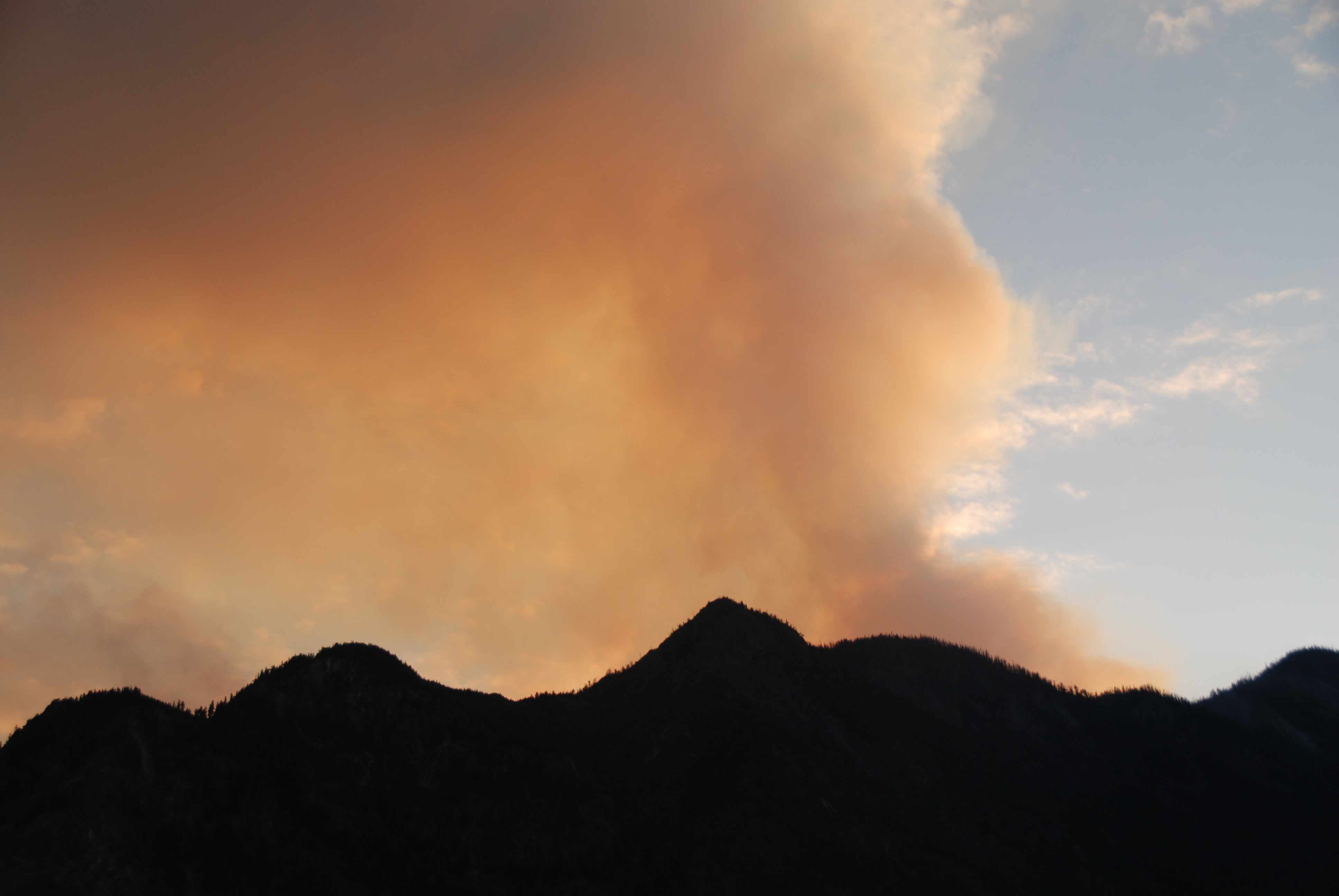 Wildfires are already burning in parts of Canada, and as they do, many communities are already facing the familiar thick haze as smoke drifts in. Smoke from wildfires has already led Environment Canada to issue air quality warnings for much of Ontario. In Toronto, smoke led to the city briefly having the worst air quality in the world. Anyone who has experienced wildfire smoke knows how it can leave you with a scratchy throat, stinging eyes and impact your lungs. However, smoke can also affect your brain. Tiny airborne pollutants found in smoke have been linked to increased risk of stroke, dementia and flare-ups in neurological diseases like multiple sclerosis, or MS. These effects can disproportionately impact older adults, people with disabilities, Indigenous Peoples and those living in low-income communities. This isn’t just about climate. It’s about equity, and health systems need to catch up.
 The 2023 McDougall Creek wildfire caused serious damage to the Rose Valley reservoir, which provides source water to more than half of West Kelowna residents through the Rose Valley Water Treatment Plant. During a presentation to city council this week, Interior Health medical health officer Dr. Fatameh Sabet said that damage makes it harder to treat water coming from the reservoir. “We know the land surrounding the Rose Valley reservoir has been contaminated because of the wildfire in 2023 and it means the contaminated source of water can be harder to treat because of the sediment, nutrients, metals and organic matter as a result of burned material,” said Dr. Sabet. “Fortunately, the Rose Valley Water Treatment Plant was not damaged from the fire and it has been very helpful to compensate for damage to the watershed.” The plant ensures water is safe by not only controlling levels of manganese and disinfection byproduct, but other perspectives as well.
 The wildfire on the northern edge of Squamish is classified as being held on Monday after a weekend of favourable weather conditions. BC Wildfire Service Fire Information Officer Sarah Budd says dozens of ground crews are working to get the Dryden Creek wildfire fully under control. “We also have three helicopters actioning this fire,” Budd told 1130 NewsRadio, adding the fire now sits at just under 60 hectares. An evacuation alert for properties near the fire, issued by the Squamish Fire Department, has been downsized. Because the Dryden Creek Fire is in difficult terrain, it could take crews another week or so to wrap things up. “This fire has been burning in sort of really difficult terrain,” explained Budd.
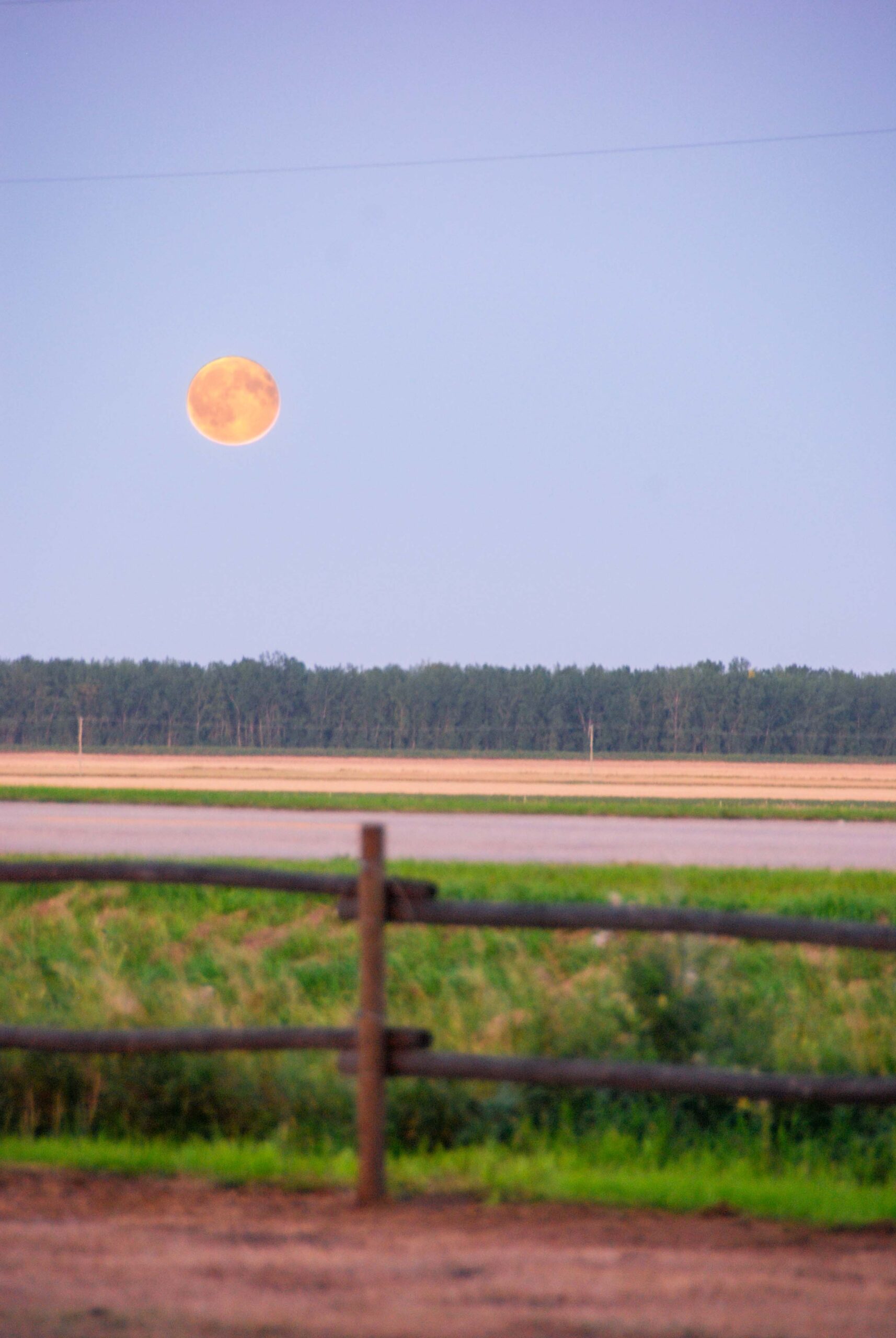 WINNIPEG — Rain and cooler temperatures brought relief to fire-ravaged Manitoba and Saskatchewan Monday, allowing fire bans to be reduced and more evacuees to go home. The weather helped fire crews get an upper hand in parts of northern Manitoba to clear the way for some of the 21,000 or more evacuees to start returning home. David Monias, chief of Pimicikamak Cree Nation, reposted video of heavy rainfall on social media along with video of small planes leaving Winnipeg with evacuees who were forced out almost three weeks earlier. “Our people are coming home,” Monias wrote on Facebook, adding the community’s infrastructure is intact and water systems have been tested by health officials. …There were 18 fires still burning across Manitoba, with seven of them listed as out of control.

