
Kevin Mason
As investors struggle to understand the implications of trade wars and the current tariff regime in the US, we offer our thoughts on the likely impacts (broken down by commodity). We note that trade parameters continue to change dramatically (e.g., tariffs blocked by the courts but then overturned on appeal). To be clear, tariffs are taxes on imports, with the degree of cost-sharing between importer and exporter determined by supply and demand. Some commodities experienced pre-tariff demand pull-forward, but, across the board, tariffs have reduced buyer appetite for any inventory accumulation and have had a generally chilling effect on investment, planning and normal business activity. We note that the ongoing Section 232 investigation into timber and timber products is sure to target lumber, but it may also expand to many others forest products. Uncertainty is now a constant in the sector.
…Tariffs on Canadian lumber imports are on hold pending the outcome of a Section 232 investigation. However, the long-standing softwood lumber dispute rumbles on; with duty rates set to more than double in the second half of 2025, price risk for S-P-F appears to be upside-weighted from current levels. SYP producers—and perhaps to a lesser extent European lumber exporters—should benefit from a drop in the volume of S-P-F going to the US when/if higher duties/tariffs are implemented. OSB and plywood could also be impacted by the Section 232 outcome. In OSB, a tariff on Canadian imports would likely see needed mill downtime north of the border.



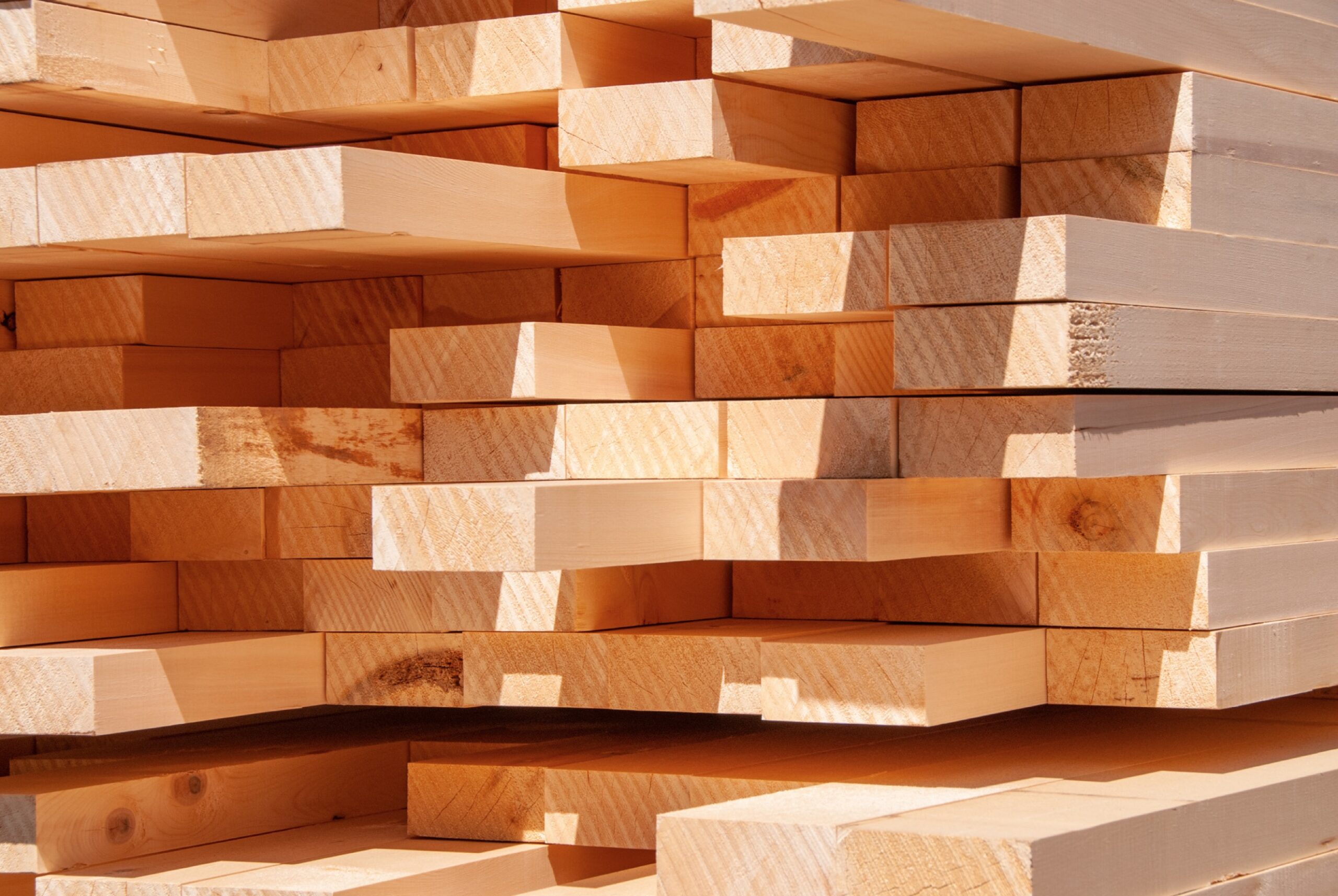
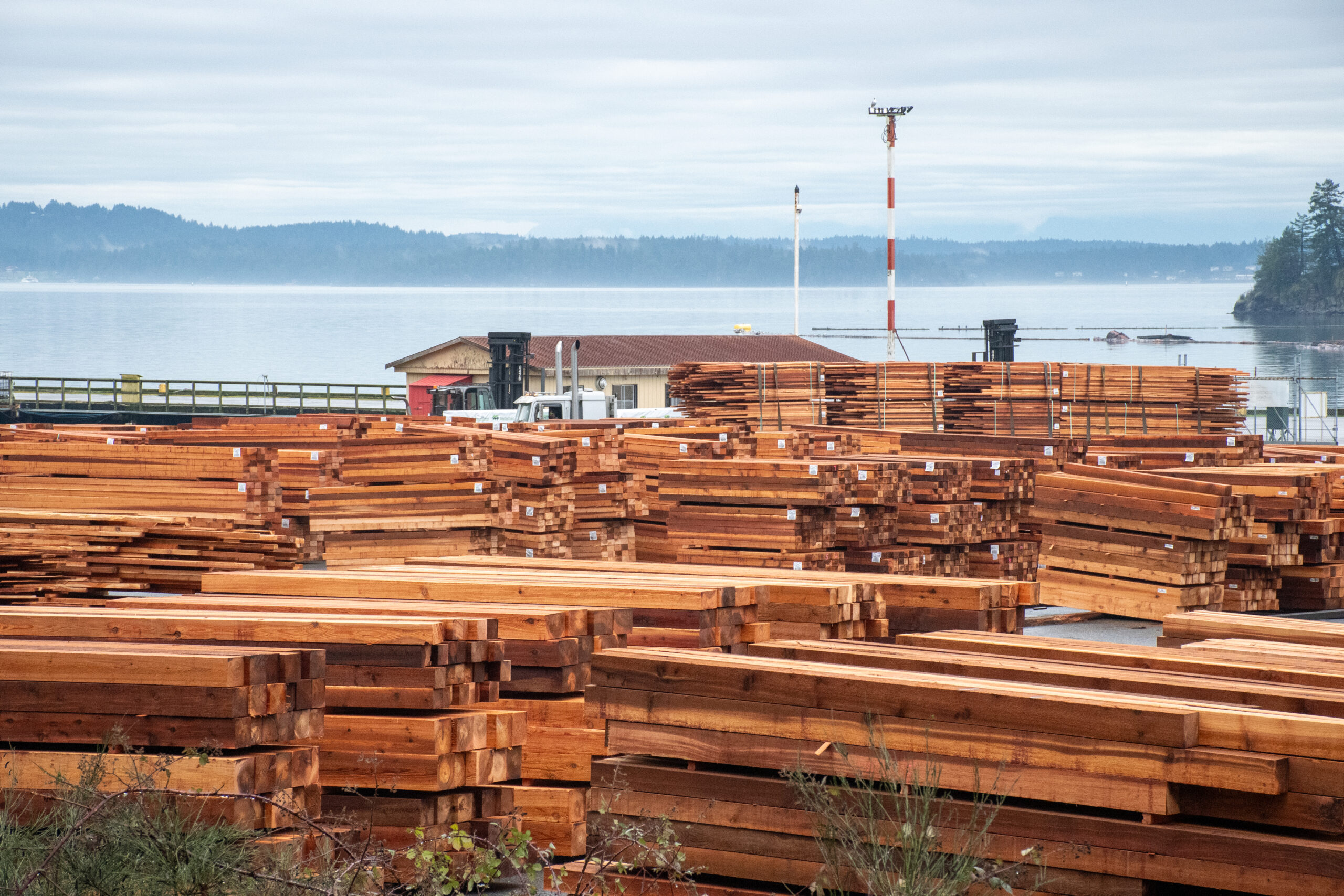 CHEMAINUS, BC — Fifty-five workers are scheduled to be laid off after a shortage of viable logs has forced production at the Chemainus Sawmill starting this month. According to North Cowichan mayor Rob Douglas, Western Forest Products has informed the municipality they intend to start curtailment of the jobs on Jun. 18. “The company has indicated the reason for the shutdown is due to their inability to find a viable supply of fiber,” Douglas says. “We don’t have a date as to when Western Forest Products is going to resume operations at the Chemainus Mill, but we hope it’s very short term.” …“I have reached out to the forest minister (Ravi Parmar),” he says. …Delays in permits and cutting fiber is a long-standing issue in BC, which has led to shutdowns and impacting production, but Douglas says he has been reassured by Parmar that the province is addressing the issue.
 SLAVE LAKE, Alberta — On Saturday, May 24, West Fraser’s Slave Lake Veneer plant celebrated its 50th anniversary with the community of Slave Lake. Several hundred community members, elected officials, Indigenous leaders, employees and retirees joined the company for a day of festivities, including lunch, bouncy castles, face painting and an opportunity to learn more about the history of Slave Lake Veneer’s operations. These directly employ 150 local residents, mostly in the mill, but also in the woodlands department, as well hundreds of more with contractors that supply the operation. …West Fraser acquired Slave Lake Veneer in 1999, as part of its acquisition of Zeidler Forest Products. At the time, the mill operated as both a veneer plant and a stud mill. In 2016, all lumber production was transferred to the newly-acquired sawmill in High Prairie. Today, veneer output is almost 13 times higher than when the plant opened in 1973.

 The CME’s physical lumber futures have been in a bullish trend since the July 2024 low of $455.50 per 1,000 board feet. The weekly chart indicates that lumber futures have formed higher lows and higher highs, reaching a peak of $699 per 1,000 board feet in March 2025. While the price has dropped below the $600 level, the pattern of higher lows remains intact in June 2025. …Seasonality suggests that a lumber rally may need to wait until 2026… Lumber tends to be a seasonal commodity, with prices peaking during late winter and early spring as the weather improves and construction activity increases. In 2021, the old random-length lumber futures rose to a record high of $1,711.20 per 1,000 board feet in May, and in 2022, reached a lower high of $1,477.40 in March. …Keep an eye on interest rates as declines could ignite pent-up demand for new homes, which could light a bullish fuse under the lumber futures arena.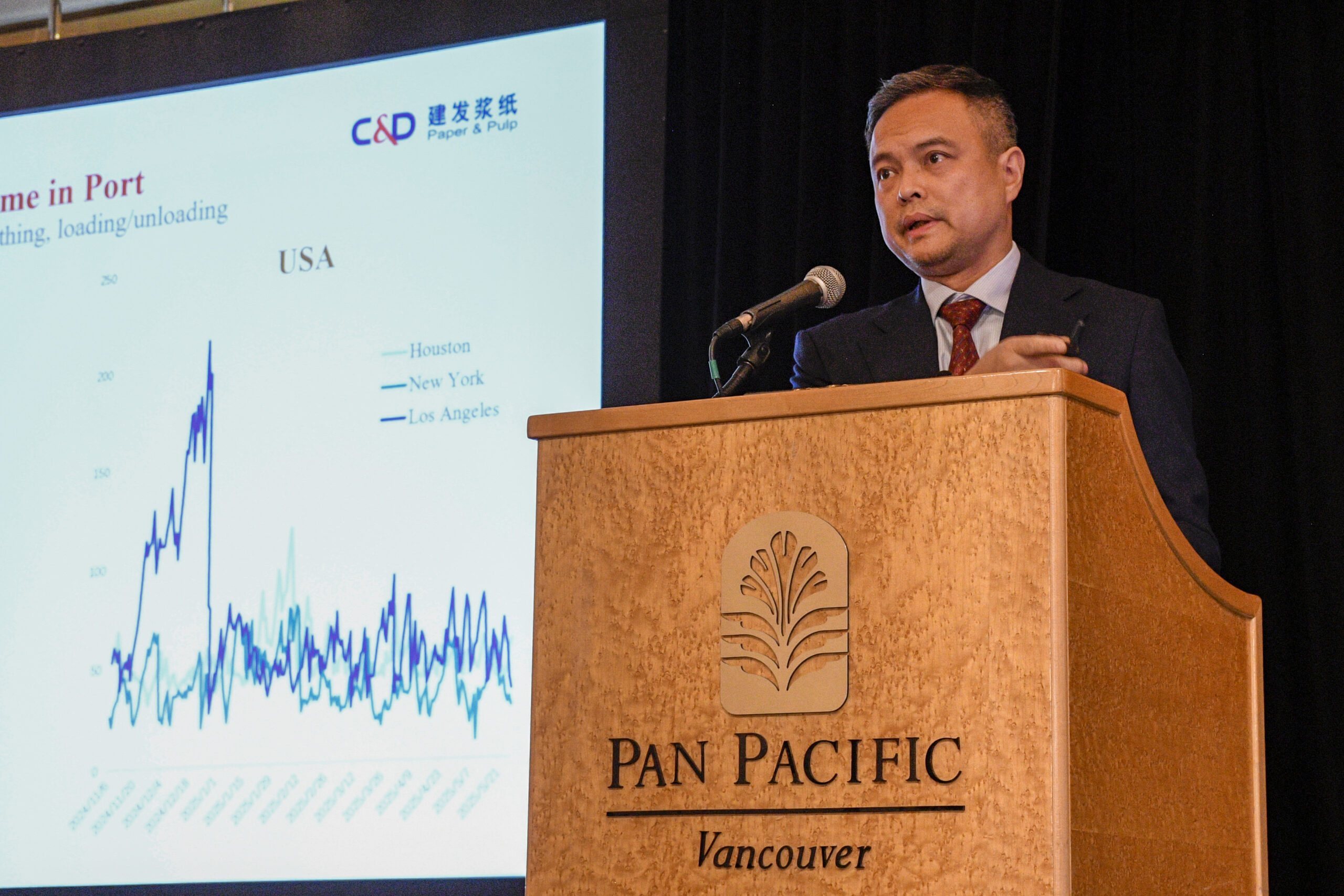

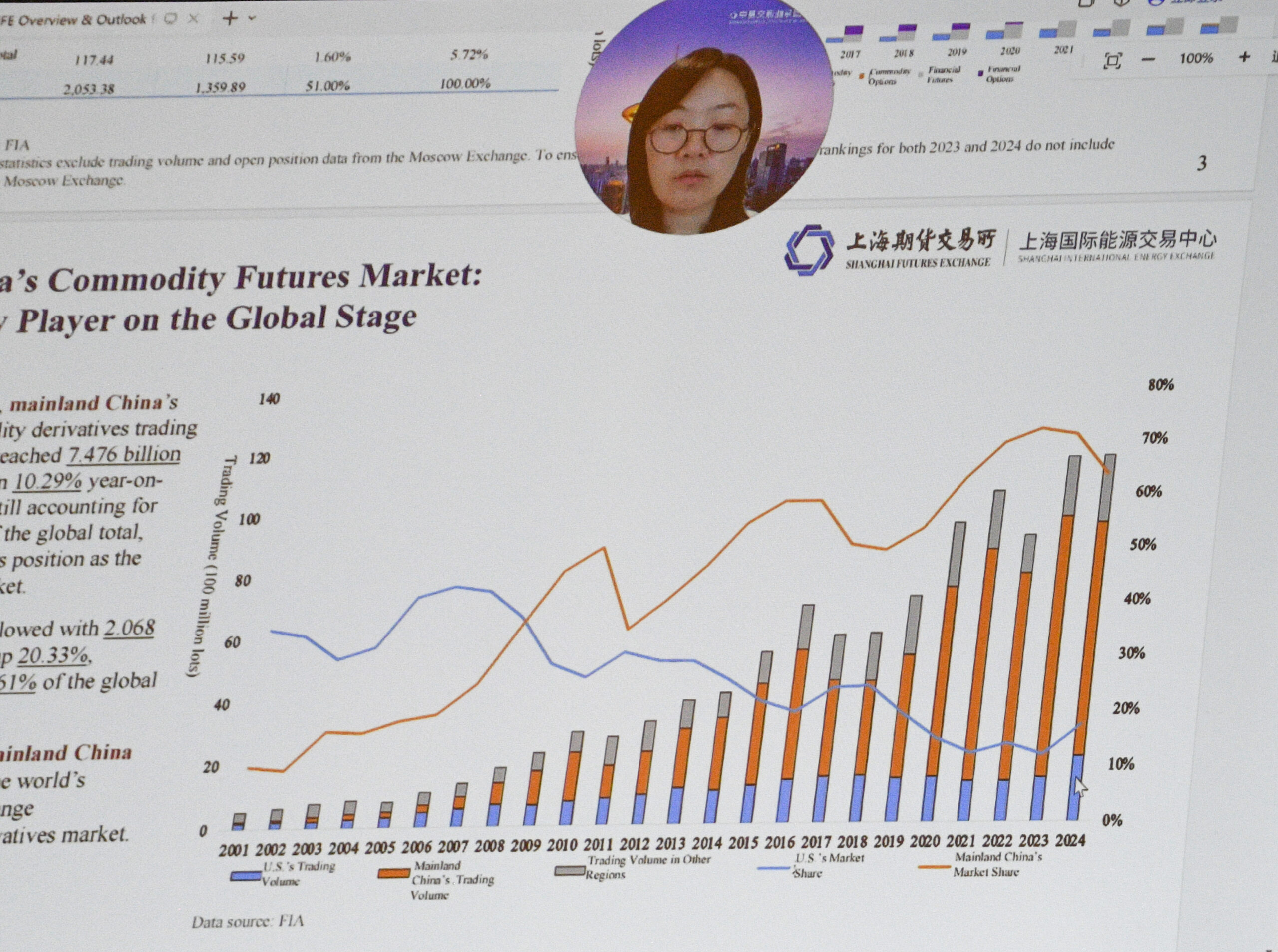 At International Pulp Week, three speakers discussed businesses that connect to China’s role in the global pulp industry — including trading, port logistics and the futures market. Haidong Weng, Executive Vice President of Pulp & Paper Research at Xiamen C&D… explained that after the US implemented its third wave of tariffs, Chinese exports of paper and board to the US fell sharply, with vessel density in major Chinese ports reflecting a significant pullback in trade flows. …He also described the cascading effects on US retail markets. …The scale and resilience of China’s port logistics were front and centre in a presentation by Tian Jun, representing the Shanghai International Port Group’s Luo Jing Terminal. Tian explained that SIPG views pulp as a strategic growth cargo across its network of general cargo terminals. …Another presentation came via video from Chi-Fei Fei of the Shanghai Futures Exchange (SHFE), who provided an overview of China’s pulp futures market.
 At International Pulp Week, Mathieu Wener, Senior Economist at Numera Analytics, provided a detailed overview of current trends in key end-use markets for pulp, with a particular focus on tissue and printing and writing papers. Drawing on recent data and modelling, he examined how these sectors have evolved post-pandemic, what is driving demand patterns today, and what may lie ahead. Wener began with tissue markets, where profitability has remained strong despite considerable cost pressures in recent years. “Producers passed through rising costs since 2022,” he noted, showing how eurozone parent roll and pulp prices had shifted over that period. Although price differentials between pulp and tissue had narrowed, margins remained healthy.” …Wener underscored the importance of tracking both macroeconomic forces and demographic trends in shaping pulp demand. For tissue, slowing population growth and cautious consumer behaviour would temper growth expectations. For printing and writing papers, the secular decline would continue, but at a somewhat more stable pace.
 The final presenter at International Pulp Week, Emanuele Bona, VP of Europe for the Pulp and Paper Products Council (PPPC), provided a comprehensive update on global market pulp demand trends, with a particular focus on the rebound underway in 2025 and the longer-term outlook for key markets and product segments. Bona began by noting that 2024 had been a weak year for market pulp demand, with global chemical market pulp demand falling by 0.9 percent. However, the first months of 2025 showed a marked improvement. “In 2025, after four months, demand is up almost one million tonnes,” he reported. Both softwood and hardwood pulp segments contributed to this recovery. …Looking ahead, Bona projected that global market pulp demand would return to growth but at a more moderate pace. “Growth to average 1.5 percent through 2029,” he said. The long-term trend for softwood pulp was expected to remain flat at best, while hardwood demand growth was projected to slow despite ongoing substitution trends.


 Canada’s wildfire season has had an early and intense start, with states of emergency declared in Saskatchewan and Manitoba and forecasts warning of severe conditions across central and eastern Canada. Wildfire smoke is already crossing borders, affecting millions. In this Q&A, wildfire experts Dr. Lori Daniels and Dr. Mathieu Bourbonnais, co-directors of the
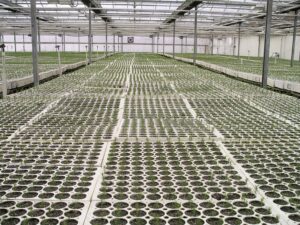 Crystal To… is part of a small crew of tree planters who are slowly filling the Whitehorse South fuel break with aspen. It’s her first time doing the job. …The goal of the fuel break is to protect the capital city from wildfires by creating a natural barrier, removing all the highly flammable conifers in an 800-hectare area and replacing them with more fire-resistant aspens. The Yukon government began work on the fuel break in 2020, near the Mary Lake subdivision. It’s one of the first such projects in Canada, and the goal is to have it finished by 2032. The aspens are being planted by the thousands every summer. This year, 232,000 seedlings will be planted.


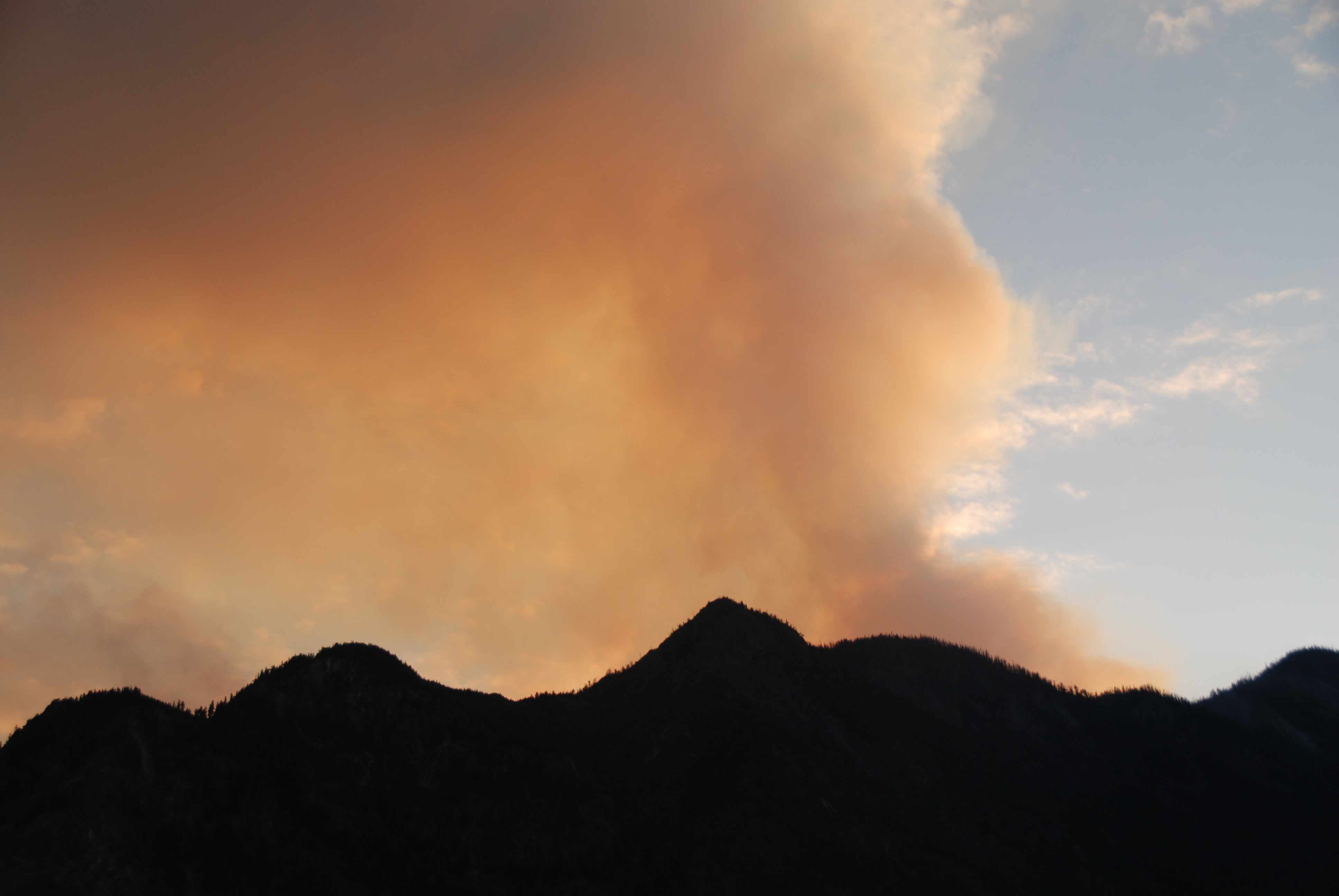 More than 200 wildfires are blazing across central and western Canada, half of which are out of control… “But increasingly we’re also concerned about the smoke,” said Mike Waddington, an environmental scientist at McMaster University in Ontario. That’s because [of] where these blazes are burning in Canada. The country’s forests have long been mined, operations that loaded soils and waterways with toxic metals like lead and mercury, especially before clean-air standards kicked in 50 years ago. Now everyone downwind of these wildfires may have to contend with that legacy and those pollutants, in addition to all the other nasties inherent in wildfire smoke, which are known to exacerbate respiratory and cardiac problems. …But an area of particular concern is around the mining city of Flin Flon, in Manitoba, which is known to have elevated levels of toxic metals in the landscape, said Colin McCarter, an environmental scientist who studies pollutants at Ontario’s Nipissing University.
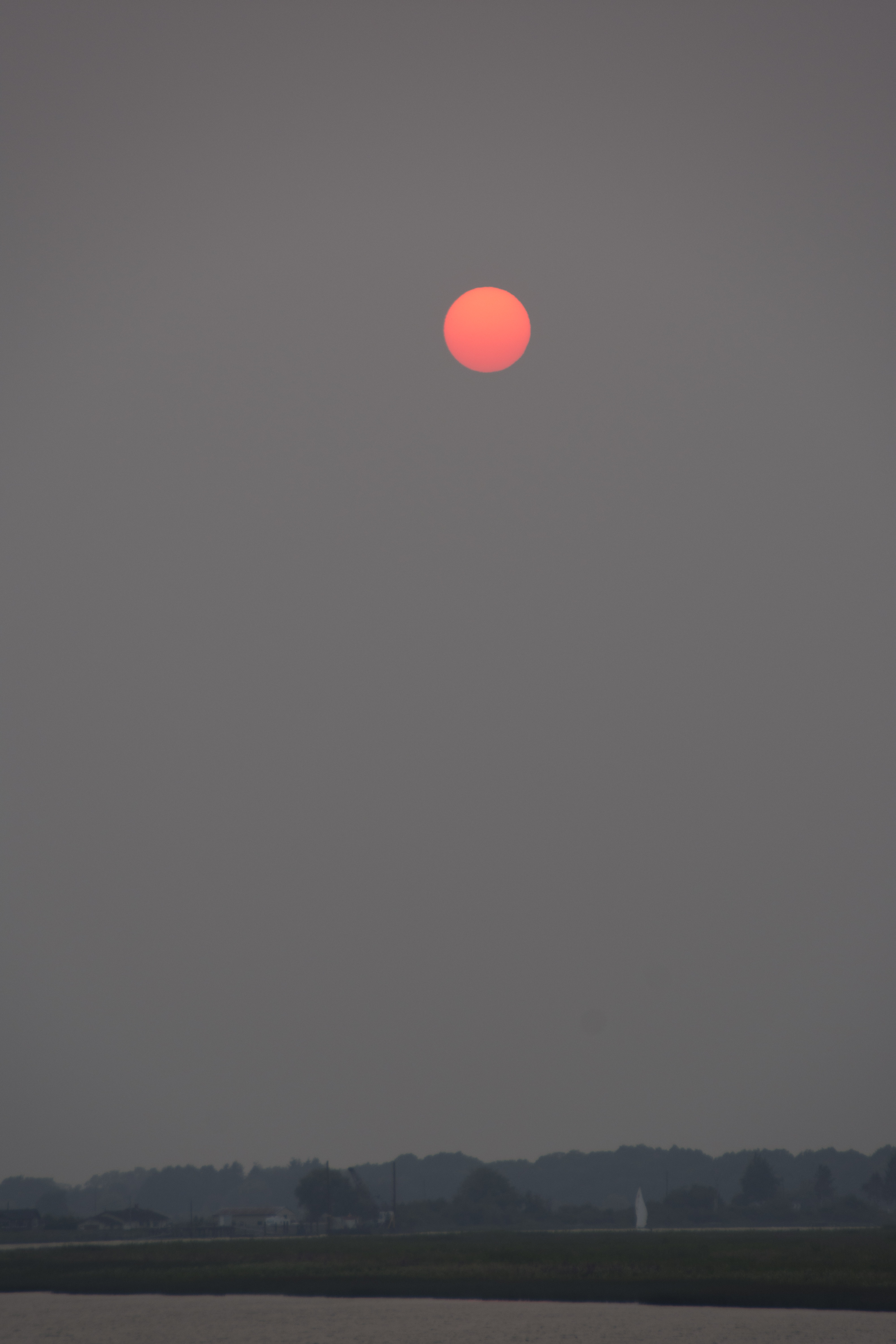
 The sun and sky had a much more eerie appearance to it on Saturday evening and Sunday morning. It was a sign that smoke from wildfires burning more than 4,000 miles (6,400km) away in central Canada had made it across the Atlantic to sit in the skies over the UK. BBC WeatherWatchers from all corners of the country were out capturing the spectacle. …The change in the appearance of the sun and sky is due to smoke particles in the atmosphere scattering the blue wavelengths of light more, allowing predominantly orange and red hues to reach our eyes. …The presence of wildfire smoke from North America over the UK, whilst not common, does occasionally happen during the summer months. …Here in the UK, the smoke plume is at too high an altitude to affect our air quality.
 With warmer, drier conditions expected to increase across B.C., people are advised to stay prepared for climate-related emergencies. …People are encouraged to prepare grab-and-go bags, create an emergency and evacuation plan, create an Emergency Support Services profile through their B.C. Services Card app and ensure they have renter’s or homeowner’s insurance for their property. …Warm and dry conditions are expected throughout the province this month, and with that comes an elevated risk of wildfire. Northeastern B.C. is continuing to experience prolonged drought and is expected to remain at high risk for wildfire this summer. …In addition to wildfire risk, the Province is also closely monitoring key indicators of drought risk, including snowpack.

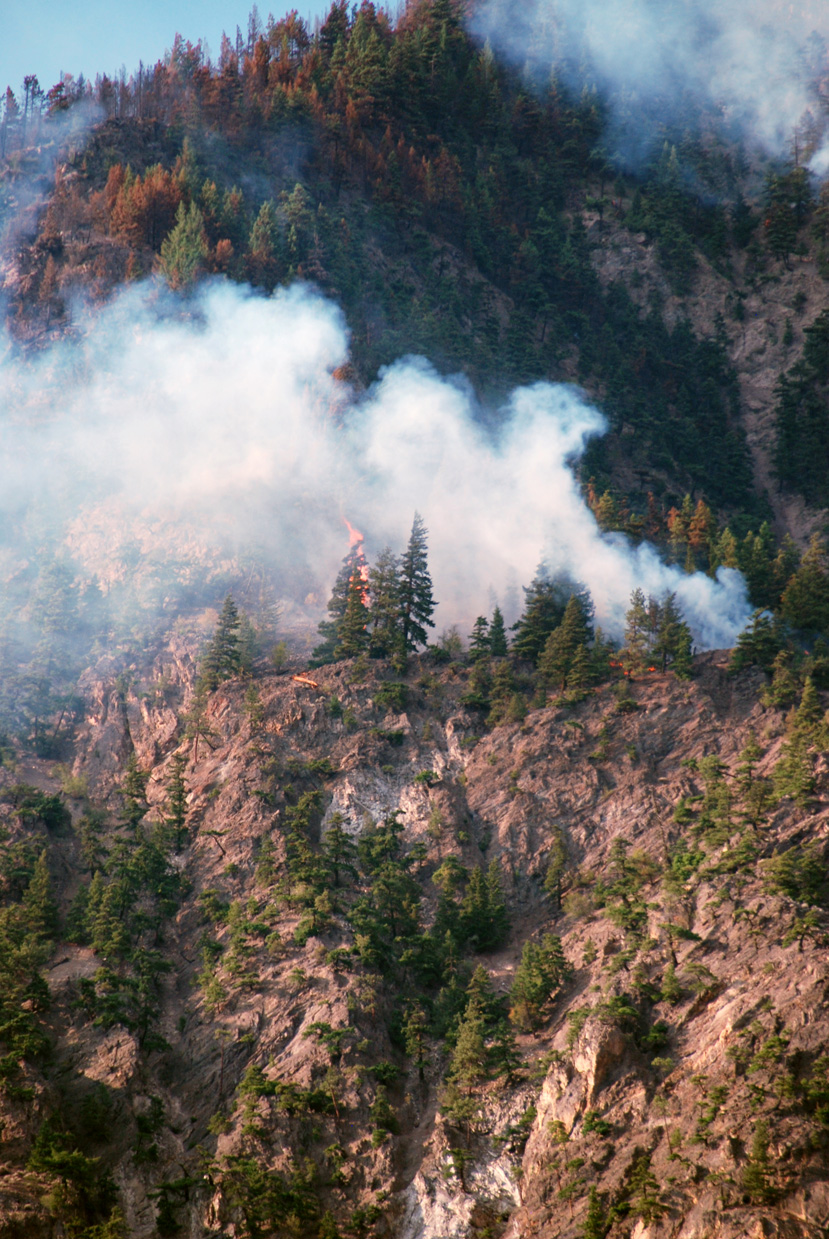
 In response to the Dryden Creek fire, as this wildfire is called, Squamish Fire Rescue said in a post late Monday night that the District’s emergency response team is working out of the Emergency Operations Centre, located at Fire Hall 1 in Valleycliffe. The out of control fire is located above the eastern end of Depot Road, in the north end of Squamish. It said the BC Wildfire Service has “actively and aggressively” attacked the wildfire thus far by air and with ground crews and would continue to late into the night, and will begin again early this morning. Aerial attack will also resume early Tuesday morning, the post said. Late last night the District of Squamish issued evacuation alerts to those living in properties at the east end of Depot Road, east of Highway 99 including the campground Mountain Fun Basecamp and at the end of Tantalus Road.
 Smoke from wildfires in northern Alberta and northeastern B.C. reached Calgary this weekend, resulting in poor air quality in the city through the weekend and into Monday morning. Fire bans remain in effect for a large part of Alberta, including in all of Rocky View County, as six of the province’s forest areas are considered to be at extreme wildfire risk. An evacuation order for parts of the County of Grande Prairie was expanded again late Saturday after the Kiskatinaw River wildfire in B.C. crossed into Alberta Friday afternoon. …As of Monday night, there were 60 fires burning in the province, with 23 of them classified as out of control. More than 615,000 hectares have burned in Alberta so far in 2025. Fire personnel and aircraft from British Columbia, Yukon, Quebec, Nova Scotia, New Brunswick, Washington State, Oregon and Idaho have arrived in Alberta to assist with battling out-of-control blazes.
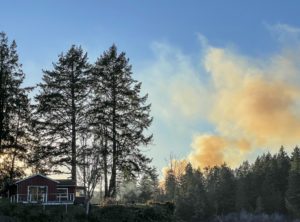 BC Wildfire Service crews are responding to an out-of-control, 10-hectare blaze south of Sproat Lake on Vancouver Island and say it’s expected to spread. Gordon Robinson, Coastal Fire Centre information officer, tells CHEK News 18 firefighters, three helicopters and a response officer are on scene in the Beverly Main area, west of Port Alberni. The fire currently measures 10 hectares, reads information online. The blaze was discovered on Sunday – and as of around 2 p.m., it’s listed as “out-of-control,” meaning it’s “anticipated to spread beyond the current perimeter or control line. Robinson says the fire is believed to be human-caused because there hasn’t been any lightning in the area. Crews are trying to determine the cause, the BC Wildfire website says, adding that such investigations “often take time and can be very complex.”


