
Kevin Mason
The Global Supply Chain Pressure Index, which provides a gauge of global supply chain conditions, spiked in April and currently sits at its highest level in almost four years. Several other measures, including the World Bank’s Supply Chain Stress Index are hovering around all-time highs as well. The conflict in the Middle East and resultant spike in energy prices has clearly driven some of the recent increase in supply chain pressure, and the logjam in the Strait of Hormuz, along with some ongoing challenges in the Red Sea, have forced many vessels to take longer routes, adding travel time, increasing fuel costs, and stretching capacity.
However, the situation in Iran is not the sole driver of recent supply chain pressure: In the US we are seeing an acute shortage of truck drivers following a government crackdown on driver qualifications and after a wave of trucking-firm bankruptcies. As a result, the Federal Reserve Bank of St. Louis’ long-distance trucking price index has recently jumped from a reading of 181 in January to 210 in April (also approaching all-time highs last seen during the pandemic). Similarly, overland freight pricing data from DAT Freight and Analytics shows that flatbed truck rates have surged since the onset of the Iran war—the national average spot rate for flatbed trucks was $2.72 per mile in February and has rocketed to $3.64 by May. DAT’s national load-to-truck ratio (the number of loads posted for every available truck posted on the DAT load board) sat at an eye-watering 72 in April, up from 35 in April 2025 and just 19 in April 2024.
A deal with Iran may be in the works, but as we learned after the COVID pandemic, it can take months (if not years) for supply chains to normalize. Buckle up.

 Canada has given the US and Mexico official notice that it wants the free trade deal between the three countries to be renewed. In a letter to his American and Mexican counterparts, Canada-US Trade Minister Dominic LeBlanc said the country is seeking renewal of CUSMA when it comes up for review on July 1. LeBlanc is in Washington Tuesday for a meeting with U.S. Trade Representative Jamieson Greer. All the signals from the White House over the past year and a half indicate that the Trump administration does not want a straightforward renewal of CUSMA and instead wants significant changes to its terms. …LeBlanc calls CUSMA “highly beneficial to each of our countries and to the integrated North American economy,” but goes on to acknowledge that the other countries may want to propose “improvements.” …Whatever happens on July 1, CUSMA is slated to remain in effect until 2036.
  – The Trump administration’s trade agency said on Wednesday it will kick off the first of three negotiating rounds with Mexico this week to revamp the North American trade agreement, but made no mention of any talks with Canada. The U.S. Trade Representative’s office said in a statement that Deputy U.S. Trade Representative Jeffrey Goettman will lead bilateral talks in Mexico City on Thursday and Friday focused on “economic security and rules of origin for key industrial goods.” USTR Jamieson Greer stayed in Washington to attend a White House cabinet meeting on Thursday. USTR said the U.S. and Mexico will hold a second round of negotiations in Washington June 16 to 17, focused on agriculture and “a level playing field,” with a third set of talks in Mexico City scheduled for the week of July 20. …But USTR’s statement made no mention of bilateral talks with Canada.
 The United States’ top trade official says he’s pushing for changes to continental trade rules to prioritize U.S. content in manufacturing supply chains, but sees a path to preferential tariff rates in North America if Canada and Mexico co-operate with external tariffs on other countries. At the same time, Jamieson Greer warned that negotiations with Canada around the future of the country’s auto sector could be difficult, while discussions about trade in commodities should prove easier. …Canada has not yet started formal talks with the U.S. and won’t be at the negotiating table this week in Mexico City. The three governments have to decide on July 1 whether to extend the agreement for 16 years or move to a period of annual reviews for 10 years. …Ottawa has signalled an openness to this type of “Fortress North America” approach. But Prime Minister Mark Carney wants to see the U.S. lower its sectoral tariffs on automobiles, steel, aluminum, copper and wood products in return for moves toward deeper integration in key sectors. [A Globe and Mail subscription is required for full access to this story]
 The US Trade Representative has determined that several Brazilian acts, policies, and practices are actionable under Section 301 and has proposed tariffs of 25% on all goods of Brazil, with specified exemptions and an annex of excluded products. …The determination covers multiple areas, including illegal deforestation, and states that timber and agricultural production linked to illegal deforestation can burden U.S. commerce by lowering costs for competing products and distorting prices. The notice describes timber-sector fraud risks, including the laundering of illegally harvested timber through supply chains, and states that illegally sourced timber products can devalue legally sourced timber prices by an estimated 7% to 16%. On wood-related findings, the notice references concerns that Brazilian products may be made with timber harvested illegally. It also describes limits in auditing and verification under Brazil’s Forest Code registration system. …The notice sets a public comment schedule that opens June 1, 2026.


 LOS ANGELES – U.S. President \ Trump on Monday signed a proclamation amending his Section 232 national security tariffs on some aluminum, steel and copper imports, the White House said. The proclamation lowers tariffs on some steel and aluminum derivative products, including certain types of agricultural machineryand residential heating, air conditioning and ventilation equipment to 15% from 25% previously. It makes mobile industrial equipment, such as bulldozers and forklifts, subject to a 15% tariff “when imported from trade deal countries that are entitled to such treatment,” the White House said in a statement. The order also allows foreign companies to qualify for a 10% tariff if “their capital equipment includes at least 85% U.S. melted and poured or smelted and cast steel or aluminum by weight.” …The changes will remain in place until Dec. 31, 2027 “to spur near–term investments that will rebuild the Nation’s industrial base,” the White House said.

 JASPER County, Georgia — Firemen from the Jasper, Tri-Community, Beech Grove, East End Fire, Lake Rayburn and Angelina Fire Departments have all converged on the Lincoln Lumber Mill where a fire in the kiln has sent thick smoke into the air that can be seen for miles. No injuries have been reported. Mike Lout with our media partner KJAS reports the fire broke out this morning at the mill off Highway 96, just south of Jasper. First responders say the fire broke out in the dryer house or kiln of the operation. Firemen have so far been able to limit the fire to the drying house. However, flames and smoke are filling the building and firemen are continuing to pump water into the structure.
 WAYNE, Pennsylvania — Saothair Capital Partners, a private equity firm, announced it has completed the acquisition of EAM Corp. from Domtar through a newly-formed affiliate. Founded in 1998 and headquartered in Jesup, Georgia, EAM is a manufacturer of nonwoven airlaid and laminated absorbent materials used in feminine hygiene, adult incontinence, baby diaper, medical, industrial and food packaging applications. …Following the acquisition, current EAM General Manager Vanecia Carr will serve as Chief Executive Officer and Lori Venn will serve as Senior Vice President, Sales and Marketing.
 KINGSPORT, Tennessee — Domtar Paper has filed a response to

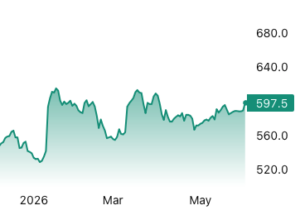 Lumber increased to 598.00 USD/1000 board feet, the highest since April 2026. Over the past 4 weeks, Lumber gained 3.57%, and in the last 12 months, it increased 0.5%.
 Framing lumber sales were slow to get started after the long holiday weekend in the US in most markets. Many buyers paused early to assess market conditions – especially prospects for shipping any new orders – before resuming moderate replenishment as the week progressed. Prices shifted modestly. Recent trends in sales of western S-P-F were little changed. Discounts grew increasingly tougher for buyers to procure as order files lengthened and mills cleared existing accumulations. …Lumber futures were little changed week to date, with the front month trading near par with the cash market in most deliverable species. …Southern pine mill sales outpaced producers’ ability to ship the loads, and backlogs of sold lumber continued to accumulate throughout the distribution pipeline. Prices shifted mildly with sales frequently reported on both sides of last week’s reported levels. …In the Inland market, prices were predominantly flat, or mildly higher in a few cases.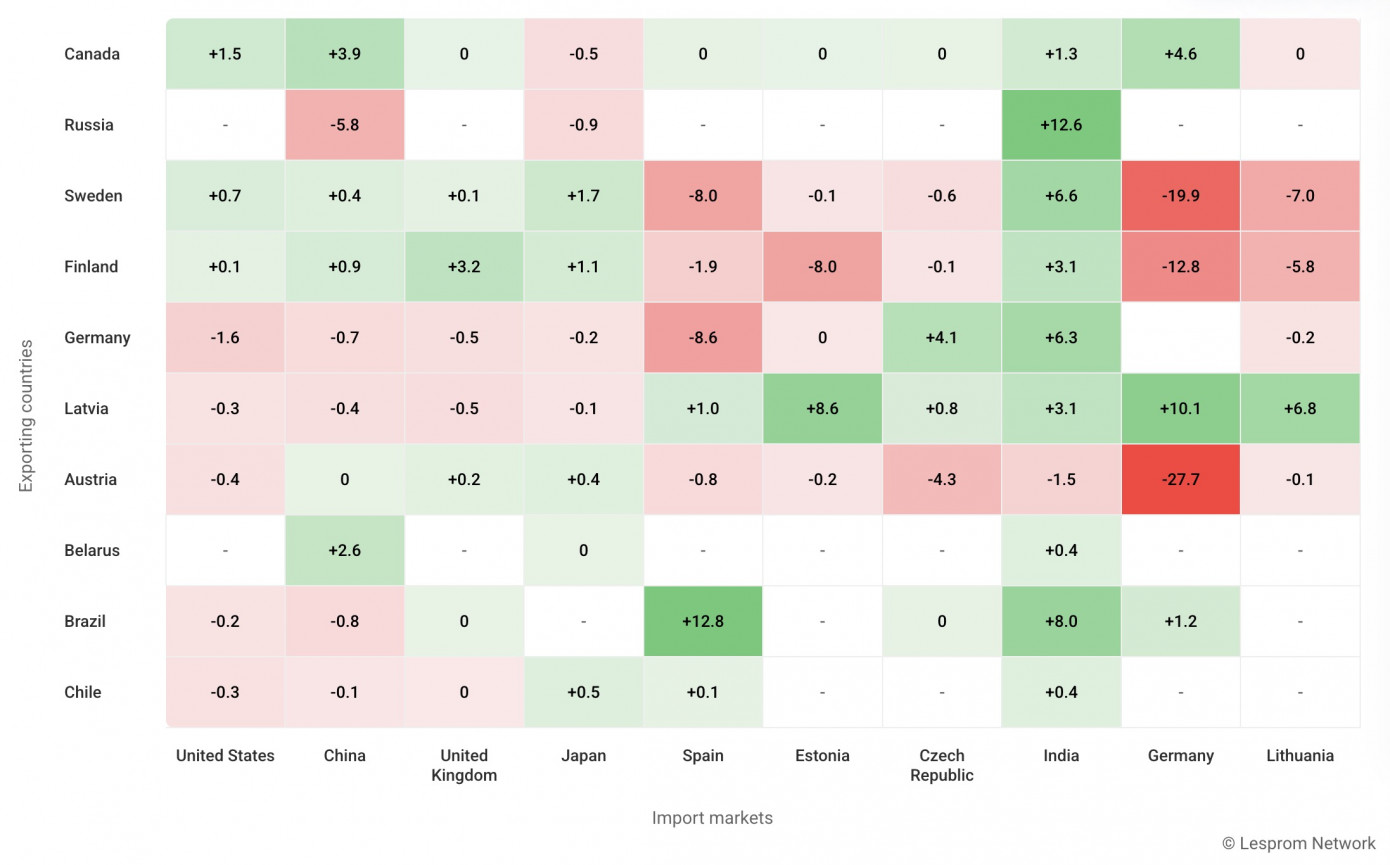
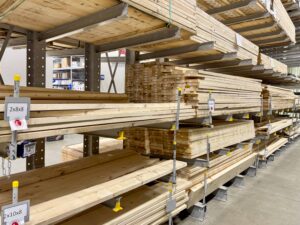 Rising mortgage rates aren’t the only thing freezing the housing market. Builders are contending with a fresh wave of sticker shock on the job site, as soaring prices for copper, lumber, diesel and aluminum drive up the cost of putting homes in the ground. A mix of geopolitical turmoil, tariffs and supply-chain disruptions is rippling through construction materials markets at a moment when affordability is already stretched thin, the Wall Street Journal reported. The result is higher costs for developers, more uncertainty for homebuilders and even fewer paths to affordable homeownership. Copper has become one of the industry’s biggest headaches. …Lumber prices are climbing again, too. Canadian sawmill closures and tariffs tied to the long-running U.S.-Canada softwood dispute have tightened supply heading into peak building season. …The broader concern for developers is that construction inflation could become self-reinforcing. Higher material costs feed broader inflation fears, which in turn keep borrowing costs elevated.
  Mortgage rates continued to increase in May as inflation accelerated. According to Freddie Mac, the 30-year fixed-rate mortgage averaged 6.41% in May, up 7 basis points over April. Since the conflict in the Middle East began, the 30-year mortgage rate has increased by 36 basis points. The average 15-year rate averaged 5.76% in May, up 7 bps from April, and up 33 basis points since the end of February. Even so, both rates remain lower than a year ago by 41 bps and 19 bps, respectively. The 10-year Treasury yield, a key benchmark for long-term borrowing, averaged 4.47% in May, 16 bps higher than the previous month. …Persistently high inflation has also strained household budgets. As people used more of their disposable income or drew down on savings to cover everyday expenses, the personal saving rate fell to 2.6% in April. The rate was the lowest since June 2022 when CPI was at its peak.
 The US commercial construction and wood products landscape has been undergoing a noticeable geographic realignment. …At the center of this transition are two powerhouse species that help define the market: Douglas Fir and Southern Yellow Pine. Understanding how manufacturers are positioning themselves around these distinct timber baskets might offer valuable insight into where resources are building the critical infrastructure for the next decades of commercial, agricultural, and residential construction in the United States. …While the West Coast navigates these supply bottlenecks, the American South seems to be experiencing a sustained wave of modernization and investment, capitalizing on robust regional resources. …Take for example the recent investments made by companies like Canfor. …The company opened a cutting-edge sawmill complex in Axis, Alabama, an endeavor that highlights the industry’s shift toward high-tech manufacturing.


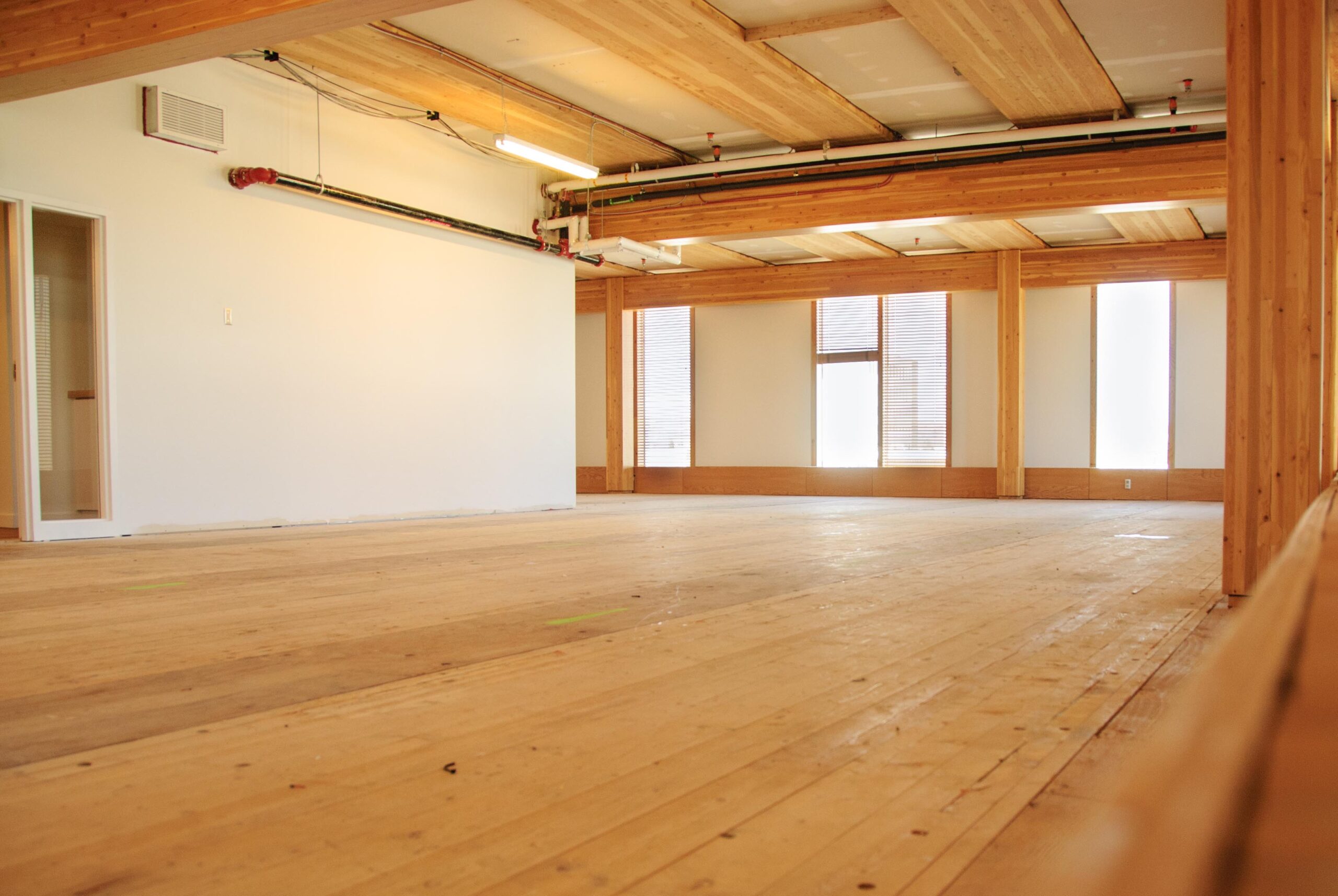
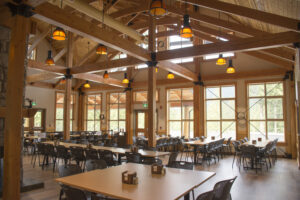 Mass timber has emerged as a leading material in the pursuit of low-carbon, sustainable construction. With its warm, natural aesthetic and significantly lower embodied carbon than steel and concrete, mass timber is increasingly used across a wide range of building types. However, unlike conventional steel or concrete structures, the very characteristics that make it appealing also create unique challenges. The constraints of mass timber construction, such as exposed structural elements and prefabricated panels with limited flexibility, demand a new level of precision and foresight in the design and coordination of mechanical, electrical, and plumbing (MEP) systems. By anticipating the structural and aesthetic challenges of mass timber and engaging in thoughtful MEP design and coordination, engineers, architects, and specifiers can deliver high-performance buildings that not only celebrate the beauty of timber but also help meet decarbonization and sustainability goals. …Mass timber’s prefabricated nature and exposed aesthetics require precise, early-stage coordination among mechanical, electrical, and plumbing systems.
 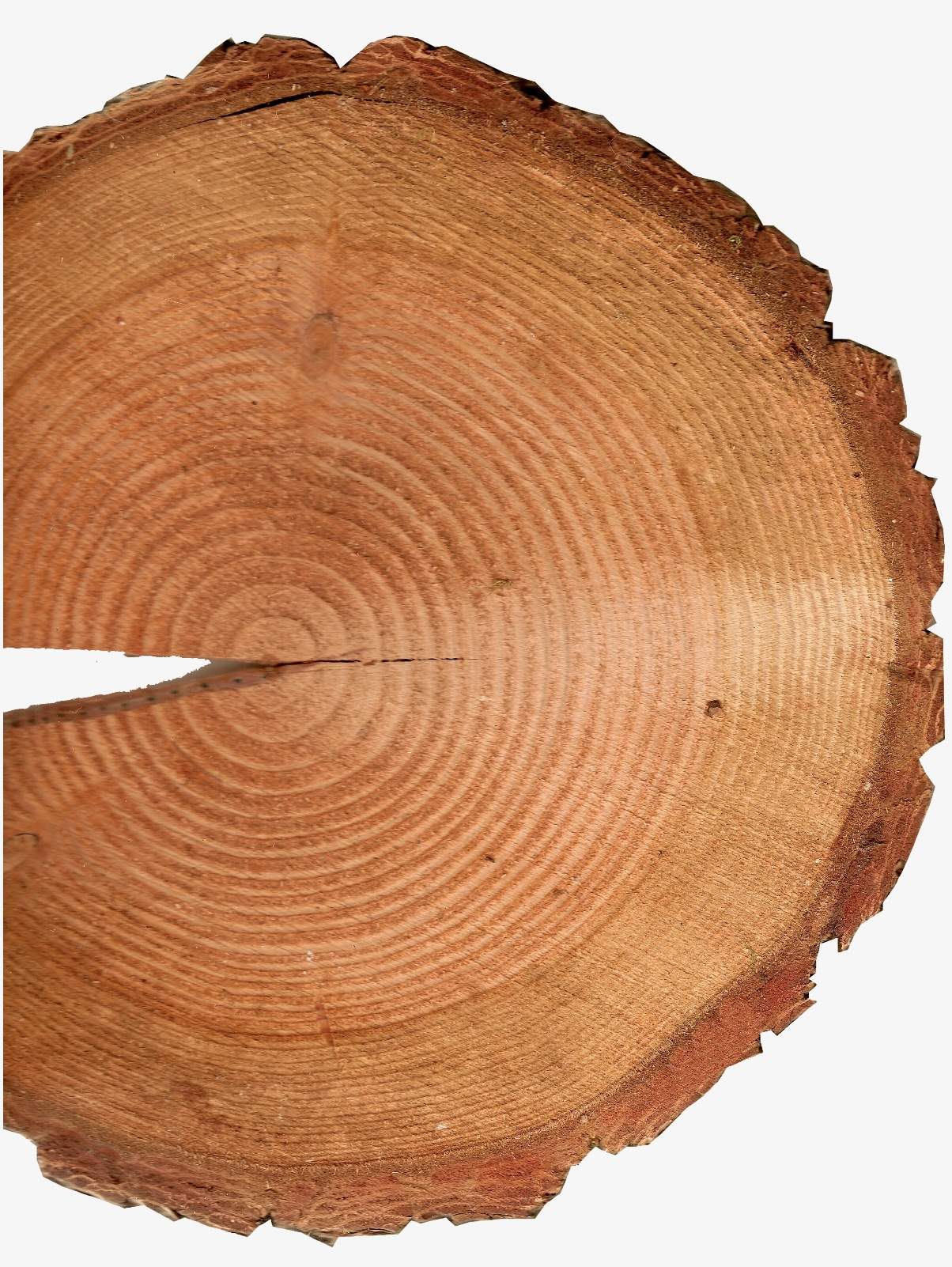 If you’ve ever spent some time amongst old-house lovers, and especially the craftspeople who work on them, you’ll no doubt have heard mention of “old-growth lumber.” It’s a material that’s spoken of with reverence, usually as supporting evidence for the “they don’t build ’em like they used to” argument, and always contrasted with today’s lumber, which is deemed comparatively subpar. So what is it about old-growth lumber that makes it so legendary, and if it’s so great, why don’t we use it anymore? …So yes, the trees are generally between 100 and 150 years old, but old-growth lumber is also characterized by competition to survive and disturbance history. In other words, if the forest is left alone for long enough, and no natural disasters reset the clock, you end up with old-growth trees. So it’s not that we can’t produce old-growth lumber now, it’s that it doesn’t fit our production needs.
 WASHINGTON, D.C. — U.S. Representatives Glenn Thompson (R-PA) and Andrea Salinas (D-OR) introduced the Mass Timber Federal Buildings Act. This marks the third consecutive year that legislation promoting mass timber for federal contracts has been introduced. This bipartisan legislation provides incentives for the use of mass timber building materials in federal contracting, giving timber and other forest products companies the ability to compete for construction, renovation, or acquisition of public buildings, and for military construction. The bill creates a two-tier contracting preference for mass timber and other innovative wood projects. The first-tier preference applies to mass timber that is made within the U.S. and responsibly sourced from state, federal, private, and Tribal forestlands. The optional second tier applies to mass timber products that are sourced from restoration practices, fire mitigation projects, and forest owners. Additionally, this bill contains a reporting requirement for a whole building lifecycle assessment.
 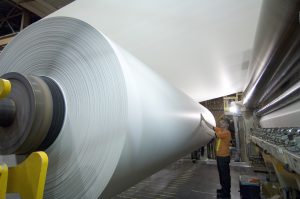 The American Forest & Paper Association (AF&PA), Washington, has released its 66th Annual Paper Industry Capacity and Fiber Consumption Survey. …The report shows that fiber consumption declined by 3.5% in 2025, with recovered fiber consumption decreasing by 4% and wood pulp consumption falling by 3.2%. The printing-writing paper operating rate improved, reaching 82.8% in 2025, while containerboard operating rates remained steady at 91.9%. Packaging paper production also increased by 1.7%, while boxboard production essentially was flat at 12.4 million tons and tissue production remained near 7.8 million tons. Despite the resilience shown by these sectors, US paper and paperboard production declined 3.7% last year, to 66.3 million tons, AF&PA says. …Containerboard production fell 4.4% to 36.1 million tons, and containerboard capacity declined 5.1% in 2025. …Printing-writing capacity fell 13.9% last year to 7.7 million tons. …Tissue production declined 0.8% in 2025 to 7.8 million tons, though, over time, it has represented a growing share of total US paper and paperboard capacity.

 As bad as things got in Los Angeles in January 2025, when 31 people died and more than 16,000 buildings were destroyed by wildfires roaring into residential neighborhoods, many wildland firefighters look back on the rest of last year as a dodged bullet. Across the nation, according to the National Interagency Fire Center (NIFC), which coordinates the federal wildfire response, the total area burned in 2025 was about two-thirds of the average over the past 10 years. This year is shaping up to be a very different prospect, wildfire experts warn. Key environmental indicators show that the nation is a tinderbox, gripped by widespread drought and with a light snowpack in the mountains that will offer little relief as its remnants melt away. At the same time, upheaval in the federal wildland firefighting effort and the loss of many staff qualified to join wildfire incident teams since Donald Trump took power for the second time have left firefighters deeply concerned about their ability to mount an effective response.



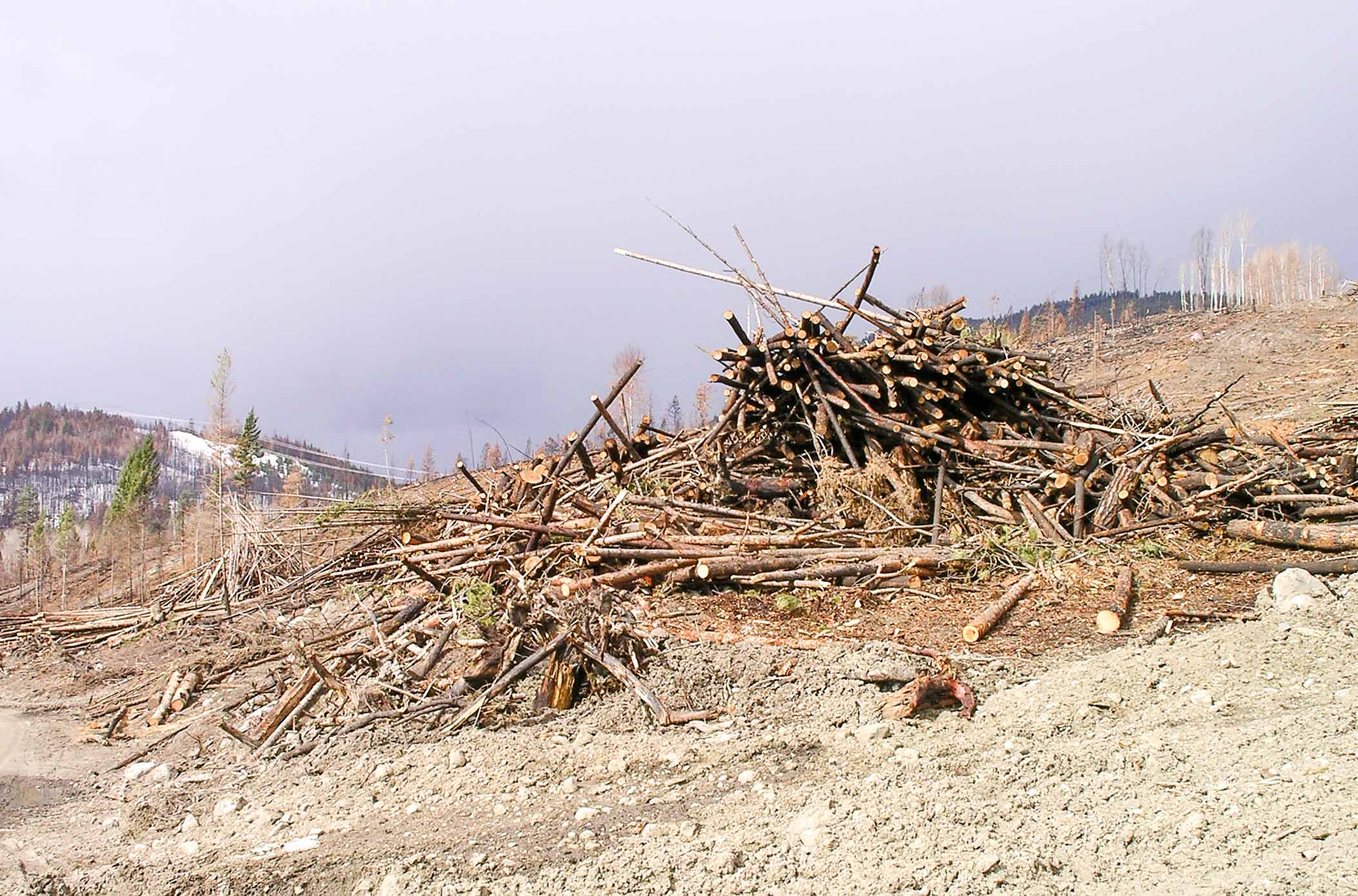
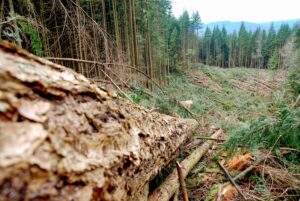 MONTANA — The US Forest Service and the timber industry have effectively lobbied Congress to enact laws based on fire paranoia that cut the public owners of these forests out of the process. They want the government to build roads at taxpayer expense to while compromising the best remaining fish and wildlife habitat and quiet spaces. Upon a molehill of truth they have constructed a mountain of disinformation. Claiming an emergency, the Forest Service is fast-tracking commercial timber sales in ways that severely limit and exempt them from environmental analysis. …They are removing the administrative review and public objection process. The bad stuff for wildlife, fish and people including ugly clearcuts, road construction and reduced water quality are being frontloaded. The good stuff including stream restoration and road reclamation are back ended. If past is prologue, the latter will not be funded or implemented as the Forest Service shifts its priority.

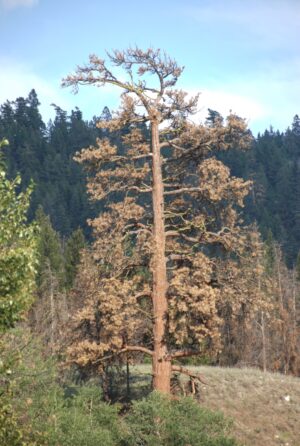 DENVER — A longstanding specter of the Colorado mountains is gaining ground in a new conquest of ponderosa pine forests. An outbreak of the mountain pine beetle is spreading quickly and expected to continue this summer under “prime conditions,” according to a






 NAPLES, Maine — The New England Forestry Foundation (NEFF) is giving out grants to landowners to help preserve some of Maine’s oldest trees. The organization got $4.3 million from the U.S. Forest Service in 2024 to pay loggers to put off cutting late-successional and old-growth forests, which are typically over 100 years old. The first grant was awarded to Chaplin Logging Inc. in Naples to conserve 23 acres of late-successional forest and improve other parts of their land. This type of forest is rare for southern Maine. The one on the Chaplins’ property has been mostly untouched for likely more than a hundred years. According to Brian Milakovsky, senior forester of NEFF, these trees provide a unique habitat for many important species and they’re good for the atmosphere. …Since these trees are being taken out of production, part of the grant is going toward timber stand improvement, removing undesirable trees in landowners’ other, younger forests.

 A bill aimed at making Louisiana more enticing to the wood pellet industry has sailed through the state Legislature. House Bill 670 won unanimous approval in the Louisiana House and Senate and was granted final passage on Wednesday (May 27). It would ease regulations for pellet manufacturers while directing state support toward workforce development, financial incentives and infrastructure improvements designed to meet the industry’s needs. The industry has come under fire for repeatedly breaking air pollution rules in Louisiana and Mississippi and contributing to greenhouse gas emissions in the United Kingdom, where most of the pellets are burned to produce energy marketed as “sustainable biomass.” The bill’s supporters admitted they knew little about the industry but backed the measure in hopes of reviving the state’s struggling logging sector. …“This bill uses taxpayer money to support a foreign industry and makes it easier for them to pollute Louisianians’ air and water,” said the Dogwood Alliance.
 LONGVIEW, Washington — Recovery crews on Friday located the ninth and final person missing at the site of the Nippon Dynawave industrial incident, bringing the death toll from the tragedy to 11. …The ruptured tank spilled up to 570,000 gallons of white liquor, a strong alkaline liquid made mostly of sodium hydroxide and sodium sulfide used in the papermaking process to dissolve wood chips. Officials said the liquid made it into the nearby Columbia River and several nearby ditches, sloughs, and dikes. …Longview city officials reassured residents on Thursday that the city’s water was safe, and the Washington State Department of Ecology stated that the water treatment plant would shut down automatically before contaminated water could enter the public water system. …Response crews have documented some impacts to fish and wildlife in drainage systems adjacent to the incident area. Officials said approximately 200 dead fish have been collected.
 This week’s chemical blast that killed at least eight workers at Longview’s Nippon Dynawave Packaging highlights the potential dangers in the timber and paper manufacturing industries. …“We work in a highly hazardous atmosphere, in a highly hazardous industry,” Brian Wood, director of support services for Nippon Dynawave, said. …The industries involved in the range of economic activities from cutting timber to manufacturing paper have shed jobs in recent decades, yet this sector continues to have some of the deadliest occupations. The disaster in Longview highlights the dangerous chemicals used in paper making. In 2024, 13 people were killed while working at their paper manufacturing job, according to the US Bureau of Labor and Statistics. Across the country jobs in the sector have plummeted. In the last quarter century, BLS figures show paper manufacturing employment fell by 230,000 jobs to sit around 355,000 across the country. Industry researchers estimate as many as 45 mills closed last year.

 LONGVIEW, Wash. — A massive chemical tank holding nearly a million gallons of a highly corrosive liquid imploded and collapsed Tuesday at a Washington paper mill, killing at least one worker and leaving nine others unaccounted for with no hope for rescue, authorities said. Another nine people were injured, some severely, in the spill at Nippon Dynawave Packaging Co. in Longview. The cause remained unclear. “At the moment we are not aware of any rescues that are yet to be made,” Cowlitz Fire and Rescue Chief Scott Goldstein said during a Tuesday evening news conference in which officials repeatedly referred to the situation as a recovery effort. That effort would not resume until Wednesday morning, when emergency responders planned to work on stabilizing the collapsed tank, which still had about 90,000 gallons (more than 340,000 liters) of a chemical brew known as “white liquor” inside, and then search for the missing, Goldstein said.
 MAINE — The fire and subsequent explosion at a Maine lumber mill that killed a firefighter and injured a dozen other people was accidental and originated at the base of a silo, authorities said Tuesday. …Rapid ignition of particulate material resulted in an explosion in the silo that caused it to lift from its concrete base and release large amounts of sawdust and other materials, the Maine State Fire Marshal’s Office said. The silo then toppled and the surrounding area became engulfed in fire, the office said. Investigators will return to the facility in the coming months to conduct a more detailed examination, the fire marshal’s office said. “Investigators also determined the facility’s fire suppression system, which was located near the top of the silo, did not activate because temperatures at that elevation did not reach the activation threshold after the fire originated at the base of the silo,” the office’s statement said.