Marc Carney
Canada is making progress on “small” tariff deals with the US for key sectors, Prime Minister Mark Carney said after revealing he’d had a recent phone call with U.S. President Donald Trump. Carney said he spoke with Trump “at length” Monday on a wide range of issues, including trade, geopolitics and employment. He described it as a “good conversation” but also warned there is no guarantee Ottawa will secure any of the deals under discussion as the Trump administration works to squeeze the Canadian economy to obtain trade concessions. …While Carney did not specify which key sectors are the subjects of trade talks, the sectors targeted by US tariffs include steel, aluminum, forestry products and automobiles. …Carney’s cabinet met behind closed doors Wednesday at a Toronto hotel — part of its preparations for the upcoming fall sitting of Parliament and for continuing negotiations with the Americans on tariffs.
 Donald Trump has called on the European Union to hit China and India with tariffs of up to 100% to force Russian president Vladimir Putin to end the war in Ukraine. The US president made the demand during a meeting between US and EU officials discussing options to increase economic pressure on Russia. …Last month, the US imposed a 50% tariff on goods from India, which included a 25% penalty for its transactions with Russia. Although the EU has said it would end its dependency on Russian energy, around 19% of its natural gas imports still come from there. If the EU does impose the tariffs on China and India it would mark a change to its approach of attempting to isolate Russia with sanctions rather than levies.


 EUGENE, Oregon — President Trump’s demand that the US increase timber output by a quarter is running into a math problem: Lumber companies may not make as much money on wood in the coming months. A steep drop in lumber futures prices nationally is jolting the wood products business just as the Trump administration is prodding the industry — including the government’s own forest managers — to ramp up production so the US doesn’t have to rely on imports. Futures prices on lumber at the end of last week dipped to $527 per MFBM, the lowest point in a year. For Weyerhaeuser, which operates a mill in Cottage Grove, Oregon, the pricing signal isn’t sounding alarms just yet. The mill’s in the middle of a multiyear modernization said representatives who figure the market is doing one of its usual seesaws. [to access the full story an E&E News subscription is required]
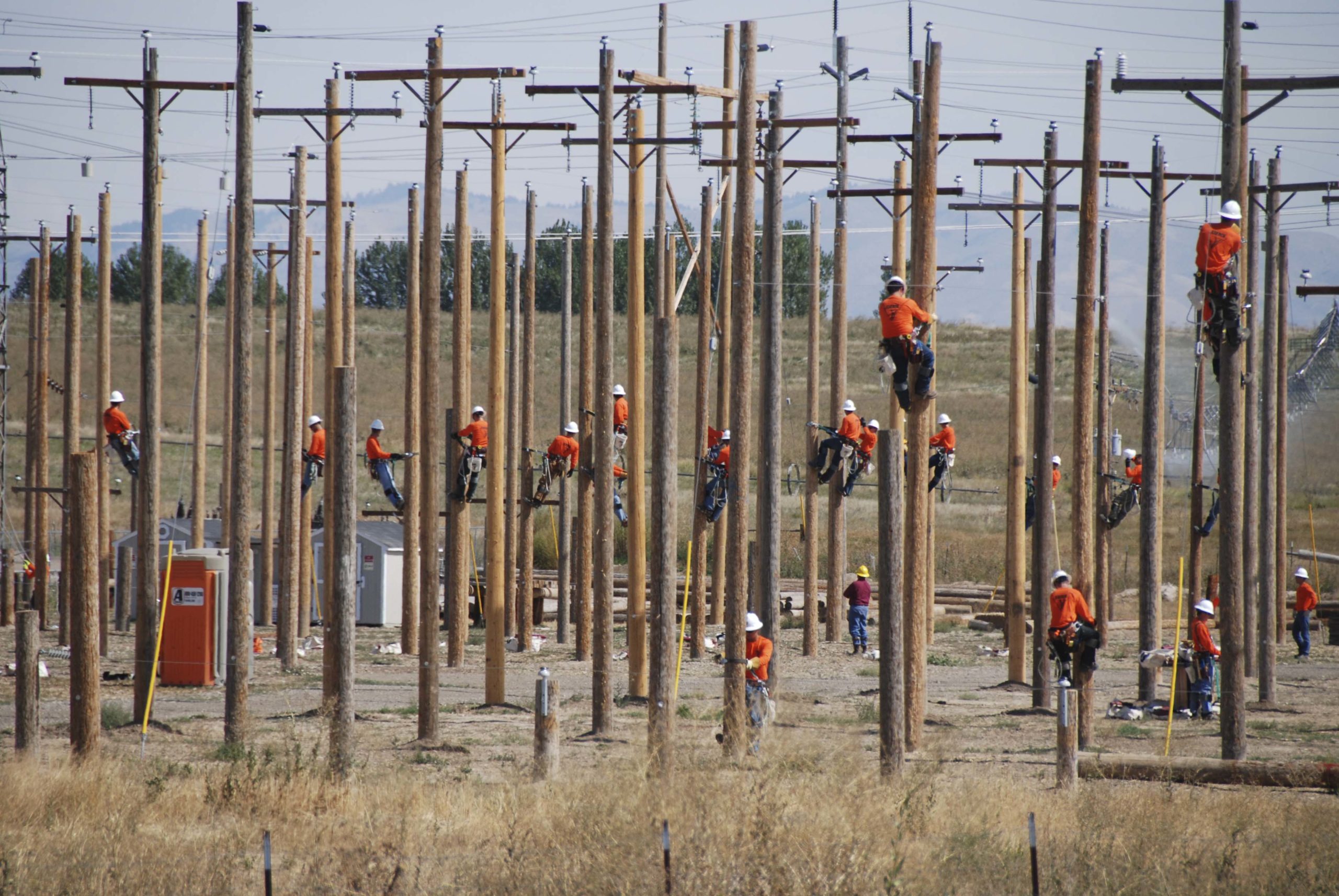 SHERIDAN, Oregon — The Oregon Department of Environmental Quality (DEQ) has fined a Yamhill County wood treating company $1,055,825 for numerous violations of environmental regulations for water quality, hazardous waste and spill response and cleanup.

 LEBANON COUNTY, Pa. — A large fire at Weaber Lumber comes just over a month after the company filed for bankruptcy. Weaber, Inc. filed for Chapter 11 bankruptcy on Aug. 1, according to online records. The company also filed a WARN notice in July at its distribution center on 25 Keystone Drive. In that notice, the company said 145 people would be laid off from July 26 through Sept. 9 of this year. The fire broke out Monday night around 10 p.m. at the company’s headquarters at 1231 Mt. Wilson Road, and it took firefighters until Tuesday morning to bring the blaze under control over eight hours later.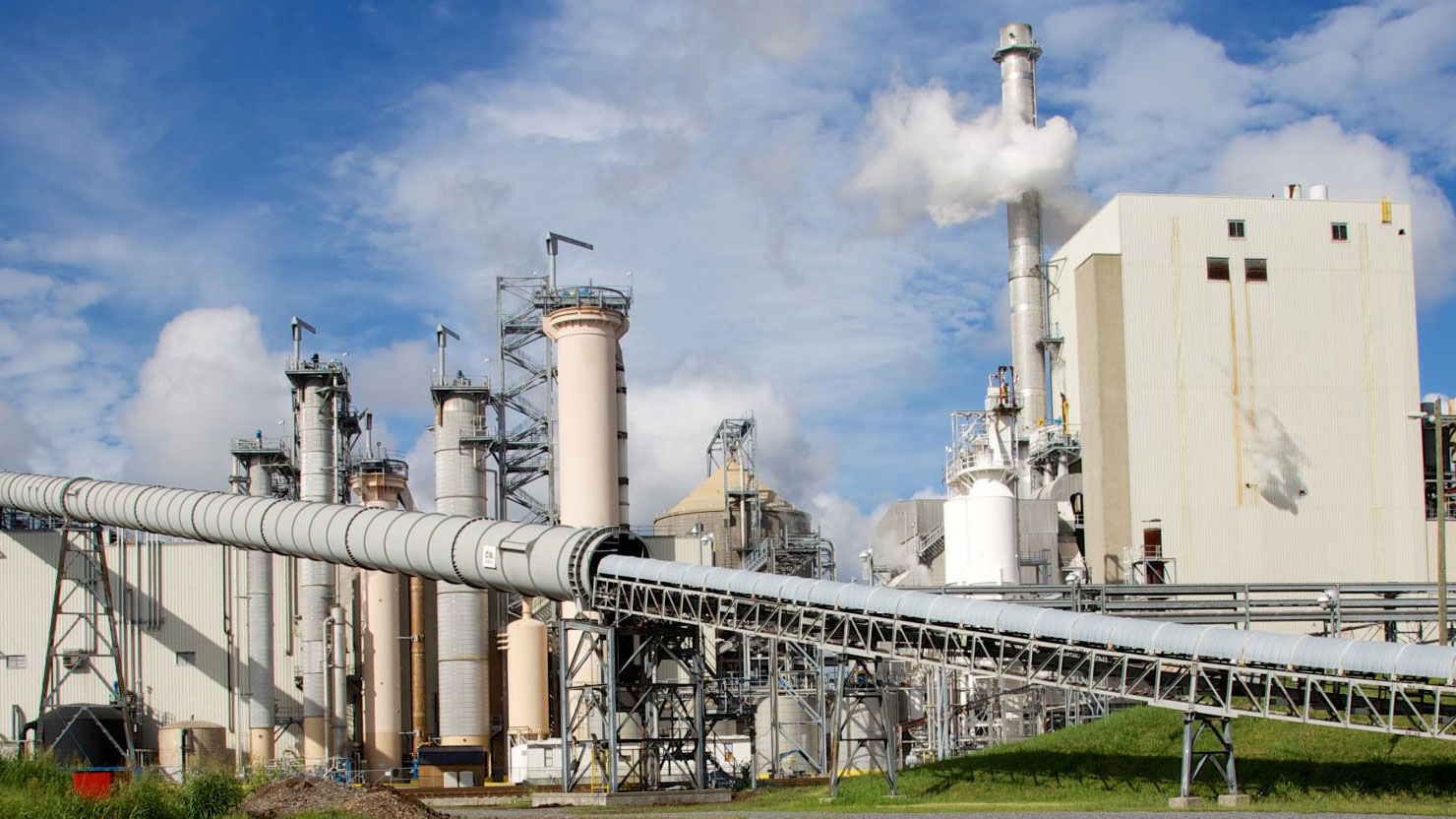
 BEMIDJI, Minnesota — The West Fraser wood engineering plant west of Bemidji was one of three companies to receive part of $4.2 million in business expansion grants from the state. The state’s Department of Employment and Economic Development stated in a news release that the three projects are expected to create or retain 587 jobs and leverage more than $270 million in private investment. West Fraser plans to renovate an existing building and improve the operating site in the small community of Solway. The operation there produces engineered wood products, such as OSB or particle board, that are used widely in construction and other industries. The project will receive more than $1 million in financing from the state’s Job Creation Fund, with the company expected to invest $137 million. The project is expected to retain 132 jobs.


 SOUTH ANNVILLE TOWNSHIP, Pa. — A three-alarm fire ripped through Weaber Lumber in Lebanon County. Crews responded to the fire in South Annville Township around 10 p.m. on Monday. Flames could be seen leaping from the burning building. The blaze was upgraded to the third alarm, prompting a large firefighter response. According to Lawn Fire Company Chief Dillon Wilson, approximately 1.1 million gallons of water have been used from the on-site hydrant system to combat the fire. Tankers also brought in additional water to the scene. Chief Wilson said most of the building was engulfed in flames when crews arrived. “It got ahead of us,” Wilson said. The chief believes this building might have the most combustible materials under one roof in the state. Weaber Lumber has experienced multiple fires over the years. …For 80 years, Weaber has been proudly committed to the lumber industry and is one of the nation’s leading hardwood manufacturers.
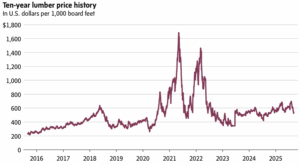 A “normal” annual softwood lumber price cycle sees prices dropping from Labour Day until early in the new year when buying starts again for the spring construction season. We are also expecting three interest rate cuts this year from the US Federal Reserve. With lower mortgage rates expected, will we see increasing demand for lumber? …The short term outlook for lumber prices continues to see weakness with price projections as low as US$450 per thousand board feet until the spring construction season. Looking into 2026 and 2027, prices are expected to recover to the mid-US$500 to low-US$600 per thousand board feet range. Ongoing duties, the upcoming court rulings on tariffs and the protracted housing shortage will all impact the price of lumber over the next two years. [to access the full story, a Globe & Mail subscription is required]
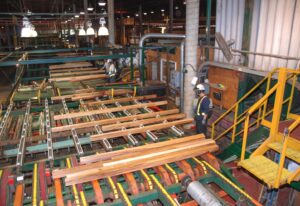 Falling lumber prices are sounding an alarm on Wall Street about potential problems on Main Street. Wood markets have been whipsawed of late by trade uncertainty and a deteriorating housing market. Futures have dropped 23% since hitting a three-year high at the beginning of August and ended Friday at $535 per thousand board feet. The price drop might have been greater—but two of North America’s biggest sawyers said last week that they would curtail output, slowing the decline. Crashing wood prices are troubling because they have been a reliable leading indicator on the direction of the housing market as well as broader economic activity. …Analysts and traders say there will have to be further cuts to ease the glut of wood. That might not be a problem, given how higher duties have pushed up Canadian sawmills’ break-even prices while demand wanes. “We anticipate further closures or curtailments,” said Truist Securities analyst Michael Roxland. [to access the full story a WSJ subscription is require]



 After years of wildland firefighters developing cancer, lung disease and other health issues while not being allowed to wear masks as they work, the US Forest Service will now allow these crews to wear masks. The policy turnaround comes as the Forest Service posted new guidance on Monday “acknowledging for the first time that masks can protect firefighters against harmful particles in wildfire smoke,” per
 National forests and wildfire will return to the congressional agenda this week with a pair of House subcommittee hearings on Forest Service programs. The Trump administration’s challenges in managing the 193-million-acre forest system with a sharply reduced workforce — and a big agency reorganization still to come — are likely topics for both the Agriculture and Natural Resources subcommittees. In the Natural Resources hearing, the Subcommittee on Federal Lands will take testimony on the state of national forests, picking up on a hearing that was initially scheduled for July 9. In the Agriculture hearing, the Subcommittee on Forestry and Horticulture will focus on improved active forest management, such as increased thinning of national forests to reduce potential wildfire fuel. [to access the full story an E&ENews subscription is required]
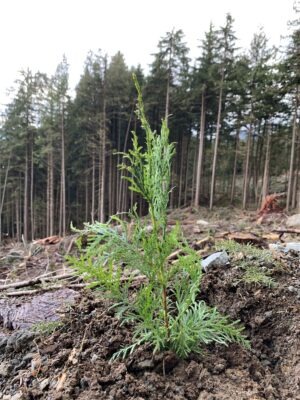 The increase in wildfires over the past few decades is changing the Colorado landscape in more ways than one. Not only do fires temporarily decimate the impacted areas but according to research out of Colorado State University, they are actually changing how, and if, forests regenerate post fire. “There are definitely some places where they’re coming back really well; it just takes a long time for trees to grow back,” said Camille Stevens-Rumann, CSU associate professor of Forest and Rangeland Stewardship. “But there are definitely other places that are not recovering and are not turning back into the forests that we expect them to be. …Reseeding efforts in these locations have shown mixed results, forcing researchers and forestry officials to look at alternative species. …“I think we do have to adapt and think about the fact that those forests are going to look differently.”
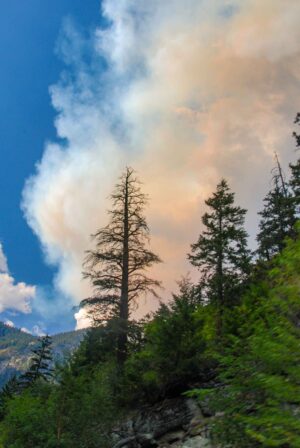 The western United States is facing another destructive wildfire season. …As US forests burn, Congress and federal agencies are asking an important question: What role should federal land management play in reducing fire risk? …Several of the current federal proposals for managing fire risk focus on increasing timber harvesting on federal lands as a solution. They also propose speeding up approvals for those projects by limiting environmental reviews and public oversight. As experts in fire science and policy, we see some useful ideas in the proposed solutions, but also reasons for concern. While cutting trees can help reduce the severity of future fires, it has to include thinning in the right places to make a difference. Without oversight and public involvement, increasing logging could skip areas with low-value trees that need thinning and miss opportunities for more effective fire risk-reduction work.
 Today’s Lookout
 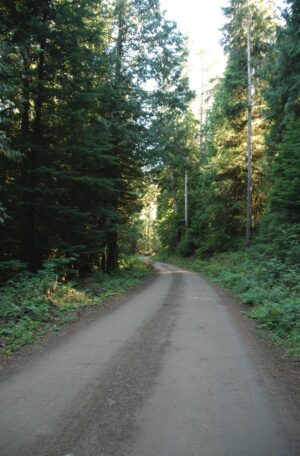 STEVENS POINT, Wisconsin — The Trump administration blitzkrieg on the environment is rumbling along, and 45 million acres of remote national forest lands are in their sights. These are areas protected by the Roadless Rule, adopted in 2001. …The administration is rushing the public comment period, with a deadline of Sept. 19. …There’s a good chance the administration has already made up its mind. But there’s something to say in this moment about being on the right side of history. …Why should Wisconsin care about the Roadless Rule, which is a huge deal in the West? Mike Dombeck, a Wisconsin native, was chief of the USDA Forest Service when the rule was adopted.” …It’s an important niche between wilderness and development. …It took a long time for us to recognize that suppressing fire actually contributes to uncontrollable wildfires. Fire has been a forest management tool for eons.
 The US Department of Agriculture (USDA) announced it would invest more than $8 million in five new projects, including one in North Carolina. These projects will improve forest health by reducing wildfire risk and improving water quality. …North Carolina has two primary wildfire seasons, one in the spring and one in the fall. …The five new projects include efforts across several states to restore and protect essential landscapes. The National Forest is launching the “Alabama Chattahoochee Fall Line Restoring Longleaf” project in Alabama. Colorado and Wyoming will see work in the Medicine Bow-Routt National Forest through the “Headwaters of the Colorado” initiative. Montana’s Lolo National Forest is beginning the “Blackfoot River Valley Landscape Mosaic” project, while North Carolina’s National Forests are moving forward with “Uwharries to Sandhills, Phase 2.” Finally, Oregon’s Mt. Hood National Forest will focus on “Hood River Wildfire and Watershed Resilience.”
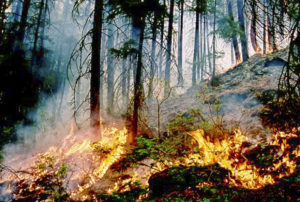 The US Forest Service will begin providing wildfire crews with masks to protect against smoke, reversing a decades-long policy banning protective gear after The NY Times spotlighted severe health impacts from smoke exposure. For decades, federal wildland firefighters were not given masks, even as researchers and labor groups warned of the long-term risks, the Times found. The Forest Service said masks could cause firefighters to overheat. …The agency now recommends masks for light use, though still bans it for arduous work. …FireRescue1 readers respond: “The policy is preposterous. No one makes such excuses for structural firefighting, where the heat load is much, much greater.” …“Heat stress is a short-term condition that can be immediately remedied by mandatory rest and work cycle adjustment. Lung issues usually last forever. A better respirator that is slimmer, lighter and maintainable needs to be created and the forest service needs to use them.