
Kevin Mason
Economic Outlook: Risks abound for 2026 and beyond but we see little chance of upside surprises for global GDP growth next year. Instead, we forecast modest declines in both US and Chinese GDP in 2026, with the Eurozone growth rate nudging up slightly from depressed levels. US-driven tariffs will stabilize but remain a drag and may become the norm for the next three years. As we’ve noted before, demand won’t be driving upside for the forest sector. Interest rate relief in the US continues to lag earlier expectations (with two further, 25bps cuts expected next year), and a US housing recovery will likely be pushed out to the second half of 2026 at the earliest (potentially 2027). A further weakening of the USD relative to other major currencies will create additional headwinds for US-based producers focused on exports but should also put downward pressure on US imports.
Forest Products Outlook: For most markets, the first half of 2026 will look a lot like 2025, with oversupply resulting in weak prices and lacklustre earnings. Highlights include:
- Housing starts will slip next year to 1.33MM as mortgage rates are expected to move only moderately lower. Affordability issues persist.
- Log prices should trend sideways, with some markets up and others down. Demand from China could rise as its US log ban has ended.
- Lumber prices will move up in 2026 as supply reductions related to high costs (duties, tariffs, etc.) begin to bite harder.
- Panel prices are likely to remain rather low in 2026 due to OSB (particularly) facing oversupply issues as a couple of mills ramp up.
- Pulp prices hinge on supply dynamics; the situation has changed as China has boosted its internal supply. Although prices are moving off their lows, shuts are needed to maintain upward momentum.
- Newsprint demand will drop by double digits next year, but, with some mills currently offline, prices should hold until supply restarts.
- Paper prices will be mixed, with expectations for an increase in uncoated woodfrees; most other grades should hold at/near year-end levels. The removal of tariffs would push prices lower.
- Containerboard producers are expected to drive a price hike in Q1 given the massive capacity shuts this year. Demand will remain sluggish, but rising box shipments aren’t needed to support hikes.
 Prime Minister Mark Carey is planning to host premiers in Ottawa later this month as the Canada-US-Mexico trade agreement (CUSMA) comes up for review later this year. The first ministers’ meeting, which will take place Jan. 29, comes just over a month after the last one. …Negotiations over the trilateral trade agreement were the focus of the last first ministers’ meeting, as the prime minister briefed premiers on what the federal government was doing ahead of the mandatory review of CUSMA, which is scheduled to be completed by July 1. Relief from punishing sectorial tariffs on steel, aluminum and forestry seems unlikely within the next six months, according to the prime minister. …All 13 premiers are expected to hold their own meeting the day before sitting down with Carney. …Canada continues to look for other export markets in the face of US tariffs.
 President Trump has delayed new tariff increases on upholstered furniture, kitchen cabinets, and vanities for a year, pushing their implementation to 2027, according to a
 The
The  Prime Minister Mark Carney said Canada probably won’t reach a near-term deal with the United States to lower tariffs on sectors such as steel and aluminum, and negotiations are likely to be rolled into next year’s review of the US-Mexico-Canada Agreement. Canada and the US were close to a pact on metals tariffs, but President Donald Trump then terminated talks in October. …“My judgment is that that is now going to roll into the broader CUSMA negotiation, so we’re unlikely, given the time horizons coming together, to have a sectoral agreement,” Carney said on Thursday. “Although if the United States wants to come back on that in those areas, we’re always ready there — we’re very ready.” …Canada is “very ready on forest products to strike an agreement,” the prime minister added. The U.S. has placed roughly 45% duties and taxes on imports of Canadian softwood lumber, to the frustration of US homebuilders.
 The trade war launched by Donald Trump continues to intensify, striking Canadian workers. In addition to the 50% tariffs on steel and aluminum imposed earlier this year and the duties on non-CUSMA-compliant automobiles and parts, Washington added a 50% tariff on copper in July. More recently, a new 10% duty on softwood lumber was introduced, on top of the existing countervailing and anti-dumping duties. …Thanks to the mobilization and constant pressure of the United Steelworkers, several long-standing union demands have finally been adopted in Ottawa. …The federal government announced that it will now require the use of Canadian-made products in publicly funded projects and has announced new investments to strengthen Canada’s industrial capacity and the resilience of our supply chains. …Canada must go further and adopt a strong industrial strategy to reduce our dependence on the U.S. market, protect jobs, and ensure that we never again find ourselves in such a vulnerable position.
 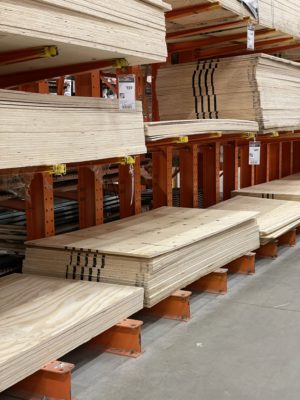 Plywood importer InterGlobal Forest, which is seeking a rehearing of its case challenging CBP’s finding that it evaded antidumping and countervailing duties on plywood from China,
 The Court of International Trade on Dec. 18 again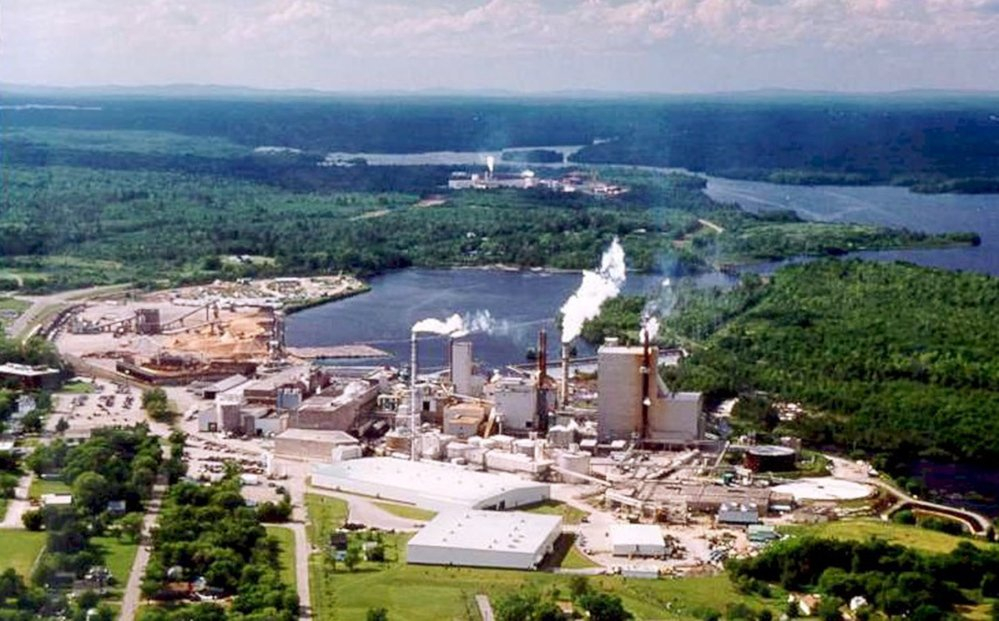


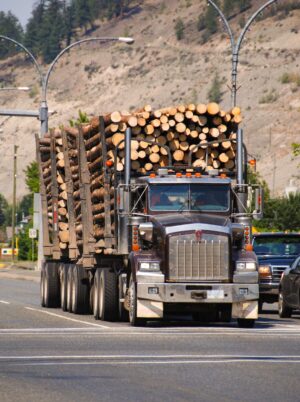 Maine timber companies are in line to receive substantial incentives to manage forests and grow healthier, more valuable trees. A $32 million award to the New England Forestry Foundation was recently finalized by the US Department of Agriculture. The funding package, through the Advancing Markets for Producers initiative, replaces similar funding provided under the “climate smart commodities” program. While there are some adjustments to the program, it achieves the same purpose, according to the foundation Deputy Director Andi Colnes. The grant will largely subsidize commercial and pre-commercial thinning, Colnes said. It will also provide funding to expand market opportunities, particularly for mass timber construction, she added. …According to Colnes, the program is able to cover about 50,000 acres of New England forests, mostly commercial timberland in Maine. The foundation said 23 commercial, conservation and public forest owners are already enrolled in the project.
 NORTH CAROLINA — After reviewing public comments, the

 Lumber futures slid below $530 per thousand board feet, testing the lowest levels since October 2024, as weak near-term demand collided with abundant and re-emerging supply. Homebuilding activity remains subdued and mortgage borrowing costs are still elevated, restraining new starts and repair and remodel demand, while US housing starts have softened and 30-year mortgage rates entered January little changed near the mid-6% range. At the same time structural supply pressures are returning, with several panel and OSB mills ramping up or preparing to add capacity and shifts in North American output seeing Canadian curtailments largely offset by higher production in the US South, keeping physical availability ample and capping any upside. In the meantime, inventory and futures market activity increased over the holiday period, amplifying downside moves when buyers stayed sidelined after year-end and seasonal restocking remained muted. [END]
 President Trump’s tariff and trade policies dominated the world’s political discourse through 2025. …The good news is that the BC economy has been fairly resilient through 2025. …BC trade resilience can also be attributed to a broader export commodity mix, dominated by forestry, agricultural and seafood products, as well as mining and oil and gas. …Forest products were tagged with a sectoral tariff of 10 per cent in October 2025, on top of new anti-dumping and countervailing tariffs on softwood lumber. …This has put tremendous pressure on an industry. …It’s difficult to disentangle the impact of tariffs from overall adverse trends in the BC forest industry, many mill closures and curtailments in recent years. BC forestry exports are among the most exposed to the US market, with about 75% of forestry exports headed south. Exports of softwood lumber were down 26% in August 2025 compared to August 2024. Pulp and paper exports were also down 9% on a year-to-date basis compared to 2024.
 The
The 
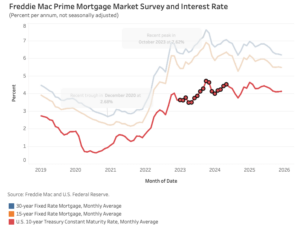 Long-term mortgage rates have been declining since mid- 2025 and ended the year at their lowest level since September 2024. According to Freddie Mac, the 30-year fixed-rate mortgage averaged 6.19% in December, 5 basis points (bps) lower than November. Meanwhile, the 15-year rate declined 3 bps to 5.48%. Compared to a year ago, the 30-year rate is lower by about half a percentage point, or 53 basis points (bps). The 15-year rate is also lower by 45 bps. …Falling lower mortgage rates have started to translate into gains as existing home sales edged up slightly in November. However, this increase remains limited as mortgage rates above 6% are still considered elevated. Nonetheless, as financing costs continue decline, more households are likely to reenter the housing market. …NAHB expects the 30-year mortgage rate to average 6.17% in 2026 and would reach 6% by 2027.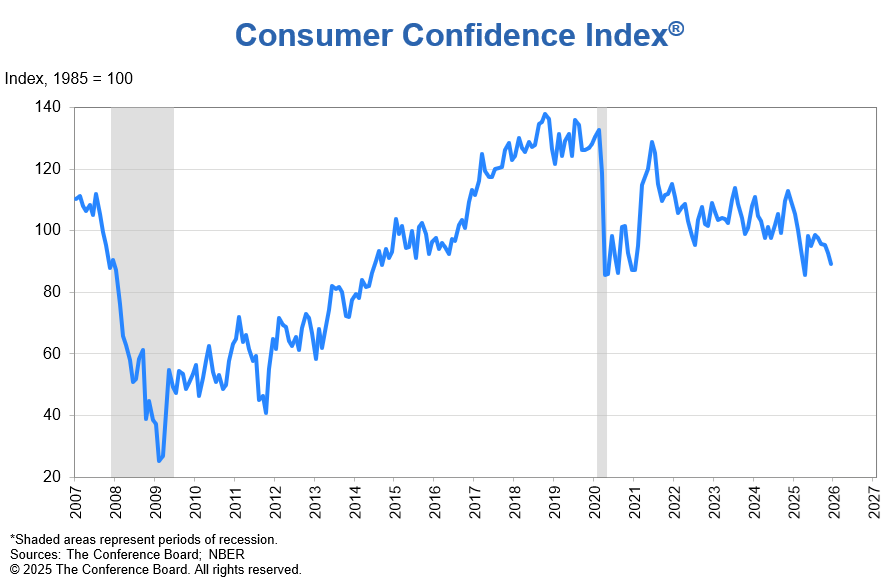



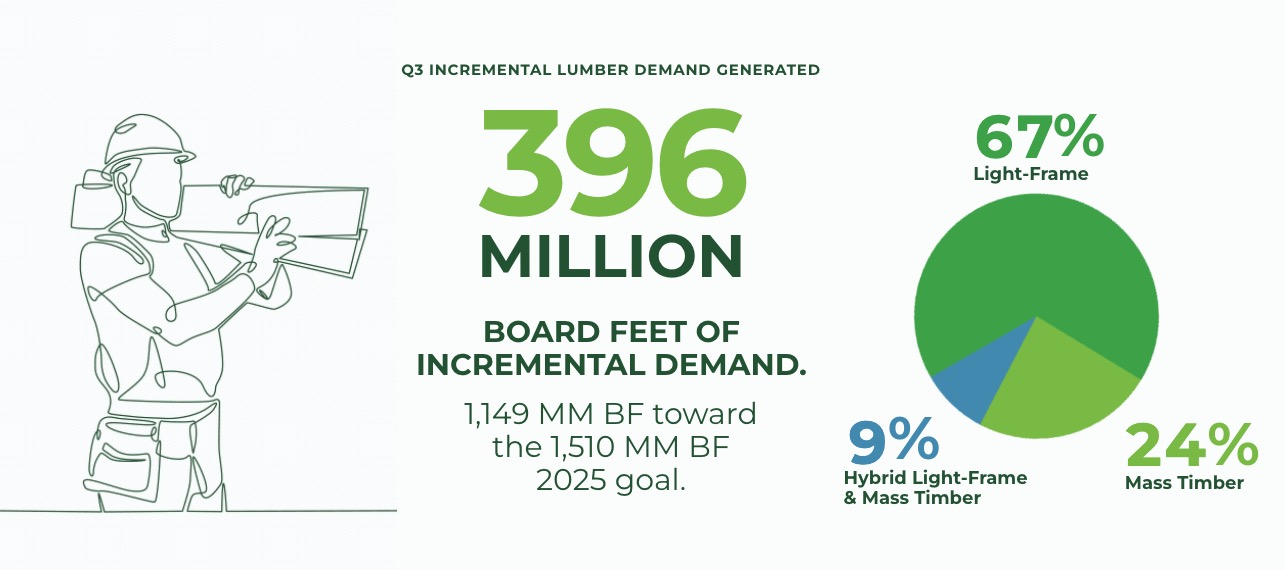 The Softwood Lumber Board has released its Q3 2025 Report, highlighting significant progress tied to its new strategic plan. This quarter, SLB-funded programs advanced a coordinated strategy centered on high-opportunity sectors—1-8 story multifamily, commercial, K-12 education, and the fast-growing industrial segment—while accelerating project conversions, strengthening building code support, scaling post-secondary education, and expanding outreach in key cities.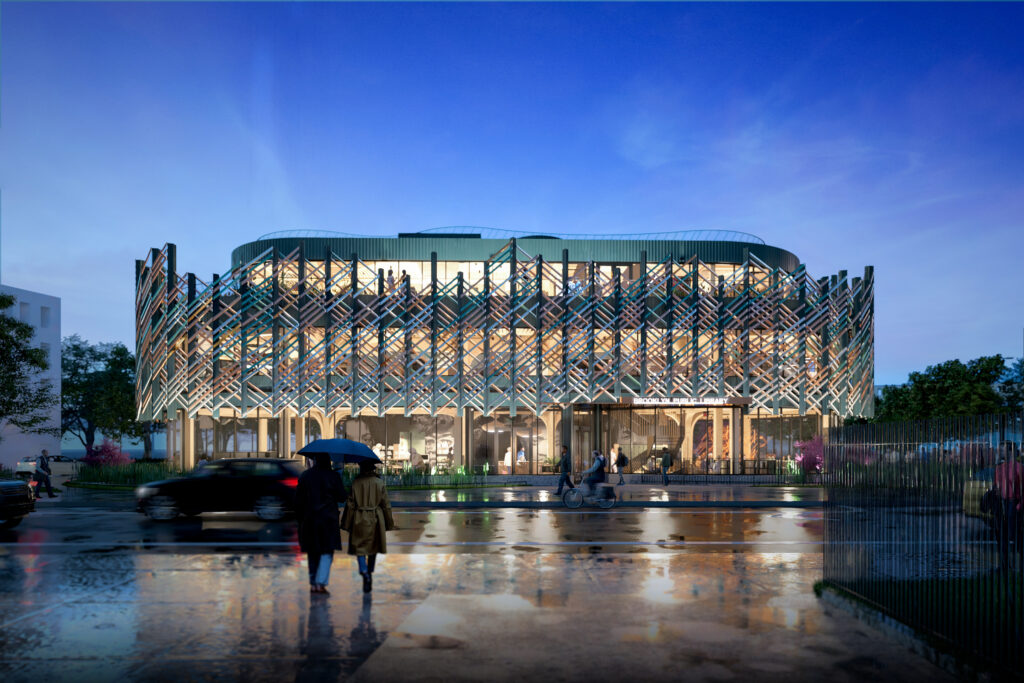
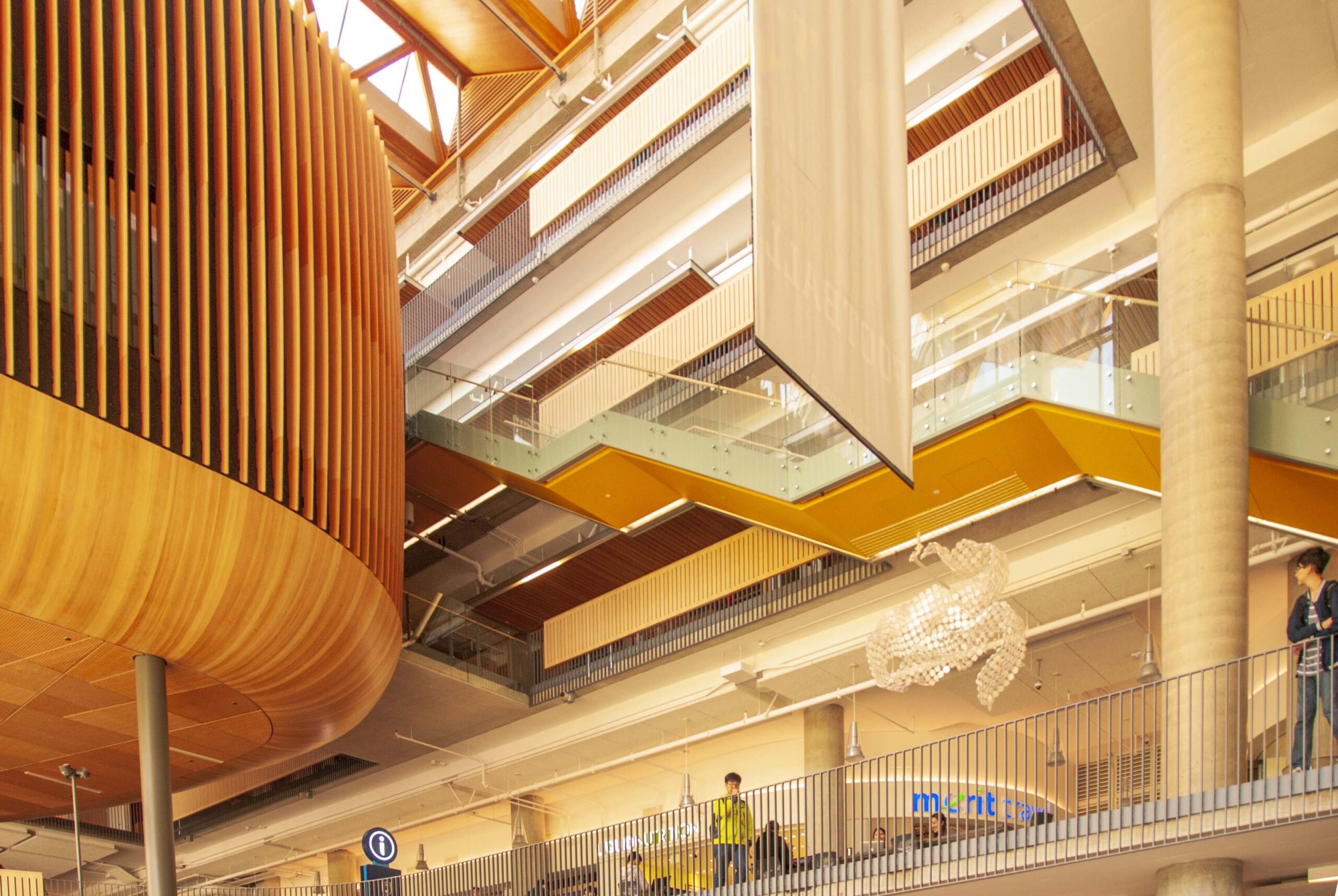 …Biophilia — a concept that’s been introduced in the pages of Health & Home before — is a term coined by the sociologist Erich Fromm and later adopted by biologist Edward O. Wilson in a 1984 book of the same name. Bill Browning, co-founder of the New York City-based sustainability consulting firm Terrapin Bright Green and chair of the Biophilic Institute, defines it as the “innate affiliation of humans to other living organisms and lifelike processes.” …Browning’s firm published a paper in 2022 titled “The Nature of Wood,” which distilled the available research on why people tend to gravitate to wood as a natural material. …Browning’s company has summarized some of biophilia’s high-level takeaways in a paper called “14 Patterns of Biophilic Design: Improving Health & Well-Being in the Built Environment.” In it, they outline how light, water, airflow and even a very primal sense of safety can positively affect cognitive performance as well as our mind-body relationship.
 Mark Latino is the CEO of Lee Display, a Fairfield, California-based company… that still makes artificial Christmas trees, producing around 10,000 each year. Tariffs shone a twinkling light this year on fake Christmas trees — and the extent to which America depends on other countries for its plastic fir trees. Prices for fake trees rose 10% to 15% this year due to the new import taxes, according to the American Christmas Tree Association, a trade group. Tree sellers cut their orders and paid higher tariffs for the stock they brought in. Despite those issues, tree companies say they aren’t likely to shift large-scale production back to the US after decades in Asia. Fake trees are labor-intensive and require holiday lights and other components the US doesn’t make. …About 80% of the US residents who put up a Christmas tree this year planned to use a fake one. …That percentage has been unchanged for at least 15 years.
 Schools built with mass timber have recently opened to positive community response in the Seattle, Renton and Highline school districts, and another is under construction in West Seattle. … Throughout the United States and Canada, about 150 educational projects have already been built with mass timber. Mass timber products such as Glulam and Cross-Laminated Timber are made from lumber stacked in layers to create large components — columns, beams and panels that become the structures of buildings of all types. These large building components drive efficiency in construction while reducing the carbon footprint. In Washington, mass timber can now be used in buildings up to 18 stories, a renewable, resilient alternative to steel and concrete. The Pacific Northwest is well-positioned to be a leader in this industry. …structures made from mass timber, where the wood remains exposed, have
 Bamboo tissue’s green image fades once you factor in coal-powered manufacturing. Bamboo tissue paper produced in China has become a popular option for shoppers looking to reduce their environmental impact. Despite its green reputation, new research suggests these products may not deliver the climate advantages many consumers expect. In some cases, bamboo tissue may even have a greater environmental footprint than tissue made in the United States. A recent
 Between the attention on forests at COP30, emerging regulations, and many corporate pledges, 2025 was slated to be the year that companies eliminate the practice within their supply chains of clearing forests and natural landscapes for production. As the calendar has turned to 2026, the truth is that we now know that dozens of the most at-risk companies have not reached that goal – but a few market leaders are proving that cleaning up supply chains is possible. Let’s be clear: Protecting forests makes economic sense. Industries depend on the benefits that natural ecosystems provide to grow food, transport goods, and manufacture products. Harming nature poses compounding financial risks to companies and their investors. …Growing awareness of the risks of biodiversity decline and the advantages of acting quickly have spurred private sector action in recent years, and we saw more positive developments unfold last year.
 USDA on Monday published a notice in the Federal Register looking to update the reporting requirement for foreign land ownership under the Agricultural Foreign Investment Disclosure Act (AFIDA). …The proposed changes come as Congress and state lawmakers have demanded more updates and better reporting on foreign ownership from USDA, spurred mainly by Chinese ownership of agricultural land. …USDA’s latest report on foreign agricultural land holdings shows people from outside the country own nearly 45 million acres of land, as of the end of 2023. That takes up about 3.5% of all privately-held agricultural land. Foreign holdings also increased by more than 1.5 million acres from 2022. Nearly half of foreign land holdings, 48%, are forest land, with 29% being cropland and 21% pastures. Canadian investors make up about one-third of all foreign holdings, or 15.3 million acres, followed by the Netherlands, Italy, the United Kingdom and Germany.
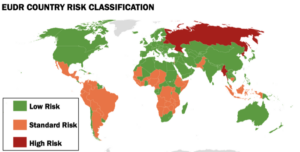 The EU Deforestation Rule has already caused supply chain hurdles for American farmers, ranchers and foresters, and the rule has not even begun being enforced. EU farmers themselves have raised concerns over their compliance requirements and received additional flexibilities, and member governments are still navigating how to implement the complex auditing system. With these logistical challenges clear even to EU officials, the European Commission has voted to once again delay the rule’s implementation until 2026 and 2027 for large and small businesses, respectively. However, as long as the rule stands as currently drafted, agricultural supply chains will be strained from the looming enforcement deadline. Overall, the EU fails to recognize the long-standing position of American farmers and ranchers as global leaders in agricultural production with environmental stewardship. A rule that was originally targeted to penalize bad actors in the global marketplace has now hindered some of the most productive producers in the world.
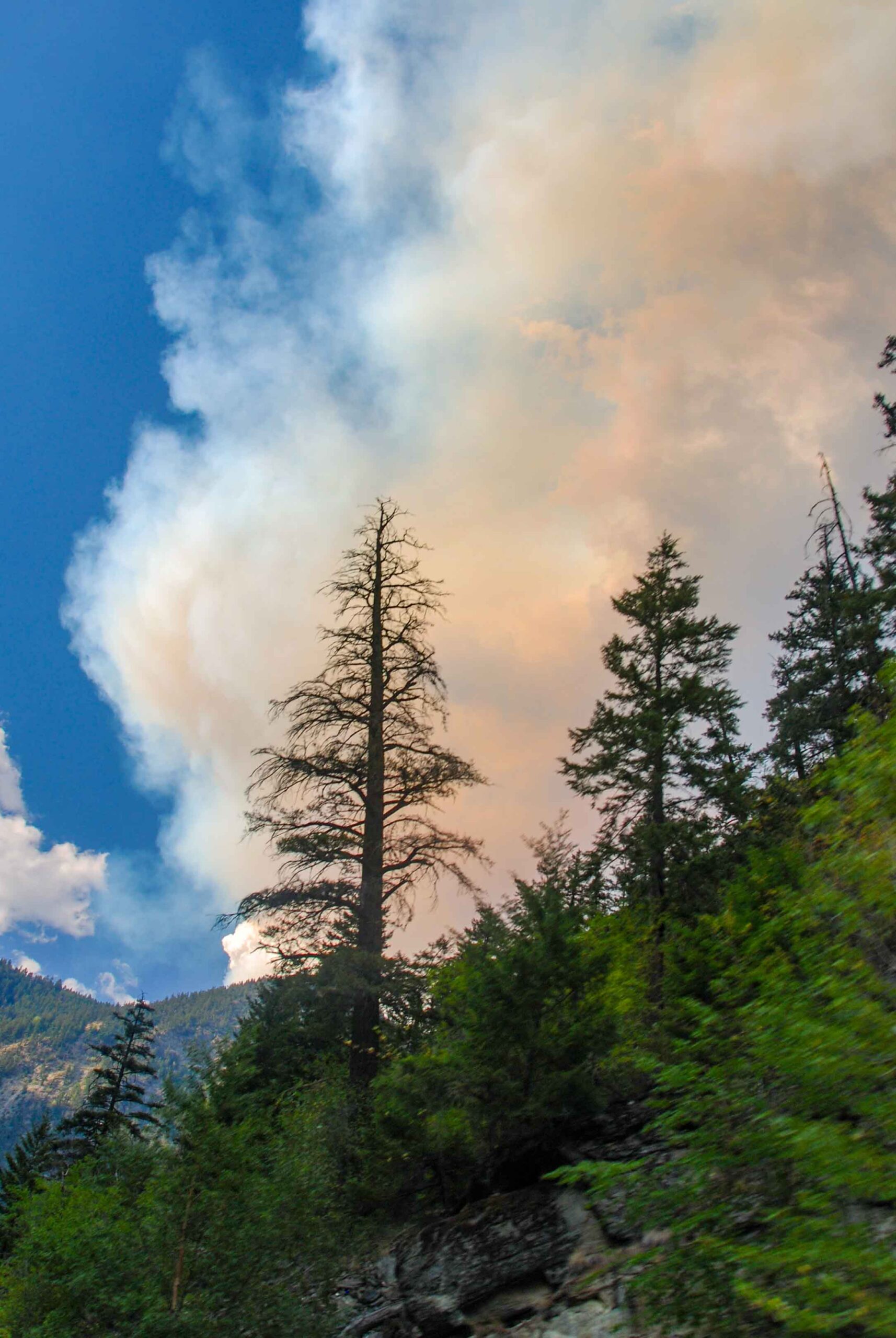 One of the most profound shifts in how the United States manages wildland fire is underway. Federal wildland fire forces are spread across several agencies, closely collaborating but each tackling prevention and protection somewhat differently. Now, the Trump administration is creating an entirely new “U.S. Wildland Fire Service” to combine as much of that under one headquarters roof as it can. A firefighter with decades of federal and local experience says he has been tapped to head that agency, news that heartened much of the wildfire community when it broke just over a week ago. …But the muddled rollout of these plans—along with widespread layoffs at agencies that fight wildfires and a crackdown on efforts to combat the climate change that’s fueling the flames—have sowed concerns that this is not the right administration to carry out such a significant transformation.

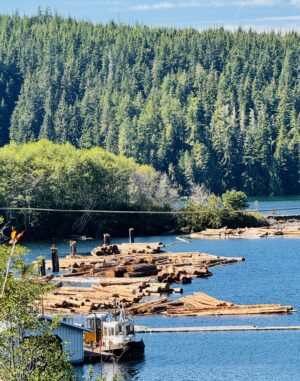 OREGON– The Bureau of Land Management’s state office in Oregon increased its timber sales in 2025, leading to one of its largest years for sales by board-feet and dollars in decades. The increase coincides with a provision of the tax and spending bill approved by Congress in July, that requires BLM to increase the timber it makes available for harvest by 20 million board-feet each year through 2034. BLM data show that the timber sales through the office totalled 290.6 million board-feet this year, an increase of 66.8 million from the previous year. …2025 was the third-highest year for BLM timber sales through the Oregon office by both board-feet and sale price, topped only by 2019 and 2021. Sales this year brought in $63.7 million.

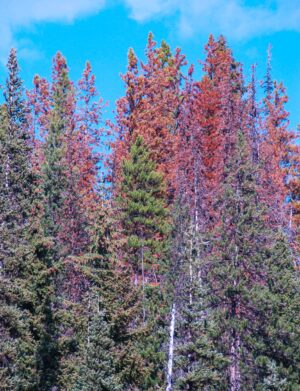 DENVER — Vast swaths of the ponderosa pine forests that blanket Colorado’s Front Range mountains could turn rust-colored and die over the next five years as pine beetles begin to spread aggressively, new federal forecasts show. Aerial surveys conducted by the U.S. Forest Service over the last year found evidence of rapidly spreading beetle infestations along the mountains and foothills that stretch from southern Larimer County to southern El Paso County, including the western flank of metro Denver. Already, pockets of dead trees are visible from Interstate 70 and U.S. 285. The rapid uptick in beetle-killed trees near the state’s largest cities and major highways prompted state leaders to form a task force this month to grapple with the outbreak. Gov. Jared Polis
 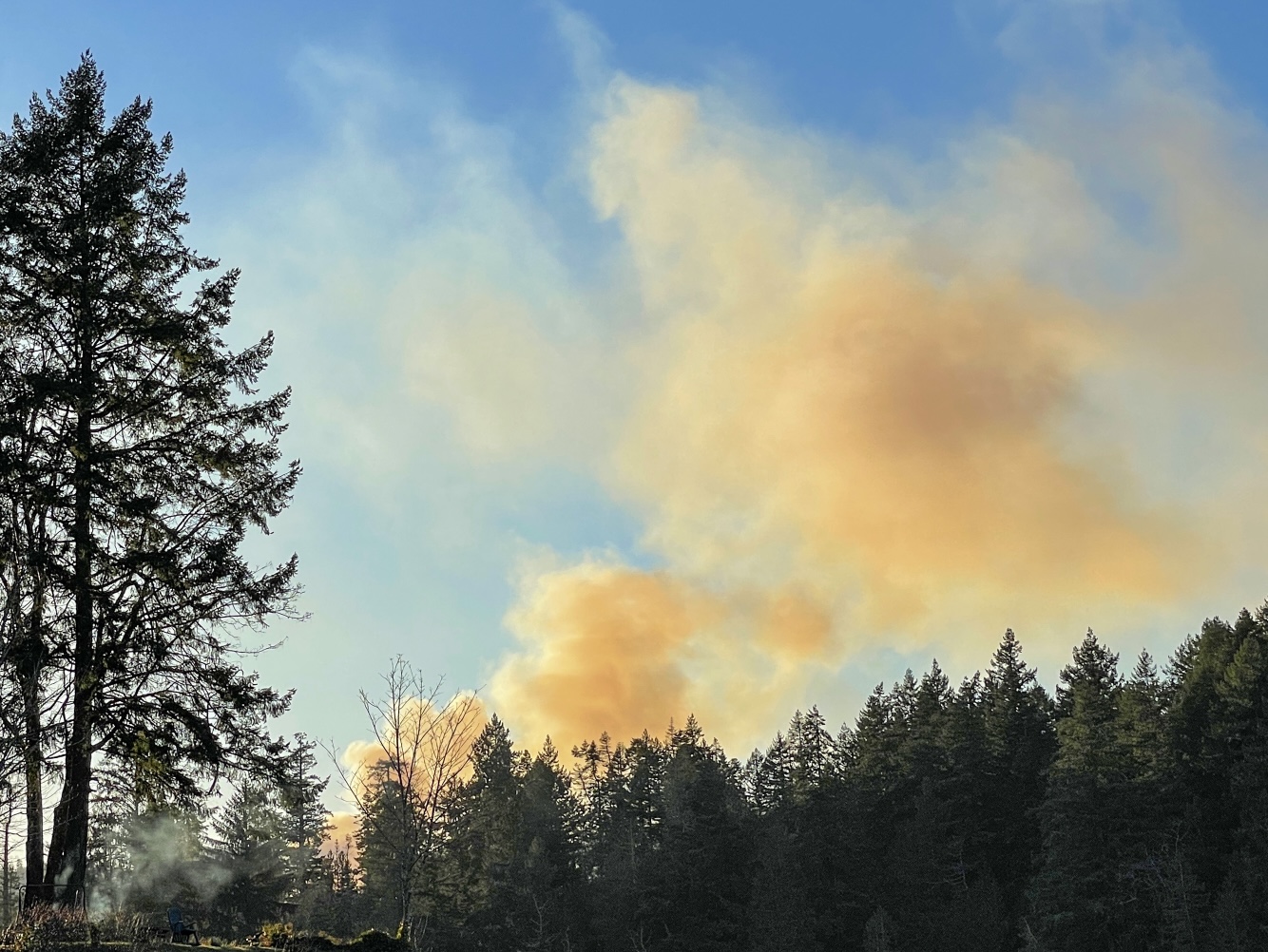 Wildfires are not always purely destructive. In many forests, fire can clear out built up dead material, return nutrients to the soil, and help ecosystems reset. For more than 100 years, the United States has spent billions of dollars on fire suppression to protect people, homes, and sensitive environments. But putting out too many fires can also prevent landscapes from getting the burns they need, allowing extra fuel to accumulate and raising the risk of larger fires later. New research … reports that nearly 38 million hectares of land in the western United States are historically behind on burning. The researchers describe these areas as being in a “fire deficit.” …”Conditions are getting so warm and dry that it’s causing huge amounts of fire compared to the historical record,” said Winslow Hansen, director of the Western Fire and Forest Resilience Collaborative and scientist at Cary Institute of Ecosystem Studies.
 Cutting red tape and streamlining project work have been marching orders for the U.S. Forest Service throughout the first year of the second Trump administration. Last week, a federal court ruling on a Greater Yellowstone landscape project showed how far those directives can backfire. …Initially proposed in 2020, it received a decision notice in 2023. Opponents referred to it by its acronym, SPLAT, and promptly sued to block it. In his December 11 opinion, U.S. District Judge Donald Molloy wrote that South Plateau failed to meet requirements of the National Environmental Policy Act, National Forest Management Act and Endangered Species Act. But he added the “primary challenge concerns the project’s conditions-based management approach.” Molloy generally agreed with the plaintiffs’ concern. “This approach,” he said, “conflates a promise of future statutory compliance with actual compliance.”




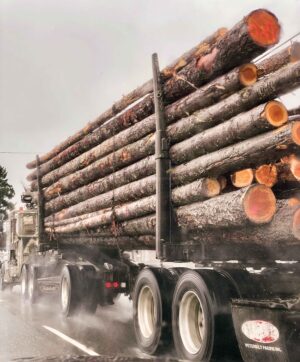 STARKVILLE, Mississippi — For all the major investments and structural changes in 2025, marked by significant sawmill expansions, shifting market dynamics and continued pressure in the pulp and paper sector, Mississippi’s timber industry observed limited monetary change. The state’s total timber value for 2025 is estimated to be $1.47 billion, which is down 1% from last year. This year’s harvest amounted to 36.4 million tons of timber products, which is down slightly from last year based on timber severance tax receipts. The value of standing timber paid to landowners as stumpage was $660 million, a 9% decline from 2024. The harvest and trucking industries, however, added $807 million to timber’s value in 2025, which was 7% more than last year. Eric McConnell, associate professor of forest business, said the industry experienced a sizable increase in the small pine sawtimber. …The forestry industry also faced pulp and paper headwinds.
  FLORIDA – Florida state officials warned of heightened wildfire risks across the state as dry conditions were expected to continue into 2026. “I’ve been with the agency a long time, and this is the driest winter that I can remember in quite a while,” Florida Forest Service Director Rick Dolan said during a Friday press conference. The number of wildfires had increased significantly, with more than 3,000 reported in 2025 compared to approximately 2,000 in 2024. This surge came months before Florida’s typical peak wildfire season, which usually occurs between April and June. Florida Commissioner of Agriculture Wilton Simpson emphasized that human activity was a major concern. “The majority of those fires are started by backyard fires, arson, things of that nature,” Simpson said. “We need everyone to be diligent as we come into the new year with the drier conditions.”
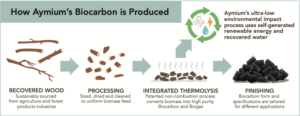 Weyerhaeuser, America’s largest private landowner, said it has launched a venture to turn runty trees and sawdust from its fleet of mills into a replacement for metallurgical coal used in steel making. The forest-products company said it expects production to begin in 2027 at a facility being built next to its sawmill in McComb, Mississippi—the first of several biocarbon plants planned by Weyerhaeuser and partner Aymium. It is the latest effort to find a market for the trees too small or otherwise unsuitable for making lumber. Such wood has typically been sent to pulp and paper mills, but U.S. wood-pulp consumption capacity has plunged due to waning paper demand. …Stockfish said he envisions the venture with Aymium operating as many as 10 or 11 biocarbon production facilities across Weyerhaeuser’s U.S. properties. …Aymium CEO James Mennell said the company’s process works with all species of wood as well as agricultural residues. [to access the full story a WSJ subscription is required]
 Washington state officials admitted Jan. 6 they overstated by more than 80% how much projects funded by cap-and-trade taxes have reduced greenhouse gases. The Department of Commerce blamed data entry errors for inflating the benefits of eight grants that helped low- and moderate income households buy energy-efficient electric appliances. The state reported in November the eight grants will cut emissions by 7.5 million metric tons and accounted for 86% of all reductions over two years. The actual reduction was only 78,000 tons, according to Commerce. Commerce’s correction confirmed calculations by Washington Policy Center vice president for research Todd Myers. Earlier in the day, Myers posted online that 86% of the purported reductions were “probably fake.” …The Department of Ecology compiled and issued the faulty report. The report was a comprehensive accounting of how 37 state agencies and universities spent $1.5 billion in cap-and-trade taxes during the 2023-25 biennium, Ecology said.
 WISCONSIN — Hayward is the “first choice” for a German company considering building a $1.5 billion plant to convert wood and wood waste into sustainable aviation fuel, but the company also is talking to Minnesota, Michigan and other states, said Matthias Mueller, CEO of Synthec Fuels. …Hayward has good access to energy and to rail and highway transportation, it is not far from the Minneapolis and Chicago airports, and it is home to Synthec’s partner Johnson Timber, Mueller said. European investors have committed to providing $1.5 billion to build that plant, but Wisconsin lawmakers are working to make the state more attractive with the Forestry Revitalization Act that would provide $210 million in tax credits and loans. …The proposed plant annually would use 890,000 tons of woody biomass to produce 48 million gallons of sustainable aviation fuel.