 As Canada’s trade deal with the US and Mexico faces a crucial review, many US industries are urging the Trump administration to preserve the agreement and to stop putting tariffs on imports from its northern and southern neighbours. Ahead of the public hearings scheduled this week, some of the heaviest hitters in the U.S. manufacturing, industrial and retail sectors have submitted briefs extolling the agreement’s benefits to the domestic economy. …CUSMA is “the most pro-US manufacturing trade agreement in history,” said the National Association of Manufacturers, the largest organization in a sector that contributes $2.9 trillion US to the nation’s GDP. …The National Association of Home Builders calls on the Trump administration to scrap all tariffs on building material imported from Canada and Mexico, including Canadian softwood lumber, which it says “fills a unique niche in residential construction that is not easily replaced with domestic sources.”
 The much-pilloried Canada-U.S.-Mexico trade agreement was signed seven years ago this weekend—on November 30, 2018. A year later, it was amended to address rules of origin for autos, digital trade, IP, dairy and, who could forget, a sunset clause. We can all do the math. The December 10, 2019 amendments set in motion a 16-year term for the agreement, with a mandatory review every six years. Which means we’ll see more of a requiem than a birthday bash next week when Mark Carney is in Washington to help kick off the 2026 FIFA World Cup. But don’t bury CUSMA just yet. Despite the U.S. President’s freeze on negotiations, officials from both countries are talking every day and laying the groundwork for what will be an intense 2026. Not many insiders seriously expect CUSMA to go away; they’re working on changes—modifications, enhancements, renovations, depending on your point of view—that will continue to change the fabric of continental commerce.
 President Donald Trump has yet to follow through on his threat to impose an additional 10 percent tariff on Canadian imports, four weeks after he halted “all trade negotiations” over an anti-tariff ad the province of Ontario ran. Trump’s announcement had Canadian exporters preparing for a worst-case scenario: a sweeping levy layered on top of existing double-digit duties. …The White House did not say whether it still plans to impose the tariff when asked for comment. But a separate US official suggested the Trump administration had opted to hold off on additional duties — which would have sent tariffs on Canadian goods to 45% — and instead continue to dangle the threat as the two sides gear up for future talks. “The Canadians know what’s on the table,” said the official. Volpe said a personal intervention by Carney in Asia last month may have helped matters, too.



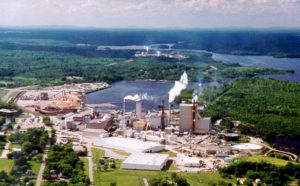
 KINGSPORT, Tennessee — About 300 gallons of waste leaked from Domtar’s mill site to Domtar Park, according to Tennessee Department of Environment and Conservation documents. Of the 300 gallons of waste, which included liquids and solids, about 150 gallons were recovered. The mill’s 25-acre lagoon was lowered four to six inches as a precautionary measure in response to the leak, Domtar told the Times News. In its letter to TDEC, Domtar said no detrimental effects were observed to the property or the environment due to the “organic nature” of the lagoon’s contents. Domtar also said it believed the waste found at Domtar Park was “partially” treated through its wastewater treatment process. “The leak did not reach waters of the state and Domtar representatives indicated mitigation was taking place. No further action was taken by the department,” said TDEC spokesperson Jennifer Donnals in a statement to Six Rivers Media.






 KINCHELOE, Michigan — A unique manufacturing facility opened in September along a CN line in Kincheloe, Michigan. Located in the Chippewa County Industrial Park in Michigan’s upper peninsula, the $7.3 million, 20,000-square foot facility serves as a transportation and logistics hub for wood and lumber dealer Maple Transport. The facility features a rail spur and is situated near Interstate 75. The new manufacturing hub will support Michigan’s $20 billion forest products industry and serve other new or expanding businesses, Maple Transport officials say. Project funding included $5.8 million from the U.S. Economic Development Administration, $1.25 million in matching dollars from the Michigan Economic Development Corp., and contributions from the Chippewa County Economic Development Corp. and a Strategic Site Readiness Program grant. Construction began in spring 2024 on the manufacturing facility, which Maple Transport will use to ship wood products, CN officials said in an email. The facility will be served by both CN and trucks.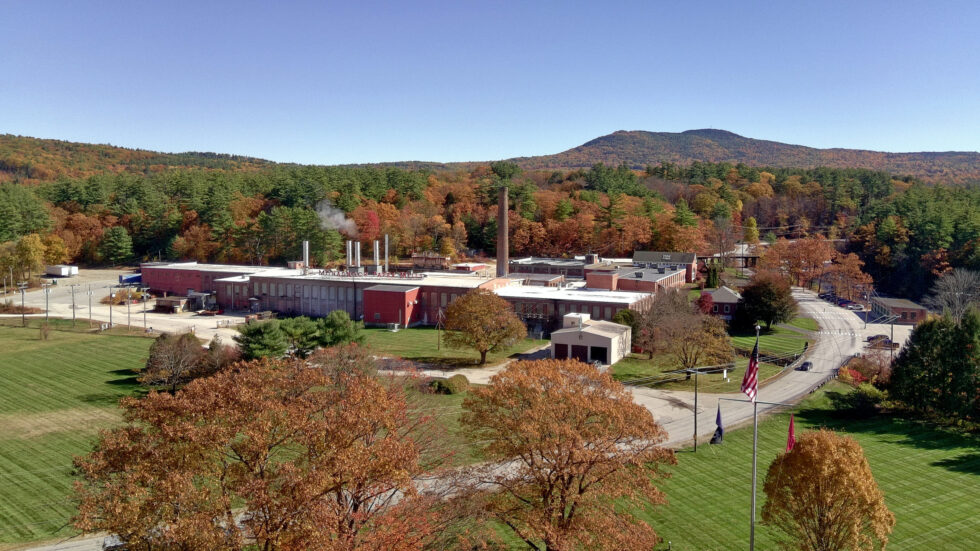
 STEVENS POINT, Wisconsin – USDA Rural Development Wisconsin State Director Andrew Iverson announced the Timber Professionals Cooperative Enterprises (TPCE) will use a Rural Development loan of $800,000 to re-open and expand the former Hoffman Wood Fiber sawmill in Shawano County. This investment is through the Timber Production Expansion Guaranteed Loan Program (TPEP). TPCE will use guaranteed loan funds to purchase over 49 acres of real estate and equipment. The equipment will allow TCPE to improve the efficiency of manufacturing wood chips. The project also includes plans to expand capabilities of the site to manufacture new, higher-value products from the same raw materials. The project will create six jobs. …TPCE plans to implement a detailed process to improve productivity involving processes in the wood yard and chip mill. Installation of an automatic log feed deck will help increase production from 2,500 to 4,000 tons per month.








 The US Census Bureau announced the following value put in place construction statistics. …Construction spending during August 2025 was estimated at a seasonally adjusted annual rate of $2,169.5 billion, 0.2 percent (±0.7 percent) above the revised July estimate of $2,165.0 billion. The August figure is 1.6 percent (±1.5 percent) below the August 2024 estimate of $2,205.3 billion. During the first eight months of this year, construction spending amounted to $1,438.0 billion, 1.8 percent (±1.0 percent) below the $1,463.7 billion for the same period in 2024. …Spending on private construction was at a seasonally adjusted annual rate of $1,652.1 billion, 0.3 percent (±0.5 percent) above the revised July estimate of $1,647.5 billion. …In August, the estimated seasonally adjusted annual rate of public construction spending was $517.3 billion, virtually unchanged from (±1.2 percent) the revised July estimate of $517.5 billion.


 SALT LAKE CITY — Homeowners in high wildfire risk areas should soon expect home assessments and a new fee. HB48 Wildland Urban Interface Modifications requires the Utah Division of Forestry, Fire and State Lands to draw a high wildfire risk boundary across the state. The division will inspect homes within the boundary for fire risk, and property owners will pay a fee based on their risk and square footage, which will cover the cost of the program and lot assessments. State Wildfire Risk Reductions Programs Manager Joseph Anderson said the assessments will focus on the vegetation surrounding the home and the materials used in the structure. “The goal is to remove any vegetation or anything that could catch an ember and allow that ember to burn and catch the structure on fire,” Anderson said. The bill comes after catastrophic wildfires across the West, like the California Eaton Fire from January 2025.



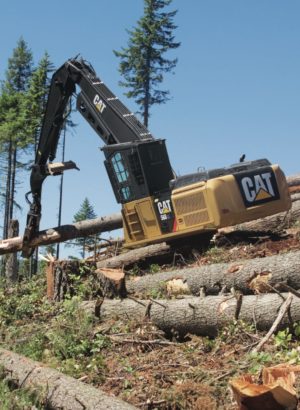 The timber industry built around the Tongass National Forest in Alaska got a boost from the Trump administration’s latest trade deal with China. In settling part of its trade battles, China agreed to accept imports of US sawlogs for the first time since banning them in March due to worries about insect pests. The resumption of exports — effective Nov. 12 — would help companies like Alcan Forest Products in Ketchikan, which for years has sold unprocessed logs to China. The latest agreement lasts one year, said Tessa Axelson, executive director of the Alaska Forest Association. A 10% tariff on products from both countries would still apply. …Southeast Alaska’s timber industry relies heavily on the nearly 17-million-acre Tongass, although most of the forest is off-limits to logging. Federal law allows the export of unprocessed logs, a practice long banned elsewhere to protect the domestic lumber processing industry. [to access the full story an E&ENews subscription is required]

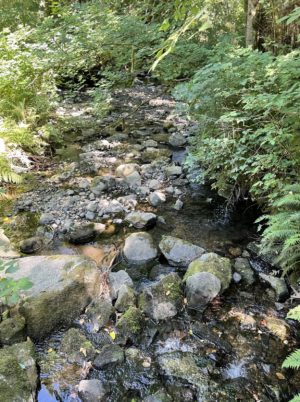 The Washington Forest Protection Association (WFPA) announced last week that it would file litigation against Washington state. The lawsuit will challenge a new buffer rule by the Washington State Forest Practices Board. The new rule expands the required no-cut buffers around non-fish-bearing streams in the state, requiring forestland owners to leave more trees uncut. WFPA states that it believes the new rule is a result of the Washington state Department of Ecology “misinterpreting” a federal water temperature standard. The statement added that the financial cost of implementing the rule is so large that it “justifies a judicial review.” The group also painted the creation of the new rule as a break from the state’s tradition of collaboration with other stakeholders. …“The rule overreaches the law, ignores on-the-ground realities, adds costly and unnecessary regulations, and offers little to no benefit for salmon recovery.”
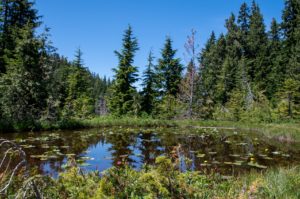 As the US Forest Service considers the future management of the Tongass National Forest, I hope that Alaska’s congressional delegation will listen to what Southeast Alaskans already know: Wild salmon are one of the Tongass’ most valuable resources. If we leave the trees standing and protect the habitat that fish need, the Tongass will continue to generate billions of dollars in natural dividends, in turn supporting thousands of fishing jobs and providing millions of pounds of nutritious seafood year after year. …For decades, Southeast Alaska’s communities and fishermen have fought industrial logging in the Tongass. …The harmful impacts of industrial logging on Southeast Alaska’s salmon watersheds and our natural dividends are not hypothetical. Protecting the Tongass is the most cost-effective way to improve ecosystem productivity and ensure the well-being for all who call Southeast home.
  TROY, Montana — Vincent Logging, a family-owned logging company in Libby is working with Hecla Mining Company to manage its forested lands for wildlife habitat. It’s a 15-hundred acre research project to determine which management techniques provide the best habitat for endangered species. …It’s forest land in the Bull Lake area on Hecla Mining property near Troy. “We’re going to create grizzly bear habitat or enhance existing habitat for the bear,” he said. “Doing so, will enhance habitat for all the other critters that are living in here or that might live in here. We’re also studying it for success or failure at the same time.” Chas said thinning small diameter trees opens the area to create more plants that grizzlies like to eat. Larger diameter trees and thickets are left untouched to create a safe haven for the bears.
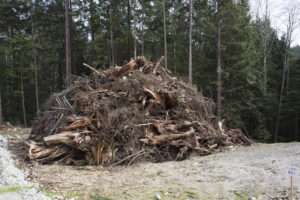 ARIZONA — For the first time in months, Forest Service timber managers last week attended a Natural Resources Working Group meeting on the continuing effort to restore Northern Arizona forests and protect communities including Payson, Show Low, Pinetop and Pine. Local officials and logging operators said they are still searching for ways to handle millions of tons of low-value brush, slash and small trees that crowd the region’s overgrown ponderosa pine forests. The group, formed through the Eastern Arizona Counties Organization, meets regularly with industry representatives and Forest Service staff. …The Four Forest Restoration Initiative (4FRI) completed about 18,000 acres of thinning in the past year. Mass layoffs and the shutdown limited collaboration and fieldwork. …Pascal Berlioux, executive director of the Eastern Arizona Counties Organization, said a major problem was reduced production at the Lignetics plant in Show Low, which normally buys large amounts of biomass for wood-pellet manufacturing.
 It was no surprise that everyone on the timber panel at this month’s Alaska Resource Development Council conference had the same message: The industry needs a larger supply of trees to cut. And a steady, bankable supply, said Joe Young, of Tok, who started Young’s Timber in Alaska’s Interior more than 30 years ago. …The Nov. 13 industry panel at the annual conference held in Anchorage also talked about demand for their product and the challenges in meeting that demand. Juneau attorney Jim Clark, said the Trump administration’s move to rescind the Roadless Rule, which has been around since 2001, could help open areas of the Tongass National Forest to logging. …The lack of timber sales, financial pressures and opposition from conservation groups have knocked down Alaska timber industry jobs from almost 4,000 in 1990 to about 700 in 2015 and just 360 in 2024, according to Alaska Department of Labor statistics.
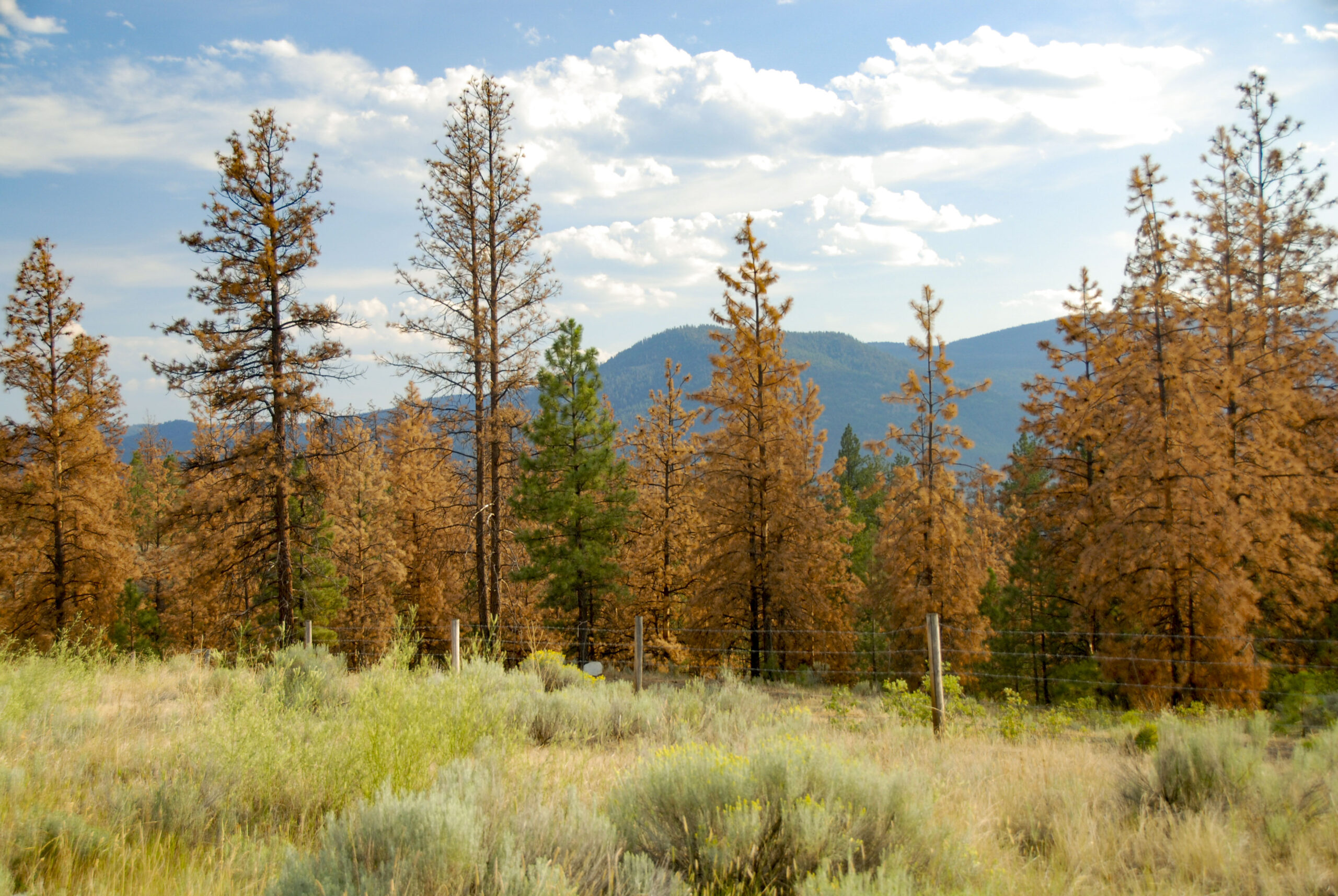 Kremmling, Colorado — The Mill in Kremmling is contributing to the natural carbon-storing success of trees in Routt County by purchasing and reusing standing dead trees logged during wildfire mitigation projects and turned into usable wood products. The company’s goal is to support the local economy and Colorado’s timber industry by creating a demand for forest products sourced entirely from fire mitigation projects, said Lisa Hara, owner and CEO at The Mill. Some 90% of the trees processed at The Mill come from Routt County, with 10% from Jefferson County for Douglas fir wood, Hara said. “We help Routt County by creating a demand for materials that come directly from fire mitigation and watershed projects,” said Hara, who purchased The Mill in spring 2023. “Instead of being treated as waste, this wood becomes a resource, one that supports forest health and rural jobs at the same time.”

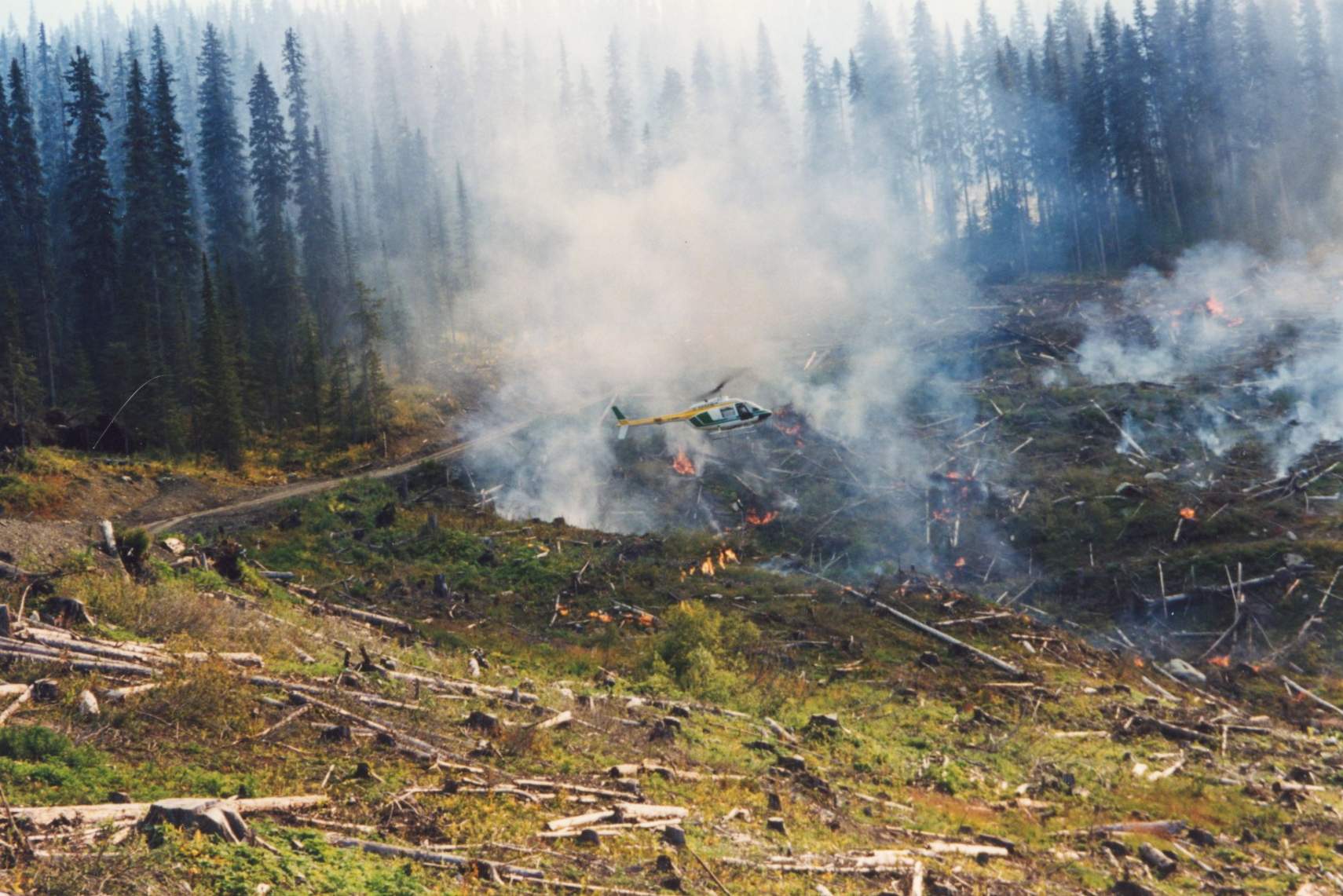 Oregon — Deschutes County is preparing to deploy $3.4 million for wildfire mitigation projects to reduce the likelihood of catastrophic wildfire in La Pine. The money comes from the U.S. Department of Agriculture and is part of a $200 million funding package to assist fire-prone areas across the country. Work is expected to begin in the spring on a variety of projects ranging from fuels reduction to community education, according to Lauren Street, a natural resources specialist with Deschutes County. The project is expected to continue for five years. La Pine was one of 58 recipients nationwide to benefit from community wildfire defense grants. The grants are funded by the Biden-era bipartisan infrastructure law of 2021. Elsewhere in Oregon, the Sweet Home Fire and Ambulance District is set to receive $8.7 million, the largest grant for any project in the state.



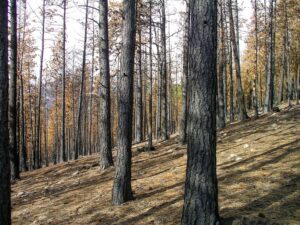 As the American West warms due to climate change, wildfires are increasingly burning in higher-elevation mountains, charring the watersheds where the region’s vital snowpack accumulates. A new study has found that in the immediate aftermath of fires across the region, the snowpack disappears earlier in burned areas. This change can threaten forest health and affect the downstream farms, cities and species that rely on the snowpack for their water, according to other research. Scientists who study the effects of wildfires on the snowpack and streamflows are finding that the story is complex and nuanced. The impacts can vary greatly across the West’s diverse ecosystems and topography. Plus, each wildfire burns differently, so the severity of the blaze is another critical factor. …Published in the Sept. 17 issue of
 PROVIDENCE, R.I. — It’s one of nature’s mysteries: How can woodpeckers, the smallest of which weigh less than an ounce, drill permanent holes into massive trees using only their tiny heads? New research shows that there’s much more at play, anatomically: When a woodpecker bores into wood, it uses not only its head but its entire body, as well as its breathing. In a study published in the Journal of Experimental Biology, a team led by biologists at Brown University reveals how woodpeckers combine breathing and whole-body coordination to drill into trees with extraordinary force. “These findings expand our understanding of the links between respiration, muscle physiology and behavior to perform extreme motor feats and meet ecological challenges,” said lead author Nicholas Antonson… The team studied downy woodpeckers, the smallest species of woodpeckers in North America, which populate forested areas throughout the United States and Canada.


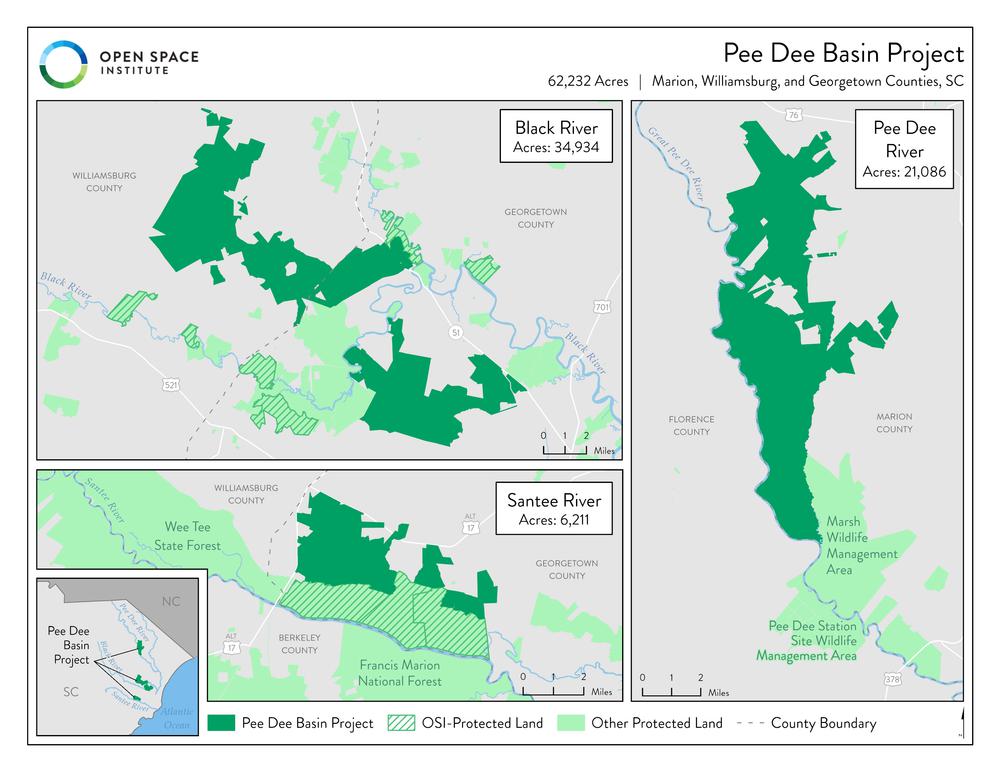

 Domtar Corp. and Eastman Chemical Co. said they will continue to record and report climate-warming emissions even with the Environmental Protection Agency’s move to end a reporting program for them. The EPA’s Greenhouse Gas Reporting Program, which went into effect in 2010, requires about 8,000 facilities to annually report their greenhouse gas emissions. That includes chemical plants and pulp and paper manufacturing facilities like Eastman and Domtar’s Kingsport locations. …Domtar said in a statement to Six Rivers Media that it plans to continue reporting greenhouse gas data and reducing those emissions are part of the company’s objectives. “Many of our customers and stakeholders are concerned about climate issues, and carbon footprints are increasingly being considered in purchasing decisions,” said Jan Martin, Domtar’s director of U.S. Public Affairs. …Other industry trade groups have shared their own concerns over the end of the program, saying it could complicate their processes or add new costs.
  The
The