
 SÃO PAULO, Brazil — Suzano, the world’s largest pulp producer, and Kimberly-Clark announced the creation of a US$3.4 billion joint venture focused on the manufacture, marketing and distribution of consumer and professional tissue products, such as toilet paper, napkins, paper towels and facial tissues in over 70 countries. Suzano will acquire a 51% interest in the new entity, with Kimberly-Clark holding a 49% interest. Suzano will pay Kimberly-Clark US$1.734 billion in cash at the closing of the transaction. …The transaction is expected to close in mid-2026 and involves approximately 9,000 employees. The new business will be a company incorporated in the Netherlands and will include 22 manufacturing facilities located in 14 countries. Collectively, these facilities have capacity to produce 1 million tonnes of tissue a year. The assets to be included in the new joint venture generated net sales in 2024 of US$3.3 billion. Kimberly-Clark will retain its consumer tissue and professional businesses in the US.


 Over the past decade, Canadian forestry companies have significantly expanded their footprint in the American lumber industry. While foreign investment remains a key component of a dynamic US economy, industry analysts and policymakers are increasingly scrutinizing the long-term implications of international control over critical domestic manufacturing infrastructure. Canadian-owned firms—including West Fraser, Canfor and Interfor—now operate dozens of sawmills in the US, with many holding more assets south of the border than in their home country. Additional Canadian firms—such as Tolko, Maibec, J.D. Irving, and Kruger—also maintain active operations and land holdings throughout the country. As foreign ownership of US lumber mills grows, several key concerns are emerging: Supply Chain Autonomy… Economic Retention… Market Influence. …Industry stakeholders are urging a closer examination of the issue. Policy suggestions include incentivizing domestic ownership, increasing sourcing transparency, and evaluating regulatory frameworks around foreign investment in strategic industries.
 VANCOUVER, BC —
 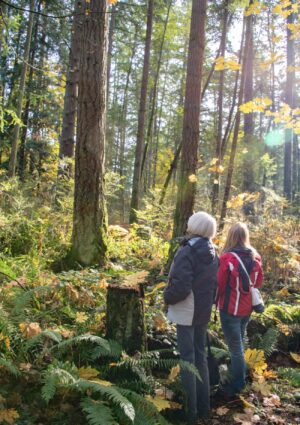 A program that protects privately owned forests for timber and other uses has survived in a megabill being put together in the Senate, after falling victim to House budget cutters in May. The Senate Agriculture, Nutrition and Forestry Committee saved the Forest Legacy Program in its piece of the big tax-cut and spending bill, refusing to cut off $100 million in Inflation Reduction Act funding. “This is a victory not only for forests, but for the families, economies, and ecosystems that depend on them,” said Lesley Kane Szynal, chair of the Land and Water Conservation Fund Coalition, an advocacy group, in a news release Thursday. The Forest Legacy Program pays for conservation easements and land purchases that prevent privately owned forests from being converted to other uses. In many cases, they’ve been used to keep timber operations in business while protecting forest watersheds and allowing for recreational access. [to access the full story an E&E News subscription is required]
 A federal appeals court on Tuesday agreed to let many of President Trump’s sweeping tariffs on US trade partners remain in effect for now, extending a pause issued late last month after a separate court ruled the tariffs were illegal. The Federal Circuit Court of Appeals granted the Trump administration’s request for a longer pause after issuing a temporary stay of the lower court ruling last month. The court put the case on a fast track to be resolved by the end of this summer, noting that “these cases present issues of exceptional importance warranting expedited en banc consideration of the merits in the first instance.” The decision comes after the US Court of International Trade ruled on May 28 that Congress did not delegate “unbounded” tariff authority to the president in the International Emergency Economic Powers Act of 1977. Trump appealed the ruling and, hours later, the appeals court granted the temporary stay.
 LONDON — US and Chinese officials said on Tuesday they had agreed on a framework to get their trade truce back on track and remove China’s export restrictions on rare earths while offering little sign of a durable resolution to longstanding trade tensions. …Lutnick said the agreement would remove restrictions on Chinese exports of rare earth minerals and magnets and some of the recent US export restrictions “in a balanced way”, but did not provide details…. adding that both sides will now return to present the framework to their respective presidents for approvals. …The two sides left Geneva with fundamentally different views of the terms of that agreement and needed to be more specific on required actions, said Josh Lipsky. …They have until August 10 to negotiate a more comprehensive agreement, or tariff rates will snap back from about 30% to 145% on the U.S. side and from 10% to 125% on the Chinese side.
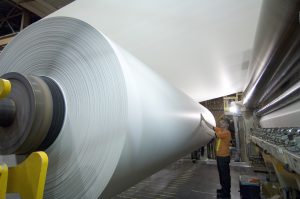 While the pulp and paper industry is inherently local—particularly in terms of production and sourcing of raw materials—trade is fundamentally cross-border and international. As a result, the sector is highly exposed to trade barriers and tensions, such as those created by the tariff policies introduced during the Trump administration. Tariffs are expected to put significant pressure on transportation and logistics—sectors that are intrinsically linked to the pulp and paper industry. This strain is partly mitigated by the fact that many pulp and paper companies have made substantial investments in overseas production capacity. Recent mergers in the industry, such as the Smurfit Kappa–WestRock merger and the International Paper–DS Smith merger, are also likely to offset some of the negative impacts of tariffs. These newly formed giants now operate production facilities in both Europe and the US. …This consolidation trend may render the pulp and paper industry more resilient.

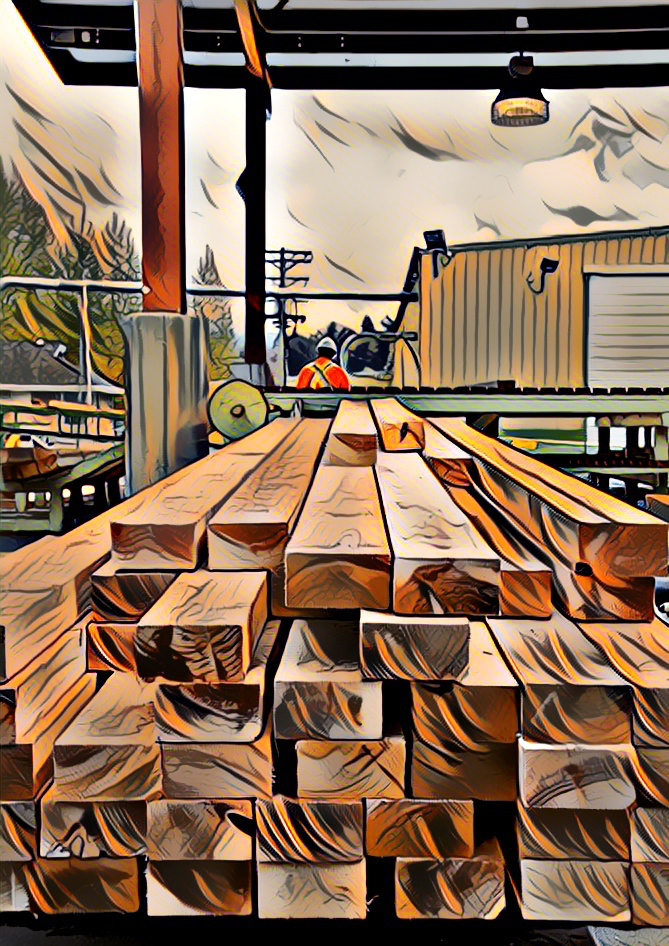 Duties placed on Canadian lumber entering the U.S. could eventually help markets here, a local mill manager is saying, but they are still a few months out. There’s a misconception that recent tariffs announced against Canadian goods extended to lumber products, F.H. Stoltze Land and Lumber vice president and general manager Paul McKenzie said Monday. The U.S.-Canada lumber market is governed under a separate and oft disputed softwood agreement that places duties on Canadian lumber. The duties are supposed to keep Canadians from dumping government subsidized lumbers onto U.S. markets. They currently amount to about 14% combined. By August or September, they’re expected to climb to 34%, McKenzie noted. That will be helpful to us,” McKenzie said. Stoltze has operated its independent mill in Columbia Falls, Montana over 100 years. McKenzie said Canadians are currently dumping their products into the U.S. ahead of the hike in duties.
 KINGSPORT, Tennessee — It could be the third or fourth quarter of 2026 before an anaerobic digester is completed to help with odor mitigation at the Kingsport mill, Domtar officials shared Tuesday. Charlie Floyd, VP of strategic capital projects for Domtar, and Bonnie Depew, environmental manager at Domtar’s Kingsport mill, presented updates about Project Bandit to the Kingsport Economic Development Board. Floyd said the biggest holdup is waiting on permits from the Tennessee Department of Environment and Conservation. TDEC has already asked for two extensions to review the permit application, state records show. …His hope is for the permit to be in the hands of Domtar by the end of the month. Over 80% of the equipment for the anaerobic digester has been purchased, according to Floyd. …At the height of construction, Floyd said there will be around 150 contractors on site to help build the digester and associated equipment.
 Lumber futures rose past $610 per thousand board feet, a ten-week high, as steady construction activity met tightening supply and mounting trade barriers. US homebuilding remains steady with single-family starts flat at 1.36 million units in April and permits edging lower, while Canadian multi-unit starts jumped 34%, keeping mill orders firm. Canadian harvests are constrained by pine-beetle infestations, prairie wildfires that have burned more than 200,000 hectares this spring and strict cut limits that left British Columbia nearly 42% below its allowable quota in 2023. In the US, sawmill utilization stalled in the mid-70% range despite recent capacity additions. Tariffs of roughly 14.5% on Canadian softwood, along with threats of higher levies, have discouraged cross-border shipments, while major exporters divert supply to Asian and European markets. Elevated fuel and transportation costs further raise delivered prices.
 The CME’s physical lumber futures have been in a bullish trend since the July 2024 low of $455.50 per 1,000 board feet. The weekly chart indicates that lumber futures have formed higher lows and higher highs, reaching a peak of $699 per 1,000 board feet in March 2025. While the price has dropped below the $600 level, the pattern of higher lows remains intact in June 2025. …Seasonality suggests that a lumber rally may need to wait until 2026… Lumber tends to be a seasonal commodity, with prices peaking during late winter and early spring as the weather improves and construction activity increases. In 2021, the old random-length lumber futures rose to a record high of $1,711.20 per 1,000 board feet in May, and in 2022, reached a lower high of $1,477.40 in March. …Keep an eye on interest rates as declines could ignite pent-up demand for new homes, which could light a bullish fuse under the lumber futures arena.

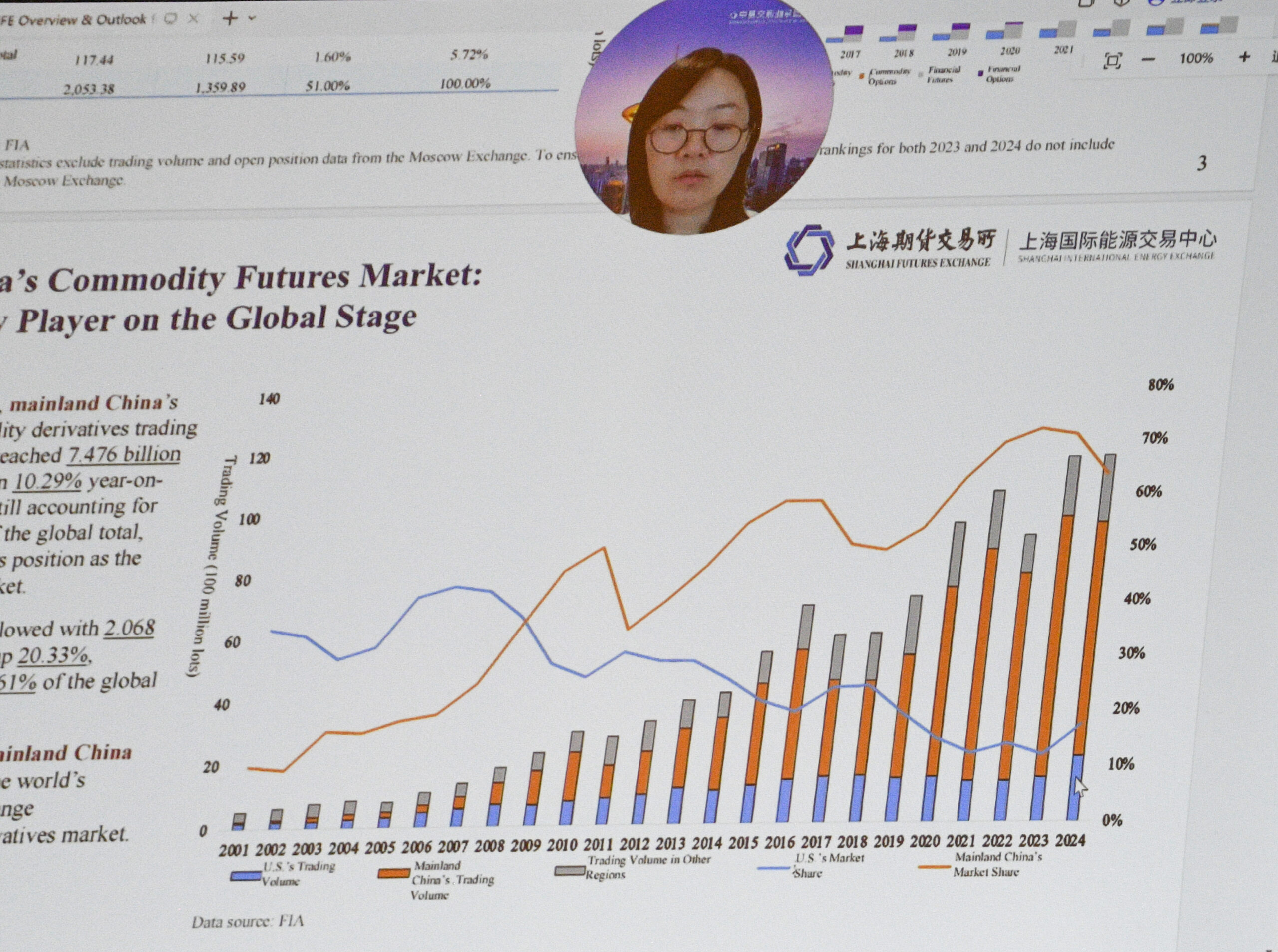 At International Pulp Week, three speakers discussed businesses that connect to China’s role in the global pulp industry — including trading, port logistics and the futures market. Haidong Weng, Executive Vice President of Pulp & Paper Research at Xiamen C&D… explained that after the US implemented its third wave of tariffs, Chinese exports of paper and board to the US fell sharply, with vessel density in major Chinese ports reflecting a significant pullback in trade flows. …He also described the cascading effects on US retail markets. …The scale and resilience of China’s port logistics were front and centre in a presentation by Tian Jun, representing the Shanghai International Port Group’s Luo Jing Terminal. Tian explained that SIPG views pulp as a strategic growth cargo across its network of general cargo terminals. …Another presentation came via video from Chi-Fei Fei of the Shanghai Futures Exchange (SHFE), who provided an overview of China’s pulp futures market.
 At International Pulp Week, Mathieu Wener, Senior Economist at Numera Analytics, provided a detailed overview of current trends in key end-use markets for pulp, with a particular focus on tissue and printing and writing papers. Drawing on recent data and modelling, he examined how these sectors have evolved post-pandemic, what is driving demand patterns today, and what may lie ahead. Wener began with tissue markets, where profitability has remained strong despite considerable cost pressures in recent years. “Producers passed through rising costs since 2022,” he noted, showing how eurozone parent roll and pulp prices had shifted over that period. Although price differentials between pulp and tissue had narrowed, margins remained healthy.” …Wener underscored the importance of tracking both macroeconomic forces and demographic trends in shaping pulp demand. For tissue, slowing population growth and cautious consumer behaviour would temper growth expectations. For printing and writing papers, the secular decline would continue, but at a somewhat more stable pace.
 The final presenter at International Pulp Week, Emanuele Bona, VP of Europe for the Pulp and Paper Products Council (PPPC), provided a comprehensive update on global market pulp demand trends, with a particular focus on the rebound underway in 2025 and the longer-term outlook for key markets and product segments. Bona began by noting that 2024 had been a weak year for market pulp demand, with global chemical market pulp demand falling by 0.9 percent. However, the first months of 2025 showed a marked improvement. “In 2025, after four months, demand is up almost one million tonnes,” he reported. Both softwood and hardwood pulp segments contributed to this recovery. …Looking ahead, Bona projected that global market pulp demand would return to growth but at a more moderate pace. “Growth to average 1.5 percent through 2029,” he said. The long-term trend for softwood pulp was expected to remain flat at best, while hardwood demand growth was projected to slow despite ongoing substitution trends.
 Uncertainty regarding tariffs continues to challenge companies across industries. It’s a common theme in every conversation I’ve had with fellow business owners lately: How do we plan, price or grow when the rules are constantly shifting? In our case, the lumber industry got a temporary break—framing lumber from Canada, which makes up over 30% of the US market, was exempt from the original tariffs. That’s good news for now, especially for residential construction. But there’s still no clarity on imports from other key countries like Brazil and China, where tariffs remain in full effect. That could have a serious impact on specialty products like Ipe and hardwood veneers. Other building materials—fasteners, finishes, flooring, and more—are also caught in the middle. …That cost will be passed on to the end user. Businesses like ours don’t have the luxury of absorbing increased costs indefinitely. If we did, we’d be out of business.
 There has been a lot of news recently on higher tariffs between the U.S. and its trading partners, including Canada and Mexico. One concern that is top of mind for many LBM dealers is how these new tariffs will affect lumber and other materials sold at yards and stores across the country. How concerned should I be and what action, if any, can I take to protect my business? Responses from lumberyards, full-line building material dealers, and specialty dealers/distributors:

 Stocks wavered Thursday as President Trump threatened setting unilateral tariffs on trading partners in two weeks. The S&P 500 added 0.2%, while the Nasdaq Composite gained 0.1%. …Wall Street awaits further developments on trade policy, especially between the U.S. and China, as talks between the two countries have been a focal point this week. Trump said Wednesday he would be willing to extend a July 8 deadline for finishing trade talks with countries before higher US levies take effect, but that the extensions may not be necessary. …“We still think the primary driver for market direction and to break out to all-time highs would be some resolution for tariffs and how they interlink with the budget and the Fed. And we see a lot of headlines about negotiations or pauses or frameworks, but we still haven’t seen a single signed trade deal,” said Tom Hainlin at U.S. Bank Asset Management Group.
 WASHINGTON, DC – Fannie Mae published the results of its May 2025 National Housing Survey® (NHS), which includes the
  U.S. home prices will rise steadily over coming years on an expected further decline in mortgage rates, according to property experts in a Reuters survey who expressed a near-unanimous view President Donald Trump’s tariffs would hinder affordable home construction. The same analysts had said three months ago that affordability and turnover in the market would improve, an upbeat outlook hinging on expectations the Federal Reserve will resume cutting interest rates after staying on the sidelines all year. That optimism has since been tempered with Congress passing a sweeping tax-cut and spending bill estimated to add roughly $3.3 trillion by 2034 to an already-enormous $36.2 trillion debt pile, according to nonpartisan think tank the Committee for a Responsible Federal Budget. Long-term bond yields have spiked higher, limiting scope for a decline in mortgage rates.
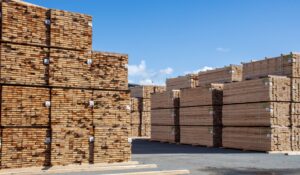 SACRAMENTO, California — There is already a crisis of available and affordable housing in America. But now, political uncertainty and economic volatility could make home buying even less attainable. …The proposed Trump tariffs on building materials are creating financial volatility that could send housing prices up significantly. Since his announcement of widespread tariffs on April 2, the additional costs imposed on imported lumber, gypsum, aluminum, electronics and other related materials delayed the nation’s housing starts in April, according to NAHB. …“More tariffs equal more anxiety and uncertainty for American businesses and consumers,” said David French, at the National Retail Federation. “Tariffs are a tax paid by the U.S. importer that will be passed along to the end consumer. …One of the largest material costs for housing construction is lumber, and the largest amounts are imported into the US from Canada.


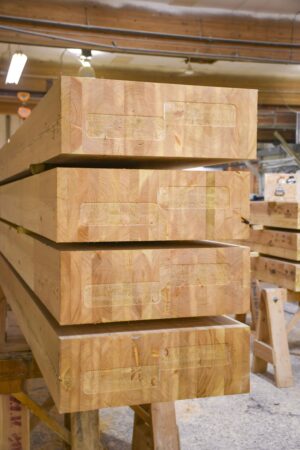 PORTLAND, Oregon – The Port of Portland is leasing a former marine terminal to a mass timber company as part of an effort to spur housing development and job growth in the area. On Wednesday, the Port of Portland approved a lease for Zaugg Timber Solutions to open a factory at the Port’s Mass Timber and Housing Innovation Campus at Terminal 2. …“Our partnership with ZTS marks a major leap forward in developing the Mass Timber and Housing Innovation Campus at T2,” said Kimberly Branam. “Their new manufacturing facility will boost our region’s economy by promoting sustainable forestry practices, creating quality jobs, and increasing housing production.” While the new 100,000-square-foot manufacturing facility is expected to open in 2028, ZTS will produce mass timber modular housing units, industrial and commercial buildings and other building components starting in 2026 in an interim manufacturing facility at the terminal, officials noted.


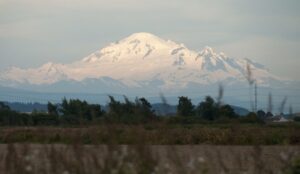 Eruptions can’t be prevented, so scientists have focused on improving early detection technologies. New work being done by NASA and the Smithsonian Institution builds upon the existing knowledge that changes in tree leaves can signify a volcanic eruption. Magma releases carbon dioxide, sulphur dioxide, and other gases as it ascends. Nearby trees absorb the carbon dioxide and become greener and more lush in response. According to the new research, these changes are detectable from space. The greener foliage can be read by NASA satellites like Landsat 8, as well as airborne instruments from the Airborne Validation Unified Experiment: Land to Ocean (AVUELO). There are roughly 1350 active volcanoes in the world, many of them in remote or hard-to-navigate terrain. Volcanic carbon dioxide is difficult to detect remotely. Scientists often have to travel to volcanoes to take direct measurements, which is a difficult and sometimes hazardous assignment.
 Federal agencies are seeking to reinterpret a key word in the Endangered Species Act that could weaken habitat protections for certain at-risk species, according to two wildlife biologists at North Carolina State University. The U.S. Fish and Wildlife Service and the National Marine Fisheries Service have proposed a rule that would exclude habitat modification and degradation from the regulatory definition of “harm” under the Endangered Species Act. “If we lose critical habitat protections for threatened and endangered species … they could face a heightened risk of extinction,” said Chris Moorman, a biology professor. Roland Kays, a research professor of fisheries, wildlife and conservation biology, added: “The Endangered Species Act, as it is written, is crucial to the protection and recovery of at-risk species across the country. And while there have been many attempts to change the law over the years, it’s held up and worked as intended.”


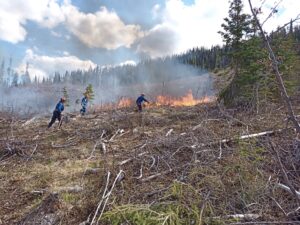 Trump administration officials on Tuesday warned of an ominous-looking fire season ahead as they repeated the case for unifying federal wildland firefighting agencies and thinning overgrown forests. Convening with the president in the White House Oval Office, Interior Secretary Doug Burgum and Agriculture Secretary Brook Rollins alternated lavishing praise on President Donald Trump with a fire-fighting call to arms and an insistence that their respective departments will be ready. “This is going to be an above-normal fire season,” Rollins said, standing near Trump, who was sitting behind the oak Resolute Desk. “This means that there is a higher likelihood of large and intense wildfires than is typically expected for this time of year for the next few months.” There were 64,897 wildfires reported in 2024, compared to 56,580 reported in 2023, according to the Boise, Idaho-based National Interagency Fire Center. The wildfires consumed 8.9 million acres in 2024 compared to 2.6 million acres in 2023. [to access the full story an E&E News subscription is required]

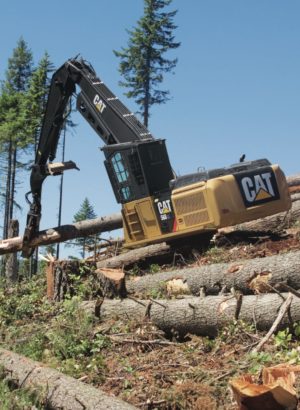 It was not long ago that the small town of Darrington, Washington drew its life from the towering stands of Douglas fir, cedar and hemlock on federal lands. …Efforts to protect the spotted owl severely restricted timber sales on federal land. “We’ve struggled since the owl wars to find an economy,” says Dan Rankin, who grew up in a local logging family and has for the past 14 years been the mayor of Darrington. So Mr. Rankin had reason for hope when Donald Trump re-entered the White House with promises to start cutting trees again. …But more than four months into Mr. Trump’s turbulent second mandate, an alternative outcome is already looming: that the dramatic actions his administration has taken since its return to office could result in fewer federal trees being cut. …Mr. Rankin’s worries are rooted in what he has seen happening at the U.S. Forest Service office. [to access the full story a Globe & Mail subscription is required]
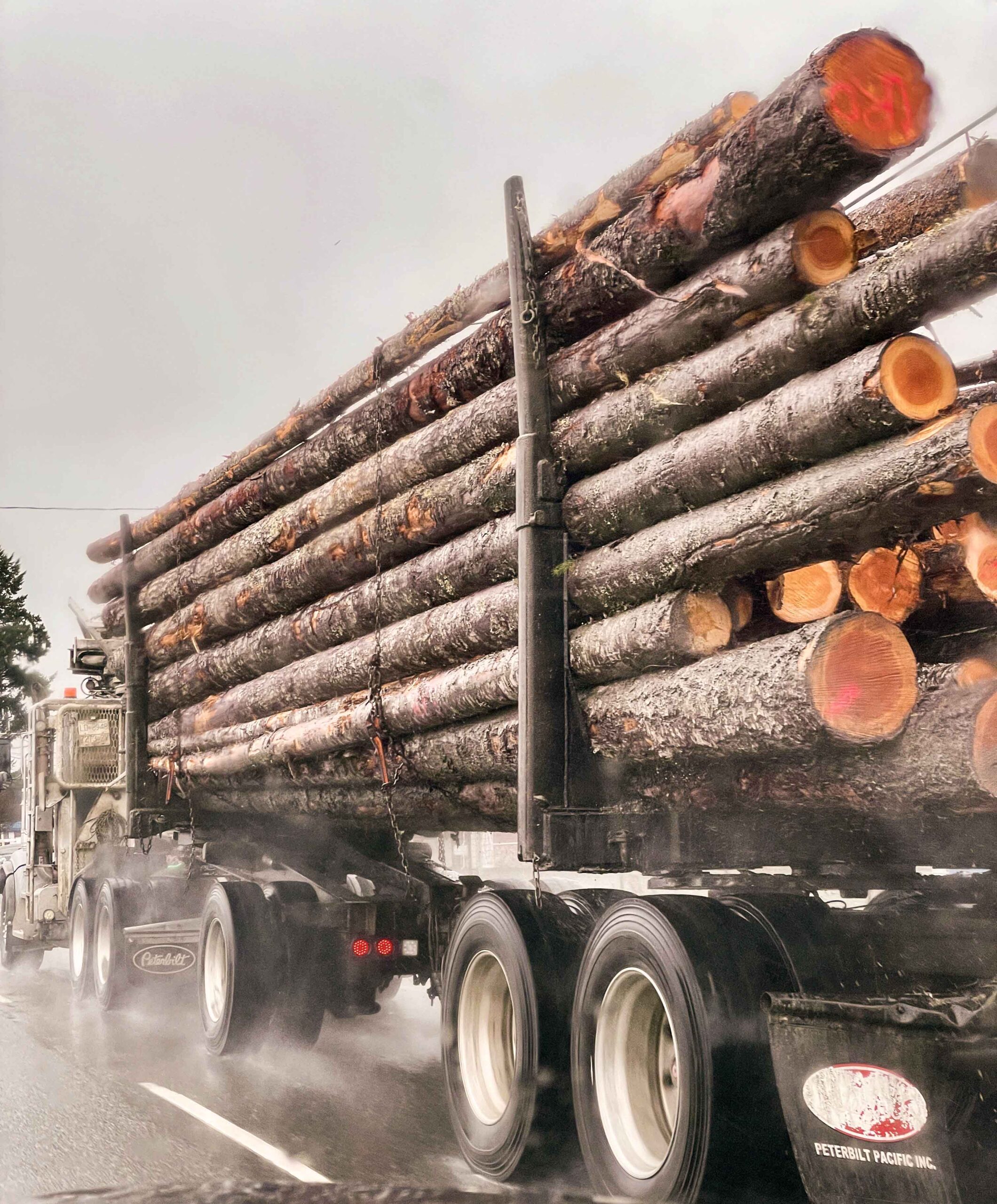
 SEATTLE — The US Forest Service has been tasked by President Trump to create a plan that will increase timber production in federal forests, and Pacific Northwest industry leaders are waiting to see how that plan will be implemented in a region rich in logging history. Many leaders are worried that this new order will disrupt the decades of work put into policies locally. …Logging has historically been a staple industry in the northwest that has simultaneously been an ongoing conversation between the need to harvest for building and economy, and also protecting the environment within these forests. …Lands Commissioner Dave Upthegrove said the constant balancing act between the economy and the environment continues. “As our state has grown, as many of our forest lands have been developed, it’s more important that we manage these forests now, not just as economic resources, but as valuable assets that contribute to our quality of life,” said Upthegrove.
 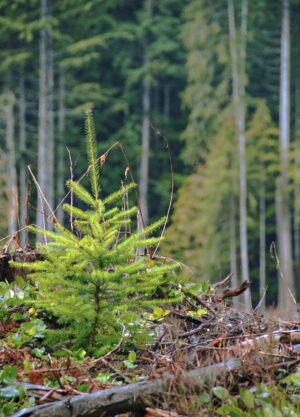 Seattle-based Mast Reforestation had a novel idea to help save the planet: sell voluntary carbon credits and use that money to replant forests destroyed by wildfire. …Mast positioned itself as a rising star in the carbon credit market, claiming to be the only “vertically-integrated reforestation carbon credit developer in the industry.”…Now, the company is facing allegations that it deceived potential partners to secure its reforestation projects. The way Mast structures its credits is central to the controversy. Mast sells carbon credits to businesses that want to voluntarily offset emissions. …But Mast’s model hinges on future climate benefits. Instead of waiting for trees to grow and capture carbon, Mast sells its credits based on projections of reductions. …In a wrongful termination lawsuit filed in Siskiyou County, Mast’s former senior director of business development Arnoud de Villegas, claims the company misled potential partners.
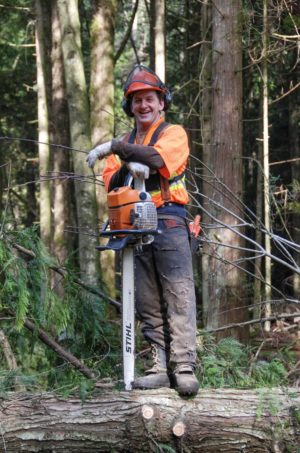 Forestry professionals are at the frontlines of California’s battle against the wildfire emergency in the West. Our forestlands play a vital role in sequestering carbon, maintaining biodiversity, and providing critical ecosystem services like clean air and water. However, they are increasingly threatened by wildfires, drought, insects and disease—all of which are exacerbated by a changing climate. To combat these threats, we need a robust and well-trained forestry workforce with the knowledge and skills necessary to manage our forests sustainably. The forestry workforce is critical in wildfire prevention and mitigation. With California experiencing record-breaking wildfire seasons in recent years, there has never been a more urgent need for skilled forestry professionals to confront this emergency. Beyond fire prevention, forestry professionals manage forest health and help create landscapes that are resilient to changing conditions.
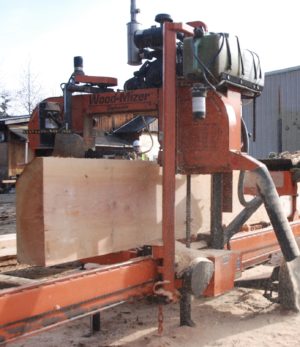 Reagan Brown sliced a board from a cut log using a brand new bright orange sawmill as a crowd of students, teachers and lumber industry workers looked on. He was part of a day-long event Orofino Junior Senior High School put on to show off its new trade programs, including the sawmill. Aiden Olive, a senior, was helping Reagan. “ This is completely new, we got this about a month ago, we put it together ourselves,” he said. The school is in a river valley surrounded by hills covered in evergreen trees – the kind of forest that has been logged for more than a hundred years. It’s a $2.5 billion industry in Idaho, but it’s looking for workers. “ I wasn’t really certain about going into forestry at first, but after getting this mill and running it and seeing how it works, I really actually think that could be some possibility of going into forestry,” Olive said.
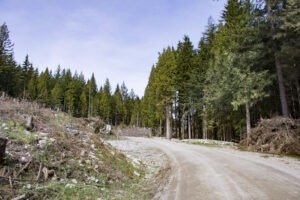 As the Forest Service contracts with slashed staff and funding, local communities are stepping up with funding for backcountry trail crews, visitor education campaigns and management of campsites and trailheads. “These folks need help. We know how important it is to have a physical human presence out there,” said Dave Ochs, the head of the Crested Butte Mountain Bike Association, which is administering $62,500 in local funding to support three seasonal Forest Service employees around Crested Butte. “Let’s help our partners. They are in need and we care very much for our backyard.” This is a scene unfolding across Colorado’s public lands as communities labor to fill gaps left by the sudden retraction of the federal government under the Trump Administration.
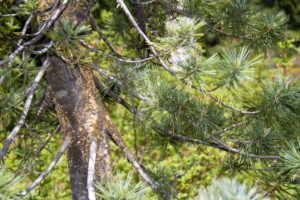 The proposed development and expansion of Grand Targhee Resort may require the removal of about 456 whitebark pine trees. At the level of detail in the environmental impact statement released last month, it’s unclear whether some projects can be amended to save trees within the project area. It’s also unclear how many of the trees within the project area are mature, cone-bearing trees necessary for the species’ reproduction. Caribou-Targhee National Forest officials, who are reviewing Targhee’s expansion plans, said the 456-tree estimate is likely high. In past projects, Teton Basin District Ranger Jay Pence said, “Grand Targhee and the Forest Service [have] routinely been able to shift some of the disturbances to avoid whitebark pine stands.”.. Whitebark were listed as “threatened” by the U.S. Fish and Wildlife Service in 2023. But its Endangered Species Act protections do not prohibit them from being hewn.


 WASHINGTON — On behalf of the American Wood Council (AWC) and the American Forest & Paper Association (AF&PA), AF&PA Vice President of Public Policy Paul Noe gave oral testimony before the House Committee on Energy and Commerce, Subcommittee on Environment in their hearing titled, “Short-Circuiting Progress: How the Clean Air Act Impacts Building Necessary Infrastructure and Onshoring American Innovation.” In his testimony, Noe applauded legislation that would allow the paper and wood products industry to make capital investments to modernize their manufacturing facilities. …discussion was heard by the committee on two bills that would make critical revisions to the National Ambient Air Quality Standard (NAAQS) setting and implementation process that would reduce the type of permit gridlock created when the particulate matter NAAQS was significantly lowered by the previous administration. “We strongly support Congressmen Rick Allen and Buddy Carter in their efforts to address the impacts of air permitting issues on U.S. manufacturing,” said Noe.
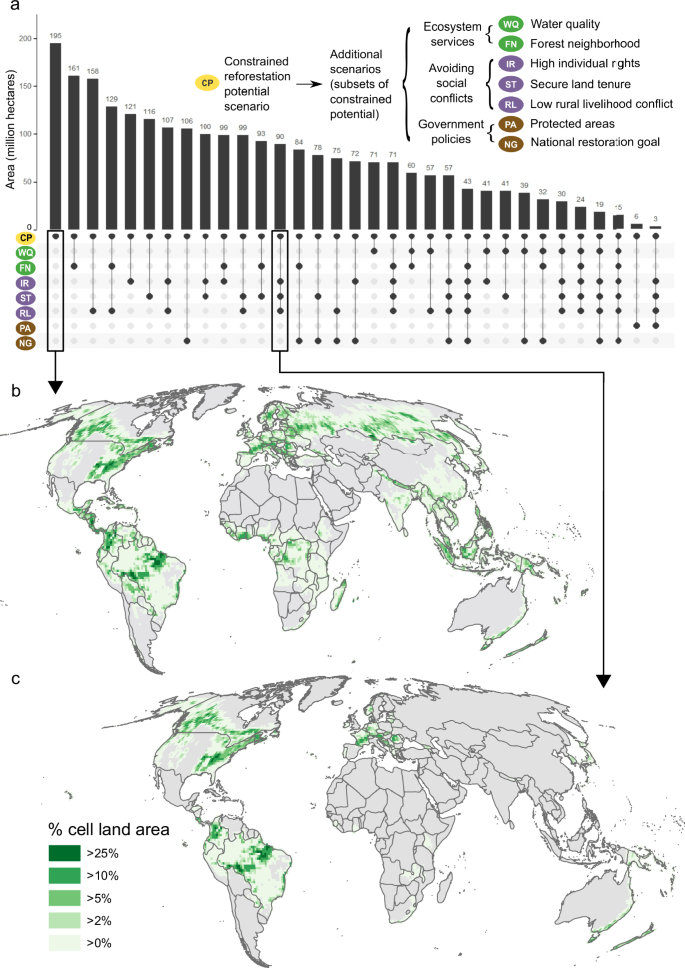
  Replanting forests can help cool the planet even more than some scientists once believed, especially in the tropics. But even if every tree lost since the mid-19th century is replanted, the total effect won’t cancel out human-generated warming. …In a new study
 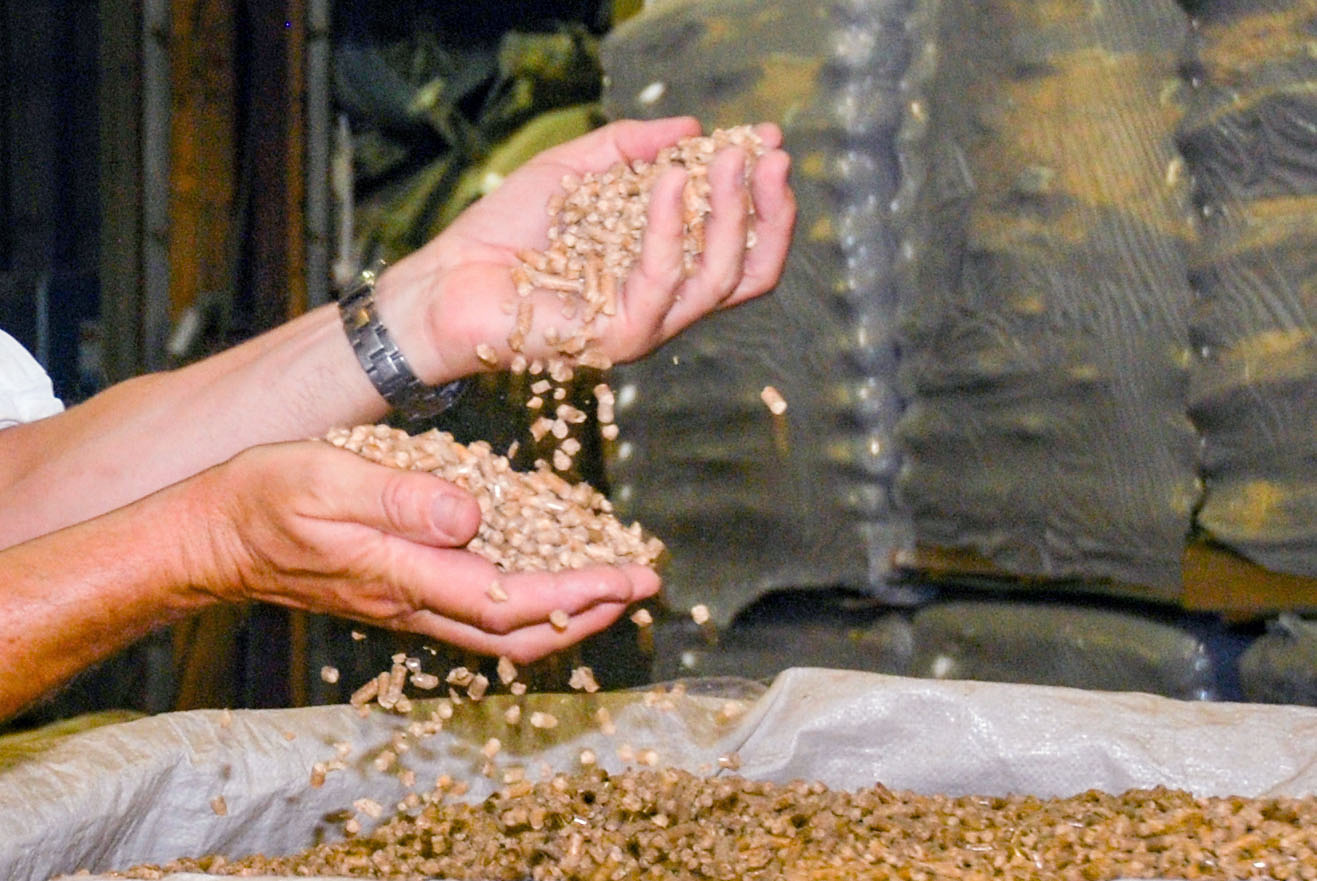 In an energy conversation dominated by buzzwords and breakthroughs, it’s easy to overlook the quiet, proven solutions that are already delivering results. Exhibit A: wood pellets. These compact cylinders aren’t flashy or trend on social media. For the uninitiated, they are carriers of renewable carbon and energy, sourced from responsibly managed forests; a real, scalable, domestic resource that delivers energy security, climate value, and rural jobs while sustaining and growing forests. Wood pellets are emerging as one of the smartest plays in America’s energy and climate portfolio. …Every year, America’s 360 million acres of privately-owned forests grow more wood than we harvest. …Responsible forest management, the kind that thins out fuel for wildfires, not only keeps forests healthy but also supplies feedstock for wood pellets. …This is climate action with a hard hat, not a hashtag. …Wood pellets are real, scalable, renewable and a true American resource.
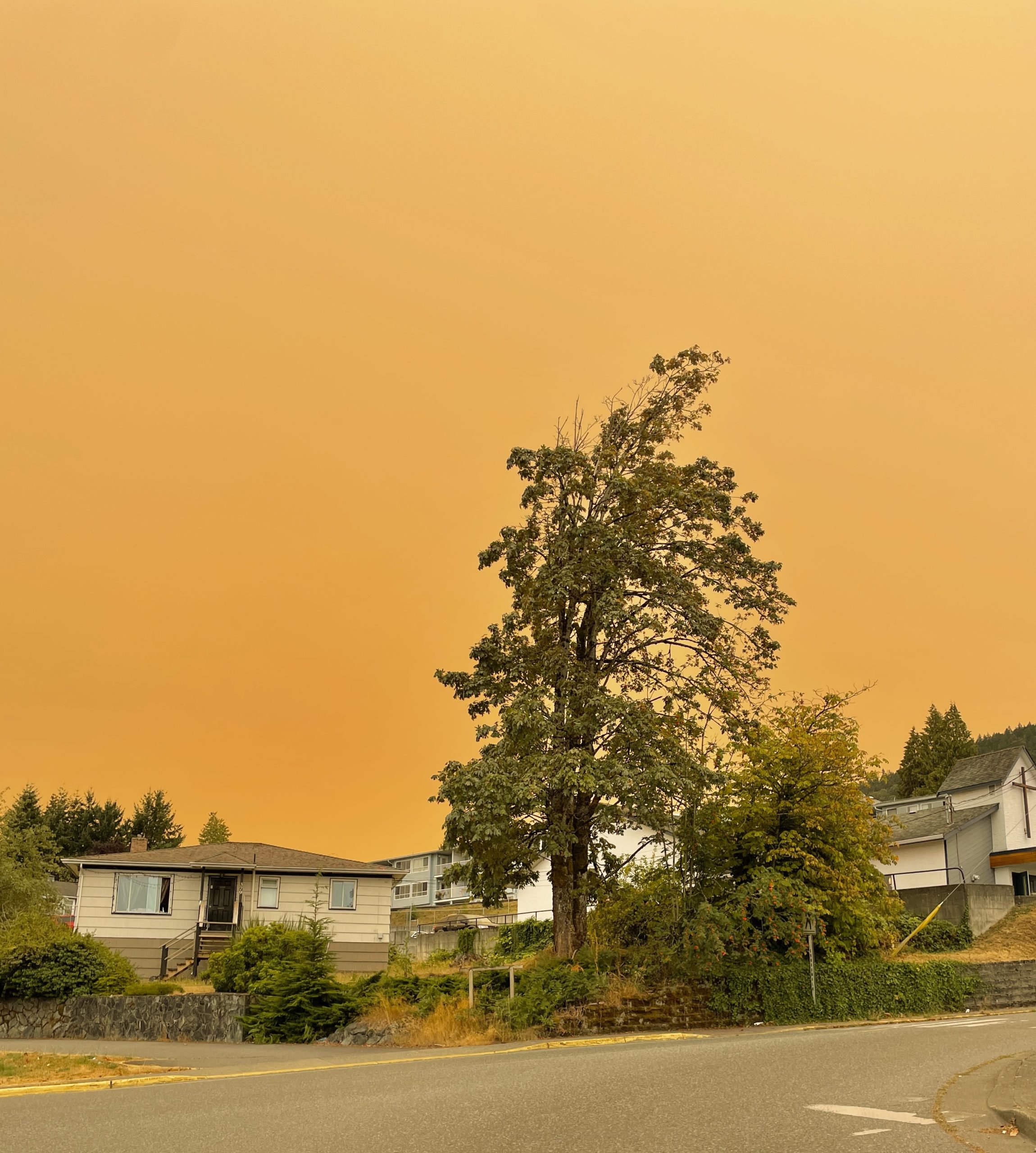 Even if you live far from the boreal forests in Canada and Siberia, you’ve likely noticed an increase in smoke from their forest fires. During major blazes in 2023, the smoke oranged the New York sky and drifted as far south as New Orleans. These blazes have surged in the last decade due to the effects of climate change — warmer summers, less snow cover in the spring, and the loss of sea ice. Experts expect that trend to continue. Yet recent climate change projection models have not accounted for the increase. For instance, the widely used sixth Coupled Model Intercomparison Project, or CMIP6, released in the late 2010s, kept these fires constant at a relatively low severity. A new University of Washington-led study projects that in the next 35 years these increasing boreal fires will actually slow warming by 12% globally and 38% in the Arctic.
 TEXAS — A plan to open a bioenergy plant in Newton County has reached a new milestone with a landmark deal to supply wood for the site in Bon Wier. Mike Lout with KJAS, reports Nick Andrews, President and CEO of the Scottsdale, Arizona-based USA Bioenergy, announced on Tuesday that his company has
  GEORGETOWN, South Carolina — Over 650 Georgetown residents have signed a petition opposing a proposed biomass plant at the site of the International Paper mill that closed last year. The group Citizens for Georgetown says it is working to revitalize the town’s waterfront through “thoughtful redevelopment.” 653 people are opposing the plant that would generate energy for Santee Cooper from tree waste. …Citizens for Georgetown Chairman Tom Swatzel. “Now, we face a critical choice: leave decades of pollution in the land and water, continue with heavy industry OR clean up the site and reimagine these properties into a vibrant, sustainable future that benefits all residents.” …State Sen. Stephen Goldfinch expressed cautious optimism over the proposed plant, saying that it could involve an investment of nearly $4 billion and create new jobs.
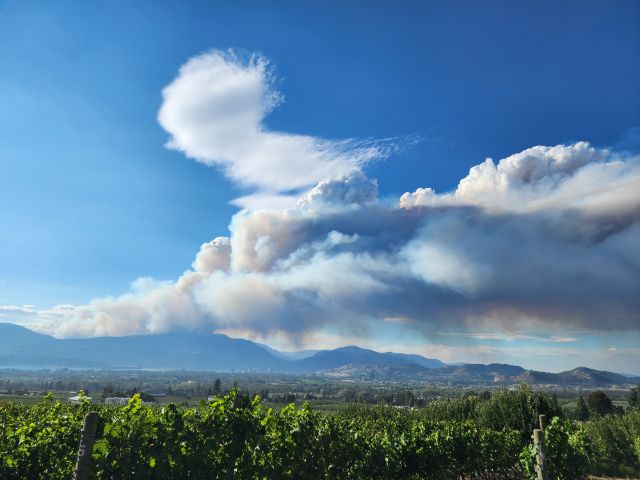 “Wildfires are happening more frequently. They’re getting bigger. They’re emitting more smoke,” Paige Fischer, a professor of environmental sustainability at the University of Michigan says. “The climate models are projecting that we’re going to have more frequent, more severe wildfires.” As of Thursday, the
 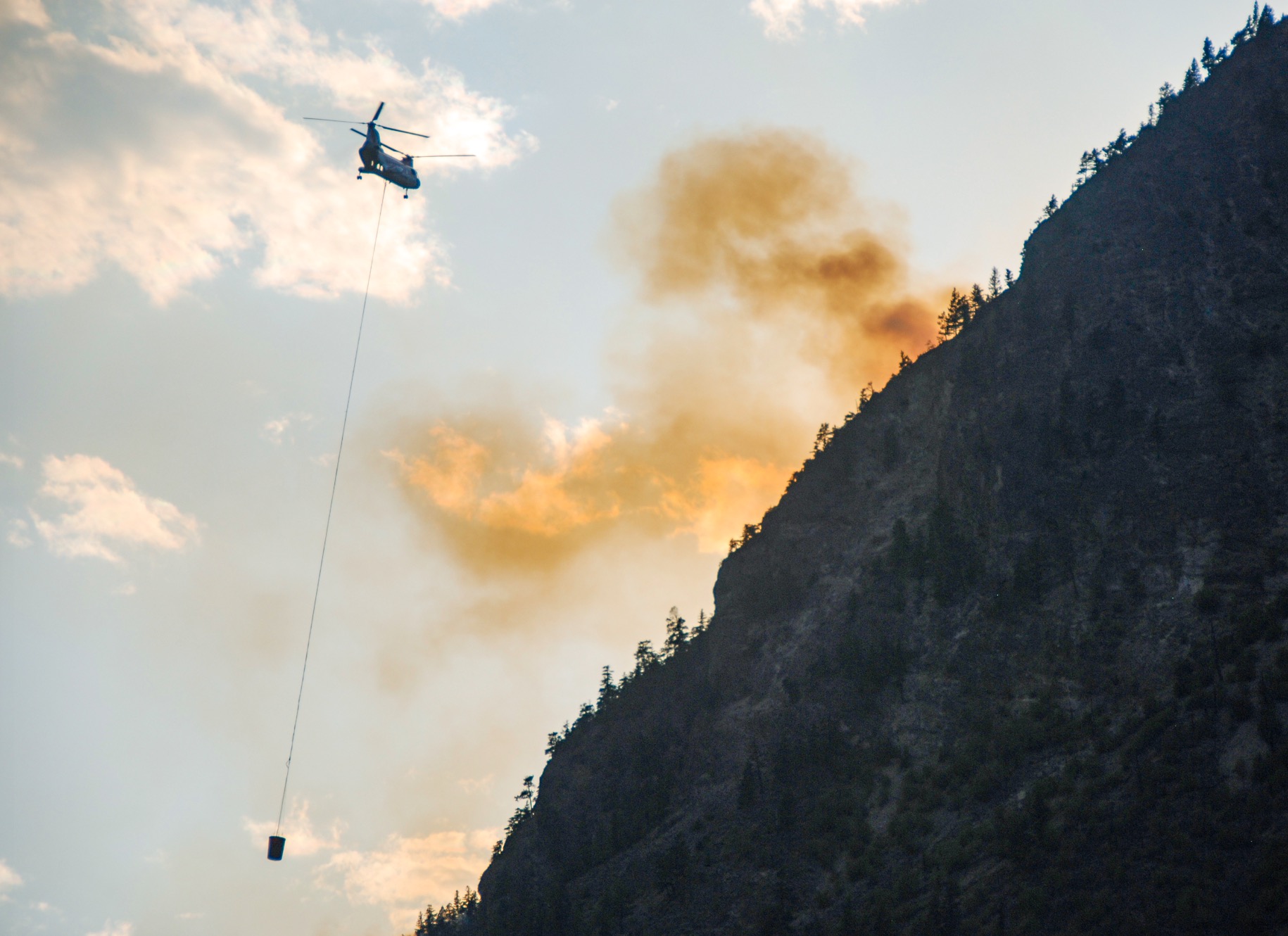 KITTITAS COUNTY, Wash. — The US Forest Service has taken command of the 60-acre Red Bridge Fire burning about 7 miles east of Cle Elum. Level 3 evacuations were issued for those nearby. A Level 3 evacuation means residents should “go now” or leave immediately. A Level 2 evacuation means there is significant danger in the area; be ready to go or voluntarily evacuate. Level 1 means there is danger in the area. Residents should plan escape routes, but evacuations are voluntary, according to the Washington Smoke Blog. The Red Bridge Fire started on June 9, 2025, at approximately 3:57 p.m. As of 8 p.m., the fire is estimated at 60 acres and growing, according to the Washington State Department of Natural Resources (DNR).