 A disturbing effect of the Trump era is how the most routine bureaucratic exercises become freighted with existential panic. …Despite having negotiated it himself, Donald Trump has attacked the CUSMA deal relentlessly. …The drumbeat of reporting over the coming sit-down with US officials might have you believing we are headed for gladiatorial combat, and not besuited teams working out the fine print of customs classifications and supply chain logistics. In this world, Pascal Chan, who helps lead the Canadian Chamber of Commerce, has emerged as a kind of trade whisperer. …Pascal Chan: There’s concern that if we don’t get to a renewal right now, everything falls apart. That’s not the case. We just go then into an annual review cycle every year. Sure, if we can hit a renewal now, that’s great. It extends the duration of the agreement. But the practical effect of a failed renewal is more uncertainty, not instant collapse.



 UK — A strong and reliable supply chain is essential to the continued growth of offsite construction in the UK, and the collaboration between West Fraser and




 NEW YORK — BTG Pactual Timberland Investment Group, timberland investment managers, announced the acquisition of approximately 90,000 acres of US timberland formerly managed by Jamestown, a global design-focused real estate investment and management firm. …The portfolio of high-quality timberland spans five U.S. states, including approximately 50,000 acres of pine timberland in Georgia and Alabama and approximately 40,000 acres of diversified hardwood timberland across Indiana, Pennsylvania, and New York. All properties are certified under the Sustainable Forestry Initiative (SFI). The acquisition increases BTG Pactual TIG’s core U.S. timberland strategy’s portfolio to more than 1.7 million acres. The firm manages 3.3 million acres globally. The transaction creates further opportunities for BTG Pactual TIG to scale positive conservation outcomes through its long-term collaboration with The Nature Conservancy (TNC), Conservation Advisor to the firm’s core U.S. timberland strategy.
 COUSHATTA, Louisiana – C&C Forest Products announced it is investing over $21 million to rebuild its Coushatta sawmill following a 2025 fire, repositioning the facility as a more efficient, cost-competitive specialty lumber and timber operation. The company is expected to create 77 direct new jobs… while retaining 27 current positions. Louisiana Economic Development estimates the project will result in an additional 256 indirect new jobs, for a total of 333 potential new job opportunities in the Northwest Region. …The project will reconfigure the existing facility at 306 Wilkinson St. with updated equipment and improved site layout to support more efficient production. Once complete, the rebuilt sawmill will focus on specialty lumber and timbers and will be capable of producing up to 90 million board feet annually. …C&C Forest Products operates sawmills in Louisiana and Arkansas.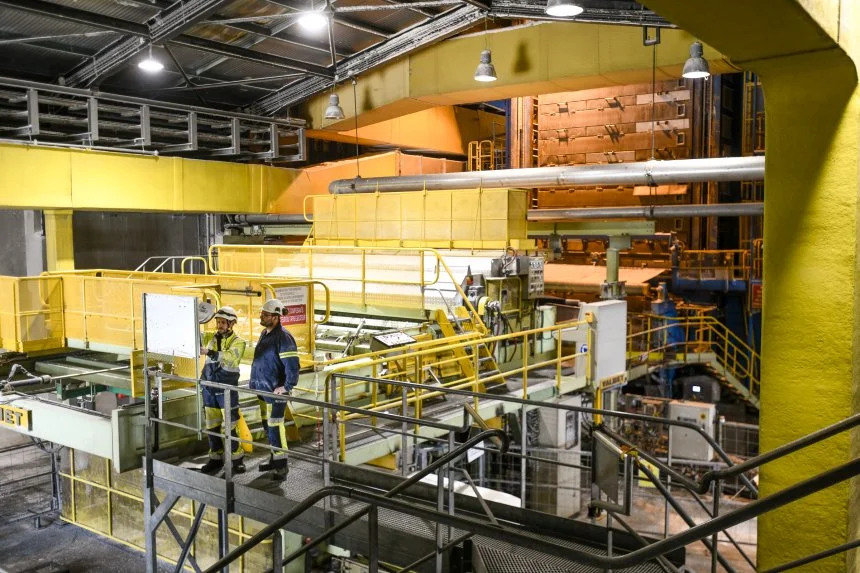

 NEW ZEALAND — PF Olsen and Forest360 have merged to become New Zealand’s biggest independent forestry manager, trading as Stand Forestry. The companies announced their merger late last year, backed by new investment from Adamantem Capital’s Environmental Opportunities Fund and supported by PF Olsen’s Quayside Holdings. …The new brand will combine 75 years’ experience, a workforce of more than 200 skilled professionals and 480,000ha of forestry under management on both sides of the Tasman, the companies said. …The company recently launched a new carbon joint venture model in New Zealand to make it easier for farmers and landowners to participate in the Emissions Trading Scheme. …The merged group has more than 1000 clients, from major institutional investors to family-run businesses and private landowners. PF Olsen also has a large operation in Australia, managing 212,000ha.
 Lumber climbed past $630 per thousand board feet, the highest level since October, amid higher effective US import costs on Canadian softwood and tighter expected supply. Prices rose despite a small reduction in preliminary antidumping and countervailing duties, because the combined tariff burden remains high at about 35.9% including the existing Section 232 levy, set to take effect in August. The market is also being driven by uncertainty ahead of final duty decisions, prompting buyers to accelerate purchases and lift near-term demand. At the same time, US domestic production is still constrained, while housing-related consumption remains structurally large, with softwood lumber and engineered wood products heavily used in new construction. Each new home requires roughly 15,000 board feet of lumber plus extensive engineered wood products, keeping baseline consumption elevated even in a softer housing cycle. [END]

 Lumber climbed to $617 per thousand board feet, the highest level since October, as constrained supply outweighed subdued conditions in the housing market. The US lumber market remains tight, with domestic production failing to fully offset reduced imports from Canada following tariffs. Canada still supplies roughly 30% of US consumption, underscoring its continued importance despite trade barriers. The US Commerce Department has proposed lowering combined duties on Canadian lumber to 24.8% from 35.2%, but an additional 10% Section 232 tariff keeps the effective rate close to 35%. Supply pressures have been further intensified by wildfire damage and other production disruptions in Canada, prompting British Columbia to introduce emergency measures aimed at boosting timber availability after storms and fires threatened output. [END]
 While supply concerns are still weighing on housing affordability, a combination of soaring prices and economic uncertainty is dragging on housing demand, according to the annual
 A top US Customs and Border Protection (CBP) official told Court of International Trade (CIT) Judge Richard Eaton on 9 June that the agency is still creating a process for refunding tariffs that involve more complex entry types and that have been finally liquidated (i.e., are more than 90 days post-liquidation) in the Consolidated Administration and Processing of Entries portal. “We can’t do it all at once,” CBP Executive Assistant Commissioner Susan Thomas testified. ….The US Trade Representative (USTR) is

 Global oil prices fell on Monday following news of a tentative deal between Iran and the U.S. to extend their ceasefire agreement and reopen the Strait of Hormuz, but a veteran oil watcher doesn’t see crude prices returning to pre-war levels anytime soon. Eric Nuttall, partner at Ninepoint Partners, said that traders are trying to determine where the price of oil will settle out in the coming days and weeks, as many key details about the deal still need to be ironed out. …Nuttall noted that even if the strategically important Strait of Hormuz is fully reopened as a result of the Iran-U.S. deal, it will take time for oil markets to recover from the volatility of the last three and a half months. …In addition to the logistical backlog and supply chain disruption, the war in Iran has caused extensive damage to petroleum facilities across the Middle East, Nuttall explained.
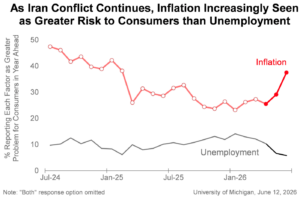 This month, consumer sentiment ticked up about four index points, or 9%, with consumers experiencing some relief due to the early-month easing in gasoline prices. This measured improvement in sentiment was widespread, seen across age, education, and political party. Lower-income consumers exhibited a particularly strong sentiment increase, consistent with the fact that gasoline comprises a larger share of their budgets. Overall, assessments and expectations of personal finances and business conditions all rose this month. Even with June’s early gains, however, views of the economy are still relatively dour. Sentiment is currently 13% below January 2026 and 19% below a year ago, as consumers remain focused on kitchen table issues. They feel burdened by the recent escalation in inflation and worry that higher inflation could remain stubborn going forward, particularly in the short run. Interviews for this release were completed between May 19 and June 8.



 Steel keeps losing the green building conversation on a technicality. Most lifecycle comparisons published in industry media compare materials on cradle-to-gate embodied carbon and walk away. Steel comes out heavy. Wood comes out light. Concrete sits somewhere in the middle. The reader files steel away as the carbon-heavy choice and moves on. The problem with that framing is not the numbers themselves. It is what gets left out of the calculation. A building exists for decades. Materials behave differently across that span. End-of-life recycling rates vary by an order of magnitude. None of that shows up in the cradle-to-gate snapshot that gets quoted in most green building pieces. …What the analysis does argue is that the cradle-to-gate number cited in most green building media tells less than half the story. …The broader lesson is that sustainable construction decisions should be based on whole-building lifecycle assessment rather than a single embodied-carbon number.
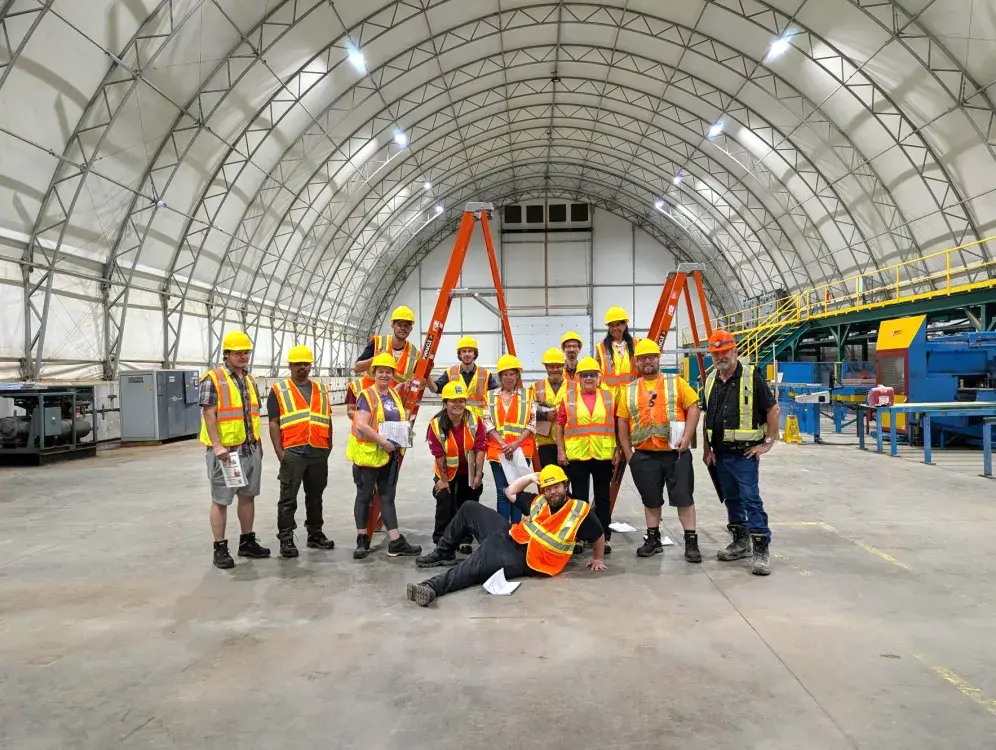

 Three years ago, the Ontario Building Code required that any developer taking on a mid-rise wood-frame building had to construct stairwells out of non-combustible material. That was expensive. It made construction challenging, and, according to the Canadian Wood Council, resulted in a lower adoption of wood-frame building. Since that requirement was removed in 2023, allowing full buildings to be constructed with wood, interest in mid-rise wood-frame building has increased considerably, especially for residential builds, said Hailey Quiquero, with the WoodWorks Ontario program, an initiative of the Canadian Wood Council. “Now, in our market, we’re sitting at around 50% of five- and six-storey buildings being built out of wood construction, so a great jump,” Quiquero said. “We’ve still got a long way to go. In BC, I think it’s greater than 80% of this market.” …Currently in Ontario, mid-rise wood-frame building is largely being used in residential projects, Quiquero said.


 A bipartisan bill in the US House is calling for additional incentives to use of mass timber building materials in federal contracting. Introduced by House Ag Committee Chair Glenn Thompson (R-PA) and Andrea Salinas (D-OR), the
 Timber frame homes built in as little as five days could be a way to increase the pace of housebuilding in London, some of the capital’s largest construction companies have heard. Industry leaders travelled to Scotland to learn how the housing is produced, from sustainable forestry through to completed homes, as developers and ministers look for ways to increase the number of homes in the city. Scotland has adopted timber frame construction on a greater scale than England. About 92% of new homes north of the border are built using timber frame, compared with 13% in England. Andrew Orriss, of the Structural Timber Association, said: “Scotland builds faster, greener, and more efficiently than England. …“And the reason is timber frame. …Mayor of London Sir Sadiq Khan has a target to build 88,000 new homes per year. …In Britain, structural timber are only permitted to a maximum height of 18 metres, or up to 6 storeys.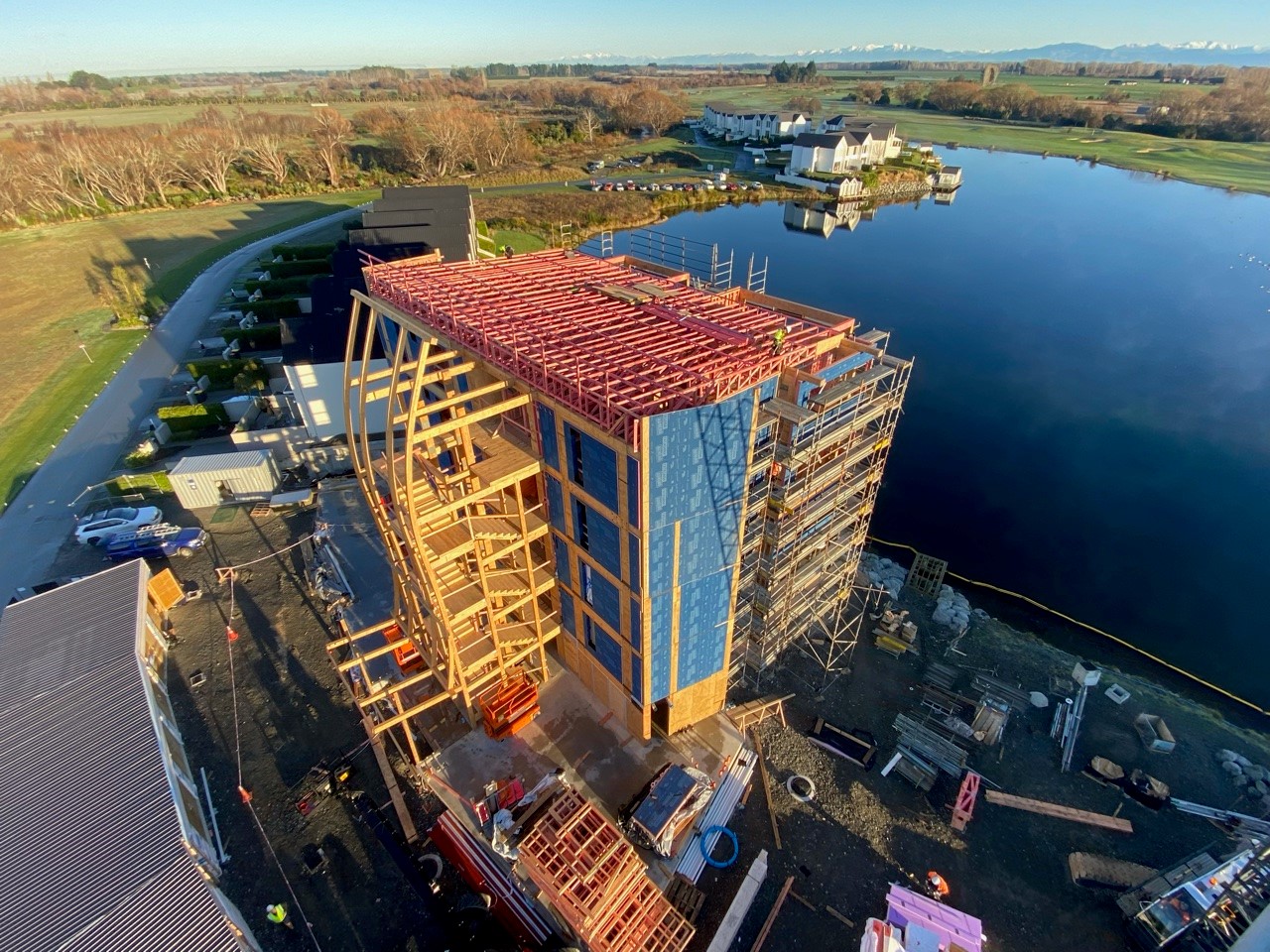

 2025 was a landmark year for FSC Canada, one defined by transition, renewed clarity, and a deepening of the values that anchor our mission. I am proud to reflect on a year in which FSC Canada strengthened its role as a trusted leader in responsible forest stewardship. This year marked an important moment in our organization’s history with the retirement of François Dufresne, who served as President and CEO for more than a decade. François guided FSC Canada through periods of significant change in the forest sector, always with integrity, steadiness, and a commitment to collaboration. …We also welcomed Monika Patel as FSC Canada’s new President and CEO. Monika brings a clear strategic vision, a deep understanding of the FSC system, and a values driven approach that aligns strongly with our mission. Her leadership has already brought renewed focus to our priorities and strengthened our engagement with partners across the country.
 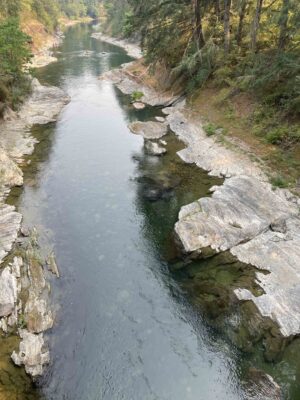 LAKE COWICHAN, BC — Pumps will likely be required to sustain the river if dry conditions continue through the summer, according to Brian Houle, environment manager for Domtar Crofton Mill. Though the mill has shut down, Domtar remains the licenced operator. As of a June 4 report issued by Houle, Cowichan Lake has dropped to 80% capacity and the below-average snowpack has already fully melted. Updated modelling for the remainder of the year was analysed at a meeting of regulators and Cowichan Tribes on June 3. Domtar was guided to begin to reduce the flow to below 7.08 cubic meters per second (cms). …With no relief in sight, there’s been a push for a larger replacement weir to store more water in the lake to reduce the need for emergency pumping. …Domtar has been authorized to have qualified professional biologists monitor the river conditions.
 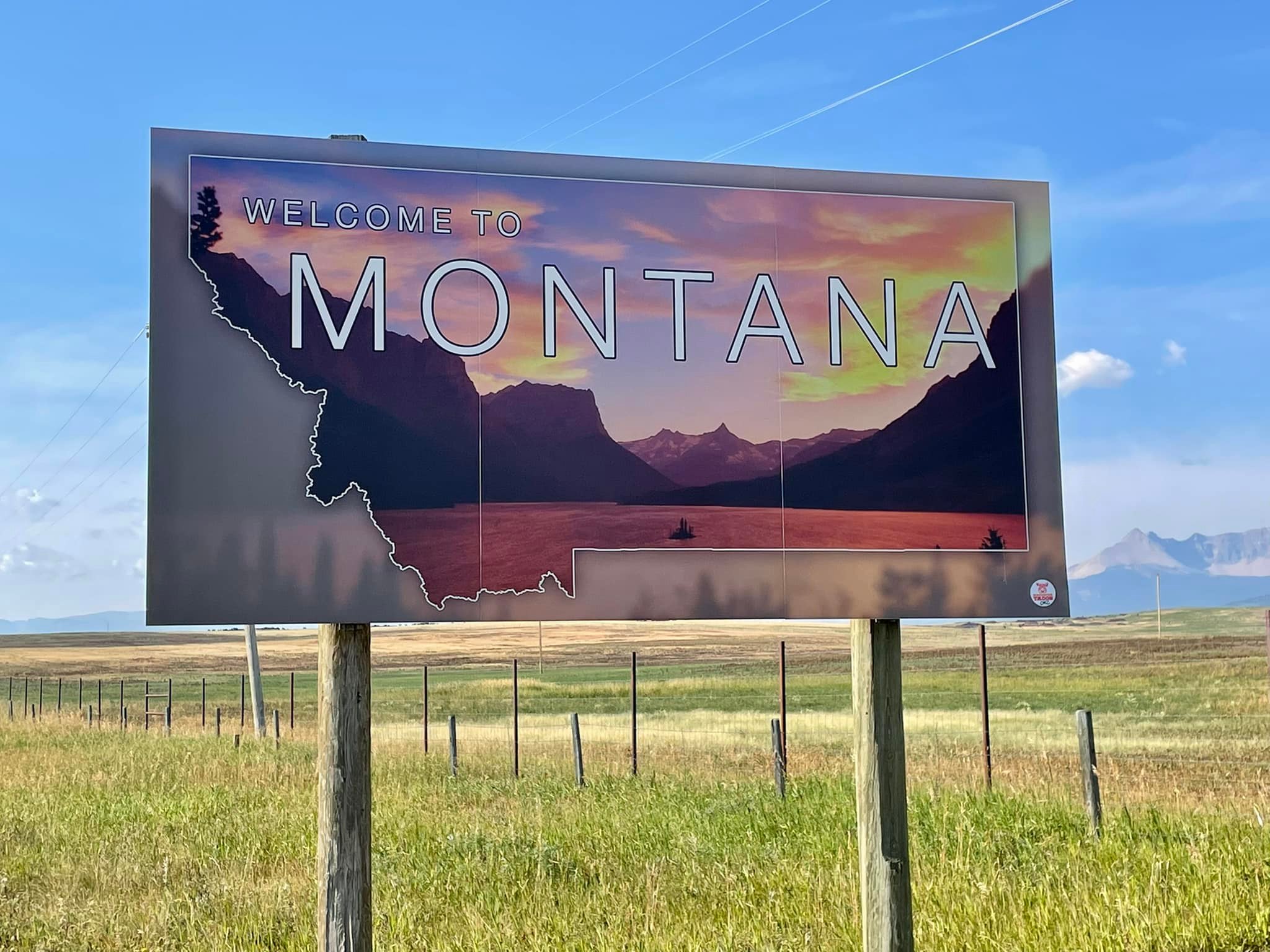 Way back in 1995 Bob Brown, the Republican president of the Montana Senate, called me into his office. He had co-sponsored a bill with a pro-logging Missoula Democrat to establish a “sustained yield” level of logging on Montana’s state trust lands – and he was worried it wasn’t working out the way he hoped. Bob was right to be worried then and Montanans are right to be worried now because Trump’s Forest Service Chief and former timber industry lobbyist Tom Schultz, has just unleashed the “sustained yield” scam on Montana’s National Forests. …My advice to Bob was to let the bill die because he didn’t have the votes to remove the amendments the timber industry lobbyists stuck on the bill. But he didn’t take that advice. …Two years later, Tom Schultz went to work for Montana’s Department of Natural Resources and Conservation, earning the sobriquet “Chainsaw Tom” for his pro-logging zeal.
 The Agriculture Department is making an ultimatum to thousands of its employees as part of its sweeping relocation plans — move to keep their jobs or quit. USDA is embarking on a multi-part reorganization plan that involves relocating more than half of its D.C.-area workforce to hubs across the country by the end of this summer. Employees impacted by these relocation plans work at the Food Safety and Inspection Service, Forest Service, Economic Research Service, National Institute of Food and Agriculture, and Food and Nutrition Service. …The memo also states that NASS and all components under USDA’s research, education and economic mission area will offer buyouts and early retirement to employees who received relocation notices. The Forest Service told employees earlier this month that it will offer Voluntary Early Retirement Authority (VERA) and Voluntary Separation Incentive Payments (VSIP) to staff impacted by its relocation plans.
 Utah Sen. Mike Lee and fellow Republicans added a repeal of the controversial roadless rule to a previously bipartisan wildfire bill on Wednesday. The amended Wildfire Prevention Act passed out of the US Senate Energy and Natural Resources Committee on an 11-9 vote split along party lines and now heads to the full Senate. The act would nullify the 2001 roadless rule. …This move comes nearly a year after the USDA began an effort to rescind the roadless rule through an administrative process. The environmental review is currently underway and a decision is expected later this year. …Democratic senators introduced a second amendment early in the meeting on Wednesday in an attempt to strike the repeal of the roadless rule from the bill. …Senators in both parties initially supported the Wildfire Prevention Act, which instructs federal land agencies to set targets and report on prescribed fire and forest thinning to reduce wildfire risk.


 OREGON — A proposed new management strategy for the three national forests in Northeastern Oregon could more than triple the amount of commercial logging over the next two decades. The Forest Service hasn’t officially released a draft environmental impact statement for the revised management plans for the Wallowa-Whitman, Umatilla and Malheur national forests, which will start a 90-day public comment period. …Shaun McKinney, Wallowa-Whitman supervisor, said on Wednesday that he expects the Forest Service will publish the draft in the Federal Register “any time.” …Typically, national forests update their plans every 15 years or so. But the current plans for the three forests in the Blue Mountains date to 1990. The three forests encompass about 5.5 million acres, including about 311,000 acres in Washington that are part of the Umatilla National Forest.
 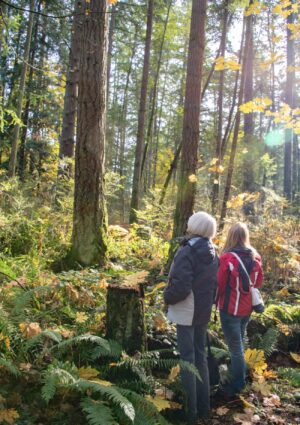 ORANGE COUNTY, California — Environmentalists are trying to raise public awareness about a plan within the Trump administration to allow roads, and potentially long-term business development, in much of the nation’s federal forest system, including the biggest undeveloped stretch of Orange County. Recently, the effort has included rallies in Los Angeles, Orange and Riverside counties. More rallies are planned in coming weeks in central and northern California. At issue is the fate of the “Roadless Area Conservation Rule,” an administrative regulation that has been in place since 2001 as a way to preserve 60 million acres of federal land for recreation and habitat protection. The rule, which is not a law, has survived every presidential administration of this century, and environmentalists say it has helped protect everything from the Pacific Crest Trail to the California Condor. …Environmentalists say ending the roadless rule would be bad for the environment and for local property values.
  OTTAWA — Three young women and two environmental groups on Tuesday filed a lawsuit against the Canadian government seeking to force it to develop an action plan to meet its key climate goals. The lawsuit comes as Prime Minister Mark Carney’s government shifts Canada’s climate and energy priorities, rolling back key environmental policies while advancing major energy and infrastructure projects to reduce dependence on the United States. Announcing the lawsuit, plaintiff Shirley Barnea, a university student from Quebec, said authorities had an obligation to build a sustainable future for younger generations. …The legal action aims to compel the government “to chart a credible, up-to-date course of action” and “to protect Canadians from the worsening impacts of climate change,” according to a statement from the Canadian Association of Physicians for the Environment (CAPE), which is also a party to the lawsuit.
 UK — The City watchdog has closed an investigation into the owner of the Drax power plant after an almost 10-month review into whether the company’s sustainability claims mislead shareholders. The Financial Conduct Authority said it had “reviewed thousands of pages” of “complex material” relating to the company’s sourcing of wood pellets for the Drax power plant in Selby, North Yorkshire, but “did not find evidence that justified any further action”. The regulator began the investigation last year into whether Drax’s annual reports and accounts between 2021 and 2023 misled shareholders or left out important information investors needed to know about the origins of its biomass fuel. …Ofgem found at the time that there was no evidence to suggest the breach was deliberate, and said instead that it was “technical in nature”. It also found no evidence that the biomass sourced was unsustainable or that Drax had wrongly laid claim to renewable energy subsidies.
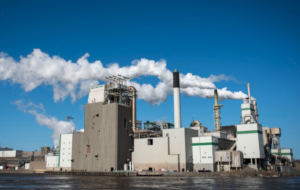 NEW BRUNSWICK — On the morning of May 26, a provincial air quality monitoring station on the west side of Saint John began registering unusual readings. …There was no special public notification about the west side spike, even though the environment department watched it develop and was concerned enough to launch an immediate investigation to determine the cause. …The department, in emails, said it believes operations and maintenance work at the Irving Pulp & Paper mill could have been a contributing factor. …“The cause appears to be a combination of unusual weather, which trapped pollutants at ground level rather than dispersing them upward, combined with higher than ordinary emissions during a cleaning/maintenance cycle at the mill.” J.D. Irving said there is “no concrete way to confirm” it caused the poor air quality readings but said adjustments in mill operations were made at the time to be on the safe side.