
Kevin Mason
The headline numbers coming out of the US continue to point to a robust economy, but the K-shaped bifurcation between income brackets is undeniable. The steady decline (and recent collapse) in real disposable income is concerning. There are many factors that contribute to an individual’s disposable income. Rising energy costs have been a big factor of late (gas prices predominantly), but disposable income was in decline far before its recent dip into negative territory. Inflation has outstripped wage growth in many parts of the private sector, with households often having to tap into savings and/or take on debt to support spending. Another challenge has been high interest rates, and that shows up in the housing market (as well as autos).
…After showing impressive resilience through the first four months of the year, US housing starts capitulated in May, slumping to a seasonally adjusted 1.18MM units (their lowest level since May 2020 at the onset of the pandemic). Single-family starts came in at 882,000, off by 2% m/m and 7% y/y, while multifamily activity was off by a whopping 40% m/m and 14% y/y at just 295,000. That adjusted multifamily number was the lowest reading since November 2024 and came as a shock after multis had decisively outperformed singles through the first four months of the year (averaging an adjusted 478,000 over that period). …To round off a dismal month, home sales data for May gave little reason for optimism. Looking first at new home sales, May’s total of 580,000 (adjusted) was off 7% both m/m and y/y.
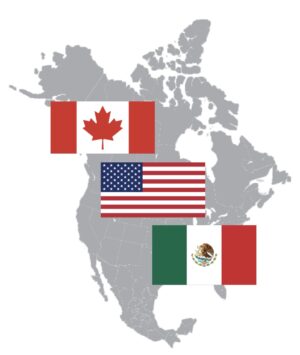 The Trump administration surprised no one with its long-expected announcement Wednesday that the U.S. would not join Canada and Mexico in extending the free trade deal between the three countries. Where things go from here, however, with renegotiating the Canada-United States-Mexico Agreement is anyone’s guess. One thing is certain: the deal remains in effect while the negotiations happen, as it doesn’t expire for another 10 years. The only circumstance that would change that is an official six-month notice of withdrawal, something Trump has stopped short of threatening to do. Domestic political concerns keep the White House from scrapping the trade agreement, according to Simon Lester, a trade expert at Rice University in Houston, Texas. He says CUSMA has broad support from Republicans in Congress, particularly those from agricultural states. …On paper, according to the text of CUSMA, the three sides could now enter a perpetual series of renegotiations every year.

 Corporate bosses are more relaxed about tariffs now than at any time since US President Trump’s return to power unleashed a spate of trade policy chaos. The share of corporate earnings calls in which tariffs were mentioned has fallen to the lowest level since Mr. Trump won the 2024 election, according to an analysis of transcripts. …The same pattern has played out on both sides of the border, even though companies have plenty of reasons to remain anxious on the trade front. The USMCA is set to enter uncharted territory on July 1. …Steep sectoral duties remain in place. …Meanwhile, Mr. Trump is expected to launch a wave of hefty tariffs next month to replace temporary duties he imposed after the U.S. Supreme Court struck down his earlier emergency tariffs. [to access the full story a Globe and Mail subscription is required]
 A Toronto company is suing BC, saying it was stripped of its mining rights as part of a deal with the Gitxaała Nation. In a lawsuit filed in BC Supreme Court, MCC Canadian Gold Ventures says it was asked to rescue a small gold mine on Banks Island, south of Prince Rupert. But then the BC government stripped its mining rights to offset some of the impacts of another BC Supreme Court ruling involving the Gitxaała. The company says it invested millions in the property and now cannot move ahead on the project. …The province has not filed a response. …MCC said their case has “striking” parallels to a lawsuit launched by Carrier Lumber in the 1990s. In 2002, the province paid a large settlement to Carrier Lumber over a lawsuit it won over government decisions the company said made it impossible to harvest timber in the BC Interior.
 VANCOUVER — A BC judge has ruled against a Richmond company that sought to reopen the Cowichan Tribes Aboriginal title case. Last year’s landmark B.C. Supreme Court decision found the Cowichan held Aboriginal title to a swath of land in southeast Richmond, including privately owned lands. The application to reopen the case was brought by the Montrose companies, which owns warehouses, a Coca-Cola distribution centre and other facilities in the area. The company was not involved in the trial that led to the 2025 ruling, but said it affected the status of its property and, in one case, led to a potential deal being put on hold. In a decision dated Monday, BC Supreme Court Justice Barbara Young dismissed the company’s application. …She said the proper place for Montrose to make its case is through an appeal.
 WASHINGTON – President Trump said he hasn’t decided whether he will sign a bipartisan housing bill, dismissing the landmark affordable housing legislation as “a big yawn” and “so unimportant” compared to an unrelated bill he supports to overhaul voting in elections. Trump told reporters on Monday, June 29 that he won’t make a decision on The 21st Century Road to Housing Act until it arrives on his desk. The president abruptly canceled a signing ceremony last week for the housing bill and said he won’t sign it until Congress passes the SAVE America Act ‒ a stalled bill he backs that would require photo identification and proof of citizenship to vote in federal elections and prohibit universal mail-in voting across the country. …The housing bill is the first major piece of legislation that passed Congress in more than three decades to address the nation’s affordable housing crisis.
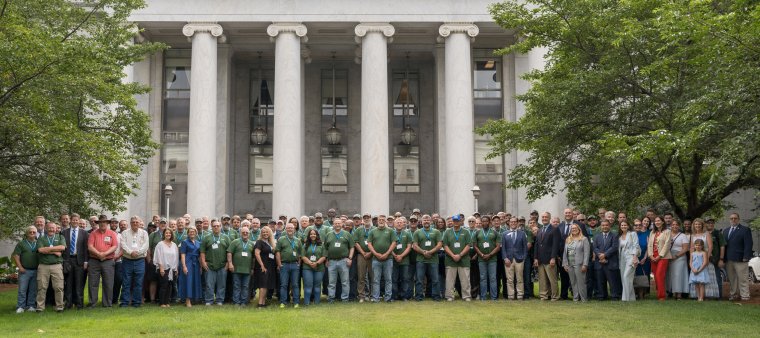
 A sprawling legislative package aimed at lowering the cost of housing and spurring more home construction won bipartisan approval from Congress this week, but it’s hit a major roadblock in becoming law: President Trump. The White House supported the
  The European Union has formally removed its remaining tariffs on American wood-based industrial products after the European Parliament approved legislation implementing the long-awaited




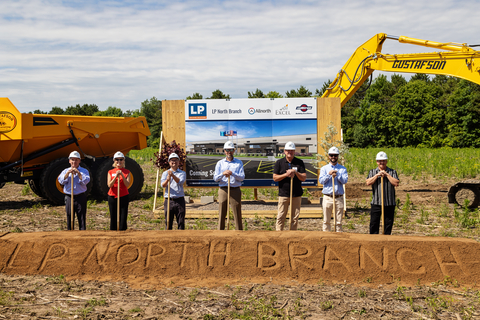

 Cepi’s



 OTTAWA — Canada’s annual inflation rate in May accelerated more than expected to 3.2%, a 29-month high, data showed on Monday, as the impact of higher crude oil prices due to the Iran conflict continued to filter through gasoline costs. Analysts polled by Reuters had estimated the annual inflation rate to touch 3% in May, up from 2.8% in April. The prices, however, are already showing a major reversal in June after an interim peace deal was signed between the United States and Iran last week, which, analysts have said, could help ease the headline number in June. Statistics Canada said excluding the impact of gasoline prices, the consumer price index still posted a higher increase of 2.2% in May from 2% in April. The monthly inflation rate rose to 1% in May, exceeding expectations of 0.8% rise. This is the highest monthly rise in 15 months.
 The U.S. goods trade deficit is widening, the Commerce Department said Friday, suggesting stockpiling ahead of higher tariffs and a continued reliance on imports for the domestic data center rollout, analysts say. The goods trade deficit for May jumped more than $20 billion to $105.8 billion, up from $83 billion in April, according to
 A closely watched inflation report is set to reveal how much price growth picked up in May — and whether many American consumers remain mired in an affordability crunch. Wall Street forecasters expected the pace of personal consumption expenditures (PCE) to have quickened compared with April data amid higher oil prices and stronger consumer spending. The monthly PCE report is the Federal Reserve’s preferred inflation gauge. New Fed Chairman Kevin Warsh has said the central bank is committed to bringing inflation back to its 2% target — a level it has failed to reach for the past five years. Wall Street now anticipates the Fed will raise its key interest rate at least once by year’s end in a bid to counteract the stronger price growth.


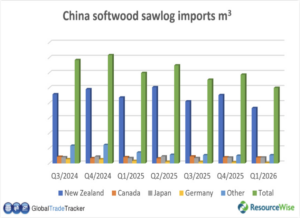 China remains one of the world’s major importers of softwood logs and lumber, but its
  Japan’s housing starts surged 33.9% yoy in May 2026, sharply accelerating from a 11.4% increase in the previous month and marking the second straight month of expansion. It was also the fastest growth since March 2025, topping market expectations of 31.8%. Growth was broad-based across most segments, including owner-occupied homes (31.8% vs 19.5% in April), rental housing (33.3% vs 17.3%), built-for-sale housing (39.2% vs 3.4%), and two-by-four homes (24.8% vs 64.8%). In contrast, prefabricated housing fell 3.4%, swinging from a 11.1% increase in April.
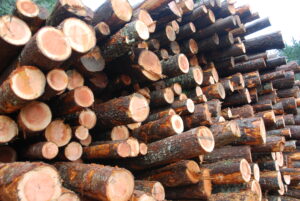 Russia’s timber exports to China, its largest overseas market, fell sharply in the first four months of 2026 as Beijing’s prolonged property downturn weighed on demand, adding to mounting pressure on an industry already struggling with sanctions, high borrowing costs and weak profitability. Exports of Russian sawn timber to China dropped 30% year on year to 2.6 million cubic meters in January-April, while export revenue declined 26% to $603.7 million, the Vedomosti business daily reported. …China accounted for roughly half of Russia’s sawn timber exports in 2025 after Europe closed its market following Moscow’s full-scale invasion of Ukraine. But weakening Chinese construction activity, rising logistics costs and a stronger ruble have eroded demand, leaving Russian producers with fewer alternative markets. Russia’s total sawn timber exports fell 32% year-on-year to around 4 million cubic meters in the January-April period. China imported 11.2 million cubic meters of Russian sawn timber in 2025.

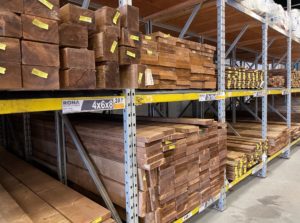 A new federal rule will tighten hazardous-air-pollutant standards for plywood and composite wood products plants, including dryers, presses, refiners and lumber kilns. The

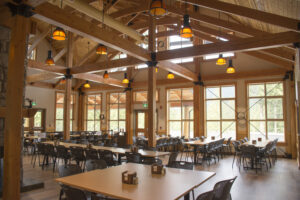 ATLANTA — At
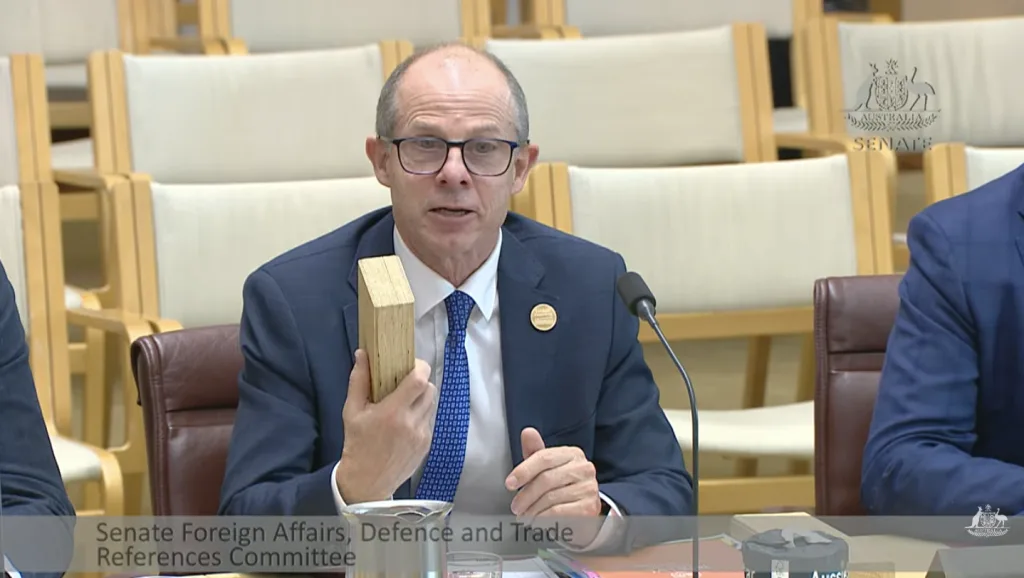
 A proposed change to England’s fire-safety guidance could make it much harder to use timber in load-bearing structures above 11 metres. The consultation on changes to Approved Document B, the fire-safety guidance used under the Building Regulations in England, closes on 1 July 2026. Under the draft text, load-bearing elements of structure in buildings with a storey more than 11 metres above ground level should be made from materials or products achieving at least class A2-s3,d2. Most structural timber and mass timber products do not normally meet this reaction-to-fire classification. The proposal would move the debate beyond external walls and cladding. It could affect the structural frame itself in a much wider group of mid-rise residential, commercial and mixed-use buildings. This matters because mass timber and CLT are increasingly used in projects where developers want faster construction and lower embodied carbon compared with concrete or steel.
 SINGAPORE — The Alliance to End Plastic Waste today published

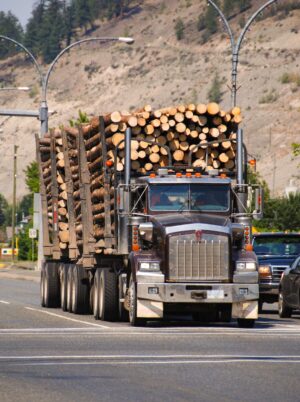 British Columbians are subsidizing the province’s forest companies to the tune of tens of millions of dollars each year under a government program that defrays the cost of shipping logs from remote forests to distant mills. In 2023, logging companies received nearly $33 million in public funds to underwrite the costs of hauling “low-value” logs to wood pulp and pellet mills. …The subsidies are posted online by the Forest Enhancement Society of BC, or FESBC, an organization created and funded by the provincial government and that reports to Forests Minister Ravi Parmar. The society’s mandate includes “preventing and mitigating the impact of wildfires” and “improving habitat for wildlife.” But many FESBC funds simply underwrite the increasing costs of hauling logs. Those expenses have been marching upward as logging activities push farther into the hinterland. That has some questioning whether the funding is accelerating the logging of forests, rather than enhancing them.


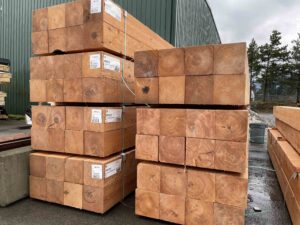
 Nordic, Baltic and Austrian forest industry associations are calling for a realistic and enabling EU climate target for the land-use sector, warning that overly high expectations for forest carbon sinks could place unnecessary pressure on forestry and the bioeconomy. In a joint letter dated 24 June 2026, several European forest industry associations said the EU’s post-2030 climate framework should focus primarily on phasing out fossil emissions, while allowing the land-use sector to continue providing renewable raw materials and climate solutions. The associations argue that forests and the wider land-use sector provide sustainable biomass that can replace fossil-based or carbon-intensive products, materials and energy. They say this role is important for Europe’s transition towards a circular and climate-neutral bioeconomy.
 LONDON — The world’s rainforests are to be better protected from deforestation as the government will confirm during London Climate Action Week, that plans to take forward new rules in Great Britain including using powers in the Environment Act alongside legislation strengthening the UK Timber Regulation. Under the proposals UK businesses who trade in commodities sourced from rainforests… will need to check that their supply chains are not contributing to illegal deforestation. …UK companies have been at the forefront of global efforts to tackle deforestation within their supply chains, but voluntary action alone cannot tackle this global challenge, and several major supermarkets have been calling for stronger regulation. Rainforests and other forests are vital for storing carbon and sustaining biodiversity, yet they are increasingly threatened by deforestation. … Rules will be enforced using powers in the Environment Act, alongside legislation strengthening existing timber rules.
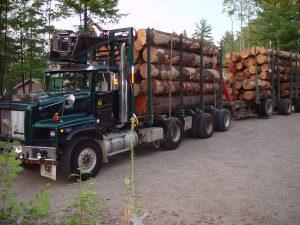 AUSTRALIA — Tasmania’s public native forestry company has corrected the record in a parliamentary committee after earlier stating that all logs from public native forests were processed in Tasmania. Tasmanian sawmill operator James Neville-Smith confirmed that some logs had been sent to Victoria, where processors had received compensation from the Victorian government as part of its industry shutdown. Mr Neville-Smith said the decision was due to retooling a sawmill to be plantation-only, meaning that hardwood logs needed to be processed elsewhere. Logs displaying stickers from Tasmanian state forests were also spotted at a mill in Powelltown, in the Yarra Valley, that was also a recipient of millions in Victorian compensation payments. Victoria phased out native forest logging in 2024. Since then, environmental groups have raised concerns about large quantities of logs being transported to Victoria on the Spirit of Tasmania, but were told that all were from private forests.
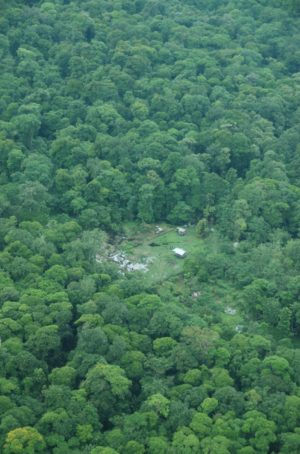 JAKARTA — Pulp and paper giant APRIL’s recent decision to lower its deforestation commitments and source wood from two companies associated with extensive recent forest loss has created a new challenge for its relationship with the Forest Stewardship Council (FSC), with environmental groups urging the world’s leading forestry certifier to terminate the already suspended reassociation process. In late May, APRIL announced it was reviewing its decade-old Sustainable Forest Management Policy 2.0 and lowering its deforestation cutoff date from 2015 to Dec. 31, 2020. The move allows the pulp and paper producer to source wood from PT Industrial Forest Plantation and PT Mayawana Persada, two companies that have experienced some of the country’s largest recent forest losses. APRIL said the decision was necessary to address fibre shortages after the Indonesian government revoked the operating permits of four of its long-term suppliers earlier this year, affecting around 15% of its wood supply in Riau Province.
 During the 1930s, Italy’s government launched a sweeping reforestation effort in the Prealps region near Lake Como, planting fast-growing Norway spruce on land that had been pasture and meadow for centuries. It was a conscious decision, made mainly to answer the demand for timber, but it did not involve much ecological thinking. Now, 90 years later, a new study has gone back to measure what that decision actually did to the landscape, and the results are not flattering. According to the study, ‘
 LONDON — The United States accounted for about a third of the rise in global carbon emissions in 2025, as higher gas prices pushed power producers back to coal, an Energy Institute report showed. Highlights from the report include:
 Across BC, significant wildfires have become an annual occurrence, underscoring the need for forest management practices to reduce long-term wildfire risk. While activities such as prescribed burning are beneficial for fuel management, both wildfire and prescribed fires produce smoke that can pose significant risks to human health. Notably, the impacts of smoke often extend beyond areas directly affected by fire, as smoke can travel significant distances, exposing communities both near and far from the fires. While the health risks specific to prescribed fire smoke remain understudied, the impacts of wildfire smoke on human health are becoming more widely understood. Substantial
 Western Europe is enduring a ferocious heatwave forecast to break temperature records, with half of France on red alert, rail services in Belgium disrupted and sports events in Spain and Germany cancelled or postponed. French authorities on Monday placed 49 of the country’s 96 mainland departments on a level 1 danger-to-life warning, urging 35 million people to exercise “absolute vigilance”, drink water often, avoid all strenuous exertion and stay out of direct sun. Another 40 departments were on a level 2 orange alert. “Very high temperatures are setting in for the long term across the country,” said the national meteorological service, Météo-France. “Day and night-time temperatures will be exceptional.” It said temperatures throughout western and central France were likely to exceed 40C from Monday afternoon, hitting 43C in Bordeaux, 41C in Limoges, 40C in Toulouse and Tours and 39C in Paris, and would continue rising until the end of the week.