Kevin Mason
The Global Supply Chain Pressure Index, which provides a gauge of global supply chain conditions, spiked in April and currently sits at its highest level in almost four years. Several other measures, including the World Bank’s Supply Chain Stress Index are hovering around all-time highs as well. The conflict in the Middle East and resultant spike in energy prices has clearly driven some of the recent increase in supply chain pressure, and the logjam in the Strait of Hormuz, along with some ongoing challenges in the Red Sea, have forced many vessels to take longer routes, adding travel time, increasing fuel costs, and stretching capacity.
However, the situation in Iran is not the sole driver of recent supply chain pressure: In the US we are seeing an acute shortage of truck drivers following a government crackdown on driver qualifications and after a wave of trucking-firm bankruptcies. As a result, the Federal Reserve Bank of St. Louis’ long-distance trucking price index has recently jumped from a reading of 181 in January to 210 in April (also approaching all-time highs last seen during the pandemic). Similarly, overland freight pricing data from DAT Freight and Analytics shows that flatbed truck rates have surged since the onset of the Iran war—the national average spot rate for flatbed trucks was $2.72 per mile in February and has rocketed to $3.64 by May. DAT’s national load-to-truck ratio (the number of loads posted for every available truck posted on the DAT load board) sat at an eye-watering 72 in April, up from 35 in April 2025 and just 19 in April 2024.
A deal with Iran may be in the works, but as we learned after the COVID pandemic, it can take months (if not years) for supply chains to normalize. Buckle up.





 The Trump administration wants to reimpose a 10% tariff on top trading partners including the EU and Canada, while hitting others with a higher rate, citing concerns about forced labor. The US Trade Representative’s Office made those proposals as part of a report with the results of its investigation into 60 trading partners over their failure to impose and enforce laws to prohibit goods made with forced labor. It’s one of two sprawling trade investigations the administration launched earlier this spring in an effort to restore President Donald Trump’s global tariffs that were struck down by the Supreme Court in February. …The USTR probe, conducted under Section 301 of the Trade Act of 1974, found that six countries have failed to effectively enforce existing laws prohibiting goods made with forced labor: Canada, Ecuador, the European Union, Indonesia, Mexico and Pakistan. The report recommended a 10% duty. It recommended the same duty for another nine countries.
 In addition to its attention-grabbing National Artificial Intelligence Strategy, last week the federal government launched its nationwide Forest Sector Action Plan. The premise behind these national plans and strategies is that individuals and businesses are incapable of managing their own affairs, and so need guidance from an all-wise federal government. …One excellent reason for skepticism about national government planning is given by the government itself. “Canada’s forest sector has faced crisis after crisis over the past 20 years,” it begins. Three sentences later, it says: “For decades, governments have delivered programs to promote investment, research, innovation, Indigenous involvement and market diversification in Canada’s forest sector.” If government forestry programs have produced crisis after crisis for decades, the idea that even more government planning will help is optimistic, to say the least. The action plan is full of central-planning interventions that have failed across industries for decades.

 Mayor Everett Baker was pleased to share some positive news about Interfor as a second shift resumed at the Interfor sawmill in Grand Forks. Baker stated in a text message to The Gazette he was pleased to hear that the second shift started on Monday. In addition, the planer mill is also expected to be back to two shifts by the end of the month. …“I want to thank Interfor for working with all levels of government to continue to keep our mill operating.” While the extra shifts are great news, Baker added the mill needs a log supply, but the team working to get the mill back up and running to at-or-near full shifts is getting closer to their goal. It wasn’t clear how many employees would be returning. In November, a single shift of 68 employees was hired back at Interfor.
 Workers at Western Forest Products Value-Added Division (WFP VAD) in Chemainus, BC, have joined the United Steelworkers union. The successful union organizing campaign was driven by a desire for better representation and a stronger voice on the job with a union that will fight for improvements that forestry workers need and deserve. …After significantly falling behind other USW-represented forestry workers in terms of wages, benefits, job security and strength on the job, the WFP VAD workers decided to come together and join a union with a proven record of achieving exactly what they are lacking in their collective agreement. …“Our local union is happy to welcome new Steelworker members from WFP VAD,” said Brian Butler, USW Local 1-1937 President. …“These workers deserve a union that has the strength, experience and resources to deliver real results at the bargaining table,” said Jeff Bromley, USW Wood Council Chair.
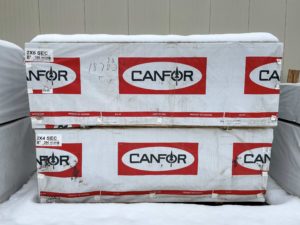 FORT ST. JOHN, BC — After much speculation, the Canfor sawmill in Fort St. John has officially been sold to outside interests. Canfor media relations representatives confirmed the sale of the sawmill, planer, pellet plant and energy systems to Rocky Mountain Salvage on May 29th. Rocky Mountain Salvage is a scrap metal and garbage recycling company with interests in Hinton and Edson, Alberta. The financial terms of the deal were not disclosed. “Since announcing the closure of the Fort St. John sawmill, Canfor is working to divest the site and assets,” said Canfor. …The sawmill was announced as closing in September 2024, affecting 220 jobs, along with a facility in Chetwynd.

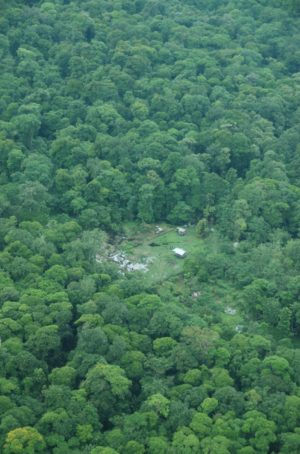 The US Trade Representative has determined that several Brazilian acts, policies, and practices are actionable under Section 301 and has proposed tariffs of 25% on all goods of Brazil, with specified exemptions and an annex of excluded products. …The determination covers multiple areas, including illegal deforestation, and states that timber and agricultural production linked to illegal deforestation can burden U.S. commerce by lowering costs for competing products and distorting prices. The notice describes timber-sector fraud risks, including the laundering of illegally harvested timber through supply chains, and states that illegally sourced timber products can devalue legally sourced timber prices by an estimated 7% to 16%. On wood-related findings, the notice references concerns that Brazilian products may be made with timber harvested illegally. It also describes limits in auditing and verification under Brazil’s Forest Code registration system. …The notice sets a public comment schedule that opens June 1, 2026.




 GOODLAND TOWNSHIP, Michigan – Firefighters were on scene for roughly 10 hours working to put out a l
 JASPER County, Georgia — Firemen from the Jasper, Tri-Community, Beech Grove, East End Fire, Lake Rayburn and Angelina Fire Departments have all converged on the Lincoln Lumber Mill where a fire in the kiln has sent thick smoke into the air that can be seen for miles. No injuries have been reported. Mike Lout with our media partner KJAS reports the fire broke out this morning at the mill off Highway 96, just south of Jasper. First responders say the fire broke out in the dryer house or kiln of the operation. Firemen have so far been able to limit the fire to the drying house. However, flames and smoke are filling the building and firemen are continuing to pump water into the structure.
 WAYNE, Pennsylvania — Saothair Capital Partners, a private equity firm, announced it has completed the acquisition of EAM Corp. from Domtar through a newly-formed affiliate. Founded in 1998 and headquartered in Jesup, Georgia, EAM is a manufacturer of nonwoven airlaid and laminated absorbent materials used in feminine hygiene, adult incontinence, baby diaper, medical, industrial and food packaging applications. …Following the acquisition, current EAM General Manager Vanecia Carr will serve as Chief Executive Officer and Lori Venn will serve as Senior Vice President, Sales and Marketing.

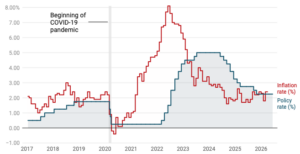 The Bank of Canada is leaving its benchmark interest rate unchanged as it tries to chart a course through global uncertainty. The central bank’s policy rate remains at 2.25 per cent today after its fifth consecutive hold. Bank of Canada governor Tiff Macklem says in prepared remarks that the economy was softer than expected in the first quarter of the year but global oil prices are also staying higher than first thought, which could keep the annual rate of inflation near three per cent for the next few months. The Bank of Canada can’t effectively respond to rising inflation and a weaker economy at the same time, so Macklem says leaving the policy rate unchanged balances those risks. The central bank sees a rebound in economic growth on the horizon but Macklem warns uncertainty is high around the war in Iran and US trade policy.
 There have been consistent signs that the housing market is poised for a rebound. Russ Taylor has been tracking North American lumber markets for decades. The data, he said, keeps telling a different story. …”If things are unaffordable and there’s uncertainty and consumer confidence is weak, then nothing happens. People might be saving more money if they’re not spending it, but everyone’s worried about jobs and everything else, so they’re not spending.” The number Taylor keeps coming back to is lumber consumption. In 2016, the country consumed roughly 50 billion board feet. In 2025, the number was almost exactly the same. Ten years of demographic tailwinds, rising equity, and persistent housing shortage arguments, and consumption has not budged. …Housing starts have been declining every year since their 2021 peak, and Taylor expects 2026 to continue that trend. Repair and remodeling, which accounts for roughly 40% of US lumber consumption, has been similarly stagnant since the COVID period.
 North American lumber futures climbed to approximately USD 597.50 per thousand board feet on June 3, their highest level since April, as persistent supply constraints continued to offset subdued housing demand. North American lumber futures rose to around USD 597.50 per thousand board feet on June 3, reaching their highest level in eight weeks. The move represents a 4.1% increase from a month earlier and reflects a market still dealing with the impact of Canadian import disruption. The price rise comes despite historically soft housing starts, showing that supply concerns remain an important driver for the market. Mills and distributors are holding limited inventories, while seasonal restocking ahead of the summer building season has added support to prices. …The net result is a structurally tight supply position. Mills and distributors are holding limited inventories, while buyers are entering the summer building season with restocking needs.
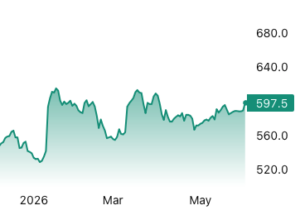 Lumber increased to 598.00 USD/1000 board feet, the highest since April 2026. Over the past 4 weeks, Lumber gained 3.57%, and in the last 12 months, it increased 0.5%.
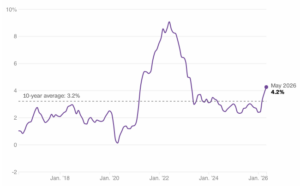 Annual inflation rose to a three-year-high of 4.2% in May, underscoring how elevated energy prices are rippling through the US economy, according to new data from the Bureau of Labor Statistics. Prices rose 0.5% on a monthly basis, driven higher by the US-Israeli war with Iran, the latest Consumer Price Index shows. The higher cost of energy accounted for 60% of the monthly increase. …“[4.2%] is still too hot for comfort, but the more important news was that the increase was concentrated mainly in energy, especially gasoline, rather than spreading widely across the economy,” economist Sung Won Sohn, at Loyola Marymount University. …May’s release is the first inflation report since Kevin Warsh was sworn in as the chair of the Federal Reserve, succeeding Jerome Powell. With inflation moving in the wrong direction and the labor market showing signs of resilience, economists expect the US central bank to keep rates unchanged — or even consider raising them.

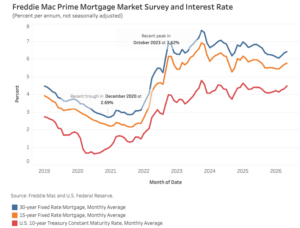 Mortgage rates continued to increase in May as inflation accelerated. According to Freddie Mac, the 30-year fixed-rate mortgage averaged 6.41% in May, up 7 basis points over April. Since the conflict in the Middle East began, the 30-year mortgage rate has increased by 36 basis points. The average 15-year rate averaged 5.76% in May, up 7 bps from April, and up 33 basis points since the end of February. Even so, both rates remain lower than a year ago by 41 bps and 19 bps, respectively. The 10-year Treasury yield, a key benchmark for long-term borrowing, averaged 4.47% in May, 16 bps higher than the previous month. …Persistently high inflation has also strained household budgets. As people used more of their disposable income or drew down on savings to cover everyday expenses, the personal saving rate fell to 2.6% in April. The rate was the lowest since June 2022 when CPI was at its peak.
 The US commercial construction and wood products landscape has been undergoing a noticeable geographic realignment. …At the center of this transition are two powerhouse species that help define the market: Douglas Fir and Southern Yellow Pine. Understanding how manufacturers are positioning themselves around these distinct timber baskets might offer valuable insight into where resources are building the critical infrastructure for the next decades of commercial, agricultural, and residential construction in the United States. …While the West Coast navigates these supply bottlenecks, the American South seems to be experiencing a sustained wave of modernization and investment, capitalizing on robust regional resources. …Take for example the recent investments made by companies like Canfor. …The company opened a cutting-edge sawmill complex in Axis, Alabama, an endeavor that highlights the industry’s shift toward high-tech manufacturing.
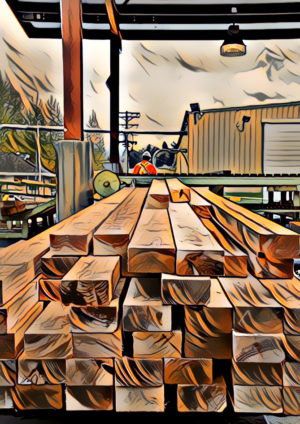 Russian lumber production is rising despite deteriorating sales and falling exports, driving inventories higher as weak household purchasing power limits the domestic market’s ability to absorb excess supply, according to the monthly Russian Lumber Industry Insights report. Companies are trying to maintain production volumes, the report said, but warehouse stocks are rising because domestic demand is weakening. The ministry in May sharply reduced its growth outlook, revising GDP growth for the current year to 0.4% and to 1.4% in 2027, and reported that the economy contracted by 0.3% in the first quarter. …At the same time, the crisis in China’s construction sector has reduced import demand and intensified price competition. …Logistics costs for Russian suppliers continue to rise, the report said, further reducing the profitability of shipments. Taken together, weakening domestic demand, lost market share in China and higher transport costs are creating pressure on exporters and contributing to a buildup of stocks.
 Canadian wood producers and manufacturers say they know how to solve the country’s housing shortage and, at the same time, increase demand in the construction industry for their products. The “two-fer” solution is laid out in a recent report published by the Canada West Foundation. The report is based on a December 2025 roundtable at which the Canadian Wood Council and the Forest Products Association of Canada convened leaders from construction and forestry to discuss how to increase the use of wood products in prefabricated, modular and panelized wood construction in residential multi-storey buildings. In the CWF report, these methods of construction are identified collectively as Modern Methods of Construction, or MMC. Eric Johnson, for FPAC and CWC, says factory-built components make better use of materials and skilled labour, reducing waste and increasing productivity. …The biggest barriers to scaling up wood-based housing are not technical but regulatory and organizational.
 NOVA SCOTIA — When Tricia Murray rebuilt her home after the devastating 2023 wildfires, she expected her insurance premiums to soar. …Instead, her premium dropped by 12%… because her new home uses modern, fire-resistant materials and incorporates a buffer zone. Murray’s experience highlights a shift in how insurance companies calculate risk. For decades, insurers relied purely on history, it was classified as low risk. ….Instead of grading entire neighbourhoods under one risk level, insurers are using advanced tools like satellite imagery and laser scanning to assess individual properties. This new approach looks at specific, real-time details: The proximity of trees and brush to a structure. The type of roofing and building materials used. Property maintenance, such as clearing dry leaves from decks and removing wood chips near walls. Amanda Dean, at the Insurance Bureau of Canada, said those tools give homeowners the power to lower their own risks by following FireSmart Canada guidelines.
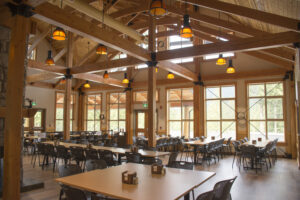 Mass timber has emerged as a leading material in the pursuit of low-carbon, sustainable construction. With its warm, natural aesthetic and significantly lower embodied carbon than steel and concrete, mass timber is increasingly used across a wide range of building types. However, unlike conventional steel or concrete structures, the very characteristics that make it appealing also create unique challenges. The constraints of mass timber construction, such as exposed structural elements and prefabricated panels with limited flexibility, demand a new level of precision and foresight in the design and coordination of mechanical, electrical, and plumbing (MEP) systems. By anticipating the structural and aesthetic challenges of mass timber and engaging in thoughtful MEP design and coordination, engineers, architects, and specifiers can deliver high-performance buildings that not only celebrate the beauty of timber but also help meet decarbonization and sustainability goals. …Mass timber’s prefabricated nature and exposed aesthetics require precise, early-stage coordination among mechanical, electrical, and plumbing systems.
 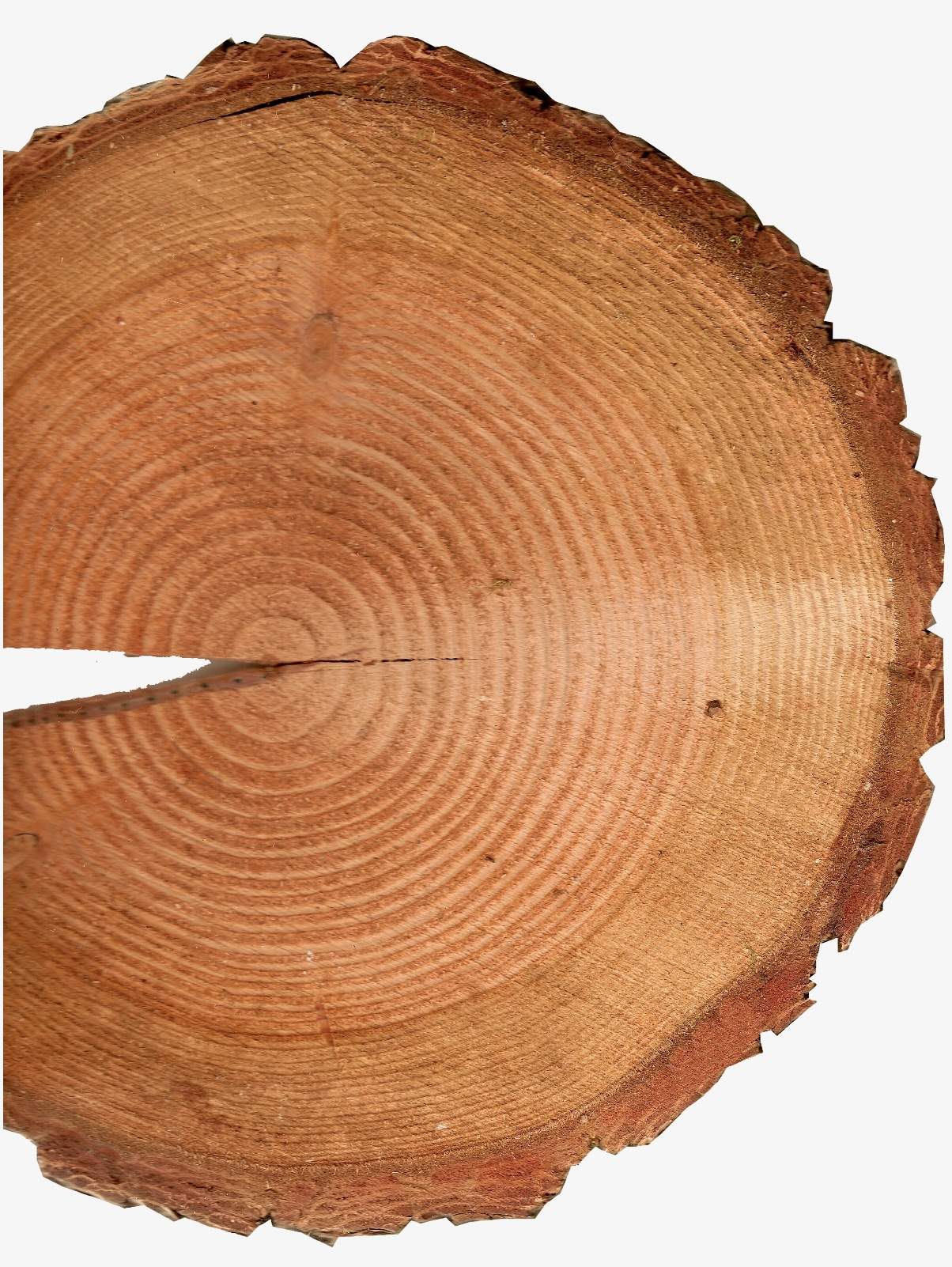 If you’ve ever spent some time amongst old-house lovers, and especially the craftspeople who work on them, you’ll no doubt have heard mention of “old-growth lumber.” It’s a material that’s spoken of with reverence, usually as supporting evidence for the “they don’t build ’em like they used to” argument, and always contrasted with today’s lumber, which is deemed comparatively subpar. So what is it about old-growth lumber that makes it so legendary, and if it’s so great, why don’t we use it anymore? …So yes, the trees are generally between 100 and 150 years old, but old-growth lumber is also characterized by competition to survive and disturbance history. In other words, if the forest is left alone for long enough, and no natural disasters reset the clock, you end up with old-growth trees. So it’s not that we can’t produce old-growth lumber now, it’s that it doesn’t fit our production needs.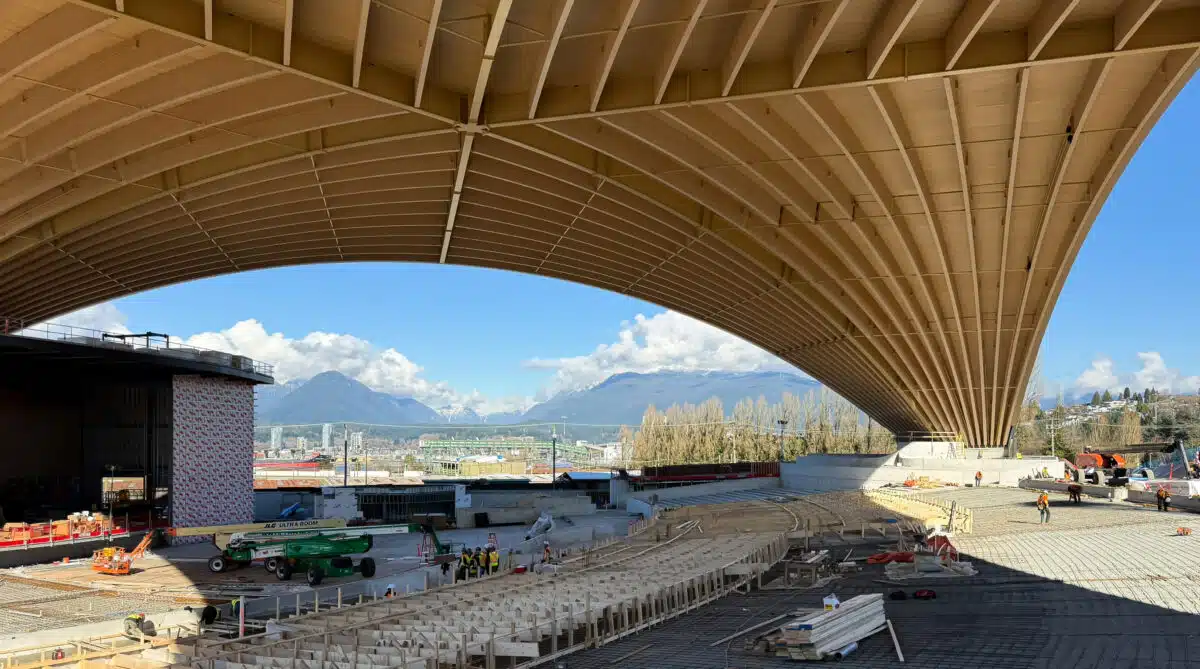
 IRELAND — Minister for Agriculture Martin Heydon [et al]… welcomed the final report from the interdepartmental and industry
 For two decades, Harold Larson helped battle wildfires across BC, Alberta, the US, often working shoulder-to-shoulder with structural firefighters. But at every one of those fires where he and his crew risked their safety alongside their municipal colleagues, there was one perplexing difference: According to the federal government, Mr. Larson was not classified as a firefighter at all. …It’s a holdover from wildland firefighting’s early decades, when the job wasn’t to protect homes, towns and lives – it was to protect timber values as part of the country’s forestry industry. …Canada’s wildland firefighters are seeking to join their municipal counterparts, a cause most recently championed by Vancouver Island MP Gord Johns. …As fire seasons continue to worsen, Mr. Larson said this only underscores the need for Ottawa to recognize that both structural and wildland firefighters are equally important when it comes to keeping people and communities safe. [to access the full story a Globe & Mail subscription is required]
 The Canadian government recently announced that it will lease a fleet of 10 firefighting aircraft and other support assets to be deployed for the 2026 wildfire season. The plan will see these 10 leased aircraft being managed by the Canadian Interagency Forest Fire Centre deployed strategically across the country and made available to provinces as they face intense wildfires. …This announcement follows the government’s fall 2025 budget announcement of a $316.7-million investment in Canada’s aerial wildfire-fighting capacity — an announcement that acknowledged a growing national challenge. …Canada’s wildfire aviation system remains fundamentally decentralized. What Canada lacks is a clearly defined national aerial response framework. That framework should establish how federally-funded aircraft are deployed, how they are prioritized when multiple provinces face simultaneous fires, and how they integrate with the emerging detection technologies — including satellite monitoring and long-endurance drones — that can identify fires earlier than ever before.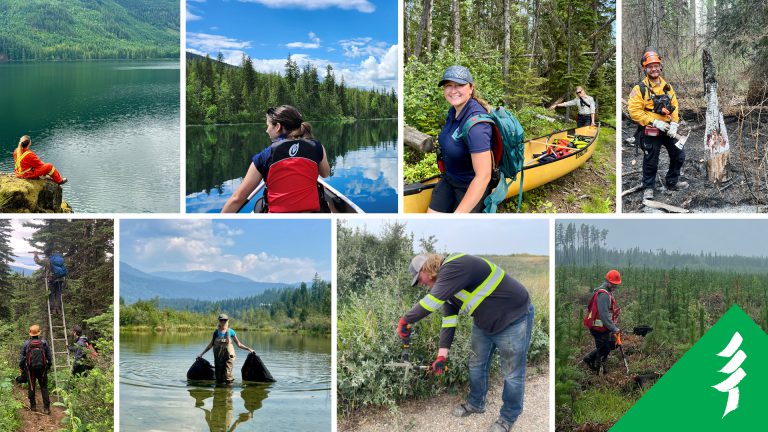
 Through the Forest Enhancement Society of BC, the Province is committing $20 million per year over three years. …This investment funds projects that reduce wildfire risk, restore forest ecosystems and improve the long-term health and resilience of B.C.’s forests. “The best wildfire is the one that never starts. The best way to protect communities is to work together to prevent them,” said Ravi Parmar, Minister of Forests. …This year, 60 forest enhancement projects are receiving funding. These projects not only reduce wildfire risk, they also support forest-sector jobs in rural and remote communities. The projects include creating landscape-level fuel breaks, removing residual fuels, carrying out prescribed burns, and making improvements to egress routes that are important in the event of an emergency or evacuation. …“These projects reflect the innovation and commitment we continue to see from proponents throughout BC,” said Jason Fisher, executive director, FESBC.
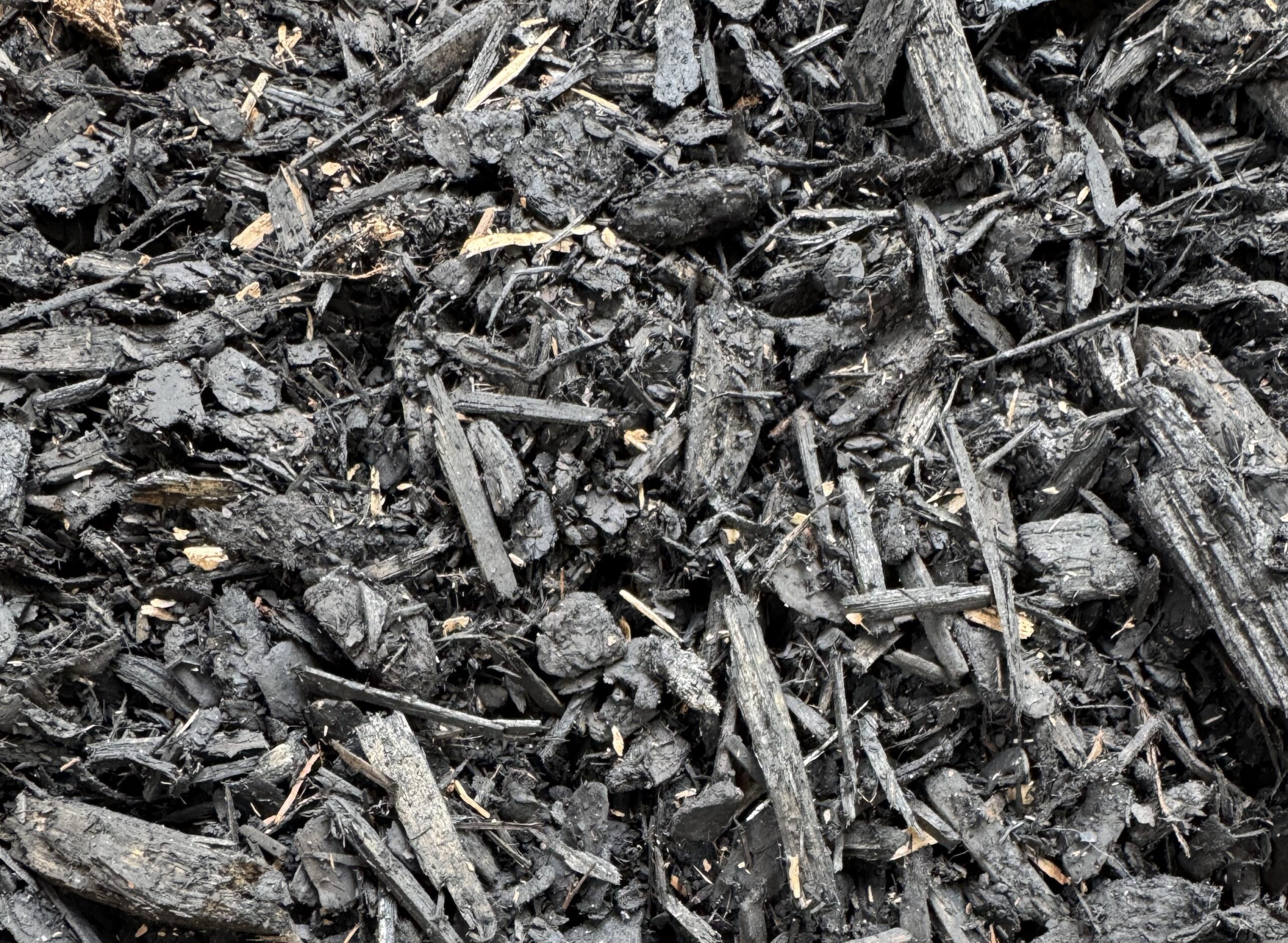 CRESTON, BC — A Kootenay-based project is receiving provincial funding to convert forestry waste into a soil supplement, benefiting agriculture and forestry sectors. …Ravi Kahlon, Minister of Jobs and Economic Growth, said “By turning wood waste into valuable new products, this project is creating jobs, supporting local businesses and helping build a stronger future for the community.” …Through the Rural Economic Diversification and Infrastructure Program (REDIP), the Province is providing approximately $182,000 to Wildsight to support its Fire for Healthy Soils project in Creston. The funding supports a pilot project to convert wood waste into biochar, which is a stable, carbon-rich form of charcoal produced by heating organic waste in a low-oxygen environment. …The provincial investment will support Wildsight, the Creston Community Forest and the Regional District of Central Kootenay to collaboratively pilot a biochar business project using low-cost kiln technology.
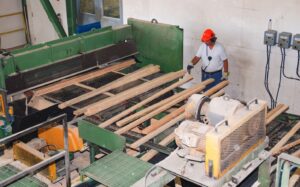 In 2024, the Tsay Keh Dene Nation and McLeod Lake Indian Band bought a logging licence near the town of Mackenzie from Canfor for $69M. …“It’s just a huge step to have some local Indigenous nations who are vested in our community step forward,” Makenzie Mayor Atkinson said. …But what if Canfor and others aren’t logging at rates close to what their licences say they can? If they sell such licences, what should those licences be valued at? And what role should the B.C. government play as the party that issues those licences and must approve any future sales? …Canfor, West Fraser and Western Forest Products alone control 39% of the timber that the government has firmly committed to logging companies. For decades, successive provincial governments granted logging licences to companies on the requirement that the public get something in return. The quid pro quo was that the companies would build mills.
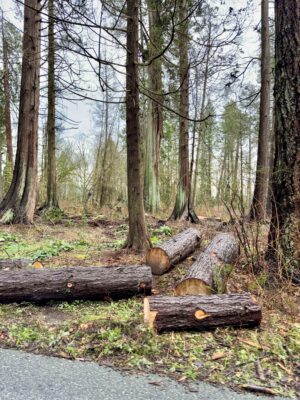 Extreme drought and rising temperatures in the US are poised to overwhelm the Trump administration’s plans to control wildfire by logging federal forests, scientists say. …The drought is expected to lead to catastrophic wildfires that stand to become the new normal amid climate change, the researchers say. “The type of drought we’re seeing this year across the West is a glimpse into the future,” said Erica Fleishman, at Oregon State University. …The US is on track in 2026 for more wildfires than 2025, a much wetter year. More than 5 million acres burned last year. As of April, 1.8 million acres had burned so far across the US—double the acres burned in the same period last year. Trump administration officials say wildfire risk makes it imperative to log forests and help the timber industry. The administration is taking an aggressive approach to quickly suppress wildfires as it increases logging by 25% this year.
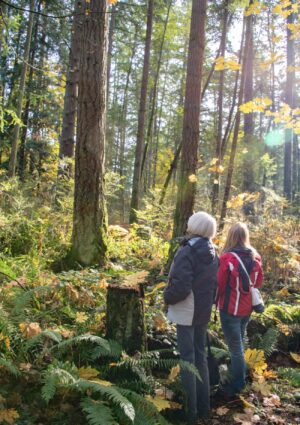 Agriculture Secretary Brooke Rollins claims “moving the Forest Service closer to the forests we manage is an essential action that will improve our core mission of managing our forests.” That is sophistry — a failed attempt to justify an ill-advised, destructive reorganization plan to remove Forest Service headquarters from Washington and radically cut its research infrastructure. Her fallacy implies that adjacent communities have a superior claim on national forests. …Government nihilists and dismantlers have for years peddled the “proximity begets policy expertise” canard, without evidence. …Meanwhile, Tom Schultz, the chief of the Forest Service, made clear his lingering allegiance to his former employer’s interests. Last month, he laid them out to House appropriators: “timber sales, critical minerals permitting, grazing allotment management.” That timber, he said, is “vital to the nation’s well-being.” In reality, only 6 percent of the total timber supply in the country comes from national forests.
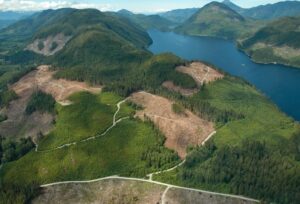 On the B.C. government website, you can read the following: “B.C. is a world leader in sustainable forest management”. …However, if you talk to BC forest ecologist Rachel Holt… or former B.C. Liberal MLA Mike Morris, you get a very different perspective. …The Council of Forest Industries says, “in BC. three to four tree seedlings are planted for every tree that is cut”. That does not solve the problem. In the last 40 years, the rate of cutting has sped up. That means there are many very young forests, not suitable for wildlife habitat and not suitable for logging. …Several groups in BC are pushing for less logging, protection of our remaining primary forests and more ecologically sound forestry practices. The down side? Large forestry companies make less profit. The upside? More jobs, healthy forests… fewer wild fires and fewer greenhouse gases.

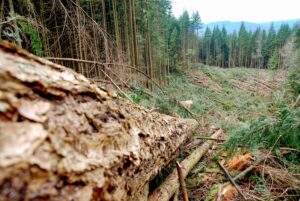 MONTANA — The US Forest Service and the timber industry have effectively lobbied Congress to enact laws based on fire paranoia that cut the public owners of these forests out of the process. They want the government to build roads at taxpayer expense to while compromising the best remaining fish and wildlife habitat and quiet spaces. Upon a molehill of truth they have constructed a mountain of disinformation. Claiming an emergency, the Forest Service is fast-tracking commercial timber sales in ways that severely limit and exempt them from environmental analysis. …They are removing the administrative review and public objection process. The bad stuff for wildlife, fish and people including ugly clearcuts, road construction and reduced water quality are being frontloaded. The good stuff including stream restoration and road reclamation are back ended. If past is prologue, the latter will not be funded or implemented as the Forest Service shifts its priority.
 WASHINGTON, D.C. – An email dropped into the US Department of Agriculture staffer’s inbox this spring. The Minnesota-based worker was about find out where she would be asked to relocate with her family. …The federal government employee had been hired to work remotely. However, her entire team was now being told to move to a new city. …The USDA, the massive federal department covering agriculture policy to anti-poverty food programs to the forest service, is consolidating offices across agencies, moving many workers out DC into select hubs. In Minnesota, USDA lost 21% of its 1,800 employees between fiscal year 2025 and 2026, coinciding with the start of President Donald Trump’s second term. It was the hardest hit of the federal agencies operating in the state. …The latest move also is different than conservation program cuts announced this spring or the USDA-run U.S. Forest Service announcing closure of research sites, including two in northern Minnesota.
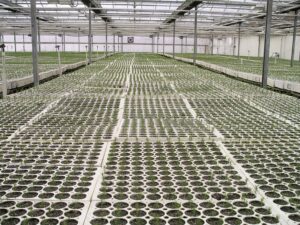 The UK Department for Environment Food and Rural Affairs (DEFRA) has published detailed guidance setting out how a planned UK‑EU sanitary and phytosanitary (SPS) deal will reshape forestry-related trade – and is urging businesses to start preparing now. In a wide‑ranging update, the department set out how the agreement would operate in practice, including the removal of most routine border checks and certification requirements for goods moving between Great Britain and the EU. But the guidance also makes clear the scale of regulatory change required, with the UK set to align dynamically with EU rules across a wide set of areas, including pesticides and plant imports. Among the most significant operational shifts set out for horticultural businesses (which includes forestry-related activities). …Further detail on transition periods and exceptions is expected later in 2026, with full implementation targeted for mid‑2027. Read the full



 TUSCALOOSA, Alabama — A worker at a lumber mill in north Tuscaloosa County was killed in a workplace accident Wednesday night, investigators have confirmed. Captain Jack Kennedy, the commander of the Tuscaloosa Violent Crimes Unit, confirmed that they are investigating a workplace fatality at the W G Sullivan Lumber Co. on Highway 171 east of Samantha in the northern part of the county. Kennedy said the worker, whose identity the VCU is not publicly releasing, died in an accident involving machinery. He said the body will be sent to Montgomery, where the Alabama Department of Forensic Sciences for autopsy. At this time, the VCU does not believe there was a criminal element to the death, which is why they are not identifying the victim publicly.