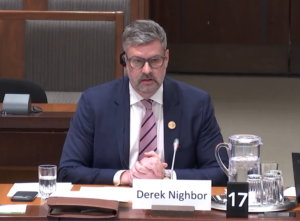
 Derek Nighbor, President and CEO of the Forest Products Association of Canada, appeared before the Parliamentary Standing Committee on International Trade to outline the promise and complexity of growing Canadian forest sector exports to Japan — and to make a pointed case for sustained federal investment to make it happen. Canada currently ships roughly $1 billion annually to Japan, a figure Nighbor put in context: it reflects a century of Canadian forestry trade there and 50 years of work by the Canada Wood Group. “It’s a heavy lift,” he said. Against nearly $8 billion in annual softwood lumber exports to the United States — now facing combined duties and Section 232 tariffs in the 45% range — Japan is a real but incremental diversification opportunity. Canada holds 65% of Japan’s 2×4 dimension lumber market, built by actively developing a wood-building culture where one didn’t naturally exist. Holding and growing that share, Nighbor told the committee, requires sustained technical engagement on codes, standards, and the platform frame system — not simply shipping more product. He also flagged headwinds: declining Japanese housing starts, growing domestic Japanese lumber supply, aggressive European entry across lumber, pulp, and pellets, and tightening Japanese sustainability and traceability requirements.
Nighbor’s asks to the committee were specific. He called for dedicated multi-year funding for the Canada Wood Group to build on its export development work, and for doubling the funding of NRCan’s Global Forest Leadership Program. He asked for federal investment in market-entry infrastructure — spec alignment tools, testing labs, and distributor networks — applicable to both Japan and Korea. And he made the case for continued government-led trade missions, pointing to a BC and Alberta forestry-specific mission to Japan in November as the kind of targeted engagement that moves the needle. Beyond lumber, Nighbor identified mass timber and engineered wood — aligned with Japan’s housing renewal, decarbonization, and seismic resilience priorities — and bioeconomy products including biocarbon, biofuels, and biomass as the next frontier for Canadian forest exports to Japan.


 The US Department of Commerce is

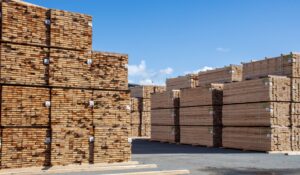 Ottawa’s decision not to include softwood lumber among the industries that will benefit from $1 billion in tariff relief funding sparked frustration from BC Premier David Eby, who said softwood lumber in the province has been “decimated” by U.S. tariffs. “I don’t know what it’s going to take, really, to get the bureaucrats and the ministers in Ottawa to recognize that softwood lumber employs more people in Canada than steel and auto parts combined,” Eby said. …”I really feel like BC’s projects are not getting the attention they deserve.” …Eby said he does not know why the industry would have been overlooked, though he hopes a separate funding announcement just for softwood lumber is in the works. …Jeff Bromley, wood council chair with the United Steelworkers, said 150,000 workers across Canada make their living off forestry. “I wish they would have included a broader program that would have helped our forestry industry,” he said.
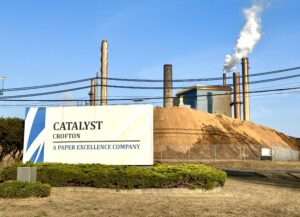 CROFTON, BC — Numerous companies and investors have expressed an interest in purchasing the Domtar pulp mill site in Crofton since the facility shut down operations earlier this year. Domtar said in a statement that it is exploring a variety of possibilities for the future of the waterfront site, and North Cowichan Mayor Rob Douglas said a number of interested parties have contacted the municipality directly looking to buy the site for a range of potential uses, including manufacturing, energy production, and other industrial purposes. …“Domtar has retained BMO Capital Markets to evaluate potential purchase proposals and expects to make a decision regarding the site’s future in the coming months.” Douglas said that as decisions about the site’s future use will ultimately rest with Domtar or a prospective new owner, and not the municipality, he is encouraging interested parties to contact Domtar directly.

 MACKENZIE, BC — Conifex will temporarily curtail sawmill operations at its Mackenzie facility for about seven weeks starting May 19, 2026, with a target restart in July 2026. This planned sawmill curtailment is primarily driven by log inventory levels and fibre availability, in conjunction with seasonal logging breakup conditions impacting supply across the BC Interior. Logging operations are expected to resume in early June, subject to, among other things, weather conditions. The curtailment represents an approximately 25 million board feet supply impact. We continue to advance initiatives underway to broaden our available financing options. …Conifex restarted the Mackenzie sawmill in February after a four-week curtailment. The restart followed the completion of a $19 million secured term loan for its subsidiary Conifex Mackenzie Forest Products.

 The clock began ticking April 7 on one of the most important Supreme Court of Canada cases in New Brunswick’s history. That’s the date the country’s top court told law firms involved in the Wolastoqey Nation’s landmark title claim it would determine if it would allow “leave for appeal.” …On one side are logging firms and other private property owners who say they’re caught in the middle of a three centuries-old fight that had nothing to do with them. The Indigenous nation wants the Supreme Court to overturn a Court of Appeal decision last December. That ruling found the nation would have no chance of success in its lawsuit proving that it has Aboriginal title over privately held lands. …By that measure, the Wolastoqey Nation could sue governments but would have no means to take back control of most of their old territory. …If the appeal goes ahead, the Supreme Court could hear the case as early as this fall.



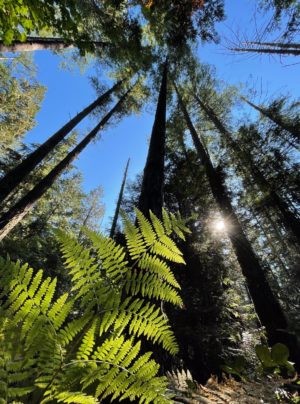
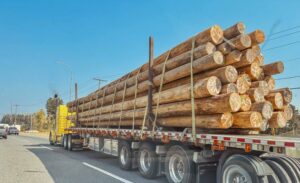 LOUISIANA — Davis Timber Company, Inc. announced it will invest $1.9 million to expand its Beauregard Parish operations with new production capabilities that will enhance efficiency and strengthen Louisiana’s timber industry. The company is expected to create 12 direct new jobs while retaining 11 current positions. Louisiana Economic Development estimates the project will result in an additional nine indirect new jobs, for a total of 21 potential new job opportunities in the Southwest Region. …Davis Timber Company’s expansion will take place at its production facility within the Beauregard Regional Airport Industrial Complex in DeRidder, where the company produces poles and pilings used in utility and infrastructure applications. The project will add new processing capabilities to the existing operation, improving efficiency and enhancing product readiness for market.
 UK — Forestry has long sat at the margins of the insurance market, often folded into broader property portfolios and lightly scrutinised. That position is becoming harder to sustain. The class now requires a level of focus and expertise the market has not always applied, said Daniel Longden, head of forestry at Orvia Underwriting. The sector differs from traditional property risks in one fundamental way: it is constantly changing. Trees grow, are harvested and replanted, altering the risk profile year by year. That dynamic sits alongside an exposure to catastrophe events that can erase entire areas in a single incident. …This variability complicates underwriting and limits the development of standardised data sets, helping explain why the class has remained relatively niche despite growing investor interest. …Where underwriters once relied heavily on historical loss data and third-party reporting, satellite technology now offers a more direct view of exposure.
 VANCOUVER, BC — Canfor Corporation reported its first quarter of 2026 results. …The Company reported an operating loss of $72.5 million for the current quarter, compared to an operating loss of $415.9 million for the fourth quarter of 2025. After taking into consideration a $20.0 million reversal of a previously recognized inventory write-down, the Company’s adjusted operating loss was $92.5 million for the first quarter of 2026, compared to an adjusted operating loss of $145.0 million for the fourth quarter of 2025. These results largely reflected improved performance in both the lumber segment and, to a lesser extent, the pulp and paper segment. Canfor’s President and CEO, Susan Yurkovich, said, “While we saw an improvement in results, largely due to a supply-driven uptick in North American lumber pricing and higher production levels, demand remained relatively subdued. …Global pulp markets continued to face significant headwinds during the first quarter, with pulp producer inventories remaining elevated.”

 VANCOUVER, BC — West Fraser Timber reported the first quarter results of 2026. First quarter sales were $1.334 billion, compared to $1.165 billion in the fourth quarter of 2025. First quarter earnings were $(188) million, compared to earnings of $(751) million in the fourth quarter of 2025. First quarter Adjusted EBITDA was $(66) million compared to $(79) million in the fourth quarter of 2025. Included in first quarter Adjusted EBITDA in the Lumber segment is ($114) million of duty adjustments related to prior periods compared to nil in the fourth quarter of 2025. …North America Engineered Wood Products segment Adjusted EBITDA of $11 million, and Europe Engineered Wood Products segment Adjusted EBITDA of $10 million. …Sean McLaren, West Fraser’s President and CEO said “Excluding the impact of prior year duty adjustments, we were pleased to see all of our core segments – lumber, NA EWP, and Europe EWP – report positive Adjusted EBITDA.”
  The Bank of Canada held its policy interest rate at 2.25 per cent for the fourth consecutive time on Wednesday, but warned that it would be closely watching the impact of rising oil prices on inflation in the coming months amid ongoing uncertainty caused by the war in Iran. …Inflation has been close to two per cent for over a year but rose to 2.4 per cent in March after slowing to 1.8 per cent in February. The central bank base case forecast is that inflation will peak in April at about three per cent before returning to the two per cent target in early 2027, but that is assuming global oil prices decline. U.S. tariff measures along with the uncertainty surrounding the Canada-United-States-Mexico Agreement (CUSMA) have also added to the uncertainty ahead of the July 1 CUSMA review deadline, especially since the Canadian government has not yet launched formal discussions with U.S. officials.
 VANCOUVER, BC — Western Forest Products reported a net loss was $19.9 million in the first quarter of 2026, compared to net income of $13.8 million in the first quarter of 2025 and net loss of $17.5 million in the fourth quarter of 2025. …The company reported Adjusted EBITDA of negative $13.6 million in the first quarter of 2026. In comparison, the Company reported Adjusted EBITDA of $3.5 million in the first quarter of 2025 and Adjusted EBITDA of negative $6.2 million in the fourth quarter of 2025. Other highlights include: Lumber production of 118 million board feet (versus 154 million board feet in Q1 2025), Lumber shipments of 113 million board feet (versus 156 million board feet in Q1 2025), Cedar lumber shipments of 25 million board feet (versus 31 million board feet in Q1 2025), Average lumber selling price of $1,422 per mfbm (versus $1,348 per mfbm in Q1 2025), and Average BC log sales price of $193 per m3 (versus $134 per m3 in Q1 2025).

 MONTREAL — Stella-Jones announced financial results for its first quarter ended March 31, 2026. Sales for the first quarter reached $791 million, versus sales of $773 million in the corresponding period last year. Excluding the impact of 2025 acquisitions of $42 million and the unfavourable currency conversion effect of $30 million, pressure-treated wood sales increased by $10 million, or 1%, largely driven by an increase in wood utility poles volumes. …Eric Vachon, President and CEO said “Our performance continues to be supported by disciplined operations. As part of our commitment to continuous improvement, we are advancing targeted initiatives across the business, with a current focus on optimizing our Railway Ties production network, enhancing efficiency and supporting future growth. We are also progressing our strategic growth priorities, notably with the finalization of the site selection for our new U.S. steel lattice manufacturing facility.”




 WASHINGTON — U.S. consumer confidence unexpectedly edged higher in April amid a rally in share prices following a ceasefire in the war with Iran and improved perceptions of the labor market, helping to ease households’ financial worries for now. Despite the rise in confidence to a four-month high, the survey from the Conference Board on Tuesday showed higher gasoline prices stemming from the conflict with Iran remained a source of concern for consumers. Fewer planned vacations over the next six months and the share of those intending to drive to their holiday destinations was the lowest since April 2020. …The Conference Board said its consumer confidence index climbed 0.6 point to 92.8 this month. Economists had forecast the index easing to 89.0. It was in stark contrast with the University of Michigan’s Surveys of Consumers, which last week showed its Consumer Sentiment Index slumping to a record low in April.




 NEW BRUNSWICK — Postmedia plans to stop printing most New Brunswick newspapers in Moncton. Postmedia publishes the Times & Transcript, Telegraph-Journal, Daily Gleaner and other local newspapers. They are printed and distributed from a building along Main Street in downtown Moncton. Dave Arsenault, president of the New Brunswick Media Guild, confirmed that print and distribution will cease in Moncton and be moved elsewhere. …”Following an assessment of printing and insert packaging operations, it was determined that outsourcing these operations from Postmedia’s Moncton facility would allow us to continue serving print subscribers and advertisers while supporting long-term financial sustainability,” the company said Wednesday. The printing will be outsourced out of province starting Aug. 2. Postmedia bought most of New Brunswick’s English-language newspapers from Irving-owned Brunswick News in 2022.
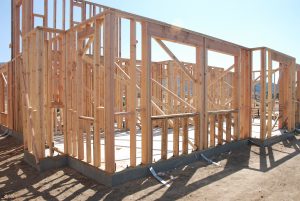 Sumitomo Forestry’s $4.5 billion Tri Pointe buyout was approved with more than 99% support, taking the combined Japanese-owned share of US single-family home construction from just 0.2 per cent in 2015 to close to 6 per cent in 2026. Sumitomo Forestry’s buyout of Tri Pointe Homes, one of California’s largest builders, was approved at a special meeting in Irvine, California, earlier this month, with the deal set to be completed by mid-year. The Tri Pointe transaction, first announced in February, is the largest US homebuilder acquisition by a Japanese forest-based conglomerate in history, and follows the same playbook Sumitomo has already run across Australia, where Japanese conglomerates wholly or partly own just under 30 per cent of the country’s top 20 housebuilders. …Tri Pointe gives the Tokyo-listed parent access to California and Nevada, the two major US growth states where Sumitomo… had no meaningful presence.

 A panel at the 2026 SFI Annual Conference — Leveraging SFI Certification for Global Reporting Frameworks and Market Assurances — took on one of the more pressing questions facing the forest sector: as global disclosure frameworks multiply and investors demand quantifiable outcomes, does forest certification still do the job? Shenandoah Johns, Chief Environment and Sustainability Officer at West Fraser, walked through five major disclosure frameworks that have arrived in the last five years and identified the gap between what certification was designed to demonstrate and what regulators are now asking for. Paige Goff, VP Sustainability at Domtar, made the case for not overcomplicating what is already working. Kirsten Vice, Senior VP Sustainability and Canadian Operations at NCASI, framed 2026 as a year of influence — with key nature-related frameworks being finalized — and called on the sector to shape its own targets before others do it for them. Jason Metnick, President of SFI, moderated.


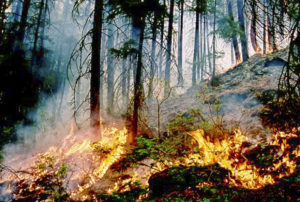 A new effort to force states to affirm the Trump administration’s views on DEI, transgender athletes and immigration when signing contracts with the U.S. Forest Service is threatening millions of dollars in wildfire grant funding and fire reduction projects on federal lands. Some liberal states can’t sign the documents because the policies clash with state law, forestry experts say. Already, at least one state is reporting that the new rules have stalled work to reduce wildfire risk and assist with projects on national forest lands. Other states say the requirements are so vague that they don’t know how to follow them. And some timber industry leaders believe the standoff could cut into their revenues. …The update to the requirements governing federal partnerships comes even as many Western states brace for a brutal wildfire season, following a winter that brought record high temperatures and a paltry snowpack.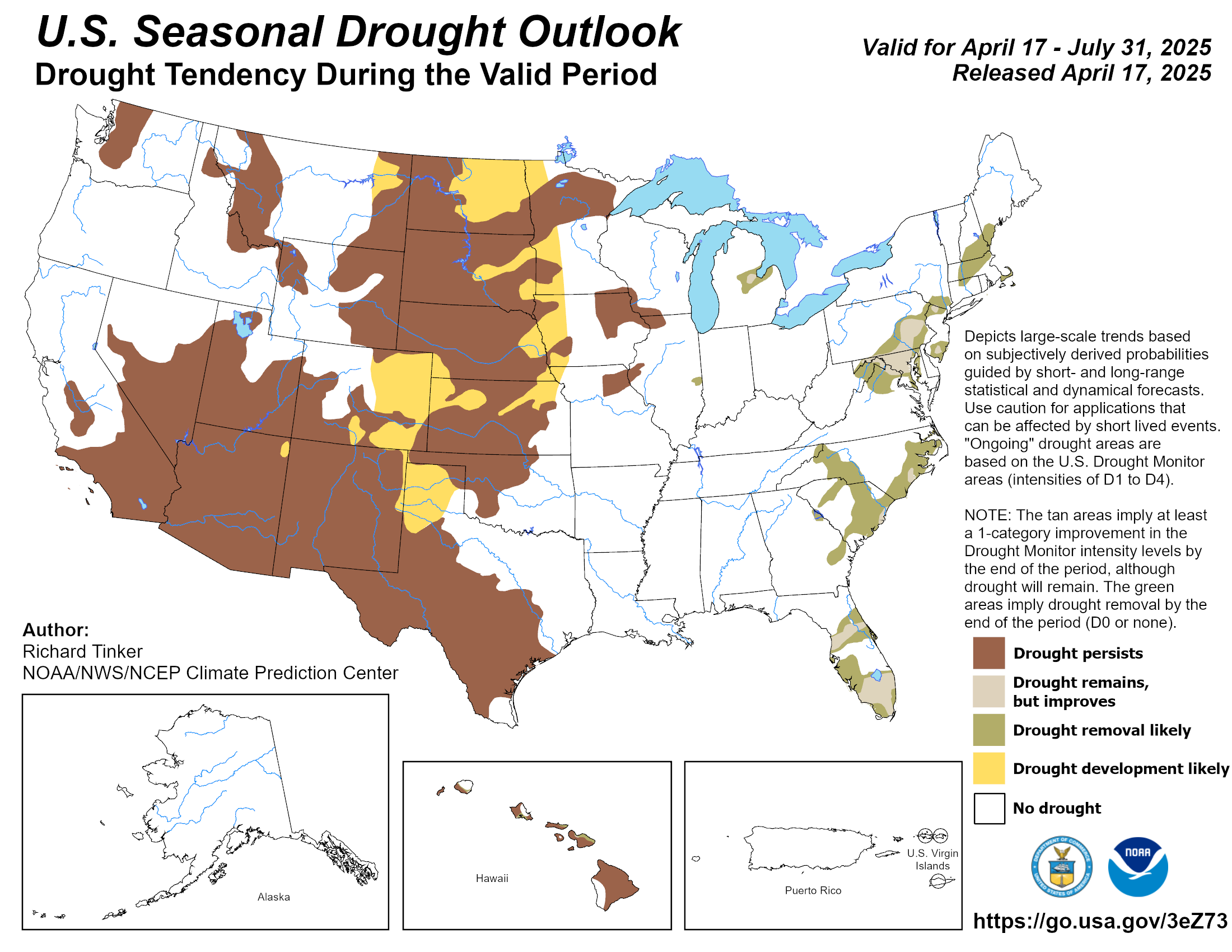



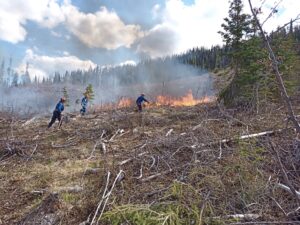 With wildfires already burning and drought persisting across much of the US, fire experts are bracing for what could be an extreme fire season. The U.S. Forest Service is going into it having done far less work than in recent years to manage the dry, flammable vegetation that can fuel catastrophic fires. In 2025, the Forest Service reduced vegetation on almost 1.5 million fewer acres than in 2024, according to an analysis of the agency’s data by NPR and firefighting experts. …The Forest Service said in a statement that the drop in prevention work is mostly due to staff being occupied with firefighting and because environmental conditions were not right for doing prescribed burns in the Southeast. The agency lost 16% of its workforce as of last summer, with 5,860 personnel leaving in the first six months of 2025 as part of the Trump administration’s efforts to reduce the size of government.
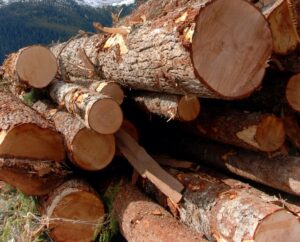 Russian timber and cellulose exports have collapsed by 50% between 2021 and 2025, the steepest fall of any sector tracked by NATO-frontline intelligence across four years of Western sanctions, with the same Latvian assessment revealing that sanctions have cost Moscow more than US$130 billion as it scrambled to source banned goods between 2022 and 2025. That is according to a new analysis published in April by the Constitution Protection Bureau (SAB), one of Latvia’s three security intelligence services, drawing on internal Russian institutional forecasts obtained through intelligence collection alongside SAB’s own assessment. Russia was the world’s largest softwood lumber exporter in 2021, ahead of its February 2022 invasion of Ukraine. …According to the analysis, Russia paid an additional US$32.5 billion each year to acquire sanctioned Western goods through intermediaries at inflated prices, excluding cases where no substitute was available.
 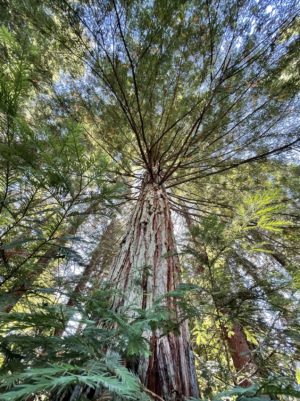 Commission attempts to retrospectively curb “rampant bureaucracy” in the EUDR are “inadequate”, according to the German Sawmill and Timber Industry Association (DeSH). DeSH says the new simplification package for the EU Deforestation Regulation (EUDR) falls far short of the goal of genuine simplification and continues to create uncertainty rather than clarity in practice. Instead of solving structural problems, DeSH says the Commission is attempting to retrospectively curb the rampant bureaucracy with ever-new guidelines, FAQs, and exemptions. …Ms Möbus says the goal of the EUDR – to combat global deforestation – is correct and important. “However, the EU has taken a wrong turn on the way there. The regulation has developed into a bureaucratic behemoth that poses enormous challenges for the companies affected.” …“The association call for a significant reduction in bureaucratic requirements, practical solutions for implementation in the supply chain, and genuine risk-based approaches that adequately consider regions without deforestation risk.”
 Our warming world is set to enter an
 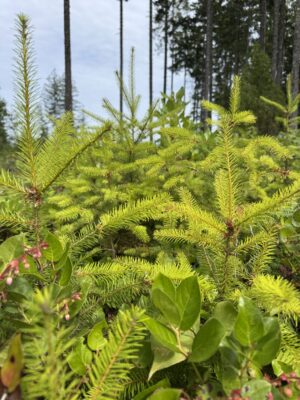 LONDON and SAN FRANCISCO – Octopus Energy Generation, one of Europe’s leading renewables investors, is ramping up efforts to slash CO₂ pollution at scale – inking a major US deal that will help remove up to 50 million tonnes of carbon dioxide from the air. Octopus’s fund management team is set to invest $500 million in afforestation and reforestation projects in the US developed by public benefit and climate technology company Living Carbon. On top of that, Octopus has put nearly $13 million into Living Carbon’s fast-growing, cutting-edge carbon removal development business. …Across the US, roughly 130 million acres of land lie degraded and could be reforested. …The locations include old mining sites and worn-out farmland, transforming these spaces into CO₂-absorbing sinks that slash emissions and combat climate change. These projects will also have a host of additional benefits: restoring wildlife habitats, improving water quality, strengthening soils, and supporting local economies in rural communities.
 Finland’s economy has long been rooted in its forests—but in 2026, the sector sits at the intersection of energy transition, environmental regulation, and global market uncertainty. A glance at Finland’s real-time energy production reveals a system increasingly diversified across nuclear, hydro, and renewables. Yet beneath this transition lies a quieter but equally critical story: the evolving role of forestry in powering both industry and energy systems. Finland’s energy picture depends heavily on whether we look at electricity output or total primary energy consumption. …The broader energy balance tells a different story. When heat, fuels, and industrial energy are included, bioenergy remains Finland’s largest energy source, at roughly 135 TWh, ahead of nuclear energy at about 105 TWh. Oil remains significant at around 70 TWh, while hydro and wind contribute roughly 25 TWh and 20 TWh, respectively. This matters for forestry because forest-based energy remains central to Finland’s energy system, even as its role is slowly declining.
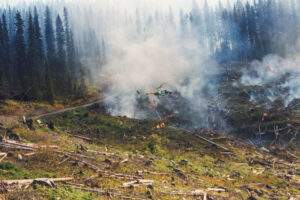 New Brunswick’s wildfire season has begun with more forests burned than at this time last year, according to the government’s wildfire dashboard. As of Wednesday afternoon, the dashboard reported there has been 178 fires so far this season, which have burned 343 hectares of forest. At the same date in 2025, there had been 100 fires burning 87.7 hectares of forest. The 10-year average for the period up to May 6 is 84 fires burning 105 hectares. As of 9 a.m. Wednesday, there were no out-of-control fires in the province, compared with six Tuesday night. …New Brunswick’s wildfire season begins in early April and continues through the summer. Last year, several fires resulted in restrictions on forest trail use. In Moncton, municipal fire departments joined with provincial firefighters. …“Record-low precipitation, minimal snowpack, and prolonged drought have pushed fire risks higher than normal,” the Department of Natural Resources said.