 Both Interfor and Conifex narrow Q1 losses as lumber markets showed signs of improvement. In related news: Canada invests $12M in BC’s forest sector, which BC’s Ravi Parmar calls a step in the right direction, and John Brink says is an insult; Domtar says it’s open to selling its Maniwaki, Quebec sawmill; and the New Zealand-India Free Trade Agreement is already helping NZ sawmills. Meanwhile: Nova Scotia supports wood-heat conversions; Louisiana House approves legislation for wood pellet manufacturing; Louisiana Tech’s mass-timber research centre is progressing; and dust from International Paper’s Port Wentworth lime kiln raises public concern.
In Forestry news: Ontario’s reorg is clamping down on conservation authorities; the US Forest Service is investing $80M in Forest Legacy projects; Washington state released its Forest Heath Highlights Report; and a feature on North Carolina’s historic ‘cradle of forestry’ site. Meanwhile: Ontario officials warn of changing-conditions ahead of long weekend.
Finally, International Pulp Week wraps up with our convention overview and links to all 11 speaker summaries — and with the long weekend ahead, the Frogs will be back Tuesday.
Kelly McCloskey, Tree Frog Editor
 International Pulp Week brought together global market pulp leaders for two days of presentations, market intelligence, and industry dialogue hosted by the Pulp and Paper Products Council. Tim Brown, vice president with PPPC opens and introduced the program before before handing the sessions to day one speaker and moderator Kevin Mason of ERA Forest Products Research, and day two moderator Kelly McNamara of Numera Analytics. Now in its 21st year, IPW remains the premier annual gathering for the market pulp sector — drawing producers, end-users, analysts, and suppliers from across the value chain for a concentrated look at the forces shaping global markets. This year’s program covered an unusually wide range of territory, from geopolitics and macroeconomics to fibre performance, specialty cellulose, bleaching chemicals, carbon capture, and a comprehensive market outlook.










 Canadian lumber mills are curtailing production, absorbing historic losses, and in some cases closing permanently – all while American competitors operate with a built-in margin advantage engineered by US tariff policy, according to wood market analyst Russ Taylor. …The practical effect is a marketplace that strongly favours US producers. Insulated from import costs, American mills are generating margins that Canadian suppliers cannot access. “The only region really making any money is the US because they’ve got what I call a huge subsidy that they’ve put on importers,” Taylor said. “So they’re gaining the margins that importers aren’t getting.” Those margins have also given US producers room to manoeuvre aggressively on pricing, further cornering their Canadian competitors. “The US mills… know that the Canadians don’t have margins – or they have break-even at best,” Taylor said. Despite the pressure, many Canadian mills have held on far longer than Taylor anticipated.



 CALGARY — Workers in sectors facing global tariff pressures will receive support to help them adapt, retrain and seize new opportunities as a result of a partnership agreement announced by
 A $2-million grant from the Province to FPInnovations will lay the groundwork to help support the development of economic hubs intended to support and grow the forestry sector. The Make More in B.C. project will support B.C.’s wood products. …Economic hubs are at the heart of the Make More in B.C initiative, fostering regional collaboration, connecting local manufacturers with local contractors and First Nations partners, unlocking fibre and forging new opportunities. …Ravi Parmar, Minister of Forests said “The Make More in B.C. project is about building a stronger, more resilient forest sector that is never again dependent on a single trading partner like the US.” Nick Arkle, CEO of Gorman Group, recently found success with this innovative concept. …The groundwork Arkle has laid through his Merritt-based working group, sets the foundation for BC’s first official economic hub in the Merritt Timber Supply Area.
 ENGLEHART, Ontario — The Ontario government is investing $10 million in Georgia-Pacific North Woods to advance a major $191 million upgrade to its OSB plant. The project will support the increased production of Ontario-made wood products and protect more than 220 jobs and hundreds of indirect jobs in the region. …The province is making strategic investments to help forest sector businesses adapt, compete and grow to stay resilient in the face of US tariffs. …The government’s investment under the Forest Biomass Program will support Georgia-Pacific’s $191 million project, helping modernize and expand operations at its Englehart facility. The project includes upgrades to log processing operations, construction of new facilities, expansion of on-site storage and modern equipment. Once completed, these improvements will increase production by 14%, strengthening a key anchor facility in the northeast. Georgia-Pacific will also acquire a thermal energy system to use wood by-products for heat and power, supporting sustainable forest management by maximizing fibre value.
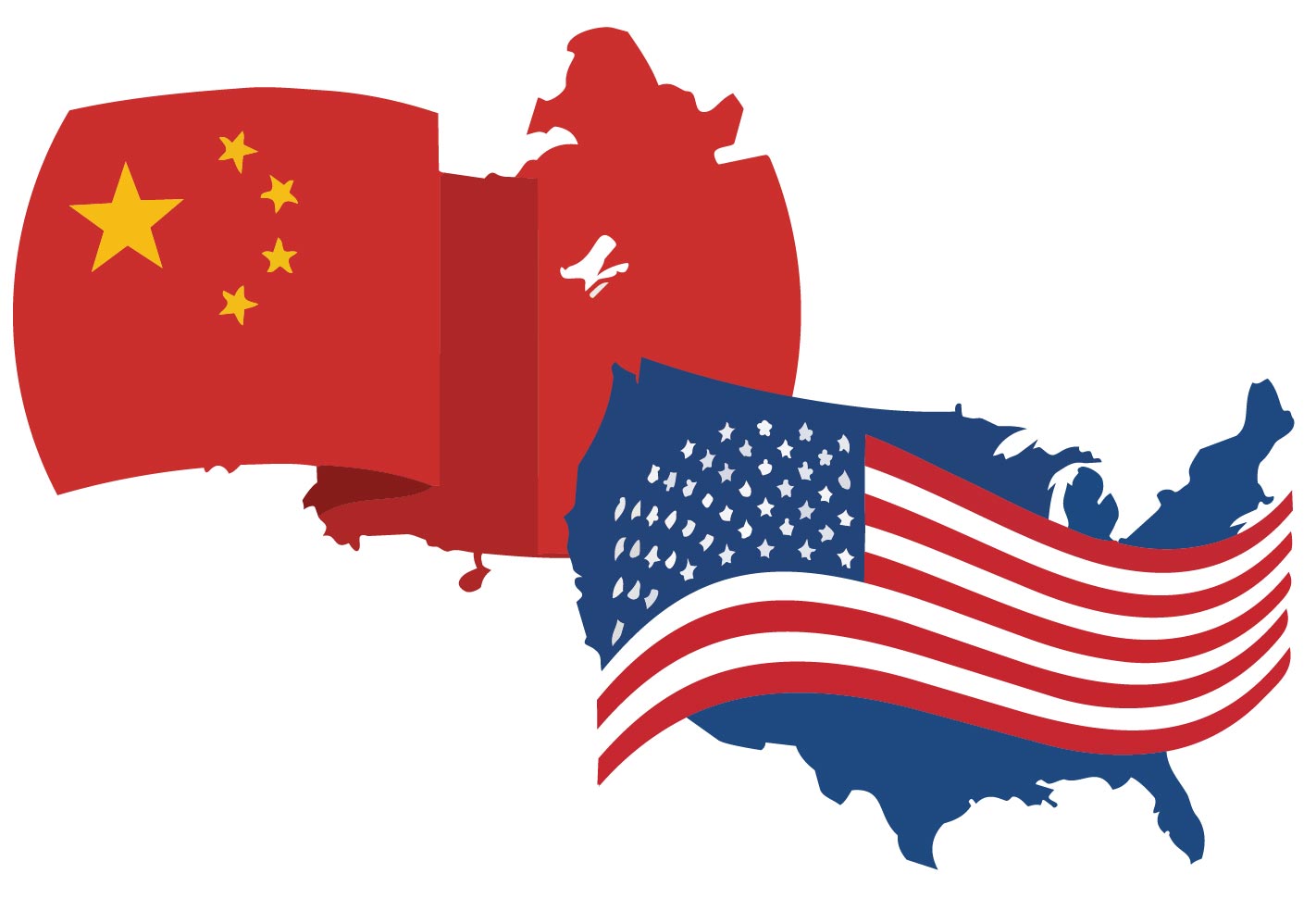 The highly anticipated summit between US President Trump and his Chinese host Xi Jinping has begun – and Europe is watching from a distance. Yet, whatever the outcome is, there is little Brussels can be optimistic about. For Europe, the Trump-Xi summit is not just about US-China relations. It’s about whether the European Union ends up squeezed between two superpowers cutting tactical deals over trade, technology, energy and security – while European interests are treated as secondary (if at all). In fact, Europe might be watching the summit from a lose-lose position. The most immediate concern in Brussels and Berlin is probably nothing less than industrial survival – and it comes in the form of rare earths. …European officials fear a US-China arrangement could prioritize American access to Chinese rare earths while Europe remains vulnerable to shortages and export restrictions — effectively making it collateral damage.
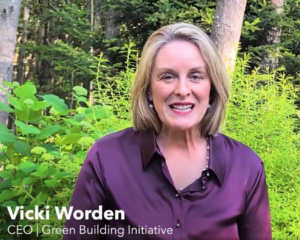 PORTLAND, Oregon — Green Building Initiative (GBI) is announcing the planned departure of its CEO, Vicki Worden. Worden is leaving to take a new CEO role after serving as GBI’s chief executive since 2015. GBI is an international nonprofit organization and ANSI accredited standards developer that operates virtually with a 30-member staff. …Sumayyah Theron, Chair of GBI’s Board of Directors and CEO and Founder of Avant-garde Sustainable Solutions, said “Under Vicki’s leadership, GBI evolved from a US-focused organization into a truly global presence, now serving members in more than 20 countries. Her vision and dedication helped GBI’s green building standards reach more than one billion square feet of certified commercial and multifamily space worldwide.” …Worden’s departure is slated for late June 2026, and a consulting firm will be engaged to manage the search for Worden’s permanent replacement. …For the transition period, GBI’s Board has appointed The Honorable Stephen T. Ayers, FAIA, as GBI’s Interim CEO.
 US President Donald Trump’s administration on Monday asked a US court to pause its ruling against the administration’s 10% global tariff while the federal government pursues an appeal. Last week, the US Court of International Trade ruled that the president’s 10% temporary global duties were unjustified under a 1970s trade law. But the court only blocked the levies for two private importers and the state of Washington. The court ruled that Trump’s imposition of the tariffs under Section 122 of the Trade Act of 1974 was misguided. In February, Trump imposed the so-called global tariff of 10 per cent after the U.S. Supreme Court struck down some tariffs the U.S. president had implemented under the International Emergency Economic Powers Act. CUSMA-compliant Canadian exports heading to the U.S. were exempt from the global tariff.
 President Trump said federal agencies “must buy American”, doubling down on his push to prioritize the use of products manufactured, developed and produced in the US. …Government agencies are generally required to buy American-made products under the Buy American Act of 1933, which mandates that federal agencies acquire domestic end products for public use. However, there are several exceptions to the law including unreasonable cost, product unavailability and if domestic preference would be inconsistent with the public interest. Trump has long criticized government agencies for signing too many waivers. In a March executive order entitled “Ensuring Truthful Advertising of Products Claiming To Be Made in America,” Trump pushed forward efforts to crack down on false claims of American-made products.


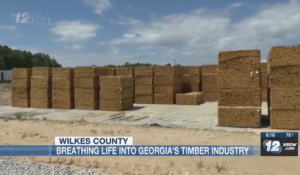 WASHINGTON, Georgia — A sawmill that once stood as the largest east of the Mississippi River in the 1990s has reopened, offering relief to Georgia’s timber industry as it struggles with mill closures, Hurricane Helene damage and recent wildfires. Wilkes Lumber has brought the old mill back online in Washington, a small mill town surrounded by endless pines along Highway 78. The facility is already operating in phase one with about 50 workers, with more hiring expected as phase two comes online in the next few weeks. The mill shut down because of the cost and capability of getting rid of chips, according to Mack Winfrey. …At a time when Georgia’s timber industry is fighting to hold on, Washington is getting back something it lost a quarter-century ago: jobs, a market and a little more hope.
 FLORIDA — On the heels of Escambia County adopting an ordinance to establish an Economic Development Ad Valorem Tax Exemption (EDATE) for West Fraser, the sawmill company announced a $70.25 million expansion, creating 30 new jobs. The board voted to approve the ordinance, which will give the Canada-based lumber company a 70% ad valorem tax exemption for a period of five years. Shortly after the vote, FloridaWest Economic Development Alliance announced that West Fraser has invested $70,250,000 in capital expenditures to expand its existing sawmill operation in McDavid. …The project is expected to generate substantial economic activity across Escambia County, supporting local suppliers, contractors and service providers. …Over the next five years, the estimate of the taxable value lost to the county is $70,252,000 improvements to real property, and $3,400,000 to tangible personal property.
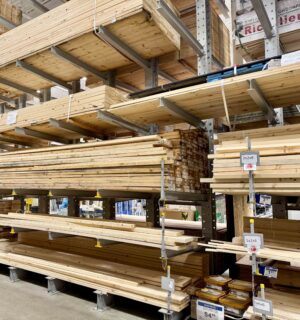 AUSTRALIA — Timber NSW, the industry body representing the NSW hardwood industry,
 BURNABY, BC — Interfor Corporation recorded a net loss in Q1’26 of $63.3 million, compared to a net loss of $104.6 million in Q4’25 and a net loss of $35.1 million in Q1’25. Adjusted EBITDA was $30.7 million on sales of $643.2 million in Q1’26 versus an Adjusted EBITDA loss of $29.2 million on sales of $600.6 million in Q4’25 and Adjusted EBITDA of $48.6 million on sales of $735.5 million in Q1’25. Highlights include: Lumber production of 856 million board feet was up 103 million board feet versus the preceding quarter driven primarily by higher operating rates at the U.S. Northwest and B.C. operations. Q4’25 production was impacted by temporary production curtailments in response to weak market conditions. Due to weak market conditions and other factors, Interfor indefinitely curtailed operations at its Ear Falls, Ontario sawmill in Q1’26 and at its Nairn and Gogama, Ontario sawmills in April 2026.
 NEW YORK — Mercer reported first quarter 2026 Operating EBITDA of $7.8 million, a decrease from $47.1 million in the same quarter of 2025 and an increase from negative $20.1 million in the fourth quarter of 2025. In the first quarter of 2026, net loss was $52.0 million compared to $22.3 million in the same quarter of 2025 and $308.7 million in the fourth quarter of 2025. Mr. Juan Carlos Bueno, CEO, stated: “Our pulp sales realizations showed resilience this quarter as softwood pulp markets held steady, while hardwood pulp performance trended upward on favorable demand-supply dynamics. However, elevated fiber costs across our supply chain and a slower-than-anticipated recovery in prices continued to weigh on our results. …Mass timber momentum continues to build, backed by an order book and commitments of $171 million that support a multi-year production plan. …European softwood pulp prices increased compared to the fourth quarter of 2025 due to supply constraints, although these gains were offset by higher discounts.
 VANCOUVER, BC — Conifex Timber reported results for the first quarter ended March 31, 2026. EBITDA was negative $7.7 million for the quarter compared to EBITDA of negative $12.6 million in the fourth quarter of 2025 and positive EBITDA of $4.9 million in the first quarter of 2025. Net loss was $9.4 million for the quarter versus a net loss of $11.4 million in the previous quarter and net income of $0.6 million in the first quarter of 2025. In March 2026, Conifex Mackenzie Forest Products, entered into a $19 million secured term loan with the Business Development Bank of Canada under the Softwood Lumber Guarantee Program… to support working capital and operations. In early February 2026, Conifex resumed sawmill operations at the Mackenzie Mill under a two-shift configuration following an extended period of single-shift operation. …The Power Plant continued to operate on its normal schedule.





 At a time when the nation is facing a severe housing shortage, more multistory apartment buildings would offer more homes to more people. And there’s a big added benefit: Residents would be much safer from fires. A new study by
 A BC government decision to source a forest fertilizer outside the US for “political reasons” ended in disaster in an incident that killed 13 cattle and triggered a major environmental penalty. Every year, BC’s Forest Investment Program tenders contracts to fertilize thousands of hectares of forest across the province in projects meant to boost tree growth for harvesting and to capture carbon. One of the sub-contracts went to Western Aerial Applications in late September 2025. Its job was to use helicopters to scatter a newly sourced blend of fertilizer onto forests near Quesnel, BC. That plan fell apart when employees overfilled bags used to load helicopters with fertilizer. In at least six locations off Highway 26, the blue pellets spilled to the ground in unintended concentrations. …Tim Singer, a range officer with the Ministry of Forests, would later document 13 dead cows, including several found next to spilled fertilizer.
 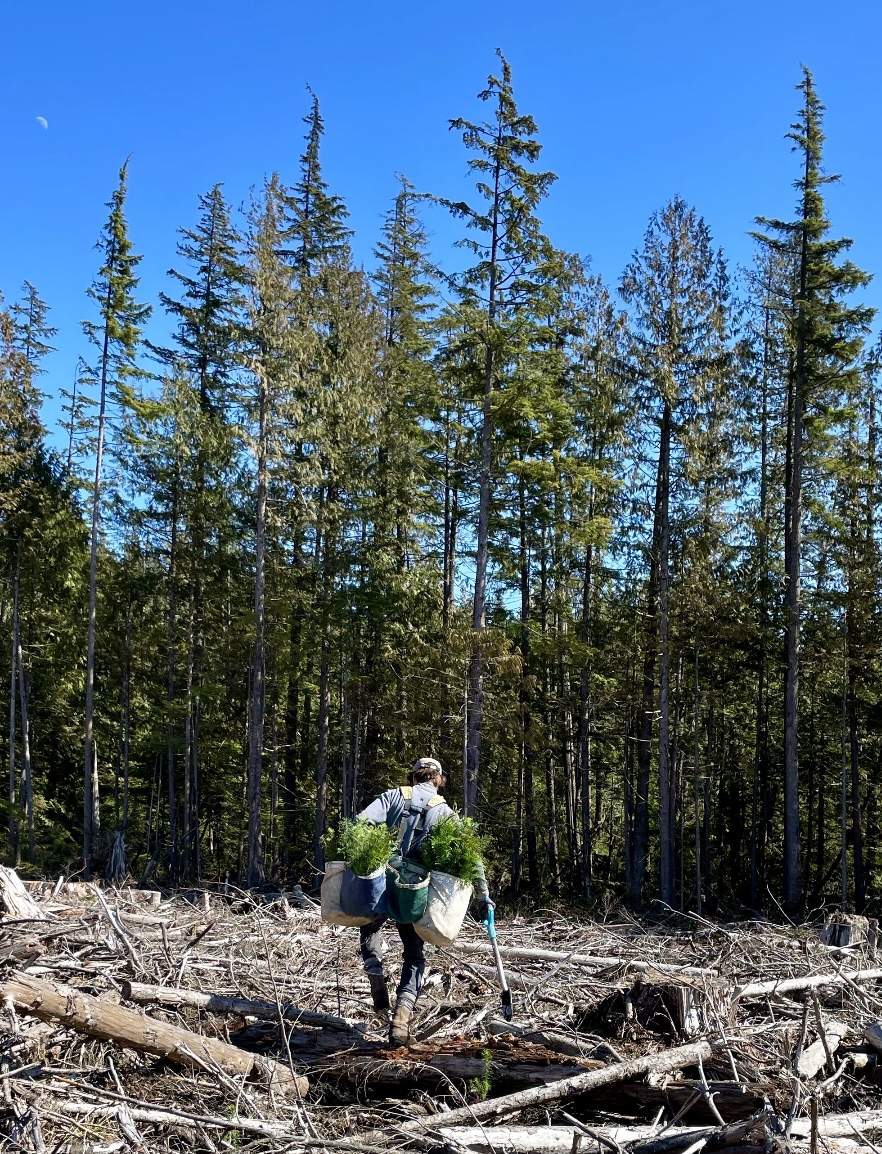 VICTORIA, BC — The Honourable Nathalie Provost, Secretary of State (Nature), highlighted 16 projects across BC. These projects represent a $272 million investment to plant over 95 million trees, helping to protect nature and biodiversity in Canada by restoring critical habitats for species at risk and wildfire-affected areas, as well as supporting Indigenous-led reforestation efforts through tree planting. … Canada’s Strategy to Protect Nature is based on three pillars for action to harmonize nature protection and economic growth: Protecting Nature in Canada, Building Canada Well, and Valuing Nature and Mobilizing Capital. Key components of the strategy include increasing our protected areas network on land and water. Elements to do this will include expanding our parks network and restoring critical habitats for species at risk, as well as recognizing and expanding on working landscapes or other effective conservation measures.
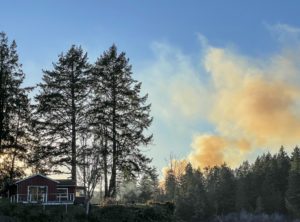 NEW BRUNSWICK — The Fredericton Fire Department is gearing up for what could be a busy wildfire season, training its firefighters in how best to respond when burning trees begin to threaten homes. Firefighters participated last week in a national training program aimed at offering crews techniques for defending homes against wildfires. These fires are an increasing threat to the city, both from climate change and from the growth of neighbourhoods beyond the city and suburbs. …”Working in the wildland interface, we’ve got to triage properties,” Sullivan said. “Oftentimes there’s not water sources nearby.” The training program is provided by the International Association of Firefighters, with 350 Canadian firefighters receiving it in 2023 and 2024. The training was funded by the federal government, which provided more funding in 2024 to train additional firefighters. …”As the line separating urban, suburban, and rural communities has blurred, wildfires are a threat spanning coast to coast.”
 The amalgamation of Ontario’s 36 conservation authorities into nine regional bodies is expected to take effect in early 2027. A new directive from Environment Minister Todd McCarthy orders conservation authorities to halt any major decision-making processes, such as changing staffing structures or purchasing property, in the meantime. After a meeting between Environment Ministry officials and conservation authority staff on May 6, 2026, one public servant told The Narwhal, “The province has essentially handcuffed conservation authorities.” …A leaked document and a recording of an internal conversation between Ministry of Environment officials and conservation authority officials for this story. …In the recording, ministry officials are heard assuring attendees that they were happy to keep working with conservation authority staff, and that the government remains committed to preserving drinking water protections. But the officials repeatedly said things are still being figured out. They acknowledged the lack of answers was “not terribly reassuring” and “anxiety producing, probably” for conservation authorities.
 WASHINGTON — The Intertribal Timber Council (ITC) expressed deep disappointment following the European Commission’s release of its EUDR simplification review, saying the package offers no meaningful relief for Indigenous Tribal Nations and leaves major concerns raised by Tribal forest managers unresolved. Despite months of engagement from Tribal representatives and repeated warnings about unintended impacts on Indigenous communities, the Commission declined to reopen the regulation and instead proposed only limited technical adjustments through implementing acts, FAQs, and guidance documents. As a result, compliance obligations affecting Tribal Nations in low-risk countries remain fundamentally unchanged. …US Tribal Nations manage 7.8 million hectares of forestland under sovereign governance systems. …The ITC is calling on the European Commission to recognize Tribal forests in the United States as low-risk, legally protected systems.


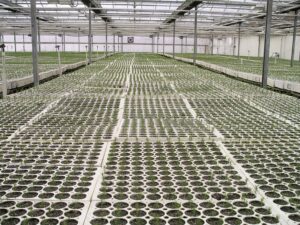 UK — The significant decline in the number of trees produced by Britain’s nurseries provides a “stark illustration” of the sector’s ‘falling’ confidence, an industry leader has said. Around 139 million trees were grown in the UK’s private and public nurseries across 2025/26, a sharp fall on previous years. In both 2024/25 and 2023/24, nurseries grew slightly over 160 million trees, with 2022/23 totalling slightly under 152 million. This means the total number of trees produced fell by around 14% between 2024/25 and 2025/26. …The findings were contained with the Forestry Commission’s new Tree Supply report – published in late April – which pointed to reduced planting expectations in Scotland as being a major cause of the decline. Stuart Goodall, chief executive at industry body Confor, said: “the report provides a stark illustration of the concerns that have been raised for a number of years – government targets for tree planting are not being met and this is affecting confidence and business activity in the sector.
 NOVA SCOTIA — The Province continues to support the forestry sector by making wood heat and building materials a priority in public buildings. A request for proposals issued Thursday, May 14, will see five buildings converted to heating systems that use local wood products. “We are seizing an opportunity to prioritize a local product from our forestry sector that also makes our province more self-reliant and energy secure,” said Public Works Minister Fred Tilley. “By using more local wood products, we are creating jobs, growing our economy and creating a brighter future for Nova Scotia.” …This is the first major project under the government’s wood initiative announced in July 2025. The deadline for submissions is June 24. Using wood products aligns with the Nova Scotia Loyal program, reduces reliance on imports and enhances export markets. It also supports the forestry sector, reduces greenhouse gas emissions and helps the province move to a low-carbon economy.
 El Niño is emerging even faster than expected in the Pacific Ocean and odds are increasing that it could become historically strong — a rare “Super” El Niño — by fall or winter. This is according to a just-released update from NOAA’s Climate Prediction Center that says there is a 2 in 3 chance that El Niño’s peak strength will be strong or very strong. El Niño is a natural climate cycle that happens when the tropical Pacific Ocean warms enough to trigger shifts in wind patterns throughout the atmosphere, which has a ripple effect on weather conditions worldwide. Droughts and heat waves can flourish in some regions, fueling wildfire danger and water supply concerns, while others are swamped by flooding rainfall. El Niño’s far-reaching effects can also stymie the Atlantic hurricane season. On a larger scale, it causes already rising global temperatures from human-caused climate change to spike even higher. Stronger El Niños make all these impacts more likely.
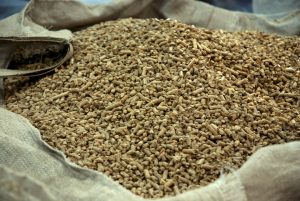 Many US pellet exporters are evaluating new potential markets abroad to diversify their portfolios and adjust to evolving policy landscapes. At the same time, other countries around the world are increasing production and use of wood pellets as a coal replacement for power generation, as well as renewable heating option for residential heating systems and industrial utilization. From Vietnam to smaller markets such as Poland, global wood pellet production continues to grow. …US manufacturers produced over 11 million tons of wood pellets in 2025, including premium and utility pellets. A majority of that volume was exported—an estimated total of 9.37 million tons last year. Globally, pellet producers are experiencing a tug of war between increased biomass use due to decarbonization efforts and increased scrutiny from programs such as the European Union Deforestation Regulation and other countries’ evolving policy mechanisms. …Finding new substantial markets for US pellets may prove to be a challenge.
 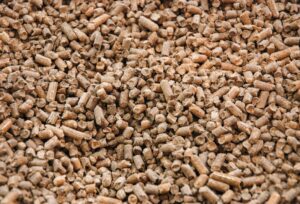 The Louisiana House of Representatives on May 13 voted unanimously to approve a bill that aims to benefit the state’s wood pellet manufacturing industry. Also on May 13, the bill reported favorably out of the Senate Committee on Commerce, Consumer Protection and International Affairs. The legislation now awaits action from the Louisiana Senate. The bill, HB 670, was introduced in late February by state Rep. Charles Owen and amended twice as it moved through House committees. It aims to benefit the state’s wood pellet manufacturing industry by streamlining permitting, developing a skilled workforce and facilitating the efficient transportation and export of wood pellets. The bill, as amended, allows Louisiana Economic Development, a cabinet-level agency focused on business growth, to support the recruitment, retention, and expansion of wood pellet manufacturing facilities in this state within existing statutory authority and subject to the availability of funds.
  GEORGIA — Residents of a Port Wentworth neighborhood believe chemical dust from a nearby International Paper mill is causing health concerns and property damage. Many residents reported shared health symptoms, including sinus issues, burning eyes and coughing. Despite resident complaints and visible white powder on cars and homes, the Georgia Environmental Protection Division has not found the mill in violation of its permits. …The Savannah Morning News collected dust scraped off of one resident’s car about 700 feet from the mill and sent it to third-party lab Eurofins for testing. Eurofins stated that most of the sample was likely calcium carbonate, a white to tan odorless powder, a major component of lime mud. The International Paper mill generates lime mud, according to its operating permit. …The North Carolina Department of Environmental Quality (DEQ) confirmed that the dust contained calcium, and narrowed down the likely culprit to the mill’s lime kiln.