
Paul Mackie
This year, I get to present the Cedar Champion Award to Paul Mackie of the Western Red Cedar Lumber Association. Paul is working for our co-operative marketing organization with a laser focus on ensuring Cedar makes it into projects and markets that will not only work for the members today, but will build the reputation of the association and the species. This triumvirate of Cedar Champions are very different people with very different career paths, but all three share the same trait – they are mission driven individuals who believed that cedar needed to be handled a certain way and never let the easy solutions supplant the right one. …Paul has lived and breathed cedar for nearly 30 years. Every day he seeks to convert someone new into a cedar champion. Paul has shown what a field rep can do when they are mission driven. The board and executive will look to add additional field reps in the near future and that is in no small part because we have watched Paul punch above his weight class for 3 decades. All of us in the association have benefited from Paul’s passion and integrity.
 Tariff uncertainty from the Trump administration continues to impact home builders across the country, as builders prepare for potential price hikes and supply chain issues. …Lumber remains a primary concern, with countervailing and antidumping duties expected to more than double this fall. Steve Martinez, president of Tradewinds General Contracting in Boise, Idaho, recently spoke with CNBC to emphasize just how much lumber goes into the construction of a new home. “This entire house is built out of wood,” Martinez said. “I mean, we really do have wood on the floor, wood on the walls, wood on the ceiling. Can’t really get away from building a house like this without using a large number of wood products in the home.” As a result, price increases to lumber can cause a huge disruption for home builders. And lack of certainty adds complexity to the home-building process.





 Domtar appears close to making a final decision about whether to convert its newsprint mill in Gatineau, Quebec, to a containerboard mill. …Last week, Unifor concluded labor negotiations with Domtar regarding the Gatineau site, and the final contract will likely be published by month’s end, said Daniel Cloutier, Unifor Quebec director. As part of the labor arrangement, agreed not to bargain, lock out or strike for eight years — on the condition that Domtar would move forward with the mill conversion, Cloutier said. Domtar agreed to proceed with the mill conversion investment, Cloutier said, although the company has not issued a final decision. Unifor anticipates that should come by autumn, if not earlier. …”one thing that could help them to make that decision was the guarantee that they will have no conflicts at [the] Gatineau plant while they proceed with the construction of the new facility,” he said.
 The Coalition for Fair Trade in Hardwood Plywood has petitioned for antidumping and countervailing duties to counter unfair trade practices by Indonesia, Vietnam, and China. These petitions were filed on Thursday, May 22, with the U.S. Department of Commerce and the International Trade Commission and have significant implications for our economy, in which hardwood plywood plays a critical role in producing numerous downstream products. The Coalition for Fair Trade in Hardwood Plywood alleges that the governments of Indonesia, Vietnam, and China are actively subsidizing dozens of programs benefiting their industries, including providing products at subsidized rates and multiple grant, tax, and lending programs.


 Canada’s inflation rate eased to 1.7% in April, driven by a drop in prices after the federal government removed the consumer carbon tax, according to Statistics Canada. The slowdown came after the inflation rate hit 2.3% in March. Lower crude oil prices were also a factor in the decline, the data agency said. Despite the decline in headline inflation, core inflation measures all rose in April, some above three per cent — well above the Bank of Canada’s two per cent target rate. The central bank watches those numbers closely because they strip out volatile sectors and don’t factor in one-offs like the removal of the carbon tax. …The central bank is set to make its next interest rate decision on June 4. Porter still expects that the Bank of Canada will cut, given the outlook for weak economic growth in 2025, but said the bank might need more time to see how inflation plays out.
 Tariff discussions about reducing US dependence on foreign goods became a focus for the second Trump administration. …However, the US forest products industry’s reliance on Canadian wood raises questions about eliminating Canadian wood imports entirely. This piece is the second in a two-part series by the Fastmarkets team.

 WASHINGTON, DC – Total single-family home sales are expected to close 2025 at 4.92 million units, with existing home sales accounting for 4.24 million of those units, according to the May 2025 Economic and Housing Outlook from the Fannie Mae Economic and Strategic Research (ESR) Group. Revisions to the home sales forecast were driven in part by the ESR Group’s lower expectations for mortgage rates, which it now forecasts to end 2025 and 2026 at 6.1% and 5.8%, respectively. The latest outlook also projects real gross domestic product growing at 0.7% in 2025 and 2.0% in 2026 on a Q4/Q4 basis. …We now expect the Consumer Price Index (CPI) to rise 3.5 percent Q4/Q4 in 2025, unchanged from our April forecast. Core CPI is expected to rise 3.8 percent Q4/Q4 in 2025 (down from 3.9 percent previously) and 2.6 percent in 2026 (unchanged).

 Volatile lumber prices are once again rattling the U.S. housing market, squeezing builders and threatening to exacerbate an already dire affordability crisis. Softwood lumber prices in April surged 23% year-over-year, while futures rose sharply in early 2025 amid fears of increased U.S. duties and widespread sawmill closures across North America, according to the National Association of Home Builders. This has weighed heavily on major homebuilders such as Lennar, D.R. Horton and Toll Brothers, which have all seen their stocks slump this spring. …“The unpredictability of lumber prices adds serious complexity to planning and budgeting,” said Steve Martinez, of Idaho-based Tradewinds General Contracting. …Beyond homebuilding, higher lumber costs are hitting renovations, fencing and interiors. The US Forest Products annual market review found that U.S. lumber production inched up… but demand continues to outpace supply. Environmental regulations, aging forests and labor constraints compound the challenge.

 The United States has officially lost its perfect credit rating. On Friday, Moody’s, for the first time in its history, downgraded U.S. government bonds from the gold star rating of “AAA” to “AA1,” the silver medal equivalent. This wasn’t a total surprise. S&P and Fitch had already lowered the U.S. rating, so this was Moody’s catching up to the crowd. But make no mistake: Moody’s didn’t just pick a random Friday in May to make this move. Moody’s wanted to send a message to Republicans in Congress: Rethink the tax bill. Or, better yet, don’t do it. …The Republicans’ bill would add at least $3.3 trillion to the debt over the next decade. …Moody’s cited concern over how big the U.S. debt already is (more than $36 trillion) and how Congress has taken almost no action to stop the annual deficits that keep adding to that tab. [to access the full story a Washington Post subscription is required]
 While the Commerce Department released a report on Friday showing a rebound by new residential construction in the U.S. in the month of April, the report also showed a substantial pullback by building permits during the month. The Commerce Department said housing starts shot up by 1.6 percent to an annual rate of 1.361 million in April after plummeting by 10.1 percent to a revised rate of 1.339 million in March. However, economists had expected housing starts to surge by 3.5 percent to a rate of 1.370 million from the 1.324 million originally reported for the previous month. “Soft housing starts in April are another sign that builders are hitting the brakes this year in response to high uncertainty for costs and future demand,” writes Nationwide Senior Economist Ben Ayers. …The smaller than expected rebound by housing starts came as a sharp increase by multi-family starts was partly offset by a continued slump by single-family starts.
 Builder confidence fell sharply in May on growing uncertainties stemming from elevated interest rates, tariff concerns, building material cost uncertainty and the cloudy economic outlook. However, 90% of the responses received in May were tabulated prior to the May 12 announcement that the US and China agreed to slash tariffs for 90 days to allow trade talks to continue. Builder confidence in the market for newly built single-family homes was 34 in May, down six points from April, according to the NAHB/Wells Fargo Housing Market Index (HMI). This ties the November 2023 reading and is the lowest since the index hit 31 in December 2022. …All three of the major HMI indices posted losses in May. The HMI index gauging current sales conditions fell eight points in May to a level of 37, the component measuring sales expectations in the next six months edged one-point lower to 42 while the gauge charting traffic of prospective buyers dropped two points to 23.
 The Producer Price Index declined 0.5% in April, according to data released Thursday by the US Bureau of Labor Statistics. However, of the 10 key commodities in the hardware and building supply space tracked below, only two (millwork and plywood) index lower compared to a year ago. And only one (plywood) declined from March to April. The softwood lumber index increased 8.6% year-over-year. A month ago, the increase was 12.6%. …Construction input prices decreased 0.1% in April compared to the previous month. Nonresidential construction input prices increased 0.2% for the month. “Construction input prices declined in April, but that was largely due to falling energy prices,” said ABC Chief Economist Anirban Basu. “Materials directly affected by tariffs saw sharp price increases for the month. Steel mill product prices, for instance, rose 5.9%, while copper wire and cable prices increased 5.0%.

 Is the Alberta government hell-bent on eliminating what remains of the two caribou herds that live in the mountains just north of Jasper National Park? Looking at the province’s recently released draft management plan for the Upper Smoky area, one might think that is the case. Let’s set this up: the motivation behind the sub-regional plan in the first place was to convince the federal government that the province was doing a good job of caribou conservation. Spoiler alert: they haven’t! Meanwhile, I can’t help but think of the irony that… the company which stands to benefit the most is a US-based forestry corporation, Weyerhaeuser. …For decades now, provincial governments have been promising to conserve and rehabilitate caribou habitat. And for decades, those governments have not made good on those promises. As discussed in previous Jasper Local articles, for caribou to have a chance, they need some space.
 SUNDRE – While the persistent, multi-year presence of a destructive pest known as spruce budworm has been noted by Alberta Forestry and Parks, an entomologist for the provincial government said the localized impact is not yet considered an epidemic. “We mapped some minor infestations that are on private land south of the Sundre area,” said Forest Health Specialist Caroline Whitehouse. …“From what we’re seeing from our aerial overview surveys – that’s the primary way that we are doing monitoring for spruce budworm – we’re not seeing what we would call an epidemic at this point,” she said. …Asked whether there are any regions in the province where there might be an epidemic unfolding, she said the department’s data from 2024 does not indicate as much. …Steve Bouchet, owner of Everblue Nursery said he is less worried about his own tree farm. …“But it’s also a forest fire risk.





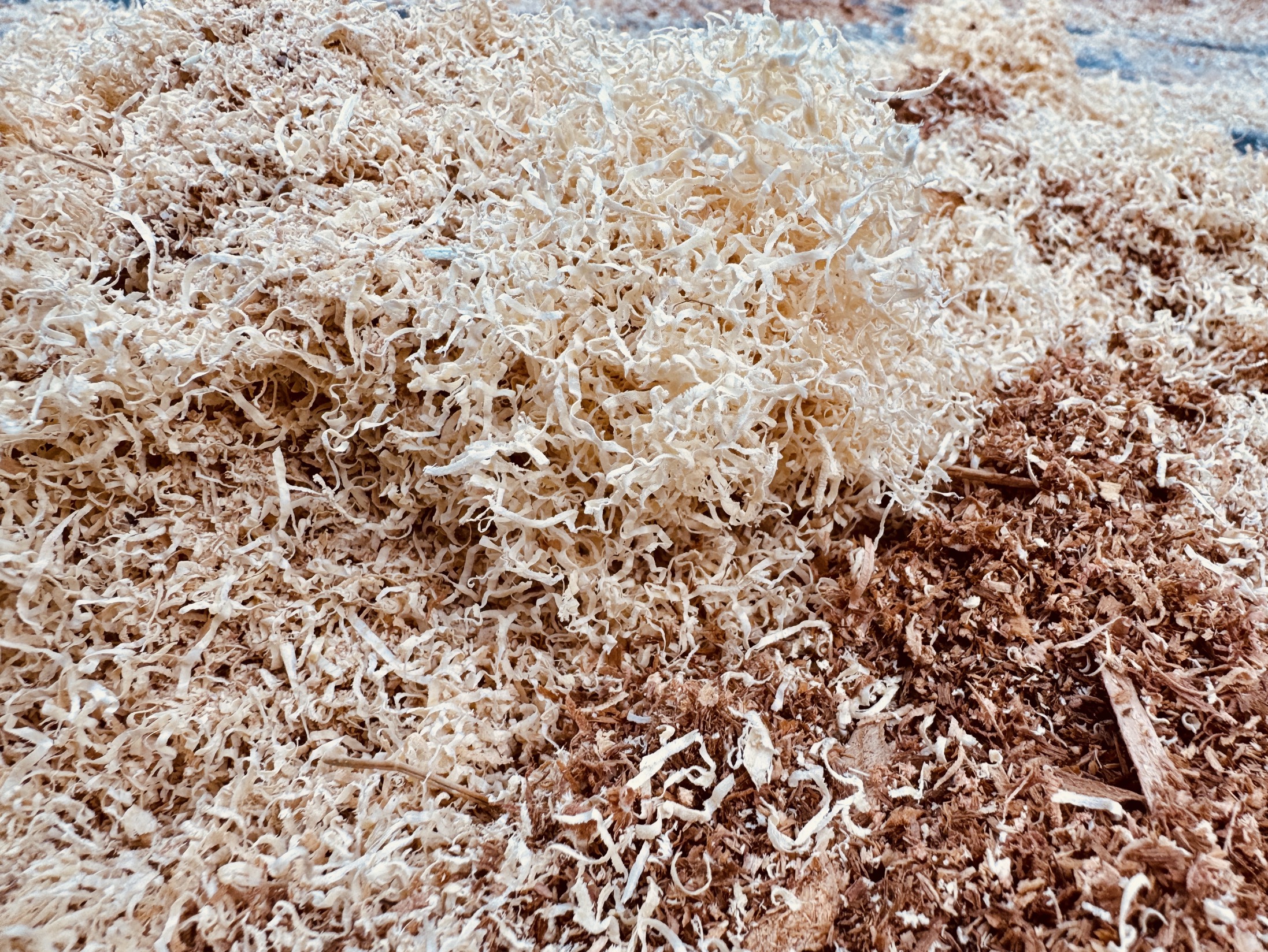 For the past 10 years, the National Fire Protection Association (NFPA) has been working to consolidate several industry-specific standards for combustible dust. In December 2024, the NFPA completed its goal by issuing “NFPA 660–Standard for Combustible Dusts and Particulate Solids.” This new standard combines six existing standards, including NFPA 61 (agricultural dust) and NFPA 664 (wood dust), into a single standard that covers all industries where combustible dust and particulates are generated, used and handled. Building permitting authorities, code enforcers and fire agencies use the NFPA standards to establish the basis of design and operation for new and existing industrial sites, so it’s important for pellet mill owners and operators to be aware of NFPA requirements, especially for new projects and plant modifications. NFPA 660 covers both administrative and engineering requirements at facilities with combustible dust, and its goal is to minimize fires and explosions, help companies maintain business continuity, and, most importantly, protect workers and the public.