
Kevin Mason
In mid-April, the Harvard Joint Centre for Housing Studies (JCHS) released its Leading Indicator of Remodeling Activity update, forecasting R&R growth ~+1.6% per quarter between now and Q1/26. This projected growth comes after a modest pullback in R&R spending in 2024 and will be welcomed by North American solid-wood producers given expected declines in demand from new residential construction in the coming quarters. …Recent pricing trends persisted in North American lumber markets over the past month, with S-P-F prices continuing lower while SYP prices moved higher. …A modest seasonal uptick in demand from treaters appears to be one of the catalysts creating SYP price improvement, while the pause on tariffs—the threat of which had previously boosted S-P-F prices—has now precipitated a drop in S-P-F lumber pricing.
As we’ve highlighted exhaustively over the past several months, duties on Canadian lumber exports to the US are scheduled to more than double later this year, and there is still potential for incremental lumber tariffs following a Section 232 investigation (there is the potential for tariffs to extend to panels, etc., but even producers don’t have any clarity). Barring an unlikely spike in lumber demand, many Canadian sawmills are likely to discover that the economics of selling lumber into the US no longer work (unless prices move substantially higher—but that will be driven by closures in Canada). …For Canadian producers, do alternative markets exist, or could a surge in Canadian homebuilding replace some of the lost volumes to the US? In short, there are no easily accessible markets that come close to the size of the US and that can be supplied by Canadian mills.

 A meeting between the leaders of Canada and the US is not usually considered a high-stakes showdown, but here was newly elected Prime Minister Mark Carney making his first visit to the Oval Office to see President Donald Trump, who has spent months musing about turning America’s northern neighbor into the 51st state. …The interaction offered a glimpse into how Trump has transformed Oval Office meetings from brief and bland encounters into precarious affairs. …His approach can be thrilling for supporters and destabilizing for diplomats accustomed to a more deliberative approach to international relations. … It appears that Carney struck the right balance, at least in Trump’s mind. An invitation to the Oval Office has long been the height of international prestige. …Now, they’re raucous episodes in a foreign policy reality show, starring Trump. While the president can be a gracious host, he openly complains about visitors’ countries.



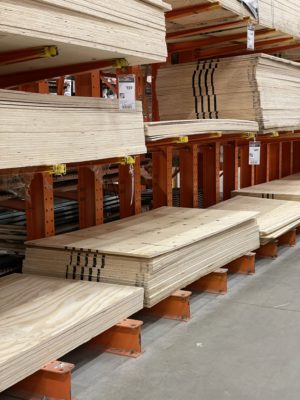 BINGEN, Washington — A plywood mill in the southern Washington city of Bingen will close next month and lay off all 81 workers, the plant’s operator said Thursday. The SDS facility has been operating — with occasional stoppages — since 1949. It uses older equipment, according to Wilkins, Kaiser & Olsen, which was part of a consortium of firms that acquired the mill in 2021. “Regrettably, the long-term challenges and the magnitude of the required investment render continued operation unsustainable,” the mill’s operators said. An adjacent stud mill, planer mill and marine facility will continue operating. Bingen is a small city just across the Columbia River from Hood River. WKO and an affiliated business, Mt. Hood Forest Products, are adding 60 full-time positions to increase their output by 35%. The firms said they will consider hiring some of the laid-off workers.
 A federal judge in Jackson, Mississippi, issued an order April 28 allowing a lawsuit by a newspaper publisher and lumber company against the Mississippi River Commission (MRC) to proceed. The lawsuit alleges a lack of transparency in meetings. The suit was originally filed in September 2024. Emmerich Newspapers Inc., which publishes dozens of publications across Mississippi, Louisiana and Arkansas, sued the MRC over what it claimed were secret meetings where proper records were not kept and the public was not notified or admitted. Emmerich was joined as plaintiff by a lumber company that manages hundreds of acres alongside the Mississippi River. The lumber company claims the Corps of Engineers’ decisions on flood control, informed by advice from the MRC, adversely affect its properties. The judge’s decision allows the lawsuit to proceed without ruling on the merits of the allegations.

 VANCOUVER — Canfor Corporation reported its Q1, 2025 results. The Company reported an operating loss of $28.5 million for the first quarter of 2025, compared to an operating loss of $45.9 million in the fourth quarter of 2024. …These results largely reflected improved lumber segment results and, to a lesser extent, the pulp and paper segment. Canfor’s CEO, Susan Yurkovich said, “While improved lumber benchmark prices provided some relief, rising global economic and trade uncertainty, and US lumber duties, create a challenging backdrop. Through our diversified operating platform in Canada, the US South and Europe, we are positioned to mitigate these challenges, while remaining focused on what we can control. …“For our pulp business” Yurkovich added, “this was another solid quarter with improved results and a strong operational performance. However, global economic uncertainty is also putting pressure on global softwood pulp markets in the near term.”
 Fresh trade data shows deepening US reliance on Canadian goods, even as the president claims the opposite. …According to the US Census Bureau and Bureau of Economic Analysis, the US goods trade deficit with Canada widened to $4.9 billion in March, up sharply from prior months. The surge was driven by higher imports of Canadian-made cars, crude oil, and finished wood products — the exact categories Trump dismissed. Automotive imports rose by $2.6 billion, including a $2.1 billion spike in passenger vehicles, many of which are assembled in Canada. Oil and lumber purchases also increased, contributing to a 14% month-over-month jump in the broader US trade deficit, which hit a new monthly high of $140.5 billion in March. …The US typically runs a services surplus with Canada, and American firms rely heavily on Canadian supply chains in autos, energy, and materials, as the fresh BEA data suggests.
 Lumber futures fell below $550 per thousand board feet, hovering at yearly lows as excess supply from winter restocking collided added to a decline in demand. A 14.2% drop in U.S. single-family housing starts to an annualized 940,000 units in March, pushed new-home inventories to nearly eight months of supply. While a federal directive to raise timber production from public lands by 25% may ease constraints in the long term, the 90-day pause on new reciprocal tariffs has removed near-term urgency for buyers to cover import risks. At the same time, expectations of sharply higher anti-dumping duties on Canadian lumber have prompted mills to hold back supply, further pressuring prices as domestic inventories accumulate and demand remains subdued despite the onset of the spring building season.
 Uncertainty over international trade barriers has caused significant fluctuations in lumber prices in recent months, according to Keta Kosman, publisher of Madison’s Lumber Reporter. “The whipsaw fatigue of conflicting tariff announcements over two months had Western Canadian suppliers hoping to see the market settle down,” Kosman. …Some stakeholders held off on buying lumber altogether, while others ordered early in hopes of securing delivery ahead of any potential trade restrictions. “Others decidedly switched their purchasing to Southern Yellow Pine from SPF,” Kosman says. …Data from the WWPA indicates US sawmills were running at only 67% of full capacity in January, compared to 72% for the full-year 2024. In Canada, sawmill utilization was 74% of capacity, down just one percentage point compared to the previous year. …“At this time, there is significant lumber supply able to come back online at existing facilities should demand improve into the summer.”
 VANCOUVER – Western Forest Products reported improved financial results in the first quarter of 2025, as compared to the same period last year. Net income was $13.8 million in the first quarter of 2025, as compared to a net loss of $8.0 million in the first quarter of 2024, and a net loss of $1.2 million in the fourth quarter of 2024. …lumber production of 134 million board feet (versus 145 million board feet in Q1 2024); average lumber selling price of $1,533 per mfbm. …North American markets are expected to be volatile due to concerns around the economic impact caused by potential further US tariffs and retaliatory tariffs. The spring building season which typically leads to gains in softwood lumber demand could be more muted. …In Japan, the spring housing demand is stronger than expected and channel inventories have declined. …Demand for our Industrial lumber products in North America are expected to strengthen as supply remains tight across all species.
 MONTREAL — Stella-Jones announced financial results for its first quarter ended March 31, 2025. Highlights include: Sales of $773 million, relatively unchanged from Q1 2024; Operating income of $143 million, including insurance settlement of $38 million; EBITDA of $179 million, or 23.2% margin; Acquisition post-quarter of a steel transmission structure manufacturer, aligned with strategy to support North American infrastructure. …Eric Vachon, President and Chief Executive Officer of Stella-Jones said “Though macroeconomic headwinds continue to impact volume growth, at this stage we remain confident in our ability to achieve our financial objectives. …“The Company entered into a definitive agreement to acquire Locwel., a leading manufacturer of lattice towers and steel poles for electrical transmission. This transaction marks a step forward in Stella-Jones’ long-term vision, allowing us to enhance our infrastructure offering and establish a presence in the growing steel transmission structure industry.”
 BEIJING — China announced a barrage of measures meant to counter the blow to its economy from US President Donald Trump ’s trade war, as the two sides prepared for talks later this week. Beijing’s central bank governor and other top financial officials outlined plans Wednesday to cut interest rates and reduce bank reserve requirements to help free up more funding for lending. …Trump’s tariffs on imports from China, have begun to take a toll on its export-dependent economy at a time when it’s already under pressure from a prolonged downturn in the property sector. China has retaliated with tariff hikes of up to 125% on US goods and stopped buying most American farm products. Late Tuesday, China and the US announced plans for talks. …The agreement to talk comes at a time when both sides have remained adamant, at least in public, about not compromising on the tariffs.
 The Federal Reserve is likely to hold interest rates steady later on Wednesday amid fears that President Trump’s tariffs will rekindle inflation and slow economic growth. The decision to keep the Fed’s benchmark borrowing rate between 4.25% and 4.5% is widely expected by financial markets despite the president’s repeated demands for the Fed to lower interest rates. …Trade tensions have led to a sharp drop in consumer confidence. But they’ve yet to put much of a dent in the job market. …So long as tariffs threaten to put upward pressure on prices, the Fed will be inclined to keep interest rates relatively high, in an effort to prevent inflation from spiking again. That calculation could change, however, if the job market softens and unemployment starts to climb. Ordinarily, that would push the central bank toward lowering interest rates.
 Mortgage loan applications saw little change in April, as refinancing activity decreased. The Market Composite Index, which measures mortgage loan application volume based on the

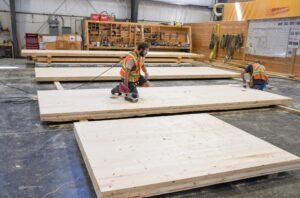 Prime Minister Carney has pledged billions of dollars in financing for makers of prefabricated homes to help end the country’s housing shortage. Experts say the plan is visionary – and laden with risks. Mr. Carney has promised to provide $25-billion in loans and $1-billion in equity financing for companies that largely build homes in factories rather than on construction sites. The federal government will also place bulk orders of prefabricated housing to help jump-start a nascent industry. …It’s a big, bold bet that could make it faster, cheaper and more environmentally friendly to build a chunk of the 3.5 million homes that Canada needs to add by 2030. But factories need sustained demand, a large enough market and streamlined production. That’s what must weave out of the web of housing bureaucracy and hyperlocal rules that currently tangles up residential construction, the experts caution. [to access the full story a Globe and Mail subscription is required]
 House Republicans have approved an amendment that authorizes the sale of thousands of acres of federal public land in Nevada and Utah; two states where the federal government owns most of the land that have long been at the forefront of a controversial movement to cede control of it to state or private entities. The House Natural Resources committee approved the amendment late Tuesday night after previously indicating federal land sales wouldn’t be included in a budget reconciliation bill. Most of the proposed land sales or exchanges appear to be aimed at building affordable housing on US Forest Service and Bureau of Land Management land outside Las Vegas and Reno, Nevada and in fast growing southwestern Utah around the tourist town of St. George, Utah. …Democrats and environmentalists say the amendment is part of a broader far right push for a wholesale transfer of federal public lands.
 MARYLAND — After five years of work and many interim steps, Maryland became the sixth US state to pass extended producer responsibility legislation for paper and packaging, continuing the policy’s evolution in the country. Sent to the governor on April 7, SB 901 would direct a producer responsibility organization to set goals for post-consumer recycled content, recyclability, recycling and reuse rates, source reduction, composting rates and contamination reduction. However, it also builds on newer elements, such as a phased-in approach to reimbursement, seen last year in Minnesota’s law. …The American Forest and Paper Association has called the bill “misguided.” “EPR programs are helpful for materials that don’t have strong end markets or aren’t highly recycled,” the association wrote. “Paper is a highly recycled material with strong end markets.” …Any EPR program must fully and fairly credit our early and voluntary actions to increase recycling in Maryland and across the country.”
 SEATTLE — Recent controversy over the management of Washington’s older state-owned forests has been dominated by an either/or framework: Either we clear-cut these tracts or prevent any harvest at all. Cut it all now or don’t cut any, ever? The human brain loves to dichotomize, but this type of either/or thinking doesn’t work in the woods. Ecologically, economically and culturally, our forests are too complex. Ecologically, climate change is altering our forests rapidly and radically. …Economically, rural areas in Washington state are a microcosm of a pattern that is global in scope. …Cultural values need to be considered as well. …We have to implement a broad array of management models and tools. Instead of re-fighting the 1980s War in the Woods and practicing lawsuit-driven forestry, we need to create flexible, forward-looking practices that will support the health of our forests and rural communities in a time of rapid change.

 MOUNTAIN VIEW COUNTY, Alberta – Provincial officials elevated the wildfire danger rating to extreme across the Rocky Mountain House Forest Area Saturday after five new wildfires ignited in the area in recent days. Parts of Mountain View County are included in the forest area, namely west of Sundre and Bergen, covering Coal Camp and Bearberry west of Range Road 60 from Township Road 312 to the north boundary of the county. “The wildfire danger is now extreme in the Rocky Mountain House Forest Area,” the province said in its May 3 update for the forest protection area. “Dead and dry vegetation continues to be a major concern, as it is highly flammable and provides an easily available fuel source for wildfires.” …On Thursday, two wildfires were discovered in the Rocky Mountain House Forest Area while three more were discovered on Friday.