The Forest Products Association of Canada (FPAC) released a new national research report, titled Canada’s Forest Economy: An Analysis of the National Supply Chain and Community Investment Impact, which underscores the forest sector’s vital contributions to Canada’s economy, rural development, and urban sustainability. Produced with the expertise of iTOTEM Analytics and in partnership with BC Council of Forest Industries (COFI) – the report highlights how 19 leading forest products companies in Canada are sustaining a network of 30,000 vendors spanning approximately 1,595 municipalities nationwide.
Together, these partnerships generated $14.9 billion in supply chain expenditures in 2022 alone, demonstrating a compound annual growth rate of 9.5% since 2020. In alignment with the First Nations Major Projects Coalition Conference Valuing Reconciliation in Global Markets happening this week, the forestry sector is deeply invested in partnering with Indigenous communities across the country and learning more on how reconciliation strengthens both commercial success & project sustainability.
“The forest products sector touches every corner of Canada,” said FPAC President and CEO Derek Nighbor. …Beyond supply chain expenditures, the study also revealed that between 2020 and 2022, the forest sector made $39.2 million in community investments – supporting over 2,000 organizations across 380 communities with funding for health, education, public amenities, and Indigenous initiatives. “As our sector continues to evolve, this research helps shine a light on the outsized and interconnected role that Canada’s forest sector, along with our commitment to growing the economy and building strong partnerships across rural and urban communities alike, plays in Canada’s national economy,” added Nighbor.
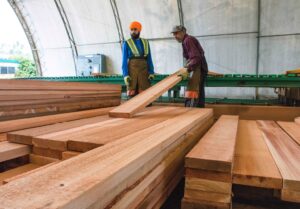 Major softwood producers with head offices in Canada say they have accounted for more than half of the growth in capacity in the US South over the past decade, highlighting their American investments as the Trump administration investigates lumber imports. The US South appeals to forestry companies because of the region’s abundant timber, the Canadian government said in a 57-page filing this month to the US Department of Commerce in a bid to avert potential tariffs. …In seeking to stave off tariffs, the Canadian government and several producers from Canada believe that the foray into the US South should be viewed as evidence of them being aligned with the Trump administration’s “America First” trade and investment agenda. …However, the U.S. Lumber Coalition is arguing that new tariffs are necessary. …Canadian producers are worried that if new lumber tariffs hit 25 per cent… total levies could reach nearly 60%. [to access the full story a Globe & Mail subscription is required]
 WASHINGTON – The US Commerce Department said on Wednesday it is opening a probe into national security impacts of imports of medium-duty and heavy-duty trucks and related parts into the United States. The “Section 232” investigation could form the basis of grounds to impose new tariffs on work trucks, buses, vans and other larger vehicles. Tariffs would hurt Mexico, as it is the largest exporter of trucks to the US. …Canada and Japan are also large exporters of larger trucks to the US. The Commerce Department is seeking public comment by mid-May on the extent to which domestic production of trucks and truck parts can meet domestic demand. …It also wants comments on the impacts on prices “due to foreign unfair trade practices and state-sponsored overproduction”. …Higher tariffs on commercial vehicles could put pressure on transportation costs.
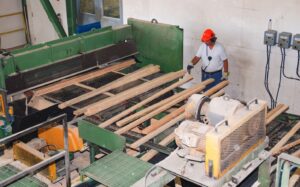 SALEM, Oregon — The Oregon Senate on Monday passed a bill to establish a lumber-grading pilot training pilot program. “This bill opens the door for small sawmill operators to participate in local housing solutions,” said Sen. Todd Nash, R-Enterprise, the bill’s sponsor. “Forty years ago, Eastern Oregon had 69 mills. Today, only seven remain. This is a practical step to support rural economies and increase housing options using locally sourced materials.” Senate Bill 1061, otherwise known as the Oregon Forests to Homes Act, would operate through Oregon State University’s Extension Service, in partnership with the Department of Consumer and Business Services. …Once certified as a grader, a mill owner could sell his lumber directly to a builder. Certified small sawmill operators will be able to sell lumber directly to homeowners or their agents for use in single-family homes or duplexes.
 Risks are high that the global economy will slip into recession this year, according to a majority of economists in a Reuters poll, in which scores said US President Donald Trump’s tariffs have damaged business sentiment. Just three months ago, the same group of economists covering nearly 50 economies had expected the global economy to grow at a strong, steady clip. …While Trump has suspended the heaviest tariffs imposed on almost all trading partners for a few months, a 10% blanket duty remains, as well as a 145% tariff on China, the United States’ largest trading partner. …Showing unusual unanimity… three-quarters of economists cut their 2025 global growth forecast, bringing the median to 2.7% from 3.0% in a January poll. …China and Russia were forecast to grow 4.5% and 1.7% respectively, outperforming the US. However, growth forecasts for Mexico and Canada were downgraded from January by some of the largest margins, to 0.2% and 1.2%.
 The clock is ticking on trade deals that the US will need to strike with many nations, most notably China, to avoid what Trump’s Treasury Secretary has described as an “unsustainable” tariffs war. But in the U.S. farming sector, the damage has already been done and the economic crisis already begun. US agriculture exporters say the global backlash to President Trump’s tariffs is punishing them, especially a decline in Chinese buying of US farm products, leading to cancelled export orders and layoffs. Peter Friedmann, of the Agriculture Transportation Coalition …says “massive” financial losses are already being shared by its members. …A wood pulp and paperboard exporter reported to the trade group the immediate cancellation or hold of 6,400 metric tons in a warehouse and a hold of 15 railcars sitting in what is known in the supply chain as “demurrage,” when fees are charged for delayed movement of goods.
 WASHINGTON — Americans’ trust in President Trump to bolster the US economy appears to be faltering, with a new poll showing that many people fear the country is being steered into a recession and that the president’s broad and haphazardly enforced tariffs will cause prices to rise. Roughly half of US adults say that Trump’s trade policies will increase prices “a lot” and another 3 in 10 think prices could go up “somewhat”. …While skepticism about tariffs is increasing modestly, that doesn’t mean the public is automatically rejecting Trump or his approach to trade. …Not quite 100 days into Trump’s second term in the White House, people around the country are bracing for possible disruptions in how they spend, work and live. The US economy remains solid for the moment with moderating inflation and a healthy 4.2% unemployment rate, yet measures such as consumer confidence have dropped sharply.


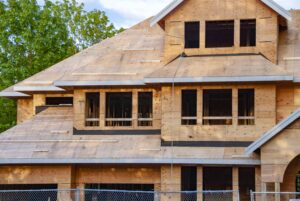 UK — Housing starts in the UK have lagged behind completions for the sixth successive quarter, including to the latest official data. Around 32,000 homes were started in the last quarter of 2024, compared to just over 49,000 completed during the same period, according to the Office for National Statistics. The number of starts is down from 37,000 in the preceding quarter and well below the average of 42,000 homes which have been started per quarter since the ONS resumed gathering the data after the pandemic in April 2022. Completions have remained more stable, rising in the last quarter of 2024 from 41,500 in the third quarter, with an average of just over 49,000 completions a year since the pandemic. Pocket Living chief executive Paul Rickard said: “By any measure these are a disappointing set of figures and continue to highlight the massive challenge the government has.”


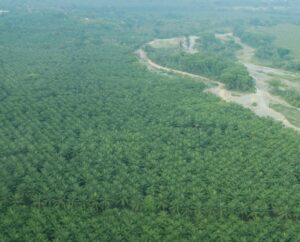 The age of forest restoration has arrived. Between 1990 and 2020, our planet lost 420 million hectares of forest cover, with grave consequences for climate, biodiversity and resource security. For years, large-scale restoration efforts were hindered by concerns around cost-effectiveness and results — but science has come a long way. Yields are higher, and the cost is lower. Advances in methods for measuring carbon storage, creating three-dimensional maps of forest, planting and surveying wildlife populations have removed technical impediments. Now, new financial models are removing the final barrier to large-scale restoration. Philanthropy alone cannot restore, rewild and conserve hundreds of millions of hectares, especially in tropical systems in the global south. …We must find ways to unlock private capital for restoration. Fortunately, commercial restoration projects are now under way across the world and forward-thinking companies are building a strong business case for investing in nature.
 The BC government says it will only meet half of its 2030 target to lower greenhouse gas emissions. In an annual
  VANCOUVER, BC — Svante Technologies, a leader in carbon capture and removal technology, announced that its joint carbon capture and storage project with Mercer International has advanced to the Front-end Engineering and Design Phase 2 (FEL-2). Also known as Pre-FEED, this phase involves engineering, cost estimation, and risk analysis to evaluate the project’s commercial viability. …The carbon capture project targets biogenic CO2 emissions from Mercer’s Peace River pulp mill, where the biomass is sourced from sustainably managed forests. Advancing to the Pre-FEED stage will support further development of the integrated design, cost estimates, and risk assessments—key steps toward a final investment decision and potential implementation. …Utilizing a Novel Carbon Capture Technology for Commercial Deployment, Svante’s second-generation capture technology maximizes low-grade waste heat from pulp mills, reducing energy consumption and increasing cost-effectiveness.
 The Sustainable Biomass Program (SPB) published its Annual Review 2024, capturing a year of growth, strategic progress, and continued delivery as the biomass certification scheme of choice. With 2024 marking the second year of its current three-year strategy, SBP has consolidated its position in a rapidly evolving sustainability landscape, while laying firm foundations for the years ahead. “2024 outcomes reflect a busy and productive year for SBP. We saw significant growth in certified biomass volumes and certificate holder numbers, but equally important we took proactive steps to define our contribution to global challenges, from carbon and climate to regulatory compliance and sustainability governance. With growth comes an increased responsibility to ensure that assurance and oversight of compliance are rigorously maintained,”stated Carsten Huljus, CEO of SBP.
 A New Jersey teenager is being charged with arson following a