 Canada formally notified the US and Mexico that it wants CUSMA renewed. In related news: Ontario municipal leaders discuss impending closure of Interfor’s Nairn mill; Canfor’s former Fort St. John sawmill has officially been sold; Robbins Lumber resumes production following deadly explosion; Fibre Excellence submits a bid to take over its mills in France; and Russia’s lumber industry struggles with weak demand. Meanwhile: mass timber legislation is reintroduced to Congress; Trump modifies some tariffs on steel, aluminum and copper; and pulp and paper educator and pioneer Dr. Michael Kocurek is dead at 83.
In Forestry news: the Syilx Okanagan Nation seeks protection for caribou habitat; a new analysis examines the economics of caribou recovery; questions are raised about the future of BC logging licences; Oregon forestry groups promote collaboration through Private Forest Accord; and former Australian scientists challenge the science behind native forest harvesting bans. Meanwhile: perspectives on Prime Minister Carney’s change of course on climate change; and Canada Wood reports market progress in Asia and Europe.
Finally, why Procter & Gamble, maker of Bounty and Charmin, hired a forester.
Kelly McCloskey, Tree Frog News Editor
 Forestry operations work in some of the most demanding environments. BC has more than 620,000kms of resource roads that are not built or maintained to public roadway standards and present various risks. Vehicles used to transport workers and equipment on resource roads travel on narrow, steep grades and rough surfaces. These conditions increase the risk of mechanical failures, loss of control and collisions, making regular vehicle inspections essential for anyone working in the woods. A solid inspection process catches issues early and reduces the likelihood of mechanical failure in the field. Regular inspections enhance safety, increase vehicle reliability, reduce downtime, improve cost efficiency and help meet safety and transportation regulations. Inspections also ensure vehicles are equipped for sudden weather changes, road hazards and emergency response in remote areas.
 – The Trump administration’s trade agency said on Wednesday it will kick off the first of three negotiating rounds with Mexico this week to revamp the North American trade agreement, but made no mention of any talks with Canada. The U.S. Trade Representative’s office said in a statement that Deputy U.S. Trade Representative Jeffrey Goettman will lead bilateral talks in Mexico City on Thursday and Friday focused on “economic security and rules of origin for key industrial goods.” USTR Jamieson Greer stayed in Washington to attend a White House cabinet meeting on Thursday. USTR said the U.S. and Mexico will hold a second round of negotiations in Washington June 16 to 17, focused on agriculture and “a level playing field,” with a third set of talks in Mexico City scheduled for the week of July 20. …But USTR’s statement made no mention of bilateral talks with Canada.
 The United States’ top trade official says he’s pushing for changes to continental trade rules to prioritize U.S. content in manufacturing supply chains, but sees a path to preferential tariff rates in North America if Canada and Mexico co-operate with external tariffs on other countries. At the same time, Jamieson Greer warned that negotiations with Canada around the future of the country’s auto sector could be difficult, while discussions about trade in commodities should prove easier. …Canada has not yet started formal talks with the U.S. and won’t be at the negotiating table this week in Mexico City. The three governments have to decide on July 1 whether to extend the agreement for 16 years or move to a period of annual reviews for 10 years. …Ottawa has signalled an openness to this type of “Fortress North America” approach. But Prime Minister Mark Carney wants to see the U.S. lower its sectoral tariffs on automobiles, steel, aluminum, copper and wood products in return for moves toward deeper integration in key sectors. [A Globe and Mail subscription is required for full access to this story]
 OTTAWA – A small group of cities across the country drove Canada’s progress on diversifying trade in 2025, while others fell behind, says a new report from the Canadian Chamber of Commerce. The report says Calgary, Ottawa-Gatineau, Toronto, Saskatoon and Kelowna, B.C., are the cities that made the strongest gains in export diversification beyond the U.S. market last year. Of the cities surveyed, Calgary and Ottawa-Gatineau posted the largest increases in exports to non-U.S. markets between 2024 and 2025 — 64.67 per cent and 64.04 per cent, respectively. … The chamber’s new report says recent Statistics Canada data on business responses to U.S. tariffs suggests many Canadian firms are “adapting cautiously” rather than fundamentally repositioning their operations. The report says that while exports to non-U.S. markets rose sharply between 2024 and 2025, much of that growth came from existing exporters expanding their reach rather than new firms entering global markets.

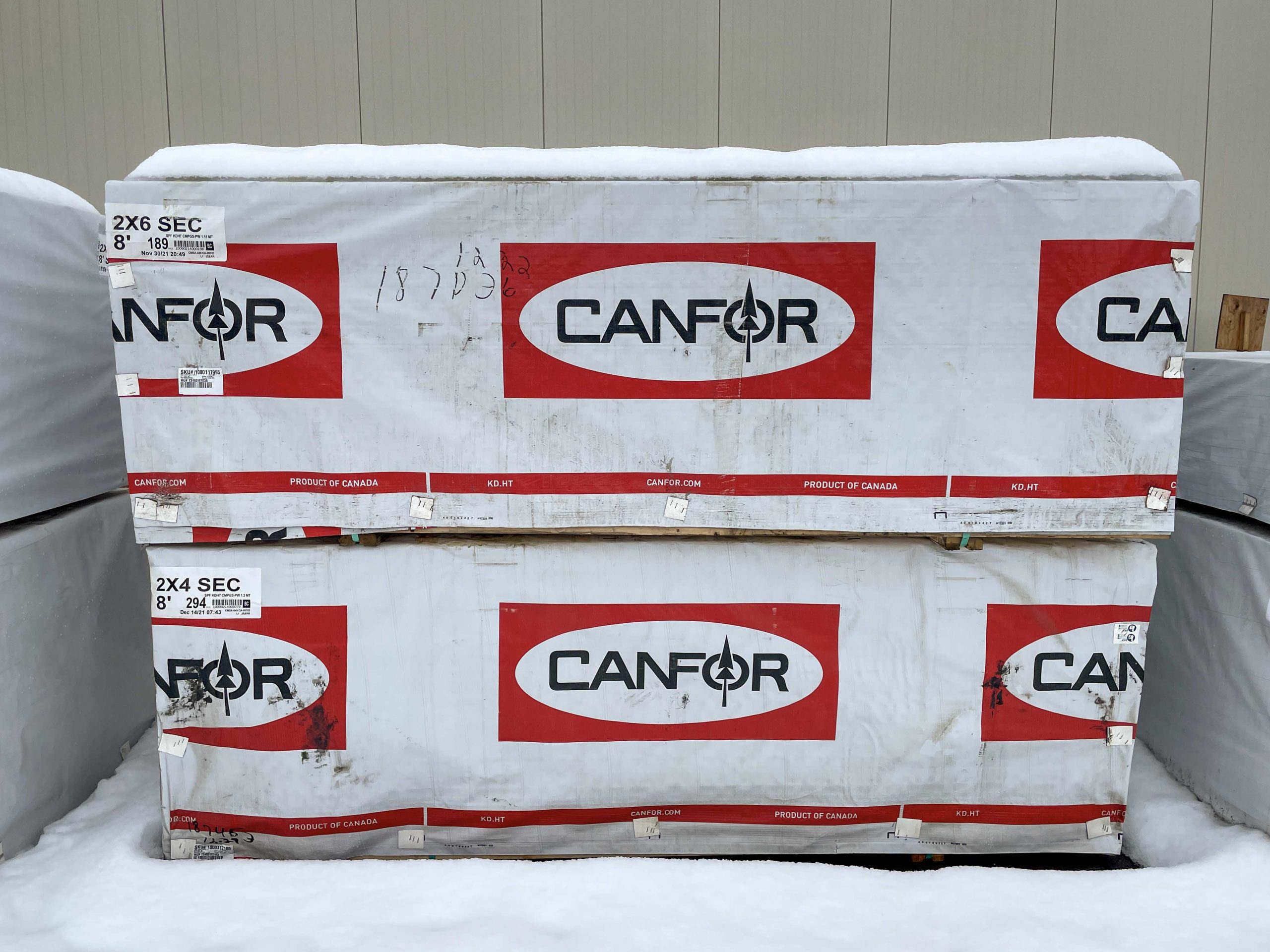 FORT ST. JOHN, B.C. — The sale of a former sawmill owned by industry giant Canfor in Fort St. John could be happening very soon. According to a news tip received by Energeticcity.ca, a purchase by a salvage company based in the province’s interior was “99 per cent complete” with the new ownership possessing the property and hourly employees would have their last shift on Friday, May 29th, at midnight. The sawmill at 9312 259 Road was announced as closing in 2024, following a “systematic, orderly wind-down process” affecting 220 jobs. However, when approached by Energeticcity.ca, media relations representative of Canfor, Mina Laudan, said that no sale has been finalized as of yet.
 SAULT STE. MARIE — The Ontario government is investing more than $14 million to build a modern, digital system to inventory the province’s forest resources, giving industry access to better information to invest, grow and create jobs. …this investment will modernize the Forest Resources Inventory (FRI) Information Management System, the essential database of Ontario’s managed forests, by replacing outdated systems with cutting-edge technology to make critical forest data more accurate, accessible and easier to use. …Through a strategic partnership with Microsoft, powered by Databricks technology, the province is developing customized digital tools to modernize how Ontario collects, stores and shares forest inventory information, strengthening the sector’s long-term competitiveness and resilience in the global economy. This work is a key commitment in the

 B.C.’s housing market remained tepid into April as sales pointing to another disappointing spring market. Seasonally adjusted home sales decreased by 1.1 per cent in April to 5,227 units after a 0.5 per cent drop in March. This was also the lowest monthly figure since November 2023. …Weak housing market conditions are likely to progress in the near term given the shaky geopolitical climate, sluggish economic growth and weak labour market conditions. …On the manufacturing front, sales in B.C. rose marginally in March. …Wood product manufacturing also declined for the third consecutive month, falling 2.4 per cent to $728 million. This represents the lowest level since May 2020, when sales were $623 million. Year to date, durable goods sales are up 2.6 per cent.

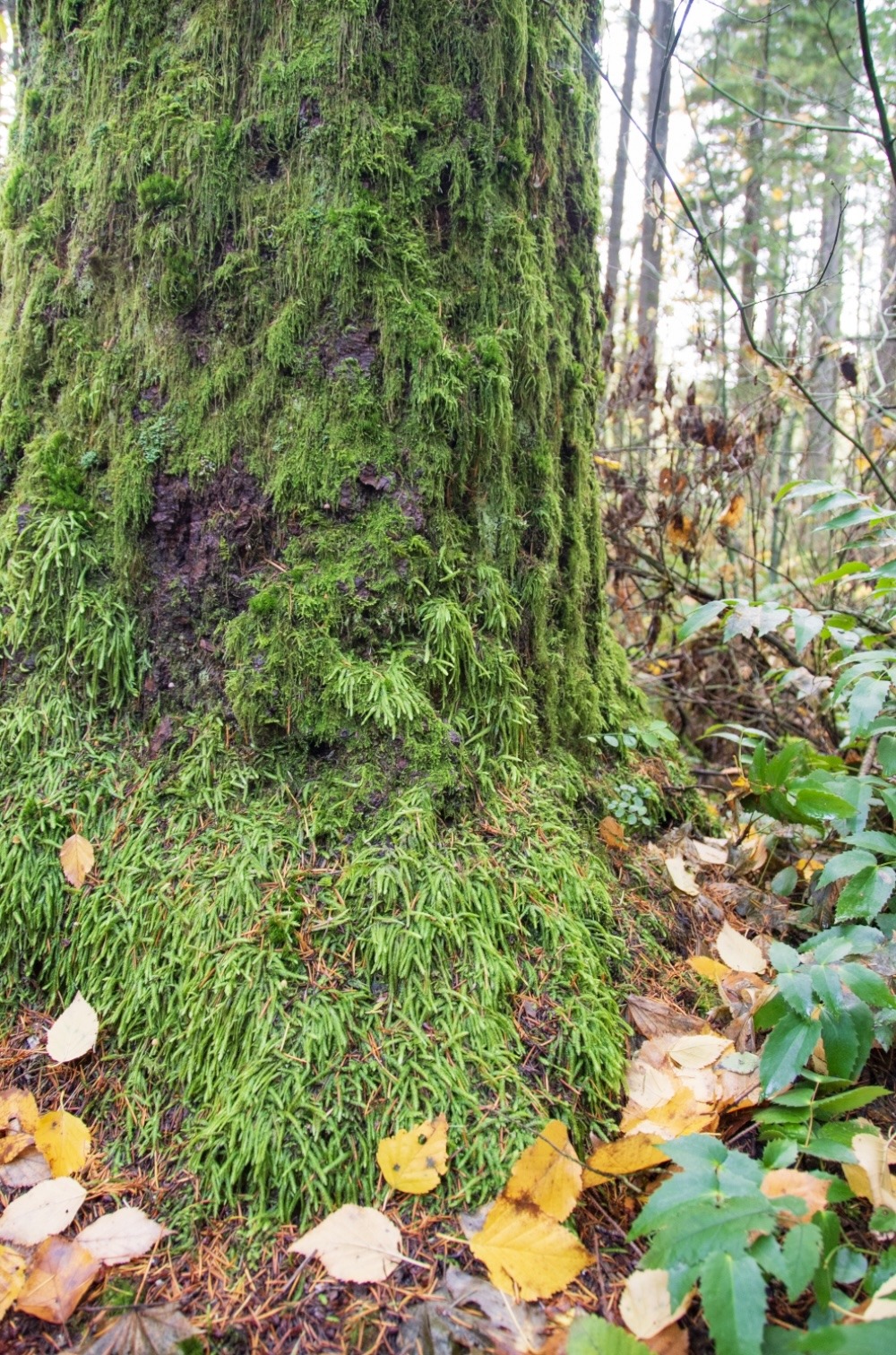 Suzanne Simard’s 1997 forest experiment did not show trees whispering to each other. It showed something narrower, stranger, and easier to test: carbon that began in the air around a paper birch seedling later appeared inside a neighbouring Douglas fir, after passing through roots and fungal tissue in the soil. The experiment, published in Nature in August 1997, used two carbon labels in the field. Paper birch and Douglas fir seedlings were sealed in plastic labelling chambers, exposed to carbon-14 dioxide or carbon-13 dioxide, left for a nine-day chase period, then harvested and analysed to see where the labelled carbon had gone. The result was not a fairy tale about kindness. It was a measurement. Carbon moved both ways between Betula papyrifera, the paper birch, and Pseudotsuga menziesii, the Douglas fir, with a net gain by Douglas fir in the second year of the field experiment.
  OTTAWA, ON
 OTTAWA, ON

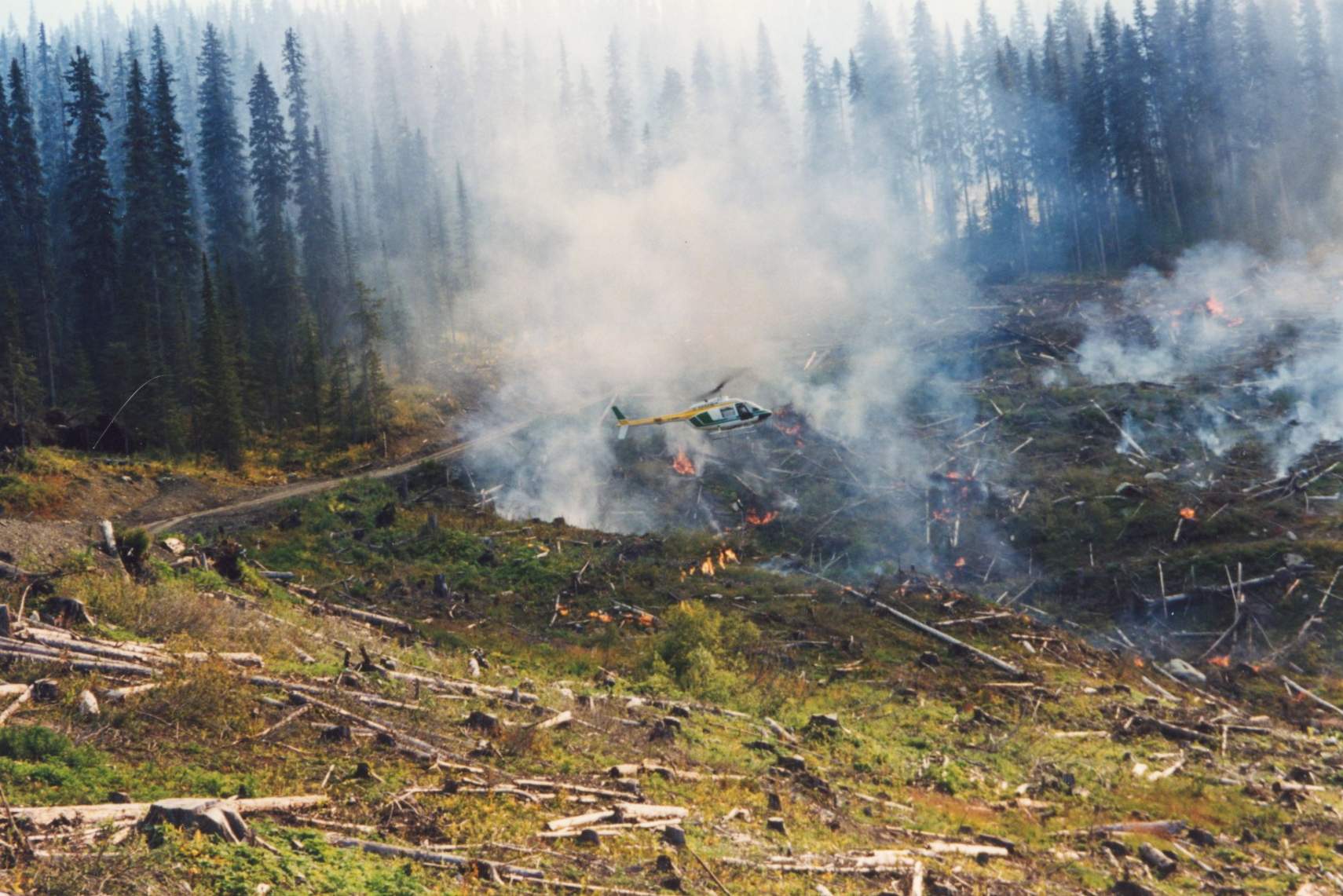 Prescribed burning is getting renewed attention in parts of B.C. as communities look for ways to reduce wildfire risk before summer. In Kimberley, B.C., that conversation recently took residents onto the trails near the city’s nature park. The city-led walk gave residents a look at treated areas where crews have been reducing forest fuels. They also heard from local fire officials and wildfire specialists about how planned fire can help protect nearby homes, trails and forested parkland from wildfire risk. Kimberley Fire Department Chief Will Booth says the tour was meant to help residents understand prescribed burning before more fuel management work happens in the city. The local tour comes as prescribed and cultural burning are getting more public attention after years of being less visible. …Bob Gray, a wildland fire ecologist and fire scientist, says warmer temperatures and drought are adding pressure to forests that already have too many trees competing for moisture.
 Olds College entomologist Ken Fry says forest tent caterpillars are native to Alberta and relatively common, but their populations go through cycles in which they increase dramatically. Municipalities in Alberta are advising residents of an increase in the caterpillars this spring. “Roughly every 10 years populations increase enormously,” he said. The cyclical population explosion is called an outbreak. He said the causes of these cyclical outbreaks are still being studied but are believed to be influenced by weather, health status of trees, and other factors like predators, parasites and disease. Forest tent caterpillars are perhaps best known for the damage they inflict on trees. …”Trees can usually withstand a one-season munching, but when it comes to prolonged persistent defoliation over two, three years, that can result in some twig death or branch death or die back, you know, vulnerability over the winter to winter kill, things like that,” Fry said.
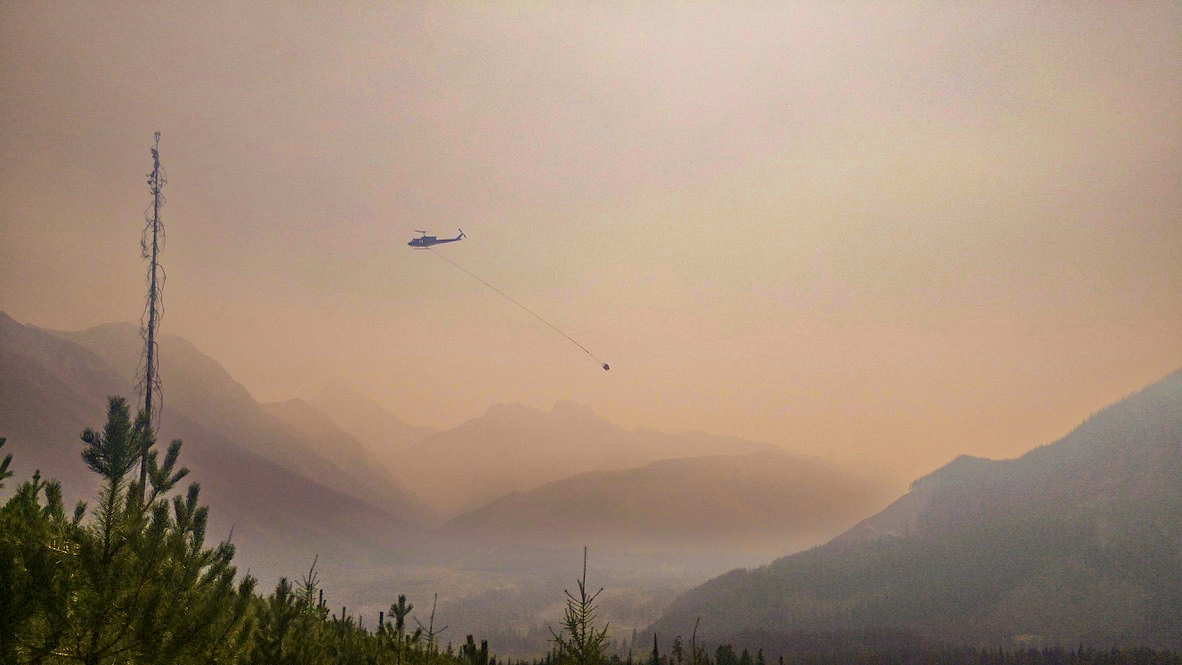 The start to the 2026 wildfire season has been slow with the number of fires raging across the country well below average, but government officials warn that as the summer progresses there’s a risk things could get much worse. “Despite the fact that we’re seeing so little activity so far this year … this summer retains the potential to be a significant one right across the country,” a government official said Thursday during a technical briefing. The official said that while the wildfire risk is unlikely to result in a record-breaking year like 2023 or 2025, the federal government is forecasting above average conditions as the season progresses. Whether that happens depends, officials explained, on what happens to the weather over the next few months. If the above average temperatures predicted for across the county come to pass, B.C. faces the highest wildfire risk, particularly in July.
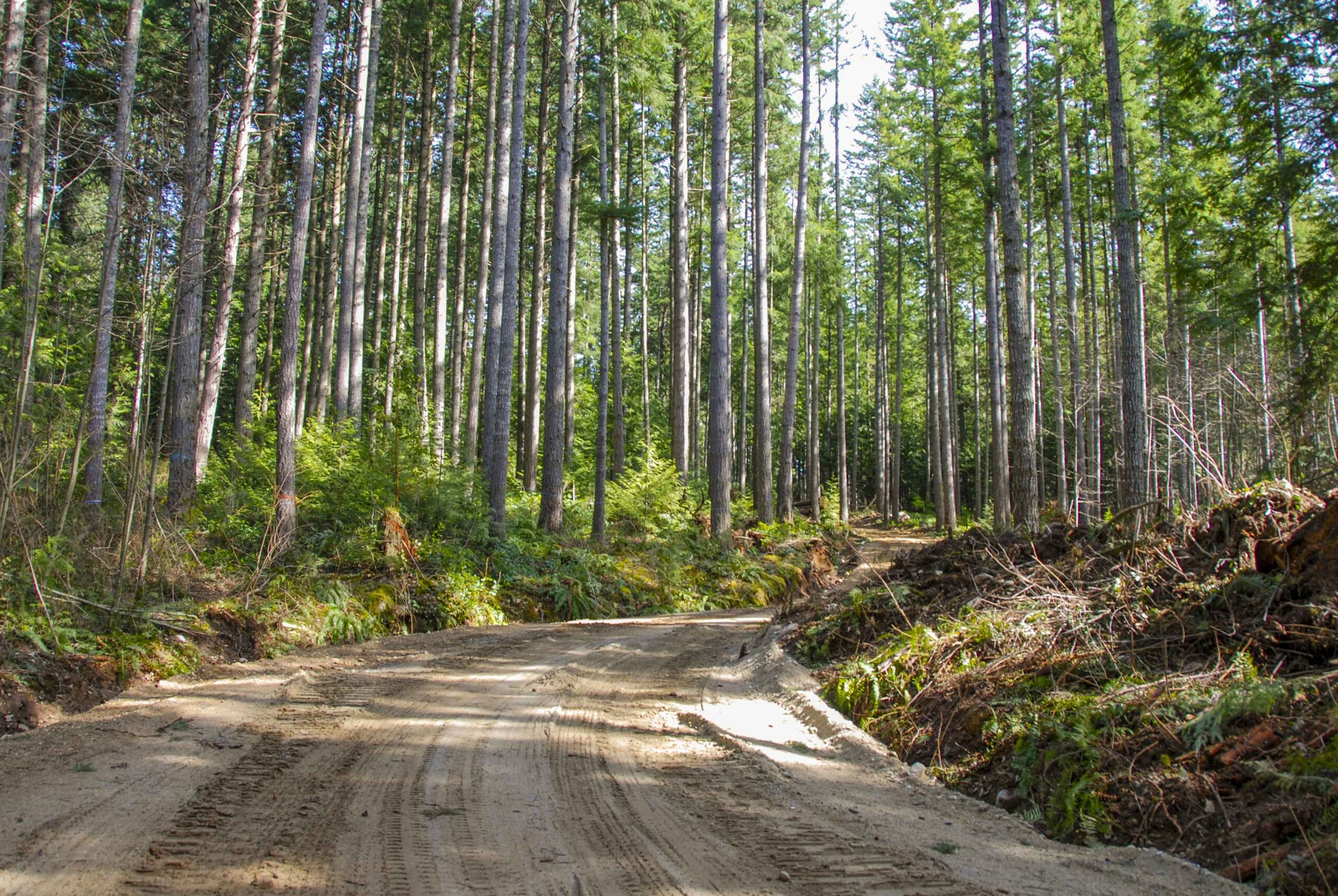 A new logging road project on the Sunshine Coast has drawn concern from local environmental advocates. At the same time, provincial officials say the work is designed to improve access and protect water resources. The Ministry of Forests confirmed to Coast Reporter that it is responsible for the road-building contract tied to Timber Sale Licence A94817. This project will see “just over 4km” of new road constructed to “move industrial traffic away from high-use public roads” and to create long-term access for multiple user groups. The ministry also said that the design has “enhanced overland techniques to minimize impacts to ground water,” along with water-quality monitoring and environmental oversight. However, Elphinstone Logging Focus’s (ELF) Ross Muirhead says the scope of the project is unusual for the region, saying four kilometres of brand new logging road is “unprecedented” on the Coast and that most projects are much shorter.
 British Columbia’s forests support a diversity of trees, plants, fungi and wildlife, while also providing recreational opportunities, cultural values, and economic benefits to communities. As we recognized the International Day for Biological Diversity on May 22 and Wildfire Awareness Month throughout May, it’s an important time to reflect on the connection between healthy forests, resilient ecosystems, and the communities and wildlife that depend on them. Wildfire resilience and biodiversity are deeply connected. Thoughtful forest management activities, including strategic fuel reduction treatments and cultural and prescribed burning, can help reduce wildfire risk while also creating healthier and more diverse forest ecosystems for generations to come. …Today, FESBC is investing in treatments that reduce wildfire risk around communities, infrastructure and other resources. We are supporting the return of cultural and prescribed burning to the landscape. We are asking questions about how wildfire risk reduction treatments can also support biodiversity and other forest values, such as recreation.
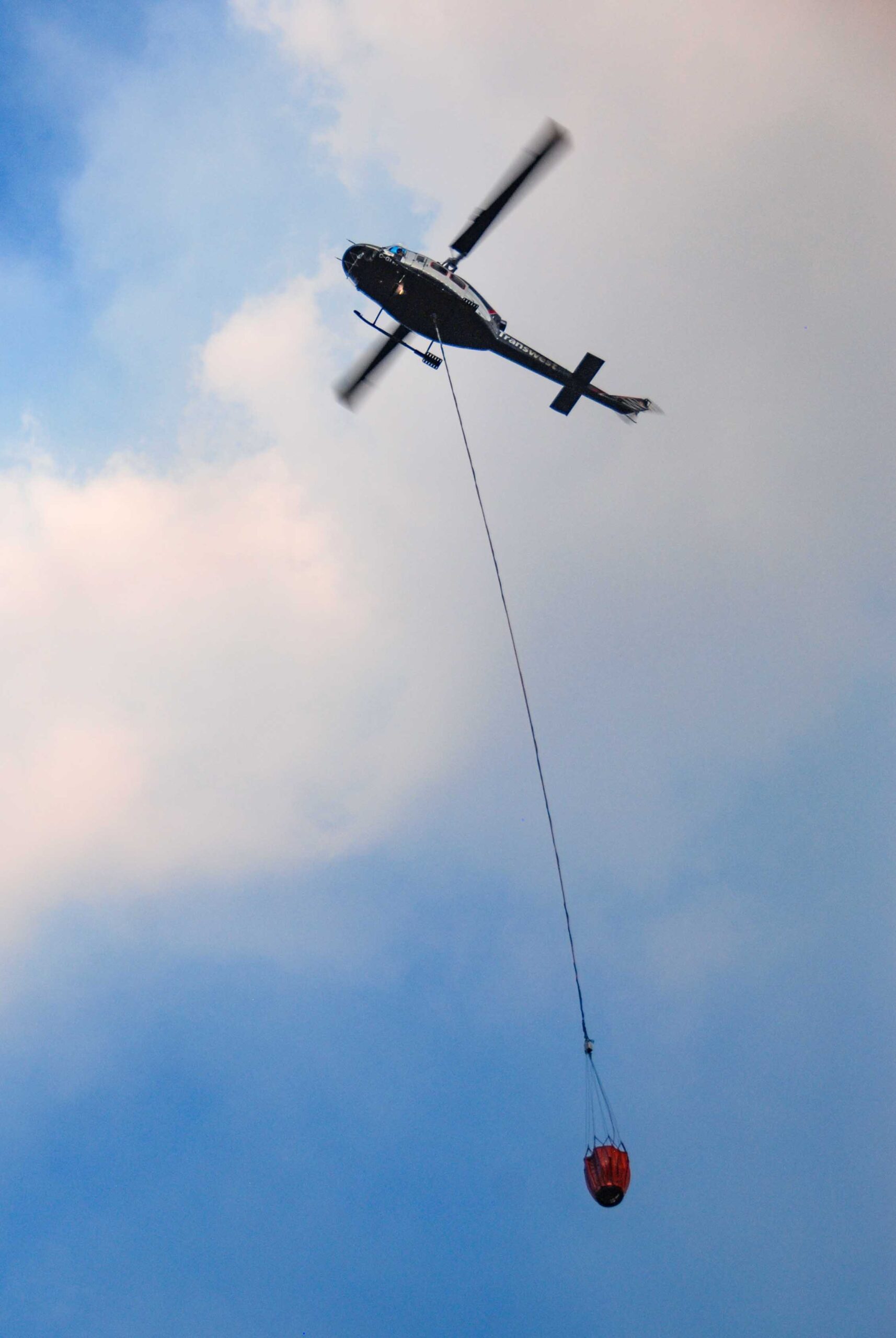 Residents and visitors to Cowichan Bay on Saturday, May 30 take note. A large-scale exercise to help emergency responders train for potential wildfires is taking place in Cowichan Bay from 8 a.m. to 5 p.m. “Please do not be alarmed and help ensure crews can safely complete their training by obeying signage and giving personnel and equipment plenty of space,” said CVRD spokesperson Lisa Moilanen. The exercise will include Shawnigan Lake, Malahat, Mill Bay, Cowichan Bay, Duncan, Sahtlam, Ladysmith, and North Oyster fire departments, as well as BC Wildfire Services and more “working, practicing and learning together to help be aligned, prepared and keep our communities safe,” Moilanen added. The exercise features a scenario where a forest fire is threatening a developed area or community. Moilanen said people will notice emergency vehicles, personnel, traffic cones, and wildfire response activities around Falcon Crescent, and Wilmot, Galdwell, Rondeault, and Hillbank Roads.
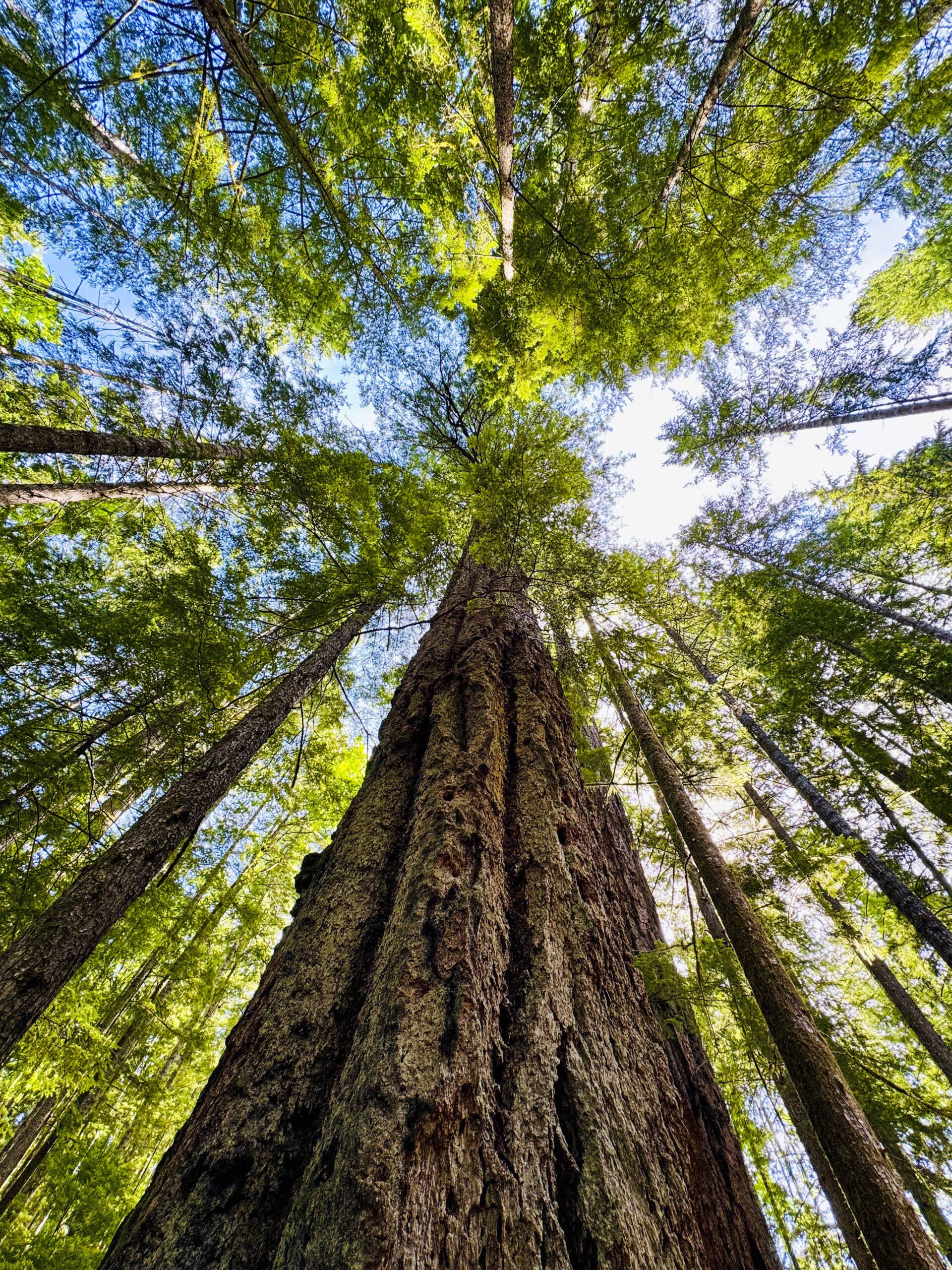 Experts are calling on the B.C. government to halt logging in a Tsitika watershed cutblock on northern Vancouver Island that has been designated for old-growth deferral. But the some First Nations whose territory it falls in say they have their own approach to managing the area sustainably. Pacific Wild, an environmental organization, says B.C. Timber Sales (BCTS) is selling off rare and ecologically significant forests for minimal economic return. In letters sent to BCTS and other government decision-makers in April, the organization presented new data, maps and field evidence showing that cutblock TA1375 — identified by the Old Growth Technical Advisory Panel as a Priority Deferral Area — provides essential habitat for threatened species and stores significant amounts of carbon. The cutblock was auctioned in March despite opposition from scientists, community members and many First Nations whose territories overlap with the Tsitika watershed.



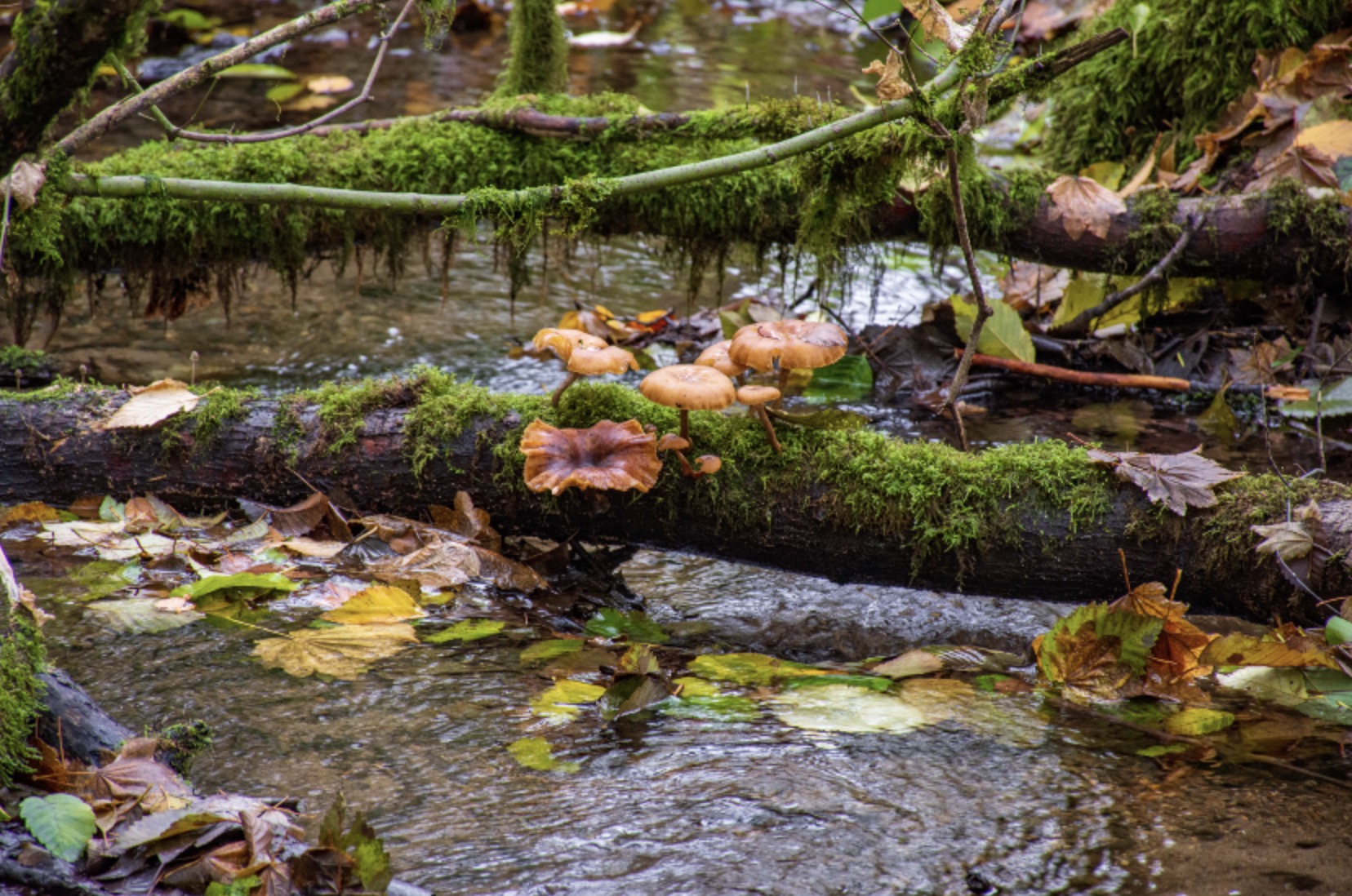 Three years ago, Barb Round heard heavy machinery chewing through the urban forest behind her home in Campbell River, a small city on east Vancouver Island that bills itself as the salmon capital of the world. Round waved down a man in a hard hat and asked why the excavator was working in the greenway, which is a haven for birds, dotted with pocket wetlands and adjacent to Simms Creek, home to four salmon species. “He explained to me that the property had been sold,” Round, a retired nurse, tells The Tyee. “Everyone in the neighbourhood thought it was protected land.” When residents found out a local developer planned to cut down much of the forest and fill in the wetlands to build a large housing development near the creek, “they were gobsmacked,” Round says.
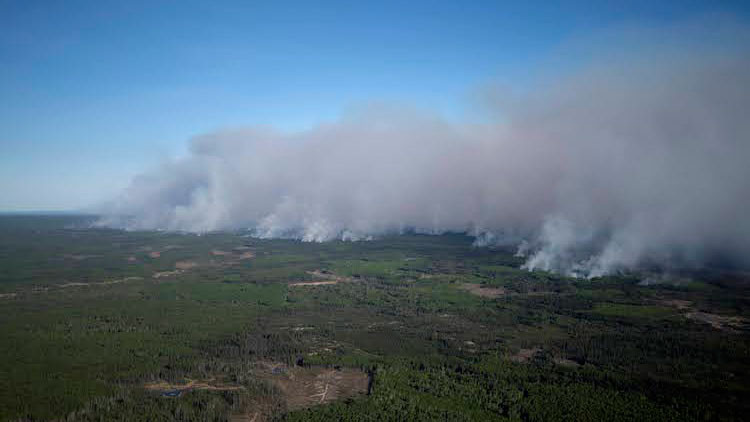
 As bad as things got in Los Angeles in January 2025, when 31 people died and more than 16,000 buildings were destroyed by wildfires roaring into residential neighborhoods, many wildland firefighters look back on the rest of last year as a dodged bullet. Across the nation, according to the National Interagency Fire Center (NIFC), which coordinates the federal wildfire response, the total area burned in 2025 was about two-thirds of the average over the past 10 years. This year is shaping up to be a very different prospect, wildfire experts warn. Key environmental indicators show that the nation is a tinderbox, gripped by widespread drought and with a light snowpack in the mountains that will offer little relief as its remnants melt away. At the same time, upheaval in the federal wildland firefighting effort and the loss of many staff qualified to join wildfire incident teams since Donald Trump took power for the second time have left firefighters deeply concerned about their ability to mount an effective response.


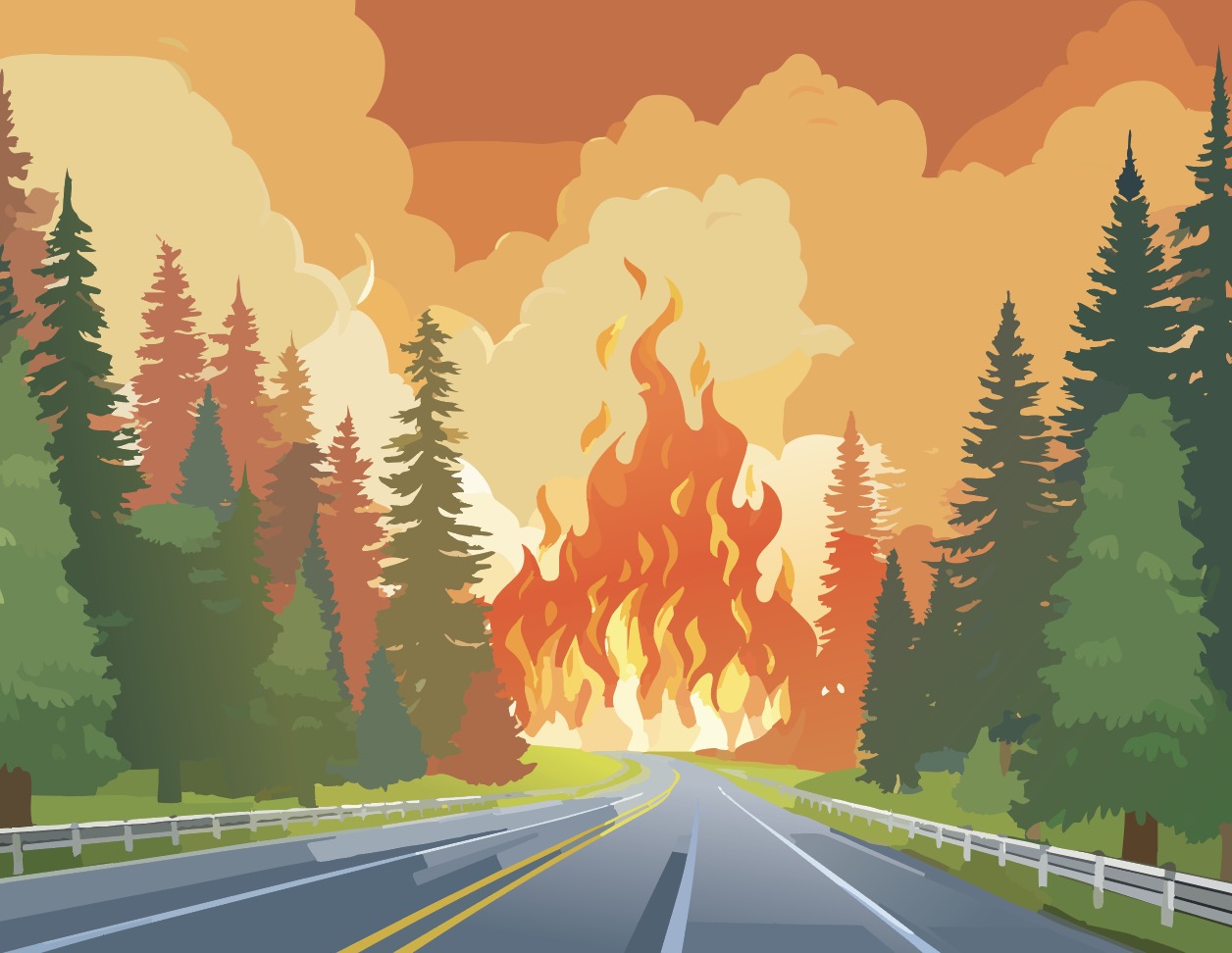 With Oregon facing what state leaders say could be another difficult wildfire season, questions are emerging about whether major changes inside the U.S. Forest Service could eventually impact how quickly fires are detected and attacked across the West. “All indications suggest a more challenging fire season ahead of all of us,” said Oregon Governor Tina Kotek… The warning comes after a historically warm winter, low snowpack levels, and worsening drought conditions across parts of Oregon. At the same time, the Forest Service is undergoing major national restructuring efforts, including consolidating research facilities and closing its nine regional offices nationwide. …Still, federal firefighters and local fire leaders say they do not expect major disruptions to wildfire response this season. “I think there’s just a growing amount of apprehension about what it’s gonna look like on the ground level in a couple of years’ time,” said Kieran Evans, a squad leader with the Forest Service.
 NAPLES, Maine — The New England Forestry Foundation (NEFF) is giving out grants to landowners to help preserve some of Maine’s oldest trees. The organization got $4.3 million from the U.S. Forest Service in 2024 to pay loggers to put off cutting late-successional and old-growth forests, which are typically over 100 years old. The first grant was awarded to Chaplin Logging Inc. in Naples to conserve 23 acres of late-successional forest and improve other parts of their land. This type of forest is rare for southern Maine. The one on the Chaplins’ property has been mostly untouched for likely more than a hundred years. According to Brian Milakovsky, senior forester of NEFF, these trees provide a unique habitat for many important species and they’re good for the atmosphere. …Since these trees are being taken out of production, part of the grant is going toward timber stand improvement, removing undesirable trees in landowners’ other, younger forests.
 European timber organisations have made a last, united call for changes to be made to the EU Deforestation Regulation (EUDR) before it comes into force this December. Eighteen organisations from various sectors, including timber, panels and packaging groups, called for an EUDR Information System “without flaws and technical constraints, aligned with business practice”. The coalition underlines that the Information System must be operationally workable and aligned with real business practices. The EUDR Information System, which represents the backbone of the traceability feature of the EU regulation, is aimed to prevent products linked to deforestation from entering the EU market. Particular coalition concerns relate to DDS aggregation, technical limitations of the TRACES-based system, the usability of simplified declarations for SMEs and micro-enterprises and the lack of clear procedures in the event of system disruptions or outages.
 Japan’s forestry sector is at a crossroads. Population decline and cheap imported timber are driving down prices. Forest ownership is fragmented and small-scale, further limiting profitability. The workforce is aging and shrinking. As a result, many forests — planted decades ago, when timber profits seemed surer — are now under-managed, abandoned, or not replanted after being clear-cut. “Especially over the past few years, we have seen a lot of forest owners decide to give up their land,” says Akio Abe, associate director of the Ishinomaki District Forestry Association in Miyagi Prefecture. …Carbon credits, Abe hopes, can provide the financial backing needed to turn the Ishinomaki District woods into a boon, not a burden, for both local landowners and the environment. Together with corporate partners, the foresters are applying for credits certified by an international body, a rarity among forest carbon projects in Japan.
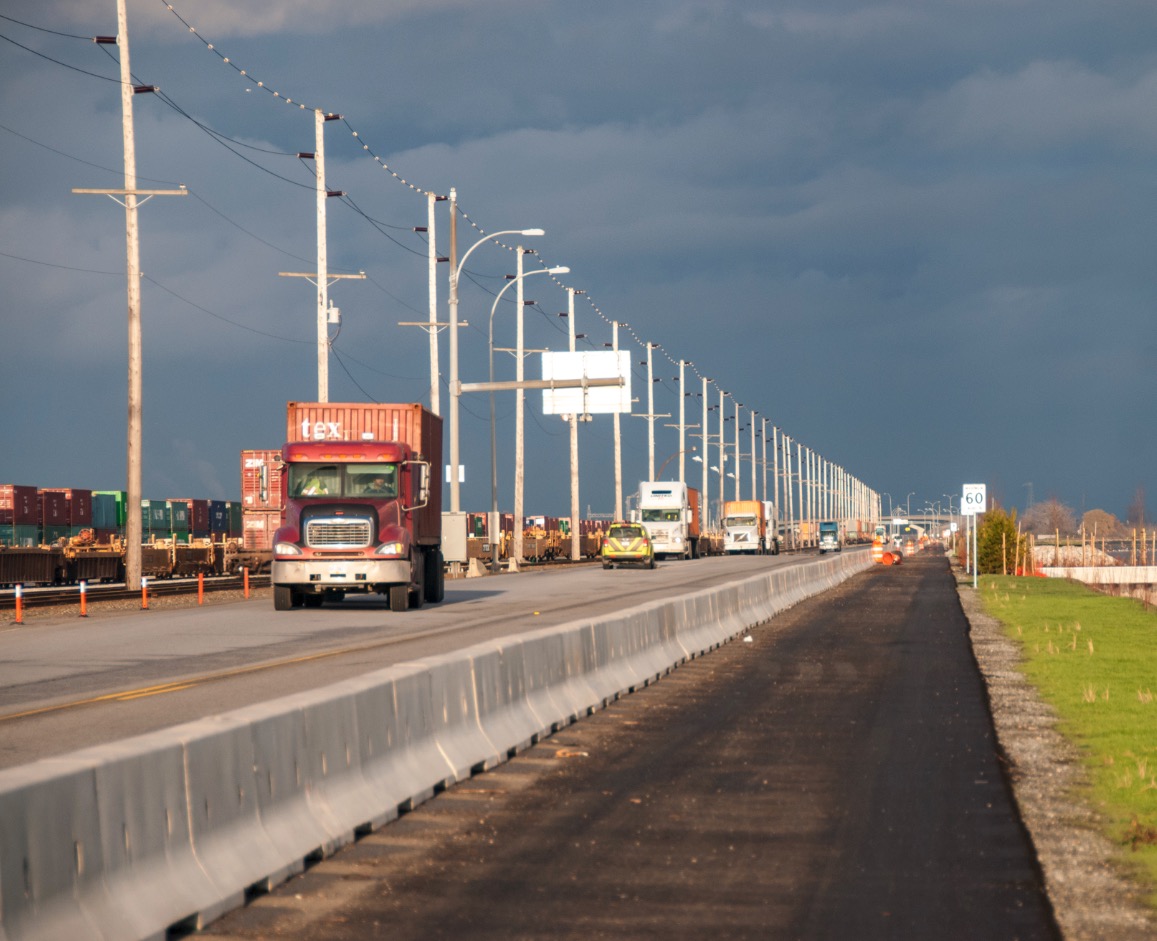 It will soon be mandatory for commercial trucks in B.C. to have dash cameras. B.C. Conservative MLA Ward Stamer introduced a bill after a string of deadly collisions on Highway 5, which goes through his riding of Kamloops-North Thompson. British Columbia is the first Canadian jurisdiction to require commercial dash cameras. Stamer says cameras will help keep drivers accountable and ensure there will be enough evidence in the event of a crash. The bill requires outward-facing dash cameras on commercial trucks travelling B.C. highways and will come into force six months after receiving royal assent. “This bill started with families along Highway 5 who have buried loved ones after preventable crashes. It finishes with B.C. leading the country on commercial vehicle safety,” said Stamer in a release.
 Classification change policy in the Assessment Manual lists the possible reasons for changing a firm’s classification. Under this policy, a firm’s failure to provide timely, complete, and accurate information to WorkSafeBC, and to respond promptly to information requests or information provided by WorkSafeBC (the positive duties), is addressed under the heading of fraud or misrepresentation. This creates confusion when the contravention is inadvertent. Our Policy, Regulation and Research Department is releasing a discussion paper with proposed amendments to policy in the Assessment Manual to clarify how a contravention of the positive duties is interpreted in the context of classification change. The discussion paper and information on how to provide feedback can be found here:
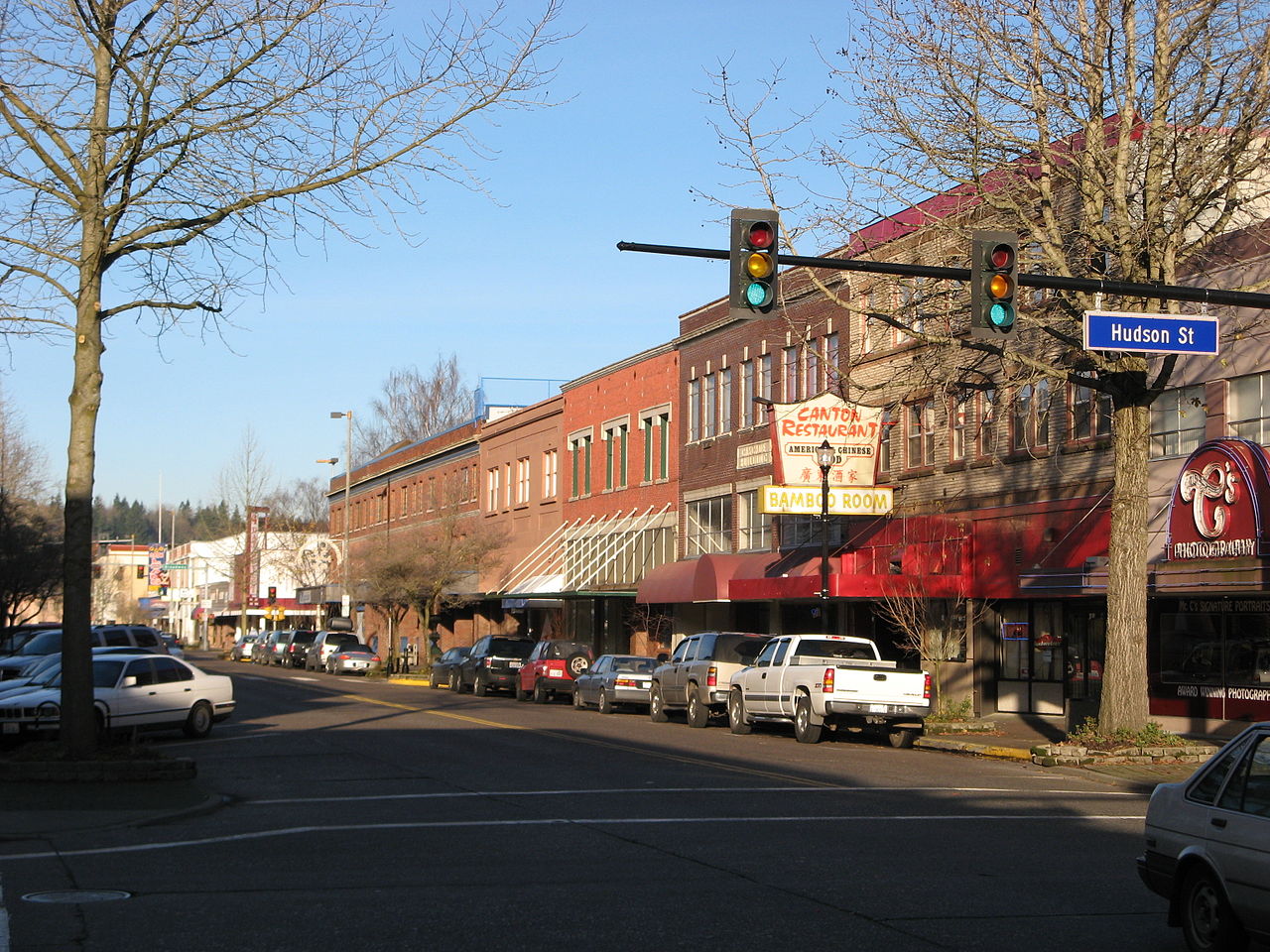

 LONGVIEW, Wash. — A massive chemical tank holding nearly a million gallons of a highly corrosive liquid imploded and collapsed Tuesday at a Washington paper mill, killing at least one worker and leaving nine others unaccounted for with no hope for rescue, authorities said. Another nine people were injured, some severely, in the spill at Nippon Dynawave Packaging Co. in Longview. The cause remained unclear. “At the moment we are not aware of any rescues that are yet to be made,” Cowlitz Fire and Rescue Chief Scott Goldstein said during a Tuesday evening news conference in which officials repeatedly referred to the situation as a recovery effort. That effort would not resume until Wednesday morning, when emergency responders planned to work on stabilizing the collapsed tank, which still had about 90,000 gallons (more than 340,000 liters) of a chemical brew known as “white liquor” inside, and then search for the missing, Goldstein said.

