
Trump says steep tariffs for Canada and Mexico could come as soon as February first. In related news: Trump signs executive orders to pull out of the Paris climate agreement, and reverse Alaska environmental protections. Meanwhile: Canada hopes US will delay tariffs but is ready to strike back; Premier Eby outlines BC’s three-pronged response; and Forest Nova Scotia says tariffs mean job losses.
In Forestry/Wildfire news: insights from Day 2 of the 80th annual Truck Loggers convention include panels titled: Securing the Future for BC’s Forestry Contractors, and Public and Political Influence Strategies; BC learns from California fire response; and Oregon is still scrambling to fund last year’s fire season.
Finally, Los Angeles fire victims turn to prefabricated homes for quick rebuilds.
Kelly McCloskey, Tree Frog Editor




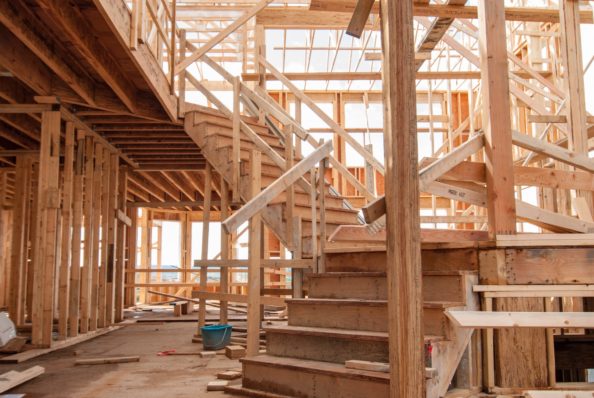 It may take months, if not years, to rebuild after the wildfires in Southern California, raising the likelihood of a spike in demand for lumber in the months and years ahead. The rebuilding process after events such as these “typically drives a significant demand for building materials, particularly lumber, given its foundational role in construction,” said Michael Goodman, of building-materials wholesaler Sherwood Lumber. The California wildfires could slow the economy and boost inflation – and that’s not even the worst of it, economists say. …Looking at the bigger picture for the lumber market, Kuta said, “if one believes that interest rates will gradually moderate lower, we as a nation [would still be] woefully underbuilt and in need of new residential housing.” Among the companies to consider are lumber providers Canfor Corp. and West Fraser Timber Co. and timberland company Weyerhaeuser Co., well as building-material suppliers Builders FirstSource Inc. and Boise Cascade Co.
  A new lawsuit accuses Procter & Gamble of deceiving Charmin purchasers with misleading environmental claims, known as greenwashing, about how it sources its toilet paper. In a proposed class action on Thursday, eight consumers said Procter & Gamble obtains most wood pulp for Charmin from the Canadian boreal forest… through harmful logging practices such as clear cutting and burning. The consumers called this sourcing “completely at odds” with Procter & Gamble’s public commitment to protecting the environment, including its “Keep Forests as Forests” campaign and the “Protect-Grow-Restore” logo found on Charmin packages. The lawsuit called the display of logos from the Forest Stewardship Council and Rainforest Alliance misleading because Procter & Gamble uses little pulp from FSC-certified forests and the Rainforest Alliance no longer has a certification program. …The lawsuit… seeks restitution, compensatory damages and punitive damages for violations of consumer protection laws in 28 U.S. states and Washington, D.C.
 New support for forest-sector manufacturers throughout the province will create and protect jobs, strengthen local economies and diversify the range of fibre sources used to manufacture high-value, made-in-B.C. forest products. “The BC Manufacturing Jobs Fund is partnering with forestry companies throughout the province to grow and stabilize their operations and get the most out of our fibre supply, while producing more made-in-B.C. engineered wood products,” said Diana Gibson, Minister of Jobs, Economic Development and Innovation. Through the BC Manufacturing Jobs Fund (BCMJF), the Government of B.C. is contributing as much as $5.1 million toward seven forest-sector capital projects and five planning projects in communities throughout the province. Cedarland Forest Products Ltd. in Maple Ridge will receive as much as $1.3 million… Gilbert Smith Forest Products in Barriere will receive as much as $1.1 million…
 As we close the 2024 chapter, we wanted to share a recap of the top stories from the SLB last year. As we continue to work towards our mission to make softwood lumber the building material of choice in the United States, we reflect on the impact the SLB and its funded programs made last year.
  The massive fire that began in Pacific Palisades on January 7 has kept the city on edge ever since, with multiple other outbreaks flaring up around L.A. in the following days. While many have been contained or extinguished, the devastation left in the fire’s wake is astonishing, with homes reduced to ashes. In light of this reality, one question remains: why is wood the primary choice for construction in an area so prone to wildfires? The U.S. is rich in forests making wood a readily available material. [Wood is] more affordable, with lower prices than other materials like steel or concrete. …The tradition of building with wood in the United States dates back to the arrival of European settlers… Wood allows for faster construction, making it an attractive choice for building homes. …However, the increasing frequency and intensity of wildfires may serve as a wake-up call, prompting a shift to fireproof materials like concrete.


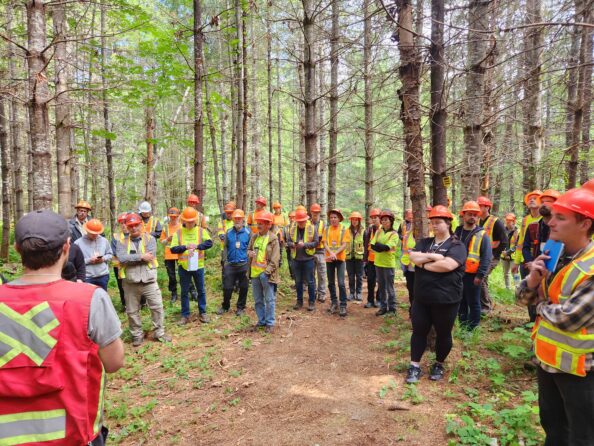 The Coast Silviculture Committee is an ad hoc organization of forest professionals whose prime objective is to disseminate current technical forest management and silvicultural information to all forest practitioners and the public in coastal British Columbia. Its membership includes corporate, government, and self-employed professional foresters and forest technologist, forestry educators, forest land owners, researchers, and tenure managers. Every year the CSC holds two meetings; a short, one or two day, information meeting in winter, and a slightly longer field based technical workshop in early to mid- June; summer meetings are held in a different part of the coast each year. All of the surplus funds from workshops go towards supporting development of silvicultural expertise in students at the post-secondary level through providing of awards. The Winter 2025 workshop is scheduled for February 19 at Vancouver Island University.
 VICTORIA – The Forest Practices Board is identifying opportunities for government to enhance how it manages and enforces range activities. This is following a complaint investigation about cattle grazing practices near Grand Forks. The board investigated concerns raised by the Southern Interior Land Trust (SILT) that two range agreement holders were not following their grazing schedules or maintaining fences as required by law, and that government actions taken in response to their concerns were inadequate. From 2021 until 2023, SILT observed cattle grazing on its private land it had purchased to conserve wildlife habitat. SILT contacted the Ministry of Forests’ range staff to request corrective action, sharing proof of the cattle grazing gathered using game cameras. …“It’s crucial that government record results when it conducts inspections,” said Keith Atkinson, chair, Forest Practices Board. “Documentation helps evaluate the accuracy of complaints, the effectiveness of enforcement efforts and can support corrective measures, if necessary.”
 On April 12-16, more than 700 firefighting professionals, FireSmart experts and Indigenous, municipal and community leaders will gather in Penticton for the 2025 Wildfire Resiliency and Training Summit. There, they’ll share lessons learned from 2024, along with the latest research, technologies, best practices and other information to help regions and communities prepare for the upcoming wildfire season. You’ll want to register fast before this conference sells out! The theme for this year’s Summit is Living with Fire: Building resilience by bringing fire back to the land, strengthening relationships, and investing in collective well-being. The Summit will kick off with two days of training for firefighting professionals, followed by a three-day conference featuring keynote addresses, expert panels, and networking opportunities. Whether you’re a firefighter, community leader, or industry professional, this event is your chance to connect with like-minded individuals, learn from experts, and contribute to a safer, more resilient future for British Columbia.
 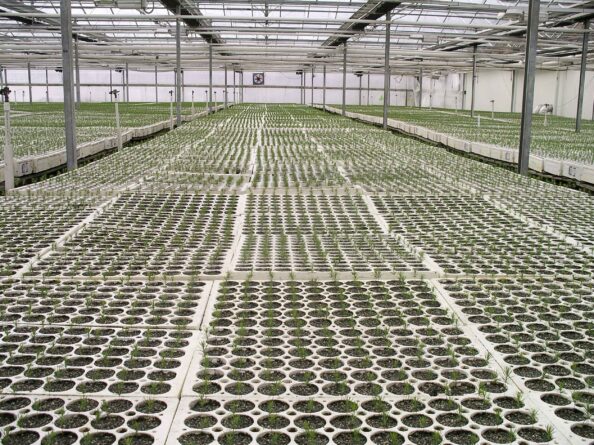 The provincial government expects to plant nearly 50 million fewer trees this year — a 17 per cent drop from last year’s planting season at a time when the province has seen a major spike in wildfire activity. The projections come from presentation slides shown to the industry in September. …the government expects the number of trees planted to sink to 233 million in 2025, 47 million fewer than were planted in 2024. …About half of the anticipated drop in 2025 is due to declines in trees planted by logging companies. Drops are also expected in government programs designed to combat climate change, restore forest carbon stocks, and plant trees in the wake of wildfires, data show. The 2023 wildfires also prevented many replanting projects from occurring that year, and delays due to the time it takes to grow enough seedlings mean replanting won’t take place until 2026 and 2027, according to the ministry spokesperson.
 OTTAWA, ON – Today, the Honourable Jonathan Wilkinson, Canada’s Minister of Energy and Natural Resources, announced an investment of more than $900,000 to Integrity Reforestation for a major reforestation project that will help to restore wildfire-impacted land and caribou habitat in Ontario’s Ogoki Forest. With this funding, Integrity Reforestation will: plant 800,000 trees, covering 450 hectares of the Ogoki Forest; rehabilitate ecosystems destroyed by wildfires using native species to restore the habitats of woodland caribou, moose and black bears; and create over 40 tree-planting jobs in the region. With this agreement, Canada and Integrity Reforestation are leveraging their shared commitment to habitat restoration and climate action. Canada will continue to work with provinces, territories, local communities, organizations and Indigenous Peoples to create a greener, healthier and more resilient Canada while reinforcing our country’s ability to respond to wildfires, especially in the face of changing climate.
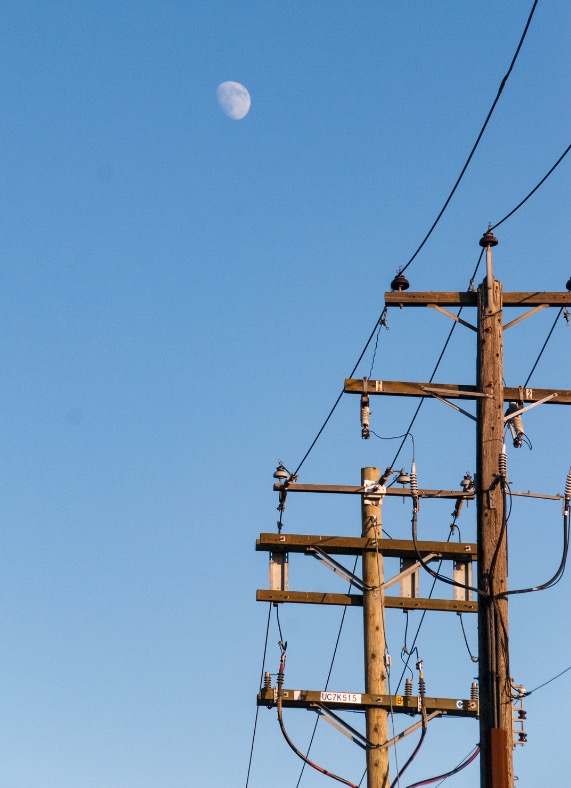 As California residents grapple for answers in the wake of a massive firestorm event in which two major blazes ravaged parts of Los Angeles — the Palisades Fire and the Eaton Fire —power lines are once again at the center of debate. It’s no wonder. Failed electric equipment and poor maintenance have caused horrific blazes in recent years, sometimes sparked by the smallest of parts, according to government investigators. …The 2023 fire in Maui that killed 102 people was caused by “reenergization” of broken power lines during high winds that showered sparks into dense, dry vegetation. …One key but often unpopular tool for preventing deadly wildfires is shutting off power when high winds of certain velocities are forecast. …Undergrounding power lines is the single best method to avoid dangerous arcing of overhead wires, or having dry palm frond hit one that can spark or spread fires. It’s also by far the most costly
 The
The 
 As wildfires continue to burn out of control across Los Angeles, questions have turned to why and how California authorities allowed the perfect conditions — extremely dry, uncleared forests, hillsides and brush — to proliferate during an already dangerous fire season made worse by a Santa Ana wind event that hits the area with relative frequency. Well before those dangerous conditions sparked the massive blazes… this week, the region was already a tinderbox due, in part, to a lack of prescribed fires. …The reason California hasn’t conducted more controlled burnings comes down to existing environmental laws in the U.S. that have posed bureaucratic obstacles to prescribed fires. It often takes years for proposals to go through reviews before any controlled burning can take place. …Lawmakers have introduced legislation that would allow for more controlled burning, but because no laws have been passed, environmental red tape has continued to present challenges to proactive fire management.
 WASHINGTON – Today, U.S. Secretary of Commerce Gina Raimondo announced the Department’s Economic Development Administration (EDA) is investing $6.2 million in the state of Kansas to support forestry and construction industry workforce development. The EDA forestry investments announced today are: Kansas State University in Manhattan will receive a $3.2 million grant to bolster natural resource and wildfire risk management workforce development through construction of a modernized training facility. This EDA investment will be matched with $815,794 in local funds. …“The Biden-Harris Administration’s Investing in America agenda is growing jobs, building a sustainable workforce, and creating opportunities for workers across the country,” said Secretary of Commerce Gina Raimondo. “These EDA investments in Manhattan and Beloit will provide expanded forestry and construction workforce training programs so local workers get the skills they need for in-demand jobs, and the local economy grows.”
 A new study indicates that over the past 10 years, the Nanaimo region has gained more winter days above 0 C than anywhere else in Canada. The study comes from Climate Central, a non-profit based in New Jersey… The
  I can’t believe it has been over a decade since the Wood Pellet Association of Canada’s (WPAC’s) Safety Committee was established. Our initial focus was combustible dust in response to tragic sawmill explosions in British Columbia. Over the years, activities have expanded to all health and safety matters. The committee’s mission is “to improve the wood pellet industry’s collective safety performance, earn a reputation with regulatory authorities and the public as an industry that is highly effective at managing safety, and learn and share best practices regarding safety.” As we enter 2025, I want to reflect on a few past successes and share our
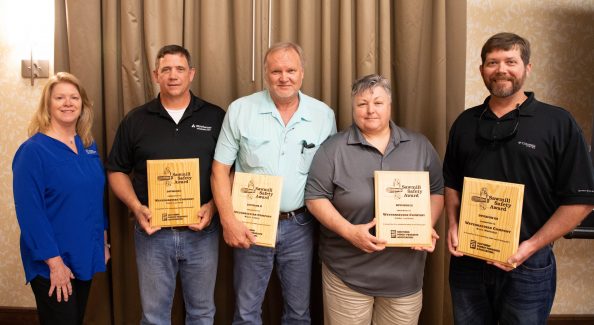

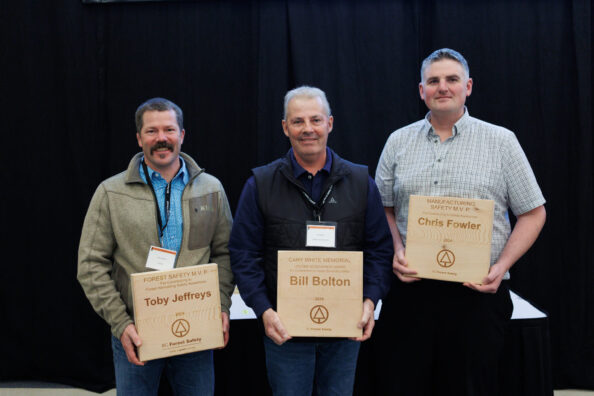 In 2008, BCFSC introduced the Leadership in Safety Awards, celebrating individual safety achievements in forestry. Award recipients are recognized in three categories including safety in harvesting, manufacturing and lifetime achievement. Nominations for leaders in forestry safety can be an individual, crew, team, division, contractor, company, supplier, consultant, trainer, etc. for outstanding safety leadership or achievements. There are three award categories for Leadership Safety. The Cary White Memorial Lifetime Achievement Award is presented to someone who has demonstrated an unwavering commitment to improving safety awareness. The Forest Safety Most Valuable Player recognizes an individual or group that has made a notable contribution to forest industry safety within their operation or company. And finally, the Manufacturing Safety Most Valuable Player recognizes an individual or group that has made a notable contribution to wood products manufacturing safety within their operation or company. Deadline for 2025 nominations is September 23, 2025.
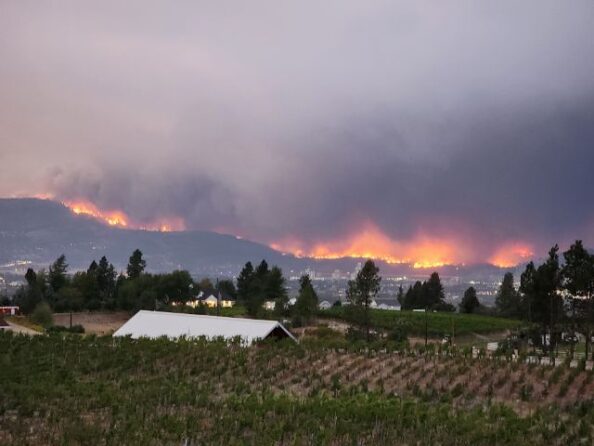 Jason Brolund, the fire chief in West Kelowna, a community devastated by a fast-moving wildfire in 2023 says it’s “haunting” to see similar circumstances playing out in Southern California. Brolund says the images from the Los Angeles area … are so familiar and vivid that some of his firefighters won’t look at them. West Kelowna bore the brunt of the McDougall Creek fire in August 2023, when it descended on neighbourhoods surrounding Okanagan Lake and destroyed or damaged almost 200 properties. In Southern California, flames fanned by high winds have devastated communities, spreading in a manner similar to what West Kelowna encountered in 2023. …”We watch California closely,” Brolund says. “We have for many years. They are considered a bellwether — what they are experiencing now, potentially five to 10 years (from) now, could be something that we see in our region.
 OTTAWA – Emergency Preparedness Minister Harjit Sajjan says dozens of firefighters from Alberta and British Columbia will help fight wildfires in California, and the federal government is co-ordinating efforts with the provinces to deploy resources. Sajjan says in a social media post that 60 firefighters from the two provinces will be deployed as soon as Monday, and that Canadian officials are working to identify and prepare more resources to send in the days ahead. He says in the post that, “Our American friends have asked for help to fight the wildfires in California and Team Canada is responding,” and he concludes with, “Neighbours helping neighbours.” A spokeswoman for Sajjan confirms in an email that Canada has received and approved an official request for help. Alberta announced last week that it is sending up to 40 wildland firefighters with more personnel, waterbombers and contracted night-vision helicopters ready to deploy.
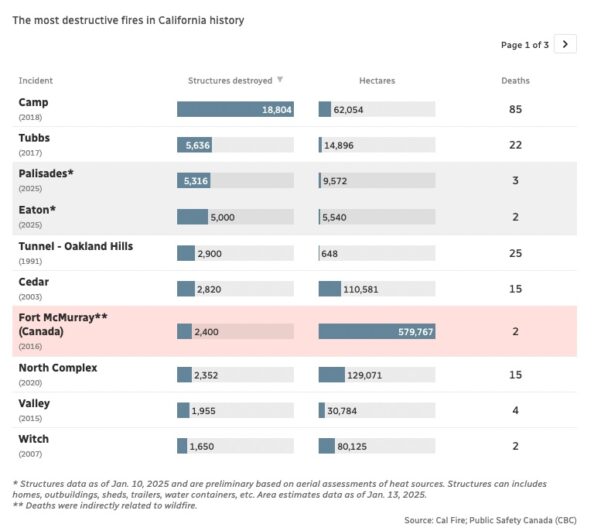 Foreboding weather forecasts keep tensions high in Los Angeles as one of North America’s largest cities battles wildfires that have already claimed at least two dozen lives and thousands of homes. Here are some data points that put into context the peril the city is in. The most destructive fires in California history — and how they compare to Canada’s largest wildfire: Palisades and Eaton fires are already among the most destructive in California’s history, scorching more than 10,000 structures in just a matter of days. With persistent winds in the forecast, those numbers could climb even higher. For context, Canada’s most devastating wildfire — in Fort McMurray, Alta., in 2016—destroyed an estimated 2,400 structures.