
Mike Mackay
Andrew Horahan
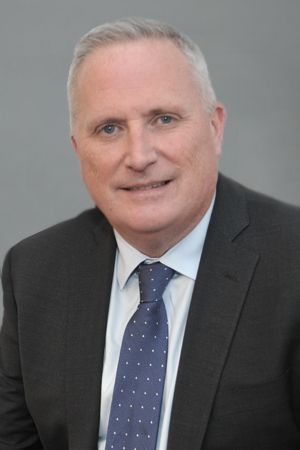
Interfor Corporation announced that it has made several leadership changes. Mike Mackay has been appointed Executive VP & Chief Financial Officer, effective December 8, 2025. Mr. Mackay, who joined Interfor in 2015, has held several leadership roles in the Company’s finance organization, most recently serving as VP, Corporate Development & Treasury. Mr. Mackay will succeed Rick Pozzebon. …Andrew Horahan has been appointed Executive VP, Chief Operating Officer, also effective December 8, 2025. Mr. Horahan joined Interfor in 2008… recently serving as Executive VP, Canadian Operations. In his expanded new role, Mr. Horahan will assume responsibility for leading all of the Company’s operations across both the U.S. and Canada. …Ian Fillinger, President & CEO said “I would like to thank Rick Pozzebon for his leadership through several important strategic transactions and for his many contributions over the last 12 years.”
 Over 600 public servants were notified this week that their jobs are on the line, with Natural Resources Canada (NRCan) feeling the brunt of the potential cuts. The Public Service Alliance of Canada (PSAC) said in a news release that 219 workers at NRCan received warning that their position could be cut. In addition, the Professional Institute of the Public Service of Canada (PIPSC) told Radio-Canada that 200 of its members at NRCan were also given notices of a potential layoff. …Jean Bérubé, a forest pathologist at NRCan who is also a union rep for 3,000 federal research scientists, said he was informed his position is being eliminated.The federal government’s cuts to the public service feel similar to those occurring south of the border under the second administration of U.S. President Donald Trump, he said. …Bérubé pointed to the emergence of the invasive Emerald ash borer that has killed millions of ash trees in Canada’s urban areas.
 OTTAWA, ON
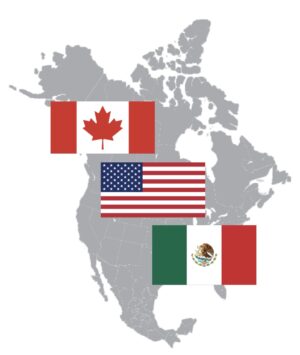 US President Trump could decide next year to withdraw from the Canada-United States-Mexico trade agreement (CUSMA), Politico reported on Thursday, citing U.S. Trade Representative Jamieson Greer. “The president’s view is he only wants deals that are a good deal. The reason why we built a review period into CUSMA was in case we needed to revise it, review it or exit it,” Greer told Politico’s White House bureau chief Dasha Burns in a podcast episode that airs Friday. Greer also raised the idea of negotiating separately with Canada and Mexico and dividing the agreement into two parts in the podcast, adding that he spoke with Trump about that possibility just this week. …Trump on Wednesday said that the CUSMA agreement – which faces an upcoming review- will either be left to expire or another deal will be worked out.
  Montréal, Quebec – Domtar Wood Products announced today a curtailment in its lumber production. Due to challenging market conditions and ongoing economic uncertainty, Domtar will temporarily reduce its lumber production by 100 million board feet for the fourth quarter of 2025, including additional curtailments for the holiday season, at its facilities in Quebec, Ontario, and the United States. “Demand for lumber continues to stagnate in North America, exacerbating an already difficult market,” said Luc Thériault, President of Domtar Wood Products. Domtar will continue to monitor market conditions and adjust its production plans accordingly. [END]
 The federal government has rejected an industry request for payouts to softwood producers in Canada on the hook for US duties, fearing that direct intervention would further irritate the US. Canadian softwood producers have paid more than $10-billion since 2017 in accumulated duties, which are cash deposits held in trust by the US that collect interest. The producers expect the US to refund a portion of the duties if and when the two countries resolve the trade dispute. In the meantime, the industry has suggested that the Canadian government make payouts to reflect the present value of anticipated refunds. The two sources said Ottawa would have received any future refunds in exchange for injecting much-needed liquidity into the struggling industry. Ottawa rejected the idea because of fears that such payouts would be viewed as subsidies and become a serious irritant during the wider US trade war, according to a senior government official. [to access the full story a Globe & Mail subscription is required]
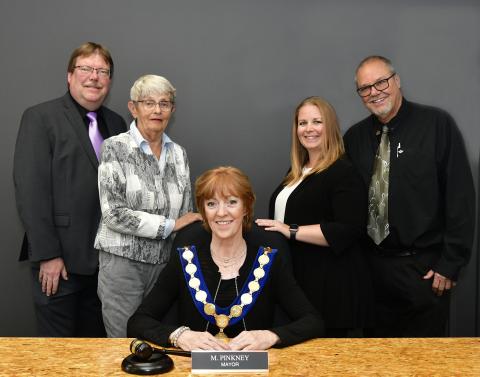
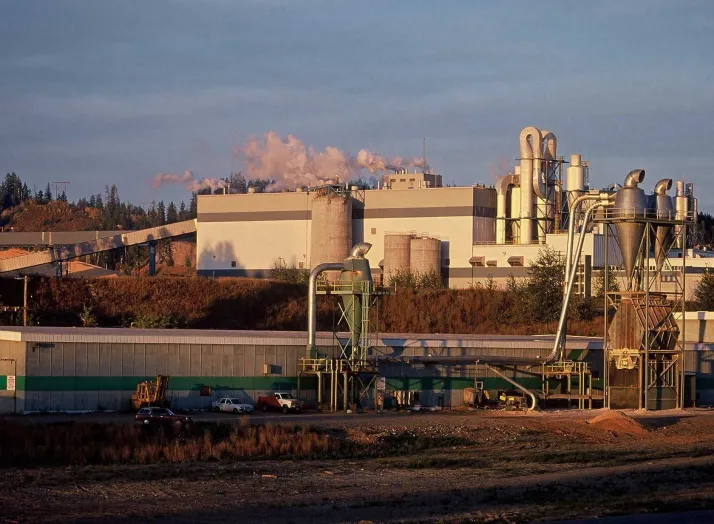
 Western Forest Products says the temporary curtailment at its Chemainus sawmill will extend into the new year, while work slowdowns are expected at its other mills across Vancouver Island in December. The WFP curtailment in Chemainus began in June, affecting about 150 workers, with work yet to resume. …Meanwhile, reduced hours are expected at other work sites on the Island later this month. “In the latter half of December, we will take temporary downtime at our Saltair mill in Ladysmith, Duke Point mill in Nanaimo, and Cowichan Bay mill in Duncan,” said Babita Khunkhun, senior director of communications at WFP. “This will involve reduced operating hours, an extended holiday break and adjusted shift schedules.” Khunkhun says regular operations are expected to resume at all of those mills – except for Chemainus – on Jan. 6 “depending on market conditions and available log supply.”
 VANCOUVER, BC

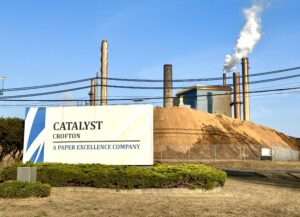 When it comes to what ultimately lies behind Crofton’s impending closure, previous BC Liberal and NDP governments past and present all have much to answer for. Both were at the helm as tumultuous changes rocked BC’s forestry sector. And both did little of consequence in response. The result is not only pain for workers and their families, but a big economic hit for local government. …The first change that governments ignored was the disintegration of what were once highly integrated forest companies. At one point, each of B.C.’s three remaining coastal pulp mills — Crofton, Harmac and Howe Sound — were part of a continuous production chain owned by the same company. In the case of Harmac and Crofton, that company was MacMillan Bloedel, while Howe Sound’s pulp mill was co-owned by Canfor. With integrated companies, all aspects of production from the tree standing in the forest to final products were linked.
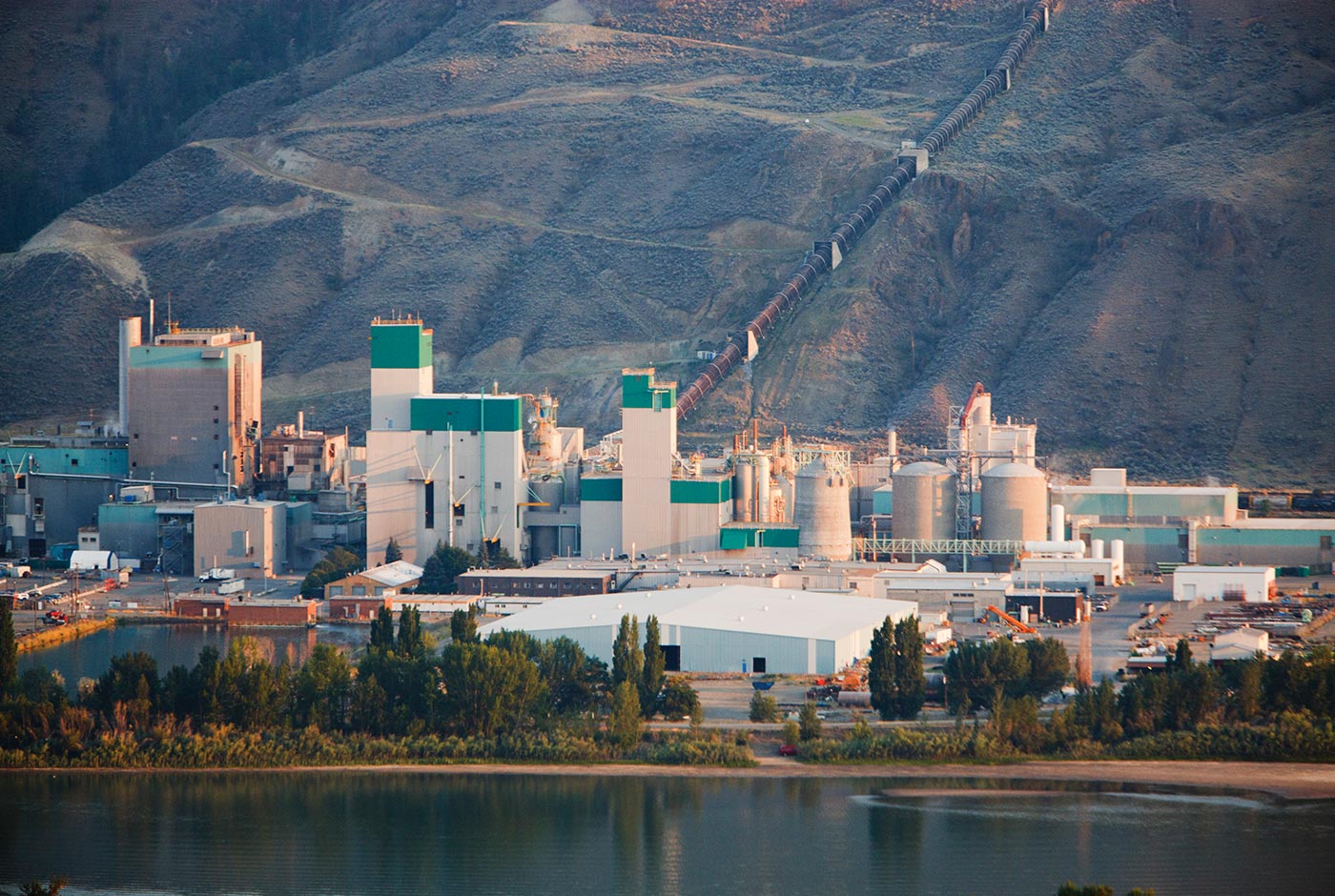
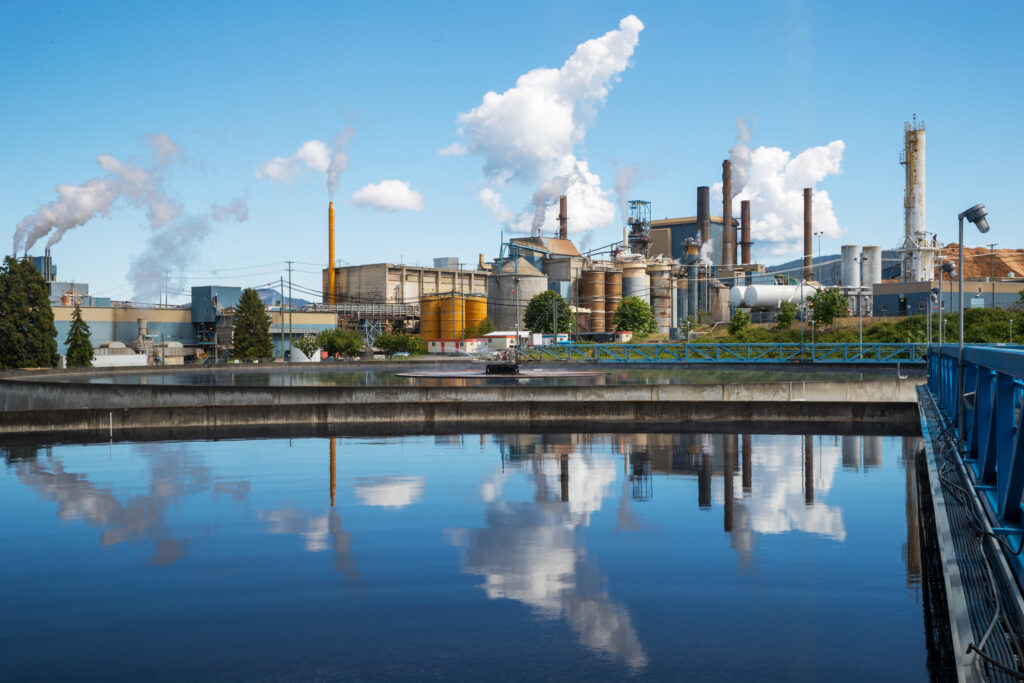
 Domtar’s announcement of its Crofton pulp and paper mill closure was a major and far-reaching loss for its workers, the North Cowichan community, and the broader forest-industry supply chain across the BC Coast. It is especially difficult knowing that this closure was preventable. Industry, labour and municipal governments have been warning the BC government about the risk of mill closures for many months. The government was given numerous recommendations, solutions, and opportunities that could have helped avoid this outcome, but has largely failed to act with the urgency that was required. …This closure underscores the many challenges facing BC’s coastal forest sector: ongoing constraints on access to economically viable fibre, an uncompetitive business cost structure, and regulatory uncertainty. For TLA members, these pressures threaten the stability of their operations and the forestry-dependent communities they support. The TLA remains committed to working with government and industry partners to stabilize the sector…
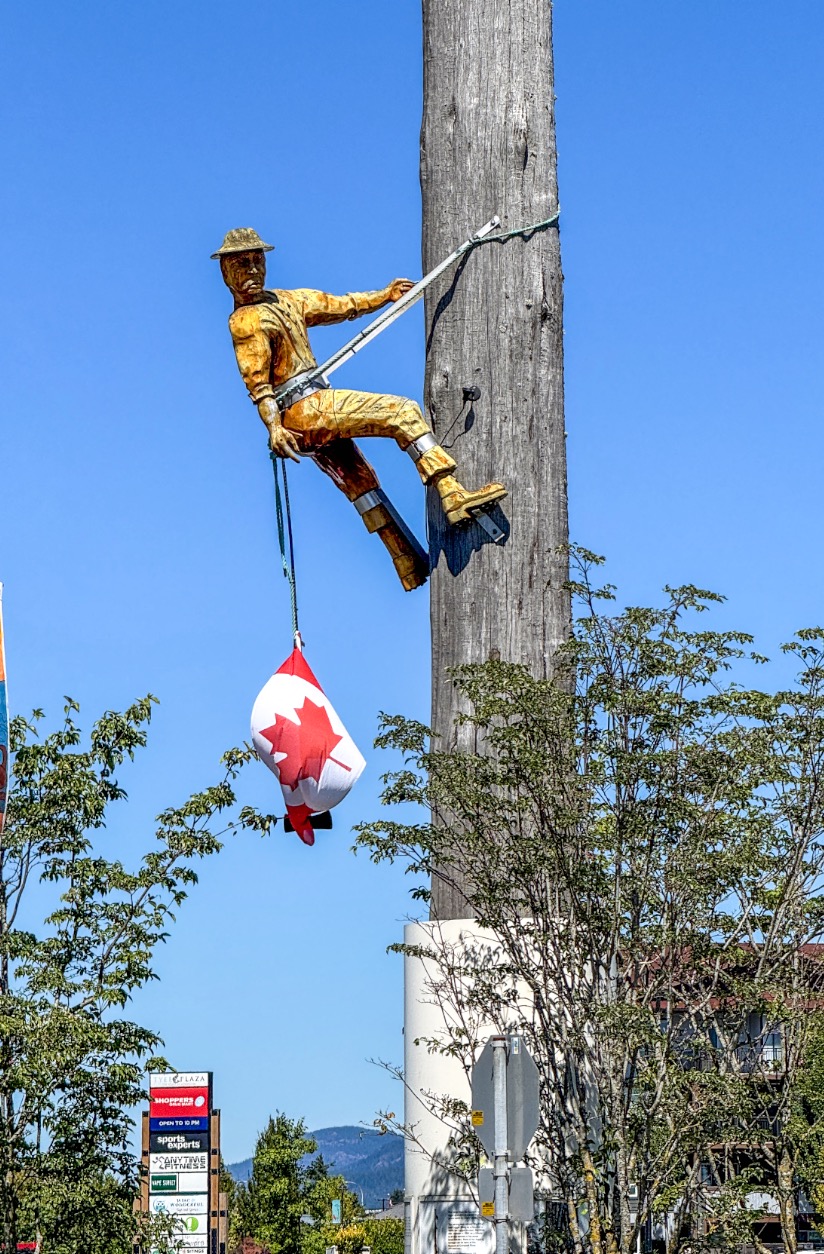 More than 100 unionized North Island forestry workers on strike rallied in Campbell River on Wednesday. They’ve been without a contract for more than six months. They warned their employer that they are united and will succeed in their demands… The United Steelworkers marched to the Campbell River offices of Western Forest Products… The company owns a controlling 55 per cent share of La-kwa sa muqw Forestry (LKSM). On Oct. 20, the union filed a common-employer application with the Labour Relations Board. “…we’re challenging the fact that LKSM is actually a separate company. …We believe our members deserve the same collective agreement that all WFP members have,” said Brian Butler, president of United Steelworkers Local 1-1937 …“What this issue is really about is the union’s demand that it wants all contractors, new contractors, working for us, including First Nation contractors, to be mandatorily certified with the union,” said Greg DeMille, Operations Manager of La-kwa sa muqw Forestry.


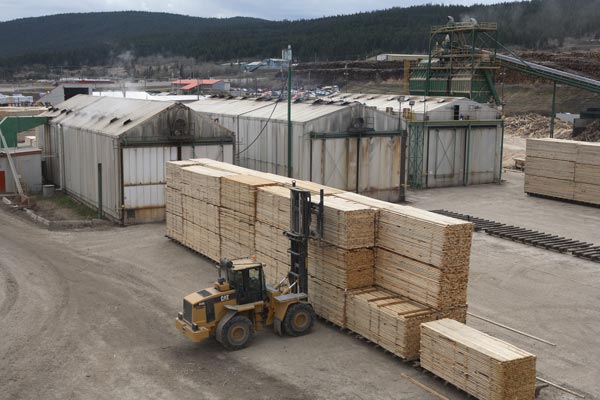






 MANCHESTER, Tennessee – Several US sawmills are struggling to stay open after industry leaders said years of trade uncertainty have drained export markets and tightened margins. The Hardwood Federation estimates at least one sawmill is going out of business every week. Additionally, the National Hardwood Lumber Association (NHLA) reported that more than 4% of U.S. sawmills have been lost due to closures and consolidations. The equipment from those sawmills ends up in a growing pile of auction fliers on Johnny Evans’ desk at the Evans Lumber in Manchester, Tennessee. However, Evans is desperate to save his sawmill from being auctioned off due to ongoing trade talks. …Evans said a lot of this goes back to trade tensions that began in 2018, during the first Trump administration. That’s when some countries, like China, stopped buying American hardwood in retaliation to President Donald Trump’s tariff policies.
