 Forest Products Association of Canada (FPAC) President and CEO Derek Nighbor released the following statement following yesterday’s EU Commission proposal related to the implementation of the EU Deforestation-free Product Regulation (EUDR). “This proposal does not address real concerns with an EU Information Technology (IT) system that is still not fit for purpose and does not address concerns raised by micro- and small businesses part of the integrated supply chain for larger organizations. “We would like to see practical simplification of the EUDR, that appropriately recognizes low-risk third countries such as Canada, as well as EU Member States. We are committed to work quickly with global partners to find an improved proposal, that will both meet the intent of the Regulation, while also enabling strong and vibrant trading relationships, as committed to in the June 2025 strategic partnership between the European Union and Canada.


 NASHVILLE, Tenn.– LP Building Solutions (LP) announced the continuation of its partnership with the [US based] Forest Workforce Training Institute’s ForestryWorks® program and a new collaboration with the [British Columbia, Canada] First Nations Forestry Council. Both initiatives aim to develop the next generation of forestry professionals and advance sustainable forest management across North America. …“Programs like ForestryWorks and First Nations Forestry Council help ensure forests remain healthy and productive while supporting the future of sustainable forestry,” said LP Chair and CEO Brad Southern. “By investing in tomorrow’s workforce, we’re also investing in the continued success of renewable, high-performance building solutions.” …“We’re pleased to welcome LP Building Solutions as a program partner in advancing Indigenous participation in forestry through the Indigenous Forestry Scholarship Program,” said BC First Nations Forestry Council CEO Lennard (Suxʷsxʷwels) Joe.

 Backgrounder: On October 24, 2025, the Honourable Rebecca Chartrand, Minister of Northern and Arctic Affairs, on behalf of the Honourable Tim Hodgson, Minister of Energy and Natural Resources,
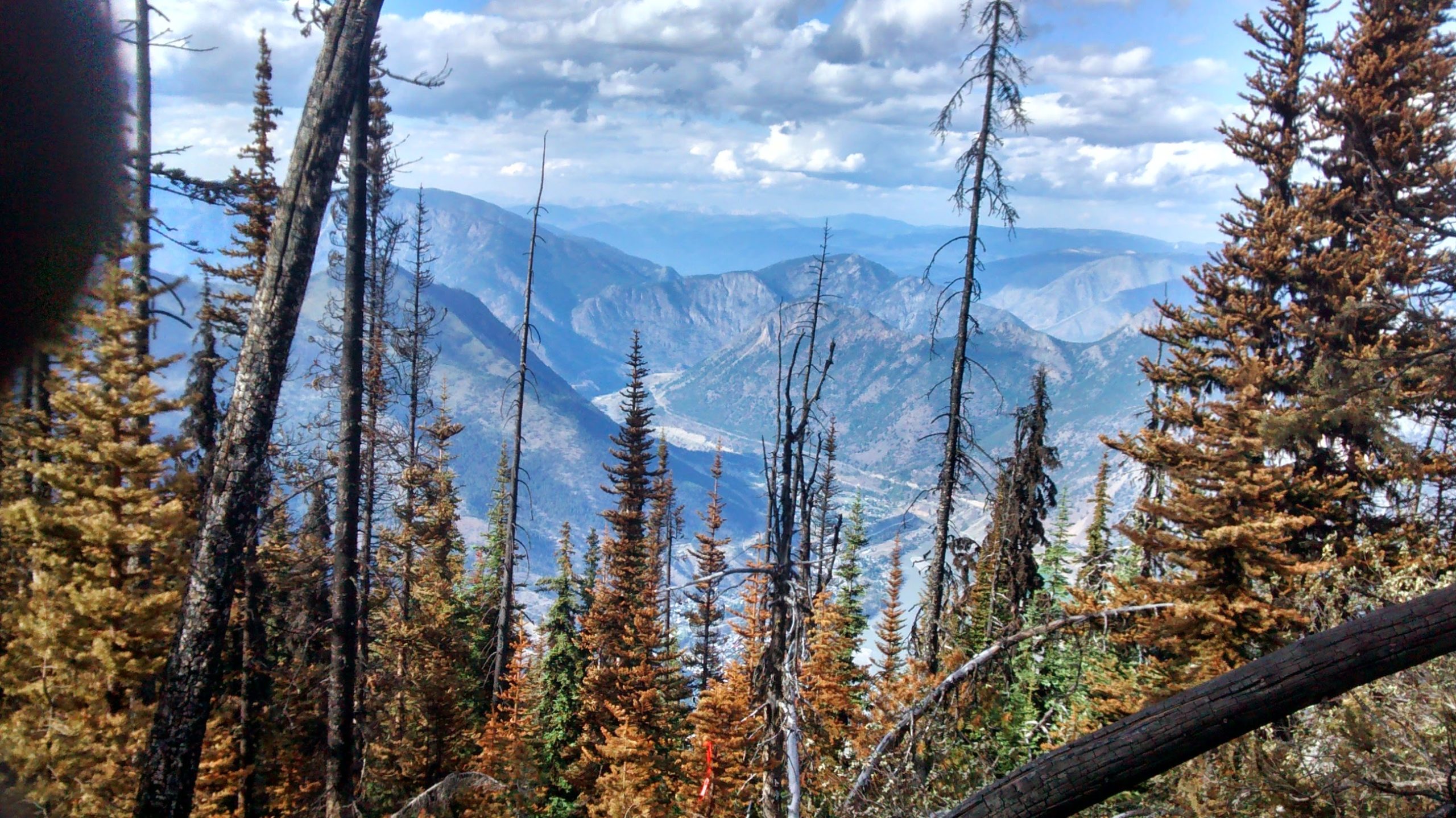
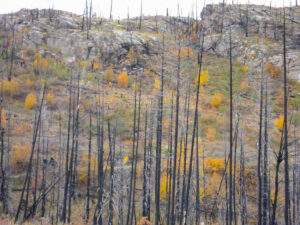 For the Northwest Territories government’s 2024 Forest Health Report, published last month, researchers were only able to survey about one third of the area they would normally study. Smoke from nearby wildfires reduced visibility for crews on the ground and in the air, making it difficult for researchers to do their work. Even so, one of the report’s findings is the sheer impact of a drought that has covered much the NWT since June 2022 – and its effect on forests. Of about four million hectares of forest surveyed by researchers in 2024, more than 220,000 hectares showed stresses from either the ongoing drought or the high water of 2020 and 2021, the report asserted. Because the survey work was limited by factors like smoke, researchers think the real extent of the issue “is likely substantially larger.” …Drought can contribute to tree and plant mortality, which in turn creates fuel for wildfires.
 VANCOUVER, BC – NorthX Climate Tech (NorthX), a BC-based innovation catalyst backing the builders of Canadian climate hard tech, today launched a funding opportunity for Canadian wildfire technologies. Through the 2025 Wildfire Tech Call for Innovation, NorthX will provide up to $3 million in non-dilutive investments to Canadian companies developing advanced technologies that prevent mega wildfires, enhance firefighting response, and support faster recovery. “With each passing year, wildfires are posing an ever-growing threat to communities across Canada,” said Sarah Goodman, President & CEO of NorthX. “In response, NorthX led the way with Canada’s first wildfire innovation call in 2024. This new round builds on that success, backing Canadian innovators developing the tools to fight fires, cut emissions, and protect lives.” …Founded in 2021 with an initial investment from the Government of Canada, the BC Government, and Shell Canada, NorthX Climate Tech (NorthX) is a catalyst for climate action…

 CAMPBELL RIVER – The Forest Practices Board will conduct an audit of Aat’uu Forestry Limited Partnership’s Forest Licence A19236 in the Campbell River Natural Resource District of the North Island Timber Supply Area, starting Monday, Oct. 20, 2025. The audit will examine whether forestry activities carried out between Oct. 1, 2023, and Oct. 24, 2025, comply with the Forest and Range Practices Act and the Wildfire Act. …Forest Licence A19236 is held by Aat’uu Forestry Limited Partnership, a company owned by the Ehattesaht First Nation, and is managed by Strategic Natural Resource Group from its Campbell River office. The licence covers an operating area of about 60,000 hectares, of which Aat’uu currently manages an allowable annual cut of approximately 50,000 cubic metres. The audit area is on the west coast of Vancouver Island, about 70 kilometres south of Port McNeill, near the community of Zeballos, within Ehattesaht territory and neighbouring territories of the Nuchatlaht and Ka:’yu:’k’t’h’/Che:k:tles7et’h’ Nations.
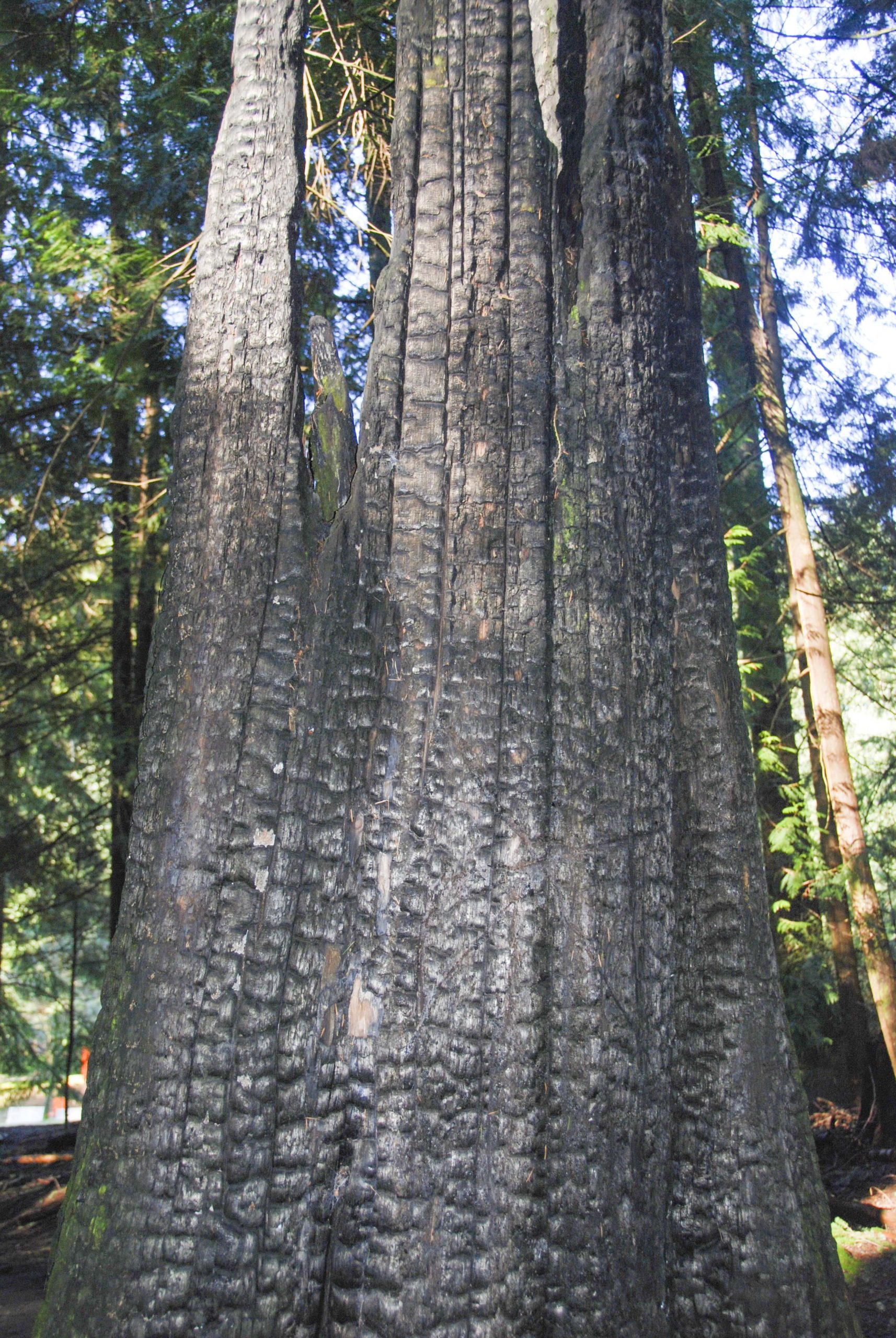 Two new reports on the July 2024 devastating wildfire in Jasper, Alta., confirm the blaze was caused by lightning and accelerated by “tornado-force fire-generated” winds and dry conditions. The fire — three separate blazes that merged into one — destroyed a third of the community’s structures. It forced 25,000 residents and displaced an estimated 2,000 people. The reports, commissioned by Parks Canada, say efforts to reduce fuel for wildfires, including prescribed burns, helped mitigate the blaze. But one of the reports, which looks at how the fire formed and developed, says more burns and other attempts to reduce fuel would have been beneficial, since the fire began in an area south of town that had not burned or been treated in over a century. …The reports come after the town published its own fire report earlier this year, leading to controversy with the province as it said Premier Danielle Smith’s government caused command challenges in the fire response.
 The Northwest Territories could see more difficult wildfire seasons ahead – all the way into the next century, according to recent research. One
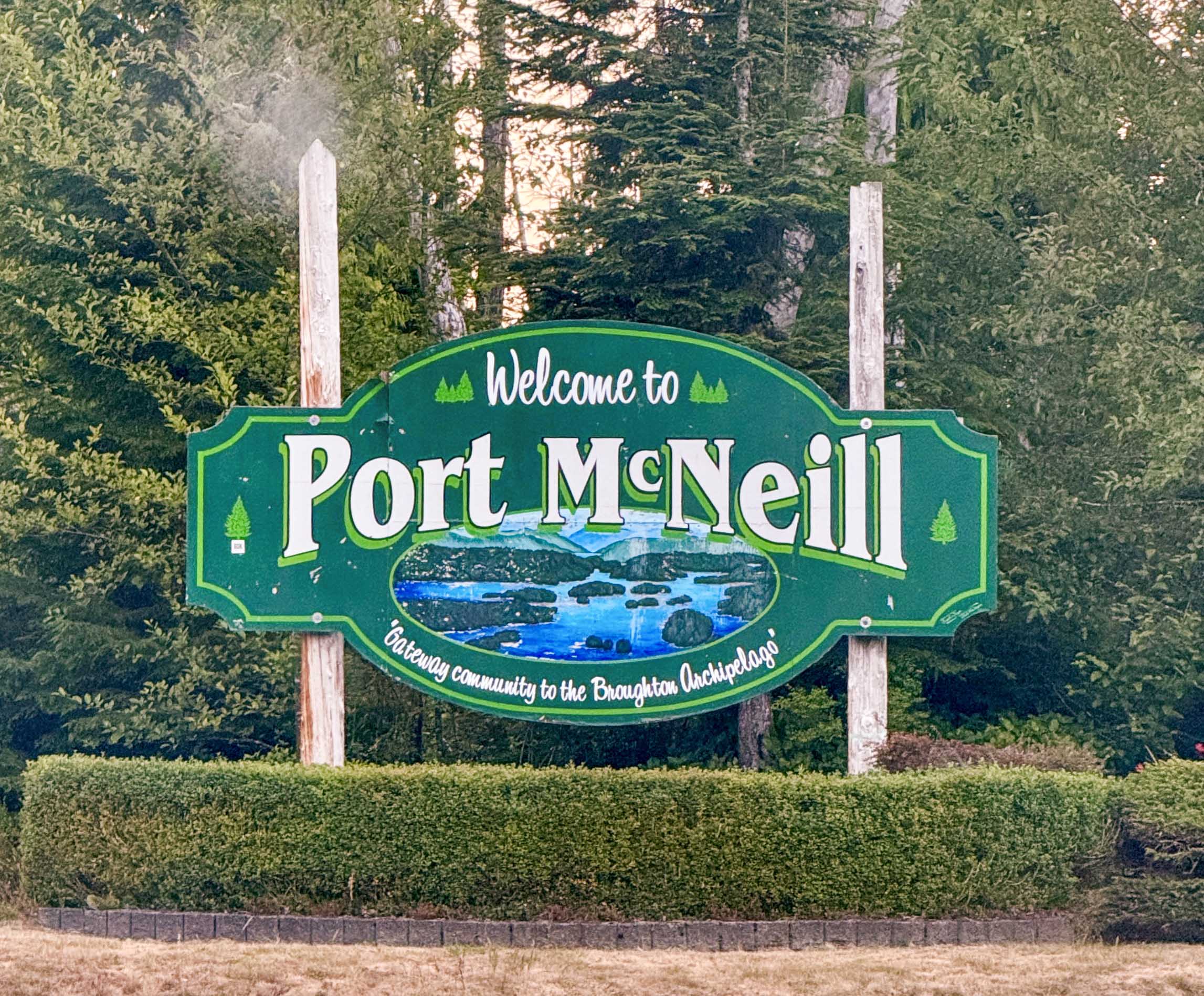 The Forest Practices Board, an independent watchdog, is set to conduct an audit on a forestry operation near Port McNeill. The Aat’uu Forestry Limited Partnership’s Forest Licence A19236 in the Campbell River Natural Resource District of the North Island Timber Supply Area is the subject of the audit, starting on Oct. 20. “The audit will examine whether forestry activities carried out between Oct. 1, 2023, and Oct. 24, 2025, comply with the Forest and Range Practices Act and the Wildfire Act,” reads a press release from the Forest Practices Board. “Activities subject to audit include timber harvesting; road and bridge construction, maintenance, and deactivation; silviculture; wildfire protection; and related operational planning.” The Aat’uu Forestery Limited Partnership is a company owned by the Ehattesaht First Nation. It is managed by Strategic Natural Resource Group from an office in Campbell River.
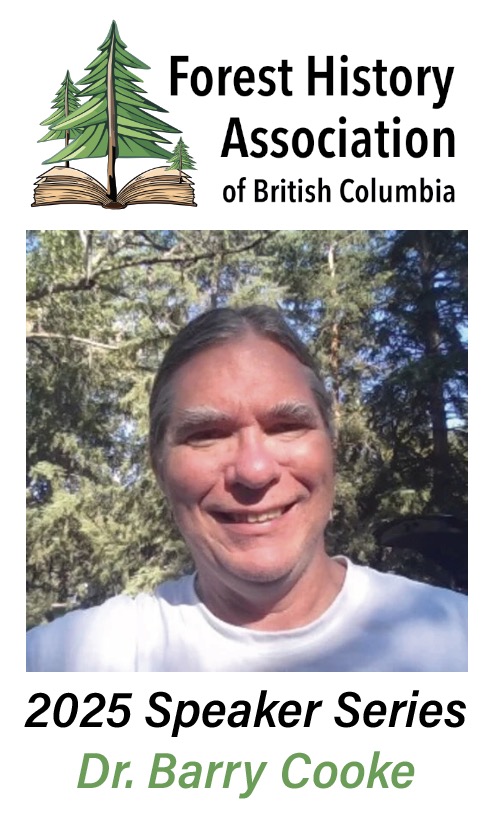 The BC Forest History Association is pleased to welcome Dr. Barry Cooke, Research Scientist with the Canadian Forest Service, as our second speaker of 2025. Dr. Cooke is one of Canada’s leading experts on modeling insect outbreak processes and patterns, with more than 30 years of experience studying spruce budworm population dynamics and forest insect ecology. He has authored over 90 scientific publications, advancing our understanding of budworms, beetles, and other major forest pests through spatial simulation modeling. Join us for this free online presentation, “A History of Debate on Budworms: A BC Perspective.” Tuesday, October 21st 2025 – 7:00 to 8:00 PST
  Canada’s vast forests are the envy of much of the world, but they’ve seen brighter days. Our changing climate has beckoned wilder wildfires, disease and drought. And after decades of cutting big and fast to maximize profits, the country’s logging industry is in freefall. But there’s opportunity in crisis — or that’s the bet some First Nations in British Columbia are making. …“Now we’re dealing with a lot of scrub in that corner that we didn’t get to before,” Garry Merkel, a professional forester and a member of the Tahltan Nation. …In Manitoba, the forestry industry watched this summer as profits went up in smoke. Devastating fires burned more forest in logging areas than any year in recorded wildfire history, according to an analysis by Manitoba reporter Julia-Simone Rutgers. And forestry companies are “scared to death,” said.


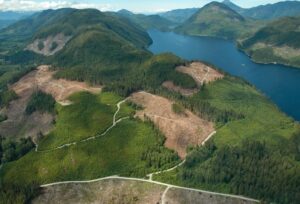 BC’s forest communities are on life support. Families are losing jobs, mills are shuttering, and entire towns are being hollowed out. And now, with another punishing softwood lumber tariff slapped on by the U.S., the bleeding has gone from slow to catastrophic. Premier David Eby calls it an “existential crisis” and wants the prime minister to declare a national emergency. Here’s a better idea: How about the premier stops being the emergency? For eight years, the B.C. NDP has dismantled the foundation of our forest industry. They have made it harder to cut, harder to haul, harder to process, and harder to survive. Now Eby is running to Ottawa and blaming the Americans while ignoring the damage his government has already done. Let’s be clear. The forest industry is not collapsing because of one more tariff. It is collapsing because this government has gutted it from the inside.
  Local residents are invited to share their input on the development of the West Central Vancouver Island (WCVI) Forest Landscape Plan (FLP), which will guide long-term forest management in the area. …People can share their thoughts through a short survey, open from Wednesday, Oct. 15 until Dec. 15, 2025, or attend an open house in a nearby community. Four in-person open-house engagement sessions are planned so people can learn more about forest landscape planning and comment on the development of the plan in Zeballos, Gold River, Tahsis and Campbell River. FLPs are co-developed with First Nations, with input from communities, subject-matter experts and forest licensees. The WCVI FLP is being developed with the Mowachaht/Muchatlaht First Nation, Ka:yu:’k’t’h’/Che:k’tles7et’h’ First Nations and Ehattesaht Chinehkint First Nation.
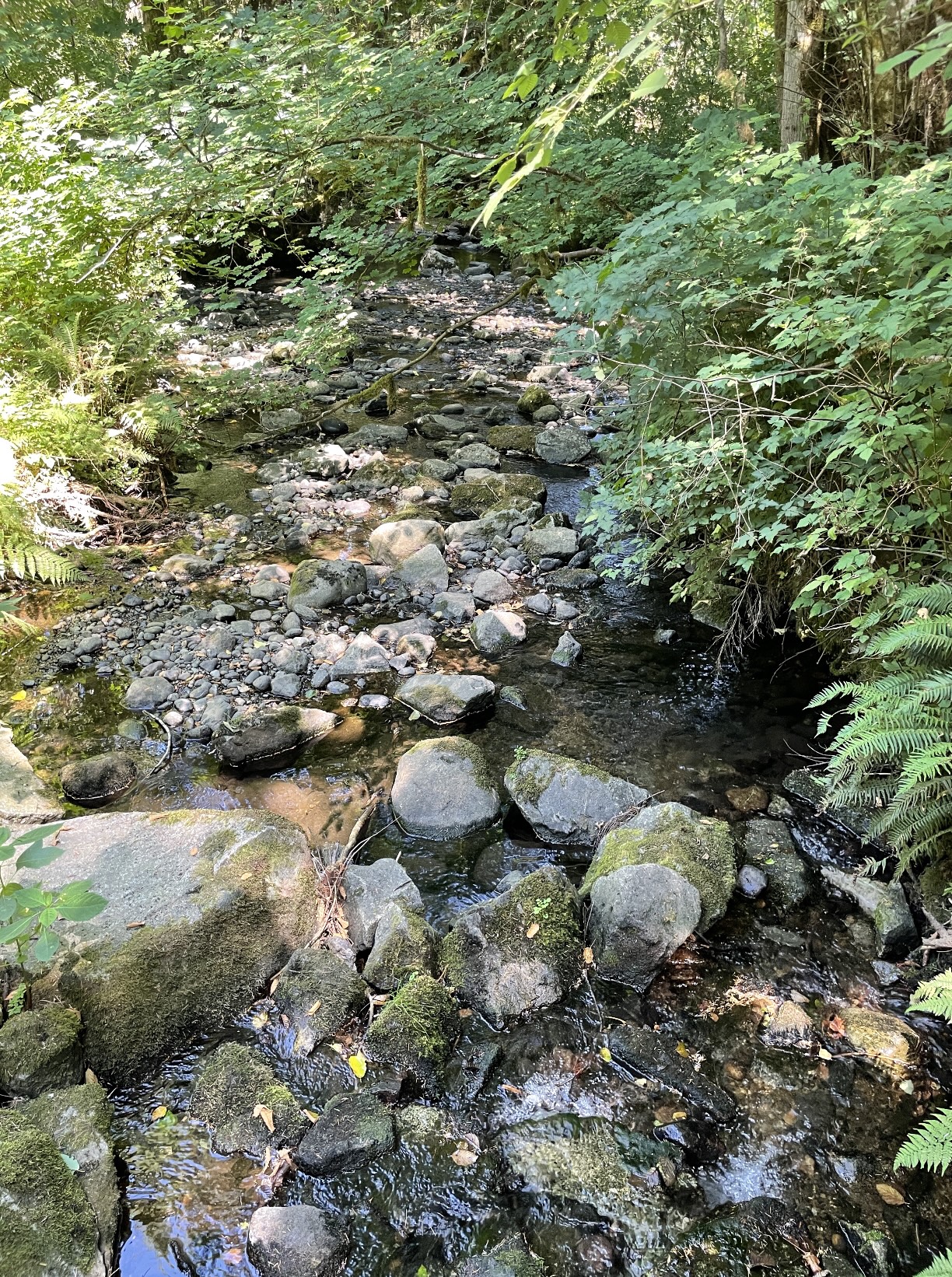 Environmental advocates and industry officials are divided over whether new logging plans in the Upper Highwood River watershed will provide sufficient protection for the threatened Bull Trout population. West Fraser Cochrane recently obtained Fisheries and Oceans Canada (DFO) authorization under the Fisheries Act and sections 73 and 74 of the Species at Risk Act (SARA) to install 14 temporary crossings for timber harvesting. The company says it is balancing responsible resource use with habitat conservation. “We understand how important it is to protect bull trout and Westslope cutthroat trout habitat in the Highwood– and share that priority,” said West Fraser Cochrane. “…we will monitor conditions before and after harvest to help inform responsible stewardship.” …Both environmental advocates and West Fraser agree on one point: safeguarding the Bull Trout and its habitat is a critical challenge. The question is whether the mitigation steps currently underway will prove sufficient to ensure the species’ long-term survival.
 The Saskatchewan NDP’s critic for forestry is calling on the province to provide support to help forests in the north recover from this summer’s destructive wildfire season. Cumberland MLA Jordan McPhail said more than 2.9 million hectares of forest was destroyed by fire over the summer, and this is having an impact on the forestry sector. “They’re literally seeing future profits go up in smoke,” he said. The northern Saskatchewan MLA said the provincial government can play a positive role by investing in reforestation work. McPhail said provincial regulations dictate that forestry companies replant two trees for every single tree they take. These dictates do not apply in instances where trees are destroyed by fires. …The Government of Saskatchewan said the province is committed to doubling growth in the forestry sector and is prepared to support the industry to do this.
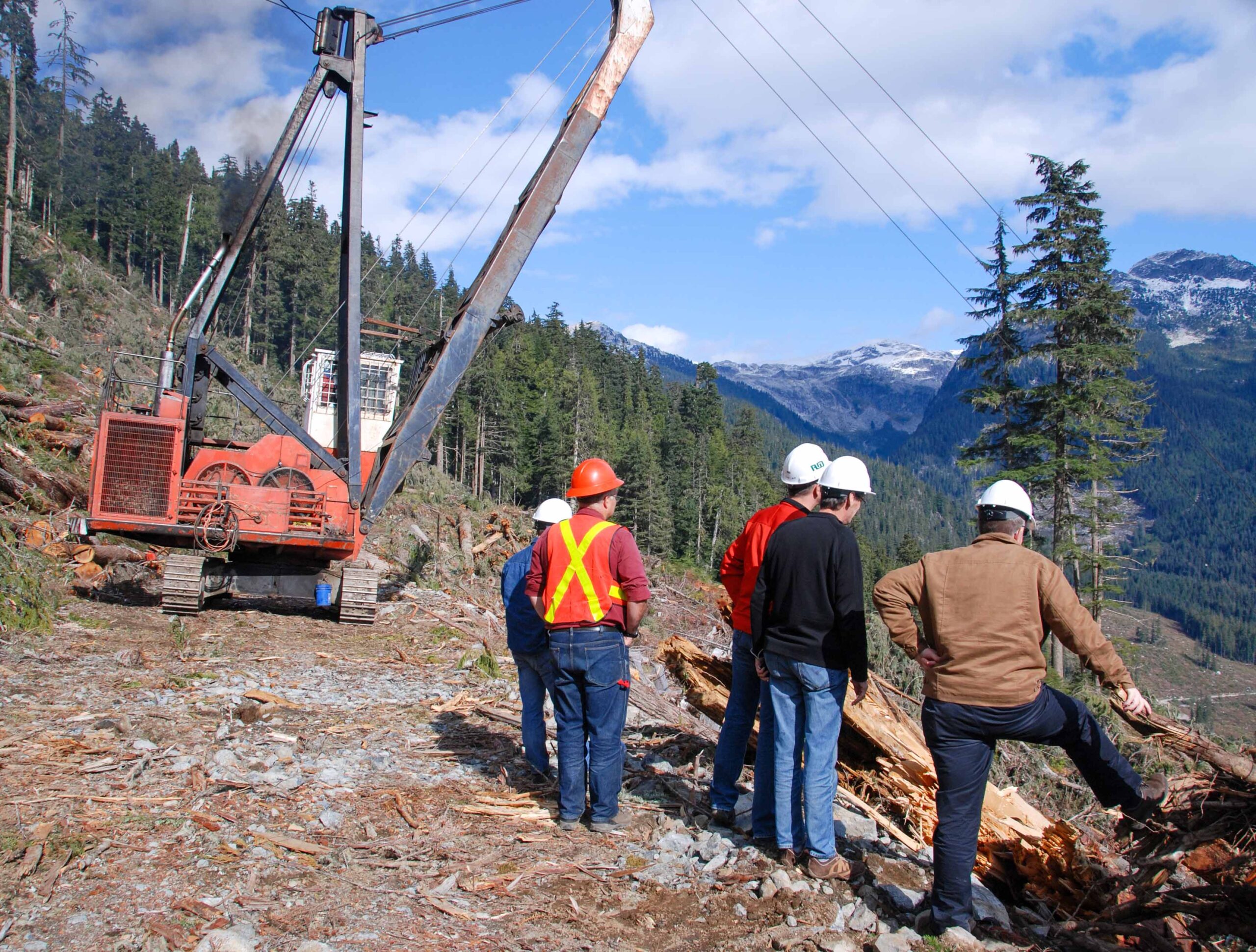 BANFF – A large swath of land will be logged at the base of Sulphur Mountain this winter to help further protect the Banff townsite from a future runaway wildfire similar to one that destroyed part of Jasper last year. As part of Parks Canada’s ongoing work to reduce the threat of wildfire to the townsite, the plan calls for 125 hectares to be logged and thinned in the Spray and Middle Springs area over the next two winters, including about 79 ha this winter. The entire project – which aims to slow the spread of an approaching wildfire and aid in suppression efforts to protect the Banff townsite – is slated to begin by the end of November and wrap up by spring 2027. …The Town of Banff has directed almost $1.5 million to be spent in 2025 wildfire mitigation work in 2025 within the four-km2 townsite.
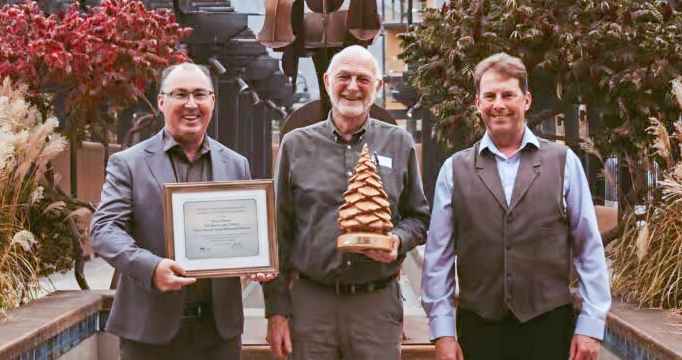
 Maple Ridge’s greenery is being recognized and awarded on a national scale. Malcolm Knapp Research Forest is one of two forests operated by the University of B.C. (UBC) that was recently acknowledged with a Canadian Institute of Forestry – Canadian Forest Management Group Achievement Award. …The award recognizes outstanding achievements by teams of managers in the field of natural resource management in Canada, and the local forest was praised for its “pivotal role” in advancing forest education, research, and management across B.C. and beyond, explained Helene Marcoux, local research forest director who was on hand for the recent awards presentation. …Through the coordination of more than 1,400 research projects and the delivery of experiential learning programs to thousands of students and professionals, the research forests have significantly shaped forest policy, sustainable management practices, and public understanding of forestry, said presenters of the national awards.
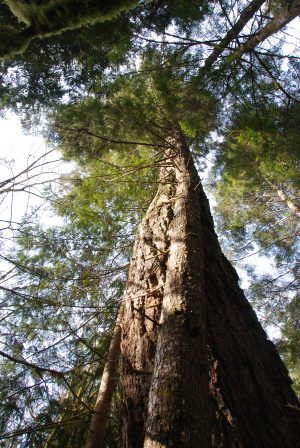
 At the Kelsey Bay log sort near the town of Sayward, B.C., pulverized cedar bark [is] evidence of the millions of trees that departed from here, never to return. “We’ve seen our territories decimated,” Wei Wai Kum Chief Christopher Roberts explains. Behind him, five freshly cut, old-growth cedars line the warming pavement. These trees, Roberts says, help explain why the nation is here today. …nations are claiming sizable stakes in an industry that has long excluded them. Wei Wai Kum is one of four First Nations to purchase a $36-million stake in La-kwa sa mukw Forestry Partnership, a joint operation with logging company Western Forest Products Ltd. Their partnership came after companies agreed to leave canoe-carving trees in their communities. A sign, for Roberts, that the industry was willing to change. …Now … First Nations’ tenure opportunities have exploded as B.C.’s biggest forest companies sell off major parts of their long-held licences.

 HALIFAX – A documentary on BC’s Fairy Creek blockade is making waves in Nova Scotia. “Fairy Creek” covers a period of eight months in 2021, when thousands of activists blockaded logging roads leading to old-growth forests on Vancouver Island. …Now, it’s getting a Nova Scotia debut with screenings in Halifax, Tatamagouche, Inverness, Annapolis Royal and Wolfville. …Neal Livingston, a Nova Scotia filmmaker, says… “We don’t have a history of that (in Nova Scotia).” Livingston says the film is especially timely for Nova Scotians, as activists in Cape Breton say they have been targeted by recent legislation. …The province introduced an omnibus bill that would make blocking forest access roads illegal and come with a fine of up to $50,000 and/or six months in jail. This fine is a steep increase from the current $2,000 penalty.

 Atlantic Canada’s wildfires are growing and a scientist at the University of New Brunswick (UNB) says the combination of climate change and regional forest management are making things worse. Anthony Taylor is a forestry expert at the UNB. He studies the impact of climate change and forest composition. “We should expect more weather like this into the future,” Taylor said. “That’s largely a consequence of inaction on climate change over the past 20 or 30 years.” Taylor said the weather and drought conditions in the Maritimes can be blamed on the climate change already baked into the system and people should expect more warming in coming decades. He said weather impacts wildfires more than any other variable but the next biggest factor is ignition. “More than 90 per cent of our fires that do occur, including this year, are from human ignition,” Taylor said. “Obviously we want to try to reduce and stop climate change but the next best thing after that is to be fire smart around the woods.”
:quality(65))
 The man charged after an investigation into the largest wildfire in Nova Scotia history has been fined $25,000. Dalton Stewart, 23, chose not to speak when he was handed the sentence Thursday in Barrington provincial court. The sentence — a joint recommendation from the Crown and defence — also includes an order to complete educational training on wildfire prevention.
  ONTARIO — The Northwestern Ontario Innovation Centre has partnered with the Thunder Bay Community Economic Development Commission (CEDC), the Centre for Research and Innovation in the Bio-Economy (CRIBE), Lakehead University and Confederation College to launch the Boreal Springboard, an innovative initiative aimed at strengthening and diversifying the forestry sector in Northwestern Ontario. Graham Bracken, at the Northwestern Ontario Innovation Centre, said the launch comes at a critical time for forestry in the region. …“The trade pressures were really the impetus to focus people’s minds,” Bracken said. “The sector is really integrated, and any threat to protection on the sawmill side weakens the rest of the sector. There’s a real drive to look to trade diversification and try and develop new value-added products that we can access other markets with.” Bracken says these investors will bring skills, technologies, and solutions that can be adapted to strengthen and grow the sector.
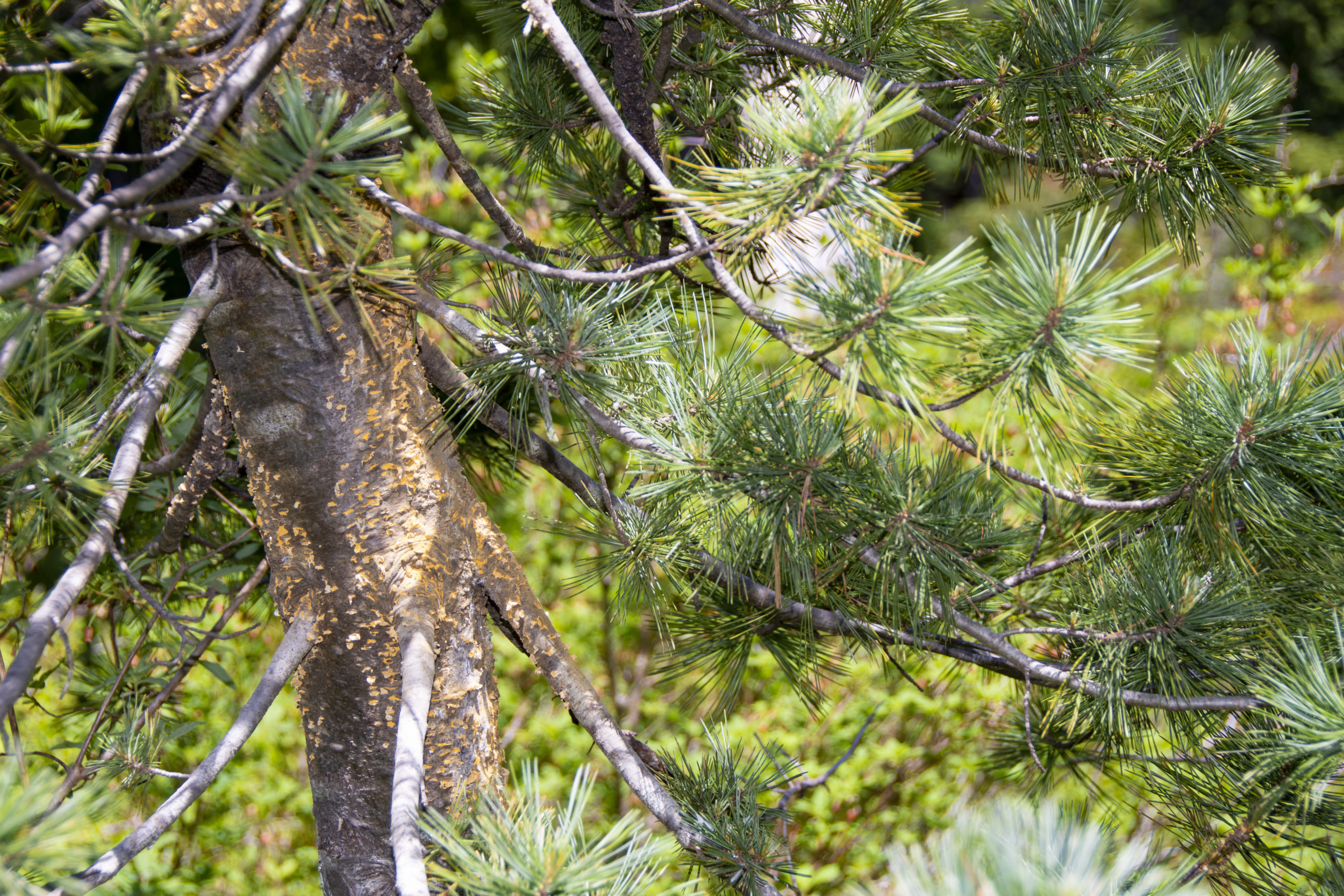 Ecological stoichiometry can help clarify how symbionts and other co-occurring organisms mediate nutrient deficiencies for hosts. We used ecological stoichiometry (comparisons of elemental compositions in food vs consumer) to investigate whether obligate mutualist fungi (Grosmannia clavigera, Ophiostoma montium) of the tree-killing bark beetle Dendroctonus ponderosae (mountain pine beetle) and the invasive tree pathogenic fungus, Cronartium ribicola (causal agent of the disease white pine blister rust) influenced availability of carbon, nitrogen, and phosphorus to the beetle in Pinus albicaulis (whitebark pine), as well as how these elements varied among three populations of the tree.
 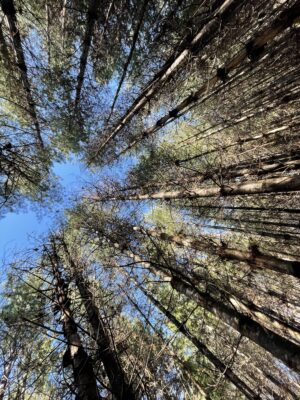 The bipartisan Fix Our Forests Act passed out of the Senate Agriculture Committee on Tuesday morning, marking the first advancement of the bill since it previously stalled in committees under both the Biden and the previous Trump administration. The Act would create an interagency Fireshed Center focused on wildfire prediction and tracking, establish fireshed management areas in forests with high wildfire risks, and expedite the review of wildfire-related forest management projects under the National Environmental Policy Act. The act has gained support from lawmakers on both sides of the aisle, along with numerous environmental and wildfire-focused organizations. Critics of the Act claim it would further open up
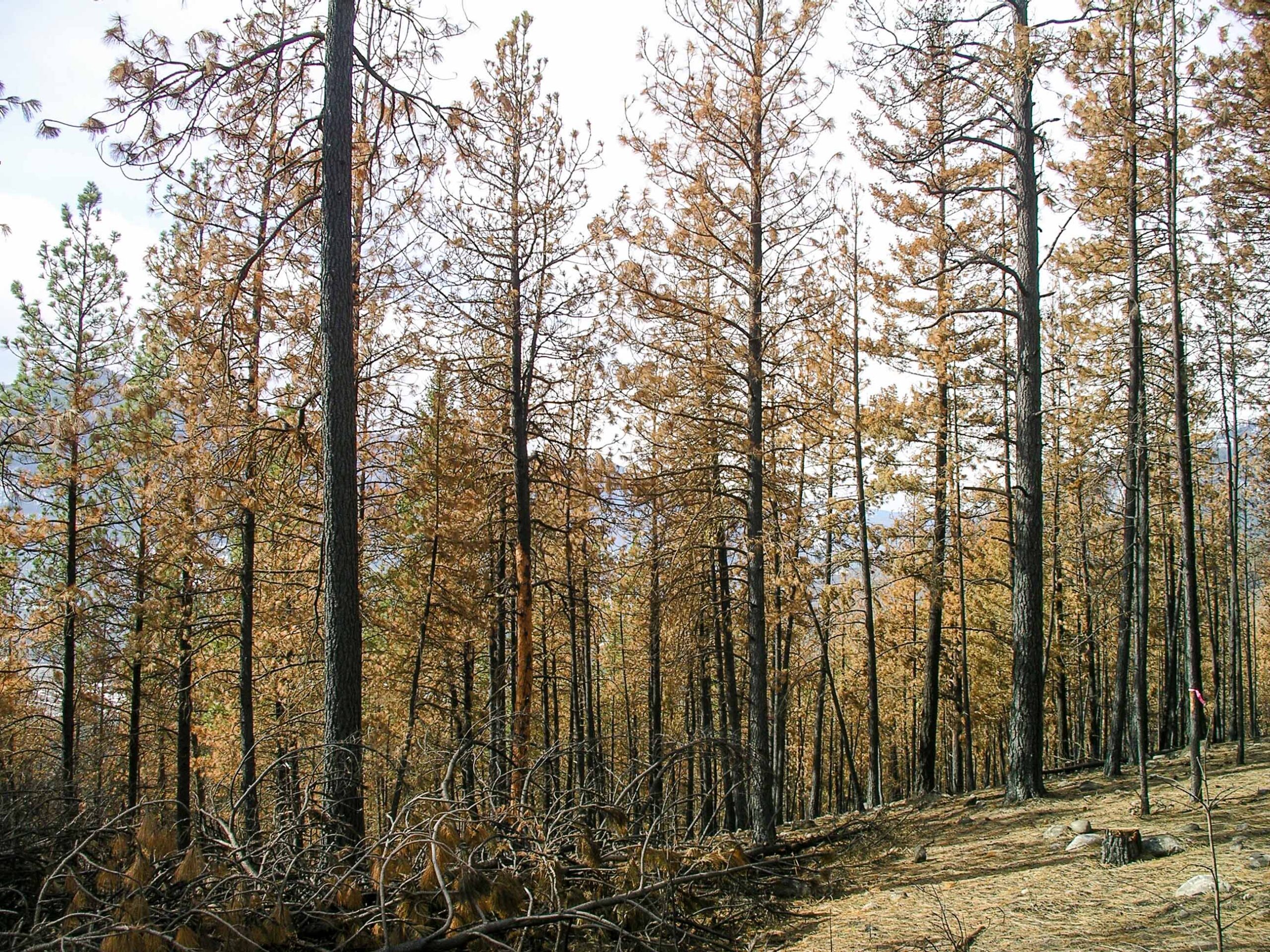 Fall is the busy season for forestry work, like fuels reduction. Summer fire restrictions have ended, and winter snow has not yet arrived. But Armando Lopez, owner of DL Reforestation in Jackson County, said the federal government shutdown has put his work on hold. Inspectors can’t visit project areas, and he’s waiting on hundreds of thousands of dollars in payments. Every day, he eagerly checks whether the government has reopened. …Lopez employs around 40 workers, most of them on temporary H-2B visas. If the shutdown doesn’t end next week, Lopez said, he won’t be able to pay them. …The Oregon Department of Forestry said in a statement that payment delays for contractors like Lopez are varied, depending on the federal agency and funding source. …But U.S. Forest Service, state, private and tribal forestry awards are continuing.

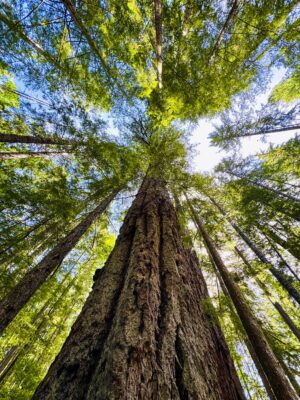 EUGENE, Oregon — With the Trump administration poised to rewrite forest management policy, groups are on guard for changes to climate and lumber harvesting sections. Travis Joseph has a message for environmental groups worried that the Pacific Northwest’s oldest trees are about to fall to loggers: Timber companies don’t really want to cut them down. Joseph, who heads a timber industry group and is a former aide to ex-Democratic Rep. Peter DeFazio of Oregon, made that proclamation. …“I love these trees, too,” said Joseph, CEO of the American Forest Resource Council (AFRC). “But they’re at risk. Let’s save them. Let’s come in here and protect them.” Joseph’s group says the threat to big trees in western Oregon — these giants were 5 or 6 feet across at the trunk — isn’t logging. It’s wildfire that’s becoming a bigger menace as climate change makes summers hotter and reduces the winter snowpack. [to access the full story a subscription is required]
 Oregon’s 2025 fire season officially wrapped up Friday with significantly fewer acres burned — and at a lower cost to the state — than in previous years. But fires this year got much closer to communities, burning 200 homes and structures. …And humans caused most of this year’s fires. Oregon experienced more than 1,100 fires from early June to mid-October. They burned roughly 350,000 acres, far less than the 1.9 million acres that burned in 2024. Fires this year also cost the state less to fight. …The U.S. Forest Service has had a target for nearly a century of keeping at least 90% of wildfires from growing larger than 10 acres. But it has come under scrutiny by some indigenous wildfire and ecology experts and scientists, as well as Forest Service scientists. They argue that some wildfires must be allowed to burn more acres to help regenerate plants that support animal habitats, reduce pest infestation and invasive species and keep ecosystems healthy.
 The Fix Our Forests Act passed out of a Senate committee Tuesday, and now heads to a full vote. Some environmental groups are warning that a federal bill intended to prevent major wildfires could effectively increase logging, cattle grazing and mining on federal lands — which make up half of Oregon’s land base. The bipartisan Fix Our Forests Act passed out of the U.S. Senate Agriculture Committee on Tuesday and now heads to the Senate floor for a final vote. It could overhaul how the nation prepares its land for wildfires, while also scaling back environmental oversight of land management projects. The bill has conservationists divided. On one side, some advocates say it would bring long-needed changes by fast-tracking prescribed fires. …On the other side, environmental groups say the bill significantly weakens environmental protections and public oversight.
 CLANCY, Montana — Healthy forests depend on a strong forest products industry. Sawmills help support thousands of Montana jobs, reduce wildfire risks, and provide a renewable resource. Despite recent mill closures in Missoula and Seeley Lake, Marks Lumber in Clancy continues to carry on. …Both Roseburg Forest Products in Missoula and Pyramid Mountain Lumber in Seeley Lake closed last year. Marks Lumber has been open for 36 years, and they have adapted to industry changes before. “ …In light of the recent closures, they have made some changes, including shifting to more board production (processed wood) rather than the raw tree, which is more expensive to manufacture, and slowing down on how much logging they do. Marks Lumber also had to change where their sawdust and chips go. Roseburg used to buy that material, but now they send them to Weyerhaeuser Forest Products in Columbia Falls.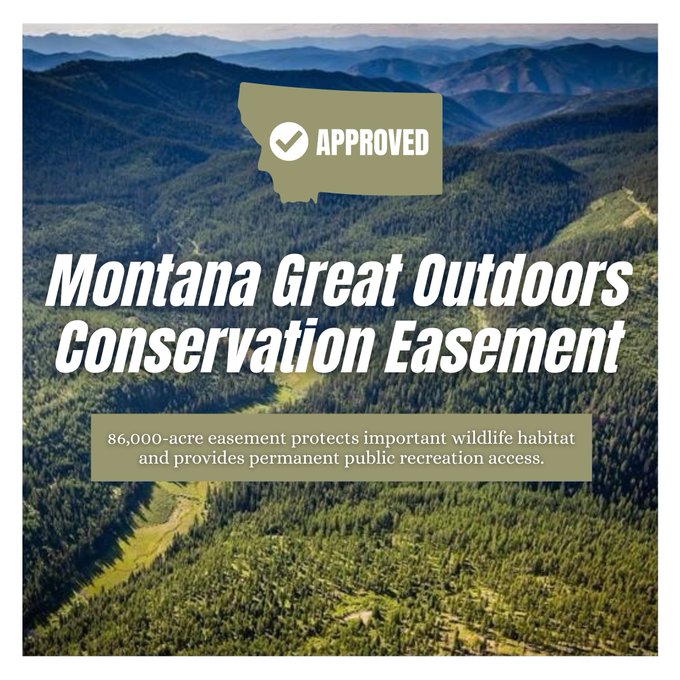
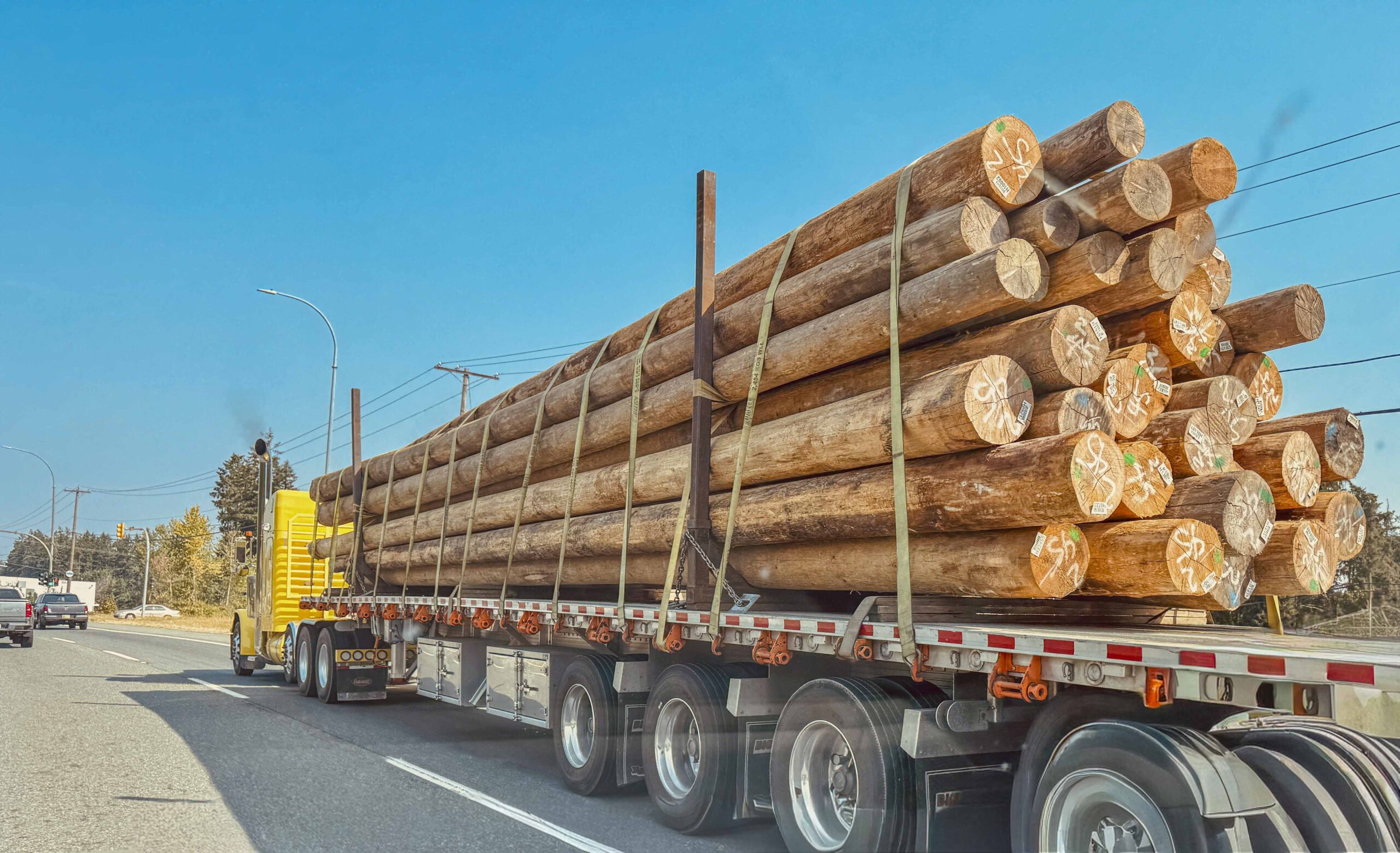 Western Colorado — Communities across the Western Slope need scientifically sound, effective action that actually helps protect our forests and communities. That’s why so many of us are paying attention to the Fix Our Forests Act, now moving through Congress. …The Act leans heavily on boosting logging, and yes, thinning trees in the right places can improve forest health. The problem is that an agenda driven by timber harvesting often causes companies to cut the largest-diameter trees to meet timber quotas set by Washington, D.C. Instead, restoration forestry is the science-backed solution that we really need. …There are real solutions to today’s forestry challenges. …We have the tools – they just need more funding and staff to do the job. …I urge our senators to do all they can to improve the bill before final passage, keeping the public at the table, as they the most to lose if we don’t get this right.
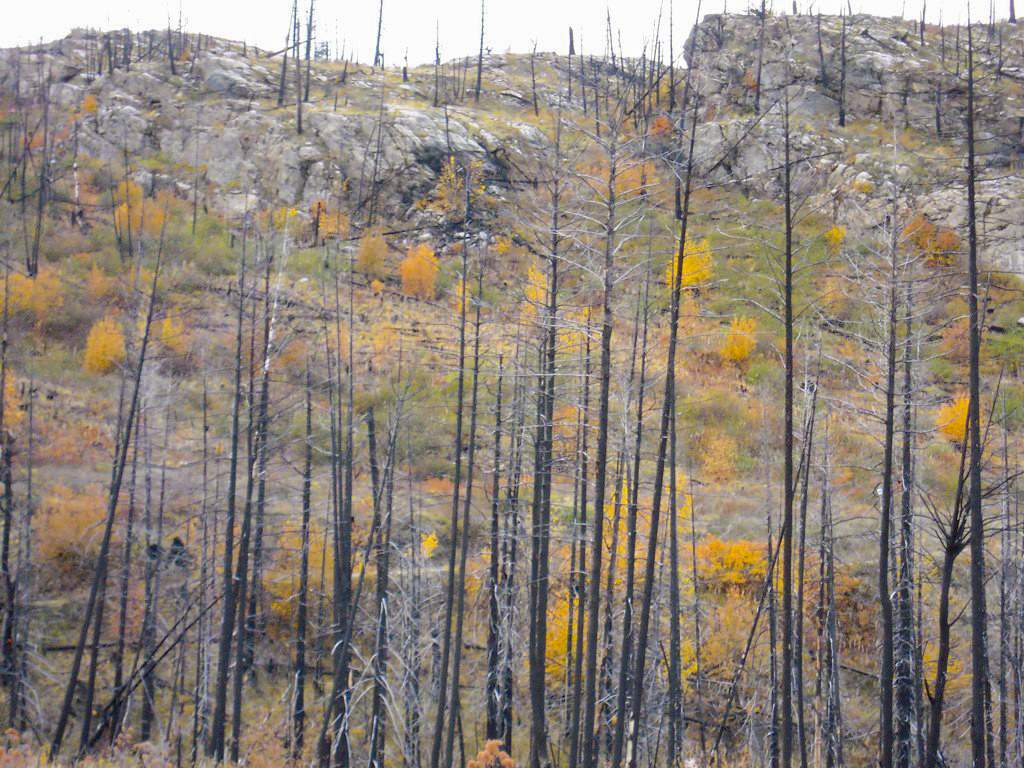



 As the European Commission prepares a further postponement of its Deforestation-free Regulation (EUDR), proposals to simplify the law are abundant in Brussels. The undersigned organizations, representing the U.S. forestry and forest products sector value chain, urge the Commission to avoid a rushed process and take the time necessary to pursue simplification with great care. An additional year provides a valuable opportunity for the Commission to engage in productive dialogue with forest owners and operators in highly forested, low-risk countries like the U.S. to understand implementation challenges and reduce unintended consequences. “Simplifying a law as significant as the EUDR requires thoughtful and purposeful review,” said Eric Gee, executive director of the Southern Forest Products Association (SFPA). “A measured approach will help ensure that any changes both strengthen the law’s effectiveness and uphold fairness for producers in low-risk, sustainably managed regions like the Southeastern United States.”

 …The World Resources Institute calculates that forests are burning at twice the rate they were two decades ago. In Canada … the frequency and severity of forest fires have quadrupled over the last half century. …the global wildfire defence market is projecting annual growth rates that range from 8.4% to 12.6%, much of it driven by public funding. For example, the United States’ budget for wildland fire management was $1.9 billion in 2025, a 10% increase from the previous year. …On October 22, a consortium of national organizations in Canada published an open letter to the federal government asking for a five-year investment of $4.1 billion in wildfire defence. …Coupled with U.S. auto tariffs, the wildfires prompted South Korea’s government to quickly assemble a US$8.6-billion supplementary budget, of which nearly a billion was earmarked for wildfire recovery. …The bushfire crisis of 2019/2020 in Australia caused AUD$2.4 billion of insured loss. …in 2025, Brazil allocated the equivalent of USD$95 million for firefighting efforts.



 The European Union proposed granting companies six months of leeway to comply with its landmark law to curb deforestation across the world, rejecting a longer delay despite industry complaints. The EU’s Deforestation Regulation aims to tackle the felling of trees associated with imports. Yet it has faced criticism at home and abroad for being too bureaucratic. The European Commission proposed Tuesday giving large companies six months of relief from sanctions after the law goes into effect at the end of the year. Bloomberg previously reported plans to delay implementing the rules by a year. …Both parliament and member states will need to sign off on the changes before the end of the year, and have the right to propose amendments. …A six-month adjustment period will be welcomed by environmental activists, alarmed by high rates of deforestation, said Luciana Chávez. [to access the full story a Bloomberg subscription is required]
 SWEDEN — Ingka Investments, the investment arm of Ingka Group (the largest IKEA retailer), has agreed to acquire approximately 153,000 hectares of land in Latvia and Estonia, of which 89% are forestland, from Södra, Sweden’s largest forest owners’ association. Completion is subject to approval by the relevant regulatory authorities. “Our unique ownership structure allows us to invest with a long-term perspective rather than short-term quarterly thinking.” …As the world’s largest IKEA retailer, Ingka Group operates in 31 markets and represents 87% of global IKEA sales. …Niks Sauva, Country Manager, Ingka Investments Latvia, continued: “We’re committed to creating more value locally in the Baltics. Our goal is to increase the share of wood processed regionally to strengthen the Baltic forestry value chain.” …Completion is subject to approval by the relevant authorities in Latvia and Estonia.