Category Archives: Forestry

Forestry

Canada Invests in Wildfire Innovation and Resilience Through New Centre of Excellence

By Natural Resources Canada
Cision Newswire
July 18, 2025
Category: Forestry
Region: Canada

OTTAWA, ON – With wildfires impacting Canadians across the country, the federal government is taking action to prevent wildfires, mitigate their effects and boost resilience. …The Government of Canada announced an investment of $11.7 million;over four years to establish the Wildfire Resilience Consortium of Canada (WRCC). Funded through the Wildfire Resilient Futures Initiative, the WRCC will serve as a national centre of excellence and virtual hub for wildland fire innovation and knowledge exchange. The WRCC will advance many of the actions in the Kananaskis Wildfire Charter, agreed to by the leaders of the G7 this spring in Canada and endorsed by the leaders of Australia, India, Mexico, the Republic of Korea and South Africa. It will bring together domestic and international governments, communities impacted by wildfires, the private sector and individual experts to share knowledge, facilitate collaboration and accelerate the use of cutting-edge science and technology in wildfire prevention, mitigation, preparedness and response.

Read More

It’s time to fight fire with fire in Canada

By the Editorial Board
The Globe and Mail
July 18, 2025
Category: Forestry
Region: Canada

Canada’s premiers met June to talk infrastructure but were distracted by the small matter of the forest fires raging across the West at the time. …Six weeks later, the country is well into one of its worst wildfire seasons ever. …“Suppression alone is no longer adequate to address the growing challenges from wildland fire,“ the Canadian Council of Forest Ministers said in a report last year. ”Wildland fire management in Canada needs to be transformed.” That means creating a national regime of prescribed burns – the deliberate setting of fires under controlled circumstances to reduce the number and intensity of forest fires, and to limit damage to property. It’s a practice that Indigenous peoples in Canada and elsewhere used for millennia to manage their lands. But its use is sharply limited in Canada, mostly because politicians are scared to the point of paralysis by the off-chance that a government-sanctioned burn could get out of control.

Read More

Bringing the forest back: Tłı̨chǫ Tree Planting initiative begins

By Lisa Iesse
My True North Now
July 11, 2025
Category: Forestry
Region: Canada

It is estimated that 130 million trees in the Tłı̨chǫ region alone were burned in the devastating 2023 fires. An ambitions new reforestation project is taking on a unprecedented initiative to plant over 1 million trees as part of a six-year plan to plant 13 million trees to bring back the forest. The Tłı̨chǫ Government is holding a special opening ceremony tomorrow at the Behchokǫ̀ Culture Centre at 10:00 a.m. in celebration of the launch of their major reforestation project. “This will mark the beginning of the largest reforestation effort ever undertaken in the Northwest Territories,” said Paul Cressman, who is working with the Tłı̨chǫ government on the new reforestation project. Over the summer, 1.4 million trees will be planted around Behchokǫ̀, Russell Lake, and James Lake. Using locally harvested seeds, the tree planting is “the first step” in a six-year plan to plant 13 million trees across Tłı̨chǫ lands.

Read More

What to know about the fires dotting the western U.S. and Canada

By Ian Livingston
The Washington Post
July 14, 2025
Category: Forestry
Region: Canada, United States

Hundreds of wildfires are burning across the Western states, Alaska and Canada as fire season perks up amid a sprawling heat wave and widespread dry conditions. …Fires are being fueled by widespread high temperatures and dry conditions. …The preparedness level is at 4 out of 5 for the U.S., and 5 out of 5 in Canada. Intense fire behavior was reported in 10 western US states over recent days in regions afflicted by heat and drought. …Alaska has seen major wildfire activity over the past week, with more than 300,000 of the 750,000 acres burned this year going up in flames, according to the Alaska Division of Forestry & Fire Protection. …After a bit of a lull in firestorms in late June to early July, Canadian wildfires returned in a big way. More than 350 fires are burning out of control across the western two-thirds of the nation. Among the most concerning fires flaring, many are in Manitoba. [A Washington Post subscription is required for full access to this story]

Read More

Australia NSW Forestry Corporation firefighters join international Canada deployment

By Forestry Corporation of New South Wales
Australian Rural & Regional News
July 15, 2025
Category: Forestry
Region: Canada, International

Forestry Corporation firefighters from Tumut and Deniliquin will deploy to Canada this week to reinforce local and international crews battling ongoing wildfires, where close to five million hectares have been burnt, approximately 150 wildfires remain active, and multiple communities have been evacuated. Forestry Corporation’s Linda Cotterill of Tumut will deploy to the position of Divisional Supervisor in Alberta and Peter O’Toole of Deniliquin will deploy as an Incident Management Team Safety Officer in Manitoba. The firefighters will be based in Canada for four weeks, working in challenging conditions. …The deployment follows a formal request for assistance through international firefighting agreements and highlights the strong collaboration between Australia and Canada in emergency response. It is the third Forestry Corporation deployment to Canada this winter, with eight Forestry Corporation staff deployed in June and currently completing month-long deployments.

Read More

Republicans complain about smoke. But they voted for fire

By Chris Hatch
The National Observer
July 14, 2025
Category: Forestry
Region: Canada, United States

It had to be a joke, right? A group of MAGA lawmakers moaning about “suffocating Canadian wildfire smoke”. …But, no. …It makes no mention of the tens of thousands of Canadians forced to evacuate this year or those who have died. The signatories conveniently ignore the fact that smoke from the US side of the border regularly smothers those of us who live north of it. In fact, the complaint does not mention fires in the US at all, even though more than two million acres have burned so far this year, and Canadian firefighters have deployed to assist their US colleagues, just as US wildland firefighters have been helping in Canada. Given the MAGA credentials of the complainants, you may not be surprised to hear their complaint blames a “lack of active forest management”… admonishes Canada for not preventing arson and makes no mention of climate change whatsoever.

Related by Marc Fawcett-Atkinson in the National Observer: Canadian far right repeats conspiracy theories on wildfires

Read More

Five Canadians awarded national 2025 Green Dream Internship

The Forest Products Association of Canada
July 10, 2025
Category: Forestry
Region: Canada

Five students from across the country are bringing their unique voices to the forests this summer. Now in its twelfth year, Forest Products Association of Canada’s (FPAC) 2025 Green Dream Internship Program offers students an opportunity to explore the sector from the inside out, share their experiences, and receive a $1,000 scholarship to support their studies. Over six weeks, interns will document their time in the field through creative storytelling on social media and short videos capturing everyday moments in forest operations…. “The Green Dream Internship is a window into the next generation of talent in our sector”, said FPAC President and CEO, Derek Nighbor. 2025 Green Dream Interns include: Marina Penner, Mercer International, Peace River, AB; Cynthia Laflamme, Domtar, Dolbeau-Mistassini, QC; Andy Chen, West Fraser, Slave Lake, AB; Elizabeth Phillips, Tolko Industries, Meadow Lake, SK; and Logan Englot, Weyerhaeuser, Hudson Bay, SK

Read More

Vancouver Park Board staff seeks approval to advance Stanley Park tree removal

By Akshay Kulkarni
CBC News
July 21, 2025
Category: Forestry
Region: Canada, Canada West

Vancouver Park Board staff are seeking commissioners’ approval to proceed with the next phase of a tree removal project in Stanley Park due to an extensive looper moth infestation. Work has been underway to cut down thousands of trees in Vancouver’s biggest park since the summer of 2023, due to fire and public safety risks posed by dead and dying trees. …While the tree removal plan has faced sharp criticism staff say they have a plan that will see the least number of trees removed. “This aims to balance key public safety risks resulting from the hemlock looper outbreak while leaving a moderate extent of internal forest areas to undergo natural forest stand regeneration,” the staff motion says of its preferred approach. If commissioners approve of the staff plan, planning for tree removal and mitigation work would begin later this year and conclude in the first quarter of 2027.

Read More

‘BC is Burning’ documentary looks to spur conversations around forest management

By Michael Reeve
CFJC Today Everything Kamloops
July 18, 2025
Category: Forestry
Region: Canada West

Murray Wilson

KAMLOOPS — A new documentary is debuting across British Columbia this month looking into devastating wildfires in the province, while advocating for change. Called BC is Burning, the 45-minute long film investigates how forest management and policy reforms can help reduce the fire risk in our province. It debuts in Kamloops next Tuesday (July 22) at Thompson Rivers University. The documentary features 16 area experts, including four from Kamloops as well as its producer from Vernon. “I’m hoping that the film will untimely drive some change because there are solutions to wildfires and one of our best opportunities is to increase forest management in the province so we can address the fires before they start, reduce the chances of the fires happening,” said Murray Wilson. “We will always have fires, but we can reduce them by active forest management.”

Read More

Woodlots BC is seeking board members

Woodlots BC
July 18, 2025
Category: Forestry
Region: Canada West

Woodlots BC is looking for people who are passionate about the woodlot program in BC, and have a keen interest in guiding it into the future as a Woodlots BC Board Director. The Board consists of: Seven voting Directors who are all woodlot licence holders and one government appointed non-voting representative (from BC Ministry of Agriculture and Food). Who qualifies: Any woodlot licensee in BC, or in the case of a woodlot licence that is held by a corporation or group (ie: First Nation Bands, communities, school district, non-profit society), a single person approved/appointed by the group representing that woodlot. This person can only represent one woodlot at a time. The WPDC Board aims to: advocate for and ensure the woodlots of BC have a voice and are able to promote themselves … and, guide and govern the WPDC operations team to work for the needs of woodlots in BC.

Read More

Clear-cutting linked to 18-fold rise in extreme floods, UBC study finds

EurekAlert!
July 17, 2025
Category: Forestry
Region: Canada, Canada West

Clear-cutting can make catastrophic floods 18 times more frequent with effects lasting more than 40 years, according to a new UBC study. In one watershed, these extreme floods also became more than twice as large, turning a once-in-70-years event into something that now happens every nine. “This research challenges conventional thinking about forest management’s impact on flooding,” said senior author Dr. Younes Alila, a hydrologist in the UBC faculty of forestry. “We hope the industry and policymakers will take note of the findings, which show that it matters not only how much forest you remove but also where, how and under what conditions.” The UBC-led study draws on one of the world’s longest-running forest experiments at the Coweeta Hydrologic Laboratory in North Carolina and is published in the Journal of Hydrology. The research team analyzed two adjacent watersheds, one north-facing, the other south-facing, that were both clear-cut in the late 1950s.

Read More

University of Saskatchewan researcher studies impact of wildfire smoke on songbirds

CBC News
July 16, 2025
Category: Forestry
Region: Canada, Canada West

Catherine Ivy is an assistant professor of biology at University of Saskatchewan. Her new research project is examining the impact of wildfire smoke on the songbird population.

Read More

Ryan Tidman Named Audain Wildlife Conservation Fellow to Protect British Columbia’s Sea Wolves

By Royal Canadian Geographical Society
Cision Newswire
July 16, 2025
Category: Forestry
Region: Canada West

Ryan Tidman

OTTAWA, ON -The Royal Canadian Geographical Society (RCGS) is proud to announce that wildlife photographer and researcher Ryan Tidman has been named the inaugural Audain Wildlife Conservation Fellow, a prestigious two-year appointment that will support Tidman’s research, storytelling, and educational outreach focused on the elusive sea wolves of British Columbia. The Fellowship, made possible through the generous support of the Audain Foundation, represents the largest single grant in RCGS history dedicated to B.C. wildlife conservation. … “We congratulate Ryan on receiving this extraordinary opportunity to move the dialogue forward on species at risk in British Columbia. His Fellowship represents the kind of transformative project we believe can shift minds—and ultimately, policy—toward stronger protections for Canada’s most vulnerable ecosystems,” said John Geiger, CEO of the Royal Canadian Geographical Society.

Read More

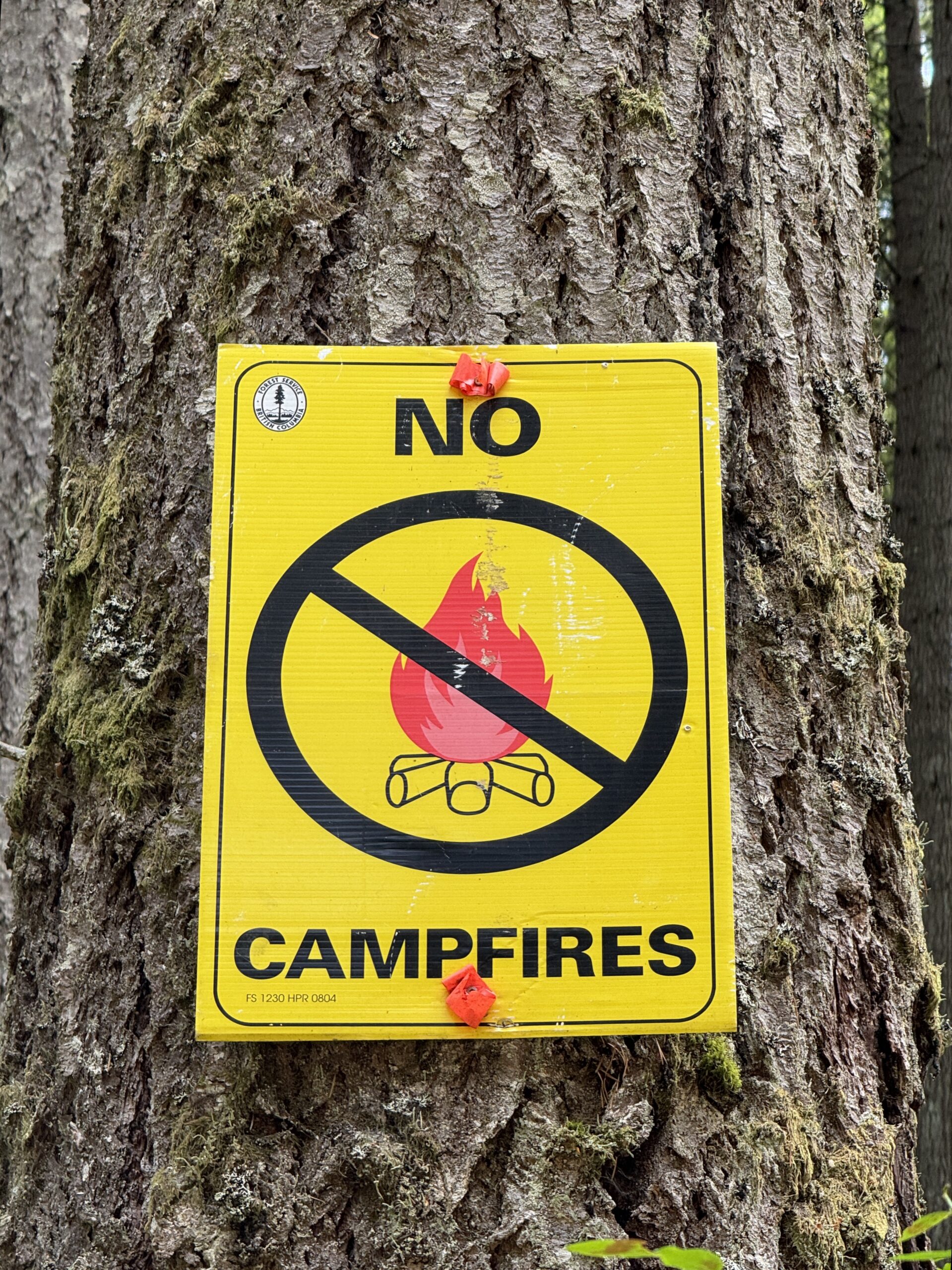
Campfire ban goes into effect this week throughout B.C. coastal region

Nanaimo News Bulletin
July 15, 2025
Category: Forestry
Region: Canada West

The Coastal Fire Centre will put a campfire ban into effect this week.  The ban will be in place starting at noon on Thursday, July 17, noted a Coastal Fire Centre information bulletin issued Tuesday, July 15. Campfires will be prohibited on Vancouver Island and throughout the Coastal Fire Centre region with the exception of Haida Gwaii and the portion of the Central Coast Regional District within the North Island Central Forest District. Existing open fire prohibitions in the Coastal Fire Centre’s jurisdiction enacted May 30 will remain in place, and fireworks and burn barrels are restricted in most areas. “Open fire is the largest cause of human-caused fires provincially,” noted the information bulletin. “Human-caused wildfires are entirely preventable and may divert crucial resources from naturally occurring and/or existing wildfires.” The campfire ban and previous burning bans will be in place until Oct. 31 or until the orders are rescinded.

Read More

Fears of a massive fish die-off in Cowichan River if conditions don’t improve

By Michael John Lo
The Peak
July 15, 2025
Category: Forestry
Region: Canada, Canada West

Warm temperatures, low river flows and declining water quality are sparking fears of another mass fish die-off in the Cowichan River this summer. The Cowichan Watershed Board said river conditions this summer “mirror” those of 2023, when an estimated 84,000 to 100,000-plus fish died after prolonged drought and heat. Samples recently collected from six points along the Cowichan River show the water is seeing significant daily fluctuations in pH and dissolved oxygen levels similar to those of 2023. …Weir flows were reduced this spring so more water could be maintained in the summer. Researchers are also looking to identify, protect and improve cold-water refuge areas along the river that could provide fish a respite from the heat when waters warm. …Built in the 1950s to provide water for the pulp mill at Crofton, the Cowichan weir is owned and operated by Domtar.

Read More

The Digital Forester – Domenico Iannidinardo & Aaron Fujikawa, SNRgroup

By Kevin Lim, CEO, Remsoft
The Digital Forester
July 15, 2025
Category: Forestry
Region: Canada West

Domenico Iannidinardo, CEO, and Aaron Fujikawa, Director of Remote Sensing & Geomatics at Strategic Natural Resource Group, join us on The Digital Forester podcast. Domenico and Aaron share how their very different paths — one rooted in traditional forestry, the other in GIS and tech — led them to Strategic Natural Resource Group, a company at the intersection of boots-on-the-ground operations and cutting-edge digital forestry. From firefighting to LiDAR, and field data collection to building digital twins, this episode highlights how Strategic is helping clients navigate uncertainty with speed, precision, and deep local knowledge. Come have a listen to how a field-first culture, Indigenous ownership, and relentless curiosity are shaping the future of resource management in British Columbia and beyond.

Read More

Vancouver tech firm aims to help forests bounce back stronger after wildfires

By Daisy Xiong
Business in Vancouver
July 14, 2025
Category: Forestry
Region: Canada, Canada West

With the wildfire season intensifying in recent years, post-wildfire restoration has become increasingly critical. A Vancouver tech company drawing investor attention says it has an answer for not only replanting trees, but helping to rebuild forests that are more resilient to future fires. Veritree Technology Inc. is a platform that uses ecological data and monitoring tools to support tree planting, tracking and reporting. “Today, areas that historically wouldn’t have burned from wildfires are actually burning much hotter. At times, that burns the seed stock that would otherwise naturally regenerate after a wildfire,” said Derrick Emsley, CEO and co-founder of Veritree. He said that without intervention, deciduous species could grow back fast, crowding out the chance for a mature, healthy natural forest to regenerate, which leaves the area more vulnerable to wildfires in the future.

Read More

North Cowichan mayor meets with counterparts to promote BC lumber

By Justin Baumgardner
My Cowichan Valley Now
July 14, 2025
Category: Forestry
Region: Canada, Canada West

Even as the curtailment at the Chemainus Sawmill continues, North Cowichan’s mayor says the municipality is looking to strengthen the local economy by supporting good jobs. According to Rob Douglas, a meeting between MP Jeff Kibble and senior members of Western Forest Products was conducted to determine the best avenue to strengthen the local industry and protect good, local, family-supporting jobs in the region. Douglas says the industry is not in the municipality’s jurisdiction, but all levels of government have an important role to play in establishing a new agreement to grow the economy. “While forestry policy largely falls under provincial jurisdiction, the federal government has a critical role to play, whether through negotiating a renewed softwood lumber agreement with the United States, or by ensuring that lumber produced in BC is prioritized in Canada,” he says.

Read More

BC Forest Practices Board to audit forestry operations near Merritt

BC Forest Practices Board
July 14, 2025
Category: Forestry
Region: Canada, Canada West

VICTORIA – The Forest Practices Board will conduct a full-scope compliance audit of B.C. Timber Sales and Timber Sale Licence holders in the Cascades Natural Resource District, starting Monday, July 21, 2025. The audit will examine harvesting, roads, silviculture and associated planning under the Forest and Range Practices Act and the Wildfire Act. B.C. Timber Sales and licensees operate throughout the district, from the American border south of Princeton to the Chilcotin ranges north of Lillooet. Once the audit is complete, a report will be prepared. Any party that may be adversely affected by the audit findings will have a chance to respond. The board’s final report and recommendations will be released to the public and provincial government. The Cascades Natural Resource District includes the Cascade mountains and the Thompson Plateau. This district transitions from coastal to continental climates. 

Read More

How a tree-killing beetle chose wrong human to fly into, revealing presence in B.C.

By Brenna Owen
The Canadian Press in the Vancouver Sun
July 13, 2025
Category: Forestry
Region: Canada, Canada West

The tiny beetle could scarcely have picked a worse human to fly into. Amateur entomologist Andrew Short was sitting on a bench in downtown Vancouver in June 2023 when the unfamiliar metallic green beetle hit him and fell to the ground. He said he “needed to know what it was,” so he captured it, took it home to photograph, and later handed it over to authorities — who confirmed the insect to be the first emerald ash borer collected in Canada west of Manitoba. Short’s fortuitous encounter set in motion a chain reaction of research aimed at understanding and clamping down on the pest that has devastated ash forests across North America, killing millions of trees in Canada and the United States. …Short makes a hobby of searching for insects and plants, examining how they interact and photographing them. …The findings in Vancouver suggest there may be other undetected populations in western North America, the study says.

Read More

Nearly one-third of forests in northeast B.C. could burn by year’s end: province

By Shaurya Kshatri
CBC News
July 13, 2025
Category: Forestry
Region: Canada, Canada West

©Govt of BC

Nearly 30 per cent of the forested land base in the Prince George Fire Centre, which covers B.C.’s northeast, is likely to burn by the end of this year, according to the province. Forest Minister Ravi Parmar says the region has already seen nearly 7,000 square kilometres burned by wildfires since June. That’s by far the most of any of B.C.’s six fire centres, with the second highest being the Northwest Fire Centre, where just under 40 square kilometres have burned. …Over the past two fire seasons the province says wildfires have burned more forest area in the region than in the previous 60 years combined, for a total of 10 per cent of the region’s land are. … region has witnessed some of the province’s most destructive wildfires, including the 2023 Donnie Creek wildfire, the largest recorded in B.C.’s history.

Read More

UBC Faculty of Forestry 2025 Fall Micro-Certificate Programs

By Faculty of Forestry
The University of British Columbia
July 14, 2025
Category: Forestry
Region: Canada West

Registration is now open for UBC Forestry’s Fall 2025 online micro-certificate programs. Designed for flexible learning and career growth, these short programs—taught by industry experts—help you build specialized skills in nine weeks or less and earn digital badges to showcase your expertise. Program themes include Natural Resource Management, Bioeconomy and Mass Timber Building. Eligible British Columbia residents can take advantage of the StrongerBC future skills grant which provides up to $3,500 for most of our micro-certificate programs.

Read More

Forest company outlines operations for qathet Regional District

By Paul Galinski
The Powell River Peak
July 12, 2025
Category: Forestry
Region: Canada West

Jimmie Hodgson

Mosaic Forest Management provided qathet Regional District directors with an update on the company’s activities. At the July 9 committee of the whole meeting, Mosaic land user forester Colin Koszman and vice-president sustainability and chief forester Jimmie Hodgson outlined what the company has been doing… Hodgson said the company is 100 per cent Canadian owned. “We’re managing lands primarily on Vancouver Island, with some on the Sunshine Coast, from Victoria to Haida Gwaii,” said Hodgson. “We’ve been managing these properties for a long time. We’re looking to build long-term relationships with all the communities we work in and around. …Koszman said Mosaic does professional assessment on all its lands… Locally, Koszman said Mosaic has supported organizations such as Powell River Junior Forest Wardens, Powell River Salmon Society, Powell River Logger Sports, Lund fire hall, the Sunshine Coast Trail and Powell River Search and Rescue.

Read More

‘The first machine of its kind’: Campbell River manufacturer creates first hybrid electric logging yarder

By Andy Garland
CTV News
July 11, 2025
Category: Forestry
Region: Canada West

T-Mar Industries Ltd, a Campbell River based manufacturer that specializes in building machines for the forestry industry, has developed the first ever hybrid electric logging yarder. “This is the first machine of its kind anywhere,” says Tyson Lambert, VP of T-Mar Industries Ltd. …Called the 7280E Hybrid Electric Drive Yarder, it has taken T-Mar five years to develop and uses electric drives that share power back and forth like a hybrid vehicle. “(It’s) very different from a traditional machine where it’s all mechanically linked and gears and clutches have to engage to make everything work,’ says Philip Biebach, mechanical engineer for T-Mar Industries Ltd. According to T-Mar, the 7280E is more powerful, easier to run, better on fuel, and requires less maintenance than a typical yarder. It will also reduce the carbon footprint in the forest by using less fuel and reducing emissions, the company says.

Read More

UBC Forestry recruiting Canada Excellence Research Chair – Natural Resources Governance

By Faculty of Forestry
University of British Columbia
July 14, 2025
Category: Forestry
Region: Canada West

The Department of Forest Resources Management, Faculty of Forestry, at the University of British Columbia (UBC) Vancouver campus is recruiting an outstanding researcher in Natural Resources Governance. The successful candidate is expected to be eligible for a full-time appointment at UBC at the rank of Professor, or the rank of Associate Professor… The successful appointee will be nominated for a Canada Excellence Research Chair (CERC). …The appointment presents a unique opportunity for leading research focused on developing, implementing, and maintaining a research program in natural resources governance capable of advancing multiple sustainable development priorities. …As a faculty member and CERC holder, the successful candidate will be expected to lead a strong, externally–funded research program, supervise postdoctoral fellows and graduate students, teach undergraduate and graduate courses, collaborate with other faculty members, and actively participate in service to the Department, University, and academic/scientific community.

Read More

New habitat-protection measures support caribou in northeastern B.C.

By Ministry of Water, Land and Resource Stewardship
Government of British Columbia
July 11, 2025
Category: Forestry
Region: Canada West

The B.C. government, Fort Nelson First Nation and the B.C. Energy Regulator (BCER) are working collaboratively to implement new protection measures to support boreal caribou recovery in northeastern B.C. “Helping caribou populations recover is a complex challenge requiring multiple approaches to stabilize and reverse the decline of herds in B.C.,” said Randene Neill, Minister of Water, Land and Resource Stewardship. “The Boreal Caribou Protection and Recovery Plan and the implementation of the new measures are crucial for caribou-recovery efforts in these four northeast ranges. The Fort Nelson First Nation community continues to be an integral partner in this important work.” …The Boreal Caribou Protection and Recovery Plan was co-developed by the B.C. government and Fort Nelson First Nation, with contributions from the Northern Rockies Regional Municipality. The plan is designed to meet federal and provincial targets for species-at-risk recovery, while supporting opportunities to strengthen the natural-resource economy in the region.

Read More

First Nations protest unauthorized timber sale on unceded territory, ministry responds

By Tyson Whitney
North Island Gazette
July 10, 2025
Category: Forestry
Region: Canada West

The Gwa’sala-‘Nakwaxda’xw First Nations (GNN) held a protest outside of the Ministry of Forests office in Port McNeill on July 7. The Nations noted in a media release the protest was in direct response to Interfor Corporation’s attempt to “sell timber harvesting rights within GNN’s unceded Traditional Territory—without GNN’s consent, participation, or recognition of its rights and interests.” “In 1964, the Gwa’sala and ‘Nakwaxda’xw peoples were forcibly removed from their ancestral homelands along the central coast of British Columbia. Displaced by federal policy and relocated to Port Hardy, our communities endured cultural disruption, disconnection from our lands, and inter-generational trauma that still lingers today. Now, more than 60 years later, we face a renewed form of dispossession, this time through economic exclusion.” …GNN noted they are calling on Interfor and the Province of British Columbia to: Immediately halt all timber tenure transfers that ignore Indigenous governance and ecological realities…

Read More

What’s with the white stuff? Why the Northwest Territories has so much tree fluff this summer

By Natalie Pressman
CBC News
July 9, 2025
Category: Forestry
Region: Canada West

Floating fluff? Summer snow? Cotton balls? If you’ve been noticing more of that white stuff floating around the N.W.T. this summer, you’re not alone. “One thing I noticed is a buildup of that stuff in my yard,” Yellowknifer Justin Grandjambe said. “When it’s windy it kind of gathers in corners and stuff … almost looks like a little bit of snow.” Turns out, that fluff is from trees dispelling their seeds. It’s a stress response from the poplars, aspen and willows reacting to the dry conditions from the past few years, according to the N.W.T.’s department of Environment and Climate Change (ECC). Within each fluff ball is a bunch of tiny seeds. The department’s experts couldn’t say how much more “fluff” there is this year compared to other years. That’s something that might also vary depending on where in the territory you’re looking.

Read More

Why are forest fires getting more frequent, intense in northern Ontario?

By Faith Greco
CBC News
July 21, 2025
Category: Forestry
Region: Canada, Canada East

As wildfires become more frequent and intense across Canada, fire officials are seeing stark differences between northwestern and northeastern Ontario. They say it all comes down to what’s burning, how it burns, and where. More than 2.2 million hectares have burned in Ontario’s northwest since 2015, compared with around 287,000 hectares in the northeast. “The three things that we need to consider are the weather, the fuels and the topography,” said Chelene Hanes, a wildland fire research scientist at the Great Lakes Forestry Centre in Sault Ste. Marie. Northwestern Ontario typically gets a minimal amount of rain, whereas the northeast has a wetter climate and vast peatlands, she explained. …”On the [northwest] side of the province, and moving into the prairies, they’ve experienced a bit more drought, which is influencing the moisture of the fuels. So that is causing more ignitions to happen as well, because it’s drier,” Hanes said.

Read More

Canada Partners With Trees For Life to Grow Southern Ontario’s Urban and Suburban Canopy

Natural Resources Canada
July 17, 2025
Category: Forestry
Region: Canada, Canada East

WHITBY, Ontario — Ryan Turnbull, Parliamentary Secretary to the Minister of Finance… highlighted a $4-million federal investment for tree-planting projects in urban and suburban areas in southern Ontario. Trees For Life will collaborate with planting partners to plant an average of 24,000 trees annually over five years, for a total of 120,000 trees in communities across southern Ontario. The collaboration with Trees For Life is already ahead of target, supporting the planting of 83,000 trees in southern Ontario with 35,000 trees planted in 2024 and 48,000 trees planted across 40 projects in 2025 to date. This project builds on a successful regional model piloted in the Durham Region. 

Read More

What Nova Scotians are on the hook for as Northern Pulp winds down

By Aaron Beswick
The Chronicle Herald
July 16, 2025
Category: Forestry
Region: Canada, Canada East

With the announcement that there won’t be a new kraft pulp mill being built in Liverpool, the long and expensive Northern Pulp saga begins winding down. Here’s the little we know about what Northern Pulp and its associated companies are worth, who’s likely to get paid and what the taxpayer might be on the hook for. When it filed for creditor protection in 2020, Northern Pulp estimated it had $254 million in assets and $311,019,464 in liabilities. But half of those assets – what it estimated as $130 million worth of equipment and land associated with a cold-idled pulp mill at Abercrombie Point – comes with a large and undetermined liability for whoever gets stuck with the cleanup costs. How much the taxpayer ends up on the hook both for unpaid loans to Northern Pulp and cleanup of the mill site will rely on how much gets paid for the companies’ assets.

Read More

Logging in Ontario’s boreal forest is ‘far in excess of what’s sustainable,’ study finds

By Fatima Syed
The Narwhal
July 17, 2025
Category: Forestry
Region: Canada, Canada East

A new peer-reviewed scientific study [Emulation or Degradation? Evaluating Forest Management Outcomes in Boreal Northeastern Ontario, by Jay Malcolm (University of Toronto), Julee Boan (Natural Resources Defense Council) & Justina Ray (Wildlife Conservation Society Canada)] suggests logging practices in Ontario are unsustainable and out of line with the province’s own strategy for sustainably managing forests. David Flood, a registered professional forester, has long thought Ontario was permitting too many trees to be cut down. Flood is from Matachewan First Nation in northeastern Ontario, home to much of the province’s boreal forest. Flood’s community has watched as forests became smaller and more sparse over time, threatening the natural habitat for caribou and martens. Flood is the general manager for Wahkohtowin Development, a decade-old social enterprise held by three First Nations — Chapleau Cree, Missanabie Cree and Brunswick House — to strengthen Indigenous participation in forest and land management across their territories. 

Read More

Hydro-Québec using AI to reduce power outages caused by trees

By Charlotte Lepage
CBC News
July 9, 2025
Category: Forestry
Region: Canada, Canada East

Montreal’s tree-lined streets are one of the city’s greatest assets — they clean the air, add bursts of green to the scenery and help push the concrete background. But when storms hit, those trees clash with the urban landscape and are a major cause of power outages. That’s why Hydro-Québec is now using new technologies to find a way for trees to coexist with its power lines. “We’re trying to make a digital twin of the network to see if there are interactions between the tree and the network,” said Étienne Langdeau, director of vegetation management for Hydro-Québec. Artificial intelligence then measures the trees before and after a weather event, like a windstorm, to see which branches broke. The algorithm uses this information to get better at predicting which branches are most likely to snap. In turn, technicians can preemptively cut these branches before they become a problem.

Read More

The Longleaf Alliance seeks areas to harvest pine cone crops

By Jennifer Allen
Coastal Review – North Carolina Coastal Federation
July 18, 2025
Category: Forestry
Region: United States

©NC Forest Service

The U.S. Forest Service estimates that the cone crop for longleaf pines in the Southeast will be “poor for 2025,” according to the “Longleaf Pine Cone Prospects for 2025”. Because of the anticipated seed shortage … the Longleaf Alliance is scouting for locations to harvest in the fall. Based on observations collected earlier this year … researchers estimate the average for seed-producing cones is 12.4 per tree this fall. The study …defines a good crop as 50 to 99 green cones per tree, a fair crop as 25 to 49, poor as 10 to 24, and a failed crop as less than 10 seed-bearing cones per tree. Once plentiful, the longleaf pine could be found on an estimated 90 million acres in the coastal plains between southeast Virginia to eastern Texas. … [but] demand grew exponentially when the turpentine industry took off, nearly stripping the ecosystem of the native pine. Today, its estimated that there’s around 5 million acres remaining. 

Read More

Man’s best friend could be the spotted lanternfly’s worst enemy

By Virginia Tech
EurekAlert!
July 16, 2025
Category: Forestry
Region: United States

©Clark DeHart for Virginia Tech

Imagine if your dog’s favorite game — sniffing out treats or toys — could help protect America’s vineyards, orchards, and forests from a devastating invader.  It turns out, it just might. A new study led by Virginia Tech found that volunteer dog-handler teams — made up of everyday people and their pets — can effectively detect the elusive egg masses of the spotted lanternfly, an invasive insect that’s damaging farms and forests across the eastern and central United States. It’s the first study to show that citizen dog-handler teams can achieve detection success rates comparable to professional conservation detection dogs. “These teams demonstrated that citizen scientists and their dogs can play a meaningful role in protecting agriculture and the environment from invasive species,” said Sally Dickinson, the study’s lead author. “With proper training, dog owners can turn their pets into powerful partners for conservation.” 

Read More

Big Billionaire Bill Will Lead to Bigger Fire Risks

By Matt Sedler
Center for Economic and Policy Research
July 15, 2025
Category: Forestry
Region: United States

You could be forgiven for not reading the entirety of the GOP’s massive One Big Bill for Billionaires that Trump just signed into law. Yet right at the beginning of the table of contents is “Subtitle B — Forestry,” which might give the impression that the GOP is serious about investing in wildfire prevention and forest restoration. Instead, the new law strips critical funding that had been appropriated to the National Forest System under the Inflation Reduction Act. Contrary to Trump’s stated goal of preventing wildfires, two sections within the Big Billionaire Bill will, in fact, exacerbate the risk of fires across the US. …Trump’s plan is simple, but the pieces of the puzzle are spread across different bills, laws, agency processes, and executive orders to obfuscate the overall intent: Cut the funding to protect the forests, open the areas for development, and then eliminate the environmental reviews. 

Read More

Trump administration wants to increase logging on federal land to reduce fire risks. Not everyone agrees.

By Seiji Yamashita
CBS News
July 10, 2025
Category: Forestry
Region: United States

OREGON — Jeff Brink takes pride in working on the same land his father did, in the national forests surrounding Oakridge, Oregon. But in the decades since, less and less timber has been harvested, and more and more megafires have threatened his hometown. “There needs to be some active management, because no management has given us this result,” he said. When the Trump administration announced executive actions aimed at increasing timber production on federal lands, Oregonians had mixed responses. Loggers and timber towns celebrated the attention, while environmentalists sounded the alarm over fears of deregulation and environmental harm. Local stakeholders wonder what forest management will look like in practice. …The timber industry and environmentalists still have questions as to the actual implementation of policy and changes in practices by federal agencies. Oregon Wild is one of many environmental groups that believe the new executive actions threaten landmark environmental laws.

Read More

Chairman Lee Applauds Repeal of Roadless Rule in Forest Budget Hearing

U.S. Senate Committee on Energy and Natural Resources
July 10, 2025
Category: Forestry
Region: United States

Mike Lee

WASHINGTON –Senator Mike Lee (R-UT), Chairman of the Senate Committee on Energy and Natural Resources, convened a hearing today to examine the President’s FY26 budget request for the U.S. Forest Service. A major focus of the hearing was the recent announcement of the repeal of the 2001 Roadless Rule—a long-overdue decision that Senator Lee praised as a victory for forest health, wildfire prevention, and timber harvesting. “The Roadless Rule prohibited road construction and timber harvesting on nearly 59 million acres of national forest land, including 60% of Forest Service land in Utah,” said Chairman Lee. “While its intent may have been to preserve the environment, its actual impact has been an environmental disaster.” Senator Lee pressed Forest Service Chief Schultz on the decades-long effects of the rule, asking whether it helps or hinders wildfire mitigation efforts. He also asked what the repeal would mean for timber harvesting and active land management going forward.

Read More

US Senate Dems from Western states blast Trump budget for cutting federal aid

By Jacob Fischler
Lansing City Pulse
July 10, 2025
Category: Forestry
Region: United States

Members of the U.S. Senate Energy and Natural Resources Committee differed along party lines at a Thursday hearing about how the U.S. Forest Service should partner with states and how the federal wildfire response should be organized. Senators of both parties emphasized the importance of working with state forest managers. But while Republicans praised the efforts of Forest Service Chief Tom Schultz … to reach out to state governments, Democrats noted that President Trump’s budget request for fiscal 2026 proposed eliminating a key program for state and tribal partnerships. Democrats on the panel also raised a series of questions about the still-unfinished Forest Service budget request as the next fiscal year approaches in less than three months. Schultz told the senators the budget proposal was not yet final, but confirmed the agency was telling states to prepare for zero dollars in discretionary spending for the State, Private, and Tribal Forestry program in fiscal 2026.

Read More

US Forest Service to cut $391M

By Andrew Rice
The Center Square
July 10, 2025
Category: Forestry
Region: United States

The U.S. Forest Services plans to cut its budget by $391 million for fiscal year 2026, according to a proposed budget request. A large portion of the cuts to the forest services budget are expected to be implemented into the new U.S. Wildland Fire Service within the Department of the Interior. Tom Shultz, chief of the U.S. Forest Service, laid out plans to integrate fire service operations within the department and highlighted its focus on a “back-to-basics approach” at a Senate Energy and Natural Resources hearing on Thursday. “The fiscal year 2026 President’s budget refocuses forest service efforts on active forest management, critical minerals permitting, recreation [and] energy development,” Shultz said. Some senators on the committee criticized the forest service’s plans to consolidate fire operations in the Department of Interior.

Read More

Going digital – Brushing paint aside for digital tree-marking methods

By Elizabeth Munding
USDA US Forest Service
July 9, 2025
Category: Forestry
Region: United States

With a paint can in hand, a forester walks step by step through the dense Arizona ponderosa pine forest, marking trees with distinctive orange streaks. The forester is part of a timber-marking crew assessing if each tree should stay or go during harvest, per a prescription from the Forest Service silviculturist. Trees to remain receive the orange marking; the others will be harvested. Timber-marking crews cover thousands of acres of Forest Service lands each year, prepping critical thinning projects to reduce the number of trees and move forest lands toward a condition less vulnerable to catastrophic wildfire. With this laborious operation, many began to ask: Couldn’t there be a more efficient way of marking trees?

Read More

Agreement Reached to Preserve Mature Ponderosa Pines in Southwest Colorado

The Center for Biological Diversity
July 18, 2025
Category: Forestry
Region: US West

DOLORES, Colo.— Forest health advocates have finalized an agreement with the U.S. Forest Service that will preserve tens of thousands of the largest, oldest ponderosa pine trees in Colorado’s San Juan National Forest. “Large, mature trees are critical for climate resilience, habitat and forest health” said John Rader, public lands program director for the San Juan Citizens Alliance. “We are pleased to reach a common-sense agreement that helps safeguard our forests from climate change and biodiversity loss.” In June 2023 San Juan Citizens Alliance and the Center for Biological Diversity sued the Forest Service in federal court over its approval of a nearly 23,000-acre timber project in the Dolores District of the San Juan National Forest. The project area is a watershed for the Dolores River and provides important habitat for elk, mule deer and raptor, including imperiled goshawks. It was extensively logged throughout the 1900s, and few mature ponderosa pines remain.

Read More

Wildfire that consumed North Rim ignites tragic debate

By Peterr Aleshire
Payson Roundup
July 17, 2025
Category: Forestry
Region: United States, US West

©NationalParkService

ARIZONA — The dawning debate about the wildfire that jumped containment lines and destroyed the iconic, Grand Canyon Lodge underscores the trap that has frozen forest management efforts for half a century. The slow-moving Dragon Bravo fire sudden flared into a monster illustrates the extreme difficulty of restoring forest health after a century of clear cutting. …The National Park Service initially released reassuring bulletins suggesting fire crews would develop fire lines to contain the fire. …Then everything changed, as winds gusting to 40 miles an hour ushered in stormfronts. By July 12, the Dragon Fire had jumped containment lines. …The pattern Is all too familiar to fire ecology experts like ASU professor Stephen Pyne. He argues that… all-out fire suppression had increased tree densities across millions of acres of Northern Arizona from about 50 per acre to more like 1,000 per acre. …Moreover, construction of homes and towns in the most fire-prone landscapes has exploded.

Read More

New tool sheds light on California wildfires

By Roseann Cattani
The Record Searchlight
July 16, 2025
Category: Forestry
Region: United States, US West

A new tool sheds light on the impact of wildfires across California. The California Vegetation Burn Severity Online Viewer, launched by CAL FIRE’s Fire and Resource Assessment Program (FRAP), is an interactive public mapping tool that people can use to see where wildfires have impacted vegetation. The online tool displays burn severity data for all wildfires over 1,000 acres in California from 2015 to 2023. CAL Fire says the tool enables post-recovery planning and makes the information easily accessible to landowners, planners, scientists, and the general public. “This tool helps Californians see and understand how fire affects our landscapes,” said Chris Keithley, Assistant Deputy Director for FRAP. “It gives communities data to support efforts to plan prescribed burns, guide restoration work, and reduce future wildfire risk.”

Read More

Kotek declares state of emergency in Oregon due to imminent threat of wildfire

By Zack Urness
The Statesman Journal
July 16, 2025
Category: Forestry
Region: United States, US West

@USDA

Gov. Tina Kotek declared a state of emergency in Oregon on July 16 that will last through the end of the year due to the imminent threat of wildfire. Multiple large wildfires have already exploded this year, largely east of the Cascade Range, including the growing Cram Fire, which roared to more than 60,000 acres by July 16 and is spreading smoke across central Oregon. The Rowena Fire burned 63 homes in The Dalles in June. “Oregon is already experiencing a devastating wildfire season that will have lasting consequences. The summer is only getting hotter, drier, and more dangerous – we have to be prepared for worsening conditions,” Kotek said in a news release. Oregon’s wildfire danger is forecast to remain above normal through summer — remaining high in every part of the state in July, August and September — the first time in recent history that’s happened.

Read More

Trump’s big bill calls for much more logging

By Jamie Hale
The Chronicle
July 16, 2025
Category: Forestry
Region: United States, US West

New federal laws could “lock up” timber land for decades at a time, raising concerns big companies could elbow out smaller competitors and that timber revenue for counties could be delayed for years. President Donald Trump’s tax cuts and spending bill, which he signed into law earlier this month, increases the length of federal logging contracts to a minimum of 20 years. The contracts, which determine how long a logging company has to harvest on the land under contract, have typically averaged three to four years, and the longest contracts extended up to 10 years. The concern raised by a coalition of timber companies and local governments is that companies could sign long-term contracts, then wait years to harvest trees. “If the timber volume is tied up in these 20 year contracts,” Doug Robertson, executive director of the Association of O&C counties, said, “that volume then is no longer available to generate revenue for the counties and the state.”

Read More

Oregon forestry board drills Gov. Tina Kotek’s staff on choosing next state forester

By April Ehrlich
Oregon Public Broadcasting
July 16, 2025
Category: Forestry
Region: US West

Oregon’s forestry board has long had the power to hire and fire the state forester, who oversees logging and environmental protections on state lands, as well as firefighting across millions of acres of public and private land. But the board lost that hiring-and-firing power this session with Senate Bill 1051, which handed it over to the governor. This bill has left many forestry board members wondering how much authority they still have. “Right now, after the passage of this senate bill, I have very little reason to trust your office,” vice chair Brenda McComb told members of Gov. Tina Kotek’s staff at the board’s Wednesday meeting. There’s a lot riding on forest management in Oregon. Revenues raised from logging trees on state lands help fund rural schools and some county budgets. Timber sales are also a key revenue source for the Oregon Department of Forestry, which fights fires on about 12 million acres of private land.

Read More

Research shows aspen forests slow wildfire spread

Colorado State University
July 15, 2025
Category: Forestry
Region: United States, US West

©Jonathan Coop

A new study from Colorado State University, Western Colorado University and the U.S. Forest Service found evidence that stands of aspen trees could resist wildfires by slowing a fire’s advance or changing its course. The researchers found that even modest increases in aspen cover dramatically reduced the rate at which fires spread. Their findings suggest that aspen forests can act as natural firebreaks, which is valuable information for land managers and agencies. “Where managers can encourage aspen over conifers, they may represent a more desirable fuel treatment in some forest types than traditional thinning or shaded firebreaks because of the aesthetic value and wildlife habitat aspen provide,” said Camille Stevens-Rumann, study principal investigator and interim director of the Colorado Forest Restoration Institute at CSU. Fires in areas with vegetation composed of at least 25% aspen spread at about a third the rate of fires in forests with less than 10% aspen trees.

Read More

Experimental forest in Idaho can’t maintain all its science during Trump freeze

By Michael Wright
Idaho Statesman
July 15, 2025
Category: Forestry
Region: United States, US West

Each day, as afternoon turns into evening, the U.S. Forest Service research staffer based at the experimental forest there walks over to the weather station next to the office and looks at two thermometers — one showing the day’s maximum temperature, the other showing the minimum. They record the readings and add them to the station’s long-term dataset, which stretches back to 1913. …And the U.S. Forest Service, which manages the site, can’t fill the role permanently because of the federal government’s continued hiring freeze, which has been extended to October. …But there will be no full-time research staff there, forcing the discontinuation of a handful of long-term data collection efforts — such as the daily weather readings, regular streamflow monitoring and a weekly acid rain sample that’s part of the National Atmospheric Deposition Program.

Read More

Oregon Department of State Lands gets new leader in scientist and lawyer Kaitlin Lovell

Oregon Public Broadcasting
July 14, 2025
Category: Forestry
Region: United States, US West

Kaitlin Lovell

A lawyer, scientist and former manager at the Portland Bureau of Environmental Services will become the new director of the Department of State Lands. Kaitlin Lovell of Colton, Oregon, begins her four-year term as the agency’s leader in early August. She’ll be in charge of managing more than 130 staff in Bend and Salem, a budget of more than $116 million, and roughly 680,000 acres of state-owned land. …The agency is in charge of managing the state’s agricultural, industrial and residential lands for conservation, development and revenue generation for the benefit of Oregon’s public schools. The agency also administers mineral and energy rights on more than 768,500 acres statewide. …Lovell spent most of the last 18 years working for Portland’s environmental services and regulatory agency, and was most recently its Regulatory Strategy Manager, in charge of financial planning for its wastewater and stormwater management services.

See Government Press Release

Read More

Colorado politicians introduce legislation to support forest and grassland restoration

By Abby Smith
KRDO News
July 15, 2025
Category: Forestry
Region: United States, US West

WASHINGTON, D.C. — Colorado Senator Michael Bennet and Representative Joe Neguse, along with other politicians, introduced the Joint Chiefs Reauthorization Act. This legislation would reauthorize the program to better support forest and grassland restoration projects on both public and private lands. “Our Western forests, grasslands, and watersheds are as important to our economy as the Lincoln Tunnel is to New York, but they are under threat from a changing climate and consistent federal underinvestment,” said Bennet. …Bennet mentioned that strengthening the program will ensure that restoring landscapes, protecting water supplies, and reducing wildfire risks can continue for future generations. “Western and Northern Colorado are all too familiar with the increasing frequency and intensity of wildfires,” said Neguse.

Read More

Could Trump’s tariffs bring back the Pacific Northwest lumberjack?

By Joshua McNichols
KUOW News and Information
July 16, 2025
Category: Forestry
Region: United States, US West

Could President Donald Trump’s strategies help revive Washington’s diminished timber industry? For nearly a century, Washington’s timber industry produced everything from paper and two-by-fours to the massive wood beams that hold up the Tacoma Dome. Lumber mills were the backbone of logging towns throughout the Northwest. But the industry has been on a long decline since the 1990s. Now, Trump wants to reduce foreign competition and increase US logging to bring back those jobs. To find out whether it could work, KUOW visited a sawmill in Morton, a small town in the foothills of Mount Rainier. …Today, the state has about 100,000 timber-related jobs, including mills. That means Washington has lost about a quarter of its timber jobs in the last thirty years. The loss has been devastating to rural communities built around those sawmills, like Morton, Washington. …The Hampton Mill is still the economic heart of the community today. It’s survived the waves of closures over the years.

Read More

Eastern Oregon’s ancient trees face alarming decline, study finds

By Bobby Corser
KATU News
July 14, 2025
Category: Forestry
Region: United States, US West

A new analysis reveals that many of Eastern Oregon’s ancient trees are dying at an alarming rate. The study, conducted by a team led by James Johnston, an assistant research professor at the University of Oregon, found that between 2012 and 2023, a quarter of trees over 300 years old in roadless areas of the Malheur National Forest had died. Johnston attributed the decline to a combination of drought, insect infestations, and competition with younger trees. “It’s sad to see so many old trees dying,” Johnston said. He emphasized the need for active management to protect these ancient trees, particularly in the dry forests of Eastern and Southern Oregon. The study, published in the journal Forest Ecology and Management, highlights the importance of old-growth trees, which store carbon, provide critical habitat, and help maintain water quality. Johnston’s research, which began a decade ago, involved taking core samples from old-growth trees in unlogged sections of the forest.

Read More

Oregon’s Forestry and Logging Industry: From Planting to Harvest

By Brian Rooney
The Newport News Times
July 14, 2025
Category: Forestry
Region: United States, US West

Forests cover more than 30 million of Oregon’s 62 million acres – almost half of the state’s landmass. According to the Oregon Employment Department’s covered employment statistics, forestry and logging’s 681 establishments employed 8,787 workers statewide and added $717 million in payroll to Oregon’s economy in 2024. The Oregon Department of Forestry (ODF) estimates logging harvests totaled 3.6 billion board feet in 2022. While much of this timber feeds Oregon’s wood products industry, creating jobs and income, many jobs are also created planting, growing, and harvesting this resource. …The high level of forestry activity in Oregon also creates demand for a support activities industry. …Employment Department projections show that the logging industry in Oregon is expected to lose about 200 jobs, or 5% between 2023 and 2033 partly due to continued mechanization. Other industries within timber production, such as timber tract operations and support activities for forestry do not have published Oregon Employment Department forecasts.

Read More

Forest management is key to supporting the struggling Black Hills timber industry

By Ariana Schumacher
Doransfarmers.com
July 14, 2025
Category: Forestry
Region: United States, US West

SPEARFISH, South Dakota — The Black Hills of South Dakota and Wyoming are not only a beautiful tourist destination but also a major part of the agricultural industry. Many are working to maintain the important role of forest management as a way of supporting agriculture, economies and public health. Jeremy Dedic, forest partnership coordinator for Wyoming State Forestry said, “It’s not like we’re growing corn, but it’s growing plants, and we can manage that and get our results,” Dedic said. …“Most recently, we’ve had some of our larger operators having to scale back their operations,” said Marcus Warnke, state forester for South Dakota. …“Thinning our forest, giving our trees space so that they have enough water, sunlight and nutrients to be healthy and resilient to fire and bugs,” Pierson said. “Those activities produce logs that we bring to our sawmills and make boards out of for public sale.”

Read More

Resources for Oregon firefighters have restrained early-season wildfires but may not last long

By Tarek Anthony
Oregon Public Broadcasting
July 11, 2025
Category: Forestry
Region: United States, US West

Fire season started early in the Northwest. The Rowena fire sparked in early June near The Dalles and destroyed 56 homes in a matter of days. Since then, as dry thunderstorms and lightning continue to start hundreds of wildfires across the state, the Oregon Department of Forestry and Bureau of Land Management say they have been able to stop most fires before they spread. But as the season intensifies nationwide, they are concerned about competition with other Western states for resources like air tankers. …While an aggressive “initial attack” approach is nothing new, Assistant State Fire Management Officer for the Oregon and Washington BLM, Richard Parrish, said having increased resources such as pre-positioned firefighting teams across the state, aerial water tankers and a Blackhawk helicopter crew — the only one in the nation — has made all the difference.

Read More

What Could the End of the Roadless Rule Mean for Montana’s National Forests?

By Tristan Scott
The Flathead Beacon
July 14, 2025
Category: Forestry
Region: United States, US West

U.S. Department of Agriculture Secretary Brooke Rollins announced last month that the administration was taking steps to rescind a decades-old policy to restrict road building and timber harvests on 58.5 million acres of national forest lands… U.S. Sen. Steve Daines, R-Mont., called it “another huge win for Montana and forest management.” …The impetus for the Roadless Rule tracks back to 1998, when former U.S. Forest Service Chief Mike Dombeck saw the agency’s vast and poorly maintained road system as a major environmental and fiscal problem… “The Roadless Rule was issued to make government more efficient by not building roads in sensitive areas when we already have far more roads than we can afford to maintain,” Keith Hammer, executive director of the Swan View Coalition said. “Rescinding the rule will result in government waste and environmental harm, all at taxpayer expense.” 

Read More

The future of pianos and the timber industry

By Jasz Garrett
The Juneau Empire
July 11, 2025
Category: Forestry
Region: United States, US West

The Trump administration announced plans to rescind the 2001 Roadless Rule, changing the political landscape in the Tongass National Forest for the third time in five years. …The U.S. Forest Service owns approximately 78% of the available land, meaning timber operators are dependent on the federal agency for a majority of their supply. Kirk Dahlstrom, co-owner of Viking Lumber Company in Klawock, said the agency is nine years behind on timber supply for the entire Southeast Alaska industry. He said his business will not survive if land management remains under Forest Service control. …Viking is the last remaining sawmill in the world that can produce the high-quality Sitka spruce needed for soundboards for grand pianos… Pacific Legal Foundation filed a lawsuit on March 6 against the U.S. Department of Agriculture on behalf of Alaska Forest Association. Viking Lumber Company and Alcan Timber of Ketchikan joined.

Read More

Trump’s big bill calls for much more logging. One provision could cost Oregon counties

By Tristin Hoffman
The Oregonian
July 14, 2025
Category: Forestry
Region: United States, US West

New federal laws could “lock up” timber land for decades at a time, raising concerns big companies could elbow out smaller competitors and that timber revenue for counties could be delayed for years. President Donald Trump’s tax cuts and spending bill, which he signed into law earlier this month, increases the length of federal logging contracts to a minimum of 20 years. The contracts, which determine how long a logging company has to harvest on the land under contract, have typically averaged three to four years, and the longest contracts extended up to 10 years. The concern raised by a coalition of timber companies and local governments is that companies could sign long-term contracts, then wait years to harvest trees. “If the timber volume is tied up in these 20 year contracts,” Doug Robertson, executive director of the Association of O&C counties, said, “that volume then is no longer available to generate revenue for the counties and the state.”

Read More

Trump wants to cut research centers like the one in this Pacific Northwest forest

By Lynda Mapes
Seattle Times
July 10, 2025
Category: Forestry
Region: United States, US West

H.J. Andrews Experimental Forest

Budget cuts proposed by the Trump administration could lead to the closure of 26 long-term ecological research, or LTER, facilities across the United States, including the H.J. Andrews Experimental Forest in Oregon. President Donald Trump has pitched these cuts to the National Science Foundation for the next budget year, which starts in October. Congress will debate them this summer. Congress will debate these proposed budget cuts this summer, with a House committee considering impacts on the National Science Foundation on July 7. A lot is at stake. The National Science Foundation funds the LTER network, which includes 2,000 scientists at the 26 sites across the country, dedicated to long-term ecological research across a range of landscapes, from tropical rainforests to arctic tundra, seascapes and everything in between.

Read More

USDA, Bighorn National Forest reexamining roadless areas

By Alex Hargrave
The Buffalo Bulletin
July 18, 2025
Category: Forestry
Region: United States, US East

WYOMING — The future of roadless areas in the Bighorn National Forest and other national forest system lands is uncertain after the Trump administration announced that it would rescind the 2001 roadless rule. …Of the Bighorn National Forest’s 1.1 million acres, 600,000 acres are managed as inventoried roadless areas. In these areas, road construction and reconstruction and timber harvesting are prohibited. Rollins’ action will require environmental analysis, compliance with the Endangered Species Act, tribal consultation and coordination with affected states, according to the U.S. Forest Service. So, at this point, how the proposal will impact forest management is uncertain. …Bighorn National Forest Supervisor Andrew Johnson said he planned to seek a technical correction to the forest’s roadless boundaries from Forest Service Chief Tom Schultz. Johnson said that roughly 50% of the forest’s suitable timber base is located in areas designated as roadless.

Read More

Kansas could get stiffed by the White House for this year’s firefighting and forestry programs

By Celia Llopis-Jepsen
KCUR
July 21, 2025
Category: Forestry
Region: United States, US East

©Kansas Forest Service

The money lets Kansas train more than 1,500 firefighters per year across the state and helps get trucks, generators and hand-tools for rural fire departments. Most of the Kansas Forest Service’s budget for this fiscal year might simply not show up. That’s the fear — with just 2.5 months left in the federal fiscal year — as the Trump administration continues to withhold federal money that states and tribal governments use for forestry and for preventing and combating wildfires. “One of the main things we do with this funding is provide training, response resources, response assistance” for wildfires, State Forester Jason Hartman said. …Rural departments are the vital, frontline responders when it comes to the kind of fires that the Kansas Forest Service focuses on preventing and combating — wildfires that sweep across the state’s prairies and woodlands. …Kansas sees about 4,000 wildfires each year.

Read More

This Golden Fungus Is Spreading Wildly in North America’s Forests

By Jacey Fortin
The New York Times
July 17, 2025
Category: Forestry
Region: United States, US East

For a few years, foragers and fungi enthusiasts around the Midwest have been seeing something yellow. The butter-colored flushes of the golden oyster mushroom are difficult to miss. They bloom on dead or decaying trees, and they have become profuse in states around the Great Lakes. The fungi, which are native to Asia, are good to eat and easy to grow. But a new study shows that they may also be sapping the resources of native mushrooms. And their footprint is spreading fast. “I don’t think anyone would hesitate to call it invasive,” said Aishwarya Veerabahu, a mycologist and doctoral student at the University of Wisconsin-Madison and an author of the study, published Wednesday in the journal Current Biology. She and her colleagues call the golden oyster “a literal and figurative bright yellow warning” in the study, adding that “as of now, there are no management strategies available to control its spread.” [a paid subscription is required to read the full article]

Read More

‘We knew it was coming’: Oklahoma deploys tiny wasps to control invasive forest pest

By Chloe Bennet-Steele
KGOU
July 17, 2025
Category: Forestry
Region: United States, US East

On a day in early June, state forester Will Phifer carried a pill bottle-orange canister into a southeastern Oklahoma forest, tied it to a shaded tree trunk and left. The area was a confirmed spot for a growing population of tree-killing beetles called emerald ash borers, which likely seeped into the state from the east. The container held what scientists hope is a solution to controlling the harmful pest: more than 100 minuscule parasitoid wasp eggs. “These emerald ash borer eggs are laid on the outer bark of the tree,” Dieter Rudolph, forest health specialist for Oklahoma Forestry Services, said. “So, this wasp will go find them and basically inject an egg into the emerald ash borer egg.” Instead of producing an emerald ash borer larva, the host egg will hatch a new wasp.

Read More

SUNY College of Environmental Science and Forestry Addresses Challenges in Northern Forest Region

By SUNY College of Environmental Science and Forestry
Newswise
July 15, 2025
Category: Forestry
Region: US East

SYRACUSE, N.Y.  Three research projects led by scientists at the SUNY College of Environmental Science and Forestry (ESF) have received funding as part of a $2.2 million investment from the Northeastern States Research Cooperative (NSRC), supporting studies that address key challenges in the Northern Forest region, including forest health, community resilience, and public engagement. Research goals for the program include sponsoring research to sustain the health of northern forest ecosystems and communities, developing new forest products, and improving forest biodiversity management. …“These research projects reflect ESF’s commitment to advancing forest health, sustainability, and community resilience in the Northern Forest region,” said ESF President Joanie Mahoney. “This funding from NSRC is a vital investment in science that benefits both ecosystems and the people who depend on them.”

Read More

A look at Louisiana’s timber industry 2 years after wildfires

By Colin Vedros
KALB News
July 10, 2025
Category: Forestry
Region: United States, US East

ALEXANDRIA, Louisiana — Wildfires and drought destroyed over 60,000 acres of trees in the summer and fall months of 2023 and costing the state $71 million in timber loss. …The wildfires came from record-breaking high temperatures and little to no measurable rainfall that summer. Now, as Louisiana continues to revive its timber industry, there is a renewed interest in the Virginia pine trees that are across the state. But that is also being facilitated by the potential for tariffs on Canadian and Chinese wood and wood products. “The issue has been of Canada and China flooding our markets with their products,” Dr. Mike Strain, the commissioner of Louisiana’s Department of Agriculture and Forestry said. “So, all of that together, I think we’re going to see a strengthening in the timber industry.” …Strengthening the timber industry also calls for more paper mills. “We really need a mill in the Florida parishes,” he said.

Read More

A nation mobilized: Türkiye’s relentless battle against forest fires

The Daily Sabah
July 21, 2025
Category: Forestry
Region: International

The General Directorate of Forestry (OGM) under Türkiye’s Ministry of Agriculture and Forestry has issued a stark warning, urging extreme caution as temperatures are forecast to rise by 6 to 12 degrees Celsius between July 19 and 25. As record-breaking summer heat and dry winds sweep across the Mediterranean basin, Türkiye is once again on the front lines of a growing global crisis: forest fires. Citing meteorological data, the OGM emphasized that a combination of soaring heat, low humidity and wind can create a dangerous trifecta, fueling wildfires that spread rapidly and with devastating intensity. “Even a moment of carelessness can ignite a fire of catastrophic scale,” the statement read. Citizens are urged not to burn brush, discard cigarette butts, light open fires or leave glass bottles in nature during this critical period. With 86% of wildfires caused by human activity, the risk is real and preventable.

Read More

Interview with FSC’s Subhra Bhattacharjee

By Hans Nicholas Jong
Mongabay
July 21, 2025
Category: Forestry
Region: International

Subhra Bhattacharjee

The Forestry Stewardship Council, a voluntary global certification was established in 1993 by environmentalists, Indigenous groups, human rights advocates and the timber industry to help ensure sustainable forestry practices. A recent report has raised alarm over the implementation of the remedy framework, which allows companies to reclaim certification if they redress past environmental and social harms. Mongabay interviewed FSC’s new director-general, Subhra Bhattacharjee, who stressed Indonesia’s role in how the remedy framework will be implemented worldwide. “When you think of Indonesia, you think of these lush natural tropical forests. You think of the breadth of the biodiversity … sometimes it takes my breath away, the kind of biodiversity we have. The world depends on these natural tropical forests,” she says.

Read More

Qarlbo Biodiversity and Woodland Biofuels Sign Agreement to Advance Sustainable Forestry

By Qarlbo Biodiversity
Cision Newswire
July 17, 2025
Category: Forestry
Region: International

STOCKHOLM — Qarlbo Biodiversity has signed a memorandum of understanding (MOU) with Woodland Biofuels to supply up to 500,000 tons of sustainably harvested pine forest thinnings from properties it manages using its Nature+ Forest Management Strategy. This agreement marks a significant milestone in implementing the Nature+ Strategy, an innovative approach to ecological stewardship that goes beyond traditional forestry methods. Designed for biomass-intensive industries, the strategy ensures a sustainable supply of biomass by combining biodiversity conservation, native species restoration, and responsible forestry production. This integrated approach helps sequester carbon, generate biodiversity credits, and promote resilient, high-performing forest ecosystems. …The pine forest thinnings supplied under this MOU will come from Qarlbo Biodiversity’s expanded properties in the U.S. 

Read More

Russia’s Timber Industry Faces Shutdowns Amid Sanctions, Strong Ruble and Slumping Demand

The Moscow Times
July 15, 2025
Category: Forestry
Region: International

Russia’s timber industry is warning of widespread production shutdowns as the sector reels from Western sanctions, declining demand and a surging ruble that has battered the country’s export competitiveness. …The Russian Association of Organizations and Enterprises of the Pulp and Paper Industry described the current moment as one of the industry’s most difficult periods in modern history. Industry data show that timber harvesting fell 13% in 2024 compared with pre-war levels in 2021, lumber production dropped 11% and plywood output declined 23%. Even pulp production, one of the sector’s more stable outputs, decreased by 3%. Major industry players including Segezha Group and ULK Group have been restructuring loans over the past two years in response to falling output, sliding prices and soaring costs. But the situation has continued to deteriorate, especially within the export-heavy pulp and paper sector. Compounding the problem is the Central Bank’s steep 20% key interest rate along with a hike in the profit tax rate from 20% to 25%.

Read More

How climate change fuels wildfires in Europe

By Kate Abnett
Reuters
July 15, 2025
Category: Forestry
Region: International

BRUSSELS – Wildfires have scorched hotspots in several Mediterranean countries this month, with blazes forcing thousands of people into lockdown in Catalonia in Spain, and encroaching on France’s second-biggest city of Marseille. …European wildfires have burnt 227,000 hectares of land since the beginning of the year – more than double the average for this time of year over the past two decades, according to the EU’s European Forest Fire Information System. …It’s not yet clear if 2025 will be a record year, as that will depend on how the fire season evolves in the coming months. The number of fires in Europe has also surged this year so far, with 1,118 blazes detected as of July 8, versus 716 in the same period last year, EFFIS said. …Scientists say the Mediterranean region’s hotter, drier summers put it at high risk of wildfires. …Climate change exacerbates this risk , by creating hotter and drier background conditions.

Read More

Forest trees and microbes choreograph their hunt for a ‘balanced diet’ under elevated CO2

University of Birmingham
July 14, 2025
Category: Forestry
Region: International

Oak trees change their fine roots and ‘energise’ soil microbes by supplying them with a cocktail of small organic compounds, all to supplement the trees’ supply of essential nutrients when exposed to higher levels of carbon dioxide. Researchers at the unique University of Birmingham Institute of Forest Research’s Free Air CO2 Enrichment (BIFoR-FACE) outdoor forest research facility discovered that trees growing in a CO2-rich atmosphere tactically choreograph in-soil trading of carbon for nutrients through “do it yourself” and “outsourcing” strategies.Perspex-sided root boxes, buried in the forest, allowed scientists at BIFoR-FACE access to the soil and roots below giant ~180 years old English oak trees growing in what is expected to be a mid-21st-century atmosphere; that is, an atmosphere containing over a third more CO2. The trees demonstrated their ability to respond to the change of atmosphere by adjusting multiple carbon investment strategies for sourcing soil nutrients.

Read More

Vigilance essential during current ‘Code Red’ forest fire warning

Teagasc
July 11, 2025
Category: Forestry
Region: International

The current glorious weather provides an opportunity for all to recreate and enjoy. However, such weather patterns give rise to extreme fire risk. Teagasc Forestry advisors tell us more on the nature of such risks and offer practical advice on mitigating forest fire danger threats. On July 10, 2025, the Department of Agriculture, Food and the Marine issued a Condition Red – Extreme Forest Fire Risk up to Monday July 14. Under such extreme fire risk conditions, any ignition source in dry vegetation will give rise to rapid and unpredictable wildfire development and spread. Such fires can be expected to cover extensive areas and pose extreme difficulties to suppression efforts and may potentially give rise to major emergency scenarios. Such conditions require very high vigilance, particularly in areas with intensive public access and recreational use. …Lighting open fires or barbeques in or around forest areas pose a huge risk and should not occur.

Read More

Estonia considers controlled burning to improve the condition of forests

Baltic News Network
July 11, 2025
Category: Forestry
Region: International

Last year, more than 112 thousand hectares of dry forests were listed in the Estonian Natura 2000 habitats. These are forests with minimal anthropogenic load, and in Estonia they are overgrown dunes, old natural forests and spruce forests with rich ground cover. The Estonian Environmental Service, the University of Tartu and the Estonian University of Life Sciences are jointly developing a plan for the maintenance of dry forests. Taavi Tattar, Head of the Nature Conservation Planning Department of the Environmental Service, pointed out that dry forests are in poor condition both in Estonia and throughout Europe. “They’re either too uniform in age or have impoverished structure. Certain species need forests with diverse structures for their life and activities, coarse woody debris, dead trees, and so on. On a broader scale, diverse forests are also more resistant to disease and better able to adapt to climate change,” Tattar said.

Read More

The right mix and planting pattern of trees enhance forest productivity and services

EurekAlert! Press Release
July 9, 2025
Category: Forestry
Region: International

A new paper published in Nature Communications reveals how the way tree species are arranged in a forest can help optimise ecosystem functioning and productivity. The study was conducted using empirical field data combined with advanced computer models and simulations by researchers at the German Centre for Integrative Biodiversity Research (iDiv), Leipzig University, Friedrich Schiller University Jena, and the French National Centre for Scientific Research (CNRS). The researchers simulated virtual forests with multiple arrangements of tree species, such as block and mini-block designs, plantings in single and double lines, and fully random distributions. These simulations incorporated real data from the BEF-China (Biodiversity-Ecosystem Functioning) experiment, including tree growth models (based on field inventories), litterfall collections, and decomposition rate measurements. This data allowed the researchers to model the effect of spatial arrangement on ecosystem functions, such as tree productivity, nitrogen, and carbon cycling.

Read More