John Desjarlais
Many Canadians may not realize we are soon entering National Forest Week, a time to reflect on forests’ vital role in our history, economy and future. National Forest Week, happening September 21–27, 2025, reminds us to balance economic opportunities with sustainability. Indigenous-led forest ventures already exemplify this. Indigenous communities have managed forests responsibly for thousands of years, and their involvement has increased significantly, with more land and resources under their control, including forest tenures. …The future of sustainable forestry depends on increasing Indigenous participation. This includes stronger industry-Indigenous partnerships, expanded forest tenures, fair forest sector procurement policies, better Indigenous recruitment and retention within the forestry world, and greater integration of Indigenous knowledge into policy frameworks. Let’s celebrate National Forest Week by honouring Canada’s original forest managers and their lasting legacy in sustainable forest management.

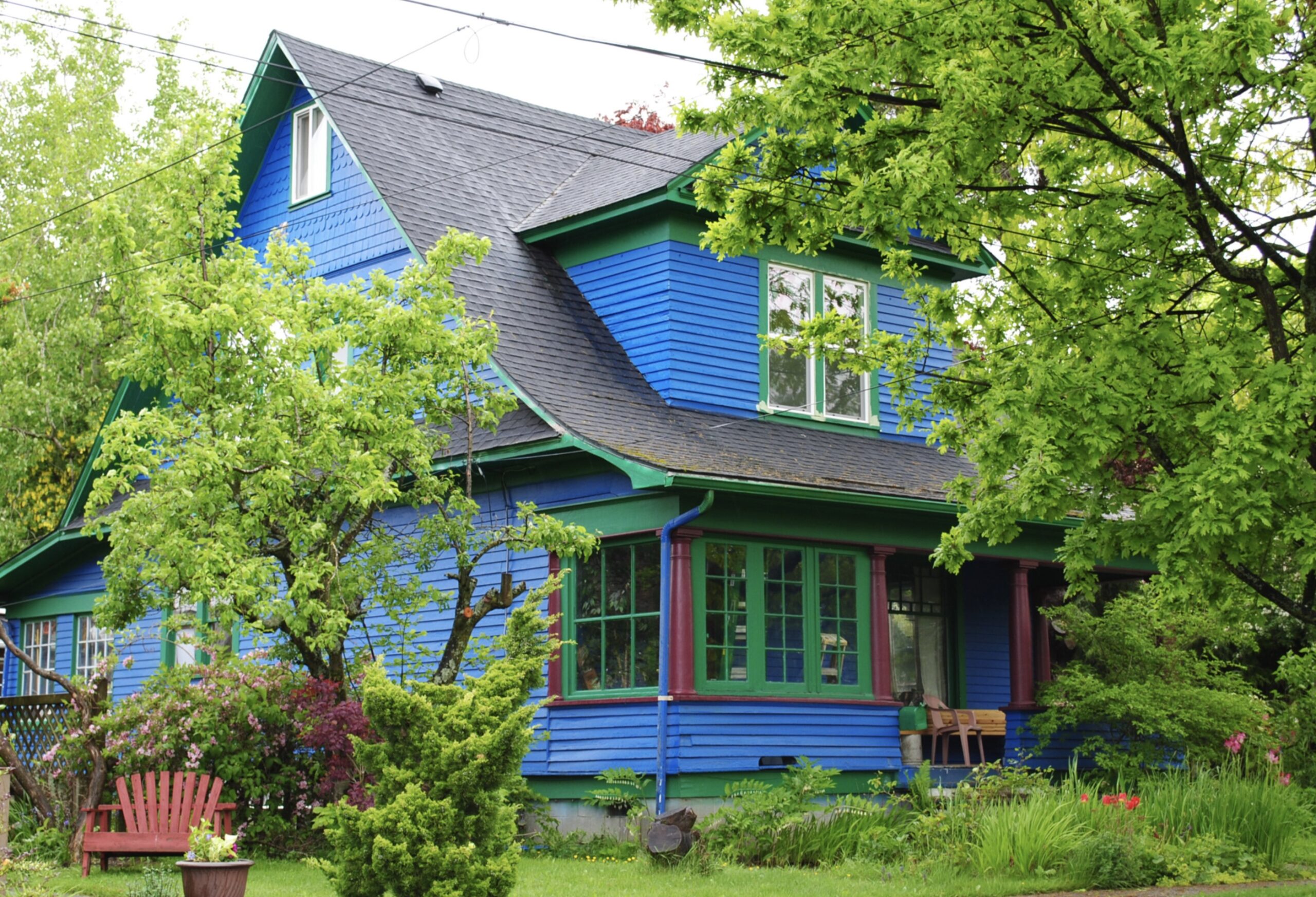 … Fires in Canada’s Wildland Urban Interface (WUI) are becoming more common as cities continue to sprawl, increasing the risk to structures. Regions across the country are grappling with the competing pressures of building housing and expanding industry, while climate change… continues to create hot, dry conditions that make wildfires more intense and frequent. A
  This summer, five exceptional students from across Canada were selected for the Forest Products Association of Canada’s (FPAC) 2025 Green Dream Internship Program, an initiative that continues to spotlight the next generation of forestry professionals. Now in its twelfth year, the Green Dream Internship offers students a unique opportunity to explore the forest sector from the inside out. Over six weeks, interns shared their experiences through creative storytelling—capturing everyday moments in forest operations, conducting interviews, and reflecting on their career journeys. Each intern received a $1,000 scholarship to support their studies. “As these students return to their studies and continue building their expertise, they now carry with them an even deeper understanding of the sector’s challenges, innovations, and opportunities,” said Derek Nighbor, FPAC’s President and CEO.
 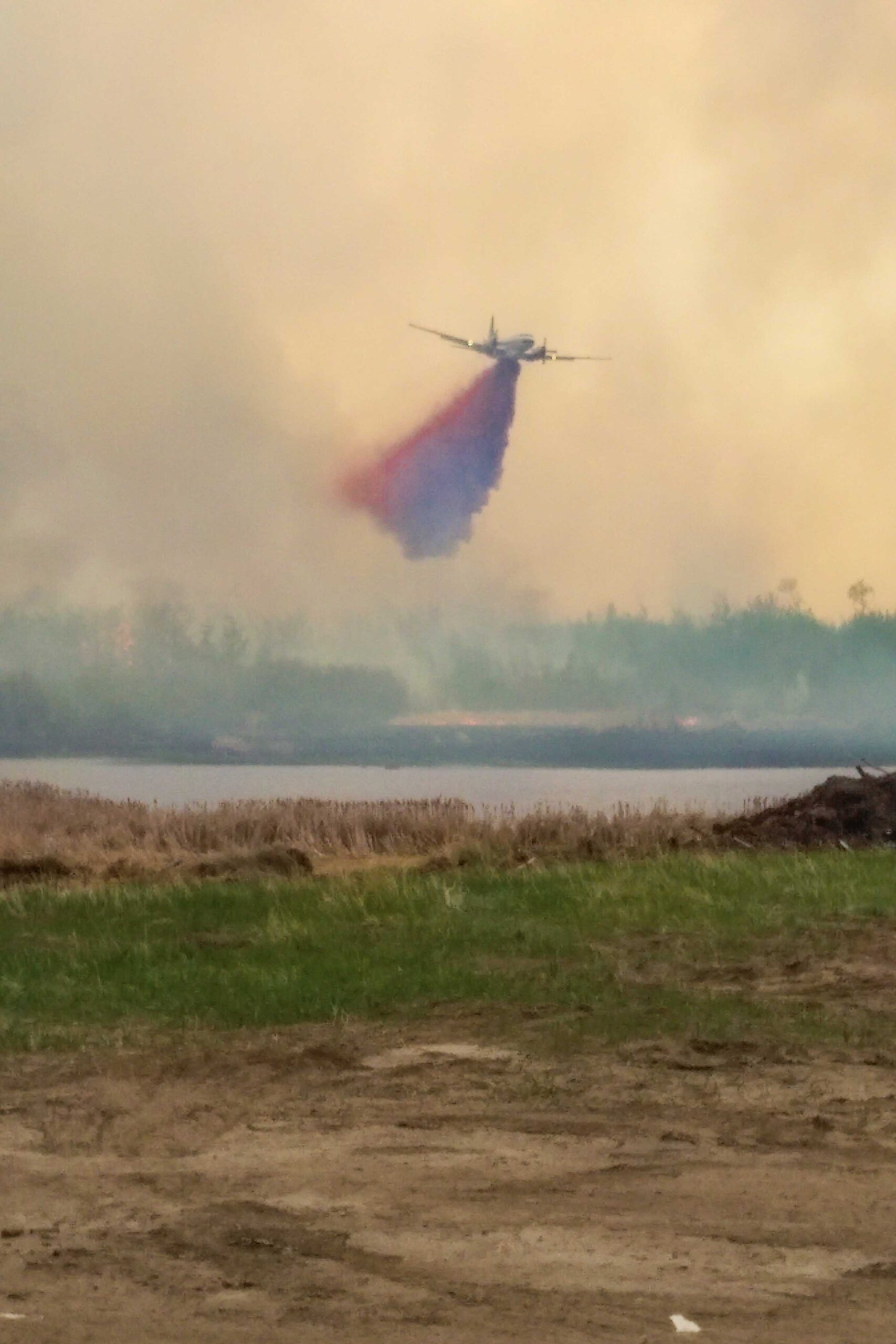 Dropping fire retardant solutions from planes is a crucial strategy in wildfire fighting, but some experts are concerned about their impact on the environment, including aquatic ecosystems. Once dropped, these retardants leave a rust-coloured or pinkish liquid coating on roads, roofs, and vegetation. This technique, commonly used since the mid 20th century, helps fire crews contain blazes by depriving flames of oxygen, explains Jen Baron, a postdoctoral researcher at the University of British Columbia’s Centre for Wildfire Coexistence. Since 2009, the B.C. Wildfire Service has relied on Phos-Chek LC-95A, a widely used retardant from Perimeter Solutions… Its main ingredient, ammonium polyphosphate, is a common fertilizer. Additives, like iron oxide, give the retardant its signature red colour, helping crews to see where it has been dropped. …Uldis Silins, a professor of forest hydrology at the University of Alberta says studying retardants like Phos-Chek remains crucial, especially because their specific chemical composition is proprietary and therefore unknown.
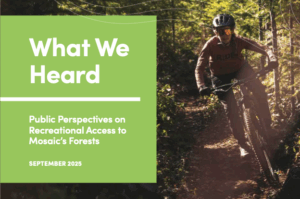 Mosaic Forest Management has clearly heard that communities value their outdoor access. After receiving what the company calls an “overwhelming” response to a survey, they will be moving forward with next steps on improving its recreation program. The survey garnered 7,600 responses in 23 days. “What we heard was clear. Communities value access to the outdoors and want more and better opportunities to do so,” said Mosaic’s CEO Duncan Davies (see report titled
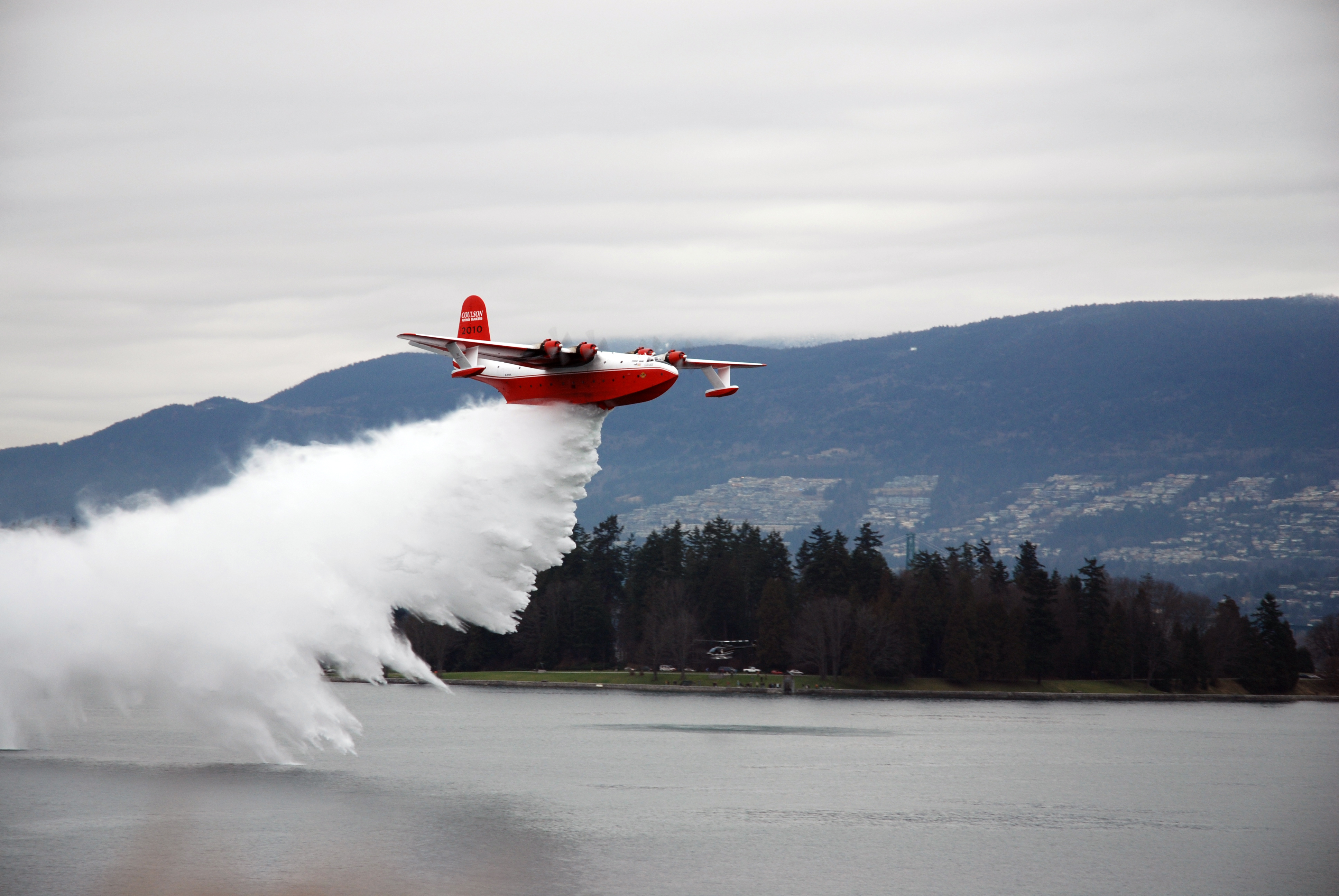 People should continue to use caution and take steps to be prepared by staying up to date on current conditions, following fire prohibitions and being Firesmart, as the risk of wildfire is expected to continue into fall. The BC Wildfire Service’s fall seasonal outlook forecasts ongoing wildfire risk for much of the province, especially in the Cariboo and southwestern Interior. Convective thunderstorms typically decrease as fall approaches; however, despite a lower likelihood of wildfires due to lightning, human-caused wildfires remain a risk. Until the southern coast shifts to a stormier fall-like pattern and the Prince George and Kamloops fire centres receive substantial rainfall, the wildfire danger ratings will continue to be elevated. As a result of the late summer’s record-breaking heat wave, combined with ongoing drought, people in B.C. are encouraged to be prepared for the risk of wildfire this fall.
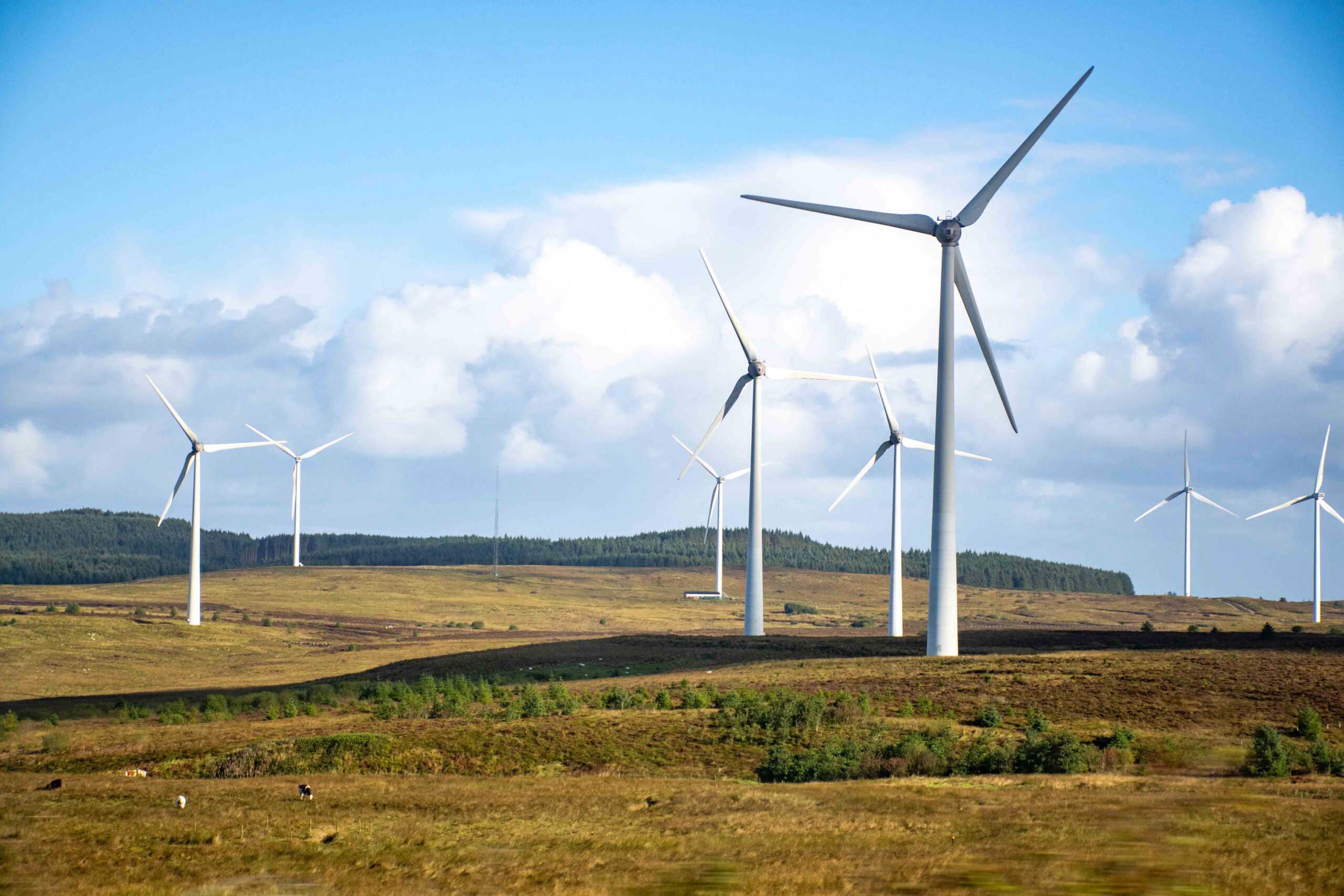 The District of 100 Mile House is refusing a proposed project that could see solar and wind farms built in the South Cariboo. During the Sept. 9 District of 100 Mile House Council meeting, around 50 people showed up to council to hear them deliberate about the Cariboo Wind and Solar Projects, which are a collection of wind and solar projects that are being proposed by MK Ince and Associates Ltd. …In a letter to the district, Tyrell Law, who is the current manager of the 100 Mile Community Forest, said that the project significantly overlaps with the Community Forest areas. The 100 Mile Community Forest is around 18,000 hectares in size and is managed by the 100 Mile Development Corporation. The proposal comprises around 730 hectares of the community forest. Law said that while Ince is partially correct to say that the area had been recently harvested and was in a plantation, it is more complicated than that.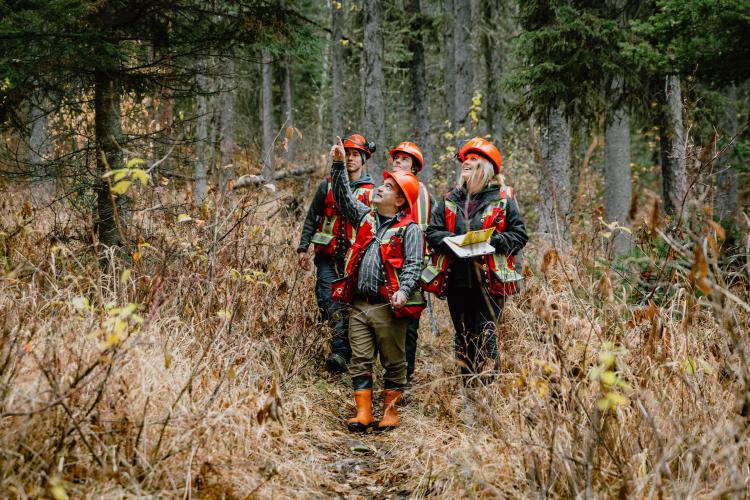
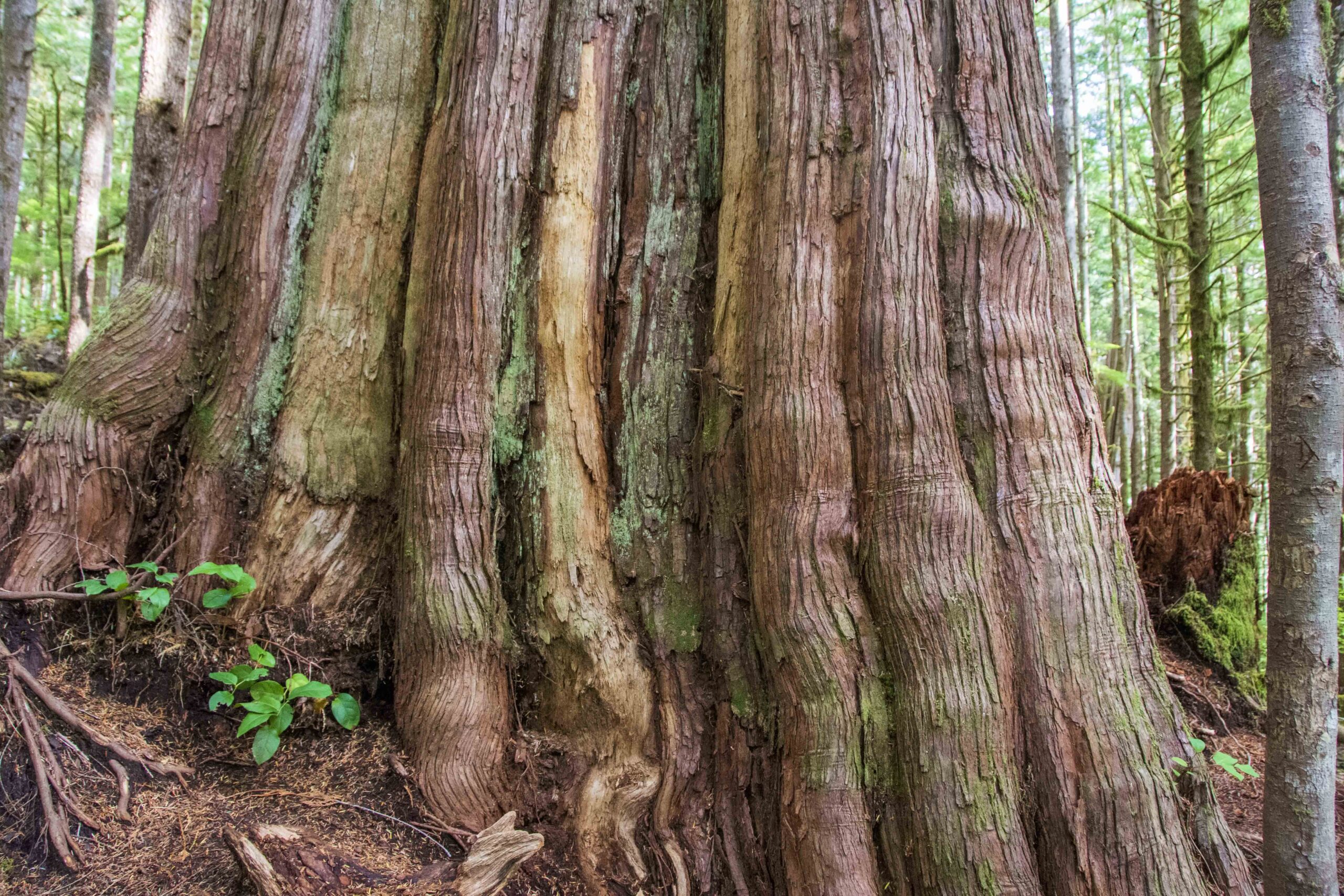 A shaggy, cool-green lichen hangs from the trunk of a tree in a forest on northeastern Vancouver Island. Lichenologist Trevor Goward has named it oldgrowth specklebelly. …Old-growth advocate Joshua Wright photographed oldgrowth specklebelly this summer in a forest about 400 kilometres northwest of Victoria. …Wright and Goward prize the forest in the Tsitika River watershed for its age and biodiversity, and a provincially appointed panel recommended that it be set aside from logging in 2021. But if a plan by the provincial logging agency, BC Timber Sales, goes ahead, the site will be auctioned for clearcut logging by the end of September. The area was stewarded by several Indigenous nations. …The plan to log it reveals differing opinions among Kwakwaka’wakw leaders on how to protect old-growth forests, while raising questions about which Aboriginal rights holders the BC government chooses to listen to, and why.
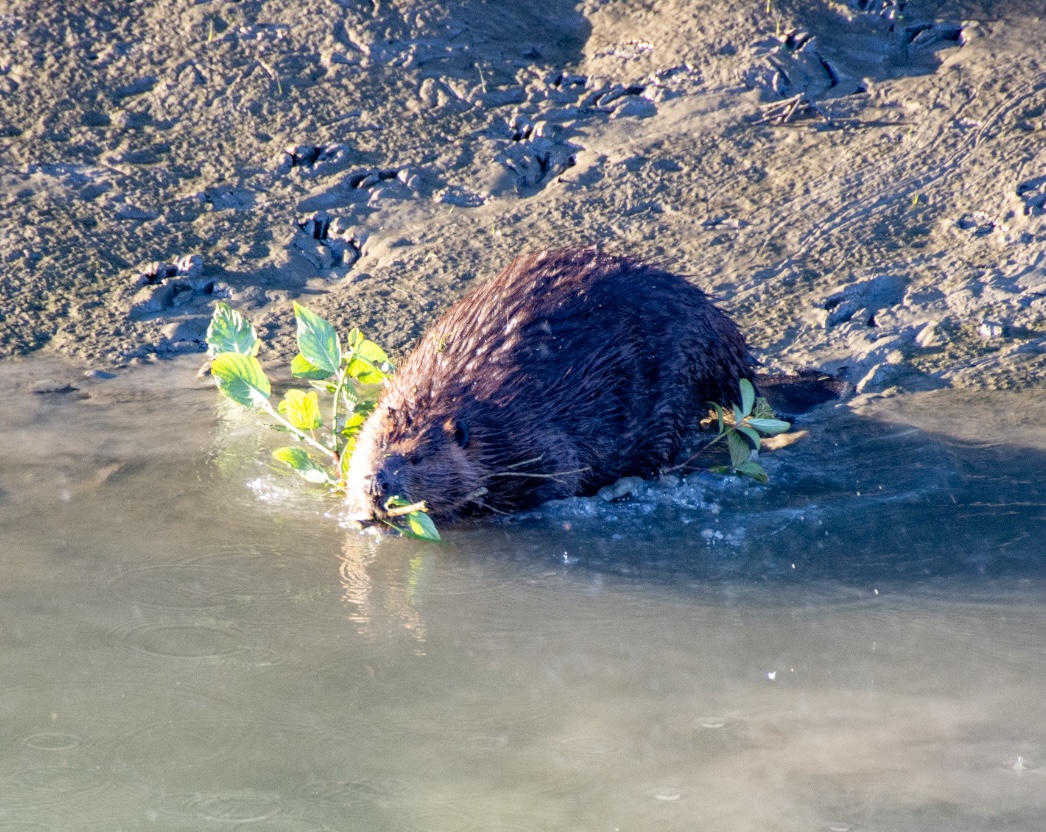 Drought and wildfire have become the rule rather than the exception and that is bad news for wildlife, for fish, and for British Columbians who rely on healthy watersheds. …over the past couple of decades we drained wetlands, straightened streams, logged forests, built highways, and ripped millions of beavers from the landscape. The result is dry forests, destructive fire seasons, and choking smoke … every summer. Dry riverbeds are unable to support salmon populations, or any wildlife for that matter. A dewatered landscape is a towering forest of matchsticks waiting to burn. … So, how do we get from here to there? Fortunately, some of the answers are simple, natural, and inexpensive. …Prescribed and cultural burning helps restore native grassland and shrub-steppe ecosystems providing improved forage for large mammals. …BCWF’s 10,000 Wetlands Project has recently installed more than 100 beaver dam analogues and dozens of post-assisted log structures…
 The Osoyoos Indian Band is kicking off its first commercial thinning silviculture treatment via Siya Forestry. In the project 28 kilometres northeast of Oliver, select trees will be harvested while the strongest will remain left to grow in the OIB First Nations woodland licence area. …Siya Forestry, the OIB-owned new company, said it aims to care for the land through stewardship, balance, and responsibility. “This is a great pilot project and hopefully it will lead to a bigger program within the Osoyoos Indian Band’s traditional territory,” said Luke Robertson, Siya Forestry, operations supervisor, in the press release.
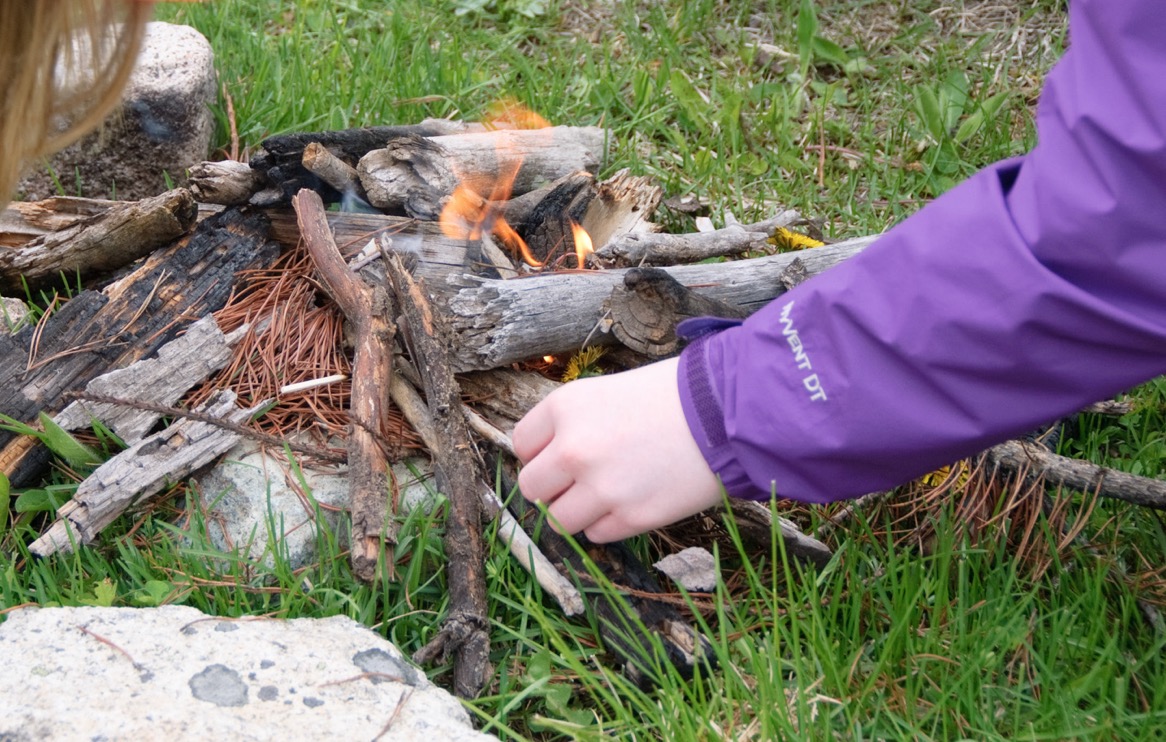 The Coastal Fire Centre is lifting the campfire ban for the Campbell River, North Island and Sunshine Coast forest districts as of Sept. 17 at noon. Due to declining fire danger ratings on the northern part of Vancouver Island, the Province has chosen to re-allow campfires and other small fires in the area. Campfires will remain prohibited for the rest of the Coastal Fire Centre, with the exception of the Haida Gwaii Forest District. The activities that will be allowed also include the use of sky lanterns, wood-fired hot tubs, pizza ovens and other devices that are not vented through a flue or are incorporated into buildings. Category 2 and 3 open fires remain prohibited throughout the Coastal Fire Centre, which includes backyard burning, industrial burning, fireworks, burn barrels and burn cages. These restrictions will remain in place until 12:00 (noon), PDT, on Friday October 31, 2025, or until the order is rescinded.
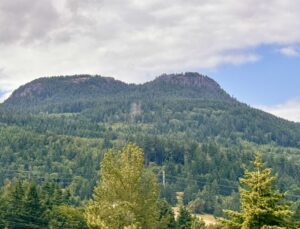 First Nations in the North Cowichan region on Vancouver Island say a motion by the municipality is undermining collaborative efforts on the future of logging in the region’s forest reserve. …Cindy Daniels, chief of Cowichan Tribes, said the move by the council “undermines the collaborative nature” of work to date on a joint plan for the forest. …The North Cowichan council has been in discussions for a collaborative framework with Quw’utsun Nation since 2021 and announced a commitment to establish a co-management strategy for the forest reserve in April 2024. …Gary Merkel, director of the Centre for Indigenous Land Stewardship at UBC…. “It’s a little bit ahead of itself that motion, but not too far. I mean, they haven’t said ‘we’re just going to go and log,’ they’ve allowed the possibility”. …”We are going to get a staff report outlining some of the implications and next steps,” North Cowichan Mayor Rob Douglas said.
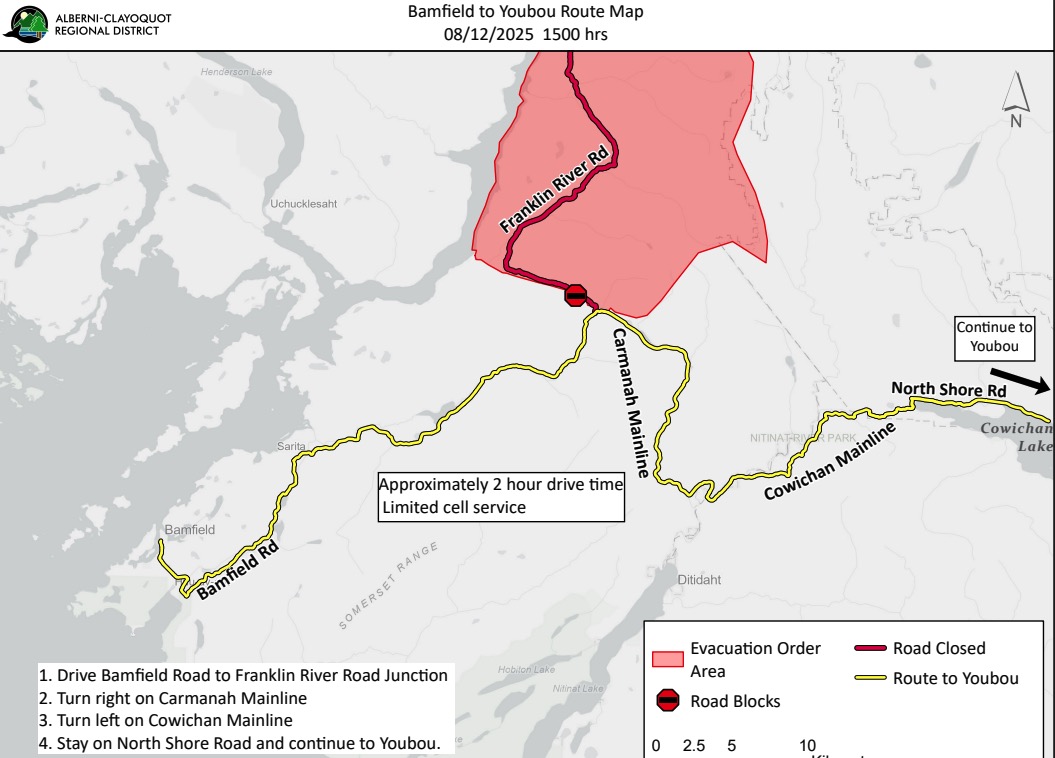 The fire-ravaged Bamfield Main Road, which connects Bamfield and several First Nation communities to Port Alberni, will reopen by the end of October, the Transportation Ministry announced. The ministry said temporary closures could still occur, however, during periods of heavy rain and strong winds. It said a geotechnical assessment to identify hazards, and assessments of the stability of trees are ongoing. Based on those findings, thresholds are being established for wind and rain events that will trigger increased patrols of Bamfield Main and potentially closures. A weather station and closure gates will be installed in the coming weeks, according to the ministry, which is leading efforts to reopen the road with Mosaic Forest Management, the company that oversees the affected stretch. …Ditidaht Nation Chief Judi Thomas said she suspects the Alberni-Clayoquot Regional District, Huu-ay-aht First Nation and Mosaic and Bamfield would be more than happy to support a provincial paved alternate route.
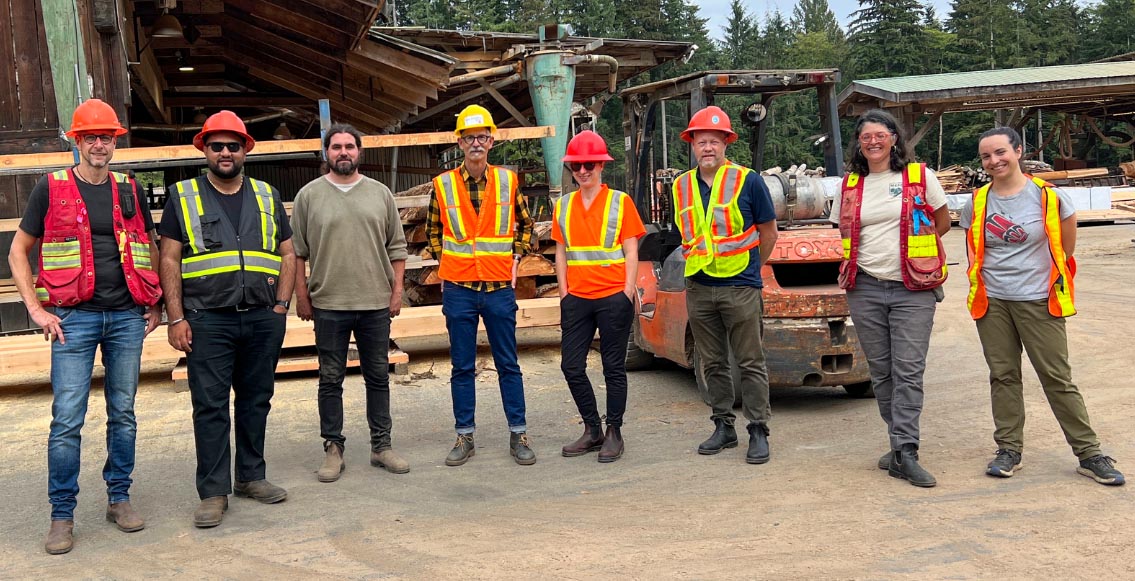 On September 11, 2025, UBC’s Faculty of Forestry welcomed British Columbia’s Minister of Forests, Ravi Parmar, to the Malcolm Knapp Research Forest (MKRF) to witness the critical work being done to advance sustainable forest management and educate the next generation of foresters. The tour, led by Dr. Dominik Roeser, Associate Dean of Research Forests and Community Outreach, and joined by Dr. Robert Kozak, Professor and Dean of the Faculty of Forestry and Hélène Marcoux, Malcolm Knapp Research Forest Manager, provided an important opportunity to showcase MKRF’s role in bridging scientific research, education and practical forest management. Minister Parmar’s visit included important conversations focused on forest stewardship and the role research plays, not just in understanding forests, but also in driving innovation, education, and creating future opportunities. Minister Parmar was able to see firsthand the vital research taking place to support both industry and government, and the advancement of sustainable forest management practices in British Columbia.
 The ancient forests near Fairy Creek, where the largest act of civil disobedience in Canadian history took place in 2021, have been fairly silent for nearly four years. But as logging in Vancouver Island’s old-growth forests picks up, protesters have returned to protect these ancient trees. On Friday, BC Supreme Court judge Amy Francis approved an injunction requested by Tsawak-qin Forestry Inc.—co-owned by Western Forest Products and the Huu-ay-aht First Nations—after two days of hearings. Those named in the injunction—including Elder Bill Jones…are banned from blocking the logging company’s access to old-growth forests in the Tree Farm License 44 area. …The removal of the sculpture and the people protesting could happen at any time. Today, blockaders at Cougar Camp—named for the sculpture blocking the logging road—said they were ready and waiting to be arrested while protecting Upper Walbran.
  Zoom Presentation
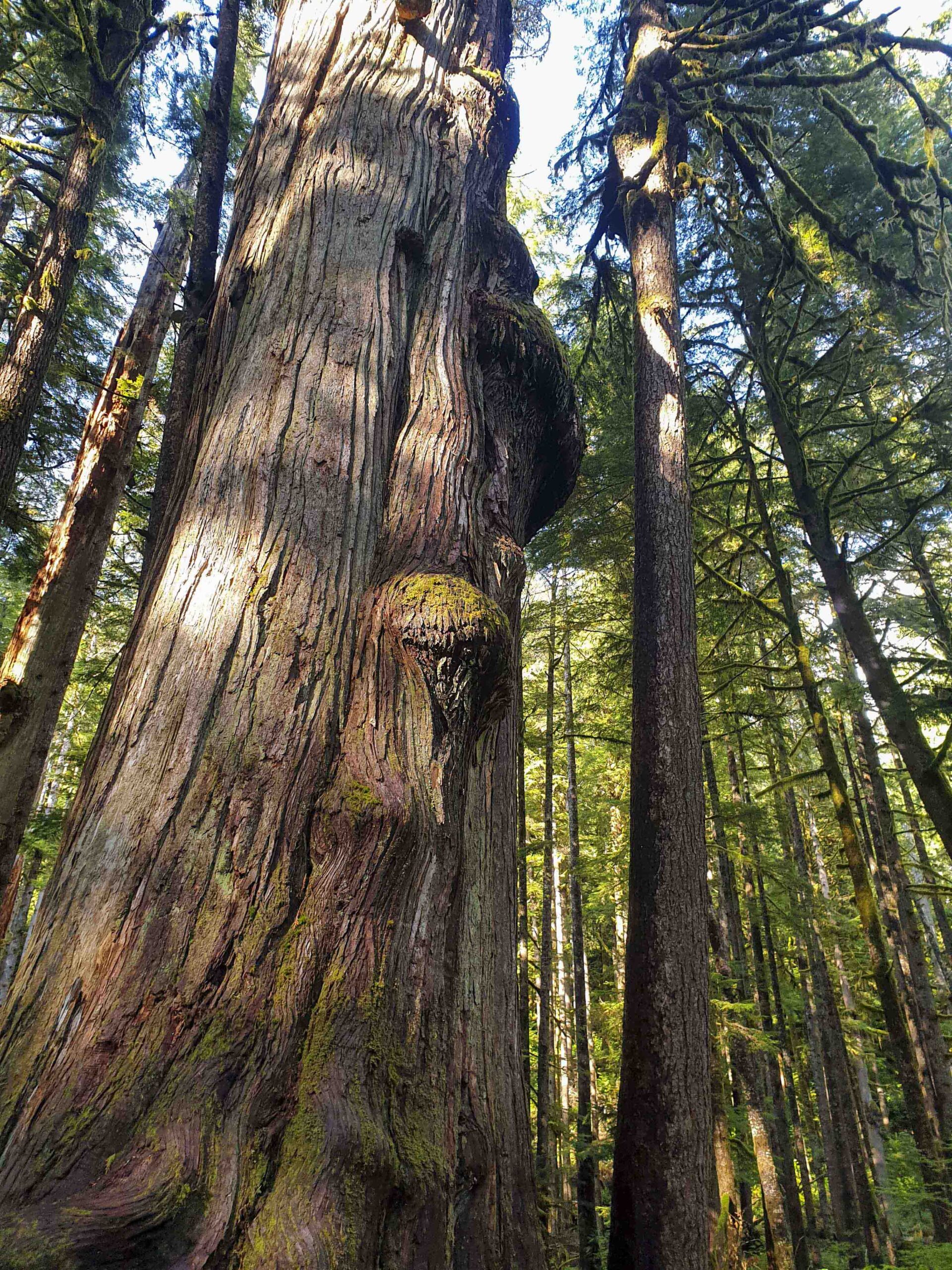

 A B.C. Supreme Court justice has ordered a group of people blocking a logging road in the Walbran Valley on southern Vancouver Island to stop. The decision to grant an injunction to Tsawak-qin Forestry Limited Partnership, a joint partnership between the Huu-ay-aht First Nations and Western Forest Products, alongside an enforcement order is expected to set the stage for the RCMP to remove people from the area. This fight over British Columbia’s old-growth forests comes four years after the start of the historic Fairy Creek protests, where more than 1,100 people were arrested. The Walbran Valley blockade began in late August and has prevented a logging company from working and accessing tools, equipment and vehicles on the other side of the blockade. Pacheedaht Elder Bill Jones, who was at the forefront of the Fairy Creek protests, is one of the parties named in the court filing, and the only person to respond to the application.
 As summer winds down, I’m pleased to welcome you to this special edition of the Forest Practices Board’s newsletter. This season marks a significant milestone for us—our 30th anniversary. For three decades, the Board has worked diligently to provide independent oversight of forest and range practices in British Columbia, helping to ensure that our natural resources are managed sustainably and in the public interest. …This issue highlights some of the conversations, initiatives, audits, investigations and special reports the Board is involved in as we embark on this anniversary year.
 The Cariboo Wood Innovation Training Hub (CWITH) is inviting people to bring their ideas and opinions to an upcoming workshop on contemplative forestry. The workshop will be facilitated by Jason Brown, an affiliate forest professional with Forest Professionals British Columbia, on Saturday, Sept. 20. Participants will explore the concept of contemplative forestry, an approach which meets two extreme views on forestry in the middle. …Stephanie Huska, project lead with CWITH, said the workshop is a way to open the door to conversations which historically have not been included in natural resource management discussions based on western worldviews. …A contemplative approach to forest management values manual work as a form of spiritual practice, allows forests to ‘speak’ for themselves, admits there are some aspects of life we don’t have the language for and sees forestry as a mutually beneficial, place-based vocation.
 VANCOUVER — The B.C. Supreme Court is set to rule on an injunction to halt a blockade against old-growth logging in the Walbran Valley on Vancouver Island, but a lawyer for one of the blockaders says the law is evolving and in need of a “course correction.” The Pacheedaht First Nation has decried the blockade on its traditional territory near Port Renfrew, B.C., claiming it is undermining its authority and should disband. The First Nation said in a statement that forestry is a “cornerstone” of its economy, and is calling for the blockaders to “stand down and leave.” The statement came after Tsawak-qin Forestry Inc., a firm co-owned by the Huu-ay-aht First Nations and Western Forest Products Inc., filed a lawsuit last week in B.C. Supreme Court alleging that “a group of largely unknown individuals” began the blockade of a road on Aug. 25.
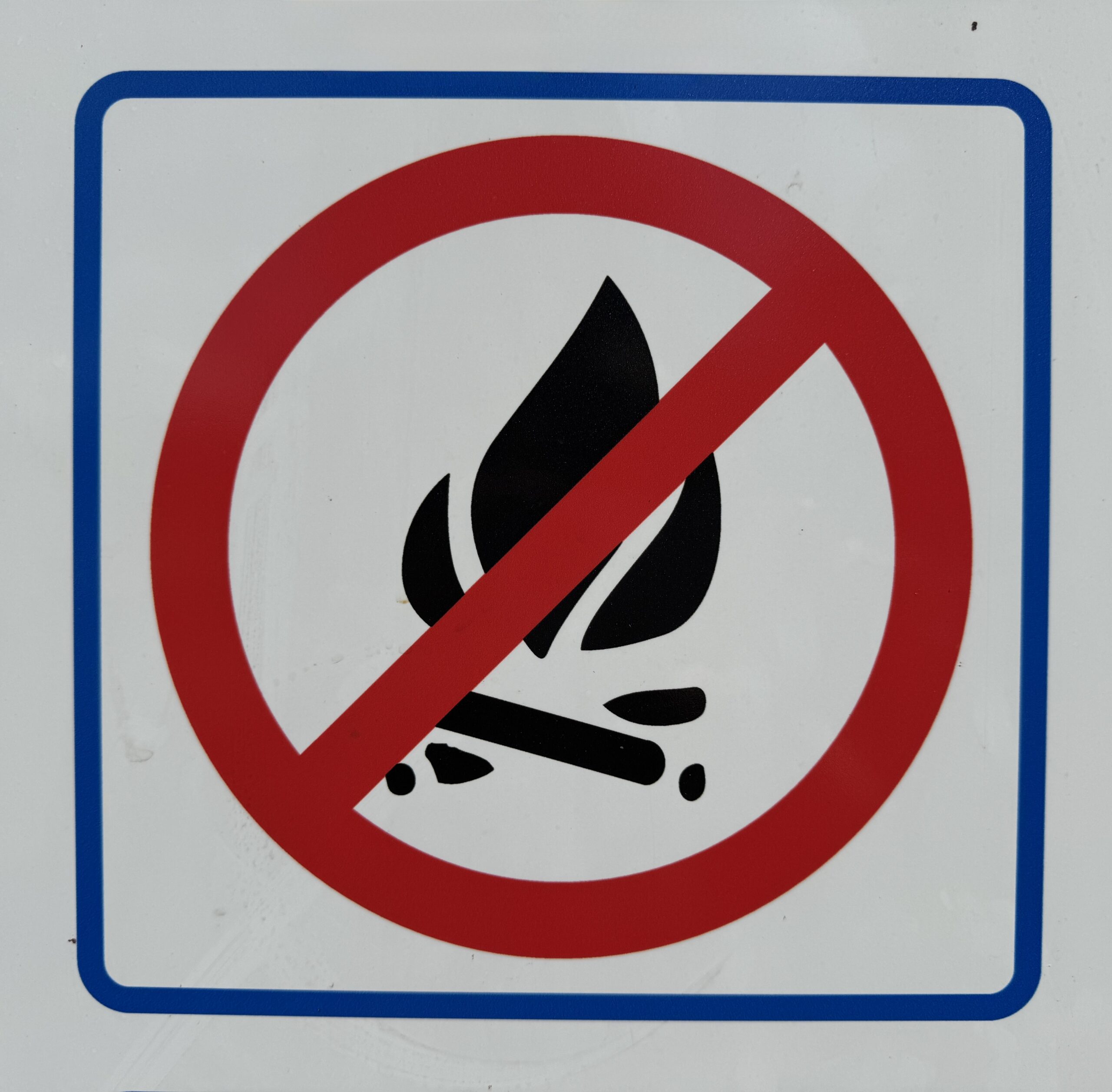 The existing Category 1 campfire prohibition for the Cariboo Fire Centre and Tsilhqot’in (Xeni Gwet’in) Declared Title area will be extended. It will go in effect at noon tomorrow (September 11) and will remain in effect until September 30 or until the order is rescinded. A Category 1 campfire is defined as any fire smaller than 0.5 metres high by 0.5 metres wide. The Cariboo Fire Centre said this prohibition applies to all areas in the Fire Centre that are outside of municipal boundaries. In addition, it also applies to these land types within municipal boundaries: Parks, conservancies and recreation areas; Recreation sites, recreation trails, interpretive forest sites and trail-based recreation areas; Ecological reserves; and Wildlife management areas and private managed forest land.
 Zoom Presentation, September 16th, 7:00 pm. The BC Forest History Association is honoured to host Larry Pedersen as the first speaker for the 2025 Speaker Series. Larry Pedersen was BC Provincial Chief Forester from 1994 to 2004. A graduate from UBC with a Bachelor of Science in Forestry in 1975, he became a registered Professional Forester in 1977. During his career, he advanced through a number of positions in the Forest Service and he also worked in the private sector. In his presentation titled Reflections from British Columbia’s 14th Chief Forester, Larry will discuss some important historical events that helped shape forestry in the province, explain how he ended up in the job, discuss some of the challenges that he faced, and will tell some stories about things that were said and done during his tenure. The presentation is intended to highlight just a few of the many important events that have shaped forestry in the province. To register for this Zoom presentation use this
 Researchers from Trent University are immersing themselves in forests and streams in northwestern Ontario to understand how forestry practices and climate change affect brook trout populations and freshwater ecosystems. The team is working in the Walkinshaw and Wolf watersheds, northeast of Thunder Bay. They are focusing on headwater streams, which are small rivers that feed larger waterways across the Great Lakes. “Northern freshwater ecosystems are currently experiencing major disturbances, two of which are forest harvest and climate change. One of the effects of climate change is an increase in water temperatures. And the consequences of these predicted increased temperatures on the stream ecosystem are still unclear,” said PhD student Celeste Milli, who is leading the fieldwork. …Milli said the research could help inform science-based policy decisions in Canada’s northern forests, ensuring that both forest ecosystems and freshwater resources remain resilient in a changing climate.

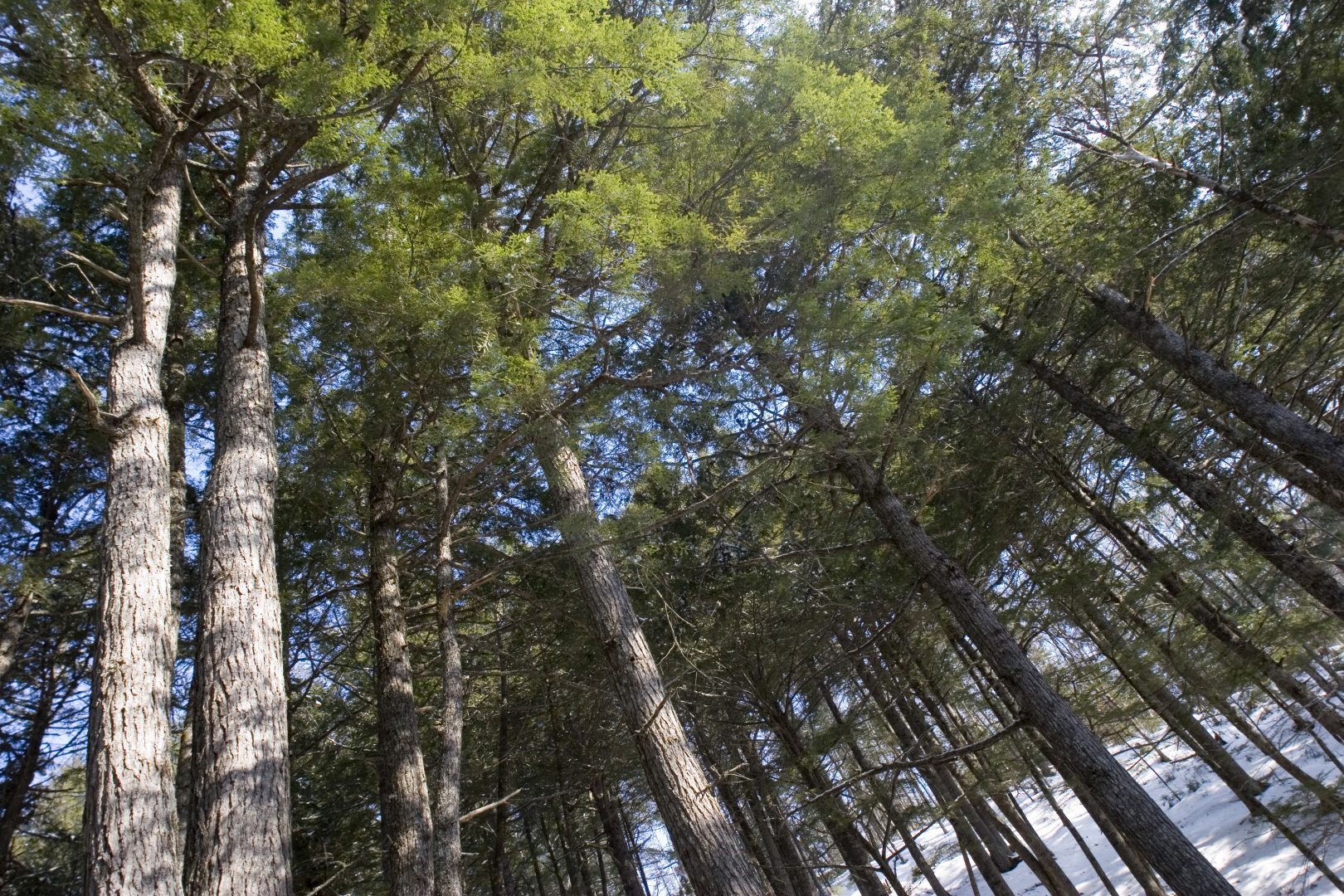
 As Nova Scotia grapples with one of its most severe wildfire seasons, a controversial decision by the provincial government has flown under the radar: the approval of aerial glyphosate spraying on 3,577 acres of drought-stricken, fire-prone forest. This move not only risks human health and ecosystems but also exacerbates the very wildfires it claims to mitigate. …Glyphosate-based herbicides are used in forestry to kill deciduous plants and shrubs that compete with commercial softwood species. However, this practice replaces diverse, resilient forests with flammable monocultures. By inhibiting plant growth and causing vegetation to wilt and die, glyphosate leaves behind dry, combustible biomass — effectively turning forests into tinderboxes. In a province already parched by drought and under travel bans due to fire risks, adding fuel to the fire is nothing short of reckless.
 Michelle Conroy says she appreciates all the work the province’s firefighters have put into protecting Miramichi, as wildfires raged out of control. But the Progressive Conservative MLA for Miramichi East also wonders if their employer, the Department of Natural Resources, might have unintentionally made conditions in the forests worse by encouraging herbicide spraying so that New Brunswick’s powerful timber industry could have softwood plantations. …The idea that the ecosystem could had been thrown “out of balance,” was addressed by Deputy Minister Cade Libby. “Your comment is one we’ve heard quite a few times,” Libby said. “Yes, herbicides target broad-leafed plants. …But a working forest is a great way to mitigate forest fire risk.” The deputy minister said timber cutters use forestry roads that act as fire breaks and that they work on forests of various types and age classes that have less fuel load than virgin, old-growth forests do.
 One of the great challenges of ecology is to understand the factors that maintain, or undermine, diversity in ecosystems, researchers write in a

 US Secretary of Agriculture Rollins issued a
  For Tom Schultz, the 21st chief of the U.S. Forest Service, repealing the Roadless Rule is not a matter of ideology but rather a matter of “common sense land management.” Leaving land alone and letting nature run its course is not management, Schultz explained, but a “false narrative.” “The idea that if I care about something, I walk away from it,” Schultz said. “I guess I don’t buy that.” The Roadless Rule… prevented the building of roads through nearly 60 million acres of Forest Service land, conserving a small percentage of the overall American landscape from further development. Today, after carve outs by several states, the total acreage is closer to 45 million. …Schultz spoke with Deseret News to explain why it’s important to repeal the provision, why the administration is working so “expeditiously” to do so and what the public might expect from the prospect.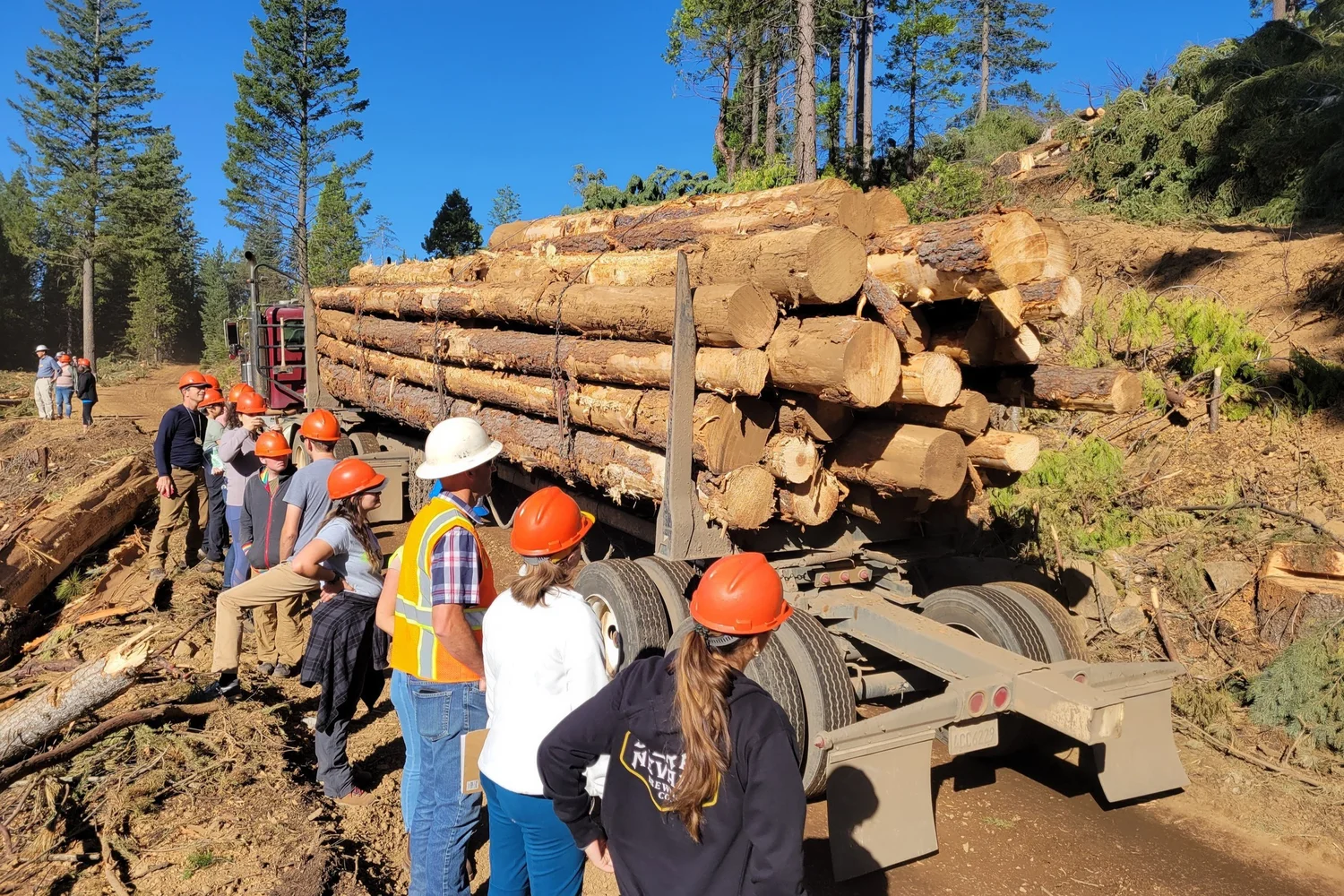

 After years of wildland firefighters developing cancer, lung disease and other health issues while not being allowed to wear masks as they work, the US Forest Service will now allow these crews to wear masks. The policy turnaround comes as the Forest Service posted new guidance on Monday “acknowledging for the first time that masks can protect firefighters against harmful particles in wildfire smoke,” per
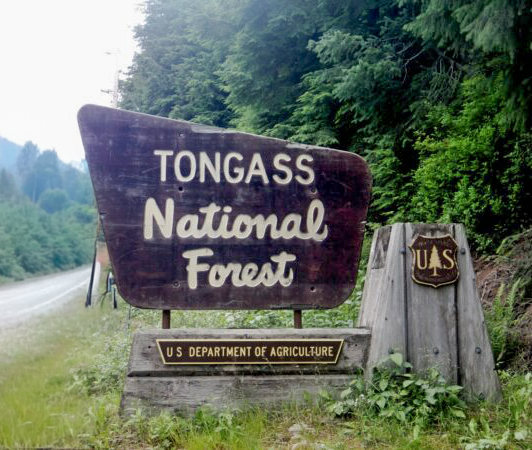 The U.S. Department of Agriculture announced this summer it was moving to rescind the Roadless Rule, a 2001 law that protects large swaths of National Forest land from development. That includes more than half of the Tongass National Forest, where Juneau is located. On Saturday, more than 100 people gathered in the state capital to protest the move. …Alaska’s Congressional delegation unanimously supports the rollback of the Roadless Rule. U.S. Sen. Lisa Murkowski has said that most of the Tongass would still be protected without it — the parts of the forest that are already designated as wilderness. …But protesters say Alaskans have more to lose in risks to the land and waterways than what they have to gain through further development. Lingít elders and fishing and tourism industry experts took the mic Saturday to deliver a message: the Roadless Rule should be left alone.
 The Trump administration is looking to finalize a repeal of a longstanding Roadless Rule with a public comment period that
 President Donald Trump’s Secretary of Agriculture has moved to rescind the “roadless rule” that protects portions of national forests from development — including 4.4 million acres in California — and members of the public can still submit comments about the change to the federal government. Every national forest in California would be affected. Commenters can weigh in through the online form on regulations.gov through Sept. 19; the docket is FS-2025-0001-0001. Since 2001, the roadless rule has protected designated areas from development and logging, limiting or barring the construction or reconstruction of roads. About 21% of California’s national forestlands are protected. Throughout the U.S., the 2001 rule covers 59 million acres. The administration has said the move to end the rule would open up these forests to more logging and has said that more roads would help with wildfire prevention. As NPR reported, the U.S. Forest Service has previously found that roads appeared to do nothing to mitigate wildfires.
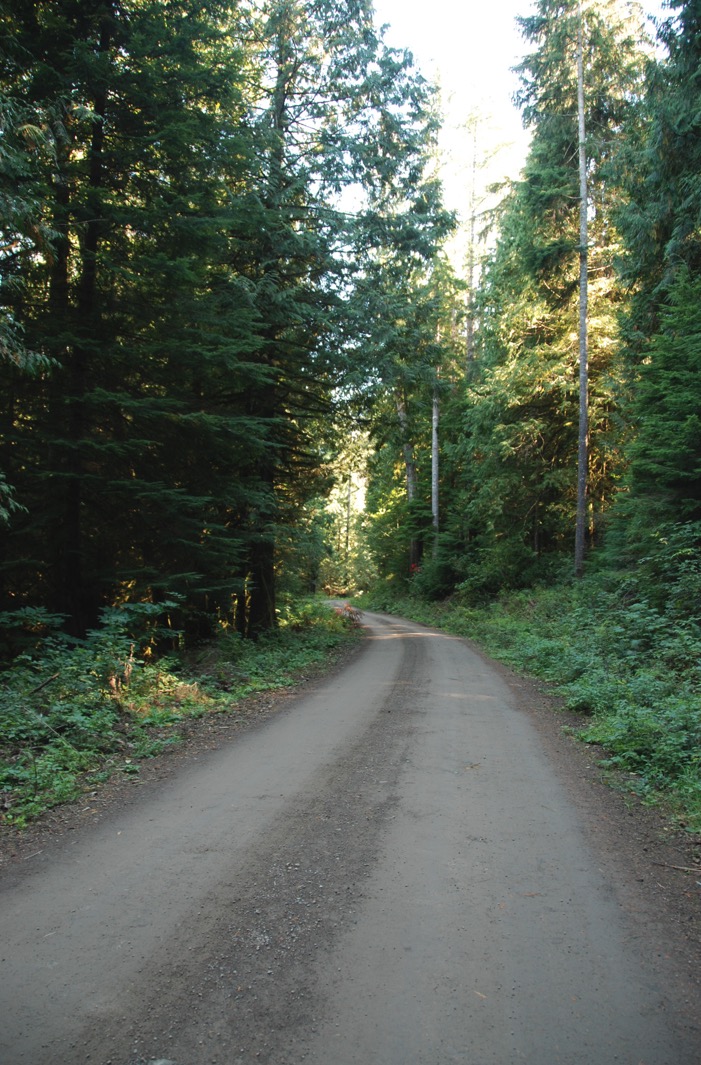
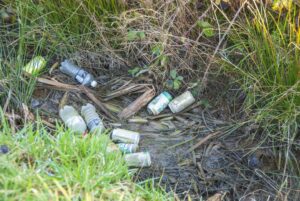 LINCOLN COUNTY, Oregon — Travelers exploring private timber lands along the Oregon Coast may encounter locked gates or restricted access, but this is not due to a desire to keep citizens off the property, the Lincoln County Sheriff’s Office said. The closures are a response to increasing incidents of littering, vehicle abandonment, theft of forest products, and criminal mischief. Common acts of vandalism include property destruction by 4x4s and ATVs in unauthorized areas and damage to road access gates, officials said. These actions not only destroy the natural beauty of the forests but also incur costs for cleanup and repairs, which are paid by private timber companies and taxpayers.
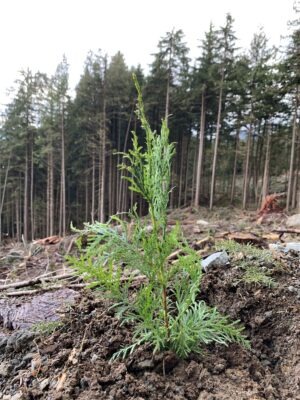 The increase in wildfires over the past few decades is changing the Colorado landscape in more ways than one. Not only do fires temporarily decimate the impacted areas but according to research out of Colorado State University, they are actually changing how, and if, forests regenerate post fire. “There are definitely some places where they’re coming back really well; it just takes a long time for trees to grow back,” said Camille Stevens-Rumann, CSU associate professor of Forest and Rangeland Stewardship. “But there are definitely other places that are not recovering and are not turning back into the forests that we expect them to be. …Reseeding efforts in these locations have shown mixed results, forcing researchers and forestry officials to look at alternative species. …“I think we do have to adapt and think about the fact that those forests are going to look differently.”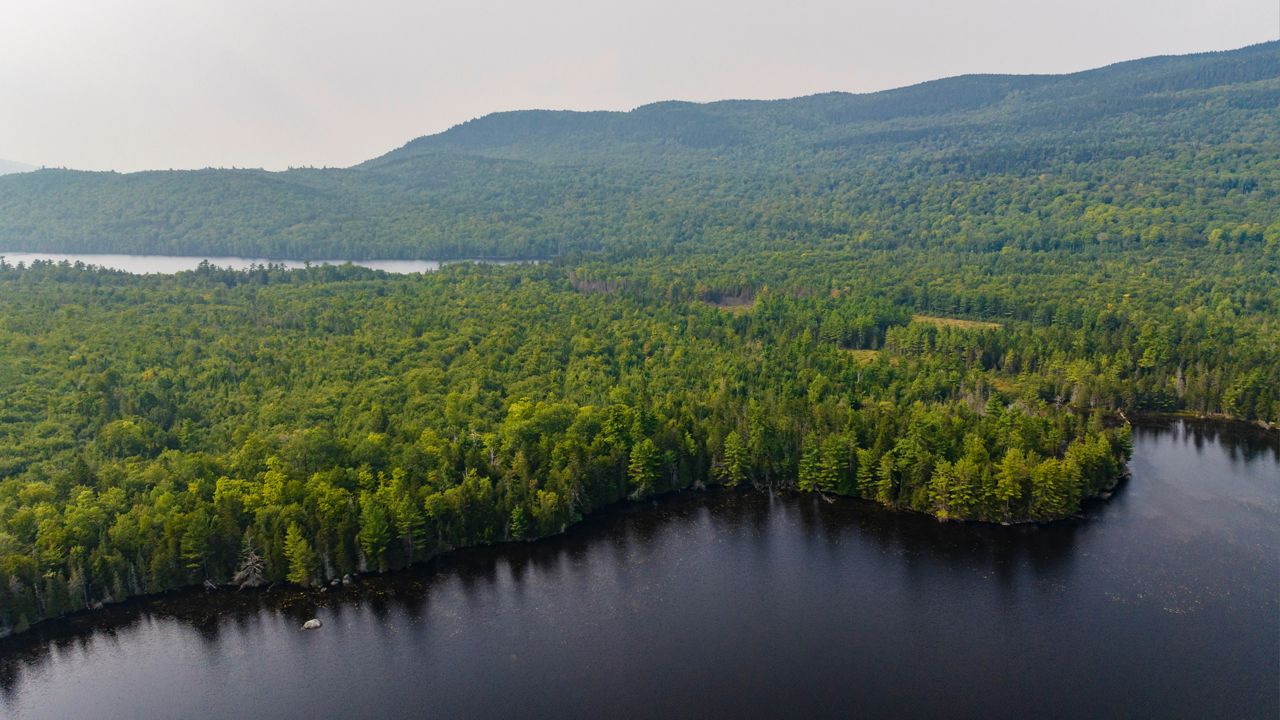

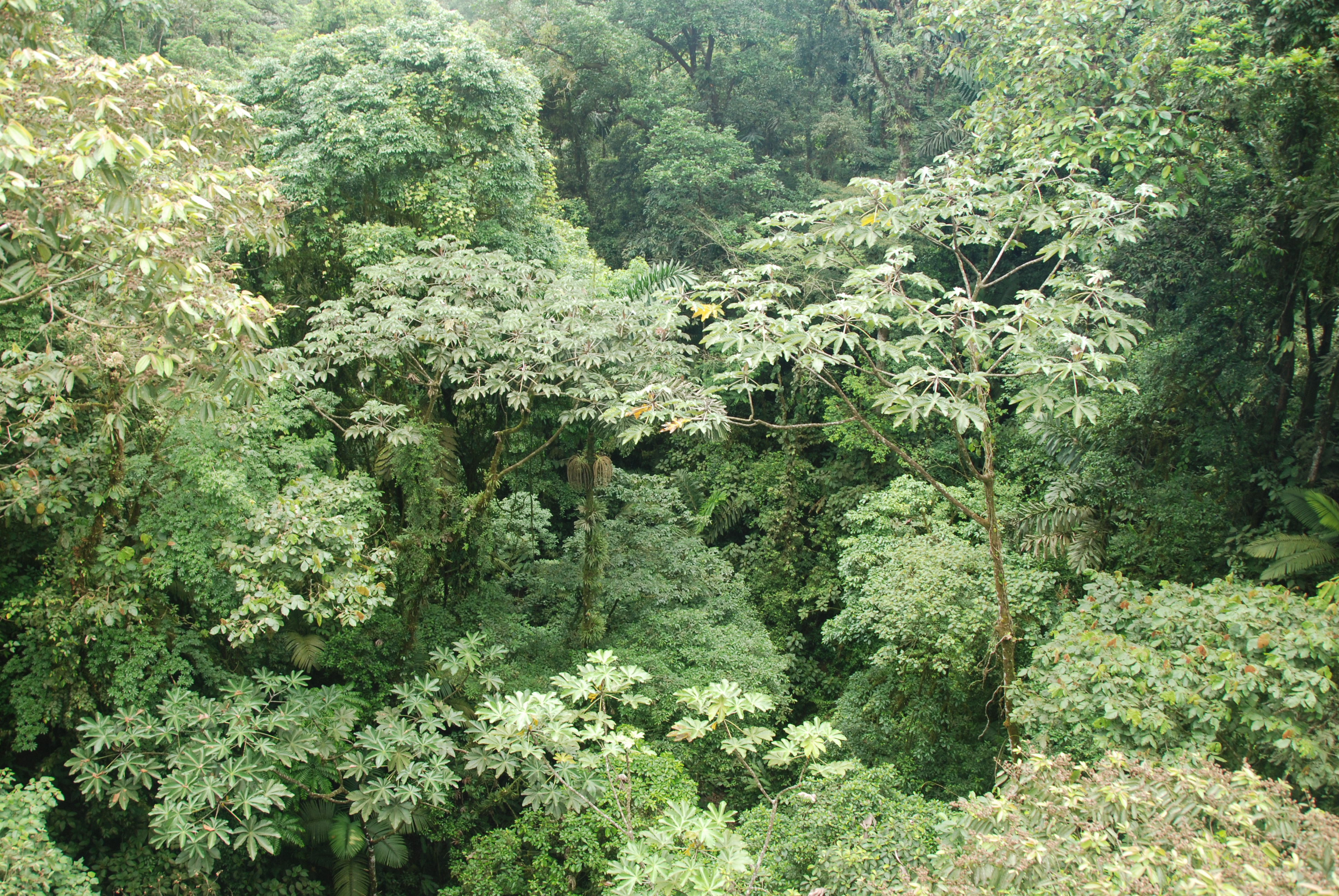 Increasing tree species diversity is widely suggested as a way to help forests withstand climate change – especially prolonged droughts. But a new international study led by the University of Freiburg, published in Global Change Biology, shows that simply mixing more tree species does not always boost forests’ resilience to drought. In fact, the effects of diversity on tree growth can shift from beneficial to negative as droughts drag on. Drawing on tree ring data from the world’s largest network of tree diversity experiments, researchers found that diverse forests can initially support better tree growth during single-year droughts. However, as droughts persist longer within a year or extend over consecutive years, these positive effects can turn negative depending on local conditions. In some cases, mixing tree species strengthened forest resilience; in others, it increased stress and competition for water. …Building resilient forests will thus require not just more species, but carefully selected combinations and adaptive management.
  The European Commission has announced dates for virtual training sessions on the EUDR Information System, open to all interested parties. These sessions provide guidance on submitting due diligence statements under the European Union Deforestation Regulation (EUDR). While these sessions are available to all, WPAC anticipates that most of our members will meet their EUDR obligations through the Sustainable Biomass Program (SBP) system, which we helped to develop. EUDR establishes robust requirements for traceability, due diligence, and risk mitigation. SBP has developed a voluntary EUDR module integrated into its Data Transfer System (DTS), helping Certificate Holders prepare now for compliance ahead of the December 2025 implementation deadline. …Learn more about
 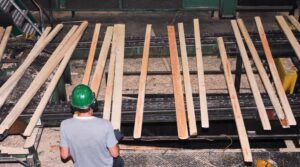 Austria’s softwood sector may face a production decline of up to 10% if the EU Deforestation Regulation (EUDR) takes effect in its current form at the end of the year. The regulation requires full traceability of wood products across the entire supply chain, which industry representatives say is unworkable according to Markus Schmölzer of the Austrian Sawmill Association. Although the sector expects a 2% production increase in 2025, the EUDR poses a direct threat to the entire wood value chain. A decline in softwood production would affect manufacturers of building components, furniture, panel boards, paper, and pellet products, especially during winter months. …The Austrian industry urges the EU to either suspend the regulation entirely or revise it through an “Omnibus” legislative package aimed at reducing bureaucracy. …While supporting the goal of halting global deforestation, the sector proposes targeted monitoring for high-risk regions and exemptions for low-risk countries such as Austria.
 The European Union Deforestation Regulation (EUDR), one of the world’s most comprehensive legislations to curb tropical deforestation, will take effect at the end of December 2025. Since its adoption in 2023, debates over its implementation and effectiveness have been loud and persistent. Some claim the requirements are unclear or impossible to meet, especially for smallholders, while others fear the regulation will disrupt trade or place heavy burdens on businesses. …Despite the challenges, governments, companies and smallholders worldwide are showing that EUDR compliance is not only possible — it is already underway. Building on our previous analysis of why the EUDR is a necessary regulation to tackle deforestation linked to commodity supply chains, this article focuses on the practicality of compliance and highlights concrete steps being taken to prepare. …Guidance from EU national enforcement authorities, such as the Netherlands’ report, show that compliance with the EUDR is not rocket science.
 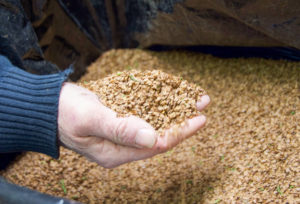 The UK’s largest and most advanced seed centre has opened in Cheshire. The store near Delamere Forest will process four tonnes of seeds every year, which Forestry England said was enough to grow millions of trees for decades to come. It added the centre was “a significant milestone in protecting the future resilience of our forests”. Forestry Minister Mary Creagh said the building was “nationally significant” because it was “part of our climate resilience”. Creagh added: “We are the largest wood importer in the world, and in a climate-constrained future we are going to have to grow more of our own.” The centre, funded through the Nature for Climate Fund and Forestry England, aims to provide seeds to grow climate-adapted trees. …Tristram Hilborn, chief operating officer of Forestry England, said: “What we need to consider for 100 a years’ time is the sort of trees that will thrive in that sort of climate.”