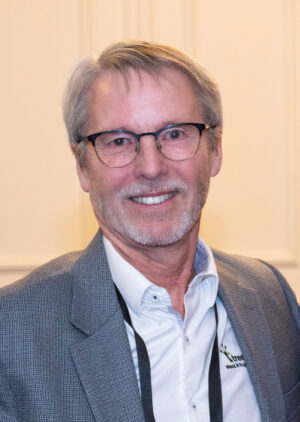
Kelly McCloskey

Robert McKellar
When we first reached out to political risk expert Robert McKellar in mid-2024, our goal was to spark a conversation the forest sector wasn’t yet having—about political risk and its growing influence on everything from trade policy to investment decisions. Robert’s op-ed in August, 2024 made the case that political risk is not just something that happens in volatile regions—it is the exposure of businesses to political forces, whether through government policies, trade dynamics, or geopolitical shifts. He identified major political forces impacting the Canadian forest sector—including the growing China-West rivalry and Canada-US trade friction—to help companies assess the relevance of political risk for themselves. In hindsight, his foresights were well placed.
After the election of President Trump and given how quickly the trade situation evolved, we reached out to Robert a few weeks ago to re-examine these dynamics. And given the complexities, we decided on a two-part approach. In Part I, in February 2025, Robert set the stage by looking at Trump’s leadership style and his approach to business, he outlined how forest product companies can assess and manage political risk, and then he focused on the most pressing risk to the sector—tariffs. The other risks—lumber duties, interference in Canadian-owned US-based industries, and the impact of US-China trade tensions on lumber sales—were left for Part II. In that this is a long read, in the “READ MORE document” are the following hyperlinked-titles—should you wish to proceed directly to a given section:
- Recap of Part I
- Is Trump toying with Canada or is there a plan?
- The latest on duties and tariffs
- Are Canadian US-subsidiaries at risk?
- US-China friction and lumber sales
- How to plan and manage for political risk
This isn’t a typical industry commentary. It’s not about what government should do, or where markets might go next. It’s about what companies can do now to better anticipate, adapt to, and, at times, even leverage political disruption. [full disclosure, Robert McKellar is Tree Frog co-editor Sandy McKellar’s brother]
 In the face of the unjustified economic attack by the leader of our U.S. neighbours, Canadian Forest Owners (CFO) stand fast as your good neighbours, who are committed to sustainable forest management for resilient, thriving communities coast to coast. Last week’s announced tariffs on Canada’s wood products by U.S. President Trump will harm not just forest landowners but local mills, workers and their families, communities, especially rural ones, and customers on both sides of the border. Together we stand firm with our colleagues in industry and the federal and provincial governments to strengthen the Canadian forest sector and work to bolster family woodlots and the economies of rural communities.
 While the market tries to process what’s to come on the trade front, it’s abundantly clear that the new administration is paying special attention to lumber and likely other wood products. Trump and his surrogates have emphasized the point of view that the US has the underlying resources to produce all its own lumber and wood product needs. In response, there have been a number of news articles highlighting the statements and questioning the idea of whether or not America can quickly and completely wean itself off Canadian wood products. …Canada currently supplies about 12.0 BBF of softwood lumber to the US market. After accounting for the 1.3 BBF of exports the US has shipped in recent years, the US is still short just over 3.2 BBF of operable capacity to quickly fill Canadian lumber supply and still meet current demand levels. In other words, at current demand levels, the US softwood lumber market does not clear without Canadian supply.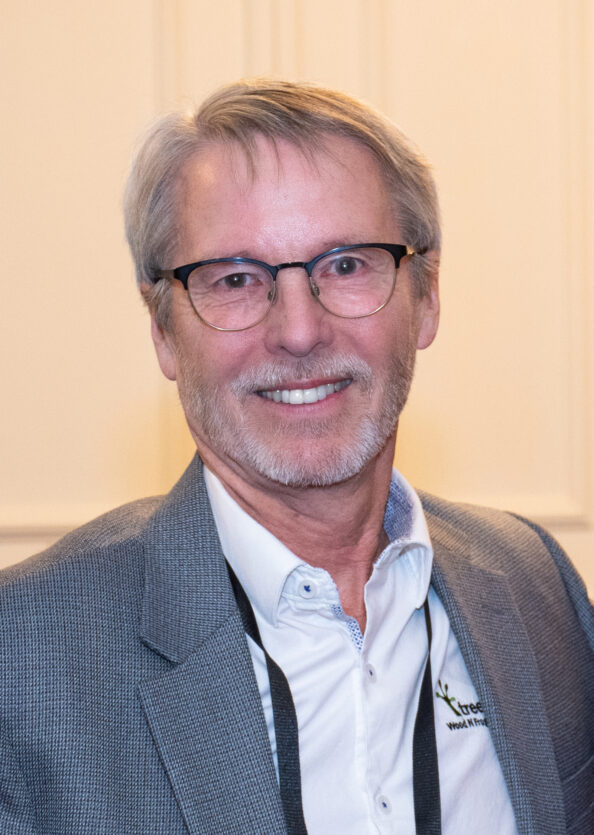






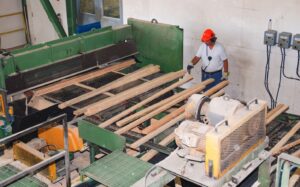 The U.S. Commerce Department today announced new preliminary anti-dumping duties on Canadian softwood lumber imports of 20%. …The duties won’t become final until August, when final determinations are expected to be made. …The new preliminary duties is just the first shot across the bow in what is expected to be a nasty trade war, with additional tariffs that may be layered on top of duties. …Anti-dumping and countervailing duties have been in place on Canadian softwood lumber at varying levels since 2017, following the expiration of the last softwood lumber agreement in 2015. The duties on Canadian softwood lumber have been effective in shrinking Canada’s market share… from about 35% in 2016, to about 24% as of the end of 2024.
 Vancouver —Forest Professionals British Columbia (FPBC) honoured 11 individuals as part of its recognition program in Victoria on February 6. FPBC recognized four Distinguished Forest Professionals, one Forest Professional of the Year, one volunteer of the year, and five authors for best magazine article at the 77th FPBC forestry conference recognition banquet. Mark Hay, RPF, of Vernon, Steve Kozuki, RPF(Ret), of Williams Lake, Randy Waterous, RFT, of Grand Forks, and the late Cindy Stern, RPF, of Parksville, were honoured as Distinguished Forest Professionals. This category recognizes significant accomplishments over a career, for providing outstanding service to the profession of forestry and for furthering the principles of FPBC. It is the profession’s highest honour for a registrant. Colin Mahony, PhD, RPF, of Victoria, is the Forest Professional of the Year, recognizing a Registered Professional Forester (RPF), Registered Forest Technologist (RFT), or Affiliated Forest Professional (AFP) for recent, outstanding service to the profession of forestry and furthering the principles of FPBC.