BMI Group buys Domtar’s idled pulp and paper mill in Espanola, Ontario. In other Business news: Microsoft signs CO2 removal agreement on the Gulf Coast; citing log shortage—West Fraser Williams Lake mill goes to 4-day week; Stella-Jones appoints Wesley Bourland Senior VP and COO; Gerald Tuskan is awarded the 2025 Marcus Wallenberg Prize; and sadly—Steve Tolnai, Sopron Student and Distinguished BC Forester, dies at 89.
Meanwhile, on the tariff/duty front: United Steelworkers International says Canada is not the problem; Maine grapples with cross-border levies; a Quebec veneer plant pans Canada’s counter tariffs; the US Lumber Coalition reacts to media banter; and Vietnam’s timber sector wants to make a deal.
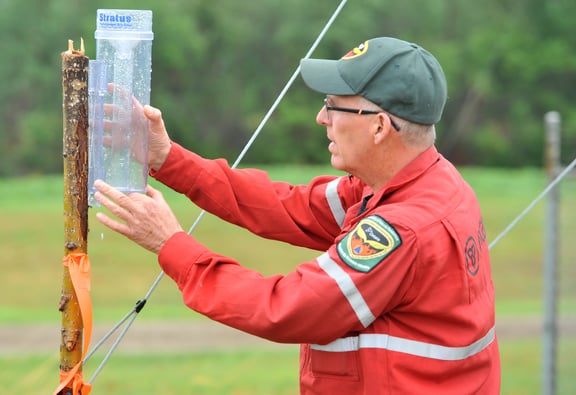
In Forestry/Wildfire news: Alberta invests to upgrade wildfire monitoring; more support for the US Fix Our Forest Act (for wildfire resilience); and two US Senators introduce a Jobs in the Woods Act (for training).
Finally, on Day 5 of Wildfire Resilience and Awareness Week—the BC is Burning documentary; and How Businesses Can Prepare for the Wildfire Season.
Kelly McCloskey, Tree Frog News Editor

 British Columbia’s forests are increasingly on fire—and the consequences are catastrophic. As we approach another fire season, communities, ecosystems, and livelihoods are at growing risk. In this crisis, BC is Burning, a new two part documentary, offers both a wake-up call and a beacon of hope. The film explores fuel loading, carbon emissions, proactive forest management and the need for a shift from suppression to increasing proactive prevention activities, offering solutions to reduce the mega-fires that are becoming all too common. … The core message of BC is Burning is the importance of active forest management. By managing forest landscapes… we can reduce fuel loads and prevent catastrophic fires. … BC is Burning is more than just a documentary—it calls for collective action. …become part of the conversation. Together, we can turn the tide on wildfires and ensure that our forests—and our future—remain safe and resilient.




 LAS VEGAS — Canadian Steelworkers joined thousands of delegates from across the US and the Caribbean at the 2025 United Steelworkers union (USW) International Convention where a resolution calling for fair trade and an end to Trump’s reckless tariffs on Canadian goods was unanimously adopted. …USW members made it clear: Canada is not the problem. …Marty Warren, USW National Director for Canada, “These tariffs hurt workers and communities on both sides of the border. …Jeff Bromley, Chair of the USW Wood Council, “We’re not the problem – we’re here to help,” said Bromley. “We’re here to help rebuild after the fires in California, after hurricanes in the Carolinas. We’ve been your brothers and sisters, your neighbours – and we want to continue to be that. We want to grow that relationship.” The resolution calls for a permanent exemption from Section 232 tariffs… and a coordinated strategy to protect and grow union jobs across the North America.

 Lumber futures fell toward $580 per thousand board feet, sliding further from a two-and-a-half-year high of $685 on March 24th, reflecting a steep decline in construction demand amid disruptive trade policies. The US decision to raise duties on Canadian softwood lumber to roughly 34% has sparked significant uncertainty and raised homebuilding costs, prompting builders to delay projects. Concurrently, Canadian production has been restricted by widespread sawmill closures, diminished timber stocks due to the mountain pine beetle, and tightening forestry policies in key regions like British Columbia, resulting in a surplus that further drives down prices. While there is a gradual shift toward lower-cost Southern Yellow Pine from the US South, logistical and technical hurdles limit its ability to fully offset the reduced Canadian supply. Market participants are adjusting to lower demand expectations amid ongoing trade tensions and a slowing construction sector.




 WASHINGTON, D.C. — U.S. Senators Angus King (I-ME) and Jim Risch (R-ID), co-chairs of the
  Amid a growing number of wildfires, mostly across Western states, a U.S. Senate bill is aiming to protect areas where communities are most vulnerable to fires, using “good neighbor” agreements, cross-boundary collaboration and the expansion of tools to prevent fire hazards. The bill, titled the