 Citing reduced packaging demand, International Paper announced it is closing four eastern US plants. In related news: Sylvamo upgrades two South Carolina paper mills; Kruger diversifies its Wayagamack, Quebec paper mill; San Group owners speak to their company’s downfall; and Interfor and Western Forest Products report Q4 losses. Meanwhile: Trump’s tariffs put upward pressure on lumber and housing prices; and HBS Dealer readers comment on whether the tariffs are needed.
In other news: Trump’s downsizing push reduces wildfire mitigation monies—eliminates 3,400 US Forest Service jobs; Canada and New Brunswick invest in wildfire equipment; Parks Canada ramps up plans for wildfire mitigation; Alabama bills would allow heavier truck traffic; and Boston University unveils design for new tall timber tower.
Finally, we’re gearing up to make improvements to the Tree Frog News. Last call to tell us what you think by completing our short survey!
Kelly McCloskey, Tree Frog News




 VANCOUVER, BC — Western Forest Products announced improved fourth quarter and fiscal 2024 results compared to the same period last year. Adjusted EBITDA was $14.4 million in the fourth quarter of 2024, as compared to negative $1.2 million in the fourth quarter of 2023, and negative EBITDA of $10.7 million in the third quarter of 2024. Adjusted EBITDA was $8.9 million for fiscal 2024, as compared to negative $29.9 million in fiscal 2023. Net loss was $1.2 million in the fourth quarter of 2024, as compared to a net loss of $14.3 million in the fourth quarter of 2023, and a net loss of $19.6 million in the third quarter of 2024. …“Despite challenging markets, we were successful in returning our business to positive EBITDA in 2024,” said Steven Hofer, CEO. …“The planned incremental US tariff will unfairly target and harm Canadian exporters like us, [and] will also hurt American consumers through higher lumber prices.” …We have informed customers of our intention to pass on the incremental US tariff.
 BURNABY, BC — Interfor recorded a net loss in Q4, 2024 of $49.9 million compared to a Net loss of $105.7 million in Q3, 2024 and a net loss of $169.0 million. Adjusted EBITDA was $80.4 million on sales of $746.5 million in Q4, 2024. …For the full year, Interfor reported a net loss of $304 million in 2024, a 14% increase from the $267 million net loss in 2023. Total sales fell 9% to $3 billion, down from $3.3 billion in the previous year. …Near-term volatility could be further impacted by a potential tariff on Canadian lumber exports… however, the Company is well positioned with a diversified product mix in Canada and the U.S., with approximately 60% of its total lumber produced and sold within the U.S. …Despite challenges, the company remains positioned to adjust production and capital spending in response to market conditions. …The company plans to invest $85 million in 2025, including the continued rebuild of the Thomaston, Georgia sawmill.
 MONCTON, New Brunswick –
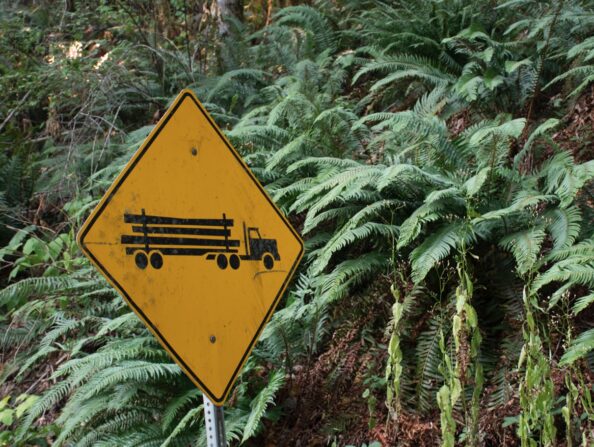 Alabama’s roads and bridges are already under immense strain, but two bills moving through the Legislature could accelerate their decline—adding 150 million dollars in maintenance costs annually, reducing highway lifespan by up to 30 percent, and forcing weight restrictions on hundreds of bridges. Senate Bill 110 and House Bill 204 would allow heavier log trucks to operate on Alabama highways while simultaneously limiting enforcement by requiring state troopers to escort overweight trucks to permanent platform scales—effectively halting roadside safety inspections for extended periods. Experts warn that these changes could have devastating consequences for infrastructure durability, public safety, and taxpayer-funded repairs. The push for heavier loads is being driven by logging and timber industry interests, which stand to benefit financially from relaxed restrictions. However, transportation and infrastructure experts warn that the cost to the public far outweighs any economic gain.